

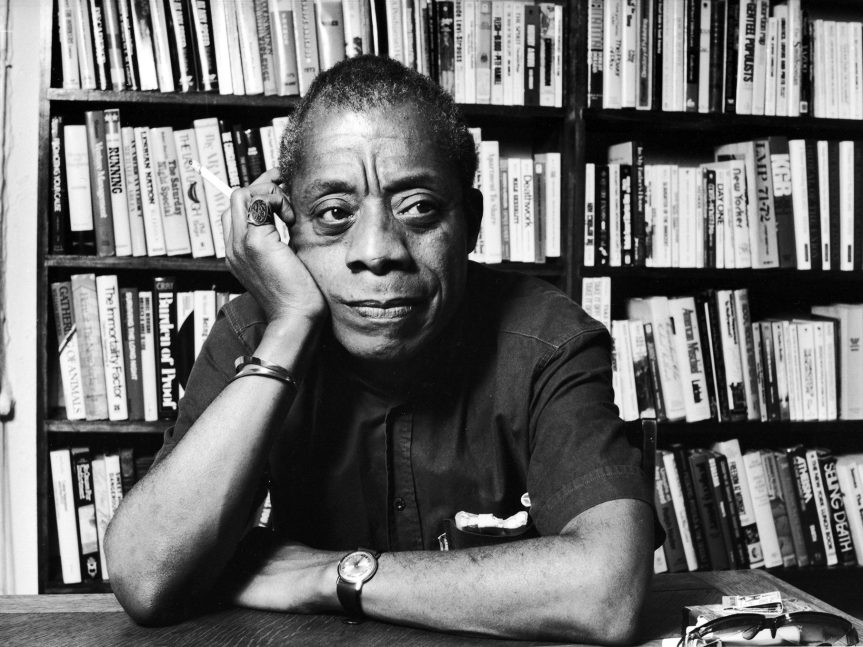
James Baldwin was an American essayist, novelist, and playwright whose eloquence and passion on the subject of race in America made him an important voice, particularly in the late 1950s and early 1960s, in the USA and throughout much of western Europe. One of the 20th century’s greatest writers, Baldwin broke new literary ground with the exploration of racial and social issues in his many works. He was especially known for his essays on the Black experience in America. In light of recent incidents in America, with the killing of George Floyd and all the violence against black people, James Baldwin’s literary works have resurfaced and remain relevant even today. Unfortunately, the violence seen in America decades ago is still in existence, and Baldwins works brings these matters to light.
Early Years
James Baldwin was born the illegitimate son of Emma Jones on August 2, 1924, in Harlem, New York. When he was three, his mother married the Reverend David Baldwin, a fire and brimstone lay preacher who legally adopted James. Despite their strained relationship, Baldwin followed in his stepfather’s footsteps and served as a youth minister in a Harlem Pentecostal church from the ages of 14 to 16. He developed a passion for reading at an early age and demonstrated a gift for writing during his school years. Baldwin published numerous poems, short stories and plays in the magazine, and his early work showed an understanding for sophisticated literary devices in a writer of such a young age. After graduating from high school in 1942, he had to put his plans for college on hold to help support his family, which included seven younger siblings. He took whatever work he could find, including laying railroad tracks for the U.S. Army in New Jersey.
During this time, Baldwin frequently encountered discrimination, being turned away from restaurants, bars and other establishments because he was an African-American. After being fired from the New Jersey job, Baldwin sought other work and struggled to make ends meet.
Aspiring Writer
James Baldwin started devoting his time to write a novel, trying to fulfil his dream of becoming a writer. Eventually he befriended writer Richard Wright, through whom he was able to land a fellowship in 1945 to cover his expenses. Baldwin started getting essays and short stories published in such national periodicals as The Nation, Partisan Review and Commentary.
Three years later, Baldwin made a dramatic change in his life and moved to Paris on another fellowship. The shift in location freed Baldwin to write more about his personal and racial background. He once told the New York Times; “Once I found myself on the other side of the ocean, I see where I came from very clearly…I am the grandson of a slave, and I am a writer. I must deal with both,” The move marked the beginning of his life as a “transatlantic commuter,” dividing his time between France and the United States.
Major Works
Baldwin had his first novel, Go Tell It on the Mountain, published in 1953. The loosely autobiographical tale focused on the life of a young man growing up in Harlem grappling with family issues and religion.
In 1954, Baldwin published his next novel, Giovanni’s Room. It told the story of an American living in Paris and broke new ground for its complex depiction of homosexuality, a then-taboo subject. Baldwin was open about his homosexuality and relationships with both men and women, and believed that human sexuality cannot be limited by rigid categories.
In 1957 he returned to the United States and became an active participant in the civil rights struggle that swept the nation. Delving into his own life, he provided an unflinching look at the Black experience in America through such works as Notes of a Native Son (1955) and Nobody Knows My Name: More Notes of a Native Son (1961), which explored Black-white relations in the United States. This theme was also central to his novel Another Country (1962), which examines sexual as well as racial issues.
Nobody Knows My Name hit the bestsellers list, selling more than a million copies. While not a marching or sit-in style activist, Baldwin emerged as one of the leading voices in the Civil Rights Movement for his compelling work on race.
Final Years
By the early 1970s, Baldwin seemed to despair over the racial situation. He had witnessed so much violence in the previous decade, especially the assassinations of Malcolm X and Martin Luther King Jr., caused by racial hatred. While his literary fame faded somewhat in his later years, Baldwin continued to produce new works in a variety of forms. He published a collection of poems, Jimmy’s Blues: Selected Poems, in 1983 as well as the 1987 novel Harlem Quartet. Baldwin died on December 1, 1987, at his home in St. Paul de Vence, France. Never wanting to be a spokesperson or a leader, Baldwin saw his personal mission as “bearing witness to the truth.” He accomplished this mission through his extensive and timeless literary legacy

 Eduindex