Beauty Of Indian Cave Paintings

Indian history is rich and diverse. For centuries, cultural beauty of India has inspired music, religion, heritage and ancient caves. Tradition and culture followed across India is intricately portrayed through hidden paintings and sculptures in enormous rock-cut cave temples that have been guarding the heritage of India. These paintings have been highlighting the evolution in Indian dynasties and culture for ages. We are able to witness the true beauty of ancient art through these magnificent creations. Cave Paintings were not confined to certain decorations but were tales of growing habitation.

One of the most valued cave paintings in India known as Bhimbetka Cave Paintings in Bhopal, Madhya Pradesh date back to 12,700 BC or earlier. Bhimbetka Caves was named after ‘Bhima’ – one of the five Pandavas of Mahabharat. It was declared UNESCO World Heritage site in 2003. These paintings exhibit the early human life. The inscriptions are monochromatic. Wild animals are shown like elephant, tiger, monkey with red and white color as the most commonly used with a rare hint of green and yellow color. There are more than 600 caves in this group of caves. Bhimbetka’s paintings artistically show culture and events.

Ajanta Caves located in Aurangabad district of Maharashtra are among the most commonly visited caves in India. These paintings were created in 1st Century BC. Ajanta Cave Paintings mainly depict the Mahayana Sector of Buddhism. The portraits and carvings are said to be masterpieces of Buddha’s life. Paintings and portraits are praised worldwide for its exceptional technique. Refined brush strokes and firm lines are breathtaking. This artwork is of spectacular extravagance. Meticulous representation of vivid human emotions like love, greed, compassion has left tourists awestruck.

Ellora caves date back to 600-100 CE, widely knowns as UNESCO World Heritage site. These caves are located in Maharashtra. Ellora Caves are also the world’s largest rock-cut monastery caves that symbolize Hindu, Jain and Buddhist traditions and culture. It conveys the message of secularism. Painting style adopted resembles painting style of Ajanta.

Kailasha or Kailasanatha is the largest temple in Ellora caves. Due to its huge breathtaking architecture, it is placed among the most remarkable temples. This temple is devoted to Lord Shiva. 12 caves of Ellora represent Buddhism and 5 cave temples represent Jainism.

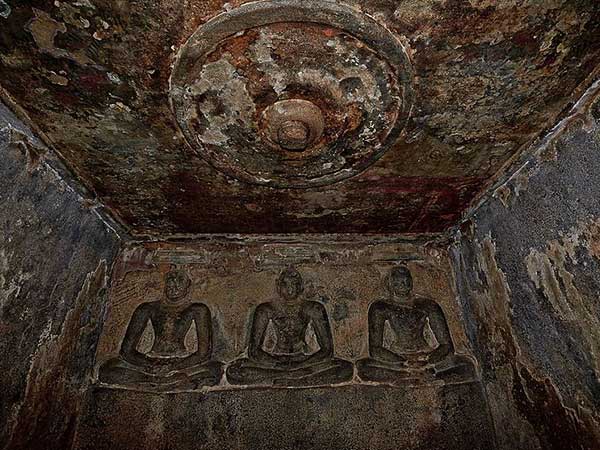
Sittanavasal Paintings located in Tamil Nadu is a Jain Monastery site, also known as the ‘Ajanta of Tamil Nadu’. These paintings represent the era of Pandyan reign. Mostly, these paintings are about animals, ducks and dancing figures. Ardhamandapam ceilings are covered with exquisite murals. Murals are painted with vegetable dyes. It is seen that that artwork of Sittanaval is similar to that of Ajanta Caves.

Cave paintings symbolize Indian culture and traditions that feature the pre-historic human life from various reigns. But sadly, these portraits are damaged to a greater extent. Lack of maintenance of these treasures have destroyed their beauty. Over the years, the condition of cave paintings have deteriorated. Cautious attention has to be given to the restoration of the caves to preserve ancient history and art.

The Legal Practitioner’s (Women) Act, 1923.

The Legal Practitioner’s (Women) Act was passed in the year 1923. it was only in 1846 that all duly qualified irrespective of nationality or religion were able to enter into the legal profession. Women were still excluded from the profession at this stage, to be thereafter admitted through the Legal Practitioner’s (Women) Act, III of 1923. The act regarding practising law profession still excluded women from entering the profession as it did not make any reference to women in the act. The Legal Practitioner’s (Women) Act formally allowed women entry into the profession. It abolished the bar on women from practising law. The Indian women were granted the right to choose legal profession and practice as Advocates in the Courts of Law. This fight was pioneered by Cornelia Sorabji. Prior to this, women due to their illiteracy and ignorance were easily duped by the legal people or their touts. Their reserve nature was inculcated and strengthened by customs and culture. They were not able to exercise their right over their own properties. Though initially only a handful of women joined the profession as Advocates this reformative measure ignited the spirit of pleading for the cause of another before the Courts. That the laws could be utilised for obtaining social justice and repressive laws could be overthrown for further development, and that women could do it for themselves and others as well was an eye-opener to the Indian society of pre-independence times. 

The challenge before women to enter into legal profession was significant and made a case for their entry to heal Indian women. They wanted to represent the Indian women. In many cases, judges opined that women were not ‘persons’ for the purpose of entering the legal profession. Regina Guha’s case was the first woman’s case. After obtaining a Bachelor of Law degree, Guha applied for admission to be enrolled as pleader in the Alipore district court. The application was examined by the court. Regina contended that since under the General Clauses Act, “words importing the masculine gender shall be taken to include female”, the rules under the Legal Practitioners Act, although referring in terms to men, would include women.In response, barrister Eardley Norton, a civil rights advocate, the bench responded that at the time the Legal Practitioners Act was passed, “there had never been a case of a lady being allowed to practice in the Indian courts”. The Legal Practitioners Act made no reference to women. In another case, Hazra applied to Calcutta University, seeking permission to appear as a private candidate in the preliminary examination of law.  Calcutta University transferred her application to Patna University. Her application was refused on the ground that she had not attended regular law lectures.Calcutta University finally granted her permission to appear as a private candidate in the preliminary law examination. In 1921, after obtaining a Bachelor of Law degree from Calcutta University, she applied to be enrolled as a pleader in the Patna district court.  The Patna high court judges delivered upholding the position in Regina Guha that in spite of the provisions of the General Clauses Act of 1868 and 1897, a woman, although fully qualified, was not entitled to a certificate under the Legal Practitioners’ Act to act as a pleader because of her sex. She was not a ‘person’.

By this time, the Sex Disqualification (Removal) Act 1919 was passed in England that allowed women to enter the legal profession.  At the same time, the Allahabad high court allowed Cornelia Sorabji to be enrolled as a vakil. With the Patna high court judgment, a concerted campaign to amend the Legal Practitioners’ Act began. In 1922, Narayan Malhar Joshi moved a resolution proposing amendment of the Legislative Assembly Electoral Rules to remove sex disqualification in the matter of registration on the electoral roll, Gour introduced a resolution to remove sex-based disqualification in the legal profession as an amendment to Joshi’s resolution.The Legal Practitioners (Women) Act was finally passed in 1923, removing the disqualification affirming that “no woman shall, by reason only of her sex, be disqualified from being admitted or enrolled as a legal practitioner or from practising as such”. 

The Revolt of 1857

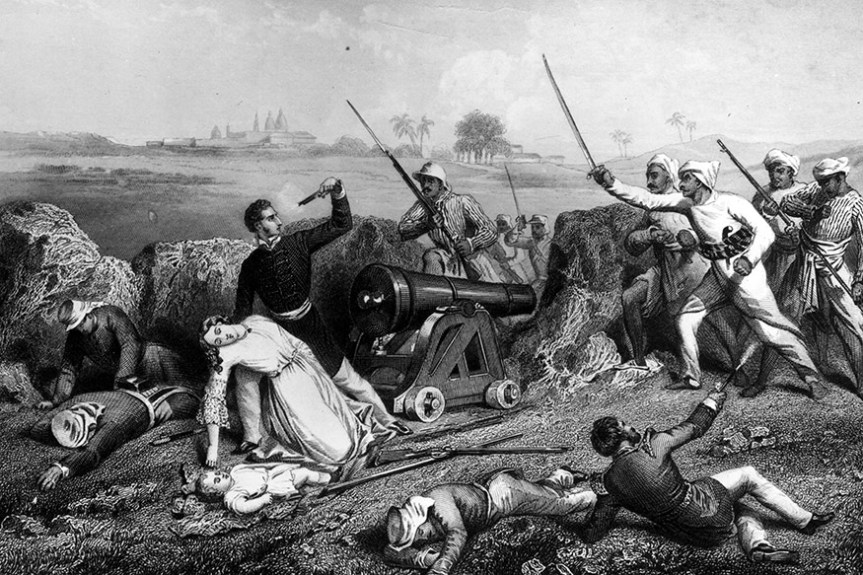
It was the first rebellion against the British East India Company in India which functioned as a sovereign power under the British Crown. The revolt began in Meerut when Sepoys of the British East India Company rebelled against the Company which led to widespread participation of the masses across the nation. The revolt is known by several names like the Sepoy Mutiny, the First War of Independence, the Great Rebellion.

Causes of the Revolt

  • The immediate cause of the revolt was from a rumour that spread that catridges used in rifles were greased with fat of cows and pigs. Before loading into the rifle the sepoy had to bite of the covering on the catridge. This was a big insult to the ritual of the Hindus and the Muslims. Lord Canning made ammends in the manufacturing of the catridges but the damage was done. In March 1857, Mangal Pandey refused to use the catridges and infuriated he attacked his British superiors. He was executed on April. On 9th May, 85 sepoys in Meerut refused to use the new catridges and were sentenced to ten years imprisonment.
Mangal Pandey
  • Indian sepoys formed a large majority of the British troops but they were considered inferior and paid less than a European sepoy who held the same rank. The General Services Enlistment Act Required the sepoys to be ready to serve even in the British land in the West.
  • The adoption of a new British policy called the Doctrine of lapse. The policy sought annexation of a Hindu ruler’s kingdom if had no natural heir, and also prohibits adopted successor of the ruler from seeking the throne, after the ruler dies. The rule was imposed by Lord Dalhousie. The rule annnexed many kingdoms and a large number of rulers were dislodged. Rani Lakshmi Bai’s adopted son was prohibited from acquire the kingdom of Jhansi. Satara, Nagpur, Jhansi were annexed under the rule. The kingdom of Awadh was also annexed which lead to discontent among the people.
Lord Dalhousie
  • The abolition of social practices like sati, and the legalizing of widow remarriage were perceived as threats to the culture. The introduction of acts like changing the Hindu law of inheritance allowing a Hindu who converted into a Christian inherit their ancestral properties. Introduction of Western style of Education was perplexing for the Indains.
  • The local peasants and zamindars were enraged ny the heavy taxes imposed on their land. Borrowal of money from money lenders in order to meet the heavy taxation demands eventually lead to bad debts, thereby losing their land that survived for generations.
  • The post Industrial Revolution in the West brought in an influx of British machine made goods into India. The action ruined the small scale industries like the textile and the handicraft.
Rani Lakshmi Bai

Many rulers also revolted. Begum Hazrat Mahal lead the revolt in Awadh when the British annxed the kingdom. Nana Saheb the adopted son Peshwa Baji Rao II, led the revolt in Kanpur. Rani Lakshmi Bai led the revolt in Jhansi after British suppressing her adopted son to ascend the throne.

On Warren Hastings and His Reforms

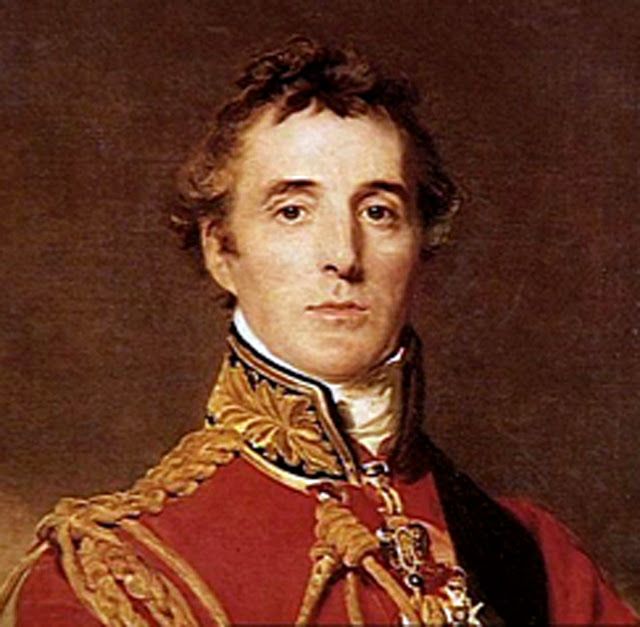
The  East India company, in 1765, acquired the diwani rights of three provinces by signing an agreement with the Emperor. These provinces were Bengal, Bihar and Orissa. These provinces were wealthy provinces. Warren Hastings was appointed as the governor general of Bengal. The dual system of government was a failure and Hastings was asked to consolidate the Company’s rule in Bengal. He was also given the task of judicial reformation. 

Warren Hastings and Judicial Reforms

Warren Hastings was an English statesman and the the first Governor of the

Presidency of Fort William (Bengal). He was the head of the  Supreme Council of

Bengal and also the first de facto Governor-General of Bengal. He exercised this position from 1772 to 1785. Hastings is seen as an important reformer who, during his tenure, brought many reforms. He first came to the country in 1772. 

One of his observations was that the though the Company enjoyed the right of Diwani(Since 1765) of the wealthy provinces(Bengal,Bihar and Orissa), it had hit the rock bottom to become financially bankrupt. He also noticed that the Dual Government had failed to succeed. Influenced by these observations, he wanted to correct the administrative system. He is praised and known for laying the foundation of the English administration in India. The Council replaced certain measures introduced by Warren Hastings. This was established by the Regulating Act. Two years post this incident, he was in a position to assert himself and introduce his plans freely. 

 After the acquisition, the concept of Mofussils was beginning to be used. The concept of Mofussils was used to denote the territories surrounding the Presidency towns. There was already a properly established and well established judicial establishment in the Presidential towns like Calcutta, Bombay, and Madras under the appearance of Mayor’s court and court of Governor-in-council. It was clear that a similar set up was urgently needed in these areas called Mofussils(Areas adjoining Presidential towns).These reforms were seen as beneficial. For this reason, it is widely opined that  “Hastings attempted to establish a just judiciary administration in India.” 

During this time, a Supreme Court was also established at the town of Calcutta. This was established after the enactment of the Regulating Act of 1774 by the British Parliament. The jurisdiction of this court and relations with the Sadar Nizamat Adalat and the Sadar Diwani Adalat, however, remained unclear and undefined. The laws followed by this court also remained unclear. As an expected result, this had an adverse impact on the judicial administration in Bengal. These impacts were clearly visible for a period of time. 

 The reforms were to be aimed at correcting the defective system. This was to be advantageous to the Company and save the ryots from oppression in the hands of Zamindaars and other tyrants. Hastings proceeded to reform the administration of justice.  His reforms can be seen as a division of four stages. 

 Hastings understood the relationship between revenue and the administration of justice. The administration of revenue in  these was seen as an important activity and function for the rulers. This was because of the fact that the activity generated a lot money and was a significant contributor to total revenue. As it was necessary to have lands and private property and these could be made prosperous only when there was proper maintenance of peace. Social order was a significant factor for prosperity as it affected the occupational work of people and the quality of the work. Peaceful society was a must to prevent unnecessary distractions affecting economical activities of the people. As the society was mostly agrarian, the need for order became even more important. It was obvious that life security and security of property was essential to bring order in the society. Ensuring peace would act as a boost for economical activities which in turn would generate sufficient revenue. This will enable the people to pay taxes properly. All these scenarios and requirements demanded an effective judicial system which was exactly what the society then lacked. 

Warren Hastings also understood that there was the lack of central authority that exercised power, dispensed justice, and controlled other authorities. The Mughal empire was dissolved at this point of time and the Nawabs were also significantly weakened in the concerned areas. The then existing judicial system was also improper and broken down. This made the system inefficient and ineffective. The appointed candidates were inefficient and lacked in required skills. They started to abuse their power and there was no system in place to check the corrupt activities of the officials. Another prevalent scenario that necessitated judicial reformation was the corruption prevalent in the centres of justice. 

According to the reforms, many courts were introduced. The other type of courts that were introduced was the Mofussil court or district court. These courts were also called as Mofussil Diwani Adalats. Each district got one of these courts. The jurisdiction of these courts extended over the the civil and revenue case. This court also dealt with cases relating to marriages,contracts, property inheritance, disputed accounts, private properties, inheritance, partnership and rent related issues. The pecuniary limit of these courts were capped at five hundred rupees. Composition of this court included Governor as the President and minimum two members of the council who were assisted by Diwan Treasury and Chief Kanungo. The judgements given in this court was the final one in cases of value upto five hundred rupees. This court was presided over by the Collector of the district. The collector worked with the native judicial officers called Kazis and Pundits. The collector or the judge of these courts required the assistance of native law officers as the collector was not versed with the personal laws of the Hindus and the Muslims based on which certain cases were to be handled. The native law officers helped the collector with their knowledge of the personal laws of native communities. 

The other type of courts were known as Mofussil Nizamat Adalat. The other name for these courts was Fauzdari Adalats. Every district got a Fauzdari Adalat. These courts, unlike other courts discussed above, dealt with  criminal cases alone. This court did not have the jurisdiction to try cases that were about capital punishment and issues related to forfeiture of property. These cases were required to be submitted to Sadar Diwani Adalat for judgements. One unique thing to these courts were that these courts were presided over by Muslim law officers alone. The Moulvi was involved involved in the process of expounding the law. Fatwa was given by the Kazi and the Mufti. These officers gave the judgements accordingly. The officers of law and the collectors of the district were allocated with important roles. These officers and the collectors were required to supervise the courts. The supervision job included the checking of witnesses involved in the case and hearing of all witnesses. The other function of this role was to try cases properly and regularly, and to impart justice impartially. 

The other type of courts was called Sadar or Provincial courts. This case acted as the central and apex court for civil cases in the area of the province. This case was empowered with both the appellate and orginal jurisdiction. It exercised this jurisdiction by hearing appeals from Mofussil Diwani Adalat. This court also tried cases that were related to or involved disputes of rupees five hundred. This court had the practice of charging up to five percent as a commission. This commission was charged on the amount involved in the dispute. This commission was charged on each petition or appeal. This court was presided over by the governor and the council. This court was located in the town of Calcutta. The first sitting of this court was held on 17th March of 1773. The next type of court was called as Sadar Nizamat Adalat. Sadar Nizamat Adalat was also the central and apex court for criminal cases within the provincial area. It is similar to Sadar Diwani Adalat in certain ways. This court had the jurisdiction and was empowered to decide issues related to capital punishment and forfeiture of property. In capital punishment cases, this court had the task of preparing death warrant. This warrant had to be signed by the Nawab (the head of the Nizamat). 

 Governor in Council acted as the supervisor and had the functions to supervise the functions of the court. This was similar to Mofussil Nizamat Adalat. The location of the court was moved Murshidabad (the residence of the Nawab). This location shift was due to the fact that his signature was required for all capital punishment cases. The office of Naib Nazim was developed later. Mohammed Reza Khan was appointed to assist instead of the Nawab. 

Several provisions were introduced, as a part of the judicial plan, to promote fair and impartial justice in the area. Open observation was made possible by conducting the judicial process and trials in the open court. This was done to gain the trust of people and ensure transparency. Adalats at district and village level were asked to maintain a register of all the cases. These records had to be sent to the Sadar Adalats. This was a move towards curbing power abuse and checked the activities of the court regularly. As a part of the reforms, already existing and rough civil procedures for civil cases was used. 

According to this procedure, the defendant had to reply after the filing of petition by the petitioner. After the hearing of the defendant, the Adalat and heard the concerned parties and examined the evidence presented. After completing all the these procedures, the court passed the decree. A time period rule was introduced, according to which a case had to be filed within 12 years of the dispute. All the cases exceeding this time limit were considered time barred. Another important feature was the introduction of arbitration for providing assistance to the civil court. When it came to laws and procedures related to crimes, the attention was given to laws and procedures to curb the activities like dacoity and remove mutilation as a method of punishment. 

 Warren Hastings did not believe in mutilation as an effective punishment and the convicted would become a dependent person and increase the burden on the society. However, mutilation as a punishment was not removed the codes of law and was its usage was refrained in practice. This was done lest resistance by the Muslim law officers who were not open to change and adhered to the texts. 

Making certain corrections to the earlier reforms,  collectors were asked to resign and other appropriate people were being searched. The new plan came into effect in January, 1774. The suitable personnel were found in Amils or Diwans. Amils were appointed in each district. Amil was given the role of revenue collector and he had the role of judge of Mofussil Diwani Adalat. The Presidencies of Bengal, Bihar, and Orissa were divided into six and headquarters were set up at Calcutta, Murshidabad, Dinajpur, Dacca, and Patna. Each division had several districts under the authority of the headquarters. Provincial councils were set up in each headquarters. Five Covenanted servants were appointed for each council. The function of the provincial councils were supervision of revenue collection. Amils were given the duty of tax and revenue collection. These courts were allotted the function of hearing appeals from Mofussil Diwani Adalat. The appeals of pecuniary value above thousand rupees would go to Sadar Diwani Adalat. These courts became an amalgamation of Mofussil Diwani Adalat and Sadar Diwani Adalat. Now cases of all value and appeals could be heard in the Provincial Council. This became a court of first instance. It was empowered with original jurisdiction. The court heard the cases from the division or headquarters. These cases could be heard directly at these courts. 

This day in Indian history(day 1)

This article
Every day is significant in history and in future. Specifically speaking every single day has its own importance in the history of Indian Independence or in general history of India. Today’s article will be about what happened today, years ago.

Today – 23rd June in the year 1757, was the day the famous Battle of Plassey started. So, with this article we are gonna dive into Indian history day by day. We will go in detail about the Battle of Plassey.
The Battle of Plassey took place between British East India Company and The Nawab of Bengal with his French allies. The British side was spear headed by Robert Clive while the Nawab at that time was Siraj ud-Daulah. The location of this battle was from where it got its name: Palashi (Plassey) on the banks of Hoogly river. Spoiler alert: British won. It was what we call “won by a landslide” in today’s terms. This should be a surprise because, the Nawab’s force combined with his French allies was much larger compared to that of Robert Clive’s.

Why is this battle important in the history of India?
There were a lot of battles and wars in the history of India’s Independence. But our history books do not talk about all of them. Firstly because it would take years to cover all that syllabus. Secondly, because not all battles were an important turning point in Indian history. Though every soldier’s sacrifice is respected. So, why is The Battle of Plassey important? We’ll see. This victory was a huge advantage to the East India Company in many ways. It was, in other words, a pivotal battle in the control of Indian subcontinent by the colonial powers. First and foremost, It aided the British to sieze control over Bengal entirely. After or due to this war, the British had big influence and control over the Nawab which helped them cover their losses due to previous causes. This battle also aided them to expand their military power. In the span of next hundred years, they won control over Indian subcontinent, Afghanistan and Myanmar. In short, this victory was the start of nearly two centuries rule of British over India.

What did it cost for India?
So we have seen what the British have gained from this battle. Let’s delve into what it cost us. Speaking in terms of casualties the Nawab’s forces lost 500 people to death and injury. Looking at the colonizer’s side, there were 22 deaths reported and 50 injured. This vast change in proportion is obvious because of the size of the army. More the soldiers, more the casualties. Now looking at the political side, the French were no longer a strong force in Bengal. Robert Clive placed Mir Jafar – commander of Siraj ud-Daulah’s army on the throne resulting in Mir Jafar becoming the first dependent Nawab of Bengal. Siraj ud-Daulah was then sentenced to death by Mir Jafar’s son. This battle led to a lot of similar puppet governments under the control of East India Company.

Now?
Now, to commemorate the turning point in Indian history, there is a monument situated in Palashi itself which is in West Bengal, India. So if you ever want to take a historic visit, I believe this could be a good choice.