

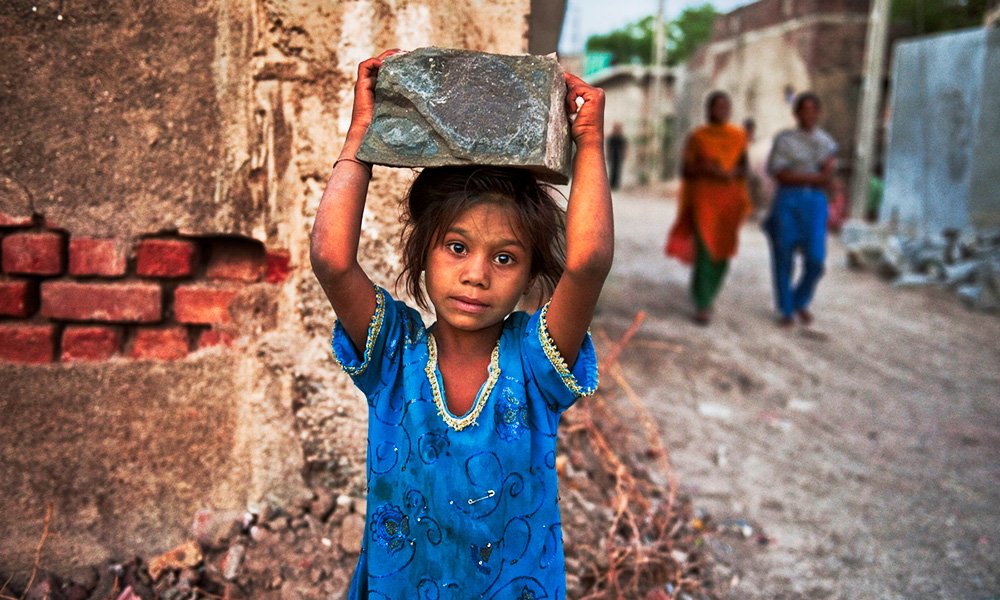
Overview
Child Labour is basically exploitation or destruction of children through any form of work that deprives children of their childhood, and are tend to work for someone even if they do not wish to. It interferes with their ability to attend regular school, and is mentally, physically, socially and morally harmful. Such exploitation is prohibited by legislation worldwide,[4][5] although these laws do not consider all work by children as child labour; exceptions include work by child artists, family duties, supervised training, etc.,. Child labour is not a recent problem, it has been from the past era. Child labour forms an intrinsic part of pre-industrial economies. In pre-industrial societies, there is rarely a concept of childhood in the modern sense. Children often begin to actively participate in activities such as child rearing, hunting and farming as soon as they are competent. In many societies, children as young as 13 are seen as adults and engage in the same activities as adults. In the previous centuries, children were tend to a little bit of Industry work, and for them there was no childhood term.
Situations in different centuries-
Early 20th century
In the early 20th century, thousands of boys were employed in glass making industries. Glass making was a dangerous and tough job especially without the current technologies. The process of making glass includes intense heat to melt glass (3133 °F). When the boys are at work, they are exposed to this heat. This could cause eye trouble, lung ailments, heat exhaustion, cuts, and burns. Since workers were paid by the piece, they had to work productively for hours without a break. An estimated 1.7 million children under the age of fifteen were employed in American industry by 1900.
21st century
Child labour is still common in many parts of the world. Estimates for child labour vary. It ranges between 250 and 304 million, if children aged 5–17 involved in any economic activity are counted. If light occasional work is excluded, ILO estimates there were 153 million child labourers aged 5–14 worldwide in 2008. This is about 20 million less than ILO estimate for child labourers in 2004. Some 60 percent of the child labour was involved in agricultural activities such as farming, dairy, fisheries and forestry. Another 25% of child labourers were in service activities such as retail, hawking goods, restaurants, load and transfer of goods, storage, picking and recycling trash, polishing shoes, domestic help, and other services. The remaining 15% laboured in assembly and manufacturing in informal economy, home-based enterprises, factories, mines, packaging salt, operating machinery, and such operations. Two out of three child workers work alongside their parents, in unpaid family work situations. Some children work as guides for tourists, sometimes combined with bringing in business for shops and restaurants. Child labour predominantly occurs in the rural areas (70%) and informal urban sector (26%).
Causes of Child labour
The major causes are stated below-
- Poverty
‘Poverty is certainly the greatest single force driving children into the workplace.’ When families cannot afford to meet their basic needs like food, water, education or health care, they have no choice but to send their children to work to supplement the household income. Poverty is considered as one of the most important causes of child labour as it is linked to other driving factors including: low literacy and numeracy rates, lack of decent work opportunities, natural disasters and climate change, conflicts and mass displacement. Poverty and child labour form a vicious cycle, without tackling one, we cannot eradicate the other.
- Lack of access to quality education
‘The availability and quality of schooling is among the most important factors.’ School needs to be a welcoming environment, with appropriate class sizes, a curriculum designed for the local context, and affordable for rural communities. Getting children into school and out of harmful work is one thing but keeping them there a means creating quality education accessible for all.
- Poor access to decent work
‘Children who were involved in child labour often lack the basic educational grounding which would enable them to acquire skills and to improve their prospects for a decent adult working life.’ If young people cannot access work which is safe, with social protection, fair pay, equality for men and women and which provides a space for workers to express their opinions, they often have no choice but to do work which is hazardous. When children above the minimum working age are doing hazardous work, this is also considered child labour.
- Limited understanding of child labour
‘The view that work is good for the character-building and skill development of children.’ When families do not understand the dangers of child labour, and how these impact on the health, safety, well-being and future of their child, they are more likely to send their children to work. Some cultural beliefs and social norms can also be drivers of child labour.
- Natural disasters & climate change
‘In rural areas, farmers who see their crops destroyed on account of climate changes have no other choice but to send their children out to work.’ The effects of natural disasters and climate change is one which is becoming of increasing concern. Rural families who depend on reliable seasons for farming are particularly vulnerable to altered patterns of rainfall, soil erosion, or extreme weather. When crops are destroyed or farming land is ruined, families struggle to make a living and are more likely to send their children to work in neighbouring farms.
- Conflicts & mass migration
‘There is a strong correlation between child labour and situations of conflict and disaster’ According to the ILO children make up more than half of the total number of people displaced by war. These children are particularly vulnerable to forms of exploitation, including child labour, due to an increase in economic shocks, a breakdown of social support, education and basic services, and disruption of child protection services. The incidence of child labour in countries affected by conflict is almost twice as high as the global average. Children are also vulnerable to becoming involved in armed conflict, this is considered one of the Worst Forms of Child Labour.
- Fighting child labour
SDG Goal 8.7 calls for the elimination of all forms of child labour by 2025. With 152 million children involved in child labour worldwide, we still have a long way to go. Programmes and policies which take into account the voices of the communities where child labour occurs, and the root causes, can advance real and sustainable progress in the fight against child labour.
What needs to be done to stop child labour in India?
Much more has to be done in the political landscape to stop exploitative child labour in India: the laws against child labour must be further tightened and more strictly enforced. In addition, it is important to combat extreme poverty, a root cause of child labour. Addressing poverty and inequality is crucial to end child labour in India.
Access to education is also vital to break the vicious cycle of poverty and child labour. As children complete higher levels of education, they are more likely to find decent work in adulthood and can use their income to care for themselves and their families without relying on child labour. Although education is compulsory and free in India for children up to the age of 14, widespread poverty forces families to prioritize putting food on the table over sending their children to school. As a result, many children attend school irregularly or not at all because they have to work instead.
 Eduindex