Experimental Licence Module for 100 5G Labs" at IIT Madras

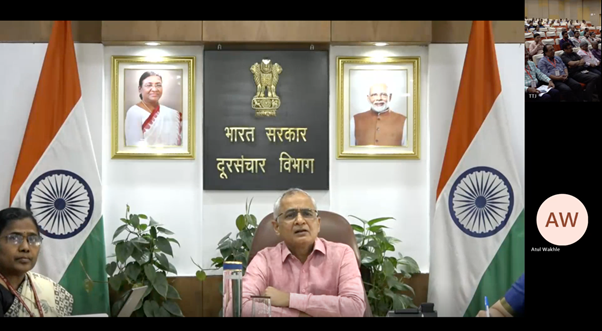
 In a move to smoothen the processes for 100 5G Labs across academic institutions in India, Secretary (Telecom), Dr Neeraj Mittal, virtually launched one of the “Experimental Licence module for 100 5G Labs” during a 5G workshop at IIT Madras. This initiative aims to simplify the experimental licence requirements for these institutions, facilitating smoother operations and fostering innovation in the 5G domain.

Department of Telecommunications (DoT) has awarded ‘100 5G Use Case Labs’ to educational institutions across the country. The primary objective behind this initiative is to cultivate competencies and engagement in 5G technologies among students and start-up communities.
These labs will be using 5G frequency bands for carrying out various experiments and testing use cases. Hence, they need to obtain Experimental (Non-Radiating) category of license from the Department of Telecommunication to ensure interference-free operations to licensed TSPs.


This license is currently being issued on “Self-declaration Mode” from the Saralsanchar portal of DoT through National Single Window System (NSWS). Till date around 1500 licenses have been granted since the launch of this module on Saralsanchar portal in July 2021.


As per the current process, applicant has to fill necessary details regarding the experiment to be carried out, schematic of the setup, details of the equipment, frequency band of operation etc. to obtain the experimental license.


The DoT has now introduced a simplified mechanism for issuance of this license through a specific Approval Type, ‘Experimental License for 100 5G Labs’ on the NSWS Portal (https://www.nsws.gov.in/). The key features of the new process are:

  • Efficiency: This automates the application process by pre-filling technical specifications and schematic details, reducing manual effort and time.
  • Instantaneous Licensing: Applicants can now obtain the experimental license through a “Self-declaration Mode” and download it instantaneously with a single click, ensuring prompt commencement of operations.
  • Simplified Application:  With only basic information required such as institute address, authorized personnel, and a nominal fee of Rs. 5000, the application process is streamlined, making it more accessible to a wider range of institutions.
  • Support for Innovation: This initiative is poised to significantly support innovation, cultivate competencies and represents a step forward in democratizing access to 5G technology and empowering educational institutions and startups to explore its potential for transformative applications.


For further details, the user manual is available at https://saralsanchar.gov.in and the official memorandum can be accessed at https://dot.gov.in/.

*****

Indian Railways network with IIT Madras to develop a hyperloop technology

Hyperloop is a high-speed transportation system(even faster than the bullet trains), having a low operating cost.

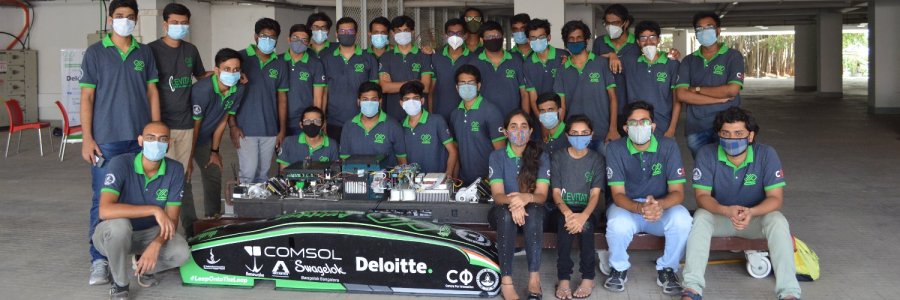
IIT Madras Avishkar Hyperloop Team(Image Source- Twitter)

The Indian Railways has collaborated with IIT Madras to develop a hyperloop technology based transport system and extended a financial support of Rs. 8.34 crores to IIT Madras for this project.

The Hyperloop project was also mentioned in the Union Budget 2022-2023. According to that, the railways was exploring possibilities of acquiring hyperloop technology for a demonstrative project to showcase its capabilities in the rail sector.

Union Minister of Railways Shri Ashwini Vaishnaw approved a financial assistance of Rs. 8.34 crores to IIT Madras for the development on hyperloop technology during his visit on Thursday.

A recent tweet on the official twitter handle of Avishkar Hyperloop

The above tweet was posted on the official twitter handle of Avishkar Hyperloop team, declaring Ashwini Vaishnaw sir as their 72nd member.

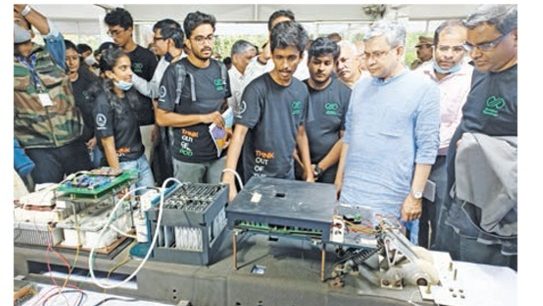
Ashwini Vaishnaw sir watching the demonstration on Hyperloop pod model

The minister saw the demonstration on the Hyperloop pod model at the New Academy Complex. Also, he also tested 5G at the Research Park.

His tweet regarding testing of 5G at the IIT-M Campus

The Hyperloop pod is a futuristic high-speed long distance public transport. The design aims at a speed of 1200 km/hr. The institution is also developing a 500m long tube, inside which the hyperloop pod will travel. Below is a visual demonstration of the Hyperloop Pod.

IIT-MADRAS, AVISHKAR HYPERLOOP TEAM QUALIFIES FOR EUROPEAN HYPERLOOP WEEK

A group of students with team named “AVISHKAR” from IIT Madras have been working tremendously towards the technology behind the future of transportation, HYPERLOOP. The team comprises of forty students from various department of IIT, madras. They have been working on this new prototype hyperloop project since last November.

BUT, WHAT IS HYPERLOOP?

Basically, hyperloop is a high speed mass transportation system. A hyperloop is a super speed ground-level transportation system in which people could travel in a hovering pod inside a vacuum tube at speeds as high as 760 mph (1220 km/h).

While talking about the product, Neel said, “Hyperloop is a proposed mode of transportation in which many pods will be traveling inside a vacuum tube, capable of attaining high speeds due to no air friction and reduced air drag.” It IS the fifth and most efficient mode of transportation that the world is moving towards, he added. Further he said, “Because Hyperloop is sustainable, it works on electrical energy, we can install Solar panels on top of the tube, which could store energy and the same energy could be used to propel the hyperloop. This is way more sustainable .”

HOW DOES A HYPERLOOP WORK?

It has three major components: a tube, pod, and terminal. The tube is a large low pressure system that is sealed and tube can be constructed either above or below the ground. A pod is a coach that runs inside this controlled system and this pod employs magnetic or aerodynamic levitation along with electromagnetic or aerodynamic propulsion to glide along a fixed guideway. The terminals are used for arrivals and departures. Hyperloop is based on simple science called Magnetic levitation. But one thing that needs to be noted is, that it requires complex machinery and sensors to make a Pod travel at nearly 1000 km/h inside a vacuum tube. However the team has cracked that and named their pod “GARV”, which translates to “PRIDE”. It consists of Carbon Fiber shell, packed with advanced machinery and sensors.

STATEMENT:

Pranit, who is Head of Braking Module, said that Garv is their second Pod which is more efficient and lighter than the one they designed for SpaceX. “This time we are introducing several technologies like linear induction motor to achieve ‘contactless propulsion’ and ‘contactless braking. The motor produces a magnetic field which makes the Pod move forward and the contactless Braking has magnets which come closer to the rail, creating a Braking force and decelerating the Pod,” Pranit added.

Parth, a member of the Controls team, said, “Our team started in November. Everything we did online such as brainstorming sessions and discussions about the simulations. Once we were confident, we came back to the institute and started working on the Pod.” He said, “We are participating in European Hyperloop Week which will be conducted on 19th – 25th July and Valencia, Spain. Because of the pandemic, we are forced to compete virtually, but that is not a setback for us.”

EUROPEAN HYPERLOOP WEEK SELECTION:

With all their hard work, they have now crossed the hurdle and are qualified for the European Hyperloop Week that is to be held in Valencia, Spain from July 19 to 25. The team will participate virtually due to pandemic restrictions. With upgraded prototype, the team estimates the travel time between Chennai and Bangalore to be a mere 30 minutes ride instead of a six hours journey. They are also working on the study of energy, costs, demands and other aspects of hyperloop so as to access the economic feasibility of hyperloop in India.