

The activities human does has its impact directly on the environment which in turn affect humans in the long term . In the last two centuries the concern for the environment protection arose first during the Industrial Revolution in Europe which changed the entire dynamics of the world leading to revolutionary changes but the burning of coal to run the machines in the industries led to smoke pollution. With time as the number of industries increased globally so did the number of harmful pollutants released in the air causing high smog level, acid rain , respiratory diseases among many other things. It was not just the air but also the water where the waste from industries was directly released making water misfit for humans as well as posing threat to the animals in there. Everything on the surface of earth is interrelated , the cycle of destruction which once starts consumes everything within it fueled by the human greed. Extensive mining , improper waste disposal, excessive noise from honking of cars and other sources leads to different forms of air, soil and noise pollution . Over the years, different governments have come up with different plans to preserve and protect the natural resources and environment along with various methods to reduce the negative impact of globalization and industrialization on the environment.
The covid-19 pandemic which hit the world in early 2020 and has claimed almost a million lives till now had the countries going into the complete lockdown to prevent the further spread of the disease. Lockdown ceased the normal routines of the people as everyone was caged inside their houses with many loosing their jobs, many getting rest from the normally hectic lives, the conditions of the medical professionalists being worse as they had to deal with a foreign deadly disease which they had no idea about. The lockdown which closed all industries and workplaces brought down the world economy to a major level. Despite all these hardships, the only positive thing which happened was the clearance of the environment such as air and water which had been polluted beyond repair by the humans.
Everything has its own pros and cons. This blogs will tell you about the positive and negative impact of covid-19 on environment.
Positive impacts
- There was a phenomenal reduction observed in the emission of green house gases such as carbon dioxide , methane and nitrous oxides due to closed industries and shut down of transportation which led to cleaner air. According to a study, China which had an average of 2,00,000 metric tones of carbon dioxide emission saw the emission being reduced by 25% which according to the Earth system scientists saved the lives of over 77000 people in two months. The decrease in air pollution brought with it 50% reduction of nitrogen dioxide and oxides of carbons levels which also decreased the rain in that particular time period being acidic. Acid rain which had led to many diseases and corrosion of metals and monuments such as our mighty Taj Mahal is caused by the combination of nitrogen dioxide with oxygen and water vapor present in the atmosphere which leads to the production of the harmful nitric acid along with water.
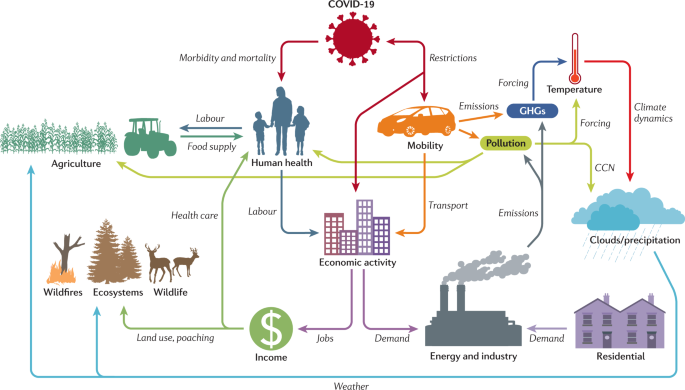
- India, where the AQI(Air Quality Index) had worsen in the last decade, saw a drastic improvement in the air quality. The AQI obtained by the Central Pollution Control Board(CPCB) was assessed by comparing the level of pollutants degrading the air quality( PM10, PM2.5, Carbon monoxide and sulphur dioxide) in the unlock (pre covid-19) phase to that in the four lockdowns which the country experienced. It was observed that there was a gradual to rapid reduction in the level of these harmful pollutants and increment in ozone concentration due to the reduction in Nitrogen dioxide concentration by almost 80%.
- Water Pollution which is a major problem in India and Bangladesh with industries releasing their waste water without its proper treatment in the water bodies causing the decrease in oxygen level in the water affecting the aquatic life present there and also making it unfit for human use. According to various reports, the Ganga and Yamuna rivers of the country which were one of the highly polluted rivers due to the dumping of garbage and industrial releases pre covid showed the signs of rejunevation during the lockdown. No discharge of harmful affluent in these water bodies led to the decline in nitrite concentration in water increasing the dissolved oxygen level. Further, it was reported that the districts in Ganga river basins experienced 60% more rainfall than what it normally experiences which led to the increased discharge of water in river further contributing towards the dilution of remaining pollutants.
- Also, the animals which were rarely found in open such as the sea turtles finally retreated to their original natural habitant with many sea turtle and rare species of fishes being spotted in the open and on the beaches which were deserted in the lockdown.
Negative Impacts
- People were advised to use masks and gloves as a precaution against covid-19. The inappropriate disposal of masks and gloves along with other bio medical waste which was used to treat the covid-19 patients will lead to more harm in the long term. Governments advised people against the open disposal of the bio medical wastes but lack of proper knowledge led people to do the otherwise contributing in the water and soil pollution.

- Also, the flora and fauna which was protected by human guards against the illegal human activities was also at risk. As with lockdown, decrease in man power guarding the reserved forests and sanctuaries decreased which led to the increase in illegal deforestation, wildlife hunting among other things.
Covid-19 can be seen as the nature’s warning to humans to stop interfering in the natural things and to mend its relation with the environment , else the consequences will be terrible.
 Eduindex