
Insurance and it’s Types

N kavya

Insurance is a means of protection from financial loss. It is a form of risk management, primarily used to hedge against the risk of a contingent or uncertain loss. An entity that provides insurance is known as an insurer, an insurance company, an insurance carrier, or an underwriter. an arrangement with a company in which you pay them regular amounts of money and they agree to pay the costs if, for example, you die or are ill, or if you lose or damage something.

Insurance is a contract in which an insurer indemnifies another against losses from specific contingencies or perils. It helps to protect the insured person or their family against financial loss. There are many types of insurance policies. Life, health, homeowners, and auto are the most common forms of insurance. insurance is a contract, represented by a policy, in which a policyholder receives financial protection or reimbursement against losses from an insurance company. The company pools clients’ risks to make payments more affordable for the insured.

Insurance policies are used to hedge against the risk of financial losses, both big and small, that may result from damage to the insured or their property or liability for damage or injury caused to a third party.

Key Takeways :

1. Insurance is a contract (policy) in which an insurer indemnifies another against losses from specific contingencies or perils.

2. There are many types of insurance policies. Life, health, homeowners, and auto are the most common forms of insurance.

3. The core components that make up most insurance policies are the deductible, policy limit, and premium.

How Insurance Works :

A multitude of different types of insurance policies is available, and virtually any individual or business can find an insurance company willing to insure them—for a price. The most common types of personal insurance policies are auto, health, homeowners, and life. Most individuals in the United States have at least one of these types of insurance, and car insurance is required by law. Businesses require special types of insurance policies that insure against specific types of risks faced by a particular business. For example, a fast-food restaurant needs a policy that covers damage or injury that occurs as a result of cooking with a deep fryer. An auto dealer is not subject to this type of risk but does require coverage for damage or injury that could occur during test drives. There are also insurance policies available for very specific needs, such as kidnap and ransom (K&R), medical malpractice, and professional liability insurance, also known as errors and omissions insurance.

Insurance Policy Components:

A firm understanding of these concepts goes a long way in helping you choose the policy that best suits your needs. For instance, whole life insurance may or may not be the right type of life insurance for you. Three components of any type of insurance are crucial: premium, policy limit, and deductible.

1. Premium -:
A policy’s premium is its price, typically expressed as a monthly cost. The premium is determined by the insurer based on your or your business’s risk profile, which may include creditworthiness.

2. Policy Limit -:
The policy limit is the maximum amount that an insurer will pay under a policy for a covered loss. Maximums may be set per period (e.g., annual or policy term), per loss or injury, or over the life of the policy, also known as the lifetime maximum.

3. Deductible -:
The deductible is a specific amount that the policyholder must pay out of pocket before the insurer pays a claim. Deductibles serve as deterrents to large volumes of small and insignificant claims.

Types of Insurance :

There are many different types of insurance. Let’s look at the most important.

1.Health Insurance -:
Regarding health insurance, people who have chronic health issues or need regular medical attention should look for policies with lower deductibles. Though the annual premium is higher than a comparable policy with a higher deductible, less expensive access to medical care throughout the year may be worth the tradeoff.

2. Home Insurance -:
Homeowners insurance (also known as home insurance) protects your home and possessions against damage or theft. Virtually all mortgage companies require borrowers to have insurance coverage for the full or fair value of a property (usually the purchase price) and won’t make a loan or finance a residential real estate transaction without proof of it.

3. Auto Insurance -:
When you buy or lease a car, it’s important to protect that investment. Getting auto insurance can offer reassurance in case you’re involved in an accident or the vehicle is stolen, vandalized, or damaged by a natural disaster. Instead of paying out of pocket for auto accidents, people pay annual premiums to an auto insurance company; the company then pays all or most of the costs associated with an auto accident or other vehicle damage.


4. Life Insurance -:
Life insurance is a contract between an insurer and a policy owner. A life insurance policy guarantees that the insurer pays a sum of money to named beneficiaries when the insured dies in exchange for the premiums paid by the policyholder during their lifetime. Life insurance. life insurance provides for your family if you unexpectedly die. This is especially important if your family is dependent on your salary. Industry experts suggest a policy that pays out 10 times your yearly income. But not everyone can afford the cost. When estimating the amount of life insurance you need, factor in funeral expenses. Then calculate your family’s daily living expenses. These may include mortgage payments, outstanding loans, credit card debt, taxes, child care, and future college costs.


5. Travel Insurance -:
Travel insurance is a type of insurance that covers the costs and losses associated with traveling. It is useful protection for those traveling domestically or abroad.

6. Long-Term Disability Coverage -: Long-term disability insurance is the type of insurance most of us think we will never need. Yet, according to statistics from the Social Security Administration, one in four workers entering the workforce will become disabled and will be unable to work before they reach the age of retirement. Often, even workers who have great health insurance, a nice nest egg, and a good life insurance policy don’t prepare for the day when they might not be able to work for weeks, months, or ever again. While health insurance pays for hospitalization and medical bills, you’re still left with all of the expenses that your paycheck had covered.

Is insurance an asset?

Depending on the type of life insurance policy and how it is used, permanent life insurance can be considered a financial asset because of its ability to build cash value or be converted into cash. Simply put, most permanent life insurance policies can build cash value over time.

Conclusion:

Insurance plans will help you pay for medical emergencies, hospitalization, contraction of any illnesses and treatment, and medical care required in the future. The financial loss to the family due to the unfortunate death of the sole earner can be covered by insurance plans.



ANXIETY

N kavya

Anxiety is your body’s natural response to stress. It is a feeling of fear or apprehension about what is to come. It is normal to feel anxious about moving to a new place, starting a new job, or taking a test. This type of anxiety is unpleasant, but it may motivate you to work harder and do a better job. Ordinary anxiety is a feeling that comes and goes but does not interfere with your everyday life. In the case of an anxiety disorder, the feeling of fear may be with you all the time. It is intense and sometimes debilitating. This type of anxiety may cause you to stop doing things you enjoy. For example, it may prevent you from entering an elevator, crossing the street, or even leaving your home in extreme cases. If left untreated, the anxiety will keep getting worse.

Symptoms of anxiety :
1. anxious thoughts or beliefs that are difficult to control
2. restlessness
3. trouble concentrating
4. difficulty falling asleep
5. fatigue
6. irritability
7. unexplained aches and pains.

What causes anxiety?


Medical experts are not sure of the actual cause. But a combination of factors likely plays a role.
The causes of anxiety may include:
1. stress
2. other medical issues such as depression or diabetes
3. first-degree relatives with generalized anxiety disorder
4. environmental concerns, such as child abuse
5. substance use
6. situations such as surgery or occupational hazard. 7. In addition, researchers believe that it stems from the areas of the brain responsible for controlling fear and the storing and retrieval of emotional and fear-related memories.

Physical symptoms of anxiety :


When you experience symptoms of anxiety, they can manifest as physical symptoms such as:


1. dizziness
2. tiredness
3. heart palpitations
4. muscle aches and tensions
5. shaking
6. dry mouth
7. excessive sweating
8. stomach-ache
9. headache
10. insomnia

Who is at risk of anxiety?


Medical researchers say with each type of anxiety, there are different risk factors. But there are some general influences, including:


1. Personality traits. This includes shyness and nervousness in childhood.
2. Life history. This includes being exposed to negative or stressful life events.
3. Genetics. Of those who have a diagnosis of anxiety, percent trusted to have a first-degree relative who also has a diagnosis of anxiety.
4. Other health conditions. Thyroid problems and other health conditions can make you prone to anxiety.
5. Stimulants. Consuming sources, specific substances, and medications can worsen your symptoms.

Are there treatments for anxiety :


Once you’ve received a diagnosis of anxiety, treatment can help you overcome the symptoms and lead a more manageable day-to-day life.


The treatment is categorized into three types :


• Psychotherapy. Therapy can include cognitive behavioral therapy and exposure response prevention.
• Complemental health techniques. Mindfulness, yoga, and self-management strategies such as stress management are ways to treat your anxiety using alternative methods.
• Medication. Doctors prescribe antianxiety and antidepressant drugs.
• Session, with a therapist or psychologist, can help you learn tools to use and strategies to cope with stress when it occurs.

Some other commonly used medications include:

• Selective serotonin uptake inhibitors (SSRIs). Escitalopram, fluoxetine, and paroxetine are common SSRIs.
• Selective norepinephrine reuptake inhibitors (SNRIs). Duloxetine and venlafaxine are common SNRIs.
• Antipsychotics. Quetiapine and aripiprazole are common antipsychotics.
• Benzodiazepines. Diazepam and clonazepam are common benzodiazepines.
• Anxiolytics. Buspirone is a common anxiolytic.

Natural remedies for anxiety are :

1. getting enough sleep
2. meditating
3. staying active and exercising
4. eating a healthy diet
5. avoiding alcohol
6. avoiding caffeine
7. quitting smoking cigarettes if you smoke.

Foods that can help you with anxiety :

• flax and chia seeds
• fatty fish such as mackerel and salmon
• turmeric
• vitamin D
• magnesium
• tryptophan

It’s important to understand that anxiety disorders can be treated, even in severe cases. Although anxiety usually doesn’t go away, you can learn to manage it and live a happy, healthy life.

Tips to learn a new language faster

Learning a new language often considered as really tough task, but is it true? Maybe for some, but the real truth is if followed right resources and direction is definitely an task to do so. So for this here are some tips that might help you.

1) Know about the language that you are going to learn

By writing this I mean one should know what language is he or she going to learn. If you have clear idea of what actually you are going to learn will help you to set almost perfect goals which will ultimately help you to do what you want.

2) Set goals

Setting goals to learn a new language will help you to go far and keep yourself ahead. Goal setting should be done after being familiar by the subject.

3) Set small goals

Setting small goals will help you to complete your work on given time. Setting small goals will also help you to analyse yourself and keep your records on track.

4) Analyse yourself

Analysing is an art if done properly will take you way to far. Whenever do things do them on time and analyse what mistakes you make or what are the problem that you have encountered.

5) Challenge yourself

This part will help you to grow. grow beyond your limits. But one thing to keep in mind while doing so is do not challenge yourself more than what will harm you. Doing this in moderation will definitely help but if done excessive will also harm.

6) Use the language as frequently as you can

If you do so it will help you to retain things faster. It will also help you to clear your vocabulary and pronunciation and also will help you to keep everything you learn stored in your brain for a long time.

7) Test yourself

At the end complete your learning and test your self this will help you to know how much you have learn about the language.

Hope you will like my blog follow the steps and go ahead. Happy learning!

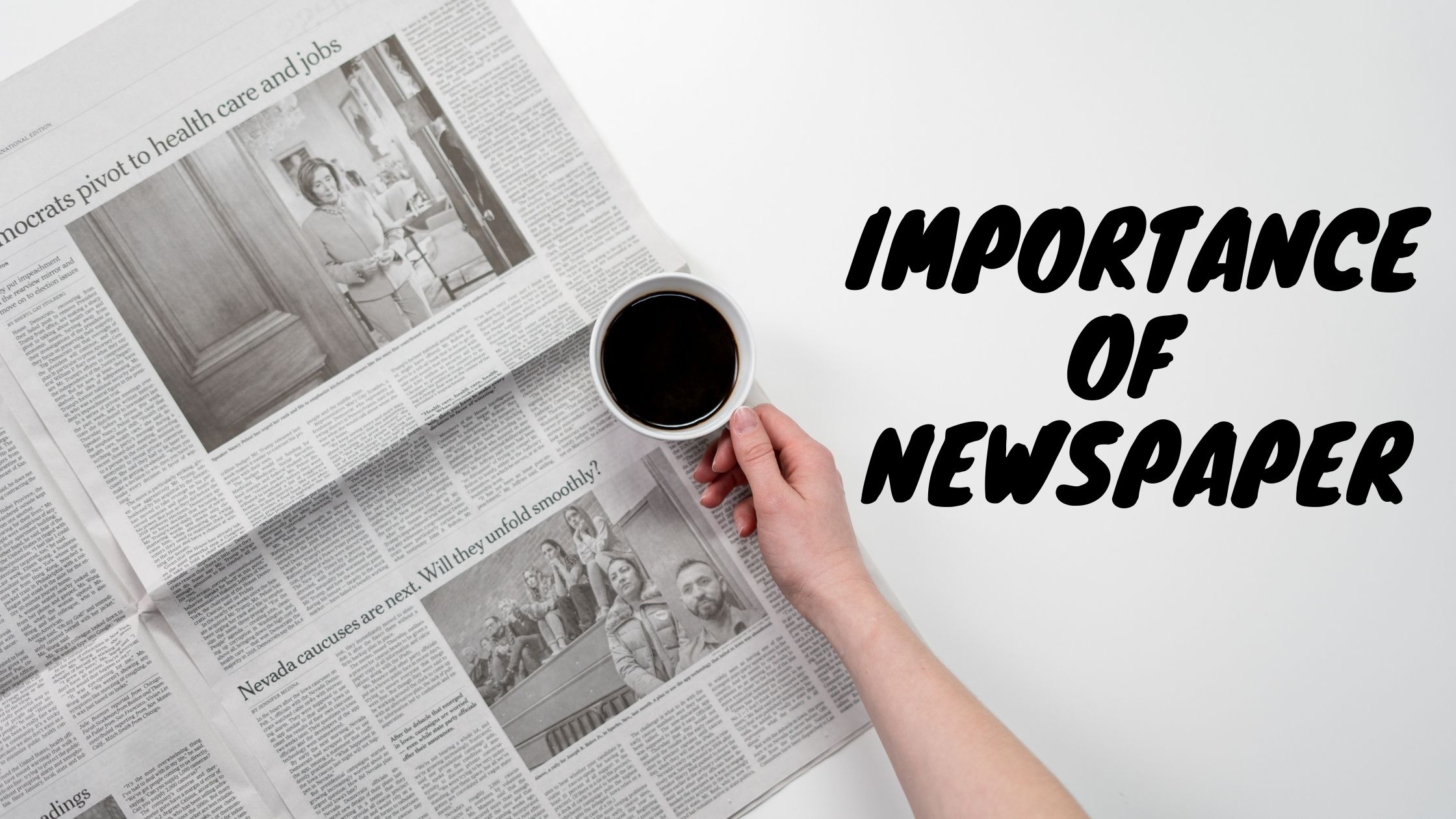
Importance of newspaper

Importance of Newspaper in Life Essay - Let's Learn

Newspaper is quite a powerful tool that circulates information to people. It is one of the greatest means of communication between people and the world. In addition, they are also a great medium of knowledge. We get our daily dose of news from newspapers early in the morning. It is quite a reliable source which gives us information only after thoroughly investigating the information.

Newspapers are easily available in the most remote regions as well. They are also very economical which gives an abundance of information at really low cost. Most importantly, newspapers are published in various languages that make it easier for people of all regions to get news in their local language. thus, we see how newspapers have numerous advantages that help the common man stay informed of the worldly issue.

Significance of Newspaper

The newspaper has created a positive impact on society. It helps people become aware of current affairs and stay curious about them. When the public will question, it means they are aware. This is exactly what a newspaper does. It is also the finest link you can find between the government and its people. Newspapers provide people with every detail no matter how small.

Essay on the Importance of Newspaper and Press - Ilmi Hub

Furthermore, it helps us become informed citizens. Whenever there are any changes in the rules and regulations of the country, newspapers make us aware of them. Moreover, they are very informative for students. A student can learn all about general knowledge and current affairs from here. We stay updated with the technological advancements, government policies, research studies and more.

Other than that, newspapers also have incredible articles that tackle social issues, cultures, arts, and more. It conveys the public opinion to the people on important issues. This will, in turn, help people review the government and ministers well. Similarly, people get great employment opportunities from newspapers. Those seeking jobs look through newspapers to get reliable job opportunities.

In short, the newspaper carries a lot of significance for humans. If we read the newspaper daily, it can develop our reading habit and make us more fluent. It also has mind-brain exercise games like puzzles, Sudoku and more to sharpen people’s brains. Furthermore, you can also go through the comic strips and cartoons to keep yourself entertained.

A World Without Newspapers

As the world is advancing rapidly, everything is becoming digital. From our shopping to news, we can easily do it on our smartphones or computers. This digitization has also affected the newspaper scenario. As people are getting instant updates on their phones about the latest news, the sales of newspapers have gone down massively.

Importance of Newspaper Essay for Students | 500+ Words Essay

Does this mean the digital era will wipe out the newspapers? Looking at the present scenario, this possibility might soon become a reality. However, are we ready to have a world without newspapers? A world without newspapers is like having a home without mirrors. This means we won’t be able to see our own reflection.

Now, compare this situation to that of the world and newspaper. Imagine the world has lost its national mirror, resulting in you not being able to get an honest reflection of what is happening around. What’s even worse is the fact that instead of the national mirror we are getting a fun-house mirror which is distorting the information and making you see what’s not real.

In short, the world will become a free rein for politicians to propagate their advertising and agendas to the public. The information won’t be reliable and won’t even be scrutinized. We won’t have any journalists to decipher the PR spin of the governments and corporate firms robbing the common man of their money.