India vs China, Economic Differences Yet India Liveable

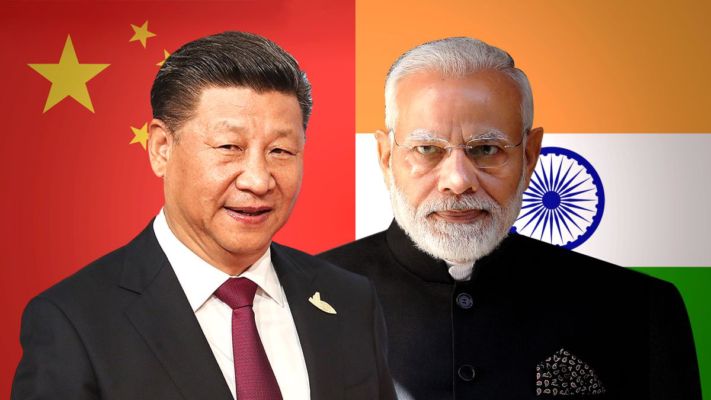
The President of China (Left) and The Prime Minister of India (Right)

China and India are the two fastest growing Asian economies. Respective governments have left no stones unturned to project the two nations as ideal investment destination on global platform, inviting industrialists with the lure of a business-friendly atmosphere. The two countries have always been at loggerheads for political reasons, making their bilateral relationship really rocky. The leaders at the helm of power of these two neighbours are known for their reformative approach and the similarities between Indian Prime Minister Narendra Modi and Chinese President XI Jinping are conspicuous. Both of them are known to rub shoulders with ten-figure friends to draw investments. While China has wowed the world with its bullet trains, India is pacing ahead in its space mission, launching valuable communication satellites.

Here’s a list of four fronts in which India is ahead of China in terms of growth:

India Being one of the Greatest Economy Balancer

An important metric where India beats China is financial market development. India ranks 38, while China ranks 56. Though the two nations introduced separate sets of reforms at different points of time, China started moving towards the pro-market economy in 1978 and India did the same in 1991. But India is 15 years ahead of China with regard to reforms in economic and financial markets. Experts are of the opinion that India has performed better than China in the financial sector. Indian bond market is known as one of the most liquid in Asia, which is well regulated by the RBI and is fully electronic. India is known as one of the best countries in the world in the way the financial sector is managed. As far as equity markets are concerned, reporting standards in India maintain global standards.

Tight Competition Among India and China in Space Technology

Though China is doing really good in space missions, India is not much behind with its successive launching of communication satellites. Recently, India has sent its heaviest communication satellite with its own GSLV MK III. India reportedly aims to win a bigger share of the $300-billion global space industry. It has successfully launched record 104 satellites, earning praise even from its northern neighbour. China started its space missions in the late 1950s while India entered the space in 1962 and is racing fast.

India being a Top Pharmaceutical Manufacturer and Exporter

India regards pharmaceutical production and exports as one of its biggest strengths. It has consistently beaten China in exports of pharmaceutical products to Latin America in the past five years. In 2016, India exported products worth $651 million to Latin America, as compared to China’s $404 million-worth exports, stated the IBEF report. Fortunately, India has never suffered regulation bottlenecks in the sector, ensuring the ease of doing business for Indian manufacturers and vendors.

What makes our country’s growth in this sector more interesting is the fact that it imports the bulk of its raw materials from China. This sector is not really the focus area of Beijing. A study by Assocham forecasted in june 2016 that India’s pharma exports could reach $20 billion by 2020. It has already crossed this mark and in fact the impact of covid-19 in 2020 has led to major medicinal demands from India than any time before. Demands of hydroxychloroquine from India have surged to a point where many countries like US, Australia, UK & other European countries are all lined up for getting these and many other medical drugs.

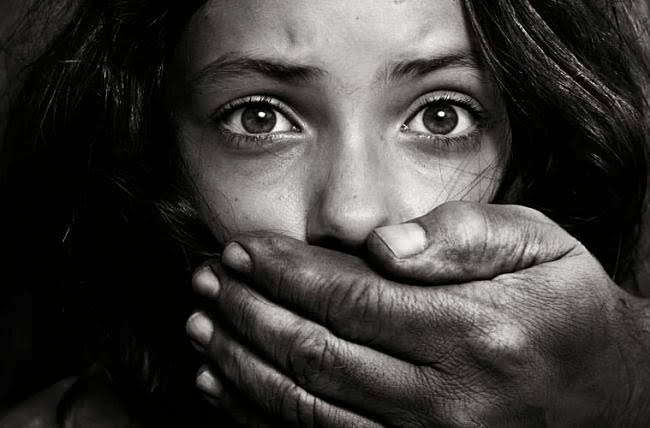
The Next World War Would Not Be – A Conventional War

Unlike all the wars and disputes we’ve seen in the past the upcoming war (if any) would never be the same we can guess this with the on-going pandemic of SARS COV Virus, this is just a tip of an iceberg and there’s a lot hidden from us. Major countries in the world are packed with numerous bio weapons. So much is undergoing research and these are much more deadly than the well-known nuclear weapons. That is why it called as a “war of the future” it would be “a bio-warfare” and something of definite catastrophes for all living beings on earth.

Biological warfare also known as germ warfare is the use of biological toxins or infectious agents such as bacteria, viruses, insects, and fungi with the intent to kill or incapacitate humans, animals or plants as an act of war. Biological weapons often known as “bio-weapons”, “biological threat agents”, or “bio-agents” are living organisms or replicating entities that is, viruses which are not universally considered alive. Entomological (insect) warfare is a subtype of bio-warfare.

Biological warfare is distinct from nuclear warfare, chemical warfare and radiological warfare, which together with biological warfare make up CBRN, the military initialise for nuclear, biological, and chemical warfare using weapons of mass destruction (WMDs). None of these are considered conventional weapons, which are deployed primarily for their explosive, kinetic, or incendiary potential. Although this world has prepared these weapons but it isn’t yet ready to tackle its attack.

Biological weapons may be employed in various ways to gain a strategic or tactical advantage over the enemy, either by threats or by actual deployments. Like some chemical weapons, biological weapons may also be useful as area denial weapons. These agents may be lethal or non-lethal, and may be targeted against a single individual, a group of people, or even an entire population. They may be developed, acquired, stockpiled or deployed by nation states or by non-national groups. In the latter case, or if a nation-state uses it clandestinely, it may also be considered bio-terrorism.

More than 16 million people have been infected by the coronavirus COVID-19 world-wide with the death toll crossing 650,000, the virus which first emerged in China in December 2019 could be the start of World War 3 and the world would not even know. The analysis done by major Intelligences of the world indicates so.

The virus could have been made in China and this could be a part of its intentions to start a war against the world, if the war begins then it will be fought on the basis of biological weapons (germ-warfare). It will also use psychological warfare and attack economies of the world.

Even during the past century, more than 500 million people died of infectious diseases. Several tens of thousands of these deaths were due to the deliberate release of pathogens or toxins, mostly during attacks in the Second World War. Two international treaties outlawed biological weapons in 1925 and 1972, but they have largely failed to stop countries from conducting offensive weapons research and large-scale production of biological weapons. And as our knowledge of the biology of disease-causing agents—viruses, bacteria and toxins—increases, it is legitimate to fear that modified pathogens could constitute devastating agents for biological warfare.

India like every other nation need to dig more into these type of microorganisms and boost its virology science. Protection from these bioweapons could be only when we know them in advance. Knowing them into deep Nano science is the key to protective measures from them.

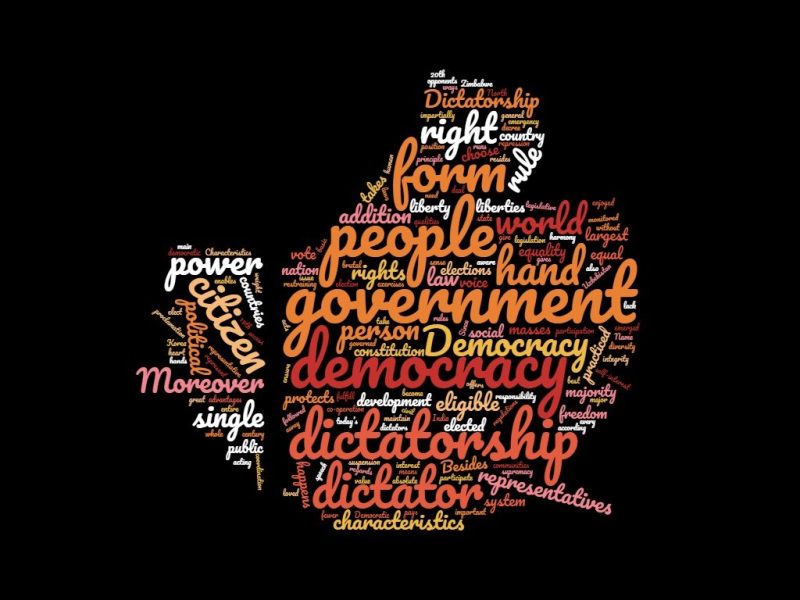
World War III, would it be Democracy Vs Dictatorship?

The current scenario of world order is disturbed and tightly stressed in the midst of on-going epidemic, Corona Virus. A virus that originated in China has spread across the globe reaching almost every country. Many countries are pointing fingers at Communist Party of China (CPC) for delaying information regarding deadly virus outbreak. Some accusations even suggest that this particular virus had been intentionally developed by the Chinese in the wuhan laboratory of virology to rupture the global economy. All this has led to tensioned strings between China and the rest of the world, with only few countries in support of china. Nations among these few allies of china are North Korea, Pakistan, Turkey, Iran etc. The most important aspect drawing attention is that all of China’s allies are either dictatorship or partially democratic.

This leads to our conclusion for the title, world war 3 would definitely be a war between dictatorship and the democracy.

India’s Military Up-gradation

India has decided to order 12 more Su30MKI fighter jets that will be made at Nasik by HAL under Russian licence. This new order will add to the 272 fighters of the type already ordered by the Indian Air Force. The Su30MKI fleet is now the backbone of IAF and will continue to be so for the coming years. The Chinese air force, too, operates the Su30 fighters.

With more than 260 fighters in service, Su30MKI forms the bulk of IAF. Additional jets are still being manufactured by HAL at Nasik and production will continue for next 2-3 years. The Indian versions are different from other Su30s as they are tailored to the needs of IAF. The designated MKI for India, the India’s modified Su30MKI have advanced Israeli avionics and an electronic warfare system, making them different from the standard Su30. The Indian fighter Aircrafts also demonstrates Brahmos firing capabilities.While they all have standard Russian origin R73/77 missiles, the Indian version will now be equipped with the longer-range Astra, the beyond visual range air-to-air missile developed by India’s DRDO (Defence Research & Development Organisation). This adds an advanced new capability to the aircraft that has till now been hampered by limited range to take down air targets, compared to the western platforms. Though it’s beyond visual range combat ability is limited, at close quarters it has unbeatable capabilities. China operates two variants of Su30 but these aren’t as capable as the Indian versions. The restrictions on the use of Israeli and western subsystems is one of the major reasons. China had ordered 73 of the older MKK version and later added 24 of the MK2 version for its Navy. However, unlike the MKI, the Chinese version does not have thrust vectoring engines, making them less manoeuvrable and nimble than the Indian fighters. China did not manufacture Su30s domestically, but it copied the design to make two indigenous versions called J11 and J16. The J11, which is based on Su27 platform, is the backbone of PLAAF, with 346 of the type ordered. The more advanced version J16 is based on the Su30 platform and are at least 128 in the service. China has fitted the aircraft with indigenous weapons, including PL12 and PL15 air-to-air missiles.

Both India and China are engaged in setting up their armies at the Indo-China borders, more aggressively after the galwan, Ladakh incident of clash between PLA (people liberation of China) and Indian army. It is also observed that most of the world leaders are upset with China’s response and careless behaviour towards the spread of covid-19. If at any point war breaks between India & China, the world would divide into allies and enemies. Diplomatically the India’s relationship with the rest of the world, would leave China helpless during war.

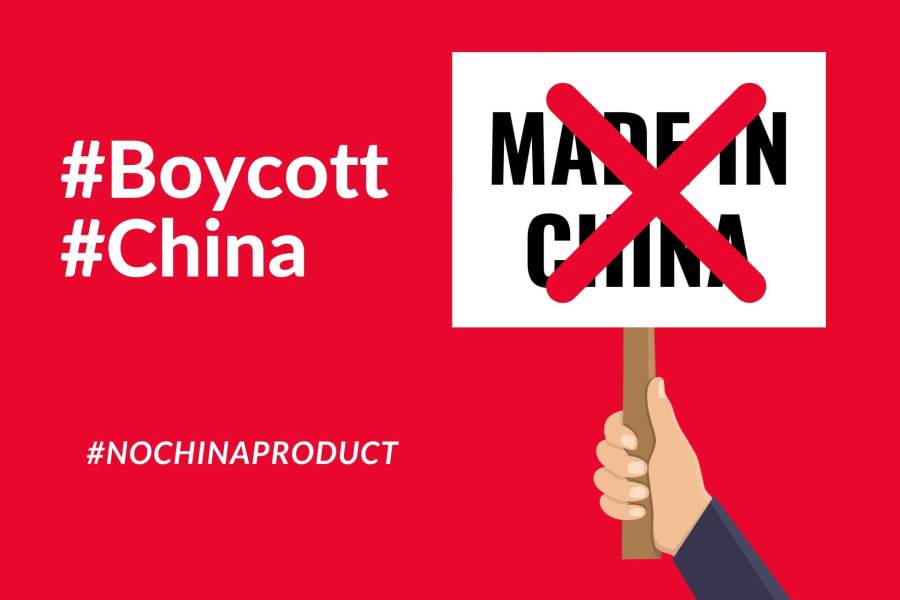
#BoycottChina, A Tough Terrain to India’s Self Dependency

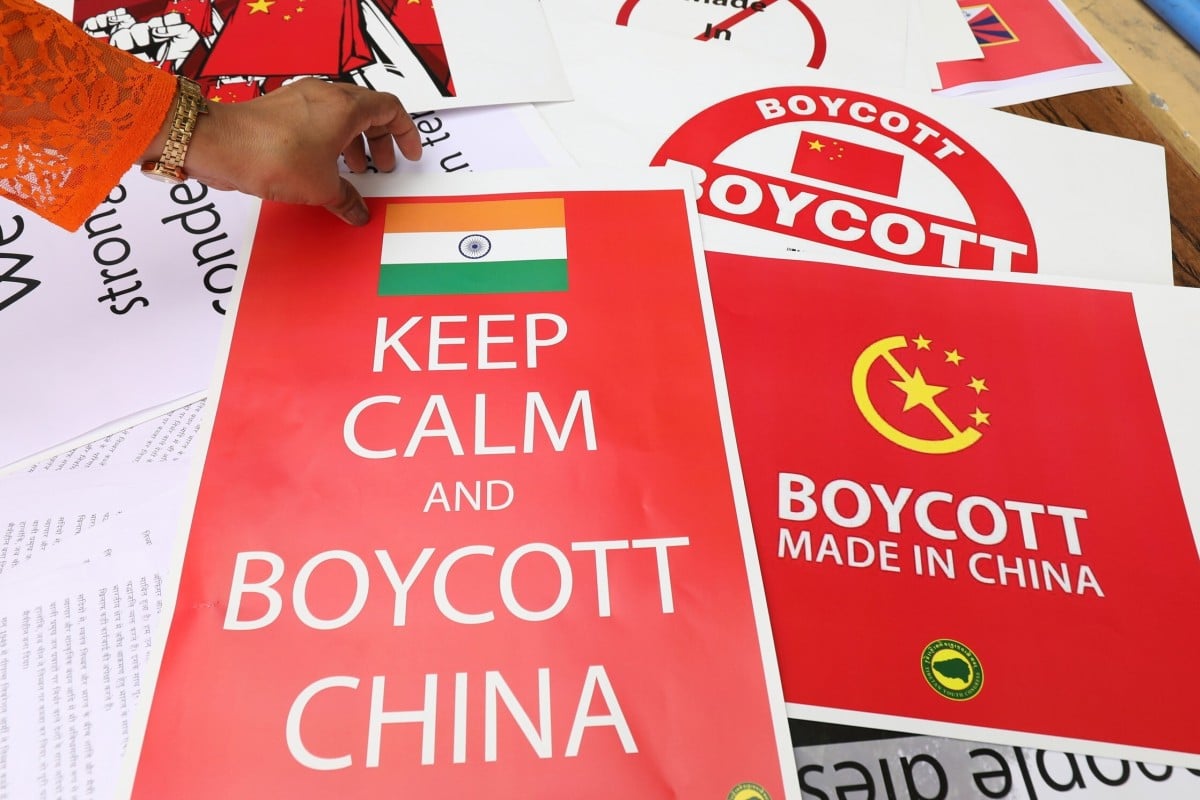
Posters of Boycott China Campaign

What happened at Galwan valley of Indian Ladakh had raised tensions between India and China to all time high. The clash between Indian and Chinese forces led to nationwide outburst against China.

Fuelling this, there had been a sudden disagreement for buying any Chinese product or services. This is to make sure that Chinese economy doesn’t receive a single penny from India and its citizens, making it obvious after China bearing malice towards its neighbours, specifically India. The initiative has greatly boosted with GOI’s (Government of India) decision of banning 59 Chinese applications in India and by increasing the import taxes on Chinese goods or services. The Indian armed forces had already been deployed at disputed regions of border and are ready for any surprise from counter side.

With Governments and Armed forces holding tight on attempts to self-reliant India, the dice of responsibility falls our side too. By us I mean, all the common or less common citizens of India whose decision of just boycotting Chinese products could shatter its trade. Already many huge economies of the world have turned against China, amid Corona virus outbreak and deaths of 600,000 (still rising) innocent people.

Boycotting Chinese items won’t be that easy as it sounds, one has to spend a little more of their money while switching to non-chinese brands, as the only PSP (product selling protocol) of Chinese products is its cheap pricing. This pricing gets balanced with its poor quality and doesn’t last any longer. Yet, Chinese products have kept its dominance in certain sectors of Indian market.

The mobile phone sector

India had imported mobile phones worth $11.3 billion from China in 2016-17, and that was about 68 per cent of all mobile phones (both push-button feature phones and smart devices) imports into the nation that year. In 2017-18, even as the duties were imposed, the value of mobile phone imports from China climbed to $15.6 billion, or 71 per cent of the mobile phones imported. As the tax measure began to hurt and local manufacturing of mobile phones gathered momentum, imports of these devices from China halved to $7.4 billion and about 41 per cent of all mobile phone imports in 2018-19. Imports of phones, by value, from China declined further in 2019-20 but not the share, which remains at 40 per cent. If we just speak of alternatives, we have few options of some Korean, Taiwanese, American and just few Indian tech companies. These options are:

  • LG
  • Samsung
  • Nokia
  • Apple
  • Asus

The drop in electronic imports gradually implemented by the GOI in recent years but this won’t be enough and buyers need to push their expenses to continue supporting the campaign of #boycottchina.

Other imports from China include toys, gift items, fabrics and garments, and thousands of small value items that are popular with consumers. CAIT (Confederation of All India Traders) estimates that there are some 3,000 items that can be easily substituted with India-made products in the first phase of the boycott of Chinese goods campaign. The list of China-made items popular with consumers includes fairy lights with tiny LED bulbs that are used to decorate homes during festivals, idols of deities, home decors, kite strings and even incense sticks (agarbattis). It is estimated that about 80 per cent of the incense sticks sold in India are imported from China.

For all of it to happen, for this campaign to succeed we all should hold our horses and should maintain an adequate transition of market into indigenous domain. This would be the only secure and once for all time solution to problems India facing with the dragon as war could never be a solution. It would just tear up economies at both ends and loss of Brave Indian soldiers shouldn’t happen any further.

Saying No To China, Could It Be A Tough Road For India?

What happened at Galwan valley of Indian Ladakh had raised tensions between India and China to all time high. The clash between Indian and Chinese forces led to nationwide outburst against China.

Fuelling this, there had been a sudden disagreement for buying any Chinese product or services. This is to make sure that Chinese economy doesn’t receive a single penny from India and its citizens, making it obvious after China bearing malice towards its neighbours, specifically India. The initiative has greatly boosted with GOI’s (Government of India) decision of banning 59 Chinese applications in India and by increasing the import taxes on Chinese goods or services. The Indian armed forces had already been deployed at disputed regions of border and are ready for any surprise from counter side.

With Governments and Armed forces holding tight on attempts to self-reliant India, the dice of responsibility falls our side too. By us I mean, all the common or less common citizens of India whose decision of just boycotting Chinese products could shatter its trade. Already many huge economies of the world have turned against China, amid Corona virus outbreak and deaths of 600,000 (still rising) innocent people.

Boycotting Chinese items won’t be that easy as it sounds, one has to spend a little more of their money while switching to non-chinese brands, as the only PSP (product selling protocol) of Chinese products is its cheap pricing. This pricing gets balanced with its poor quality and doesn’t last any longer. Yet, Chinese products have kept its dominance in certain sectors of Indian market.

The mobile phone sector

India had imported mobile phones worth $11.3 billion from China in 2016-17, and that was about 68 per cent of all mobile phones (both push-button feature phones and smart devices) imports into the nation that year. In 2017-18, even as the duties were imposed, the value of mobile phone imports from China climbed to $15.6 billion, or 71 per cent of the mobile phones imported. As the tax measure began to hurt and local manufacturing of mobile phones gathered momentum, imports of these devices from China halved to $7.4 billion and about 41 per cent of all mobile phone imports in 2018-19. Imports of phones, by value, from China declined further in 2019-20 but not the share, which remains at 40 per cent. If we just speak of alternatives, we have few options of some Korean, Taiwanese, American and just few Indian tech companies. These options are:

  • LG
  • Samsung
  • Nokia
  • Apple
  • Asus

The drop in electronic imports gradually implemented by the GOI in recent years but this won’t be enough and buyers need to push their expenses to continue supporting the campaign of #boycottchina.

Other imports from China include toys, gift items, fabrics and garments, and thousands of small value items that are popular with consumers. CAIT (Confederation of All India Traders) estimates that there are some 3,000 items that can be easily substituted with India-made products in the first phase of the boycott of Chinese goods campaign. The list of China-made items popular with consumers includes fairy lights with tiny LED bulbs that are used to decorate homes during festivals, idols of deities, home decors, kite strings and even incense sticks (agarbattis). It is estimated that about 80 per cent of the incense sticks sold in India are imported from China.

For all of it to happen, for this campaign to succeed we all should hold our horses and should maintain an adequate transition of market into indigenous domain. This would be the only secure and once for all time solution to problems India facing with the dragon as war could never be a solution. It would just tear up economies at both ends and loss of Brave Indian soldiers shouldn’t happen any further.