Its moves are influenced by a large group of components — from the breaks in the worldwide request to the decrease of India’s savvy power.
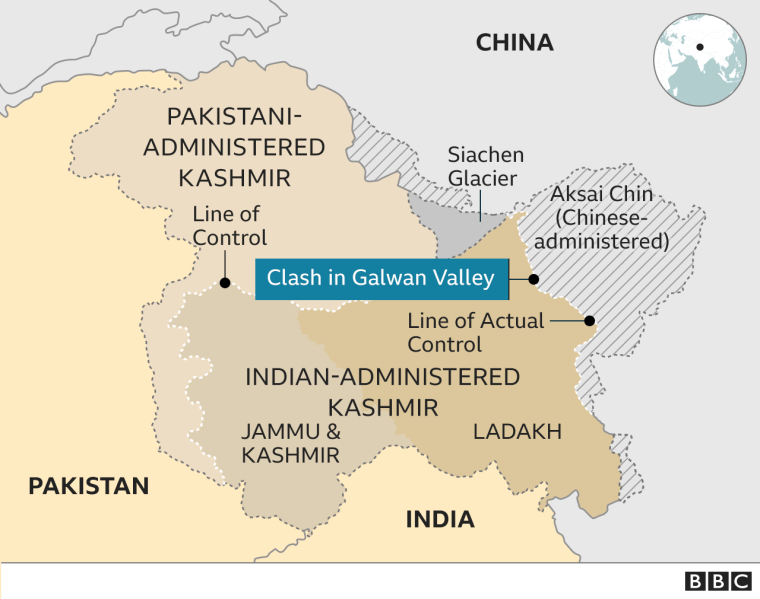
The progressing pressures along the Line of Actual Control (LAC) represent the greatest national security challenge to New Delhi in any event 20 years. The conflicts in Galwan Valley in eastern Ladakh have guaranteed 20 Indian carries on with, the main episode of fatalities on the India-China outskirt in 45 years. China has resuscitated its case on the whole Galwan Valley and has requested that India pull over from the zones. Satellite pictures in the open space recommend that China has set up guard positions in the valley just as the contested “Fingers” of Pangong Tso. The two sides are occupied with a go head to head at Hot Springs. Regardless of different rounds of military-level talks, strains are probably not going to ease given the multifaceted nature of the ground circumstance.
What prompted the current circumstance? In 2017, India and China consented to agreeably resolve the Doklam stalemate that went on for over two months. No blood was spilt at that point, and no shots discharged. The National Democratic Alliance government drove by Prime Minister Narendra Modi has been mindful so as not to disturb China’s residential and international sensitivities. Excepting intermittent joint articulations gave with pioneers from the U. S. also, Asia-Pacific nations, reasserting India’s promise to “opportunity of route” (a hidden analysis of China’s cases over the South China Sea), India has avoided reprimanding China on questionable points, regardless of whether its “de-radicalisation” camps in Xinjiang, crackdown on fights in Hong Kong, or debates with Taiwan. However China decided to build strains along the LAC. Why?
Salami cut methodology
One well known contention is that China’s turn, driven by neighborhood factors, for example, India’s foundation redesign and its choice to change the status of Jammu and Kashmir and Ladakh, was careless. For some square kilometers of land, this contention goes, China has lost India deliberately, toward the West. A few specialists have guaranteed that the strains on the fringe are driving India more profound into a vital grasp with the U. S. Be that as it may, it’s not as simple as it appears. There is a reasonable move in Chinese international strategy post the COVID-19 flare-up. This is found in China’s rising pressures with the U. S. , its dangers against Taiwan, rehashed maritime occurrences in the South China Sea, and another security law for Hong Kong. The strains along the LAC are a piece of this move. To comprehend this move, one needs to get a feeling of the wellsprings of China’s lead.
The present China is an eager rising force which needs to reorient the worldwide request. In contrast to the Soviet Union of the 1940s (in the beginning phases of the Cold War), China isn’t an ideological express that means to send out socialism to different nations. Be that as it may, similar to the Soviet Union of the post-war world, China is the new superpower on the square. At the point when it was rising, China had received distinctive strategic positions — “conceal your ability and stick around for your opportunity”, “serene ascent” or “tranquil turn of events”. That time is finished. Under President Xi Jinping, the Chinese think they have shown up. With the worldwide economy in the doldrums, globalization in a hopeless emergency emphasizd by the COVID-19 episode, and the U. S. under an independent President taking the most forceful situation towards China since Richard Nixon, Beijing accepts the worldwide request is at a limit. It is retaliating through what game scholars call “salami strategies” — where a predominant force endeavors to build up its authority piece by piece. India is one cut in this salami cut system.
View of decay
China doesn’t consider India to be a ‘swing state’ any more. It considers India to be a partner in-progress of the U. S. Its activities were not careless, taken at the danger of losing India deliberately. Its activities are a consequence of the vital misfortune that has just occurred. On the off chance that India is the thing that numerous in the West call the “stabilizer” to China’s ascent, Beijing’s distinct message is that it isn’t hindered by the stabilizer. This is a message to India, yet to a large group of China’s adversaries that are collaborating and anxious to enroll India to the club.
Inside this more extensive system there could be a large group of components — nearby, provincial and worldwide — that affected China’s moves. At the point when the majority of the world’s enormous forces are wrestling with the pandemic, revisionist powers, for example, China have more space for international moving . Europe has been crushed by the infection. The U. S. is fighting in a political decision year the COVID-19 episode just as the most profound financial emergency since the Great Depression. Its worldwide authority is unwinding quick. The Indian economy was in a difficult situation even before COVID-19 struck the nation, hindering its ascent. Social change over the Citizenship (Amendment) Act (CAA), 2019, and the National Register of Citizens had debilitated the Indian commonwealth. India’s conventional clout in its neighborhood was slipping: strains with Pakistan have been high keeping the soldiers involved in the outskirt regions; Nepal raised limit issues with India; Sri Lanka is expanding its international strategy and China is making profound advances into that locale; and Bangladesh was profoundly annoyed with the CAA. Indeed, even in Afghanistan, where Pakistan, China, Russia and the U. S. are engaged with the progress procedure, India is out. Progressively significant, a year ago’s Balakot airstrike was deliberately tragic. It might have helped Prime Minister Modi win a re-appointment, yet there was no proof that demonstrated that Indian strikes hit the aggressors. India lost a fly to the neighbor and its pilot was caught and later discharged by Pakistan. The entire activity uncovered the chinks in our defensive layer, disintegrating India’s discouragement. A conversion of every one of these elements, which point to a decrease in the nation’s keen force, permitted China to make forceful proceeds onward the LAC.
This is a key snare. India has reached here incompletely in light of the absence of profundity in its key reasoning. A profound grasp of a declining U. S. isn’t an answer the same number of contend; rather, it’s a piece of the issue. Pakistan grasped a far steadier U. S. during the Cold War to check India. What befell Pakistan from that point ought to be an exercise for India. What India needs is a national security methodology that is decoupled from the impulses of residential legislative issues and tied down in neighborhood authenticity. It should face China’s harassing on the fringe now, with a drawn out spotlight on improving limits and winning back its amicable neighbors. There are no convenient solutions this time.



 Eduindex
You must be logged in to post a comment.