WEAPON SYSTEMS SCHOOL INAUGURATED BY THE CHIEF OF THE AIR STAFF AT BEGUMPET, HYDERABAD

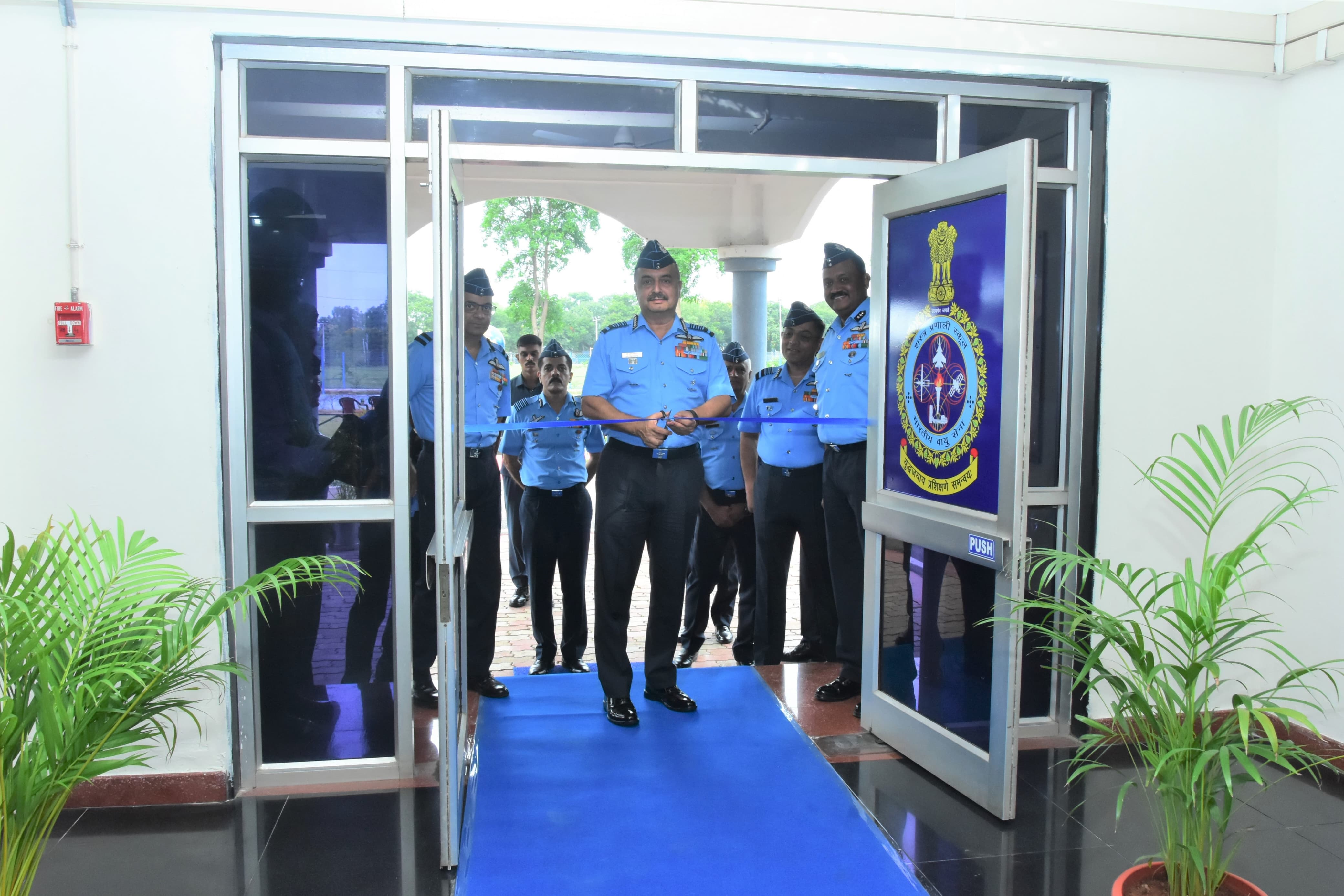
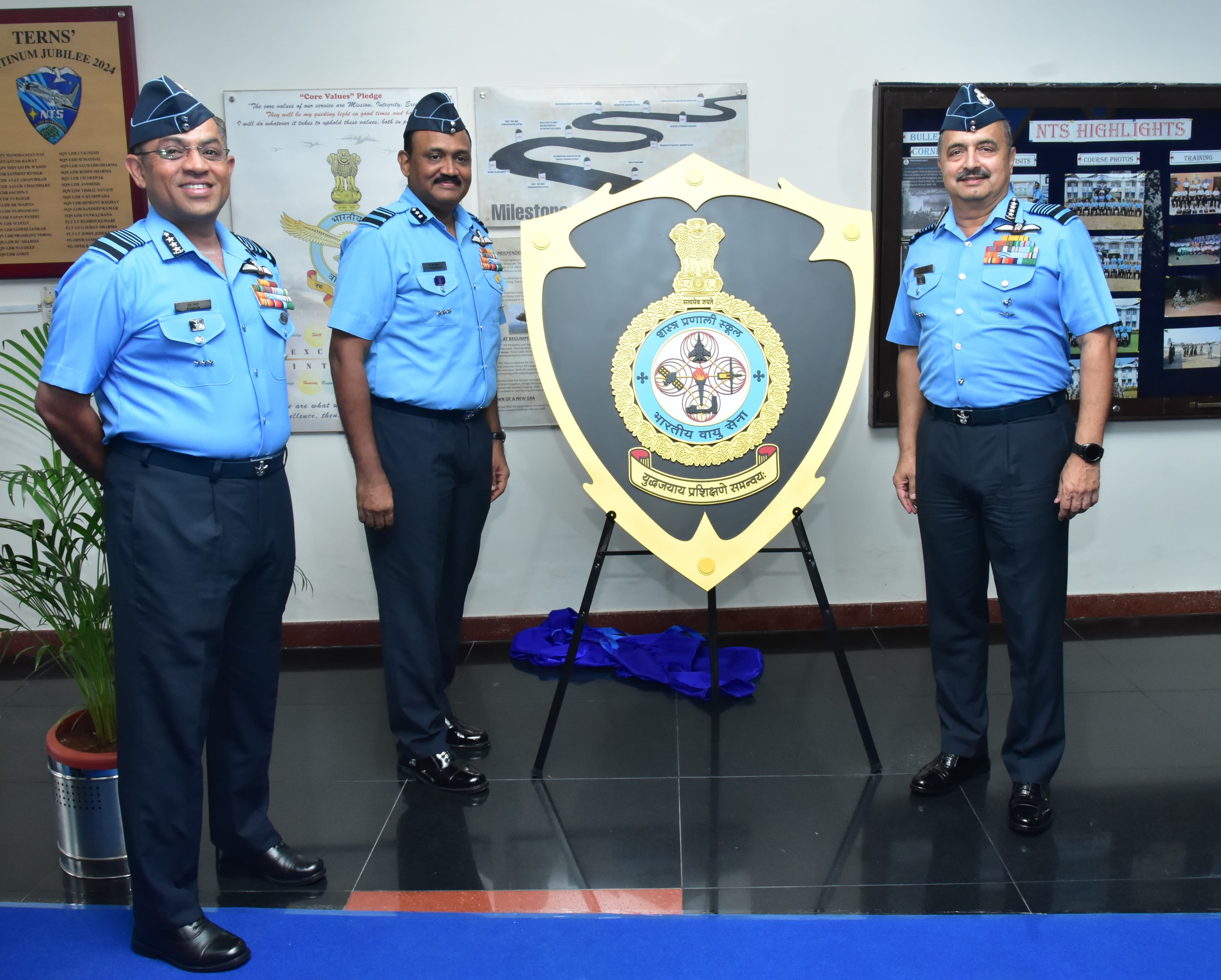
 A new chapter has been introduced in the history of the Indian Air Force (IAF) with the inauguration of the Weapon Systems School (WSS) by Air Chief Marshal VR Chaudhari, Chief of the Air Staff (CAS), at Air Force Station Begumpet, Hyderabad on 01 July 24. This follows the approval of a new branch of officers in the IAF, the Weapon System (WS) branch in 2022. Aimed at recalibrating and transforming the Indian Air Force as a future-oriented force, the formation of this new training establishment is a gigantic leap for the Armed Forces in general, and Indian Air Force in particular.

The CAS was welcomed by Air Vice Marshal Premkumar Krishnaswamy. Commandant, Weapon Systems School. The inauguration ceremony was also graced by the presence of Air Marshal Nagesh Kapoor, Air Officer Commanding-in-Chief, Training Command, and other senior officers of the IAF including Commandant, Air Force Academy, Commandant, College of Air Warfare, Air Office Commanding, Air Force Station Hakimpet, and Station Commander, Air Force Station Begumpet.

The WSS will impart effect based training that is contemporary in nature and prepare officers of the newly formed branch in line with the requirements of the IAF. With inauguration of the WSS, Flight Cadets of WS Branch will undergo their second semester of training at this institute. The new branch will have four streams; Flying stream to operate the weapons and systems in airborne platforms like the Sukhoi-30 MKI and C-130J; Remote stream to operate Remotely Piloted Aircraft; Mission Commanders and operators for Surface to Air and Surface-to-Surface weapon systems, and Intelligence stream for handling space-based intelligence and imagery.

During the interaction, the CAS highlighted that with the creation of WS Branch, operators of ground based and specialist weapon systems will come under one umbrella, enhancing war fighting capabilities of the IAF significantly. He exhorted the instructors that being pioneers in a newly formed branch, they were the pillars on which the entire edifice of the envisioned training regime would stand firmly and deliver decisive air power. While complimenting the founding members of the School, the CAS urged all personnel to establish the School as a nodal centre for weapon systems training in the country.

The creation of the WS branch was announced by the CAS during the Air Force Day Parade celebrations on 08 October 2022.

***

Landmark 350th iDEX contract inked; MoD to collaborate with SpacePixxel Technologies Pvt Ltd for design & development of miniaturised satellite capable of carrying multiple payloads up to 150 kgs for Indian Air Force

 Innovations for Defence Excellence (iDEX), the flagship initiative of the Ministry of Defence, signed the landmark 350th contract in New Delhi on June 25, 2024. The contract was inked with SpacePixxel Technologies Pvt Ltd for the design and development of a ‘Miniaturised satellite capable of carrying Electro-Optical, Infrared, Synthetic Aperture Radar, and Hyperspectral payloads up to 150 kgs’. This challenge is being led by the Indian Air Force. The 150th iDEX contract was signed in December 2022, and within a span of 18 months, the 350th contract has been signed.

The contract was exchanged between Additional Secretary (Defence Production) & CEO, Defence Innovation Organisation (DIO) Shri Anurag Bajpai and Founder & CEO of SpacePixxel Technologies Pvt Ltd Shri Awais Ahmed Nadeem Alduri in the presence of Defence Secretary Shri Giridhar Aramane and other senior civil & military officials of the Ministry of Defence. SpacePixxel has been actively working to build and launch high-resolution hyperspectral imaging satellites to provide detailed earth observation data.

This 350th iDEX contract enables innovation in space electronics, wherein many payloads earlier deployed on dedicated large satellites are now being miniaturised. The modular small satellite will integrate multiple miniaturised payloads as per requirement, providing advantages like faster and economical deployment, ease of manufacturing, scalability, adaptability, and less environmental impact.

In his address, the Defence Secretary appreciated the unwavering commitment of new defence innovators for pushing the boundaries of technology and safeguarding the nation. Emphasising the importance of combining indigenisation with innovation, he stated that domestic capabilities provide a foundation for fostering innovation by offering a platform for experimentation and development. Innovation fuels indigenisation by driving the creation of new technologies and solutions that can be produced domestically, he said, assuring all possible support to the innovators at every step.

About iDEX

iDEX, the recipient of the esteemed Prime Minister Award for Public Policy in Innovation Category in 2021, has emerged as a game-changer in the defence ecosystem. Established by the DIO under Department of Defence Production, iDEX has launched 11 editions of the Defence India Start-up Challenge (DISC), and recently unveiled the Acing Development of Innovative Technologies with iDEX (ADITI) scheme to promote innovations in critical and strategic defence technologies.

In a brief period, iDEX has successfully gained momentum, fostering a burgeoning community of start-ups within the defence sector. It is currently engaged with over 400 start-ups and MSMEs. Till now, procurement of 35 items, worth over Rs 2,000 crore, has been cleared. iDEX has facilitated the creation of numerous job opportunities and played a pivotal role in the development of the defence ecosystem.

*****

VARIOUS SECURITY FORCES AND AGENCIES AND THEIR MANDATE IN INDIA

There are external and internal threats to India’s security and various specialized Indian forces deal with these threats. External threats are typically handled by the armed forces of the Department of Defense, while internal threats are handled by the Department of Home affairs .

Security forces

1.Indian Armed Forces

2.Central Armed Police Force

Indian Armed Force

The defense forces are divided into four sub-heads.

  1. Indian Army Personnel.
  2. Indian Air Force Personnel.
  3. Indian Navy Personnel.
  4. Indian Coast Guard Personnel.

The Supreme Commander of the Indian Armed Forces is the President of India. All three of these services are under the Department of Defense.

Indian Army

The Indian Army is the land component of the armed forces. It evolved from the armed forces of the East India Company, eventually transforming into the British Indian Army and the Indian Army after independence.
It is commanded by the Chief of Staff of the Army (COAS). It is considered the second largest active army in the world. The mission of the Indian Army is to ensure national security and protect India’s sovereignty, territorial integrity and harmony against foreign aggression and threats. This also includes providing humanitarian assistance and aid to civilians during natural disasters and unexpected times.

Indian Navy

India has a coastline of 7516.6 km. The Indian Navy secures India’s maritime borders and interests. It also protected Indian merchant ships by fighting pirates on the high seas, and at the same time, it aided civilians in disasters. It is commanded by the Chief of Naval Staff, an Admiral. The Indian Navy is deployed under three commands: Eastern Naval Command – Vishakhapatnam is the headquarters. Western Naval Command – Mumbai is the headquarters The Southern Naval Command – Kochi is the headquarters. The navy is used to support foreign policy goals, build “bridges of friendship” and strengthen international cooperation.

Indian Air Force

The Indian Air Force was officially established on 8 October 1932. The force was known as the Royal Indian Air Force in recognition of its service during the Second World War. . After Independence, the term “Royal” was dropped. It is considered the 4th largest air force in the world. The primary responsibility of the Indian Air Force is to secure Indian airspace and conduct air wars in times of conflict. In addition to the wars of independence for India and humanitarian action, she has participated in many UN peacekeeping missions. An Air Marshal is the commander of the air forces in India. The Air Force Network (AFNet), launched September 14, 2010, is a digital information network that enables rapid and accurate response to threats. It is a fiber-based network.

Security Forces Dealing with Internal Threats

There are many divisions of Central Armed Police Force, which deal with internal threats.

Central Armed Police Force (CAPF)

  1. Assam Rifles (AR)
  2. Border Security Force (BSF)
  3. Central Industrial Security Force (CISF)
  4. Central Reserve Police Force (CRPF)
  5. Indo Tibetan Border Police (ITBP)
  6. National Security Guard (NSG)
  7. Sashastra Seema Bal (SSB)

Duties of various security forces and agencies The Ministry of Home Affairs (MHA) has many responsibilities, the most important of which are internal security, management of paramilitary forces, border management, center-state relations, administration of territories. of the Union, disaster management, etc. Article 355 of the Constitution ordered the Union to defend each State against external aggression and internal disturbances and to ensure that each State’s government was carried out in accordance with the provisions of the Constitution.

Padmavathy Bandopadhyay: The Embodiment of Passion, Success and ‘Firsts’

Celebrating achievements and positive changes is a necessity. And celebrating individuals who make these possible, is even more important. Because we never know, whose story will inspire whom, and will lead onto a new story. India, with its developing and evolving social structure, has many such stories. Especially of women, who tread their way into different spheres that were once thought to be off limits for them. One such story is of Padmavathy Bandopadhyay, first female Air Marshal of Indian Air Force (IAF), and second female officer of Indian Armed Force to have been promoted to the three star rank.

Starting of the journey

Born on 4th November 1944, her birth name was Padmavathy Swaminathan. She was born to Mr. V. Swaminathan and Mrs. Alamelu, at Tirupati, Andhra Pradesh. With her mother being in hospital most of the time, these experiences drove Padma to take up medicine, so that she could help those who needed medical expertise.

She did her pre-medical studies from Kirori Mal College, Delhi and stood first in the course. Then she went ahead and cleared the entrance test for the first batch of then established Armed Forces Medical College, Pune. But, due to her family’s reluctance to send her away for such a long period to study medicine, she, unfortunately, could not join the first batch. But she didn’t bow down to this challenge and after convincing her parents, she finally joined the second batch of AFMC in 1963.  With an extraordinary overall record, she graduated in 1968, having opted for Indian Air Force and doing her internship in Air Force Hospital, Bangalore.

Flying to the success

She was inducted into IAF in1968. Sadly, some complications regarding her eyesight cut her dream short to become a pilot. But she took that in stride and went ahead to pursue specialization in aviation medicine. With the completion of her specialization in 1975, she became the first female officer to become an aviation medicine specialist.

She married Flt Lt. S. N. Bandopadhyay, whom she met at Air Force Hospital. They became the first husband-wife team to be awarded the  Vishisht Seva Medal (VSM) by the President in the same defence ceremony, due to their contribution to the 1971 Indo-Pakistani War. They were posted together in the Halwara air base,  Punjab.

During her posting in Defence Institute of Physiology & Allied Science (DIPAS) as a Wing Commander , she did commendable research work about high altitude. With her expertise, she contributed in the development of a new acclimatization schedule for Indian Soldiers at high altitudes and also directed the preventive measures to complications like High Altitude Pulmonary Oedema and High Altitude Cerebral Oedema.

She also happens to be the first woman Armed Force Officer to complete the Defence Service Staff College course, with her completing it in 1978. With her promotion to Group Captain rank, she was handed over the responsibility for the post of Deputy Principal Medical Officer of Westren Air Command, IAF. She went down into history when she became the first Lady Air Commodore of IAF, on 26th June, 2000. Along with this rank, she got the honour to command the prestigious IAF Medical Unit – Air Force Central Medical Establishment. For her impeccable performance in all the posts held by her and utmost dedication towards her duty, she was awarded with the prestigious Ati Vishisht Seva Medal (AVSM) on 26th January, 2002.

She was then promoted to the rank of Air Vice Marshal, and with that became the first lady to hold this post, not only in IAF, but across all the Air Forces in the world. Following this achievement, she took over the post of Additional Director General Armed Forces Medical Services. She handled this post with great success, which led to her promotion to the highest rank in the medical branch, Air Marshal, which happens to be a three star rank and the second highest active post in IAF. This momentous occurrence took place on 1st October, 2004. With that, she became the first Lady Air MArshal in the whole world, and also attained the honour of being the first Lady Director General Medical Services of the forces.

Apart from achievements in the Armed forces, she also holds the illustrious achievements of being the member of Indian Society of Aerospace Medicines (again being the first woman to do so!), International Medical Society and New York Academy of Sciences. She also took part in a research expenditure in the North Pole, and dedicated four months (November 1989 and February 1990) to this, being the first Indian woman to do so. She was also awarded the Indira Priyadarshini Award for all her glorious accomplishments, and was the first lady in uniform to get this honour. She also happens to be the first lady who is the Honorary Surgeon of the President of India.

She served the Indian Air Force until 2005 and was awarded the Param Vishist Seva Medal in January 2006. In 2020, she was awarded the Padma Shree for her contribution to the medical field.

With an exhaustive list of ‘firsts’ and achievements, Air Marshal Padma Bandopadhyay is truly an ultimate inspiration, who has excelled in everything she has ever set her mind to, against all the odds. Her memoir is titled as The Lady in Blue.

Website References:

http://www.anusandhan.net/women/suc_padma.htm

https://en.wikipedia.org/wiki/Padma_Bandopadhyay#cite_note-7