VARIOUS SECURITY FORCES AND AGENCIES AND THEIR MANDATE IN INDIA

There are external and internal threats to India’s security and various specialized Indian forces deal with these threats. External threats are typically handled by the armed forces of the Department of Defense, while internal threats are handled by the Department of Home affairs .

Security forces

1.Indian Armed Forces

2.Central Armed Police Force

Indian Armed Force

The defense forces are divided into four sub-heads.

  1. Indian Army Personnel.
  2. Indian Air Force Personnel.
  3. Indian Navy Personnel.
  4. Indian Coast Guard Personnel.

The Supreme Commander of the Indian Armed Forces is the President of India. All three of these services are under the Department of Defense.

Indian Army

The Indian Army is the land component of the armed forces. It evolved from the armed forces of the East India Company, eventually transforming into the British Indian Army and the Indian Army after independence.
It is commanded by the Chief of Staff of the Army (COAS). It is considered the second largest active army in the world. The mission of the Indian Army is to ensure national security and protect India’s sovereignty, territorial integrity and harmony against foreign aggression and threats. This also includes providing humanitarian assistance and aid to civilians during natural disasters and unexpected times.

Indian Navy

India has a coastline of 7516.6 km. The Indian Navy secures India’s maritime borders and interests. It also protected Indian merchant ships by fighting pirates on the high seas, and at the same time, it aided civilians in disasters. It is commanded by the Chief of Naval Staff, an Admiral. The Indian Navy is deployed under three commands: Eastern Naval Command – Vishakhapatnam is the headquarters. Western Naval Command – Mumbai is the headquarters The Southern Naval Command – Kochi is the headquarters. The navy is used to support foreign policy goals, build “bridges of friendship” and strengthen international cooperation.

Indian Air Force

The Indian Air Force was officially established on 8 October 1932. The force was known as the Royal Indian Air Force in recognition of its service during the Second World War. . After Independence, the term “Royal” was dropped. It is considered the 4th largest air force in the world. The primary responsibility of the Indian Air Force is to secure Indian airspace and conduct air wars in times of conflict. In addition to the wars of independence for India and humanitarian action, she has participated in many UN peacekeeping missions. An Air Marshal is the commander of the air forces in India. The Air Force Network (AFNet), launched September 14, 2010, is a digital information network that enables rapid and accurate response to threats. It is a fiber-based network.

Security Forces Dealing with Internal Threats

There are many divisions of Central Armed Police Force, which deal with internal threats.

Central Armed Police Force (CAPF)

  1. Assam Rifles (AR)
  2. Border Security Force (BSF)
  3. Central Industrial Security Force (CISF)
  4. Central Reserve Police Force (CRPF)
  5. Indo Tibetan Border Police (ITBP)
  6. National Security Guard (NSG)
  7. Sashastra Seema Bal (SSB)

Duties of various security forces and agencies The Ministry of Home Affairs (MHA) has many responsibilities, the most important of which are internal security, management of paramilitary forces, border management, center-state relations, administration of territories. of the Union, disaster management, etc. Article 355 of the Constitution ordered the Union to defend each State against external aggression and internal disturbances and to ensure that each State’s government was carried out in accordance with the provisions of the Constitution.
Indian Surgical Strike

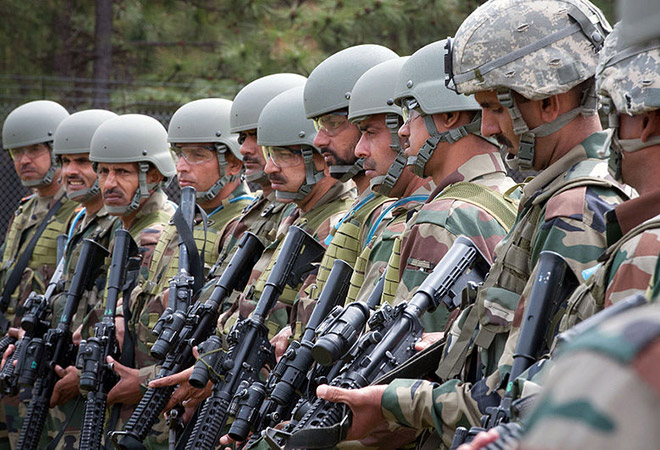
Today 28th September, we are celebrating the anniversary of surgical Strike. It was the first operation in which the Indian army’s para special forces has crossed the Line of Control to destroy terrorists camps and launch pads.

Reason for conducting surgical Strike

The Indian Army conducted the surgical Strike in response to the Uri attack on September 18, 2006, which was conducted by a Pakistani base terror group jaish-e-mohammed. The Attack aimed Indian army camp killings 19 soldiers. Similar attacks where done in Gurdaspur and Pathankot, so this was an alarming security alert for the Indian armed forces.

How it was conducted

Indian Army Army conducted this operation In the Midnight of 28 and 29 September 2016. There were 70 to 80 soldiers involved in teams a team of the forces crossed LOC in Kupwara district while, another group cross LOC from poonch district. They destroyed terrorist camp using granites and rockets, there were no casualties and no commoner was harmed during this mission. A soldier was injured due to tripping landmine.

New India

This was a moment the whole Nation was celebrating as we got our revenge of Uri attack and other previous attacks. Nations security is atmost priority and Indian Army Soldiers showed the whole world that this is New India, which knows how to enter in enemy’s land and finish them off ( Bhart dushmano ke ghar me ghusega bhi aur marega bhi).

Kargil Vijay Diwas

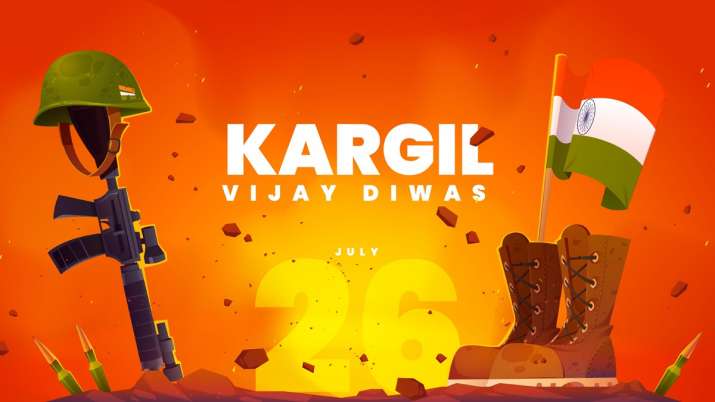
Today marks the 22nd anniversary of Kargil Vijay Diwas, which is being observed across the country. On Kargil Vijay Diwas, the nation remembers its war heroes and pays respect to Martyrs.

The day commemorates the success of Indian military forces in Operation Vijay in 1999, when they drove infiltrators supported by the Pakistani army out of high positions in the Kargil area.

President Ram Nath Kovind will visit the Kargil War Memorial in Drass, Ladakh, today to pay tribute to the Indian Armed Forces’ unwavering heroism and sacrifice during the Kargil Conflict in 1999.

The Prime Minister also shared a clip from All India Radio’s Mann Ki Baat show from last year. He stated that India will never forget the circumstances surrounding the Kargil conflict.

On the occasion of Kargil Vijay Diwas, Defence Minister Rajnath Singh today paid tribute to the Indian Army’s unwavering courage and sacrifice. Prime Minister Narendra Modi paid tribute to all those who died while defending our country. President of India Ram Nath Kovind will attend the 22nd anniversary of the Kargil War.

He will be the first President to visit the Kargil War Memorial in Drass and take part in the festivities. Air Force Chief Air Chief Marshal R K S Bhadauria and Navy Vice Chief Vice Admiral G Ashok Kumar also expressed their condolences.

“Operation Vijay was a perfect combination of strong and resolute political, military, and diplomatic efforts that helped us to turn an unfavourable situation into a military and diplomatic victory,” wrote General VP Malik, the Indian Army Chief during the Kargil War, in a 2002 essay.

The Kargil War in 1999 was the world’s first and only conflict between two nuclear-armed states. Every year on Kargil Vijay Diwas, India commemorates the heroism of its defence troops, headed by the Indian Army, which pulled off numerous notable successes in the line of fire.

Despite strategic disadvantages and hostile weather, India successfully pushed back the enemy after a nearly three-month operation that included intense warfare, synchronised political and militaristic pressure, and, most importantly, the sacrifices of many lionhearted patriots who will be remembered for the rest of their lives.

INDIA PAID TRIBUTE TO THE VALIANT MARTYRS OF PULWAMA ATTACK

It’s been two years since the Pulwama terror attack which took the lives of 40 Indian soldiers happened. The 14th of February leaves a deep sigh in the hearts of every patriotic Indian. It is one of the worst hit attacks and is remembered as a ‘ black day’ in the history of India. While paying his tributes to the Pulwama martyrs on the occasion of the second anniversary of the attack, Prime minister Narendra Modi said: “No Indian can forget this day. Two years ago, the PulwamaAttack happened. We pay homage to all the martyrs we lost in that attack. We are proud of our security forces. Their bravery will continue to inspire generations”.

The gruesome incident which shook the whole nation took place on 14th February 2019 after the security convoy of 78 buses carrying around 2500 military personnels of the Indian Army was rammed by an IED-laden vehicle while traveling from Jammu to Srinagar. Investigations have revealed that the car which rammed the convoy was driven by a 22 year old suicide bomber Adil Ahmad Dar and carried nearly 300 Kgs of explosives including 80 Kgs of RDX and ammonium nitrate. The attack which took the lives of 40 CRPF jawans was later claimed by the Pakistan based terrorist group named Jaish-e-Mohammed (JeM). Even though the investigation agency was able to confirm the identity of the suicide bomber through DNA samples, they are yet to trace the source of the explosives used. 

Along with the Prime Minister, many Senior officers of the various armed forces of the country also participated in the remembrance and paid tribute to the valiant heroes of the nation. “Did not Forgive, will not Forget: Salute to our brothers who made the supreme sacrifice for the nation in #PulwamaAttack. Indebted, we stand with the families of our valiant Bravehearts,” the force said in a Twitter post.

Galwan and it’s past

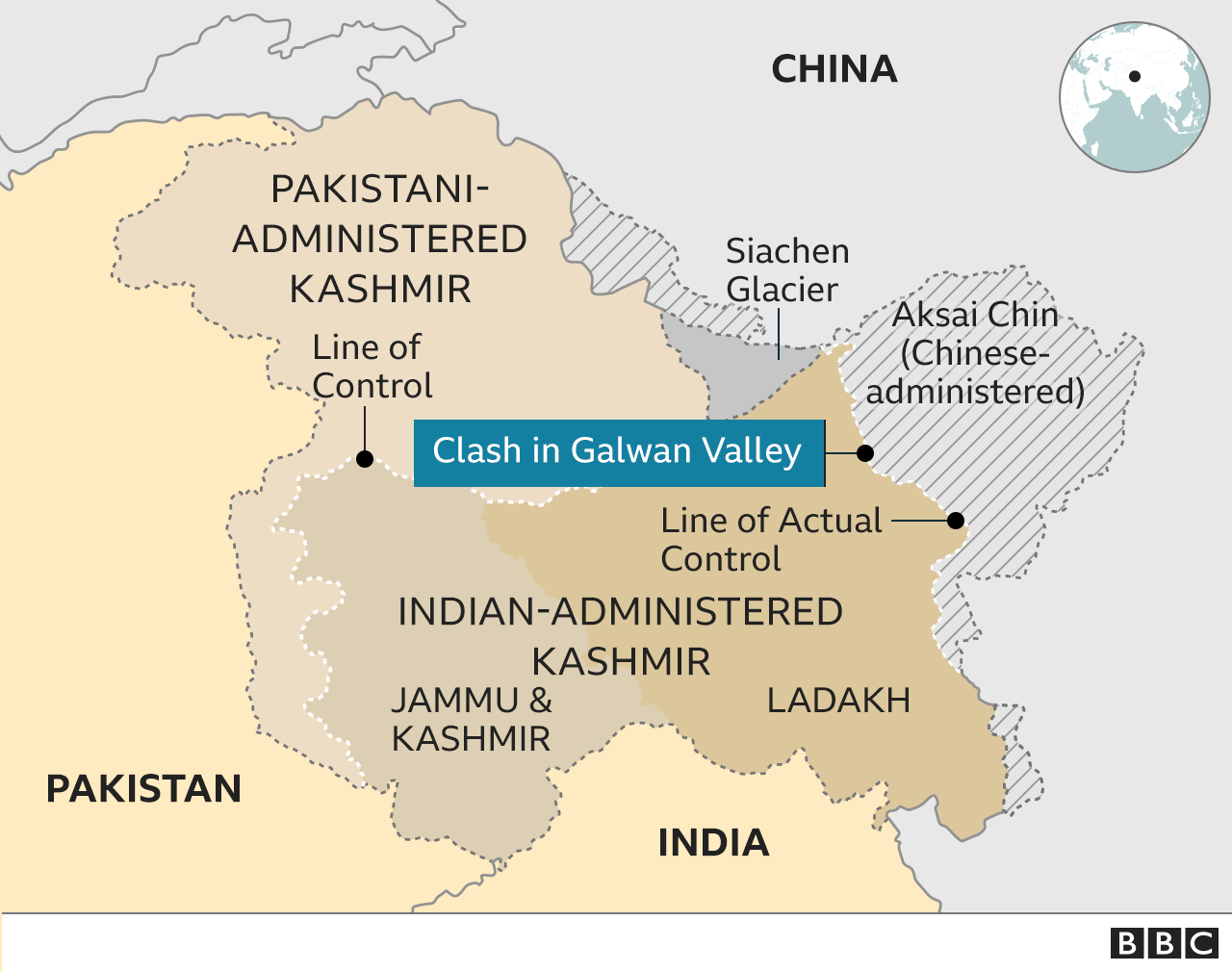
It is a devastating year where we have lost all our hopes of living a normal life.Things are turning into a nightmare where we cannot breath normally, we cannot step out of our house without covering our face, where we cannot talk or meet our friends like the way we used to do before. What has happened? Our life has changed upside down, we are living our in the boundaries of problems covered with dirt, virus, pollution. Now our world has completely turned itself into a virtual world consisting of dark and disturbing news. One such news which we came across recently was about the 20 soldiers who were martyred at the Galwan Valley(Ladakh), and we all know what happened, what made the soldiers to fight against the Chinese and why did they sacrificed their lives, but are you aware about the facts of the Galwan Valley, why did it become the battle ground of the Indian Army and Chinese Troops?

Why was it named as Galwan?

Galwan valley lies along the western sector of the Line of Actual Control (LAC), and close to Aksai Chin, am Indian territory under Beijing’s control.

Galwan Valley: Ten Indian soldiers reportedly released by China ...
BBC.com

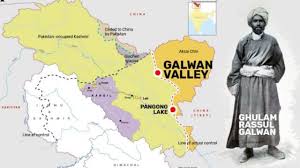
The valley has a hidden story behind it’s name. Digging deep into the story, you will find out that this valley belonged to Rasuul Galwan, who was a local explorer. The story starts where the Galwan was trekking with the Britishers in 1895, and while crossing the bridge the weather turned stormy and it got difficult for them to move forward but Rasuul came as a savior and saved the Britishers from the stormy weather. Britishers wanted to reward him, in return Rasuul asked them to name the valley after his name, Galwan.

kashmirobserver.net
Backstory of Ladakh's Galwan Valley and the legend of Rassul ...
Kasmirobserver.net

All of this is said to be written in the book “Servant Of Sahibs” written by Ghulam Rasuul Galwan itself, journeying his adventures in his book. The foreword of the book is written by British explorer and a leading figure in The Great Game between the British and Russia. Asking further about the story of Galwan, Mohammad Amin Galwan (Galwan’s grandson) says that the valley belongs to them since 200 years, but it has turned into a battleground for the Indian Army. He also adds that the Indian government should resolve their issues peacefully so that no war takes place.

Check the the video below for more facts about the valley.