
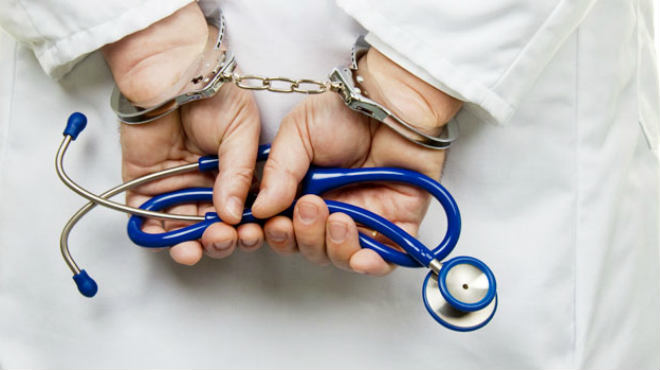
Medical negligence during Covid-19

Law on Medical Negligence in India: How and when to file a case | Medical  Negligence Law Guide

NEGLIGENCE DURING THE COVID-19 PHASE

With the COVID 19 pandemic surrounding the globe and in excess of 2 million active instances of the same, the caring administrations by the medical experts is the main redeeming quality going with the careful steps that are the duty of the considerable number of citizens. Be that as it may, the security of the residents is being taken consideration by the clinical organization yet what it involves for the clinical clique who is over and over being blamed for negligence in discharge of average duty. On one hand the medical practitioners are being hailed as ‘Corona warriors’ but on the other hand, with the increase in cases wouldn’t there be a increase in negligence?

India had only 111 Covid-19 testing   centers to deal with a population of 1.35 billion people. This accounts to the medical negligence of the practitioners along with the hospital administrations especially at a time when every state is trying to reduce the number of cases. The number of beds available in the hospitals is comparatively less and as a result the citizens are dependent on understaffed and under-funded state run health facilities for COVID 19 diagnosis and treatment. This is a serious issue as people do not believe on the state authorities. A lady who was quarantined after her Spain visit states that there is a lack of basic amenities in the hospitals. People fear to come forward as they doubt the skills of the administration to treat their disease. Global health experts claimed that India does not have enough infrastructure and other facilities to face the pandemic. The claim nearly became evident with the increasing number of cases in India. Not only hospital authorities but the government has been lacking service, testing is another major concern. India has performed a little over 100,000 tests — a rate of nearly 47 tests per million people compared with 4,572 tests per million in the U.S., 2,753 tests per million in the U.K, and 8,800 per million in South Korea[1]. At present, India is not adequately testing to identify new cases, which might be hiding the true number of cases. An incident of severe medical negligence was noted when the Patna All India Institute of Medical Sciences (AIIMS-P) handed over the body of a COVID-19 positive patient to his family members.

In the midst of the vulnerability made by the COVID-19 pandemic, the judiciary remains the sole symbol of would like to review the worries of residents oppressed by the absence of satisfactory medical framework and the rising occasions of clinical negligence. There is trust that vital estimates will be taken by the Supreme Court, to safeguard the confidence and any expectation of the individuals.

VIEWS

Medical Negligence is, by and by, a hard issue to set up. On the off chance that negligence cases result from the current emergency, they will be tried comparable to target norms of care. The courts will think about the real factors and conditions of the case, including that the medicinal services staff were acting in an emergency. Considering past cases and the law’s methodology, the significance of clinical rules, conventions, staff preparing, ability appraisal, and enlistment expect a fundamental centrality, and all means should be completely reported. Documentation of steps taken in every one of these issues will demonstrate pivotal in safeguarding any cases brought. In any case, the COVID 19 is a phenomenal occasion and the relevance of the above laws in such conditions of most extreme criticality and affectability stays to be questionable. After the lockdown ends it would be unmistakable component of the lawful framework to observe such case emerging out of clinical carelessness in taking care of crown positive patients.

It isn’t expressed that specialists (doctors) are careless or reckless, however while carrying out a duty which requires a great deal of knowledge and care, regularly numerous experts fail to perform their duty towards the patient. Medication which is perhaps the noblest profession requires setting a domain which can profit the victims of different diseases. Numerous specialists even the expert in some cases dismisses little things to be dealt with while practicing which may bring about harms to the patients that could have been maintained with a permanent disability from that time or even the demise of the patients.

This type of negligence makes patients more prone to harm than to heal. And to avoid these sorts of accidents, prevention and careful behavior of doctors is important. The most prevalent way of doing this is relevant laws and statutes to ensure a patients well being. In a case where a US-based doctor who was Indian from origin lost his 29-year-old wife who was a child psychologist during their visit to India fifteen years ago. The Supreme Court asked the Kolkata-based hospital and three doctors to pay over Rs 11.41 crore[2]. “A bench of justices C K Prasad and V Gopala Gowda arrived at a figure of Rs 6.08 crore as compensation after considering aspects such as loss of consortium, pain and suffering and the cost of litigation.”

Another such case was noted where the Apex Court awarded a compensation of 1.8 crores to a women who had lost her eyes in 1996.[3] Cases like this are evidence of the medical malpractice in India. The government requires making strict rules to prevent the same, so that the justice prevails. People of India should be provided with adequate medical facilities, hygiene and sanitation. Laws should be strict for not only medicine but for all such professions to maintain a certain standard of care and prevent breach of duty.


[1] https://www.bbc.com/news/world-asia-india-51922204

[2] THE OUTLOOK

[3] Krishna Iyer v. State of Tamilnadu and Others, 2015 STPL(Web) 1239 SC

Hyderabad’s high COVID-19 positivity rate worries experts

Telangana State Disaster Response and Fire Services Department workers sanitise the area surrounding Charminar in Hyderabad, to prevent the spreading of COVID-19

Report points to abysmally low testing rates in the State of Telangana Amidst apprehension that COVID-19 community transmission may be under way in large urban cities, Hyderabad’s high COVID-19 positivity rate (32.1% on June 23), the highest among major infected cities in India, coupled with low tests per 10 lakh population compared to other cities has been repeatedly red-flagged by worried Central government experts.

Pointing to the abysmally low testing rates in Telangana, the report ‘Testing Status: Hyderabad and Telangana’ accessed by The Hindu notes, “Only 1 out of 19 private labs in Telangana is conducting more than 500 tests per week and testing in Telangana is heavily focussed on Hyderabad. Tests per 10 lakh population in other highly infected districts (Ranga Reddy, Sangareddy, Warangal Urban and Jagaon) is extremely low.”

The document adds that Telangana has the highest positivity rate (June 10-23) in India (27.7%) and consistently ranges from 20 – 40% daily with the lowest tests per 10 lakh population (June 10-23) in India.

“All COVID-red States are being closely monitored and have been instructed to hike testing. Testing is vital to map out the growth and concentration of the virus in the general population. Several States have been instructed on this multiple times,” said a senior government official with ICMR who added that letters were issued to all States recently asking them to ramp-up COVID-19 testing.

The ICMR also has noted that COVID-19 escalation is sharpest in urban cities with Delhi, Gurugram, Mumbai and Chennai, also witnessing significant rise in the spread of the virus and added that Telangana has been repeated told to improve its testing scope and reach.

Bringing in the contrast, a senior health official added that neighbouring Andhra Pradesh is testing over 12,000 persons/day and also ramping-up testing to maintain a low mortality rate. “Andhra Pradesh has 336 TruNat machines and 42 labs for COVID-19 testing while Telangana has 21 machines and one lab,” the official added.

According to the Health Ministry, a Central team led by Lav Agarwal, Joint Secretary, in the Ministry is now in Gujarat, Maharashtra and Telangana to interact with the State officials and coordinate with them to strengthen ongoing efforts for management of COVID-19 there.

The Ministry added that they are expanding the COVID-19 testing labs network across the country, ICMR has inducted 11 new labs in the last 24 hours and the country now has 1,016 diagnostic labs dedicated to COVID-19 which includes — 737 in the government sector and 279 private labs.

“At present, India has Real-Time RT PCR based testing labs — 560 (Govt: 359 + Private: 201), TrueNat based testing labs : 369 (Govt: 346 + Private: 23) and CBNAAT based testing labs : 87 (Govt: 32 + Private: 55),” said ICMR.

‘Bring all helathcare facilities under one umbrella’

Meanwhile, in a statement issued by 26 national and Karnataka-based civil society organisations including Naavu Bharathiyaru Karnataka, All India Drug Action Network, All India Central Council of Trade Unions (AICCTU), Karnataka and Campaign for Dignified and Affordable Healthcare (CDAH), the group has noted that in order to successfully curtail the pandemic, a whole health systems approach is sorely required. This is missing in the current approach where provision of healthcare is seen in a segmented manner. There is a dire need to bring public, private, charitable, medical colleges, corporation facilities under a single umbrella with transparent and well-functioning referral and reporting mechanisms, said the group.

It added that the government could use the COVID-19 situation as a good opportunity to improve the reporting and assisted referral mechanisms from the various public as well private facilities so that the patients are not distressed going from one hospital to another and the treatment given to COVID-19 patients must be in strict adherence to Standard Treatment Guidelines, which should be issued by an appropriate government agency.


>Coronavirus update: Record 18,500 new cases in India in 24 hours, 2.9 lakh cured so far

Coronavirus cases in the country have breached the 5 lakh-mark after India registered 18,552 new cases in the last 24 hours. The new cases have crossed the previous record of 17,296 that was registered on Friday. The total number of people in India who tested positive for coronavirus has reached 5,08,953.

The current total includes 1,97,387 active cases. 2,95,881 Covid-19 cases have been cured or discharged from the hospital. The total recovery now stands at 58.13%. The death tally has also increased to 15,685.

Maharashtra continues to be the worst affected state in the country with 1,52,765 cases. Out of the total cases in the state, 79,815 have recovered from the coronavirus disease and 65,844 are still active. The state has reported a total of 7,106 deaths so far.

The national capital is second in terms of total cases. Delhi’s Covid-19 tally now stands at 77,240. The capital has registered 2,492 deaths, so far and 47,091 have recovered out of it. The tally of active cases stands at 27,657.

Delhi Chief Minister conducted a press conference on Friday claiming that the current situation in the capital is under control. He also claimed that the testing rate has been increased by three times.

Tamil Nadu has reported 74,622 total cases of coronavirus and the death tally in the state has grown to 957. Out of the total cases in the state, 32,308 are active and 41,357 have recovered.

Globally, the Covid-19 cases have increased to over 9.4 million and the death toll has reached over 4,80,000, as per the World Health Organisation on Friday. The total increase in cases was over 1,77,000 in 24 hours and the deaths over the same period were reported at 5,116. The United States continues to be the worst affected country with over 4.7 million cases. Brazil is the second-worst affected country with over 1.1 million positive cases. India is fourth in the list.


Kangra Tea could lower coronavirus activity better than HIV drugs

The Indian Council of Medical Research (ICMR) is likely to replace hydroxychloroquine (HCQ) with anti-HIV drugs to improve immunity and possibly reduce viral replication, in the revised protocol. However, the chemicals in Kangra tea could also be effective in boosting immunity as they can block coronavirus activity better than anti-HIV drugs, said Dr Sanjay Kumar, Director, Institute of Himalayan Bioresource Technology (IHBT), based in Palampur, Himachal Pradesh. Dr Kumar has revealed this fact during a webinar organized at IHBT on the occasion of the International Tea Day.

Fellowships Scheme
Fellowships Scheme

In his lecture, Dr Kumar discussed the benefits of Kangra tea for society and industry,  medicinal properties of tea for human health and the technologies developed and transferred by IHBT for combating COVID-19 disease. “Using computer-based models, the scientists screened 65 bioactive chemicals or polyphenols that could bind to a specific viral protein more efficiently than commercially available anti-HIV drugs approved for treating COVID-19 patients. These chemicals might block the activity of the viral protein that helps the virus to thrive inside human cells”, said Dr Kumar.

IHBT, a constituent of Council of Scientific and Industrial Research (CSIR), has also produced and supplied the alcohol-based hand sanitizer containing tea extract and natural aromatic oils through its technology partners. The Institute has developed herbal soap with tea extract, natural saponins and without SLES (sodium laureth sulphate), SDS (sodium dodecyl sulphate) and mineral oil. This soap provides anti-fungal, anti-bacterial, cleansing and moisturizing benefits. The soap is being produced and marketed by two companies based in Himachal Pradesh.

“Tea catechins production process which has been transferred to M/s Baijnath Pharmaceuticals, and Ready to Serve Teas and Tea wines which could be game changer for Kangra tea”, added Dr Kumar. Catechins are natural antioxidants that help prevent cell damage and provide other benefits.

On this occasion, Tea vinegar technology has been transferred to a company based in Dharmshala. Tea vinegar has anti-obesity properties. Also Herbal Green and Black Teas blended with AYUSH-recommended herbs were launched. These products could be very useful for boosting immunity against COVID-19, say IHBT scientists.