

12 Great Inventions you didn’t know were made in INDIA

Indian inventions and discoveries have been instrumental in shaping the face of the current modern world. I have picked 12 such interesting findings out of a whole bunch that will make you go, “I didn’t know that”.

Shampoo

12 Best Drugstore Shampoos 2020 Under $10

The word ‘Shampoo’ is derived from chāmpo (चाँपो). It was initially used as a head massage oil for the Nawabs of Bengal during the Mughal Empire around 1762. It evolved into shampoo over the years. Yes, you have India to thank for shampoo.

Buttons

Microsoft Store on Twitter: "Did you know Count Your Buttons Day ...

Buttons were first used in Mohenjo-daro for ornamental purpose rather than for fastening. They were first used in the Indus Valley Civilization by 2000 BCE.

The Chess Game

1st FIDE World Corporate Championship

Chess developed out of Chaturanga, which is an ancient strategy board game developed during the Gupta Empire in India around the 6th century AD. Now you know why Vishwanathan Anand is such a pro. It is simply in our roots.

Ruler / Scale

11 Online Rulers To Use When You Can't Find A Physical One

Rulers were first used by the Indus Valley Civilization prior to 1500 BCE. Made of ivory, the rulers found during excavation, reveal the amazing accuracy of decimal subdivisions on it.

Radio / Wire-less Communication

Why India has only 179 community radio stations instead of the ...

We all know that Marconi received a Nobel Prize in Physics in 1909 for contribution to the development of wireless telegraphy. But the first public demonstration of radio waves for communication was made by Sir Jagdish Chandra Bose in 1895, two years prior to Marconi’s similar demonstration in England.

Sir Bose was posthumously credited (more than a century later) for his achievement. The fact remains that this discovery truly shaped the face of modern wireless communication.

Ink

Pin on Writing

Many ancient cultures and civilizations independently discovered and prepared ink for writing purposes. The source of carbon pigment used in Indian Ink (called musi) used in ancient India, was India. Since 4th century BC, the practice of writing with ink with a sharp pointed needle was common in South India.

Flush in Toilets

Why Toddlers Go Potty at Day Care but Not at Home

Flush toilets were first used in the Indus Valley Civilization. These existed in most homes and were connected to a sophisticated sewage mechanism. The civilization was prominent in hydraulic engineering.

Diamond Mining

Diamonds

Worldwide, India was the only source of diamonds until the discovery of mines in Brazil in the 18th century. Almost 5000 years ago, diamonds were first recognized and mined in central India.

Cotton – so basically we clothed the World!

Cotton-Ancient and Modern Fiber | Memory Foam Mattress

The ancient Greeks used to wear animal skins and were not even aware of cotton. But Indians were sort of cool and started cultivating cotton during the 5th – 4th millennium BCE in the Indus Valley Civilization. The word spread to the Mediterranean and beyond and soon everyone was ordering one from Flipkart. Well, pretty much.

Steel and Metal Works

How to build a working iron man suit! - YouTube

Ancient Indians were pioneers in metallurgy. High quality steel was produced, almost two thousand years before it was understood by the West. One of the most remarkable feat in metallurgy: creating a seamless celestial globe, was invented in Kashmir. It was earlier considered impossible to create a metal globe without seams.

So thanks to India, Iron Man can wear his suit now.

Plastic Surgery & Cataract Surgery

Geetika Swami on Twitter: "Sushruta,father of Plastic surgery ...

Yes, you heard it right. Indians were pioneers in Plastic Surgery and Cataract surgery, too. It was carried out in India as early as 2000 BCE by Rishi Sushruta also known as the father of surgery.

Snakes & Ladders
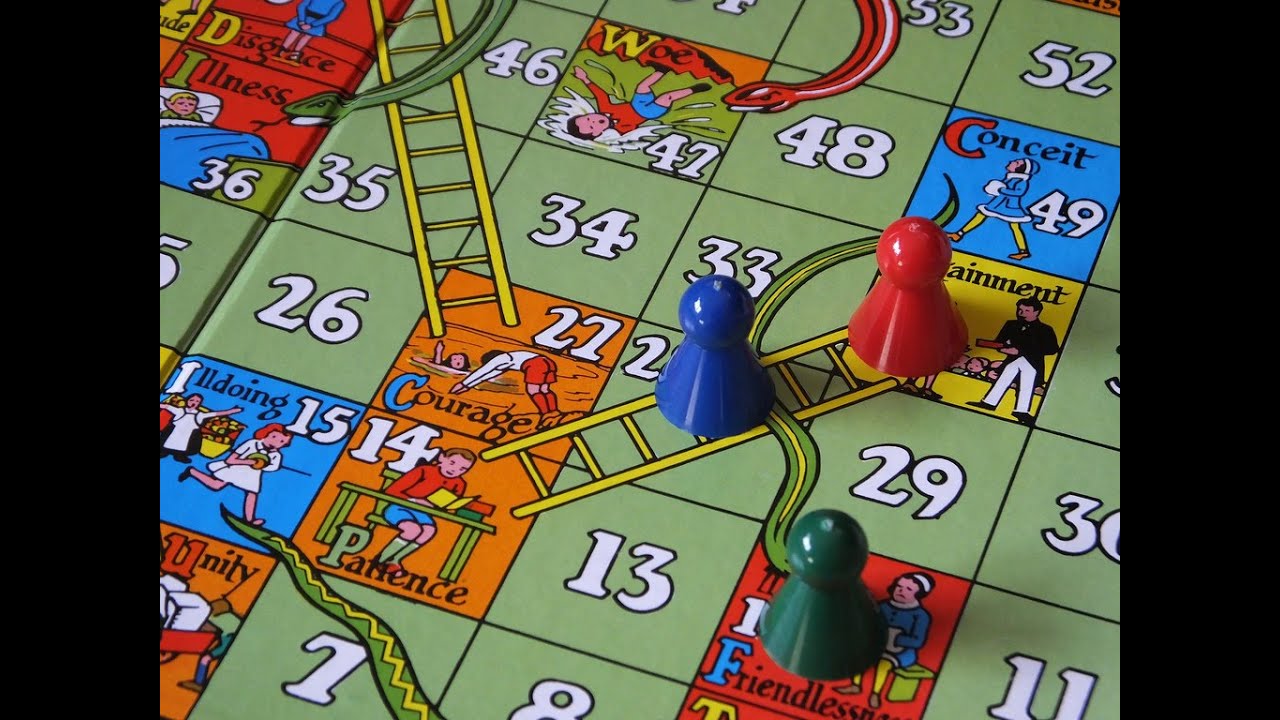
Snakes & Ladders ! - YouTube

The game, Snakes & Ladders,  was invented in India as a game of morals. Later it spread to England and eventually introduced in the USA by game pioneer Milton Bradley in 1943.

Being one of the oldest civilizations in the world, complete with a rich history and culture as well as a strong and long scientific and technological tradition, it comes as no surprise that many significant inventions have come out of INDIA. 

How India’s Oldest Civilisations Taught The New India

India is the earth’s most advanced, biggest and oldest civilisation and if we do not consider the 19th and 20th centuries, the wealthiest civilisation too. The influence of ancient Indian history on the modern world is due to the many manifestations of Indian genius and the fact that the language people used was so logical that it nourished critical thinking on the fundamental unity underlying mankind’s diversity.

Up to the 17th century, the wealth in India was more than twice that of the rest of the world combined. So many of the foundations of modern society be it science, medicine, mathematics, metaphysics, religion and astronomy — originated in India. We can call India the cradle of human civilization, the birthplace of speech, the mother of history and numerous languages, the grandmother of legends and traditions.

The Harappa Civilizations

One of the most fascinating yet mysterious cultures of the ancient world is the Harappan civilization. This culture existed along the Indus River in present day Pakistan. It was named after the city of Harappa which it was centred around. Harappa and the city of Mohenjo-Daro were the greatest achievements of the Indus valley civilization. These cities are well known for their impressive, organized and regular layout. They have well laid our plumbing and drainage system, including indoor toilets. Over one hundred other towns and villages also existed in this region. The Harappan people were literate and used the Dravidian language. Only part of this language has been deciphered today, leaving numerous questions about this civilization unanswered.

Artefacts and clues discovered at Mohenjo-Daro have allowed archaeologists to reconstruct this civilization. The similarities in plan and construction between Mohenjo-Daro and Harappa indicate that they were part of a unified government with extreme organization. Both cities were constructed of the same type and shape of bricks. The two cities may have existed simultaneously and their sizes suggest that they served as capitals of their provinces. In contrast to other civilizations, burials found from these cities are not magnificent; they are more simplistic and contain few material goods. This evidence suggests that this civilization did not have social classes. Remains of palaces or temples in the cities have not been found. No hard evidence exists indicating military activity; it is likely that the Harappans were a peaceful civilization. The cities did contain fortifications and the people used copper and bronze knives, spears, and arrowheads.

The Harappan civilization was mainly urban and mercantile. Inhabitants of the Indus valley traded with Mesopotamia, southern India, Afghanistan, and Persia for gold, silver, copper, and turquoise. The Mesopotamian model of irrigated agriculture was used to take advantage of the fertile grounds along the Indus River. EarthLink’s were built to control the river’s annual flooding. Crops that were grown included wheat, barley, peas, melons, and sesame. This civilization was the first to cultivate cotton for the production of cloth. Several animals were domesticated including the elephant which was used for its ivory.

Mathematics

Indians invented zero and the number system, one of the greatest innovations in history. The decimal system, the value of pi, algebra, trigonometry, calculus and many mathematical concepts were all born in India. The largest number Greeks and Romans used was 10 to the power of 6; well before 5000 B.C., Indians used numbers as big as 10 to the power of 53.

Albert Einstein was once quoted: “We owe a lot to the Indians, who taught us how to count, without which no worthwhile scientific discoveries could have been made.”

Medicine

Sushruta was the father of medicine — the first to invent the art of performing surgery with anaesthesia. The first school of medicine, Ayurveda, was based on a systematic knowledge of plant-derived medicines and is practiced effectively even today. Detailed knowledge of anatomy, embryology, digestion, metabolism, physiology, genetics, immunity, psychology and ethology can be found in many ancient Indian texts.

Astronomy

Some of Europe’s greatest discoveries were first made in India thousands of years earlier, before Europe even existed. Gravity for example, It was not Isaac Newton, but an Indian named Brahmagupta, who explained gravity, 1,000 years before the British Empire emerged. Ancient Indians had a profound knowledge of the origin and age of the universe and Earth, the circumference of the Earth and other planets. Mathematician Bhaskaracharya accurately calculated the time it takes our planet to orbit the sun to be 365.258756484 days, well before Western astronomers. 

The Indian system of astronomy is by far the oldest. It was the source from which the Egyptians, Greeks, Romans and Jews derived their knowledge. The motion of the stars on the tables of Giovanni Cassini and Tobias Mayer, used in the 19th century, do not vary by even a minute from Indian calculations made 4,500 years before. Indian tables give the same annual variation of the moon as discovered by Tyco Brahe — a variation unknown to the schools of Alexandria and the Arabs.

Religion

Four of the world’s major religions — Hinduism, Sikhism, Buddhism and Jainism — originated in India. India’s literary, artistic and philosophical contributions to the world are far greater than those of any other civilization in history.

Almost all religious, philosophical and mathematical theories taught by the Pythagoreans were known in India in the sixth century B.C. Indian sages of philosophy were the prototypes of Greece — to whose works Plato, Thales and Pythagoras were disciples. The priests of Egypt and the sages of Greece drew directly from India. Nearly 2,500 years ago, Pythagoras went from Samos to the Indian Ganges to learn geometry.

Indians also invented yoga, the art of unifying the mind and body. Today, it is practiced for its health benefits all over the world. The Chinese learned yoga, martial arts and Buddhism from India. Chess, snakes and ladders, buttons, high-grade steel manufacturing, the art of navigation, playing cards, the gymnasium, the university, rocket artillery, almost every geometrical instrument, the cultivation of cotton and jute, mining, the concept of gross domestic product — all have roots in India.

If there is one place where all of humanity’s dreams have found a home from the very earliest days of existence, it is India. Modern Indians should understand the original scientific culture their ancestors developed, make use of modern technology to demonstrate their in-born abilities, and strive for breakthroughs that will help all of society. And modern writers may need to rewrite the scientific history books after consulting Indian experts.