
India’s Healthcare Condition

Long before the virus invasion into India, the nation already suffered from a devastatingly poor healthcare system. With more corrupt systems in Public (government owned) hospitals where only miserable think of going while the middle or upper  middle and upper classes always seek for the genuine treatments at heavily priced private hospitals. Middle class economic sectors do end up with long term bank loans.

We’ve seen many cases in the past where private hospitals literally looted patient’s families, in some cases the patient was already dead while reaching the hospital and yet doctor’s kept the dead bodies for treatment and kept fooling the family by saying “we are doing the treatment and trying our best to save the patient”. All this was done just to add up bills for the families and friends of patient.

There’s a saying about doctors worldwide that they are a form of god who saves lives but this thought is questioned when some doctors commit the hideous sins ever known to humanity. This is happening even during the treatments of covid-19 specifically in India where many citizens are falsely reported covid positive and are admitted to expensive private medical institutes who charge hefty charges (8-12 Lakhs INR) from somebody who’s already negative from the virus contagion.

In many other cases where healthy citizens wrongly reported are admitted to hospitals and later their vital body parts viz. heart, kidneys, eyes, liver etc were removed for organ trade benefits. So how these doctors were able to do this and how still many are doing this right under the nose of government administrations. The answer comes to complete absence of investigation of each dead body, these doctors know it for sure that an alleged positive patient when claimed dead would be directly sealed into a body bag by the hospital workers. No policemen and neither family nor friends are allowed to have a sneak peek at the dead body. The dead body in a body bag is directly sent for cremation. This gives an upper hand for corruption and illegal organ trade.

Some 2.4 million Indians die of treatable conditions every year, the worst situation among 136 nations studied for a report published in The Lancet. Poor care quality leads to more deaths than insufficient access to healthcare–1.6 million Indians died due to poor quality of care in 2016, nearly twice as many as due to non-utilisation of healthcare services (838,000 persons).

“For too long, the global health discourse has been focused on improving access to care, without sufficient emphasis on high quality care,” Muhammad Pate, co-chair of the commission that produced the report, who is also chief executive of Big Win Philanthropy and former minister of state for health in Nigeria, said in a statement. “Providing health services without guaranteeing a minimum level of quality is ineffective, wasteful and unethical,” he said.

As the Indian government readies to roll out its ambitious national health protection scheme, the Ayushman Bharat Yojana, by the end of September 2018, the study’s findings are crucial.

“We need to better measure the quality of our health system as a composite entity rather than be merely content with certifying hospitals and laboratories,” said Srinath Reddy, president of the Public Health Foundation of India, a Delhi-based think tank, about the lack of mechanisms for monitoring quality in India. “Some elements of quality, mainly in maternal and child health, are being monitored under NRHM [National Rural Health Mission]. However, composite measures of the health system overall are unavailable,” he said.

Public accountability and transparency on health system performance are two ways to improve the quality of healthcare, the commission recommends.

Commonly used health metrics such as the availability of medicines, equipment and skilled attendants do not reflect quality of care and even “lead to false complacency about progress”, it says, proposing a dashboard of metrics that should be implemented by countries by 2021 to enable transparent measurement and reporting of quality care.

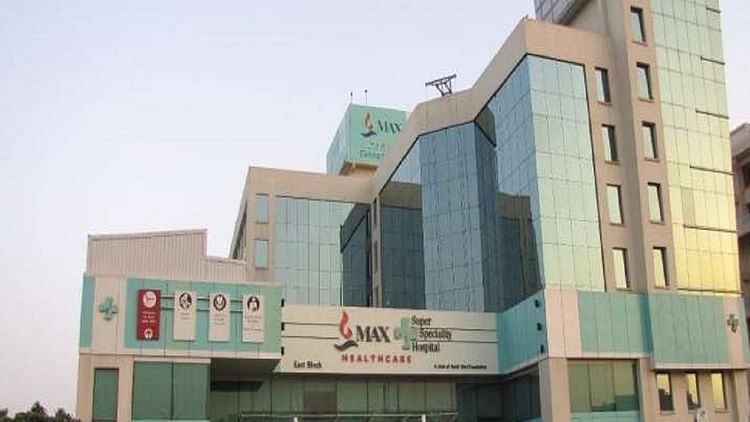
India’s private hospitals and their exorbitant charges

Image courtesy- Social Media

On the month of May 14th in the current year 2020, Mr. Tushar Jindal, 40, a kidney patient, tested positive for novel coronavirus and his family shocked with the results made some calls to Sir Ganga Ram Hospital, India’s one of the elite private hospital situated in Delhi. The private hospital allegedly asked for an advance deposit of INR 5 lakhs for admission.

Since the amount was hefty for a middle class Indian family, following advice from Mr. Jindal’s nephrologist, they admitted him at Max Hospital in Saket, Delhi where an advance of INR 2.5 lakhs had to be paid.

“While I was admitted there, I barely received any treatment as my condition was stable. I was discharged within four days, but I was handed an exorbitant bill of ₹1.98 lakh,” claimed Mr. Jindal. He has sent a legal notice to the hospital contesting many of the items charged for and claiming that the bill issued to him was “faulty and fake and carries a lot of unnecessary and unreasonable charges”.

Mr. Jindal’s notice states that medicines and drugs which were not administered to him have been charged for in the bill and a charge of ₹71,000 questioned for “investigation” offered no other detail. Specifically, the notice states that being a kidney transplant patient, Mr. Jindal takes a particular brand of medicine prescribed by his nephrologist and he has been charged for a medicine he could never take, as it belongs to another company. He claims that he consumed his nephrologist-prescribed brand but has been charged for an alternative with four units and six times a day. Mr. Jindal was also charged ₹8,900 per day for PPE kits amounting to ₹35,600, hospital bills show. He was also charged ₹52,000 for “other charges”, which the notice terms “irrelevant and fake”.

Responding to queries, a Max Healthcare spokesperson said: “A patient’s attendants are counselled about the estimated cost of treatment at the time of admission itself, and they are required to sign an informed consent form for all treatment and procedures. Bill updates are also shared on a day-to-day basis on registered mobile numbers of attendants for any immediate concerns. The attendants of the patient were explained the overall consumption of PPEs during a 24-hour cycle, which is approximately nine PPEs per day per person in the COVID ICU, and the costs charged to the patient are in line with the costs incurred by the hospital in sourcing the PPEs.”

D.S. Rana, chairman of Sir Ganga Ram Hospital, said “the upfront payment is to tide over certain issues such as the family of a COVID-19 patient not being allowed to come to the hospital due to risk of infection. How will they make payments? We ask for INR 5 lakhs as advance from COVID-19 patients and refund the money if the bill is less than that,” he said.

Dr. Rana said, “The hospital follows a similar process for non-COVID-19 treatment too”.

“There is nothing to hide. Our expenses have gone up since the virus outbreak. Our hospital is just meeting expenses, not making any profit. The government can audit our accounts if they want,” he said.

Another case of a Journalist from nationalheraldindia shows another face of the overall situation and the huge differences in charging between government and private hospitals. The said journalist initially went seeking aid from an elite private hospital who gave a pricing quotation of INR 9 lakhs, the journalist was shocked with this pricing and with the mere fact that particular hospital called it as “a package for covid-19 treatment”, yes a package!

Shocked with the pricing, he decided to admit himself to the district civil hospital in the city where they charged him INR 50 (fifty) per day for three medicines and less than INR 1,000 per day for equipment that included oxygen cylinders and ventilators. With his multiple ailments, including chronic kidney disease, he should have had no hope of survival. But it is almost a miracle that the doctors at the district civil hospital pulled him out of danger and did not allow the comorbidity factors to undermine his chances of recovery. Out of hospital for a week now, he is fighting fit and back to the normal activities of a journalist.

Now what we can do to tackle these situations is to question the administrations, the system and governments ruling these systems, we need to ask our governments as to “why they are unable to curb the exorbitant charges by the prominent private hospitals of India”.