The Indian Tricolour Flag

On August 15, 2021, India will commemorate its 75th anniversary of independence. As we get closer to the big day, it’s only natural to look back at the history of the tricolour, or tiranga. Did you realise that our flag’s colours of saffron, green, and white have no communal significance? In this essay, we’ll look at the history of the tricolour, its evolution, and the meaning of the Chakra and the three colours of the flag to learn more about these facts.
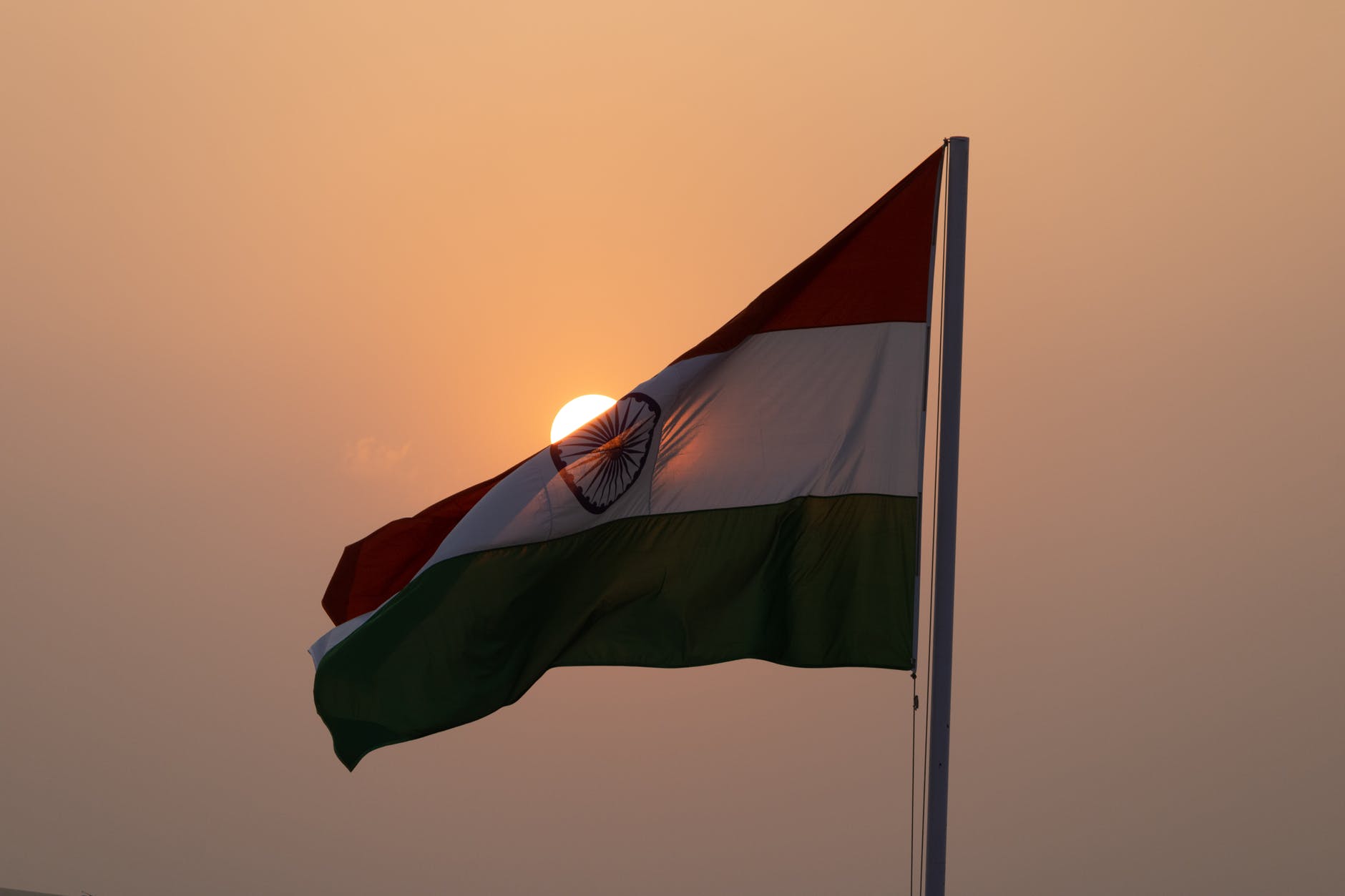
Photo by Still Pixels on Pexels.com

The flag of a country is a sign of its independence. The Indian National Flag in its current form was adopted just days before the country declared independence from British rule on August 15, 1947. The decision was made on July 22, 1947, during a meeting of the Constituent Assembly. Between August 15, 1947, and January 2, 1950, it was the national flag of the Dominion of India, and then the Republic of India.

India’s current tricolour flag was adopted after the country gained independence. The old flag’s colour and meaning were retained, but the Dharma Charkha of Emperor Asoka was replaced as the flag’s insignia in favour of the spinning wheel.

The colours of the Indian flag

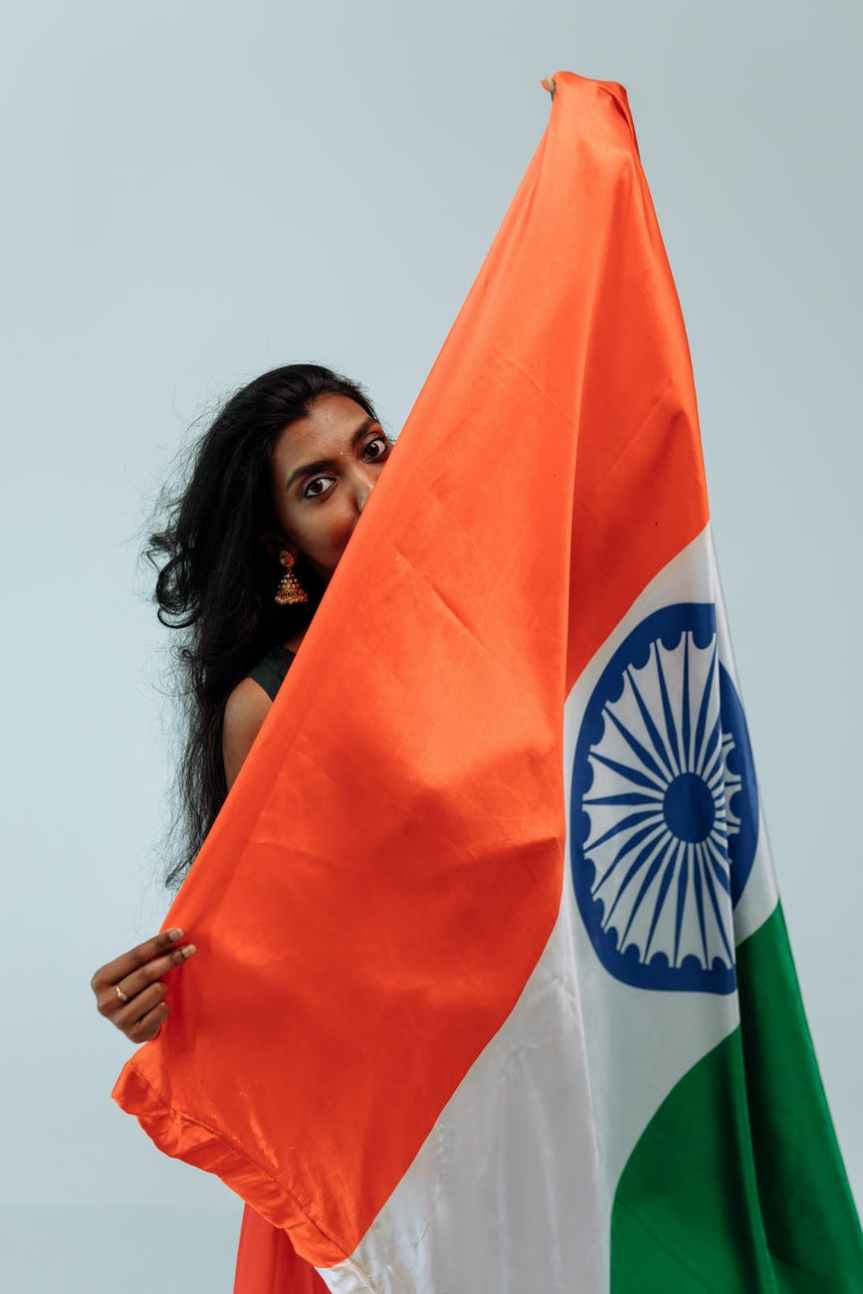
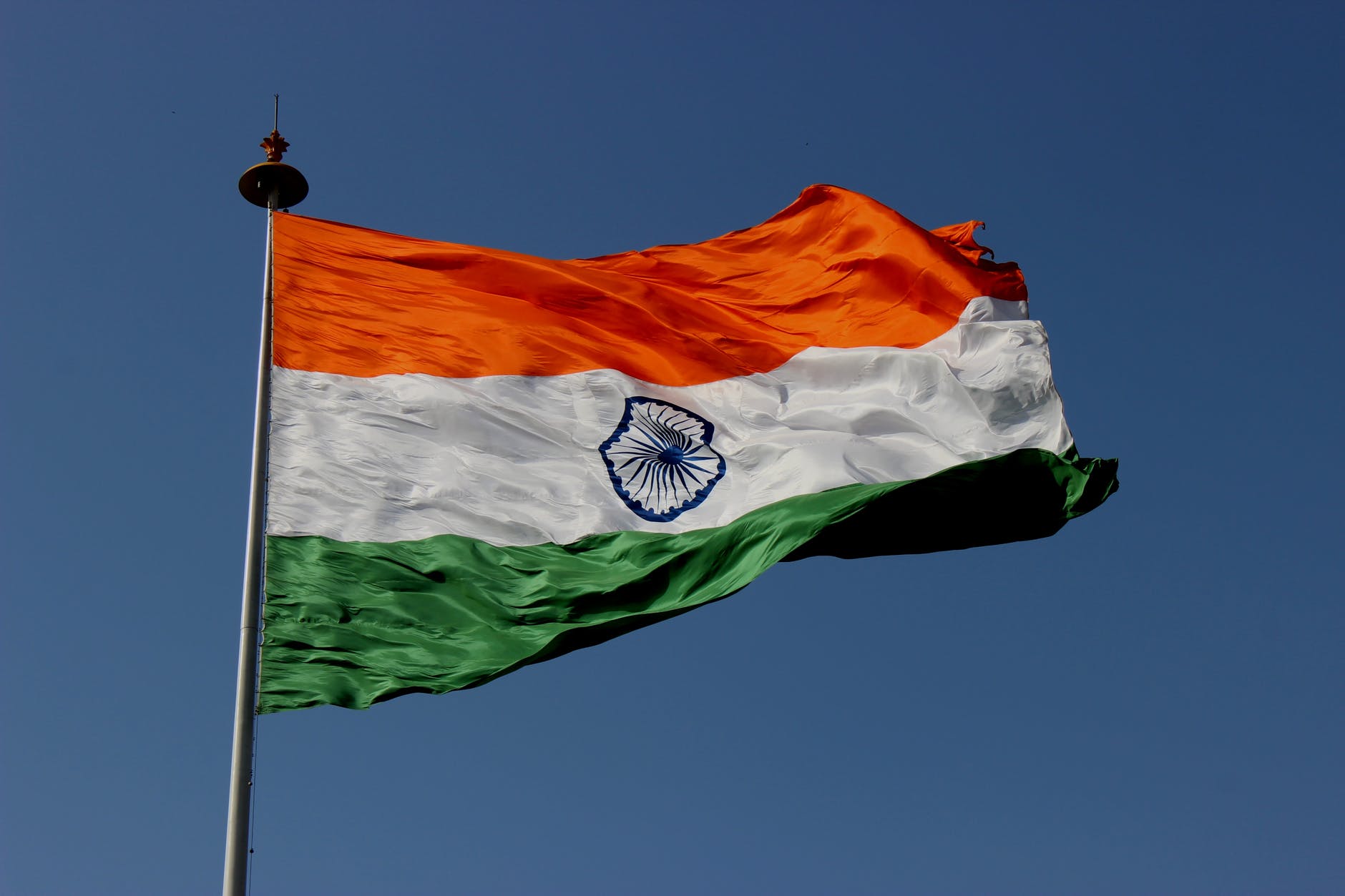
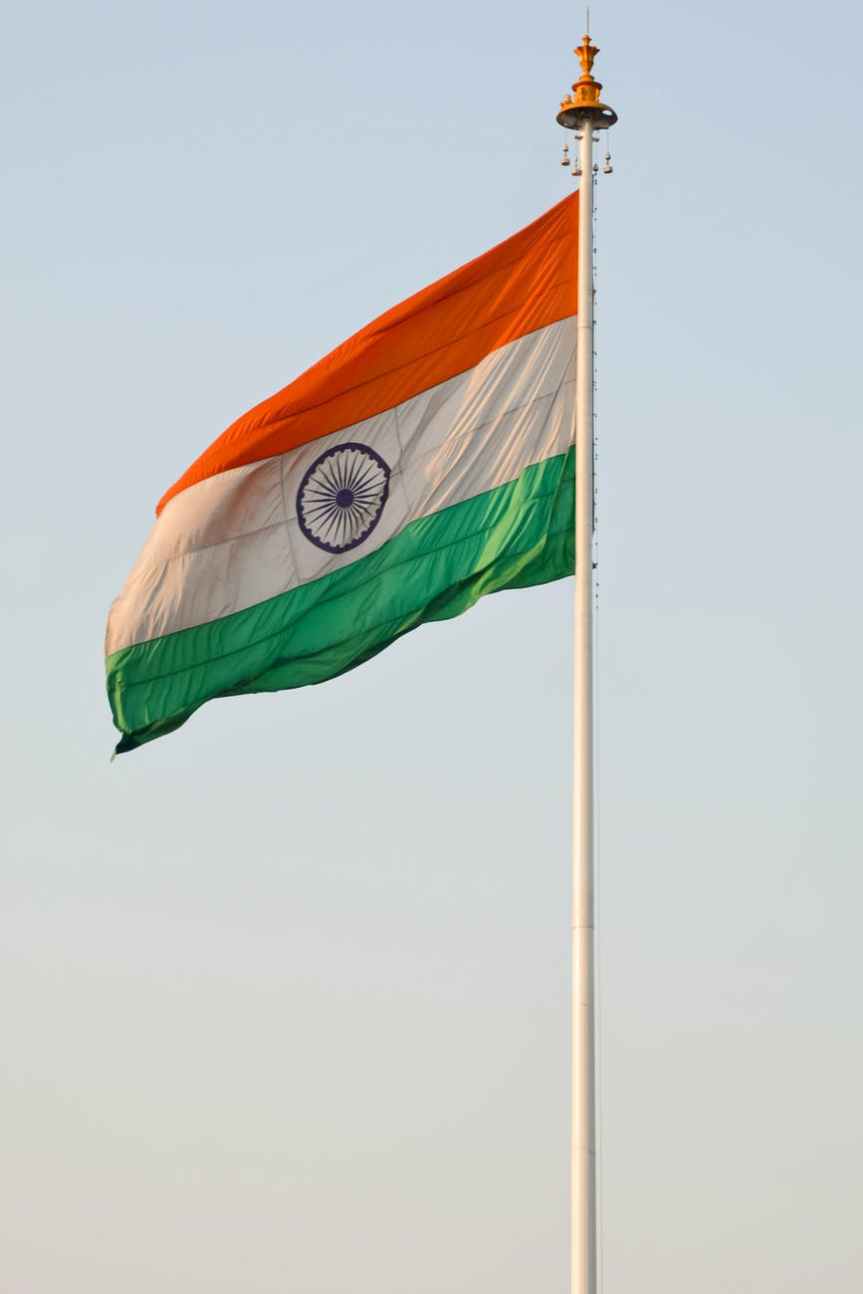
India’s national flag is a horizontal tricolour with a deep saffron top, white in the middle, and dark green at the bottom. The chakra is represented by a navy blue wheel in the midst of the white ring.

The colour saffron represents the country’s power and bravery. The colour white represents peace and truth. Our land’s fertility, growth, and auspiciousness are symbolized by the green belt.

The “wheel of the law” is shown by Dharma Chakra at the Sarnath Lion Capital, which was built by Mauryan Emperor Ashoka in the 3rd century BC. It meant that life is found in movement and death is found in immobility.

Flag Code

The Indian flag code was changed on January 26, 2002, and inhabitants of India were now allowed to hoist the Indian flag above their homes, offices, and factories on any day, not only national holidays, as was previously the case. Indians can now proudly display the national flag anywhere and whenever they want, as long as the Flag Code is rigorously obeyed to avoid any disrespect to the tricolour. The Flag Code of India, 2002, has been broken into three parts for your convenience. The National Flag is described in general in Part I of the Code. The display of the National Flag by members of the public, private organisations, educational institutions, and other entities is addressed in Part II of the Code. The National Flag is displayed by the Central and State governments, as well as their organisations and agencies, according to Part III of the Code.

Based on law passed on January 26, 2002, there are some guidelines for flying the flag. The following are some of them:

Do’s:

– To promote respect for the Flag, the National Flag may be flown in educational institutions (schools, colleges, sports camps, scout camps, and so on). The flag flying in schools now includes an oath of allegiance.

– On all days and occasions, ceremonial or otherwise consistent with the dignity and honour of the National Flag, a member of the public, a private group, or an educational institution may hoist/display the National Flag.

– Section 2 of the new code recognises that all private persons have the right to fly the flag on their property.

Don’ts:

– The flag may not be used for communal purposes, draperies, or clothing. It should be flown as much as possible from sunrise to sunset, regardless of the weather.

– The flag cannot be permitted to contact the ground, the floor, or the water’s surface. Vehicles, trains, boats, and aircraft cannot have it draped over the hood, top, sides, or back.

– There can be no other flag or bunting higher than the flag. Also, no object can be placed on or above the flag, including flowers, garlands, or symbols. A tricolour festoon, rosette, or bunting cannot be used.
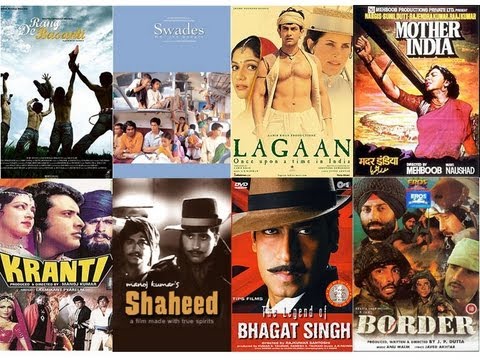
5 Greatest Films on India’s Freedom Struggle

Many people find it difficult to conceive living a life of slavery and servitude with no possibility of liberation. However, this was the reality for the entire nation of India only a little more than seven decades ago.

Today is India’s 74th anniversary as a constitutionally democratic and sovereign country. However, without the courage, tenacity, and heroism demonstrated by India’s revolutionaries, the road to freedom would have been significantly more difficult.

Here, we look at five of the best films that pay tribute to individuals who helped us achieve our current level of freedom.

1. Mangal Pandey: Mangal Pandey, directed by Ketan Mehta, transports viewers to the mid-nineteenth century and India’s First War of Independence, the country’s first organised revolt against the British Empire. The plot centres around an Indian soldier who fights the East India Company valiantly. Against all obstacles, Mangal Pandey (Aamir Khan), an Indian Army sepoy, conducts a violent and fierce revolt against India’s colonial occupiers, while preserving his friendship with his British commanding officer, William Gordon. Mangal Pandey, a classic story about the oppressed fighting against their oppressors, is a must-see this Independence Day.

2. Lagaan: Lagaan was India’s entry to the Academy Awards in 2001, written and directed by Ashutosh Gowariker. The film, which stars Aamir Khan and Gracy Singh in the key roles, is set in 1893 and expertly blends sports and politics. Lagaan is a hugely enjoyable film that was a worldwide smash thanks to its devious machinations, musical sequences, and laugh-out-loud humour. When the British overlords of India decide to impose a new tax on Indian villages, Bhuvan, a young man, leads a charge against them, challenging the occupiers to a cricket match. The story that follows is a colourful one of perseverance and intrigue.

3. The Legend of Bhagat Singh: The Legend of Bhagat Singh is a film directed by Rajkumar Santoshi and starring Ajay Devgan. It tells the story of the fiery independence fighter who led an armed battle against British imperialism. The film follows the revolutionary from his childhood, when he witnesses the atrocities perpetrated on his people, to his alliance with the Hindustan Republic Association and the assassination of a British police officer. The Legend of Bhagat Singh is a must-see for anybody interested in learning about the immense sacrifices made by India’s liberation fighters.

4. Gandhi: Mohandas Karamchand Gandhi, the father of the nation, has and will continue to be an unrivalled presence in Indian history. Gandhi, starring Ben Kingsley as Mahatma Gandhi, is a biopic that follows his life and tribulations from his days as a lawyer in South Africa through the nonviolent independence movement he leads in India. Gandhi has near-saintly status in India, yet the film succeeds admirably in depicting his more humanistic side. Richard Attenborough’s biographical drama, filmed and produced by him, received acclaim upon its premiere and won eight Academy Awards, including Best Picture, Best Director, and Best Actor.

5. Rang De Basanti: Rang De Basanti, produced and directed by Omprakash Mehra, is the third film on this list to feature Aamir Khan in the lead role. Following their graduation from Delhi University, a group of young Indians are cast in a documentary about India’s liberation fighters by an English woman. Mehra’s film, which alternates between two time zones, poses some difficult concerns and challenges the viewer to consider what the genuine value of freedom is. Rang De Basanti was also nominated for Best Foreign Film at the Oscars, thanks to its outstanding screenplay and narrative.

Apart from India, here are 5 countries that celebrate Independence Day on 15th August as well

For every Indian, August 15 is a significant date because it was on this day in 1947 that the country gained its legitimate independence from the United Kingdom, putting an end to over two centuries of colonial control. India, the world’s largest democracy, celebrates its independence on August 15, 1947. The founding of the democratic country is commemorated on this day. This is the day India gained independence from the British Raj. Jawaharlal Nehru, India’s first Prime Minister, proudly unfurled the Indian flag at the Red Fort in Delhi on August 15, 1947.

Photo by Studio Art Smile on Pexels.com

In case you were wondering, India is not the only country that celebrates Independence Day on August 15; people all over the world mark this date on their calendars as a national holiday. Here are five more: Republic of Congo, South Korea, North Korea, Bahrain, and Liechtenstein all commemorate their independence on August 15. Here’s additional information on them:

1. Bahrain: Bahrain, which was likewise ruled by the British, gained independence on August 15, 1971, more than two decades after India. Following a United Nations assessment of Bahrain’s population, the British announced a troop pullback east of Suez in the early 1960s. The signing of a treaty between Bahrain and the United Kingdom commemorated Bahrain’s independence day. The country, however, does not commemorate its independence on this day. Instead, it commemorates the succession of the late king Isa bin Salman Al Khalifa to the throne on December 16 as National Day.

2. North Korea: North and South Korea, officially known as the Democratic People’s Republic of Korea, gained independence from Japan on August 15, 1945. During the Russo-Japanese War, Japan conquered Korea. Japan attempted to acquire Korean traditions and culture while also gaining control of the economy for its own gain. Korean resistance groups, known as Dongnipgun, fought Japanese forces along the Sino-Korean border.

3. South Korea: In 1945, the Korean Peninsula was liberated, and on August 15, 1948, autonomous Korean governments were established. The area was officially dubbed the Republic of Korea, and a pro-US administration was founded. The first President of South Korea, Syngman Rhee, was elected, and August 15 was declared a national holiday. The holiday is known as Gwangbokjeol, which translates to “the day the light returned.”

4. Liechtenstein: Liechtenstein, a German-speaking microstate in the European Alps between Austria and Switzerland, celebrates its National Day on August 15. The date was chosen since it was already a bank holiday; the feast of the Assumption of Mary is on August 15. Second, Prince Franz Josef II, the reigning prince at the time, was born on August 16. As a result, the Feast of the Assumption and the Prince’s birthday were combined to form Liechtenstein’s national holiday.  

5. Democratic Republic of Congo: The Central African country, often known as Congo, gained full independence from French colonial overlords on August 15, 1960. It has been under French control for exactly 80 years. In 1880, the country was renamed French Congo, and in 1903, it was renamed Middle Congo. During the first five decades of colonial administration in Congo, economic development was centered on natural-resource extraction, and the techniques used were violent. At least 14,000 people died in the construction of the Congo-Ocean Railroad.