GLORIFYING ANCIENT INDIAN SCIENTIFIC DEVELOPMENTS

Today whatever the advancement that is taking place worldwide, whether in technology, medicine, cosmic, and health all the praises are sung for the westerners.

However, India on the other side was one of the most renowned and developed nations in the world, contributing 32.00% of the world GDP(3rd BCE-13th CE).

“Many of the advances in the sciences that we consider today to have been made in Europe were in fact made in India centuries ago”.

– Grant Duff (British Historian)
And no other way this could be said more clearly.

Astonishingly, many Indians do not know about their own country’s past and history.
We need to recognize and learn our accomplishments of the past and glorify them.
India, the land of sages and seer, is not just a country of multiple, colorful cultures but the land that gave the world all those that are fundamental blocks of today’s great advancements.

TECHNOLOGICAL DEVELOPMENTS:


Galileo Galilei, Pythagoras, Aristotle, Newton are some of the great scientists and scholars of the west that are credited for all major discoveries and inventions.

However, ancient Indian scientists like Aryabhatt, Patanjali, Charaka are a few of the gems of the ancient technological world.

The invention of zero-


The invention of “zero” by Aryabhatt in the fifth century is the greatest invention of all time. With the integration of zero in the place value system, the world is now able to write numbers no matter how long.
Lancelot Hogben said:
“There has been no more revolutionary contribution than the one which the Hindus (Indians) made when they invented ZERO”.

Gravitational force-


We remember the Theory of Gravitational Force to be the contribution of Sir Isaac Newton, but in 400-500AD India this was already discovered.
In Surya Siddhanta, Indian astronomer, Bhaskaracharya stated-” All objects fall due to a force of attraction. That is why earth, planets, moon, sun are all in their orbits due to this attraction force”.

The atomic theory was discovered thousand years ago in India

To the world, a 19th century English chemist John Dalton is the father of atomic theory. However, few people know that ancient Indian scientist Acharya Kanada talked about atoms or “paramanu” in his book Kanada Sutras, or Aphorisms of Kanada.https://en.wikipedia.org/wiki/Kanada_(philosopher)#The_concept_of_anu_(atom)

Kanada opined, “paramanu is the indestructible particle of a matter”.

He also mentioned that atoms combine in a specific manner to form dvyanuka (diatomic molecules) and tryanuka (triatomic molecules).

WOOTZ STEEL:


The Discovery of wootz steel is one of the greatest discoveries in the metallurgical sector. It originated in South India, in present-day Tamil Nadu.
“Wootz steel is a crucible steel characterized by a pattern of bands and high carbon conten. The method was to heat black magnetite ore in the presence of carbon in a sealed clay crucible inside a charcoal furnace to completely remove slag”. as per Wikipedia.https://en.wikipedia.org/wiki/Wootz_steel

MEDICAL INNOVATIONS:

Plastic surgery-


Sushruta Samhita is the most important treatise on surgery written by Susruta. It describes the surgical training, instruments, and procedures practiced in modern surgery.
The treatise also deals with diseases and their prevention and cure, following with the number of bones in a human body.
It also thoroughly describes 700 medicinal herbs.n.wikipedia.org/wiki/Sushruta_Samhita#Prevention_versus_cure

Cataract Surgery-

Sushruta, an ancient Indian physician pioneered the first cataract surgery in the sixth century BC.
To remove the cataract he used a sharp needle called Jabamukhi Salaka, to loosen the lens and push the cataract out of the vision. Then the eye is bandaged till the time it gets healed.

Yoga

Acharya Patanjali is the Father of Yoga. He introduced the Yoga Sūtra of Patañjali in the 2nd century BC which became a very renowned contribution to the world. Through this field of discipline, one can discover his true self and its 84 yogic posture has proved efficient for the proper functioning of different systems, i.e. endocrine, nervous, respiratory, circulatory, etc. The different breathing patterns taught in this discipline aids in calming down the mind, body, and soul and allows them to work in unison.

SANSKRIT SHLOKA SAYS-
yogaścittavṛttinirodhaḥ

                                          MEANING:

Yoga is restraining the mind-stuff (Chitta) from taking various forms (Vrttis).​

These were few of the many achievements of our ancient scientists.

At last, the contribution of Ancient Indian scientists to scientific technology is worth dignifying.
To India, the cradle of the eminent leading light, Mark Twain honours-
“India is the cradle of the human race, the birthplace of human speech, the mother of history, the grandmother of legend, and great grandmother of tradition”
Celebrating Indian Women Scientists on International Women Scientist’s Day

The United Nations celebrates International Women’s Scientific Day on 11 February every year. The aim is to encourage women and girls to take up the field of STEM i.e. Science, Technology, Engineering and Mathematics.

This time the theme is laid out by leading lady scientist in the struggle against Covid-19.

According to the Ministry of Science and Technology, approximately 20% percent of women in 2019-20 are directly involved in research and development (R&D) in the country.

Females in technology education

According to the United Nations, 43% of students in STEM are studying in India. India ranks first on the list of 17 countries in this case. Russia ranks second in this list, while America is ninth with 34%. Among 2.80 lakh scientists, engineers and technologists working in India only 14% of them are women.

Women had significant involvement in the fight against Corona. From treatment and testing, women were ahead in drug discovery and patient care. Dr. Soumya Swaminathan of the country is working as a Chief Scientist in the World Health Organization to carry out the fight against the epidemic.

According to UNESCO, there are only 33% of women researchers worldwide. The percentage of women taking admission to Bachelors or Masters under STEM is 45 and 55 percent. Approximately 70% of women are in the field of health and social work but they are given 11 percent less salary than men. Hopefully as we advance into the future we will see more women achieving greater heights in Science and Technology.

Here are some of the female scientists of India who inspire us with their achievements in the field of STEM-

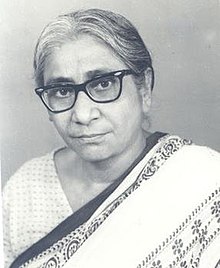
  • Asima Chatterjee

First Indian women to earn a doctorate in science, her research concentrated on natural products chemistry and resulted in anti-convulsive, anti-malarial, and chemotherapy drugs. She also discovered anti-epileptic activity which led to the development of an epilepsy drug called Ayush-56 and several anti-malarial drugs.

She won the C.V Ramen award, P.C Ray Award, and the S.S Bhatnagar award.

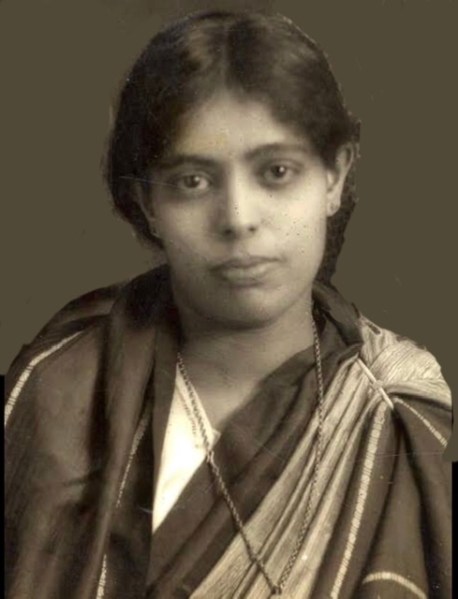
  • Janaki Ammal

an Indian botanist who worked on plant breeding, cytogenetics and phytogeography. Her most notable work involved studies on sugarcane and the eggplant and co-authored the Chromosome Atlas of Cultivated Plants (1945) with C.D. Darlington. She was awarded a Padma Shri by the Indian government in 1977. The University of Michigan conferred an honorary LL.D. on her in 1956 in recognition of her contributions to botany and cytogenetics.

  • Rohini Godbole

Prof. Godbole is part of the International Detector Advisory Group (IDAG) for the International Linear Collider in the European research lab, CERN. She is the Chair of the Panel for Women in Science initiative of the Indian Academy of Sciences.

She received Padma Shri for her contributions in science and technology (2019).

  • Tessy Thomas

Tessy Thomas joined DRDO in 1988, where she worked on the design and development of the new generation ballistic missile, Agni. She was appointed by Dr. APJ Abdul Kalam for the Agni Project. In addition, Tessy was the associate project director of the 3,000 km range Agni-III missile project. She was the project director for mission Agni IV which was successfully tested in 2011. Later, Tessy was appointed as the project director of the 5,000 km range Agni-V in 2009, which was successfully tested on 19 April 2012.

In 2018, she became the Director-General, Aeronautical Systems of DRDO

Thomas received the Lal Bahadur Shastri National Award for her contribution for making India self-reliant in the field of missile technology.

  • Ritu Karidhal

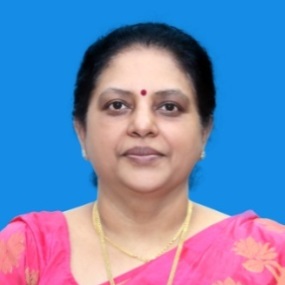
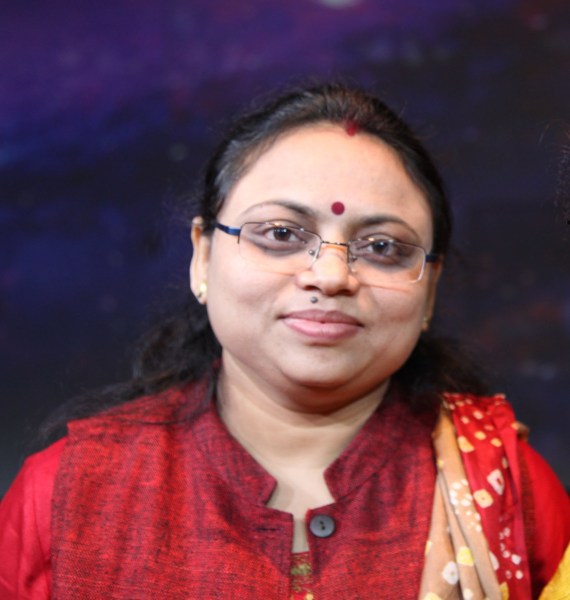
Dr. Ritu Karidhal Srivastava is an aerospace engineer, working with the Indian Space Research Organisation (ISRO). She was a Deputy Operations Director to India’s Mars orbital mission, Mangalyaan. She has been referred to as a “Rocket Woman” of India.

Karidhal received the ISRO Young Scientist Award in 2007 from A. P. J. Abdul Kalam, then president of India

  • Anna Mani

The only woman scientist to work with C.V. Raman, is well known for her work in atmospheric physics and instrumentation. She contributed to the study of radiation, ozone and atmospheric electricity, both on the surface and in the upper air using special sounding techniques. Joining the India Meteorological Department in 1948 she rose to become the Deputy Director General of Observatories in Delhi.

  • Soumya Swaminathan

Soumya Swaminathan is an Indian pediatrician and clinical scientist known for her research on tuberculosis and HIV Since March 2019, Swaminathan has served as the Chief Scientist at the WHO. Previously, from October 2017 to March 2019, she was the Deputy Director General of Programmes (DDP) at the WHO. In March 2019, Swaminathan became Chief Scientist of the World Health Organization, where she participated in regular bi-weekly press briefings on the COVID-19 Pandemic.

  • Sudha Murty

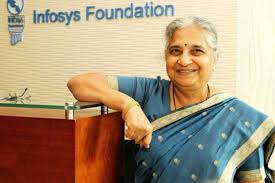
Sudha Murthy became the first female engineer hired at India’s largest auto manufacturer TATA Engineering and Locomotive Company (TELCO). She joined the company as a Development Engineer in Pune.

In 1996, she started Infosys Foundation & till date has been the Trustee of Infosys Foundation and a Visiting Professor at the PG Center of Bangalore University. She has written and published many books.

She won India’s fourth highest civilian award Padma Shri.

12 Great Inventions you didn’t know were made in INDIA

Indian inventions and discoveries have been instrumental in shaping the face of the current modern world. I have picked 12 such interesting findings out of a whole bunch that will make you go, “I didn’t know that”.

Shampoo

12 Best Drugstore Shampoos 2020 Under $10

The word ‘Shampoo’ is derived from chāmpo (चाँपो). It was initially used as a head massage oil for the Nawabs of Bengal during the Mughal Empire around 1762. It evolved into shampoo over the years. Yes, you have India to thank for shampoo.

Buttons

Microsoft Store on Twitter: "Did you know Count Your Buttons Day ...

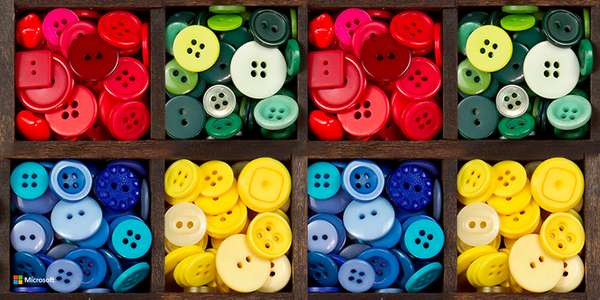
Buttons were first used in Mohenjo-daro for ornamental purpose rather than for fastening. They were first used in the Indus Valley Civilization by 2000 BCE.

The Chess Game

1st FIDE World Corporate Championship

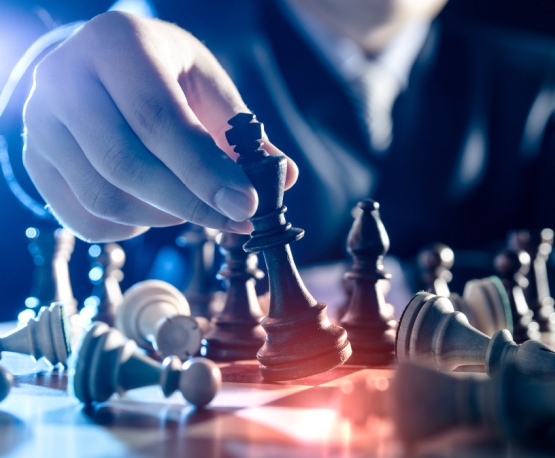
Chess developed out of Chaturanga, which is an ancient strategy board game developed during the Gupta Empire in India around the 6th century AD. Now you know why Vishwanathan Anand is such a pro. It is simply in our roots.

Ruler / Scale

11 Online Rulers To Use When You Can't Find A Physical One

Rulers were first used by the Indus Valley Civilization prior to 1500 BCE. Made of ivory, the rulers found during excavation, reveal the amazing accuracy of decimal subdivisions on it.

Radio / Wire-less Communication

Why India has only 179 community radio stations instead of the ...

We all know that Marconi received a Nobel Prize in Physics in 1909 for contribution to the development of wireless telegraphy. But the first public demonstration of radio waves for communication was made by Sir Jagdish Chandra Bose in 1895, two years prior to Marconi’s similar demonstration in England.

Sir Bose was posthumously credited (more than a century later) for his achievement. The fact remains that this discovery truly shaped the face of modern wireless communication.

Ink

Pin on Writing

Many ancient cultures and civilizations independently discovered and prepared ink for writing purposes. The source of carbon pigment used in Indian Ink (called musi) used in ancient India, was India. Since 4th century BC, the practice of writing with ink with a sharp pointed needle was common in South India.

Flush in Toilets

Why Toddlers Go Potty at Day Care but Not at Home

Flush toilets were first used in the Indus Valley Civilization. These existed in most homes and were connected to a sophisticated sewage mechanism. The civilization was prominent in hydraulic engineering.

Diamond Mining

Diamonds

Worldwide, India was the only source of diamonds until the discovery of mines in Brazil in the 18th century. Almost 5000 years ago, diamonds were first recognized and mined in central India.

Cotton – so basically we clothed the World!

Cotton-Ancient and Modern Fiber | Memory Foam Mattress

The ancient Greeks used to wear animal skins and were not even aware of cotton. But Indians were sort of cool and started cultivating cotton during the 5th – 4th millennium BCE in the Indus Valley Civilization. The word spread to the Mediterranean and beyond and soon everyone was ordering one from Flipkart. Well, pretty much.

Steel and Metal Works

How to build a working iron man suit! - YouTube

Ancient Indians were pioneers in metallurgy. High quality steel was produced, almost two thousand years before it was understood by the West. One of the most remarkable feat in metallurgy: creating a seamless celestial globe, was invented in Kashmir. It was earlier considered impossible to create a metal globe without seams.

So thanks to India, Iron Man can wear his suit now.

Plastic Surgery & Cataract Surgery

Geetika Swami on Twitter: "Sushruta,father of Plastic surgery ...

Yes, you heard it right. Indians were pioneers in Plastic Surgery and Cataract surgery, too. It was carried out in India as early as 2000 BCE by Rishi Sushruta also known as the father of surgery.

Snakes & Ladders

Snakes & Ladders ! - YouTube

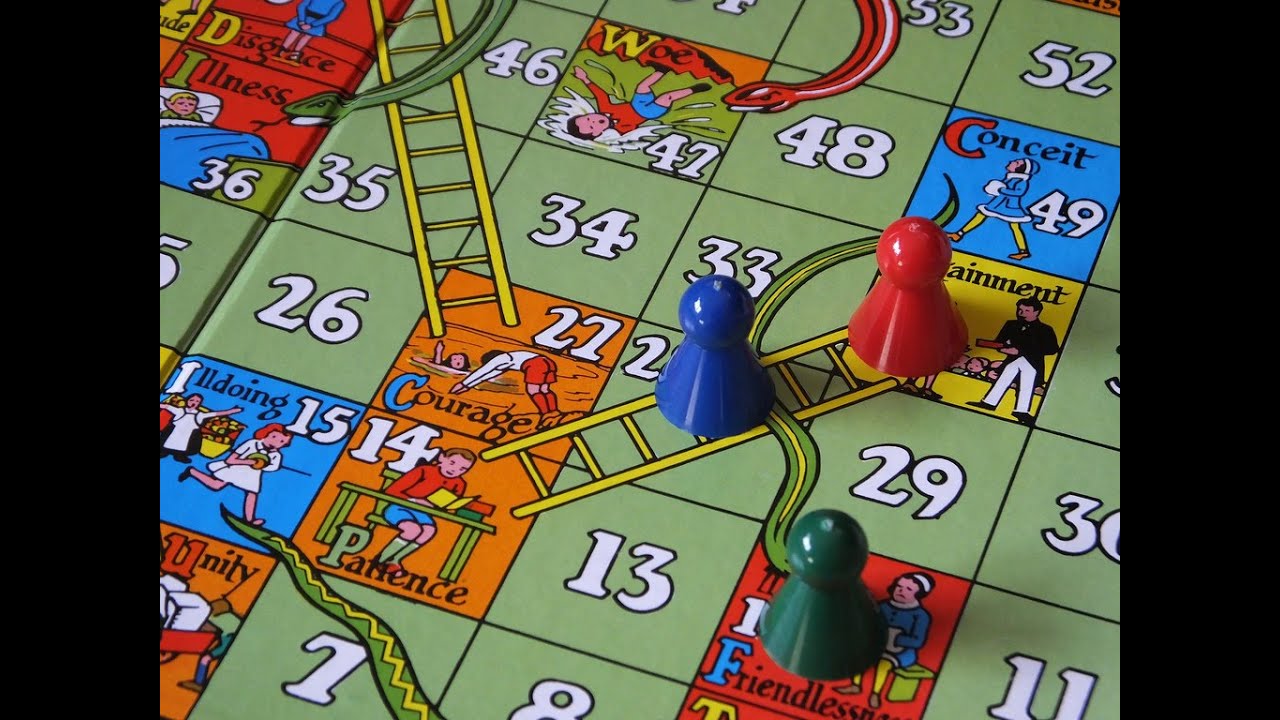
The game, Snakes & Ladders,  was invented in India as a game of morals. Later it spread to England and eventually introduced in the USA by game pioneer Milton Bradley in 1943.

Being one of the oldest civilizations in the world, complete with a rich history and culture as well as a strong and long scientific and technological tradition, it comes as no surprise that many significant inventions have come out of INDIA.