Cultural Heritage Sites in India

India is a country which has a host of spectacular sites, ranging from glorious historical monuments to diverse natural heritage sites. UNESCO World Heritage Convention has recognised many sites across the world for their cultural heritage. India has the 6th largest number of world heritage sites with 38 such sites. Here are some sites among those, which one shouldn’t miss while exploring the country.

Taj Mahal, Agra

The Taj Mahal is a funerary mosque, built by Emperor Shah Jahan in memory of his third wife Begum Mumtaz Mahal. Set against the Mughal Gardens, it is a pristine architectural monument made of white marble. It was built in 16 years by thousands of artisans under the Chief Architect Ustad Ahmad Lahauri and is considered as a masterpiece.
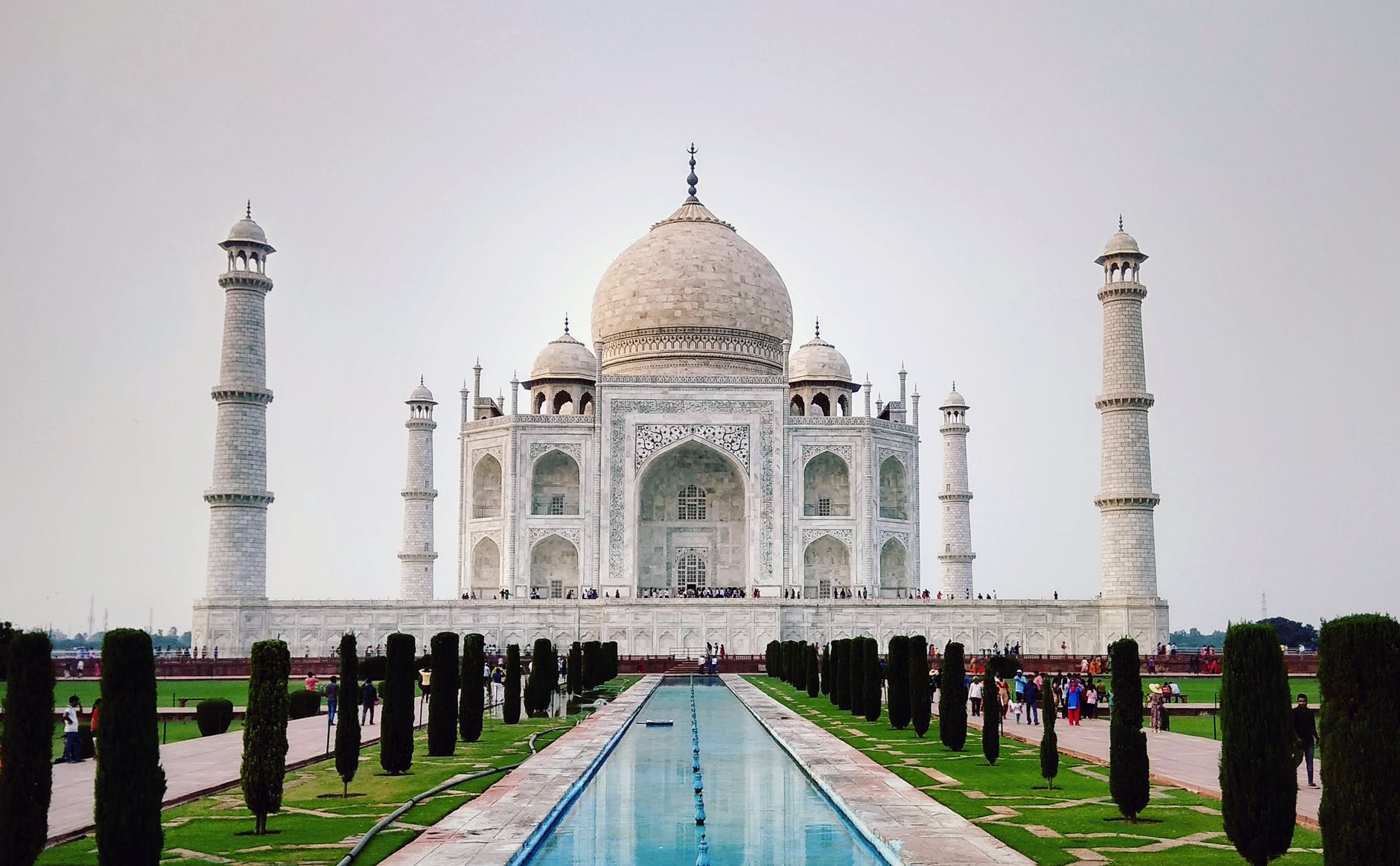
Photo by Roney John on Pexels.com

Khajurao, Madhya Pradesh

The Khajurao is a group of monuments located in Madhya Pradesh and is attributed to the Chandela dynasty. It is known for its unique artistic architecture which has survived since the 10th century. Out of the 85 temples built originally, only 22 temples are there at present.

The PInk City, Jaipur

Jaipur is a fort city in Rajasthan, built according to grid plans of Vedic architecture. The urban planning of the city shows influence of ancient Hindu, modern Mughal and western cultures. Originally built as a commercial capital, the city is an intersection of commercial, artisanal and traditional center.

Elephanta Caves, Maharashtra

The Elephanta Caves is a group of sculpted caves on Elephanta island, located in Mumbai harbour. It is dated to 5th century and it consists of 5 Hindu caves and 2 Buddhist caves. The architecture is characterized by rock cut stone sculptures.

Sundarbans, West Bengal

The Sundarbans are the largest mangrove forests in the world and is both a national park and a tiger reserve. It is situated in the Sundarbans Ganges river delta and is formed by the deposition of sediments from 3 rivers – the Ganges, Brahmaputra and Meghna. It consists of dense mangrove forests which is the home to the Bengal tiger, the salt water crocodile and various birds.

Fatehpur Sikri

Also known as the City of Victory, the Fatehpur Sikri was built by the Emperor Akbar. It includes a set of mosques, monuments and temples built in Mughal architectural style. It was built as a city which had several monuments, buildings, palaces, public spaces and courts. The site has monuments like – the Jama Masjid, the Buland Darwaza, the Panch Mahal, and the Tomb of Salim Chishti which are popular tourist attractions.

Monuments at Hampi, Karnataka

These are a group of monuments in the Hampi town in Karnataka. Located on the banks of the river Tungabhadra, it consists of Dravidian temples and palaces. It has been admired by travelers of the 14th and 16th century and is still a very important cultural and religious center for Hindus and Jains.

Sun Temple, Konark, Odisha

The Konark Sun temple is a renowned temple, located on the coast of the Bay of Bengal and built in the form of the chariot of Surya, the sun god. It is constructed with sandstone and decorated with beautiful stone carvings. It was constructed under the rule of King Narasimhadeva I of the Eastern Ganga Dynasty.
Indian Folk Art

India is home to around 2500 tribes and it has always been portrayed as a land of cultural and traditional diversity. Every corner of the country has a distinctive cultural identity which is represented through different art forms. These art forms can be collectively put under the topic of Indian Folk Art. Each region has a different style and pattern of art which is practised by the rural folks living there. These art forms are colourful and simple and reflect the rich cultural heritage of India. The country is home to around 2500 tribes and ethnic groups. So each region has a unique and interesting form of folk art.

Previously these were done using natural dyes and mostly used for decorating walls and houses. These art forms have undergone many changes through all these years including change of medium, colours and pattern. Here are 10 such art forms which give us a peek into the cultural heritage of different regions of the country.

MADHUBANI

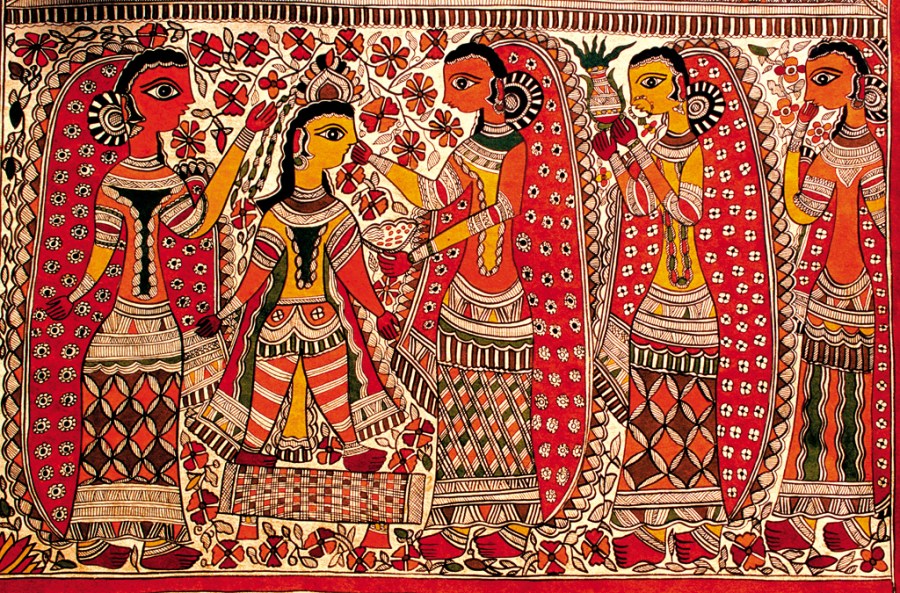
Madhubani, also known as Mithila art, was developed by women of Mithila in Northern Bihar. It is characterised by line drawings, colourful patterns and motives. These were practised for hundreds of years but were discovered in 1934 by a British colonial officer during an inspection after an earthquake.

PATACHITRA

The word ‘patachitra’ derives from the Sanskrit words patta, meaning canvas and chitra, meaning picture.  It is one of the oldest art forms of Odisha. It is done on canvas and portrays simple mythological themes through rich colours and motives. Some of the themes include Thia Badhia – depicting the temple of Jagannath, and Panchamukhi – depicting Lord Ganesh as a five-headed deity.

WARLI

Warli is the name of cultivator tribes belonging to Northern Maharashtra and Gujarat. Though discovered in early seventies, the roots of the art form can be traced back to as early as 10th century A.D. Mostly featuring geometrical shapes, they portray daily life, hunting, fishing and festival scenes. They show a common human figure through a circle and two triangles which move in circles resembling the circle of life.

RAJASTHANI MINIATURE PAINTING

The art form was introduced in the country by Mughals who brought in Persian artists for creating the art. The Mughal emperor Akbar built an atelier for them to promote the artwork. They trained Indian artists who produced it in a new style inspired by the royal lives of Mughals. Eventually the paintings made by these Indian artists came to be known as Rajput or Rajasthani miniature. They are characterized by strong lines and bold colours made from minerals, precious stones, even pure gold and silver.

TANJORE ART

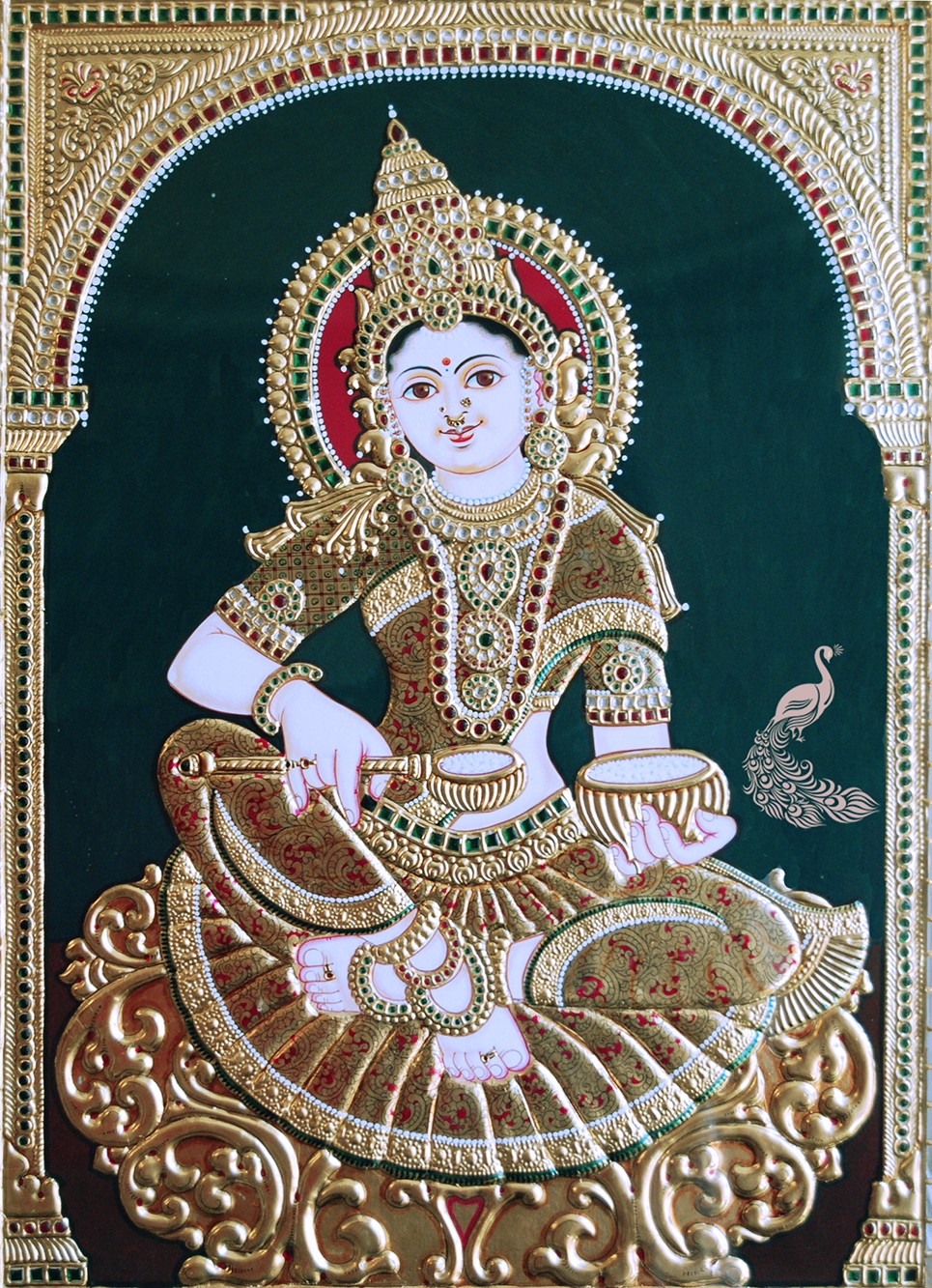
Originating in Tanjavore, about 300kms from Chennai, this art form evolved under the rulers of the Chola empire. Characterized by brilliant colour schemes, decorative jewellery with stones and remarkable gold leaf work, these paintings mostly consist themes of gods and goddesses.

KALAMEZUTHU

Similar to Rangoli and Kolam, this art form originated in Kerala. It mostly consists of the representation of deities like Kali and Lord Ayyappa on temple floors. Natural pigments and powders in five colours are used by the makers and the art is done by bare fingers without the use of any tools. The five colour shades are made from natural pigments like – rice powder for white, burnt husk for black, turmeric for yellow, a mixture of lime and turmeric for red and the leaves of certain trees for green.  Lighted oil lamps brighten the colours in the figures which usually feature anger or other emotions.

POOR vs RICH

We live in a society comprised of two classes called the rich and the poor with a lot of differences between them. These are also referred to as the dos and don’ts of the society. The rich make up barely 40% of the population and have control over 60% of the resources while 60% of the population makes use of the remaining 40% of the resources. However, the divide between rich and poor, despite all ‘isms’ such as communism, capitalism, and socialism keeps growing all the time making the condition of the poor worse than it has all along been. However, the financial condition is not the only difference between the rich and the poor.

• Control of Life:

• Rich believe they are in control of their lives.

• Poor feel they are subject to various of life and life controls events taking place in their lives.

• Money:

• Investing in schemes to make more money is like a game for rich.

• The poor are all the time terrified of investing in the stock market with the result that more often than not, they lose money.

• It is apparent to all that the poor are playing not to lose money while the rich are playing to win more.

• Opportunities and Obstacles:

• Rich people see the opportunities while poor see the obstacles first.

• Poor keep thinking how they will overcome these obstacles whereas rich keep their focus on opportunities as they have the resources to overcome obstacles easily.

• Dreaming:

• Rich dream big and, therefore, strike rich.

• Poor dream small with the result that they have to remain content with whatever they get.

• Doers and Dreamers:

• Rich are doers; they take concrete steps to fulfill their dreams.

• Poor just dream about their dreams.

• Company:

• The company of rich people includes rich and successful.

• Poor people have the company of unsuccessful and daydreamers.

• This difference in company proves vital in deciding the future of the rich and the poor.

Dekho Apna Desh Webinar Series -India’s rich diversity under Ek Bharat Shreshtha Bharat

The 26th session of the Dekho Apna Desh webinar series of Ministry of Tourism on 30.05.2020 titled “The Tenacity of Survival”-Inspirational story of Kutch showcased the history, culture, crafts, textile heritage of India’s largest district Kutch, Gujarat and the resilient spirit of the people of Kutch to fight natural calamities, the skills that form the report card of the continuous dynamics defining the Indian civilization. The webinar displayed the message of Kutch that “Kutch nahi Dekha toh Kuch nahi Dekha”.  Dekho Apna Desh Webinar Series is an effort to showcase India’s rich diversity under Ek Bharat Shreshtha Bharat

 This session of webinar moderated by Ms. Rupinder Brar Additional Director General, Ministry of Tourism and was presented by Dr. Navina Jafa, Director, Indian Cultural Heritage Research.

Ms. Jafa through her powerful narration skills presented the contrasting geographical features, and genetic cocktail that defines India in the most dramatic manner.

Kutch is a land of salt desert, grasslands and mangroves. Interestingly, the mangroves here are known for an amazing phenomenon of being world’s only Inland Mangrove. The Rann of Kutch alone produces three-fourth of total salt supply of India. The place is also the home to the Kharai breed of camel which has the special ability to survive on both dry land as well as in the saline water. They can even swim in sea water and feed on saline water and plants. They are well-adapted to the extreme climate of the desert and high salinity of water.

The key highlights of the presentation were virtual visit to the community of Ajrakh traditional block printers. Ajrakh is one of the oldest types of block printing on textiles still practiced in parts of Gujarat and Rajasthan in India. Textiles printed in this style are hand-printed using natural dyes on both sides by a laborious and long process of resist printing (a method of printing in which designated areas in the pattern are treated to resist penetration by the dye).

The seminar then took the participants visit to Bannithe Salt Desert in Kutch where the work of three major indigenous communities engaged in pottery, embroidery and leather work was showcased. Ms. Jafaalso spoke about the monastery of the ear torn ascetics (the siddhi sidhhant sect) and the langar (Community kitchen) run by the Monastery.

The presentation also covered the coastal town of Mandavi, where regional Sufi beliefs guide traditional boat builders on the Arabian Sea.

The other salient attractions of Kutch showcased in the webinar included:

• Dholavira- UNESCO World Heritage Site and second largest Harappan site located in India. It is indeed a marvellous example of town-planning and architecture.

• Fossil Park

• Rann of Kutch-Salt Desert of Arabian Sea

• Kala Dungar

• Guru Gorkanath Temple

• Narayan Sarovar Temple

• Lakhport Fort & Port

• Surhando- Unique peacock-shaped instrument plays a melodious music

• Thaali Dance- A balancing dance performed to commensurate the celebrations of marriage and child birth

• Tooofaan- Famous wild dance of the ocean also known as “Samundar ki Masti”

• Waai Sufi Mystics

Dhordo is a village in Bhuj taluka of the Kutch district of Gujarat. The eco-system of this place not conducive for any other activity boosted tourism like anything. The Rann Utsav which is annually organisedfromNovember to March has become the main driver for tourism in Gujarat. This transformation of the most challenging Dhordo White Rann to the most happening tourist destination of Gujarat has led to many temporary and permanent accommodation structures in and around Dhordo. The sheer human grit, imagination and enterprise have transformed a harsh and unusual terrain in to an engine of socio economic and cultural vibrancy, bringing to its people a sense of self reliance and pride. The most popular of them all is the Rann Utsav Tent City organized with the support of Gujarat Tourism.

Rann Festival held every year is celebrated from December to February. The Bhuj city is converted into a Tent City with basic amenities. The festival has attractions of BSF Band, Hot Air Ballooning activities, a cultural fiesta of folk music and dance, shopping and tasting the traditional cuisines.

An itinerary for 3-4 days and 7-8 days was shared for capturing the real spirit of Kutch. The itinerary aimed to guide the tourists travelling to Kutch, have a bird’s eye view of things, locations or the tourist sites and to look into the culture, traditions, textiles, block printing, musical instruments, market places, village tours and dance forms.

Bhuj is a well-connected by road from its neighbouringcities in Gujarat, good rail connectivity from various parts of the country especially from Delhi and Mumbai and is also accessible by air from the Rudra Mata Airport.

The sessions of webinars are now available on the https://www.youtube.com/channel/UCbzIbBmMvtvH7d6Zo_ZEHDA/featured and also on all social media handles of Ministry of Tourism, Government of India.

The next episode of the Webinar scheduled on, 2nd June 2020 at 11:00 am, is titled ‘Haryana: Culture, Cuisine and Tourism’. Please register here: https://bit/ly/3dmTbmz