
JHANSI RANI LAXMIBAI

Jhansi ki rani ,the one who fought bravely against the rule of British inspired many women all over the world with her bravery and courage .Her father Monopanth Thambe raised her like a warrior. Even though she was born in a Brahmin family, she can fight like a kshatriya since her childhood. she started to think against slavery from the childhood itself .she always wanted to end the rule of British.
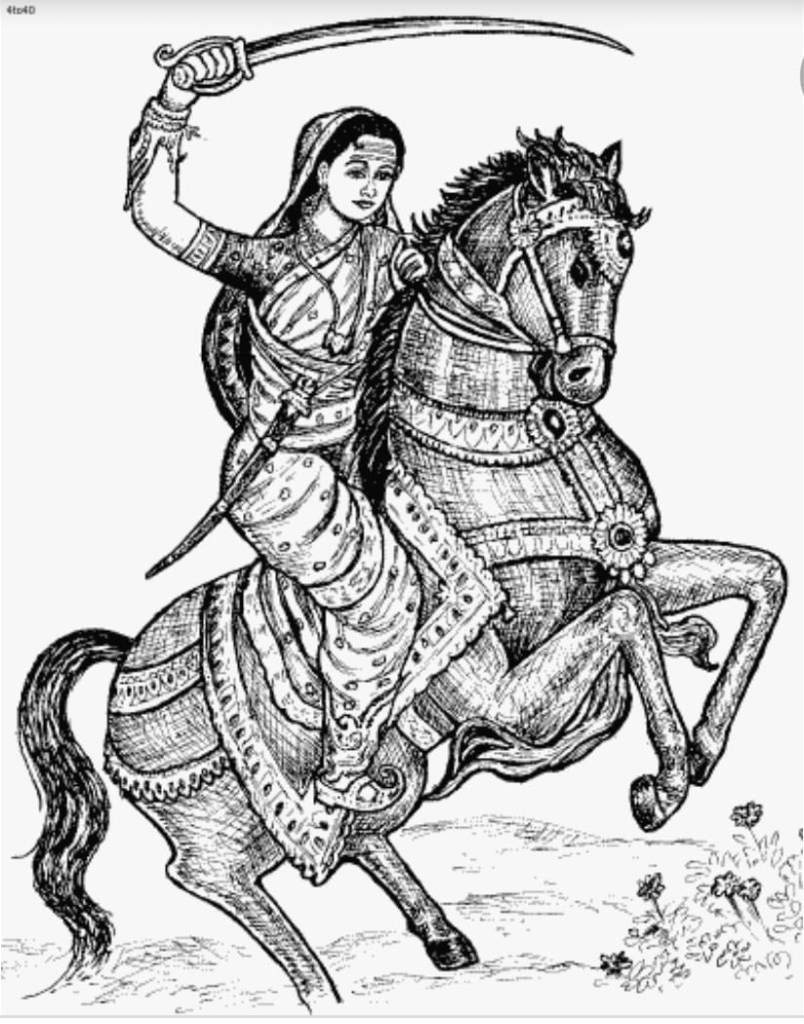
She was born on 19 November 1828 in Varanasi . From childhood she was educated at home ,able to read and write , very independent than others of her age .When she was married to Maharaja Gangadar Rao Newalkar ,she got renamed from Manikarnika to Lakshmi Bai .she helped a lot to her husband to defend the Jhansi from the influence of British. she is the best women warrior i have ever heard . Her thoughts makes every Indian women to stand for themselves and other people who are in need.

she gave birth to a boy child in 1851 and named him as Damodar Rao .He was dead due to the backsliders .Later they adopted a boy named Anand Rao and then renamed as Damodar Rao on the day before the maharaja died . Generally, after the death of husband wife needs to shave her head as a ritual . But ,Manikarnika refused to shave her head and decided to take place of her husband to protect the people of her kingdom to not let the name of her husband down. she wanted to end the attrocities of Britishers .She also encouraged many women to become soldiers and trained them to fight .
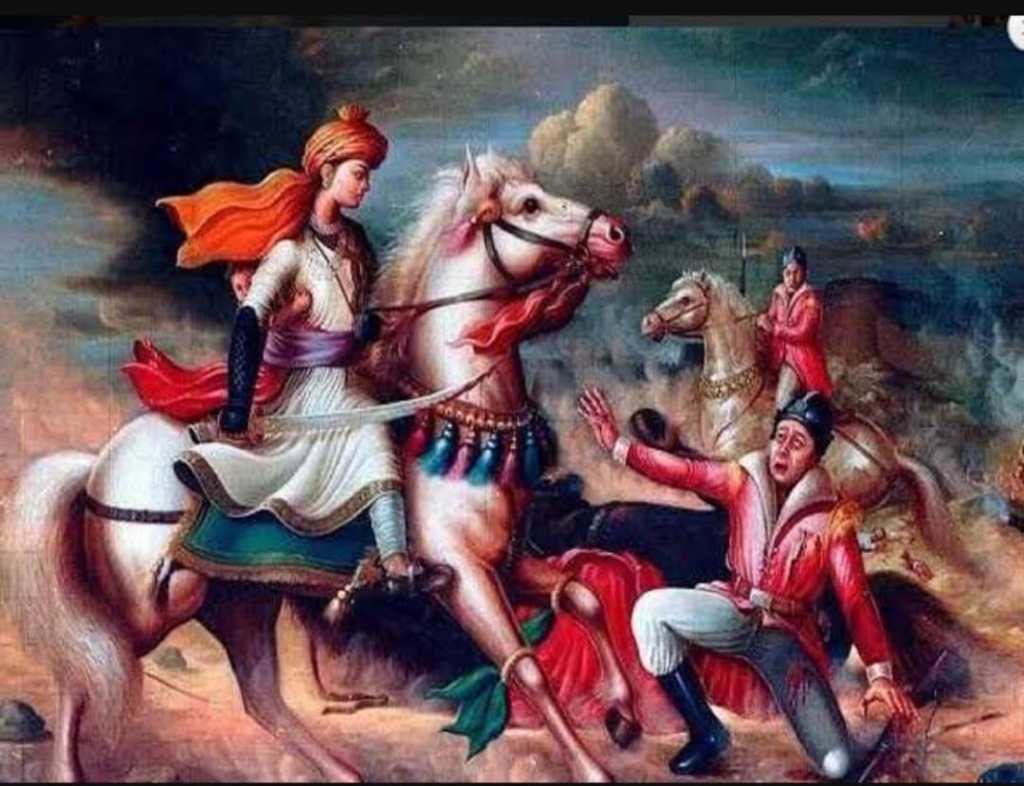
she asked many villagers to help help her in the fight to take the rule of british over them. she even strenghtened her people with her great skillful ambition. she didn’t hesitate to take her child to the war .she tied her son to her back and fought war like a legend . she never showed her back eventhough they have less weapons and soilders than their opponents. Throughout the life she never headed down and maintained her dignity . she also died like a legend in her young age of 30.

whatever her fault in British eyes may have been ,her countrymen will ever remember that she was driven by ill-treatment into rebellion ,and that she lived and died for her country ,we cannot forget her contribution for India. _ COLONEL MALLESON

Kadambini Ganguly

We have seen a lot of women who overcome the hindrances made by society to a woman. One of them was Kadambini Ganguly, who broke the norms of society and became India’s first female doctor. She was born on 18 July 1861, when India was struggling for her freedom. At that time people were not much aware of the importance of female education. She was also one of the first graduates (along with Chandramukhi Basu). She also became one of the first female doctors of the country who were certified to practice western medicine.

She was in Bhagalpur, Bihar, in a Brahmo family, in 1861. Her family was originally hailed from Barisal (in present Bangladesh). Her father’s name was Braj Kishore Basu. He was a headmaster by profession and participated in several social movements aimed at women’s empowerment. He established the Bhagalpur Mahila Samiti with Abhay Charan Mallick in 1863.

She completed her education at the Bangla Mahila Vidyalaya, and after that, she wrote the entrance examination for the University of Calcutta. In 1878, she became the first Indian woman to clear the entrance. And because of her efforts, Bethune College introduced first arts and then Graduation courses in 1883.

She married a Bramo reformer, Dwarkanath Ganguly. Her ambition was to go to the clinical school but at that in Calcutta Medical College females were not permitted to enter. She and her husband volunteered to change this standard. And in a result, she became the first woman to attempt to get admission to Calcutta Medical College in 1884. She graduated in 1886 and was awarded the Graduate of Medical College of Bengal and made history as the first practicing woman physician with a degree in modern science in the whole of South Asia. She worked for a short period of time at Lady Dufferin Women’s Hospital (her salary was 200 rupees per month). Then she decided to travel to London in 1892 for further education. The reason to leave was strong opposition from her colleagues and administrative staff who believe that this is a male-dominated stream and could not accept a woman entering the mainstream. Apart from this she also contributed to several movements in India’s freedom struggle. She became the first woman to be on the platform at a session of the Indian National Congress. She organized the Women’s conference in Calcutta (1908) and spiked many movements during the partition of Bengal. She also served as the President of the Transvaal Indian Association and worked for the rights of female coal miners in the eastern parts of India. She did not leave her profession as a doctor and continued to practice until her death in 1923.

The 19th century was a period of misogynistic practices such as Sati, Child marriage, and many more, she was truly a torchbearer in terms of providing women access to educational institutions. She is still an inspiration to many women in India who thinks that she cannot reach her goal because she is married or financially weak or having children. She achieved her goal despite all the hindrances. Women like her have always been an example in the society who created hr space for women in the fields which remain traditionally a man’s sphere even in the present day.

In the book ‘How India Wrought For Freedom’, Annie Besant depicted Kadambini as a “symbol that India’s freedom would uplift India’s womanhood”.