World System And Dependency

Structural approaches of international relations, also known as ‘neo-radical approaches’, are of recent origin. Theories in support of these approaches were advocated by leftist writers who were deeply influenced by Marxism-Leninisim. The structural approaches, including the ‘World System Approach’ and the ‘Dependency Theory’, consider the world structure from the class point of view, based largely on the level of development and accumulation of capital. Western capitalist countries, having huge accumulation of capital, are termed as the centre or core of the world system, while third world countries, lacking development and capital, are called the periphery. We shall examine the concept of development and underdevelopment with reference to the centre versus periphery.

A reference may be made here to neo-realists, who also examine the international structure, but from the political angle. They describe the international structure as chaotic or anarchic because there is no all powerful central authority to discipline the nation states, and to resolve their disputes and maintain world peace. The leftists, on the other hand, largely concentrate on economic relations between the rich industrialized nations of the capitalist world on the one hand and the poor developing third world countries on the other. This chapter will discuss the centre-periphery aspect of development as advocated by the neo-radicals.

Economic Accumulation : The North-South Divide

There is enormous gap today between income levels in the world’s industrialized regions and those in the third world. The rich industrialized countries generally lie in the northern parts of the world, while the poor developing countries are in the south. This difference in the income levels has caused differences in the overall prosperity between the rich North and the poor South. How can this gap be explained? This may be done with the help of the liberal view and also with reference to the revolutionary or radical world view.

The liberal view explains the problem by stressing that the capitalist countries have overall efficiency in maximizing economic growth. This view holds that the poor countries are merely lagging behind the industrial north. The liberals would make us believe that more wealth creation in the North is a good thing, as is wealth creation in the South. According to this view, there is no conflict between the two, as eventually the South will also acquire more wealth.

The leftist, or socialist, view is that the divide may be viewed not only in terms of creation of wealth but also with regard to its distribution. According to this view, the creation of wealth in the North often comes at the expense of the South.

The World System Approach – Centre And Periphery

The system of regional class divisions has been viewed by scholars of international relations with Marxist orientation as the ‘ world system’ or ‘capitalist world economy.’ The world system approach is a leftist theory and it relies on global system of analysis. Marx himself had limited his theory to domestic class conflict only, but Marxist scholars apply the same logic in their world system approach. In this system, class divisions are regionalized. The third world countries (exceptions apart) generally produce raw materials, including agricultural products.

These activities need large manpower but not much of capital. The peasants working in agriculture, mining and other sectors are paid low wages. The industrialized countries, on the other hand, mostly produce manufactured goods. This requires large amount of capital, and needs more skilled workers who are paid high wages. The industrialized manufacturing regions are called ‘centre’ of the world system; and the extraction regions (producing raw materials and agricultural items) are known as ‘periphery’.

Reference : International relations by V.N Khanna

76th Session of UNGA

“Assembly of hope and resolutions”


United Nations General Assembly (UNGA) is the main deliberative, policymaking and representative organ of the United Nations (UN). Each 193 member state has equal power to vote, providing a unique forum for multilateral discussion of the International issue by comprising all the member states.


Each year in September the Assembly meets for regular sessions; thereafter as required. Through the dedicated agenda items or sub-items discussion of certain issues is done which leads to the adoption of resolutions. Amid covid-19 when all in-person meeting was not possible UNGA included virtual platforms to conduct meetings and other novel means to guarantee business continuity.


Abdulla Shahid of the Maldives opened the 76th session of the United Nations General Assembly on 14 September 2021 as he was sworn in as General Assembly President. Over 100 heads of state and government are expected to attend in person. The size of delegations allowed into the General Assembly Hall has been limited. Due to the global pandemic, UN Member States were encouraged to provide pre-recorded statements instead of travelling to UN Headquarters.

Pandemic is not the only problem the world is facing right now. The world has been facing the challenges such as Racism, intolerance, inequality, poverty, hunger, armed conflict, climate change and other ills for decades. General Assembly is an important opportunity for all to come together and work for the future that is different from today.


The theme for the 76th session is “Building Resilience through hope to recover from COVID-19, rebuild sustainably, respond to the needs of the planet, respect the rights of people, and revitalise the United Nations.”


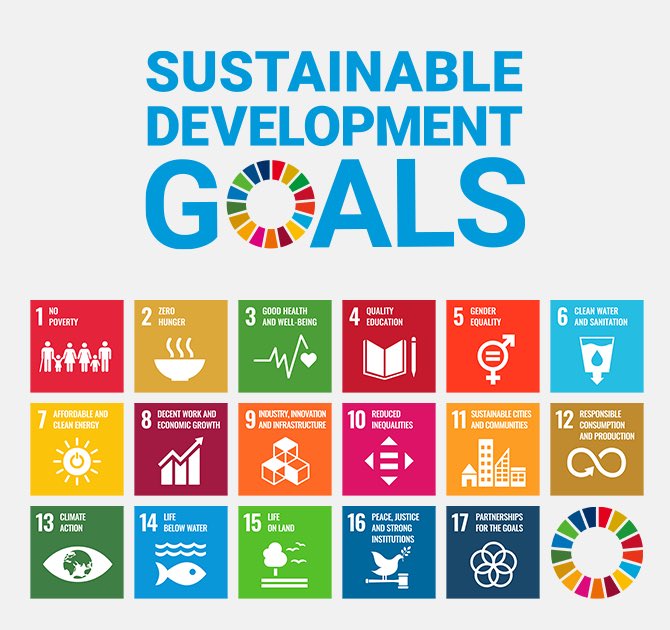
SUSTAINABLE DEVELOPMENT GOALS (SDG)

Sustainable Development Goals are a call for action by all countries- poor, rich and middle-income – to promote prosperity while protecting the planet. It is also an outline for fighting poverty and hunger, achieving gender equality, confronting the climate crisis and much more, within the next ten years.


In unpredictable times, the SDGs show the way to advance towards a strong recovery from COVID-19 and a better future for all on a safe and healthy planet. Sustainable Development Goals are a global pact to create a future where nobody is left behind. These 17 goals were adopted by all countries at the United Nations in September 2015.


DECADE OF ACTION
In the aspect of human and planetary well being ‘Decade of action’ is a universal call to action to end poverty, to protect Earth and ensure all people enjoy peace and prosperity.
In September 2019, the secretary-general called on all sectors of society to mobilize for a decade of action on three levels:
Global action to secure greater leadership, more resources and smarter solutions for the Sustainable Development Goals;
local action implanting the needed transitions in the policies, budgets, institutions and regulatory frameworks of governments, cities and local authorities; and
people action, including by youth, civil society, the media, the private sector, unions, academia and other stakeholders, to generate an unstoppable movement pushing for the required transformations.


Progress is being made in several places but action to meet the Goals is not yet developing at speed that is required to meet the achievements. The Decade of Action calls for accelerating sustainable solutions to all the world’s biggest challenges — ranging from poverty and gender to climate change, inequality and closing the finance gap.


The pandemic became the unprecedented wake-up call that demanded urgency in actions and ambition. The progress that was planned and had been achieved for the decade of action got shaken in the very first five months of the pandemic, spreading the vary that then SGD moment is going off track.


Covid-19 began as a health crisis and quickly become a human and socio-economic crisis. It also urged everyone to see the importance of the preservation of the achieved progress.

“We need to turn the recovery into a real opportunity to do things right for the future.”
– UN Secretary-General António Guterres.


Some of the event highlights

• On 20 September the second SDG moment took place with leaders from over 30 countries addressing the theme ‘Plans, pathways and partners for Recovery and beyond.’ In inclusion of four focal topics Gender equality; Connectivity; Youth in Action; and Localising the SDGs.

• On 23 September, the first-ever food summit will take place completely virtually to mobilise the actionable commitments to transform food systems.

• On 24 September, the first global gathering on energy under UNGA auspices since the UN Conference on New and Renewable Sources of Energy in 1981, ‘High-level Dialogue on Energy’ will be commenced.

• On 28 September, the High-Level Event on Jobs and Social Protection for Poverty Elimination event will be conveyed virtually.


2021 remains a crucial year to bring back the balance with nature, take measures about the climate emergency, and get ahead of the pollution crisis while making sure that no one is left behind. The topics that have been discussed and are to be discussed in the 76th United Nations general assembly are a reminder of what must be done for the future so our dreams won’t be lost forever.
Only by being together, we can tackle the feeling of helplessness and hopelessness that many of us are currently feeling. As long as we are united we can make a difference for the sake of our planet and each other.


‘One person can hope for change and two can make it come true with the support of each other.’

Continue reading “76th Session of UNGA”