NASA spends a lot of time researching the Earth and its surrounding space environment. One particular feature of interest are the Van Allen belts, so much so that NASA built special probes to study them! They’ve now discovered a protective bubble they believe has been generated by human transmissions in the VLF range.
VLF transmissions cover the 3-30 kHz range, and thus bandwidth is highly limited. VLF hardware is primarily used to communicate with submarines, often to remind them that, yes, everything is still fine and there’s no need to launch the nukes yet. It’s also used for navigation and broadcasting time signals.
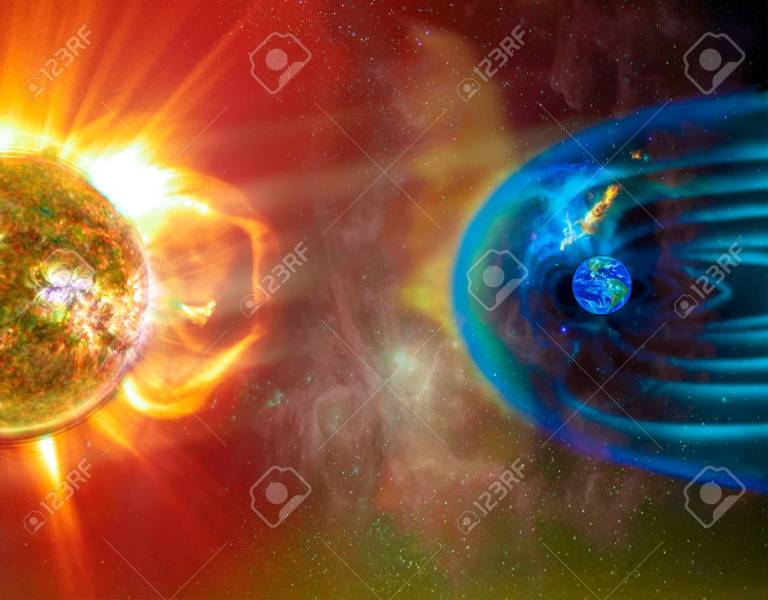
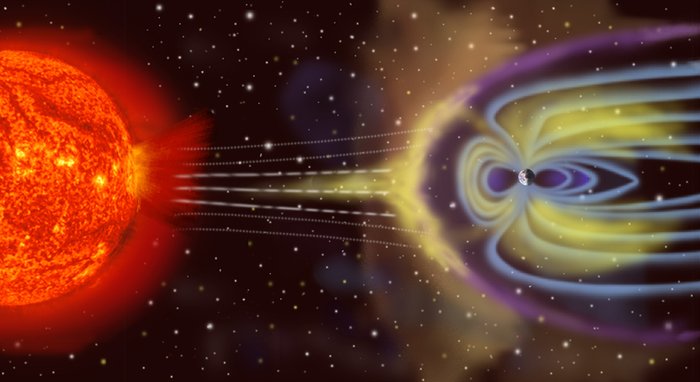
It seems that this human transmission has created a barrier of sorts in the atmosphere that protects it against radiation from space. Interestingly, the outward edge of this “VLF Bubble” seems to correspond very closely with the innermost edge of the Van Allen belts caused by Earth’s magnetic field.
Credit : Third Party Reference
What’s more, the inner limit of the Van Allan belts now appears to be much farther away from the Earth’s surface than it was in the 1960s, which suggests that man-made VLF transmissions could be responsible for pushing the boundary outwards.
Overall, this seems like an accidental, but potentially positive effect of human activity – the barrier protects the Earth from potentially harmful radiation. NASA’s YouTube video on the topic suggests that understanding this mechanism better could enable us to protect our satellites and space vehicles from some of the harmful effects of the space environment.
A week or two ago we featured a research paper from NASA scientists that reported a tiny but measurable thrust from an electromagnetic drive mounted on a torsion balance in a vacuum chamber. This was interesting news because electromagnetic drives do not eject mass in the way that a traditional rocket engine does, so any thrust they may produce would violate Newton’s Third Law.
Credit : Third Party Reference
Either the Laws Of Physics are not as inviolate as we have been led to believe, or some other factor has evaded the attempts of the team to exclude or explain everything that might otherwise produce a force.
As you might imagine, opinion has entrenched itself on both sides of this issue. Those who believe that EM drives have allowed us to stumble upon some hitherto undiscovered branch of physics seized upon the fact that the NASA paper was peer-reviewed to support their case, while those who believe the mechanism through which the force is generated will eventually be explained by conventional means stuck to their guns. The rest of us who sit on the fence await further developments from either side with interest.
Over at Phys.org they have an interview from the University of Connecticut with [Brice Cassenti], a propulsion expert, which brings his specialist knowledge to the issue. He believes that eventually the results will be explained by conventional means.
But explains why the paper made it through peer review and addresses some of the speculation about the device being tested in space. If you are firmly in one of the opposing camps the interview may not persuade you to change your mind, but it nevertheless makes for an interesting read.
Extreme space weather has a global footprint and the potential to damage critical infrastructure on the ground and in space. A new report from the European Commission’s Joint Research Centre (JRC) calls for bridging knowledge gaps and for better coordination at EU level to reduce the potential impact of space weather events.
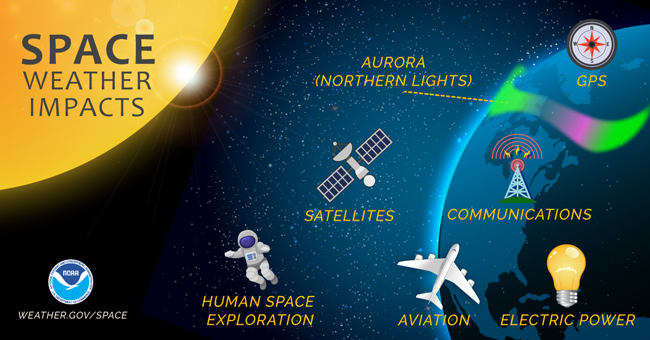
The sun shapes the space environment around the Earth. This so-called space weather can affect space assets but also critical infrastructure on the ground, potentially causing service disruptions or infrastructure failures. Numerous space weather events affecting the power grid, aviation, communication, and navigation systems have already been documented.
Credit : Third Party Reference
The impact of severe space weather can cross national borders, which means that a crisis in one country can affect the infrastructure in the neighbouring countries. This raises concerns due to the increasing reliance of society on the services that these infrastructures provide.
NEW REPORT IDENTIFIES KNOWLEDGE GAPS
The JRC has investigated the impacts of space weather on critical infrastructure in the EU. A new report identifies the gaps in reducing risks linked to space weather and makes recommendations for policy, industry and science on how to close these gaps.
The report summarises the results of a summit organised in partnership with the Swedish Civil Contingencies Agency and the UK Met Office, with the support of the US National Oceanic and Atmospheric Administration (NOAA) in November 2016. Representatives from European infrastructure operators, insurance, academia, ESA, and European and US government agencies attended the event.
INTERDEPENDENCIES AND CRISIS RESPONSE
The potential failure of critical infrastructures during extreme space weather can lead to cascading effects impacting other sectors.
New methodologies and tools, as well as a multi-risk governance approach are needed to assess these interdependencies and to enable the coordination of the many different actors that often manage risks in isolation from one other.
Credit : Third Party Reference
A pan-European vulnerability assessment of the power grid should be carried out to identify critical issues and transboundary effects in case of extreme space weather. Infrastructure operators should also assess whether their systems could be indirectly vulnerable to space weather, for instance due to dependencies on timing and positioning information provided by the Global Navigation Satellite System (GNSS).
Better communication between science and industry is also needed to provide relevant and reliable information to operators for decision making.
SPACE WEATHER FORECASTING
Early warning and preparedness are essential for limiting the effects of space-weather impacts.
In Europe and the USA, 24/7 space-weather forecasting capabilities are available to support the early warning of government and industry. However, it is important that the consistency of forecasts from different service providers are ensured.
Credit : Third Party Reference
There is a need to enhance forecasting capabilities for regional or local forecasts on the severity and duration of extreme space weather to ensure appropriate response from local operators.
Currently, geomagnetic storm forecasting is hampered by the limited understanding of the magnetic field orientation of Coronal Mass Ejections (CME) before they hit the Earth, and there are still significant knowledge gaps in physical and impact modelling, which affect the early-warning capabilities and preparedness in industry.
THE ROLE OF THE EU
In the EU, the European Programme on Critical Infrastructure Protection provides a policy background for critical infrastructure protection, while the EU disaster risk management policy covers prevention, preparedness and response for all types of disasters.
The Union Civil Protection Mechanism requires EU Member States to prepare a national risk assessment and list the priority risks they are facing. Six countries have included space weather in their risk assessment.
Credit : Third Party Reference
The participants of the summit indicated that there is a need for for improving coordination between the different space weather actors and recommended the establishment of a strategic European decision-making capability to coordinate space-weather risk mitigation and response at pan-European level.
They also advised that the roles and responsibilities of the key players in Europe should be better defined and suggested that coordinated strategic investments for improving the scientific know-how in this area could be explored.
YouTube has become a video repository for UFO videos, collections of images edited as videos showing inexplicable discoveries on both the Moon, Mars and other places in the solar system.
The video-uploading Social Network has quickly lost control of what is posted on the site as hundreds of thousands of people record and upload videos of strange events they say are proof of aliens and UFOS.
Regrettably, while there may be quite a few videos which are actually the real deal and offer proof of the existence of UFOs, there is a huge amount of fake videos posted on YouTube, most of them being the product of Computer Generated images (CGI).
Credit : Third Party Reference
Now a new video uploaded to YouTube has made headlines around the world after a man from Mexico called Diego Alves uploaded a very peculiar clip on his YouTube channel. Since then, it has gained much popularity and has been reposted to several other YouTube accounts.
The ‘controversial video’ seems to show what everyone wants to see: A UFO taking off from the Moon, and shooting into space.
It must be the real deal, right?
Users rushed to comment on the video: “That UFO looks like it’s coming from a hole out of the moon. This is a great video.”
And another added: “Something is Coming, I can feel it.”
A third comment claimed: “That is the best UFO footage I have ever seen.
But hold your horses, not all is as it appears.
UFO debunkers quickly spotted that Mr. Aviles’ Facebook page was filled with CGI content (very talented he is) and that he was a graphic artist who has made a host of stunning CGI videos.
While the video may be undoubtedly awesome, and while it appears to clearly show a mystery object shooting off from the surface of the moon at great speed, the truth is that the man who uploaded the Video, Diego Aviles is a graphic artist who has made a host of stunning CGI videos.
Credit : Third Party Reference
The video is a product of two parts: the moon filmed from a telescope and a small object that was added afterward making it appear as if it was taking off from the moon, and shooting into outer space.
Earth’s moon is a mysterious place. Yes, and there are many things on the surface which are hard to explain. Dr. Robert Jastrow, the first president of NASA’s Commission of Lunar Exploration called the moon “the Rosetta Stone of the planets.” And yes, there are several theories that suggest the moon is both a massive alien base or has numerous bases on its surface whose origin remains a mystery.
Credit : Third Party Reference
In July of 1970, two Russian scientists, Mikhail Vasin and Alexander Shcherbakov, published an article in the Soviet journal Sputnik called “Is the Moon the Creation of Alien Intelligence?” The theory proposed by the two experts offers arguments that would explain the countless e
The Russian scientific duo proposed the theory that Earth’s Moon is not a natural satellite, but a planetoid that was literally hollowed out eons ago in the far reaches of the universe by super advanced intelligent beings possessing a technology far superior to ours, even today.
Anyhow, while there are numerous interesting theories worth pursuing in terms of Aliens and UFO’s, videos like the one uploaded to Mr. Avila’s YouTube channel damage serious UFO investigations.
Unbeknownst to a world still reeling from the atomic catastrophe of Hiroshima, and under the crafty guise of a “peaceful nuclear explosion”, India detonated it’s first Weapon of Mass Destruction at the infamous Pokhran test range in 1974, carving for itself an irrevocable position in a community of toffee-nosed, nuclear-armed governments. The diplomatic furore that followed this tectonic shift would resound in the international nuclear coterie for decades to come, and incense totalitarian American administrations committed to crippling India’s self-defence programmes. Even the most imperious sanctions and underhanded espionage, however, could not muffle a nation of determined democracy, that tested it’s most triumphant space-technology yesterday – The GSLV Mk-III.
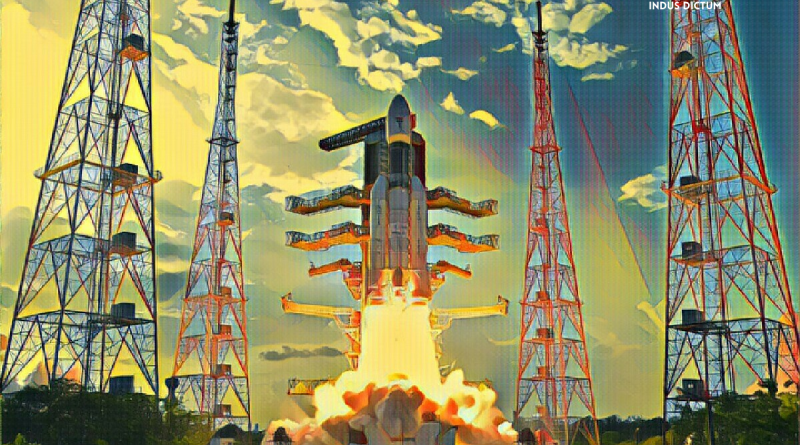
On June 5th, 2017, after more than 200 tests in 2 years, the Indian Space Research Organisation (ISRO) launched into orbit a three-tonne payload on a home-grown rocket of the class developed by only 5 others – Russia, China, Japan, the European Space Agency, and the United States. The Geosynchronous Satellite Launch Vehicle Mark-III (GSLV Mk-III) weighs 640 tonnes – as much as 200 fully grown elephants – and carries upto 10 tonnes to be delivered into orbit. It is a 140 foot-tall, three-stage, game-changing Launch Vehicle with a cryogenic engine, developed almost entirely using Indian components, and capable at long last of sending manned crews into space.
Credit : Third Party Reference
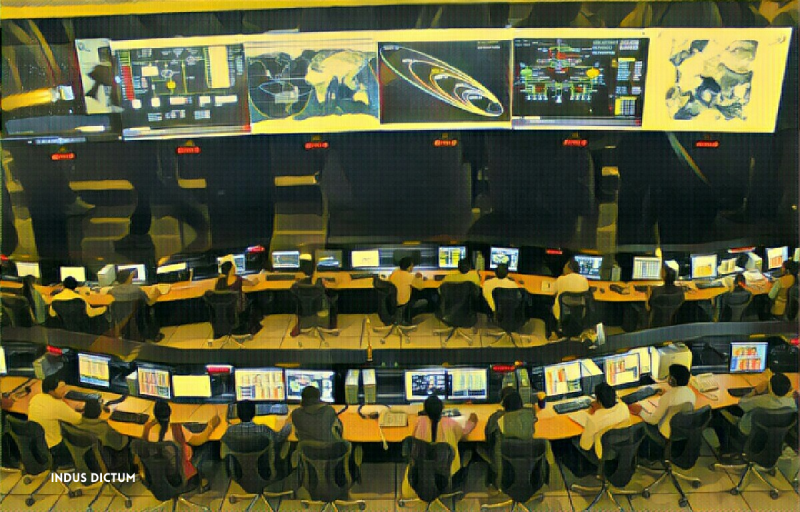
The Command Centre and Launchpad at Sriharikota, Andhra Pradesh, witnessed a turning point in the global space-race yesterday with the success of India’s GSLV Mk-III, placing the country at the heart of a space-industry valued at nearly $350 billion. Dependent on foreign agencies to launch satellites over 2,300 kilograms, India was confined to under 1 percent of this burgeoning market. Today, India has made “quantum leaps” in the words of P. V. Krishnan, Director of the ISRO Propulsion Complex, and is well on the way to launching Chandrayaan-II, slated for next year, and Aditya-I, a satellite mission designed to study the sun.
This jumbo-jet of the rocket-world, however, has a dramatic history riddled with international outrage and sabotage spanning nearly three decades. Beginning at the height of the Soviet era, India’s space and nuclear programmes have been the subject of gory eco-political power-plays between the two superpowers of our time – Russia and the United States. Yet, against all odds, and the express actions and sanctions of the US Government, Indian scientists designed by themselves a heavy-weight carrier of not only 10-tonne satellites, but also national pride and international glory.
Credit : Third Party Reference
After the successful Smiling Buddha nuclear tests at Pokhran, ISRO made enormous strides in space technology with the aid of it’s Russian counterparts, leading up to a $120 million contract in 1991 with the Soviet Space Agency Glavkosmos for seven cryogenic rocket engines, along with a complete transfer of technology. Cryogenic engines use super-cooled liquid fuels to produce massive amounts of thrust in order to lift heavy payloads into space, and the Russians were offering a secret engine, the RD-56 or KVD-1 – originally designed by the Isayev Design Bureau as part of the Soviet manned moon-landing programme of 1964 – with unparalleled thrust and capabilities that NASA could not match for years. Apprehensive of competition in the highly-lucrative commercial space industry, the US descended into a dirty game of geopolitical sanctions and espionage to disable this agreement.
Invoking the Missile Technology Control Regime (MTCR), the United States stalled the engine supply by sanctioning both ISRO and Glavkosmos. The American administration claimed that the issue was not India importing engine components from Russia, but that India was importing engines at all. The idea being that if India were forced to make those developments on their own instead of simply buying engines and the technology driving them, it would slow India’s rocket program and keep them from becoming a potential military threat.
The two-faced Americans, however, continued to import engines from Russia, simultaneously strong-arming India to sign the Non-Proliferation Treaty. India refused on the grounds that all signatories – except members of the UN Security Council – are required to unilaterally destroy their nuclear weapons, and could not afford to oblige given that the country is neighboured by two nuclear armed states, both of whom are hostile. Crippled but not killed, ISRO began the formidable task of developing indigenously a cryogenic rocket.
Credit : Third Party Reference
America views launch vehicles as weapons and components of ballistic missiles, as opposed to a commercial service. That is why it is acceptable when European nations, America, or other such countries purchase engines from each other, because they are allies and have advanced propulsion capabilities of their own, but a less developed, non-allied nation buying the same engines is not. This is, however, a remarkably flawed perspective.
In fact, there are no ballistic missiles in the world that use cryogenic engines. Because it takes several critical hours to fuel up a cryogenic rocket, such an engine could never be used in a ballistic missile. The fear mongering about using or selling these engines, then, is an outright farce and strawman fallacy.
Unblushing and wholly devoid of shame, the Machiavellian Americans turned around to sell banned WMD technologies to Pakistan, disobeying both US as well as international non-proliferation protocols. When US aid to Pakistan tapered off after the withdrawal of the Soviet Union from Afghanistan, the unscrupulous and impoverished Pakistani military responded in 1987 by selling it’s nuclear hardware and know-how for cash, pitching south Asia into three near-nuclear conflagrations, and enabling the nuclear weapons programmes of Iran, Libya and North Korea, which might never have got off the ground were it not for the duplicitous Americans. This hypocritical subterfuge is detailed in the account of CIA Agent and Pakistan-specialist Rich Barlow, reported by the Guardian almost a decade ago.
In defiance of ruthless international oppression and embargo, ISRO advanced swiftly and surely to counter America’s tyrannical throttling of the industry and reserve a seat at the space-table. Earlier this year, the triumphant ISRO launched a record 104 satellites on a single rocket. And now, having spurned the Non-Proliferation Treaty, this historic moment is an open-handed smack in the face of US monopoly.
India has overcome cumbrous obstacles and staunch opposition to design and launch it’s own cryogenic rocket. The GSLV Mk-III is a true testament to the ingenuity of an intrepid democracy. Resolute is the country we live in today.
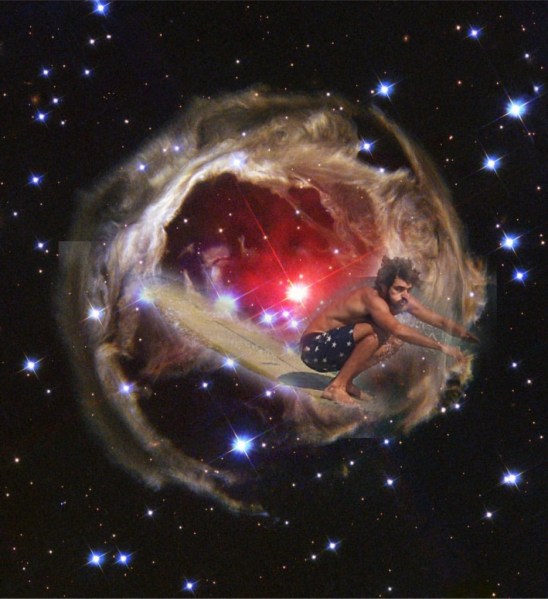
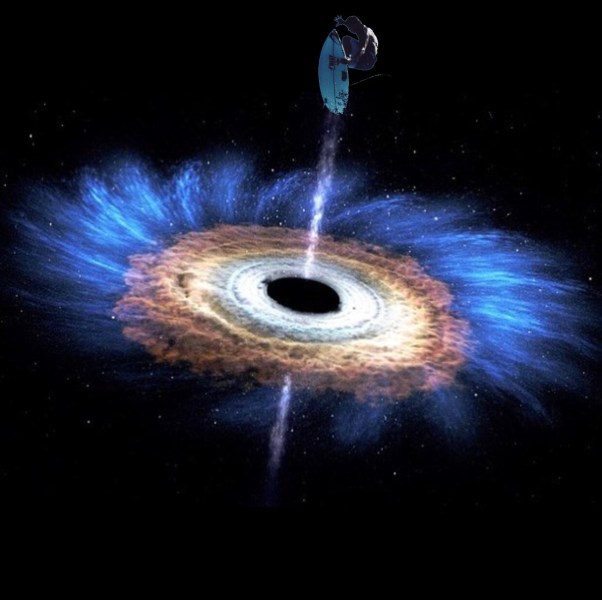
Surfing on a distant star in a galaxy far, far, away. Walking out on the nose of your board for a cheater-five, riding a nebulous cloud through the infinite darkness of space. Getting spit out of a black hole, executing a grab-rail, carving cut-back. Ripping a hole in the space-time continuum. Finessing the very fabric of the Universe.
Credit : Third Party Reference
WATER IS COSMIC.
All of the water on Earth came from space in exactly the form it is in now: H2O. Water not only came from space it was created out in space. Hundreds of millions (or even billions) of years before the solar system itself, the world’s Ocean came from an interstellar cloud somewhere in the Milky Way galaxy—formed one molecule at a time. All of the water on Earth was delivered here when Earth was formed (within the first 100 million years or so) and what we have is what we’ve got. There is no geological mechanism on Earth to create or destroy H20. The Ocean (and all of Earth’s water) has literally been here forever.
Credit : Third Party Reference
The Ocean—all the water on Earth—began as the finest mist, tiny ice crystals drifting around inside an interstellar cloud. However, scientists don’t actually know how all that water gets from the interstellar cloud to our Ocean, nor do they know how much water is actually on Earth.
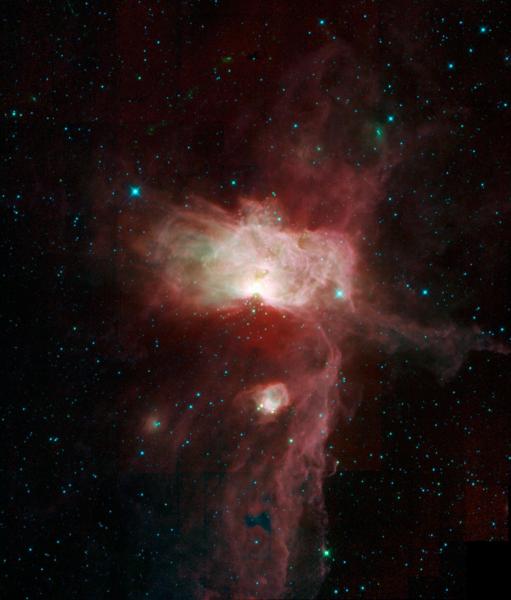
THE ORION MOLECULAR CLOUD.
DISTANCE FROM EARTH: A MERE 1400 LIGHT YEARS (1 LIGHT YEAR = 5.88 TRILLION MILES)
The OMC is an interstellar spring of water. This massive glowing cloud of hydrogen gives birth to thousands of stars at once. As the stars coalesce and collapse in on themselves, they send shockwaves out through the clouds of gas which contain lots of loose hydrogen and oxygen. When the shock waves slam the hydrogens and oxygens into each other, they often form water. There is enough water being formed in the OMC to fill all of Earth’s Oceans every 24 minutes. Surf’s up!
Credit : Third Party Reference
The Orion Molecular Cloud is making 60 Earth Oceans every 24 hours but it is doing it across a span of space 420 times the size of our entire solar system—so even the dustiest (most dense, with the most particles) parts of the cloud are emptier than any vacuum that people can create on Earth.
VENUS
DISTANCE FROM EARTH: 162 MILLION MILES
Venus may have been our solar system’s first Ocean world —a supercritical carbon dioxide Ocean of a bubbly sort of fluid that flowed a bit more like a liquid, with bubbles that behaved more like a gas popping up where the temperature and pressure varied a bit. Here on Earth, International Surfing Day is celebrated in the Summer on the longest day of the year. Venus boasts an endless summer—with an average surface temperature of 864° Fahrenheit (462° C)—and a single day on Venus is equal to 243 Earth days. That’s a lot of time to surf each day!
Venus is so hot, though, that the atmospheric pressure (92 bar or 1334 pounds per square inch pressing down on you) would be the equivalent of being 3000 feet deep in the Ocean—you would be crushed before you ever had a chance to catch a bubbling hot wave.
Credit : Third Party Reference
It’s this extreme Venusian pressure and heat that initially may have created a supercritical carbon dioxide Ocean. Scientists are still in debate on what type of liquid—water or lava—etched Venus’ surface features which look very much like canyons, lake beds, and broad plains that may have once been sea floors. Venus no longer has liquid on its surface, the planet is dry and is not currently hot enough to melt its carbons (which make up 96% of its atmosphere). While the surface rotates slowly, the winds blow at hurricane force, sending clouds around the planet every five days.
Venus lacks a strong global magnetic field, which on Earth helps protect our atmosphere. If there ever was an Ocean of water here, then Billions of years ago, a runaway greenhouse effect began raising temperatures enough (over 1340° F or 727° C) on Venus to boil off all of the water in the Ocean ( a small amount of water vapor still exist on Venus, something like 20 parts-per-million), which escaped into space due to the unrelenting solar wind.
Credit : Third Party Reference
“Should’ve been here billions of years ago, the surf was firing—before the wind got on it.” -Surfer on Venus
Mars was once much more Earth-like, with a thick atmosphere, abundant water, and an Ocean covering nearly a third of the Red Planet. Imagine surfing huge, slow-motion barrels. Mars has only 10% the mass of Earth and its gravitational field is only one-third of Earth’s so less gravity would produce larger yet slower moving waves compared to Ocean swells of Earth. Aerial surfing maneuvers would be extra lofty.
Credit : Third Party Reference
However, Mars lost its protective atmosphere billions of years ago and has since lost approximately 87% of its water. Most of its remaining water is frozen in ice caps or trapped beneath the soil, but a small amount of muddy, brackish water can be seen moving down the side of Martian hills in the local summer.
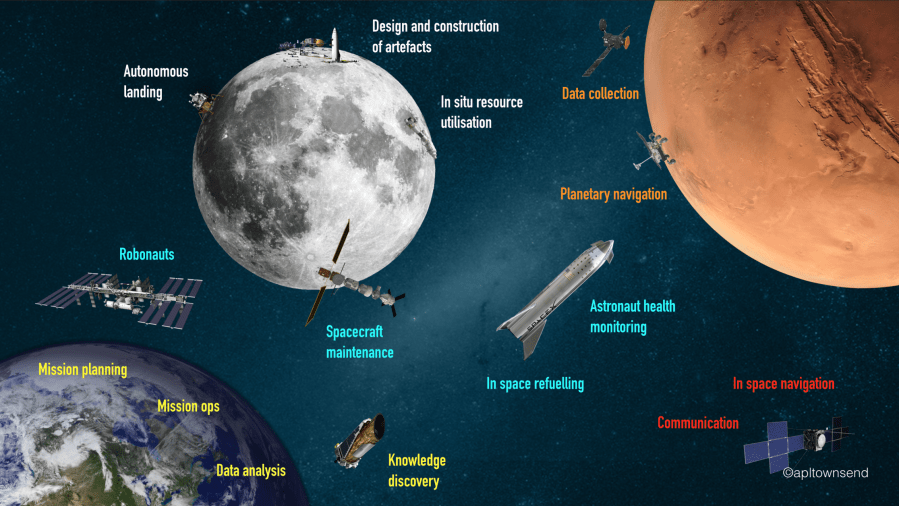
Space may be the final frontier, but it continues to pose myriad technical challenges as commercial and government-driven space investment continues. One of those challenges is developing more effective space-based communication systems for the increasing number of satellites and spacecrafts that need to interact with one another in the void. A team of researchers has developed an algorithm to enable cognitive radio functions on satellite communications systems to adapt themselves autonomously.
Current space communication systems deploy radio-resource selection algorithms, but they are rudimentary and work with a pre-programmed look-up table. Furthermore, they have little flexibility regarding the various parameters for the performance goals the system needs to achieve. Researchers from Worcester Polytechnic Institute, Pennsylvania State University and NASA’s John H. Glenn Research Center, have designed a new algorithm that allows autonomous parameter selection for radio resource allocated using a novel artificial intelligence architecture.
Credit : Third Party Reference
Autonomous space communication is critical because space is a harsh environment. A number of things can go wrong in space, which why space communications systems should be able to operate without human intervention. The team’s algorithms could serve as the core of a new cognitive engine (CE) used as a baseline for developing communication systems for the next generation of spacecraft and satellites.
The team developed a CE design that autonomously selects multiple radio transmitter settings while attempting to achieve multiple conflicting goals in a dynamically changing communications channel. It accomplishes this by leveraging reinforcement learning (RL) and “virtual exploration” structures studied in the author’s previous research. The CE integrates these with a novel artificial neural network ensemble design and new algorithms to implement the exploitation aspect of multi-objective reinforcement learning (MORL).
Credit : Third Party Reference
Through RL, the artificial neural network can be trained to adapt to the dynamic conditions of space through multiple trials and experiments, as the algorithm is set up to learn in a manner similar to the human brain by weighing inputs to achieve a goal. In the researchers’ CE, the system can learn how to adapt to achieve multiple goals for satellite communication.
The proof-of-concept design was created through computational simulations as well as ground- and spaced-based experiments. It successfully addresses the limitations of current technology by enabling:
Table-free state-action mapping with fixed memory size;
Operation over dynamically changing channels;
Decoupling of states from actions &
Usage of continuous action and state spaces.
As space exploration continues to develop with trips to the moon and Mars, cognitive radio and communication systems will be essential for space flight. There will be a need for space “internetworking” to manage the interaction of user spacecrafts, relay spacecrafts and ground stations. This new CE could be a needed progression for space communication to be more efficient and reliable for any situation encountered during space travel.
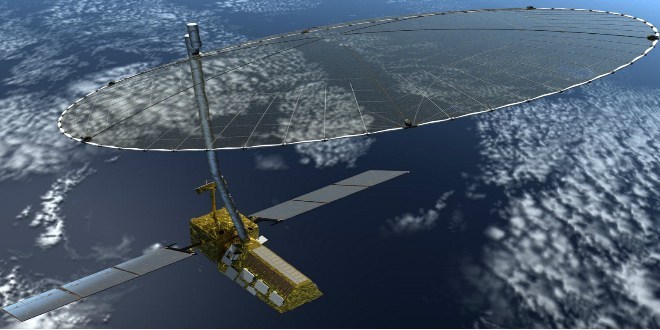
NASA (National Aeronautics and Space Administration) and ISRO (Indian Space Research Organisation) are one of the most admired space agencies know in today’s world (not to forget about ROSCOSMOS and ESA). While NASA is known throughout the world for its diverse missions (Voyagers, New Horizons, Cassini, Juno and many more to count on). In the meantime, ISRO is gearing up by creating the most cost-effective and marvelous launches known till date. But what if these two space agencies were to come together and work on a single project..? Well, that’s what NISAR is all about!
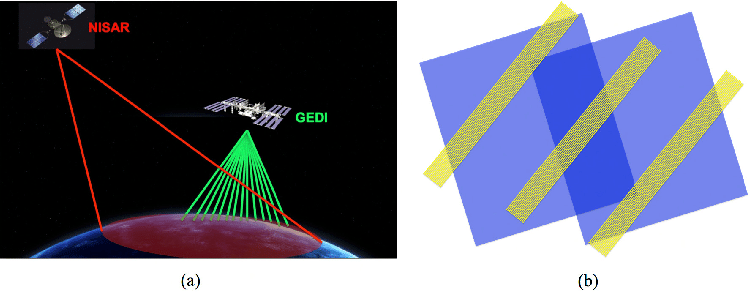
NISAR (NASA-ISRO Synthetic Aperture Radar) mission is a joint project between NASA and ISRO to co-develop and launch a dual-frequency synthetic aperture radar (SAR) satellite with the hopes of understanding our home planet in a better perspective than ever before.
Credit: Third Party Reference
KEY FACTS ABOUT NISAR:
NISAR is designed to map out earth’s entire land and ice masses 4 to 6 times a month and possibly provide an explanation for planet’s most complex geological problems, including natural disasters like earthquakes, volcanoes, tsunamis and even the mysteries to their origin.
2. NISAR will use Advance Radar Imaging to provide mankind with the finest and crispier view of the earth than ever achieved, with a staggering resolution of 5-10 m/pixel(For example, Google Earth has a peak resolution of 15m/pixel!). Moreover,all the data from NISAR would be freely available within 1-2 days of any natural disaster, if any.
3. The Project has an allocated budget of over $1 Billion, making it the most expensive earth-imaging satellite till date. ISRO’s share of the project cost is about US$110 million, and NASA’s share is about US$808 million.
4. NISAR is planned to be launched by 2021 aboard a GSLV MKII (Geosynchronous Satellite Launch Vehicle Mark II) from Satish Dhawan Space center located in India. The mission will have a payload mass of 2800 kg and will be suspended in a Sun-Synchronous orbit. It has a life expectancy of about 3 years.
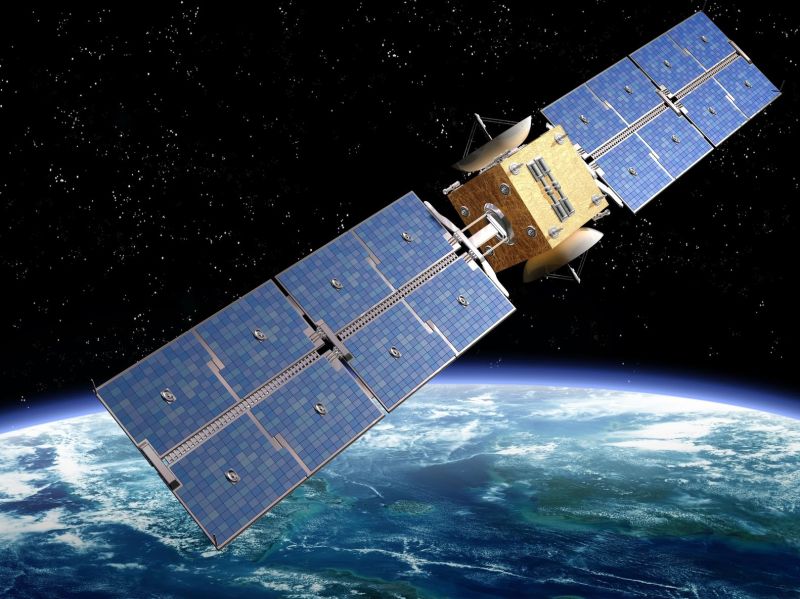
5. The satellite consists of a L Band and a S-Band Polarimetric Synthetic Aperture Radar (SAR), operating at the frequencies of 1.25 GHz and 3.2 GHz respectively. While NASA will be providing the L-band SAR, a payload data subsystem, a solid state recorder, and GPS receiver, ISRO will provide the Launch Vehicle and S-Band SAR.
Credit : Third Party Reference
Planned Launch Date: 2022
The NASA-ISRO SAR (NISAR) Mission will measure Earth’s changing ecosystems, dynamic surfaces, and ice masses providing information about biomass, natural hazards, sea level rise, and groundwater, and will support a host of other applications.
NISAR will observe Earth’s land and ice-covered surfaces globally with 12-day regularity on ascending and descending passes, sampling Earth on average every 6 days for a baseline 3-year mission.
Big-bang model, widely held theory of the evolution of the universe. Its essential feature is the emergence of the universe from a state of extremely high temperature and density —the so-called big bang that occurred 13.8 billion years ago. Although this type of universe was proposed by Russian mathematician Aleksandr Friedmann and Belgian astronomer Georges Lemaitre in the 1920s, the modern version was developed by Russian-born American physicist George Gamow and colleagues in the 1940s.
The Big bang theory itself is the outcome of thousands of brilliant minds put all together in astronomy and cosmology cautiously for exploring the origin of our universe.
Let’s move back in time.13.82 billion years ago, what was there?
Credit: Third Party Reference
A point of singularity, extraordinary small and hot where no laws of physics were applied, the time has no existence, all four fundamental forces exist forming a unified force called super force suddenly exploded because of no reason.
”SOMETHING CAME FROM NOTHING”
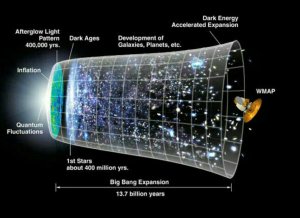
In less than one second, gravity split off from the super force. Three minutes later, the temperature dropped to 10 billion degrees of Fahrenheit, an appropriate temperature for the formation of atoms to take place. Lighter element, hydrogen came into existence.
Credit: Third Party Reference
After 380,000 years, light travelled through the darkness. 4 billion years later, stars started shaping due to the presence of heavier elements such as nitrogen, oxygen, carbon etc. At the age of 13.7 billion years, the sky filled with stars and galaxies.
Credit: Third Party Reference
In 1965, Arno Penzias and Robert Wilson build a radio receiver which accidentally recorded echo or aftershock noise of big bang docking from everywhere and every corner of the universe. This was experimentally proved by NASA’S Wilkison microwave Anisotropy probe on 3 June 2001.
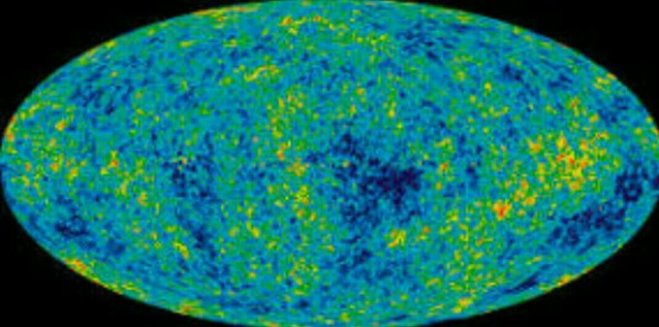
In February 2003, Cosmic microwave background provided a baby picture of our universe. Some of the major anomalies with the big bang theory were the unanswerable questions –
IS THERE SOMETHING OUT OF OUR UNIVERSE?
WHAT HAPPENED AT THE POINT OF SINGULARITY?
WHAT’S THE EXACT SHAPE OF OUR UNIVERSE?
HOW IS SPACE STRETCHING ITSELF FASTER THAN THE SPEED OF LIGHT?
WHAT WAS THE REASON BEHIND BIG BANG EXPLOSION?
Many alternate theories exist claming answer to these questions but none of them is experimentally verified.In 1980’s Alan Guth came up with the hypothesis of cosmic inflation i.e expanding universe which is now accepted as part of big bang theory.








 Eduindex
You must be logged in to post a comment.