5 IITians who excelled in different field .

Indian institute of technology (iits) are the most prestigious institution in india. The IITs are autonomous public technical universities located across India students are mostly attached towards iits because of the High package offered in these institutions. It’s quite obvious that the enterance in theses institute need a lot of Hard work and perseverance. The Institutes of Technology Act, 1961 lists twenty-three institutes. Each IIT is autonomous, linked to the others through a common council, which oversees their administration. So here is the list of IITians who excelled in different field like arts, science & technology.

1.Sundar Pichai
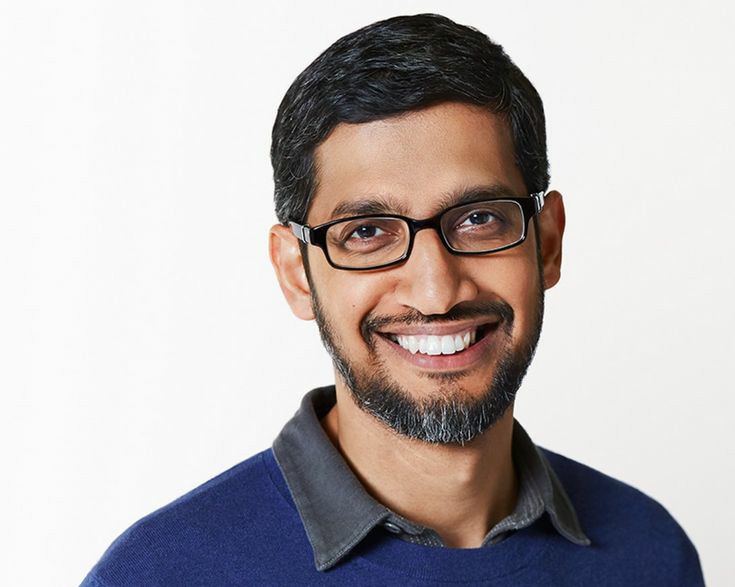
Born in Madras, India, Pichai earned his degree from IIT Kharagpur in metallurgical engineering. Moving to the United States, he attained an M.S. from Stanford University in materials science and engineering and further attained an MBA from the Wharton School of the University of Pennsylvania, where he was named a Siebel Scholar and a Palmer Scholar, respectively. Pichai was selected to become the next CEO of Google on August 10, 2015, after previously being appointed Product Chief by CEO, Larry Page. On October 24, 2015, he stepped into the new position at the completion of the formation of Alphabet Inc., the new holding company for the Google company family. He was appointed to the Alphabet Board of Directors in 2017.

2.Arvind Kejriwal
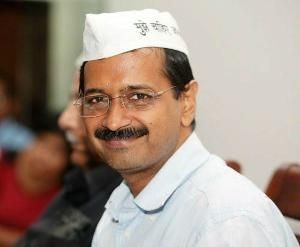
Arvind Kejriwal is the founder of Aam Admi Party (AAP), and Convenor of the same. He is a politician and a former bureaucrat who is the current and 7th Chief Minister of Delhi since February 2015.In 2006, Kejriwal was awarded the Ramon Magsaysay Award for Emergent Leadership in recognition of his involvement in the grassroots level movement Parivartan using right to information legislation in a campaign against government corruption. The same year, after resigning from Government service, he donated his Magsaysay award money as a corpus fund to found the Public Cause Research Foundation, a non-governmental organization (NGO). He was educated at Campus School in Hisar and at Holy Child School at Sonipat.In 1985, he took the IIT-JEE exam and scored All India Rank of 563.He graduated from Indian Institute of Technology Kharagpur, majoring in mechanical engineering.

3.chetan Bhagat
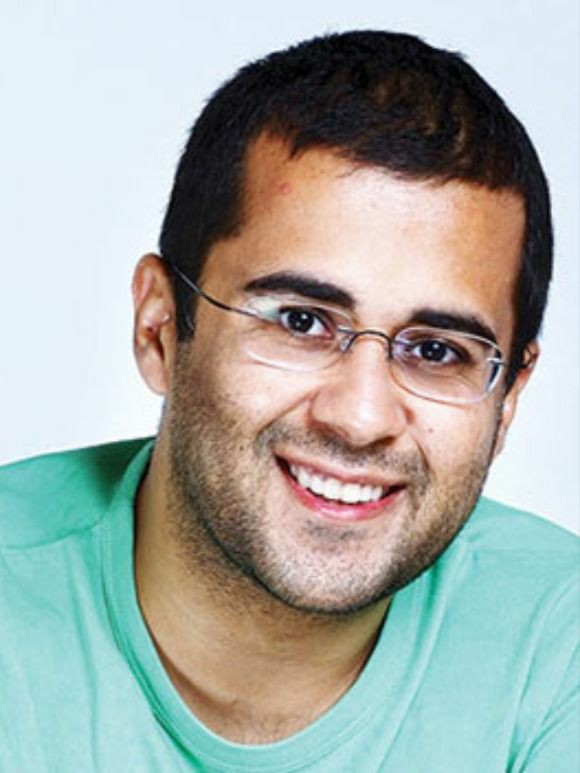
Chetan Bhagat is an Indian author and columnist. He was included in Time magazine’s list of World’s 100 Most Influential People in 2010. grew up in Naraina Vihar, West Delhi in a traditional middle-class Punjabi Hindu family. Bhagat graduated with a BTech degree in Mechanical Engineering from the Indian Institute of Technology, Delhi in 1995. Bhagat then went on to do an master’s of business administration degree in marketing from the Indian Institute of Management, Ahmedabad (IIMA) and graduated in 1997.

4.raghuram Rajan
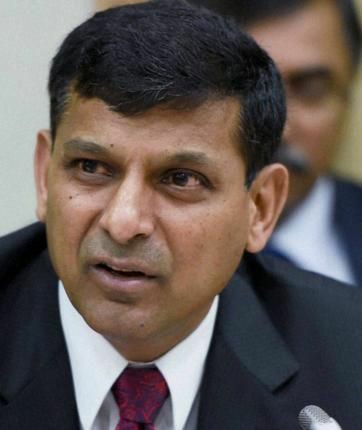
Raghuram Govinda Rajan  is a indian economist & former governor of the Reserve Bank of India.Between 2003 and 2006 he was Chief Economist and Director of Research at the International Monetary Fund. From September 2013 through September 2016 he was the 23rd Governor of the Reserve Bank of India; in 2015, during his tenure at the RBI, he became the Vice-Chairman of the Bank for International Settlements. In 1981 he enrolled at Indian Institute of Technology Delhi for a bachelor’s degree in electrical engineering. In the final year of his four-year degree, he headed the Student Affairs Council. He graduated in 1985 and was awarded the Director’s Gold Medal as the best all-round student. In 1987, he earned a Master of Business Administration from the Indian Institute of Management Ahmedabad, graduating with a gold medal for academic performance.

5.Jitendra Kumar

Jitendra is one actor who makes it a point to play relatable characters that we just can’t forget. From Jeetu to Gittu, he has starred in series/movies like Kota Factory, Panchayat, Shubh Mangal Zyada Saavdhan. He has won a Filmfare OTT award in the category of “Best Actor Comedy Series (Male) for portraying Abhishek Tripathi in Amazon Prime’s Panchayat. He did his bachelor’s in civil engineering from IIT Kharagpur .While studying civil engineering at IIT Kharagpur Jitendra kumar started liking acting. Kumar has done many stage plays as the Governor of the Hindi Technology Dramatics Society at IIT KGP where he met Biswapati Sarkar who eventually invited him to join TVF in 2012.

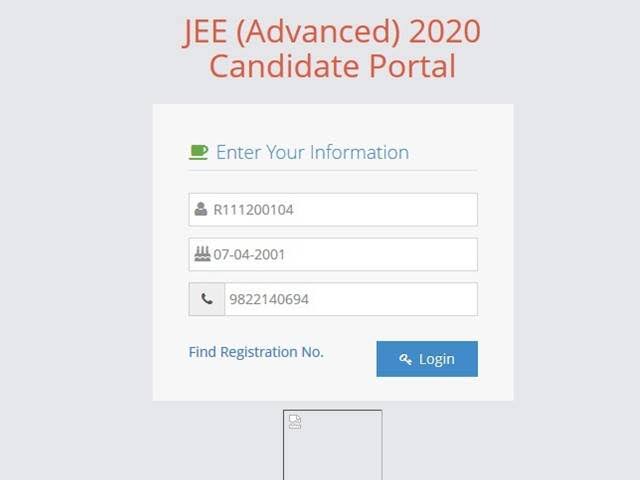
IIT JEE ADVANCED 2020 ADMIT CARD RELEASED

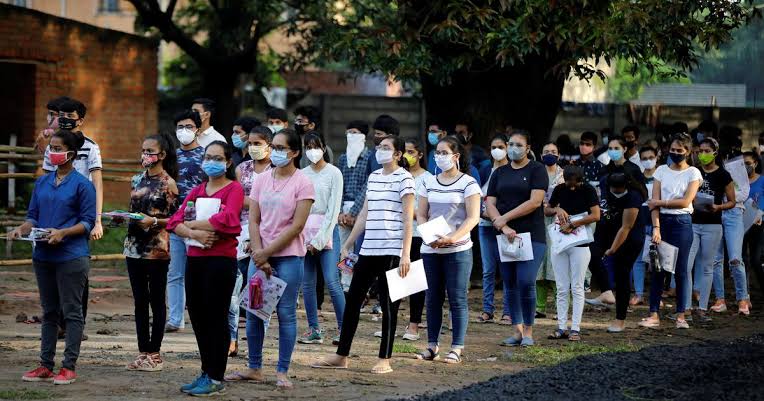
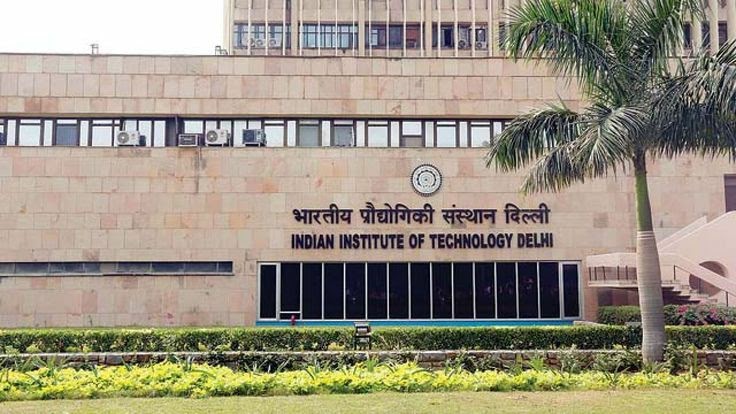
The Indian Institute of Technology (IIT) Delhi on Monday (September 21) released the admit cards for Joint Entrance Examination (Advanced) 2020 – the entrance exam for admission to undergraduate courses across IITs and IISc. The admit cards were released on official website of the board. 

Candidates who have registered for the JEE (Advanced) 2020 will be able to download their admit card online at jeeadv.ac.in. This year, a total of 1,60,864 students have registered to appear for the exam. These are the top-ranking students from the JEE Main. 
AdvertisingnullAdvertising

Around 2.5 lakh students were eligible to apply, however, the number of candidates choosing to appear for IIT entrance test declined massively this year due to the pandemic.

The JEE Advanced 2020 admit cards can be downloaded from Monday (September 21) 10:00 am to September 27 (9:00 pm). Candidates will have to visit jeeadv.ac.in to login and download your JEE Advanced admit card 2020.

The JEE Advanced 2020 admit cards will bear the candidate’s name, Roll Number for JEE Advanced 2020, photograph, signature, date of birth, address for correspondence and category. In addition, it will also bear the name and address of the examination centre allotted to the candidate. 

The JEE Advanced 2020 examination is scheduled to be conducted on September 27, 2020, at various centres spread across the state

NEET, JEE: Supreme Court rejects review petition to postpone the exams

Photo credit: Google images

Supreme Court on Friday refused to entertain the review petition filed by ministers of six opposition-ruled states who were seeking review of the court’s August 17 order to conduct NEET-UG and JEE EXAMINATIONS.

Six ministers from Maharashtra, Punjab, West Bengal, Jharkhand, Rajasthan and Chhattisgarh had had moved to the apex court saying that if the order was not reviewed, “grave and irreparable harm and injury would befall on the student community”.

The petitioners in the case were Moloy Ghatak (minister from West Bengal), Rameshwar Oraon (Jharkhand), Raghu Sharma (Rajasthan), Amarjeet Bhagat (Chhattisgarh), Balbir Singh Sidhu (Punjab), and Uday Ravindra Samant (Maharashtra). In its review plea, stated, “not only will health, welfare and safety of students/candidates appearing for the NEET/JEE examinations stand imperilled but also the public health at large would be in severe jeopardy…”

The ministers in the plea had claimed that the top court order failed to secure students’ “right to life” and ignored “teething logistical difficulties” to be faced in conducting the exams during the COVID-19 pandemic.

The state ministers on August 28 moved SC and demanded that the examinations be postponed by at least six to eight weeks keeping in mind the surge in coronavirus cases and health concerns of students. It alleged that the government’s decision to go ahead with examinations despite the 3.3 million covid cases with over 60,000 deaths, “reveals non application of mind, and is unreasonable, arbitrary and capricious exercise of power”.

The bench of Justices Ashok Bhushan, B R Gavai and Krishna Murari, which considered the pleas in-chamber, also rejected the applications seeking listing of the review petition in the open court. “Applications seeking permission to file review petitions are allowed. We have carefully gone through the review petitions and the connected papers. We find no merit in the review petitions and the same are accordingly dismissed,” the bench said in its order.

The JEE-Main will be held from 1 to 6 September, while NEET exams for admission to undergraduate courses in medical colleges is scheduled for 13 September. JEE Advanced for the Indian Institutes of Technology (IITs) is scheduled for later in September.

JEE-Mains have already begun across the country from September 1, with guidelines for maintaining social distance minimising contact.

PTI reported that on the third day of the JEE-Mains, 82.14 percent of the registered candidates appeared for the examination, as against 54.67 percent on the first day.

Insights –2nd day of JEE MAIN 2020 with Paper analysis.

Irrespective to student’s opinion, Govt. managed to organise the JEE Main Exams for nearly 8 lakhs of students from 1st of September to 6th of September. On the first day of exams i.e. 1st September, there were many speculations and doubts on the conduction of exams. However, there was no big news of any kind of unwanted and bad news across the country. Same was the situation in 2nd day. There was no such news of unpleasant incident around the whole country and exam went smooth, we can say although it faced many other issues. There was the news of students getting late across the country.

In a major announcement today, just half-an-hour before the exam began, the Nagpur bench of the Bombay High Court said that the students residing in flood-affected areas in Vidarbha region of Maharashtra can approach the National Testing Agency (NTA), if they were unable to reach the exam centre or reached late. The court also asked NTA to check the veracity of the claims and decide their representation within 15 days.

The JEE paper 2 was held yesterday and today onwards, the engineering exam will be conducted. JEE Main morning shift timing is 9 am to 12 noon. NTA conducted 1st shift exam with all security measures and students maintained social distancing. But still, some centres were failed to maintain social distancing and students shared photos and videos on twitter for the same. Due to the COVID-19 pandemic, the exam is being conducted amid special arrangement, from no shoes with thick soles to mandatory masks at exam hall – several arrangements have been made by the NTA. Over 10 lakh masks, 10 lakh pairs of gloves, 1,300 infrared thermometer guns, 6,600 litres of hand sanitiser and an equal amount of disinfectant liquid, 6,600 sponges, 3,300 spray bottles and 3,300 cleaning staff have been arranged at an additional cost of almost Rs 13 crore.

JEE Main 2020 for B.Tech/ B.E shift 2 has been concluded at 6 pm across 660 centres. Students are coming out of exam centres. The exam will be conducted at 660 centres across the country, which was increased from 570.

Analysis

On the analysis of the paper of JEE Main 2020, Exams pattern was observed like following. Paper was on the decent hard level. As per students, student’s reaction was not quite good. The stress of paper and fear of being corona positive while visiting the centre was peeping out from their faces.

-The overall level of the exam was Easy to Moderate. 

-Most of the Students were able to attempt 13-14 questions easily.

-however, physics section was a little difficult.

-Maths was moderate but they were quite time consuming.

-Chemistry was the easiest part in all three subjects.

-A lot of questions were based on NCERT & Applications (60-70%).

-Distribution of all questions were uniformly asked from whole syllabus in each of the subjects.

To know more about the question paper and its detail with every question, you can browse the JEE paper too. National Testing Agency (NTA) will publish JEE Main question paper PDF at nta.jeemain.nic.in. It will be released in candidate login, at jeemain.nta.nic.in.

The Joint Seat Allocation Authority (JoSAA) will start counselling for admission to IIITs, NITs, and GFTIs soon after the declaration of the JEE Main result. The registration for JoSSA counselling, according to the JEE Advanced brochure, will begin tentatively on October 6.

Candidates, who qualify in JEE Advanced 2020 and seek admission to BArch programme in IITs, will be required to sit for the Architecture Aptitude Test, or JEE Advanced AAT 2020.

What is NTA and who conducts JEE-NEET and many other examinations?

National Testing Agency (NTA) conducts competitive examinations like NEET, JEE, CAT, UGC NET, G-PAT. NTA was established under the Indian Institution Registration Act-1860. It is an autonomous institution that conducts entrance examinations for admission and scholarship in higher educational institutions of the country. The objective of this agency is to be efficient, transparent and test based on international standards to assess the eligibility of candidates for admission and recruitment.

Now, academic sessions of all medical colleges, IITs, NITs, CFTIs and ICAR-AU depend on these entrance exams, know why NTA is insisting on getting these exams early. This agency conducts the examination in online medium for which it has to select such schools and universities where all basic facilities are available and the conduct of the examination does not affect their academic routine

Why this exam is very important for NTA?
This entire exercise is to save the academic calendar. It is necessary for many candidates to conduct entrance examinations to save one year. So the NTA’s is trying very hard and giving their full effort to save one year of students, even if the sessions are slightly delayed for courses.

NTA Functions
-Making question papers of all subjects with the help of state-of-the-art technology.
-To create a panel of subject matter experts for testing along with a strong R&D culture.
-Providing training and advisory services from time to time in Indian educational institutions.
-Working closely with international organizations such as Educational Testing Services.
-Conduct of an examination in case of various ministries and central government departments and state governments entrusted with the responsibility of conducting the examination.
-To ensure improvement along with training in schools, boards and other bodies and periodically check the testing standards of entrance examinations.
-The President of NTA is a noted educationist and is appointed by the Union Ministry of Education.
-Its Chief Executive Officer is a Director-General who is appointed by the Central Government.
-The establishment of a specialized testing agency like NTA has reduced the burden of conducting examinations from institutions like Central Board of Secondary Education All India Council for Technical Education.

-NTA is helping all the individual colleges and universities in the country in the field of testing, training and providing advisory services to the institutions in India. To provide quality testing services for the institutions in India.
-NTA conducts examinations at least twice every year through online medium thereby increasing the chances of admission for candidates preparing for competitive examinations.
-This agency is setting up its centers at the district level and sub-district level to increase the reach in rural areas and for the convenience of the candidates.
-The National Testing Agency has set up practice testing centers along with the introduction of a mobile app, with the help of which candidates can also conduct mock tests on their smartphones and do their pre-test evaluation.

“JEE-MAINS”- The first step to a new beginning

JEE-MAINS stands for JOINT ENTRANCE TEST-MAINS which was earlier called as All India Engineering Entrance Examination (AIEEE). This is an undergraduate entrance test for taking admissions in various engineering and architecture institutes, mainly in 31 National Institutes of Technology (NITs), 23 Indian Institutes of Information Technology (IITs), and Government Funded Technical Institutes (GFTIs). This test is organized every year by National Teaching Agency (NTA) in India. This test was introduced in the year 2002.


STRUCTURE OF THE EXAM –
Until 2018, it was held only once after the CBSE exams, nearly in first week of April by the NTA since 2019 has decided to take this entrance test twice a year. Earlier, it held either electronically or online but now it happens only in the online mode.
It is a computer based entrance exam which consists of 2 papers:

  1. Paper 1 is for B.E. / B.Tech courses which only occurs in online mode from 2019, earlier there was an option of OMR based exam also. The qualification required for this paper is Physics, Chemistry and Mathematics as main subjects in class 12th.
  2. Paper 2 is for BArch and BPlanning courses. The knowledge of Mathematics, Aptitude, Drawing and Planning is required for being a part of this paper.
    The duration of the exam is 3 hours and candidates can apply for 3 subsequent years. LANGUAGE OF THE ENTANCE TEST –
    The exam was offered in English, Hindi and Gujarati. From January 2021, It has been planned to take the exam in eleven different languages namely Assamese, Bengali, English, Hindi, Gujarati, Kannada, Marathi, Odiya, Tamil, Telugu, Urdu.
    MODE OF EXAMINATION –
    • B.E. /B. Tech. (Paper 1) Physics, Chemistry and Mathematics, part 1, 2 and 3 respectively will be conducted in Computer Based Test mode only.
    • B. Arch (Paper 2) Mathematics and Aptitude Test, part 1 and 2 respectively will be held in Computer Based Test mode only. While Drawing Test or part 3 will be in offline mode on drawing sheet.
    • B. Planning (Paper 3) Mathematics, Aptitude Test and Planning Based Questions, part 1, 2 and 3 respectively will be held in Computer Based Test mode only.

PARTICIPATING INSTITUTES –
Institutes participating in the 2017 centralized seat allocation process included:
• The 31 National Institutes of Technology,
• The 24 Indian Institutes of Information Technology,
• 19 other central government or state government funded institutions including the three Schools of Planning and Architecture.
• Several self-financed institutes (during the spot round).
• Many other institutes used JEE (Main) ranks to fill seats through their own seat allocation processes.

NUMBER OF APPLICANTS

There are lakhs of students who appear in the entrance exam every year. The number of applicants has varied over the years, with the peak of over 1.35 millions in 2014.

  1. Starting from 2012, there were 1,220,000 students who appeared in the exam.
  2. In the year 2013, 1,282,000 students appeared.
  3. In 2014, 1,356,805 students appeared.
  4. In 2015, 1,304,495 students appeared.
  5. In 2016, 1,194,938 students appeared.
  6. In 2017, 1,186,454 students appeared.
  7. In 2018, 1,259,000 students appeared.
  8. From 2019, exam was conducted in two different phases. So, in 2019 in the first phase 929,198 students gave the exam while in second phase 935,741 students appreared for the exam.
  9. In 2020, in the first phase of the exam 921,261 students appeared whereas the second phase is still to be held.