
Laws in India children need to know

Out of tons of subjects and important topics missing from our Indian curriculum, laws are one of the most important.

Here are some laws each and every child needs to be aware of, regardless of all variable factors:

I LAWS AGAINST CHILD LABOUR
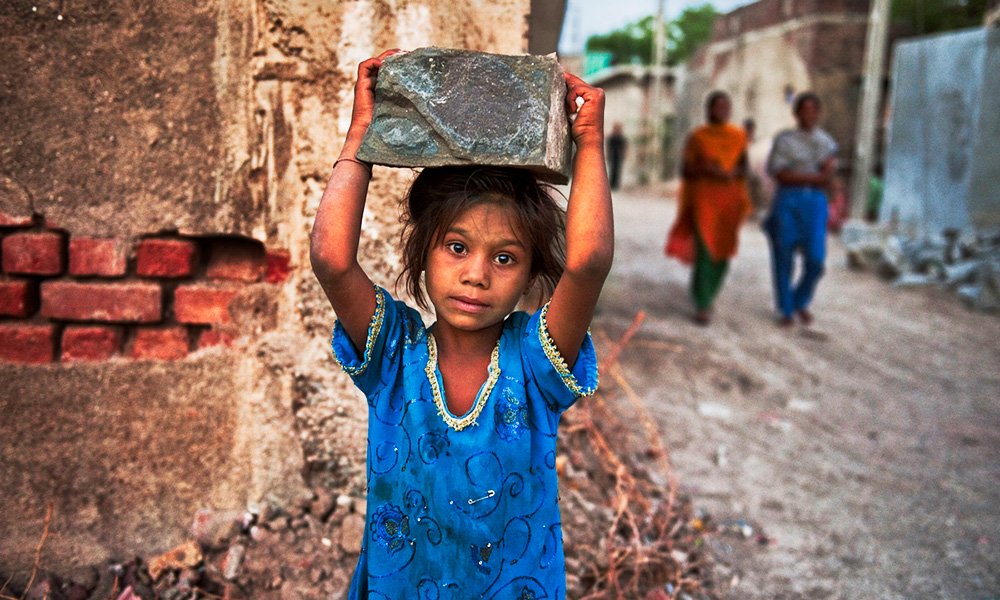
Image source: Google | Image by: Nikita Roy 

Children below 14 years of age – can work in family enterprise or entertainment industry as artists with certain conditions

Children between 14-18 years of age- cannot work in any factory, mine or any other hazardous setting, without exception

Children cannot be made to overwork or even work night shifts.

These laws are made clear in article 24 of the Indian constitution and acts that were passed in its pursuance.

II LAW AGAINST SEXUAL OFFENCES
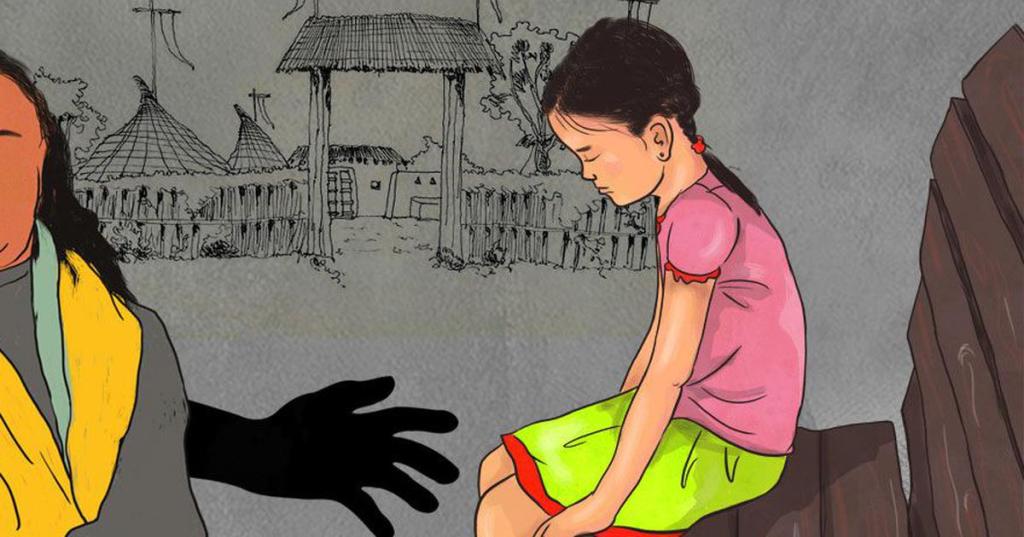
Image source: Google | Image by: Manisha Yadav scroll.in

The Protection of Children from Sexual Offences(POCSO), amendment Bill 2019 protects children below 18 against:

  • Sexual assault against children
  • Child pornography
  • Harassment
  • Drugs being administered to them to bring about early sexual maturity

POCSO aims at making offences against children gender-neutral.

III ENSURING FREE AND COMPULSORY EDUCATION
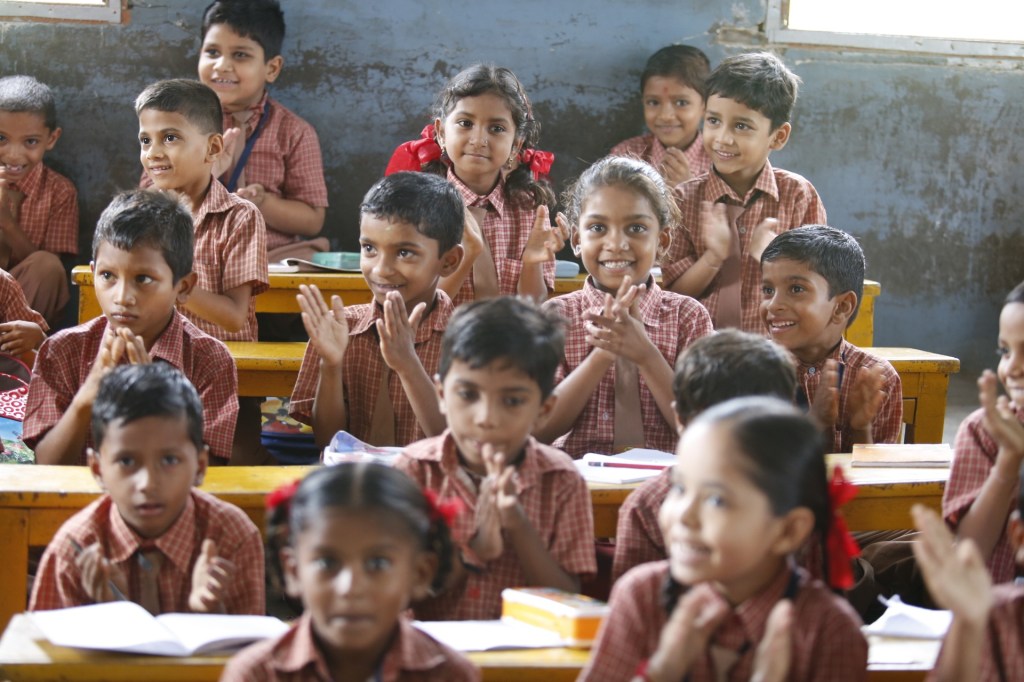
Image source: Google | Image by: Aprajita Jha

The Right of Children to Free and Compulsory Education Act or Right to Education Act (RTE), 2009, Article 21A of the Indian constitution, ensures free and compulsory education to everyone between 6 to 14 years of age. 25% of seats in all private institutions are reimbursed by the state to which kids are admitted based on economic status or caste-based reservations.

The Right to education of a specially enabled child (under 18 years of age) has separate legislation that is laid down under the Persons with Disability Act.

IV PROHIBITION OF CHILD MARRIAGE
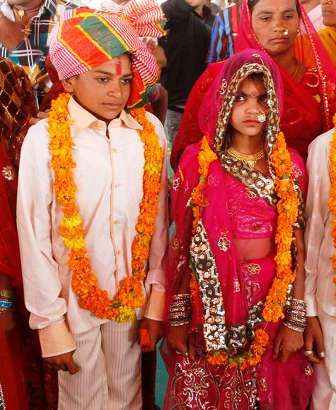
Image source: Google | Image by: OBJECTIVE IAS

Any marriage in which either the boy is under 21 or the girl is under 18, is child marriage.

Prohibition of Child Marriage Act, 2006 serves the following purpose:

  • Prevents child marriages
  • Protects the children involved
  • Prosecutes the offenders

Child marriages, under the above-mentioned act, are cognizable and non-bailable offences. This law also prescribes punishment for performing, conducting and abetting child marriage. Permitting or promoting these marriages by the parents of a child is punishable.

POCSO penalizes penetrative sexual assault on a child by anyone related to the child through marriage

Section 375IPC penalizes sexual acts with a girl below 18 years of age, with or without her consent.

V LAWS AGAINST TRAFFICKING
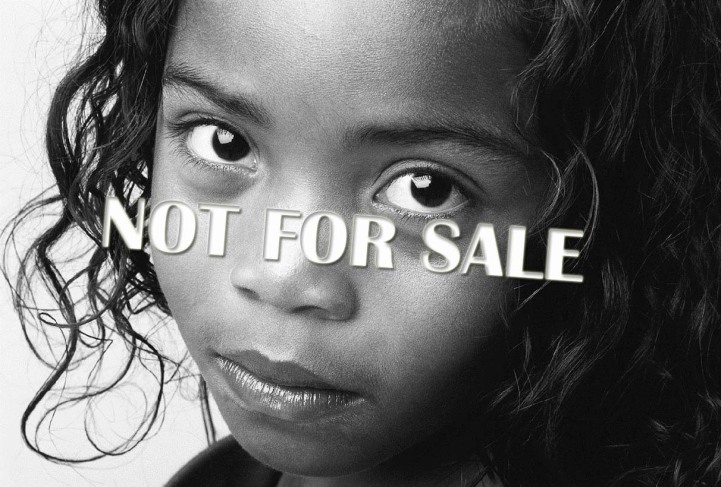
Image source: Google | Image by: Jessica Gooding

The Trafficking of Persons (Prevention, Protection and Rehabilitation) Bill of 2018 addresses this crime affecting mostly children and women.

This bill addresses:

  • Aggravated trafficking for forced labour
  • Begging
  • Trafficking by administering chemical substances or hormones for the purpose of early sexual maturity
  • Trafficking for marrying, under the ploy of marriage or after marriage.
  • Promotion or facilitation of such crimes

So these were some of the children specific laws other basic laws such as the right to equality, right to life, right against discrimination etc. should also be taught to children.

Here are some of the basic ways we can spread awareness:

  1. Including basic laws and fundamental rights in school textbooks.
  2. Making young parents aware of the laws.
  3. Workshops, seminars, etc. in educational institutions.
  4. Including them in cartoon shows and podcasts for children.

To all the parents reading this, ensure your child is safe and comfortable and make them aware of all the laws to ensure their well-being.

To all the children reading this,

If you’re being hurt in any manner, verbal abuse, beatings, bad touch, not being provided with essentials or absolutely anything that is making you feel uncomfortable, REPORT.

Here are some of the few actions you can take:

Image source: Google | Image by: Sage Day

Tell a trusted adult, your parents, grandparents, school counsellors or teachers. You can also tell a friends’ parent, or any other adult you trust.

Don’t have an adult you trust, don’t worry as there is support available, you can always call childline number 1098.

As a child being harassed, you might be threatened to stay mum, but it’s important you raise your voice.

If you think any of your friends or someone you know is being abused or suffering in any manner, you should tell your parents or teachers.

Child-friendly mechanisms are used in all stages of your case and you don’t ever need to hesitate to report when something unfair is happening to you. You don’t deserve that ordeal.

References:

  1. https://byjus.com/free-ias-prep/right-against-exploitation-articles-23-24/
  2. https://www.firstpost.com/india/child-labour-act-govt-allows-under-14-children-to-work-in-non-hazardous-family-enterprises-2242120.html
  3. https://www.business-standard.com/about/what-is-pocso
  4. http://righttoeducation.in/know-your-rte/about
  5. https://timesofindia.indiatimes.com/blogs/legally-speaking/legal-status-of-child-marriages-in-india/
  6. https://www.thehindu.com/opinion/op-ed/preventing-trafficking/article23325538.ece

Juvenile Justice Act, 2015: Unconstitutionality of the Amendment

The unconstitutional amendment of Juvenile Justice Act, 2015 begins its contradictions from the initial provisions itself. The section 2(12) of the main Act states that a juvenile means a person who has not completed the age of 18 years and on the other side this amended version contradicts its own law as it states that children from 16-18 years of age can be tried as adult criminals. It also reflects how arbitrary it is on testified along with the tests under Art. 14.

The test of Intelligible differentia, another test under Art. 14, is found unreasonable too due to the logic and the reasons behind the Act. Firstly, it replaces the word juvenile with child in conflict with law which was supposedly more humane. But this very child in conflict with law is meant to be tried for adult offences and this inhumane idea is conceived by the Government. Furthermore, the terms child alleged to be in conflict with law and child found to be in conflict with the law are not defined clearly and are used interchangeably in the Act. It stands as a great flaw due to the general understanding of the evident difference between alleged to be and found to be.

In the second test, the nexus between the classification and the object is absent as the authorities have acted without following the procedure to unequal treatment. The object or the purpose of the Juvenile Justice Act is to provide care, protection and child friendly approach but the approach suddenly disappears towards the child between the ages of 16-18 years. The objective of Juvenile Justice Act is not being fulfilled as Juveniles are being treated as adult criminals and sent to the prison where they would be influenced to be more hardened criminals since the purpose of the Act is to protect the juvenile from committing further crimes and evidently not fulfilled with the amendment. Instead the government through this specific provision is giving a hand in converting the juveniles into hardened criminals unlikely of the main idea which stands to reform the juveniles so that they could be accepted into the society.

There is also a violation of fundamental right under Art. 21 as the rights of opportunity to be heard and right of fair trial are infringed. The right of the juvenile to be tried infront of the Children’s Court gets him infront of the Session court with the other hardened criminals and consequently, the degree of punishment is harsher.

Section 15 of the Act seeks to repeal and replace the existing Juvenile Justice Act, 2002 with a draconian and unconstitutional amendment which instead of providing care and protection to the children deems them as an adult in cases where the alleged commission of crime by them is heinous in nature. It seeks to punish the child in conflict with the law for the failure of the society at large in providing the child with adequate care and protection. Juveniles in conflict with the law are more capable of change given the fact that their brains are still learning. Honest efforts made towards rehabilitation — including visits by a mental health professional three-four times a month — will have a significant positive impact on them. Unfortunately, there is no psychiatric screening in Indian prisons. No mental health professional would meet the juvenile convicted in any case and would lead to its worser development, totally against the objective of the Act. Every child develops in different background factors and considering to bring most of them into a similar set would be unethical since their mental faculty would not be equal.

The provision does not necessarily decide on the child in respect to his psychological or social factors but only governs on his mental faculty while committing the crime. It is totally undermined by the government that the mental faculty actually develops through these factors. More often than not the children who are put into rehabilitation centres come through as a changed human being. Under the existing law of a child in conflict with law between the age of 16-18 years who were found to have committed an offence by Juvenile Justice Board, there was an arrangement of rehabilitation supposition that could be passed by the Board. This rehabilitation disposition includes admonition community service, imposition of fine, probation group counselling and an extreme measure of deprivation of liberty by way of placement of the child in the special home for three years. The same facilities however could take a drastic turn in for cases when they are handed over the sessions court.

There are many further circumstances under the Indian law a person under the age is not allowed to vote, is considered minor for entering into a contract, a girl of age less than eighteen years cannot give consent for sexual relationships, a child of age less than eighteen years cannot marry. Yet by the amended Act that child can be tried as an adult after a preliminary assessment, the child shall be presumed to have the knowledge and understanding of the alleged crime that he has committed. Such a scenario would be travesty of justice. The idea behind treating a certain age group as children is to protect the most vulnerable section of the society where the government would have analysed in such matters that they are not mature enough to deal with these things. It is unjust and against the well-established principle lex iniusta non est lex that states that unjust law is not a law.

 Section 15 of Juvenile Justice Act, 2015 is hence against natural conscience, unjustified and unconstitutional to which we hope, no child falls as prey.