


“WHERE SHIVA EXISTS IN EVERY STONE , IS UTTRAKHAND “
And this statement gives the justification of why Uttarakhand is know as “the land of gods “. Uttarakhand was formed on 9th November 2000 as the 27th State of India, when it was carved out of northern Uttar Pradesh. Located at the foothills of the Himalayan mountain ranges, it is largely a hilly State, having international boundaries with China (Tibet) in the north and Nepal in the east. On its north-west lies Himachal Pradesh, while on the south is Uttar Pradesh. It is rich in natural resources especially water and forests with many glaciers, rivers, dense forests and snow-clad mountain peaks. Char-dhams, the four most sacred and revered Hindu temples of Badrinath, Kedarnath, Gangotri and Yamunotri are nestled in the mighty mountains.
LET ME GIVE YOU A BRIEF ABOUT THE MAJOR TEMPLES FOR WHICH UTTARAKHAND IS FAMOUS FOR :
- PANCH BADRI ( 5 BADRI )
a. BARDINATH : Badrinath is the northern Dham of the four sacred Dhams called Char Dham. Though the Badrinath temple is believed to date to the Vedic period, the current structure was built in the 8th century AD by Adi Shankaracharya. The other three dhams are Rameswaram in the south, Dwarka in the west and Jagannath Puri in the east; all of these four temples are dedicated to god Vishnu. Adi Shankara’s basic intention was to unite the country under the banner of Hinduism. The temple, which had been subjected to damage due to snow avalanches and landslides, several times in the past, was last restored in the 19th century. Badrinath is also part of Chota Char Dham, four sacred temples in Uttarakhand. The others include the Shiva temple of Kedarnath and the sources of the holy rivers Ganges and Yamuna.
b. AADI BADRI : In ancient times, when approach to the main shrine of Badrinath was closed due to weather conditions, pilgrims worshipped Vishnu at this temple. Adi Badri, also known as Helisera according to revenue records, is a tiny temple complex enclosed within a space of 14 meters (46 ft.) X 30 meters (98 ft.). The height of the temples vary from 2–6 meters (6.6–19.7 ft.).
c. BHAVISHAY BADRI: According to the legend of Bhavishya Badri (literally “Badri of the future”), when evil transcends the world, the mountains of Nara and Narayana would block up the route to Badrinath and the sacred shrine would become inaccessible. The present world will be destroyed and a new one established. Then, Badrinath will appear at the Bhavishya Badri temple and be worshipped here, instead of the Badrinath shrine.
d. DHAYAN BADRI : The legend of Dhyan Badri (meditating Badri) is linked to the Urvashi, son of King Puranjaya of the Pandavas lineage who meditated in the Urgam region and established the temple for Vishnu. The image of Vishnu is four-armed, made of black stone and in a meditative posture.
e. YOGADHYAN BADRI : Yogadhyan Badri, also called Yoga Badri, is located at Pandukeshwar at the elevation of 1,829 meters , close to Govind Ghat and is as ancient as the main Badrinath shrine . Legend has it that King Pandu, father of the five Pandavas – heroes of the Hindu epic Mahabharata, meditated here to god Vishnu to cleanse him of the sin of killing of two mating deer, who were ascetics in their previous lives. The Pandavas were also born here and Pandu died and attained salvation here. Pandu is believed to have installed the bronze image of Vishnu in the Yogadhyan Badri shrine. The image is in a meditative posture and thus the image is called Yoga-Dhyan (meditative) Badri. The idol is life size and has been carved from Shaligram stone. According to legend, the Pandavas, after defeating and killing their cousins Kauravas in the Mahabharata war, came here to repent.
2. PANCH KEDAR ( 5 KEDAR )
A folk legend about Panch Kedar relates to the Pandavas, the heroes of the Hindu epic Mahabharata. The Pandavas defeated and slayed their cousins — the Kauravas in the epic Kurukshetra war. They wished to atone for the sins of committing fratricide and Brahmanahatya (killing of Brahmins — the priest class) during the war. Thus, they handed over the reins of their kingdom to their kin and left in search of lord Shiva and to seek his blessings. First, they went to the holy city of Varanasi (Kashi), believed to be Shiva’s favorite city and known for its Shiva temple. But, Shiva wanted to avoid them as he was deeply incensed by the death and dishonesty at the Kurukshetra war and was, therefore, insensitive to Pandavas’ prayers. Therefore, he assumed the form of a bull (Nandi) and hid in the Garhwal region.
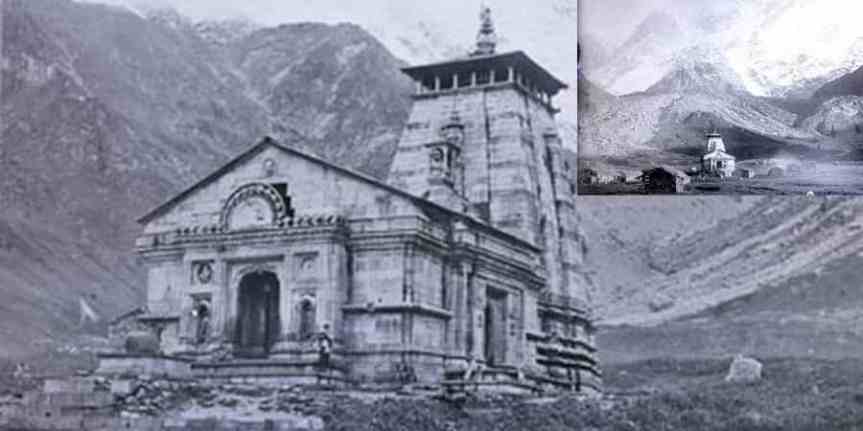
Not finding Shiva in Varanasi, the Pandavas went to Garhwal Himalayas. Bhima, the second of the five Pandava brothers, then standing astride two mountains started to look for Shiva. He saw a bull grazing near Guptakashi (“hidden Kashi” — the name derived from the hiding act of Shiva). Bhima immediately recognized the bull to be Shiva. Bhima caught hold of the bull by its tail and hind legs. But the bull-formed Shiva disappeared into the ground to later reappear in parts, with the hump raising in Kedarnath, the arms appearing in Tungnath, the face showing up at Rudranath, the nabhi (navel) and stomach surfacing in Madhyamaheshwar and the hair appearing in Kalpeshwar. The Pandavas pleased with this reappearance in five different forms, built temples at the five places for venerating and worshipping Shiva.
3. PANCH PRAYAG( FIVE PRAYAG )
- VISHNU PRAYAG : The Alaknanda River, which originates from Satopanth glacier is joined by the Dhauli Ganga River near Joshimath . Alaknanda flows in front of the Badrinath temple, one of the most revered Hindu shrines. Dhauli Ganga originates from the Niti Pass, after traveling a distance of 25 km (15.5 mi) from its source to the Vishnu Prayag
2. NAND PRAYAG :Nand Prayag is the second Prayag in the cascade sequence of the confluences where the Nandakini River joins the main Alaknanda River. According to one tale, a noble King Nanda performed Yagnya (fire-sacrifice) and sought blessings of God. Hence, the confluence is named after him.
3. KARNA PRAYAG : KARN Prayag is the location where Alaknanda River is joined by the Pindar River that originates from the Pindar glacier, below the Nanda Devi Mountain range. The epic Mahabharata legend narrates that Karna did penance here and earned the protective gear of Kavacha (armour) and Kundala (ear rings) from his father, the Sun god, which gave him indestructible powers. The name of the confluence is thus derived from the name of Karna.
4. RUDRA PRAYAG : At Rudra Prayag the Alaknanda meets the Mandakini River. The confluence is named after god Shiva, who is also known as Rudra. According to a widely narrated legend, Shiva performed the Tandava here, Tandava is a vigorous dance that is the source of the cycle of creation, preservation and dissolution. Shiva also played his favourite musical instrument the Rudra veena here. By playing the Veena, he enticed god Vishnu to his presence and converted him to water.
5. DEV PRAYAG : Dev Prayag is the confluence of the two holy rivers, the Bhagirathi – the chief stream of the Ganges and the Alaknanda. It is the first prayag on the way to Badrinath. Beyond this confluence, the river is known as Ganges. The holiness of this place is considered equal to the famous Triveni sangam confluence at Allahabad where the Ganges, Yamuna and Saraswati rivers merge.
A part from temples , there are many other famous place to pay a visit for . some of them are , Dehradun , Nainital , Mussoorie , Rishikesh, Haridwar , Almora , Kausani , Pithoragarh , Chopta , Ranikhet , valley of flowers , etc. One in his life time should make a visit to this state , to see nature from you soul , from your eyes . It is a heaven on earth .

 Eduindex
You must be logged in to post a comment.