A.P.J. Abdul Kalam biography

 
By: Astha Raghav 

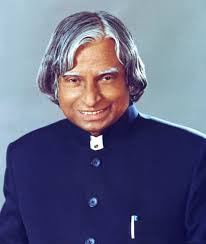
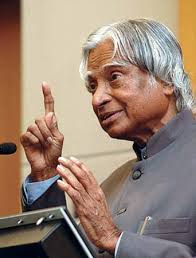
A.P.J. Abdul Kalam , in full Avul Pakir Jainulabdeen Abdul Kalam, (born October 15, 1931, Rameswaram, India—died July 27, 2015, Shillong), Indian scientist and politician who played a leading role in the development of India’s missile and nuclear weapons programs. He was president  of India from 2002 to 2007.

Kalam earned a degree in aeronautical engineering  from the Madras Institute of Technology and in 1958 joined the Defence Research and Development Organisation (DRDO). In 1969 he moved to the Indian Space Research Organization, where he was project director of the SLV-III, the first satellite launch vehicle that was both designed and produced in India. Rejoining DRDO in 1982, Kalam planned the program that produced a number of successful missiles, which helped earn him the nickname “Missile Man.” Among those successes was Agni, India’s first intermediate-range ballistic missile, which incorporated aspects of the SLV-III and was launched in 1989.

From 1992 to 1997 Kalam was scientific adviser to the defense minister, and he later served as principal scientific adviser (1999–2001) to the government with the rank of cabinet minister. His prominent role in the country’s 1998 nuclear weapons tests solidified India as a nuclear power  and established Kalam as a national hero, although the tests caused great concern in the international community . In 1998 Kalam put forward a countrywide plan called Technology Vision 2020, which he described as a road map for transforming India from a less-developed to a developed society in 20 years. The plan called for, among other measures, increasing agricultural productivity, emphasizing technology as a vehicle for economic growth , and widening access to health care and education.

Thank You!

Goods and Services Tax


By: Astha Raghav 

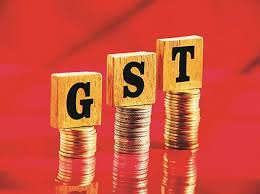
The goods and services tax (GST) is a value-added tax levied on most goods and services sold for domestic consumption. The GST is paid by consumers, but it is remitted to the government by the businesses selling the goods and services.

The goods and services tax (GST) is an indirect federal sales tax that is applied to the cost of certain goods and services. The business adds the GST to the price of the product, and a customer who buys the product pays the sales price inclusive of the GST. The GST portion is collected by the business or seller and forwarded to the government. It is also referred to as Value Added Tax( VAT) in some countries.

Most countries with a GST have a single unified GST system, which means that a single tax rate is applied throughout the country. A country with a unified GST platform merges central taxes (e.g., sales tax, excise duty tax, and service tax) with state-level taxes (e.g., entertainment tax, entry tax, transfer tax, sin tax, and luxury tax) and collects them as one single tax. These countries tax virtually everything at a single rate.

Only a handful of countries, such as Canada and Brazil, have a dual GST structure. Compared to a unified GST economy where tax is collected by the federal government and then distributed to the states, in a dual system, the federal GST is applied in addition to the state sales tax. In Canada, for example, the federal government levies a 5% tax and some provinces/states also levy a provincial state tax (PST), which varies from 7% to 10%. In this case, a consumer’s receipt will clearly have the GST and PST rate that was applied to their purchase value.

More recently, the GST and PST have been combined in some provinces into a single tax known as the Harmonized Sales Tax(HST). Prince Edward Island was the first to adopt the HST in 2013, combining its federal and provincial sales taxes into a single tax. Since then, several other provinces have followed suit, including New Brunswick, Newfoundland and Labrador, Nova Scotia, and Ontario. 

France was the first country to implement the GST in 1954; since then, an estimated 160 countries have adopted this tax system in some form or another. Some of the countries with a GST include Canada, Vietnam, Australia, Singapore, United Kingdom, Monaco, Spain, Italy, Nigeria, Brazil, South Korea, and India.

India established a dual GST structure in 2017, which was the biggest reform in the country’s tax structure in decades. The main objective of incorporating the GST was to eliminate tax on tax, or double taxation, which cascades from the manufacturing level to the consumption level.

For example, a manufacturer that makes notebooks obtains the raw materials  for, say, Rs. 10, which includes a 10% tax. This means that they pay Rs. 1 in tax for Rs. 9 worth of materials. In the process of manufacturing the notebook, the manufacturer adds value to the original materials of Rs. 5, for a total value of Rs. 10 + Rs. 5 = Rs. 15. The 10% tax due on the finished good will be Rs. 1.50. Under a GST system, the previous tax paid can be applied against this additional tax to bring the effective tax rate to Rs. 1.50 – Rs. 1.00 = Rs. 0.50.

In turn, the wholesaler purchases the notebook for Rs. 15 and sells it to the retailer at a Rs. 2.50 markup value for Rs. 17.50. The 10% tax on the gross value of the good will be Rs. 1.75, which the wholesaler can apply against the tax on the original cost price from the manufacturer (i.e., Rs. 15). The wholesaler’s effective tax rate will, thus, be Rs. 1.75 – Rs. 1.50 = Rs. 0.25.

Similarly, if the retailer’s margin is Rs. 1.50, his effective tax rate will be (10% x Rs. 19) – Rs. 1.75 = Rs. 0.15. Total tax that cascades from manufacturer to retailer will be Rs. 1 + Rs. 0.50 + Rs. 0.25 + Rs. 0.15 = Rs. 1.90.

India has, since launching the GST on July 1, 2017, implemented the following tax rates: 

  • A 0% tax rate applied to certain foods, books, newspapers, homespun cotton cloth, and hotel services.
  • A rate of 0.25% applied to cut and semi-polished stones.
  • A 5% tax on household necessities such as sugar, spices, tea, and coffee.
  • A 12% tax on computers and processed food.
  • An 18% tax on hair oil, toothpaste, soap, and industrial intermediaries.
  • The final bracket, taxing goods at 28%, applies to luxury products, including refrigerators, ceramic tiles, cigarettes, cars, and motorcycles.                                                          Thank You!                                                        

Say No To Crackers


By: Astha Raghav 

DIWALI and one can hear the sounds of firecrackers exploding from all directions. People of all age groups are fascinated with firecrackers, which form a prominent part of the Diwali celebrations. Firecrackers are known to cause air pollution as well as noise pollution and are extremely harmful for senior citizens and small children.   Pets such as dogs and cats also suffer on account of firecrackers as animals have a more sensitive sense of hearing than humans. 

Firecrackers can cause hearing loss, high blood pressure, sleeping disturbances and sudden exposure to loud noise can cause temporary or permanent deafness or even result in heart attack. 

Diwali is the biggest festival of India and its sanctity should not be blown away in smoke. This festival of goodwill can be celebrated in a number of ways other than bursting firecrackers.

Let each one of us take a pledge THIS DIWALI to “SAY NO TO CRACKERS” and invest in a safer and greener future. Diwali is the festival of lights and we must enlighten our lives with the sparkle of joy and goodwill, forget past grievances and look ahead towards a brighter and happier future.

Over the years several Bollywood celebrities have vowed against bursting crackers during Diwali and some have made good use of social media to raise awareness regarding the ills they cause not just to the environment but also humans and animals. In 2017, actress Alia Bhatt started the #PoochOverPataka campaign as she couldn’t bear to see her pet suffer due to the noise pollution. Anushka Sharma followed it with #PAWsitive. Each year, several artists speak of their concerns over health, pollution and the amount of waste bursting crackers causes.

“I remember as a boy I used to love firecrackers and I’m not going to be ashamed of that. But now I believe the time of crackers is over,” actor Boman Irani told MAIL TODAY. “One should understand that. Environmentally, for older people, for dogs, for your own lungs, for all the money that could have been put to better use Even the noise I can’t stand anymore. I find it tough to find a positive, except for the sparkling colours they give.”

Actress Isha Koppikar agreed and said celebrating a “green” Diwali is an excellent idea. “Instead donate your old stuff to the needy people, avoid plastic for gifts packaging, make rangoli with flowers, flour or rice products, gift herbal products or a plant. Buy earthen lamps or diyas and avoid using decorative electric lights. This Diwali let the Earth breathe,” she said.

But as they say charity begins at home and The Family Man actor Sunny Hinduja makes sure he doesn’t burst crackers and encourages his nephew and niece not to do it either.

“I was in Indore one Diwali with my brother and bhabhi, and I came home from the hostel to celebrate with them. I remember we were trying to burst what was known as the Laxmi Bomb’ but it wouldn’t light and we were scared because we had heard horror stories of it suddenly bursting when you went near it. So we waited for a long time and when I did go to check, it literally burst in my face,” recalled Hinduja. “If you don’t burst crackers on Diwali, it doesn’t mean you are breaking tradition. Traditions are made by us and it’s time we evolve, considering pollution, cutting down trees global warming, so much is happening. So even if it’s not such a big contribution from our side, we shouldn’t burst crackers and tell others not to do it either. That’s our responsibility as good citizens.”

Thank You!

Take Care of Stray Animals


By: Astha Raghav 

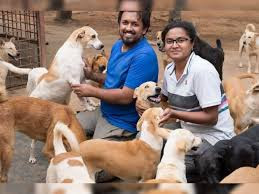
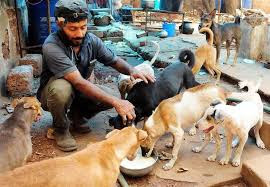
Every year, millions of animals end up in shelters all across the globe. These animals are either rescued from the streets or dropped off at the shelter. Though a lot of these shelters provide outstanding care and attention, there are still limitations to what they can do.

As an individual, you can contribute to these efforts in a lot of different ways. Running a shelter involves a ton of work and they will need all the help they can get. Offering even a small donation or volunteering a short amount of your time can make a huge difference.

Animals, whether we are aware or not, play a huge role in our lives and in the environment. Therefore, it’s in our best interest to help them however we can.

Altruism aside, there are quite a few key reasons we should care for them. One reason is to prevent the spread of disease.

Diseases, such as rabies, pose a huge threat to humans. The disease is fatal to humans, as well as to the animals who carry it. Infected animals become aggressive and bite without provocation.

Rescuing animals helps prevent the spread of rabies by reducing the population of potential carriers in the wild. This reduces the chance of infected animals harming other people and animals in the community.

The best and most effective way to help homeless animals is to raise awareness in the community.

Talking to people in the community can bring about the changes that will dramatically improve the welfare of these animals.

Spay and neuter your own pets, if you have them, and tell your friends to spay and neuter their pets. Spaying and neutering help control the population of strays in the community.

Advocate for adopting pets instead of shopping. There are a lot of pets in shelters today that are eager to find their forever homes. Adopting helps improve their lives and allows shelters to accommodate more pets that need their help. Some shelters even give you a starter kit of blankets, toys, and other things you may need to care for your new pet.

You can also consider donating your time and skills to your local centers. Volunteering to help out in the shelter for a few hours a week will surely be appreciated by the staff. If you have other skills such as carpentry, accounting, or graphic design, you can offer your services to the shelter. You can help build things for the animals, balance the shelter’s books, or design advertisements and print ads for the shelter.

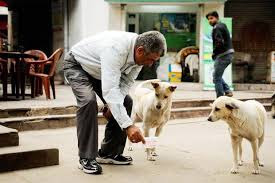
If you see a stray dog in your area, you can help them, but you should do so with caution.

Never approach stray dogs, especially if they look scared. You may have the best intentions, but they don’t know that and could bite if you get too close. Instead, call your local animal control or animal rescue center for assistance.

Stray dogs are easily spooked and can become aggressive when cornered. It is best to let the experts handle the situation for the safety of the dog and everyone involved. Once in custody, the dogs will be tested for various diseases and their overall health is checked.

Just like dogs, stray and feral cats can be very aggressive when approached.

For you and the cat’s safety, it is best to call for professionals to deal with the situation. Until proper testing is done, one can’t be sure if the animal is free from diseases like rabies which pose a serious threat to humans.

Once in custody, you can help the cat by visiting them often once. Donating some supplies such as blankets and a litter box would be a great way to help as well.

Once fully recovered and tested for any diseases, fostering cats until they find a forever home is a possibility. Who knows, you might find a furry friend that you’d like to adopt yourself!

<

p style=”background-color: white;color: #444444;font-family: Roboto, sans-serif;font-size: 15px;margin: 0px 0px 20px;padding: 0px”>Thank You!

Role of youth in the development of country

By: Astha Raghav 

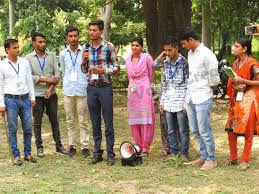
It is a well-known fact that the youth of any country is a great asset. They are indeed the future of the country and represent it at every level. The role of youths in nation-building is more important than you might think. In other words, the intelligence and work of the youth will take the country on the pathway of success. As every citizen is equally responsible, the youth is too. They are the building blocks of a country.

 The youth is important because they will be our future. Today they might be our partners, tomorrow they will go on to become leaders. The youths are very energetic and enthusiastic. They have the ability to learn and adapt to the environment. Similarly, they are willing to learn and act on it as well to achieve their goals.

Our youth can bring social reform and improvement in society. We cannot make do without the youth of a country. Furthermore, the nation requires their participation to achieve the goals and help in taking the country towards progress.

Likewise, we see how the development of any country requires active participation from the youth. It does not matter which field we want to progress in, whether it is the technical field or sports field, youth is needed. It is up to us how to help the youth in playing this role properly. We must make all the youth aware of their power and the role they have to play in nation-building.

There are many ways in which we can help the youth of our country to achieve their potential. For that, the government must introduce programs that will help in fighting off issues like unemployment, poor education institutes and more to help them prosper without any hindrance.

Similarly, citizens must make sure to encourage our youth to do better in every field. When we constantly discourage our youth and don’t believe in them, they will lose their spark. We all must make sure that they should be given the wind beneath their wings to fly high instead of bringing them down by tying chains to their wings.

Furthermore, equal opportunities must be provided for all irrespective of caste, creed, gender, race, religion and more. There are various issues of nepotism and favoritism that is eating away the actual talent of the country. This must be done away with as soon as possible. We must make sure that every youth has the chance to prove themselves worthy and that must be offered equally to all.

In short, our youth has the power to build a nation so we must give them the opportunity. They are the future and they have the perspective which the older generations lack. Their zeal and enthusiasm must be channelized properly to help a nation prosper and flourish.

Thank You!

Lal Bahadur Shastri Biography

By: Astha Raghav 

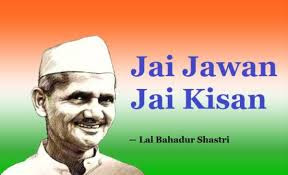
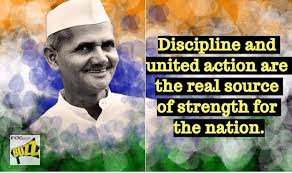
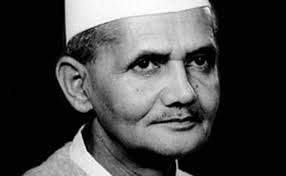
Shri Lal Bahadur Shastri was born on October 2, 1904 at Mughalsarai, a small railway town seven miles from Varanasi in Uttar Pradesh. His father was a school teacher who died when Lal Bahadur Shastri was only a year and half old. His mother, still in her twenties, took her three children to her father’s house and settled down there.

Lal Bahadur’s small town schooling was not remarkable in any way but he had a happy enough childhood despite the poverty that dogged him.

He was sent to live with an uncle in Varanasi so that he could go to high school. Nanhe, or ‘little one’ as he was called at home, walked many miles to school without shoes, even when the streets burned in the summer’s heat.

As he grew up, Lal Bahadur Shastri became more and more interested in the country’s struggle for freedom from foreign yoke. He was greatly impressed by Mahatma Gandhi’s denunciation of Indian Princes for their support of British rule in India. Lal Bahadur Sashtri was only eleven at the time, but the process that was end day to catapult him to the national stage had already begun in his mind.


Lal Bahadur Shastri was sixteen when Gandhiji called upon his countrymen to join the Non-Cooperation Movement. He decided at once to give up his studies in response to the Mahatma’s call. The decision shattered his mother’s hopes. The family could not dissuade him from what they thought was a disastrous course of action. But Lal Bahadur had made up his mind. All those who were close to him knew that he would never change his mind once it was made up, for behind his soft exterior was the firmness of a rock.

Lal Bahadur Shastri joined the Kashi Vidya Peeth in Varanasi, one of the many national institutions set up in defiance of the British rule. There, he came under the influence of the greatest intellectuals, and nationalists of the country. ‘Shastri’ was the bachelor’s degree awarded to him by the Vidya Peeth but has stuck in the minds of the people as part of his name.

In 1927, he got married. His wife, Lalita Devi, came from Mirzapur, near his home town. The wedding was traditional in all senses but one. A spinning wheel and a few yards of handspun cloth was all the dowry. The bridegroom would accept nothing more.

In 1930, Mahatma Gandhi marched to the sea beach at Dandi and broke the imperial salt law. The symbolic gesture set the whole country ablaze. Lal Bahadur Shastri threw himself into the struggle for freedom with feverish energy. He led many defiant campaigns and spent a total of seven years in British jails. It was in the fire of this struggle that his steel was tempered and he grew into maturity.

When the Congress came to power after Independence, the sterling worth of the apparently meek and unassuming Lal Bahadur Shastri had already been recognised by the leader of the national struggle. When the Congress Government was formed in 1946, this ‘little dynamo of a man’ was called upon to play a constructive role in the governance of the country. He was appointed Parliamentary Secretary in his home State of Uttar Pradesh and soon rose to the position of Home Minister. His capacity for hard work and his efficiency became a byeword in Uttar Pradesh. He moved to New Delhi in 1951 and held several portfolios in the Union Cabinet – Minister for Railways; Minister for Transport and Communications; Minister for Commerce and Industry; Home Minister; and during Nehru’s illness Minister without portfolio. He was growing in stature constantly. He resigned his post as Minister for Railways because he felt responsible for a railway accident in which many lives were lost. The unprecedented gesture was greatly appreciated by Parliament and the country. The then Prime Minister, Pt. Nehru, speaking in Parliament on the incident, extolled Lal Bahadur Shastri’s integrity and high ideals. He said he was accepting the resignation because it would set an example in constitutional propriety and not because Lal Bahadur Shastri was in any way responsible for what had happened. Replying to the long debate on the Railway accident, Lal Bahadur Shastri said; “Perhaps due to my being small in size and soft of tongue, people are apt to believe that I am not able to be very firm. Though not physically strong, I think I am internally not so weak.”

In between his Ministerial assignments, he continued to lavish his organising abilities on the affairs of the Congress Party. The landslide successes of the Party in the General Elections of 1952, 1957 and 1962 were in a very large measure the result of his complete identification with the cause and his organisational genius.

More than thirty years of dedicated service were behind Lal Bahadur Shastri. In the course of this period, he came to be known as a man of great integrity and competence. Humble, tolerant, with great inner strength and resoluteness, he was a man of the people who understood their language. He was also a man of vision who led the country towards progress. Lal Bahadur Shastri was deeply influenced by the political teachings of Mahatma Gandhi. “Hard work is equal to prayer,” he once said, in accents profoundly reminiscent of his Master. In the direct tradition of Mahatma Gandhi, Lal Bahadur Shastri represented the best in Indian culture.

Thank You!

Unrest among students

 By: Astha Raghav 

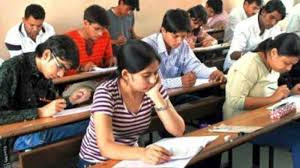
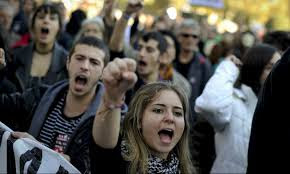
Student unrest is one of the problems of the day. The problem, however, cannot be analyzed properly unless we view it in the larger context of general unrest and discontentment in the country. As the things are, there is growing dissatisfaction everywhere. Prices are soaring and the burden of taxation is growing heavier. Corruption is rampant everywhere. Academic institutions are no exception to it these have polluted the student’s minds and created unrest in their hearts. Growing frustration is the root cause of student’s unrest. An average student has nothing but frustration in store for him, especially in the matter of employment. He joins one or the other course of study without any definite aim of his life, so he is frustrated.

Political exploitation is another cause of student unrest. The vested interests in all political parties try to use the force of students for their personal ends. They patronize the student leaders in times of their union elections and ultimately use the academic atmosphere. They often instigate the students to indulge in anti-social and subversive activities.

The teacher-taught relationship has undergone tremendous change in recent years. Materialism has stuck deep roots in our thoughts and our teachers are more concerned about their own prospects than about those of their students. As a result, the student feels let down and confused, unable to find anyone to give him proper guidance. Maladministration of academic institutions is also responsible for indiscipline among students. The uncertainty of the future caused by unemployment instigates the students to indulge in anti-social and subversive activities.

We cannot neglect the effects of mass media on students. With the fast-developing means of communication the world is coming closer day by day and the developments in one corner of the globe do not fail to affect others. If a student-led revolution takes place in some countries, their actions will naturally influence their counterparts in India. Students have been at the forefront in bringing about political upheavals in different parts of the world, no wonder; the Indian students feel they can do something similar here too. Student unrest is a social problem. It is to be tackled by responsible leaders and public-spirited men of society. The important remedy to the problem is that efforts should be made to increase opportunities for employment and education should be, as such, geared towards more of the professional career than mere academic pursuits. The academic environment should be improved and closer parent-teacher contact assure. The energies of the students should de-channelized towards a purposeful life. It should be a combined effort of educationists, parents, and leaders.

<

p style=”background-color: white;color: #070707;padding: 7px 0px”> Thank You!

Pandit Jawaharlal Nehru Biography


By: Astha Raghav 

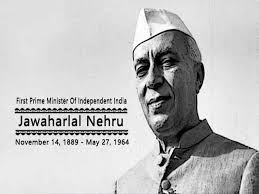
Jawaharlal Nehru :  (14 November 1889 – 27 May 1964) was an Indian independence activist and later the first prime minister of India. Considered one of the greatest statesmen of India and of the twentieth century, he was a central figure in Indian politics both before and after independence. He emerged as an eminent leader of the Indian independence movement, serving India as prime minister from its establishment in 1947 as an independent nation, until his death in 1964. He was also known as Pandit Nehru because of his roots in the Kashmiri Pandit community, while Indian children knew him better as Chacha Nehru.

Failure comes only when we forget our ideals, objective and principles”

                                  – Jawarharlal Nehru 


          The son of Swarup Rani and Motilal Nehru, a prominent lawyer and nationalist statesman, Nehru was a graduate of Trinity College, Cambridge, and the Inner Temple, where he trained to be a barrister. Upon his return to India, he enrolled at the Allahabad High Court and took an interest in national politics, which eventually replaced his legal practice. A committed nationalist since his teenage years, he became a rising figure in Indian politics during the upheavals of the 1910s. He became the prominent leader of the left-wing factions of the Indian National Congress during the 1920s, and eventually of the entire Congress, with the tacit approval of his mentor, Mahatma Gandhi. As Congress president in 1929, Nehru called for complete independence from the British Raj and instigated the Congress’s decisive shift towards the left.

Nehru and the Congress dominated Indian politics during the 1930s as the country moved towards independence. His idea of a secular nation-state was seemingly validated when the Congress swept the 1937 provincial elections and formed the government in several provinces; the separatist Muslim League fared much poorer. However, these achievements were severely compromised in the aftermath of the Quit India Movement in 1942, which saw the British effectively crush the Congress as a political organisation. Nehru, who had reluctantly heeded Gandhi’s call for immediate independence, for he had desired to support the Allied war effort during World War II, came out of a lengthy prison term to a much altered political landscape. The Muslim League under his old Congress colleague and now opponent, Muhammad Ali Jinnah, had come to dominate Muslim politics in India. Negotiations between the Congress and the Muslim League for power sharing failed and gave way to the independence and bloody partition of India in 1947.

The Congress elected Nehru to assume office as independent India’s first prime minister, although the question of leadership had been settled as far back as 1941, when Gandhi acknowledged Nehru as his political heir and successor. As Prime Minister, he set out to realise his vision of India. The Constitution of India was enacted in 1950, after which he embarked on an ambitious program of economic, social and political reforms. Chiefly, he oversaw India’s transition from a colony to a republic, while nurturing a plural, multi-party system. In foreign policy, he took a leading role in the Non-Aligned Movement while projecting India as a regional hegemon in South Asia.

Under Nehru’s leadership, the Congress emerged as a catch-all party, dominating national and state-level politics and winning consecutive elections in 1951, 1957 and 1962. He remained popular with the people of India in spite of political troubles in his final years and failure of leadership during the 1962 Sino-Indian War. In India, his birthday is celebrated as Children’s Day.

Thank You !

The importance of public transport


By: Astha Raghav 

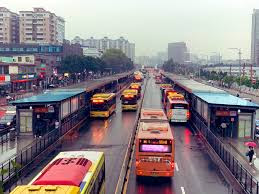
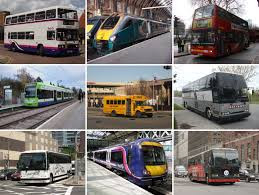
Public transportation contributes to a healthier environment by improving air quality and reducing oil consumption, and through better land-use policies. It also helps to expand business development and work opportunities. And, it is critical for emergency situations requiring safe and efficient evacuation. In terms of energy consumption, public transportation is better than individualtransport in a personal vehicle. In England, bus and rail are popular methods of public transportation, especially in London.

Public transportation is reducing energy consumption and harmful carbon dioxide (CO2) greenhouse gas emissions that damage the environment. Traveling by public transportation uses less energy and produces less pollution than comparable travel in private vehicles.

The increase in the number of cars and bikes has added to various pollution problems. The smoke emitted from vehicles has made the cities living gas chambers. The new policies of economic liberalisation has opened doors for the multinationals and the cars of various companies have become status symbols of the upper middle class. The amount of harmful gases in the air is alarmingly on the rise. They affect our eyes and lungs, giving rise to all kinds of cardiovascular and respiratory diseases.

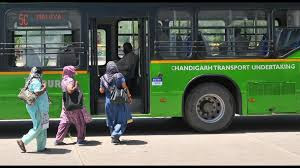
We, as the responsible citizens of India, must take steps to reduce these man-made problems and start using public transport as much as possible. The introduction of Metro Rail is a boon to the commuters as it saves time and money. These days, public transport have been made safe and secure. They are comfortable, clean and a cheaper alterative to personal vehicles for all office goers. Even the services of the Government road transport is good with GPS and A.C. installed for the convenience of the passengers.

Using public transport would definitely save fuel, reduce harmful gas emissions, further reducing one’s carbon footprint and eventually the causes and effects of global warming.

Thank You!

Biography of Mother Teresa


By: Astha Raghav 

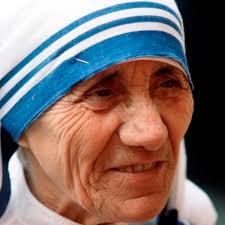
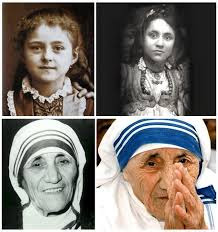
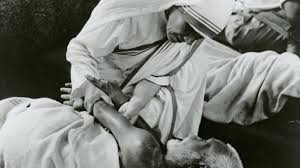
Mother Teresa is also known as “Blessed Teresa of Calcutta”. Her earlier name was Anjeza Gonxha Bojaxhiu. She was born on 26th August 1910 at the then Yugoslavia [ Non Republic of Macedonian]. She cameto India in 1926. Mother Teresa was Roman Ca6nun moved to Calcutta slum to serve God among the poorest of the poor.

In 1950, she established the Missionaries of Charity to help the poor, helpless, disabled, diseased, refugees and lepers. Today, the  Missionary is present in more than 100 countries. She was awarded the title of Padam Shri in 1962. She received the Novel peace prize in 1979. Later in 1980, she received the title of  “Bharat Ratna” the highest civilian award in India.  She is the first citizen of India to win Novel Peace Prize. 

She had once said, “Love cannot remain by itself – it has no meaning. Love has to be put into action, and that action is service.” Her work transcended geo-political borders and she encompassed the whole of humanity in her healing embrace. Her work was recognised through numerous international and national awards and recognitions. She was canonised at a ceremony in St. Peter’s Square at the Vatican by Pope Francis on September 4, 2016 and came to be known as Saint Teresa of Calcutta.In 1928, she left Skopje to join the Institute of the Blessed Virgin Mary, at Loreto Abbey in Rathfarnham, Ireland, a Catholic institution, which was popularly known as Sisters of Loreto. There, she was inducted into nunnery. She was given the name Sister Mary Teresa after the Saint Thérèse of Lisieux. After a training of around six months in Dublin, the capital of Ireland, Teresa was sent to Darjeeling, India to complete the novitiate period. 

On 24 May, 1931 she took her initial vows as a nun, the First Profession of Vows. She was sent to Calcutta by the Sisterhood. For around next 15 years, Mother Teresa taught at St. Mary’s High School in Calcutta, now Kolkata. The school run by the Sisters of Loreto provided free education to girls hailing from poor families. Here, Teresa became well versed in Bengali, and improved her English. She also became the principal of the school in 1944.

During her Final Profession of Vows on May 24, 1937, she took a vow of poverty, chastity and obedience. She took on the customary title of Mother and came to be known as Mother Teresa.

Call for Serving Humanity

Although Mother loved teaching and enjoyed shaping young minds at St. Mary’s, she was immensely disturbed by the plight of people around her. She was witness to the Bengal Famine in 1943, and experienced the pitiful condition of the poor during the trying times. Sufferings and desperation of the hungry tugged at the chords of her heart. The Hindu-Muslim Riots of 1946 prior to partition of India tore the nation apart. These two traumatic events drove Mother Teresa to contemplate what she could do to alleviate the sufferings of the people around her. 

On 10 September, 1946, while traveling to Darjeeling, North-Bengal, for the annual retreat of the Convent, Mother heard “the call within call”. She felt as if the Jesus was asking her to come out of the walls and serve the down-trodden of the society. Following the Call, on August 17, 1947, Mother left the Convent. Out of reverence towards the Indian culture she adopted white sari with a blue border. He applied for Indian Citizenship and took basic medical training from Holy Family Hospital in Patna. For the next few years, Mother Teresa lived among the poor, in the slums of Calcutta. She, along with a few fellow nuns, went door to door, begging for food and financial help. They survived on the bare minimum and used the excess to help people around them. Gradually, her tireless efforts were recognised and help started pouring in from various sources.

<

p style=”background-color: white;color: #4c4a4a;font-family: Arial, Helvetica, sans-serif;font-size: 18px;line-height: 24px;margin: 0px 10px 10px;text-align: justify”>Thank You!

JANMASHTAMI

By: Astha Raghav.

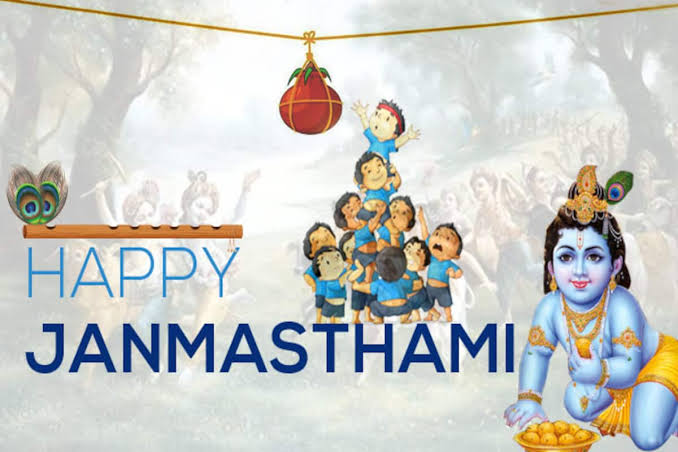
 Krishna Janmashtami, also known simply as Janmashtami or Gokulashtami, is an annual Hindhu festival that celebrates the birth of Krishna, the eighth avatar of Vishnu. It is observed according to the Hindhu lunisolar calendar, on the eighth day (Ashtami) of the Krishna Paksha (dark fortnight) in Shraavana or Bhadrapad (depending on whether the calendar chooses the new moon or full moon day as the last day of the month), which overlaps with August or September of the Gregorian Calendar.

It is an important festival, particularly in the Vaishnavism tradition of Hinduism. Dance-drama enactments of the life of Krishna according to the Bhagavata Purana (such as Rasa Lila or Krishna Lila), devotional singing through the midnight when Krishna was born, fasting (upavasa), a night vigil (Ratri Jagaran), and a festival (Mahotsav) on the following day are a part of the Janmashtami celebrations. It is celebrated particularly in Mathura and Vrindavan, along with major Vaishnava and non-sectarian communities found in Manipur, Assam, Bihar, West Bengal, Odisha, Madhya Pradesh, Rajasthan, Gujarat, Maharashtra, Karnataka, Kerala, Tamil Nadu, Andhra Pradesh and all other states of India.

Krishna Janmashtami is followed by the festival Nandotsav, which celebrates the occasion when NandaBaba distributed gifts to the community in honor of the birth.

Every year, Janmashtami is celebrated as the birthday of Lord Krishna. Though we all have nicknames, Lord Krishna has a whopping 108 names! Some of his names include Govind, Mohan, Hari, Vasudeva, Shyam, Ghanshyam, and to name a few more! These names reflect in all the bhajans and hymns which devotees sing on Janmashtami!

Janmashtami is celebrated with great enthusiasm by Hindus across the Indian subcontinent and beyond. In “A Janmashtami Journey”, we take a whistle-stop tour around the world to look at how this great festival is celebrated.

In countries like Singapore, Malaysia, Canada, and New Zealand, where there is a large community of Hindus, Janmashtami is celebrated. The day is marked with great fanfare and fervour in London, the US, and Poland and there is a unique temple in the Macau peninsula.

Thank You!

The benefits of a bilingual brain – Bilingual Brain

 Hello Friends !…  And besides having an easier time traveling or watching movies without subtitles, knowing two or more languages means that your brain may actually look and work differently than those of your monolingual friends. So what does it really mean to know a language? Language ability is typically measured in two active parts, speaking and writing, and two passive parts, listening and reading. While a balanced bilingual has near equal abilities across the board in two languages, most bilinguals around the world know and use their languages in varying proportions. And depending on their situation and how they acquired each language, they can be classified into three general types. For example, let’s take Gabriella, whose family immigrates to the US from Peru when she’s two-years old.

 As a compound bilingual, Gabriella develops two linguistic codes simultaneously, with a single set of concepts, learning both English and Spanish as she begins to process the world around her. Her teenage brother, on the other hand, might be a coordinate bilingual, working with two sets of concepts, learning English in school, while continuing to speak Spanish at home and with friends. Finally, Gabriella’s parents are likely to be subordinate bilinguals who learn a secondary language by filtering it through their primary language. Because all types of bilingual people can become fully proficient in a language regardless of accent or pronunciation, the difference may not be apparent to a casual observer.

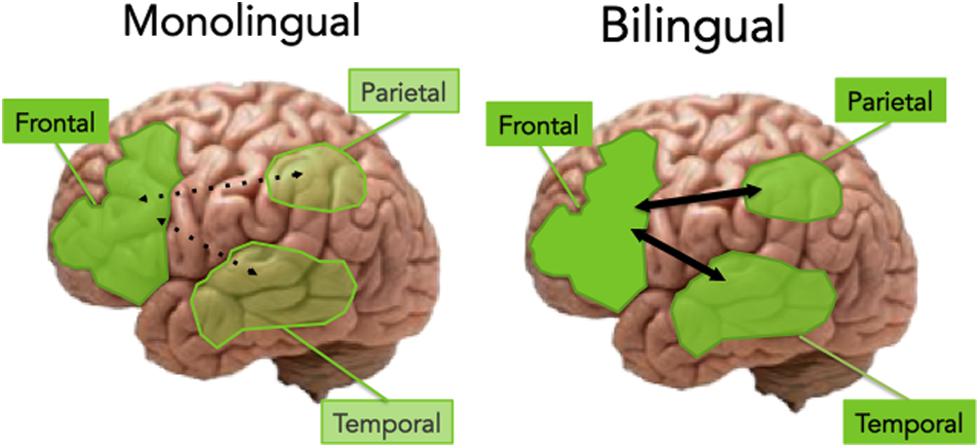
 But recent advances in brain imaging technology have given neurolinguists a glimpse into how specific aspects of language learning affect the bilingual brain. It’s well known that the brain’s left hemisphere is more dominant and analytical in logical processes, while the right hemisphere is more active in emotional and social ones, though this is a matter of degree, not an absolute split. The fact that language involves both types of functions while lateralization develops gradually with age, has lead to the critical period hypothesis. According to this theory, children learn languages more easily because the plasticity of their developing brains lets them use both hemispheres in language acquisition, while in most adults, language is lateralized to one hemisphere, usually the left.

 If this is true, learning a language in childhood may give you a more holistic grasp of its social and emotional contexts. Conversely, recent research showed that people who learned a second language in adulthood exhibit less emotional bias and a more rational approach when confronting problems in the second language than in their native one. But regardless of when you acquire additional languages, being multilingual gives your brain some remarkable advantages. Some of these are even visible, such as higher density of the grey matter that contains most of your brain’s neurons and synapses, and more activity in certain regions when engaging a second language. 

The heightened workout a bilingual brain receives throughout its life can also help delay the onset of diseases, like Alzheimer’s and dementia by as much as five years. The idea of major cognitive benefits to bilingualism may seem intuitive now, but it would have surprised earlier experts. Before the 1960s, bilingualism was considered a handicap that slowed a child’s development by forcing them to spend too much energy distinguishing between languages, a view based largely on flawed studies.

 And while a more recent study did show that reaction times and errors increase for some bilingual students in cross-language tests, it also showed that the effort and attention needed to switch between languages triggered more activity in, and potentially strengthened, the dorsolateral prefrontal cortex. This is the part of the brain that plays a large role in executive function, problem solving, switching between tasks, and focusing while filtering out irrelevant information.

 So, while bilingualism may not necessarily make you smarter, it does make your brain more healthy, complex and actively engaged, and even if you didn’t have the good fortune of learning a second language as a child, it’s never too late to do yourself a favor and make the linguistic leap from, “Hello,” to, “Hola,” “Bonjour” or “你好’s” because when it comes to our brains a little exercise can go a long way.

LAUGHTER IS THE BEST MEDICINE

 By: Astha Raghav

It should not take a doctor to tell you that laughing is good for health, a better way to cope with life than brooding over negative thoughts. Can there be a better way to greet the day than with a smile or a deep- bellied laugh? Laughingout loud helps more than endless rounds of medication. Not only is laughter therapy free and easy to practice, it can benefit in many ways. The benefits of laughter. It’s true: laughter is strong medicine. It draws people together in ways that trigger healthy physical and emotional changes in the body. Laughter strengthens your immune system, boosts mood, diminishes pain, and protects you from the damaging effects of stress.

Laughter is a good muscle-relaxant and reduces stress hormones, it increases the count of natural killer cells and raises antibody levels. 15 minutes of laughter is equivalent to 10 minutes of strenuous aerobic exercise. It is the enemy of anti-depressant pills and tranquillizers.

  Laughter improves lung capacity and oxygen levels in blood and cures chest infections. It is the best medicine. Do not waste time; join a laughter club and harvest rich benefits from the healing effects of laughter therapy. Laughter is the best medicine!: Humor is good for the health! idiom. This idiom suggests that laughter or good humor is beneficial to the health. The old cliche, “laughter is the best medicine,” may actually have some truth to it. According to legendary funny man Carl Reiner, “there isn’t anything more important than being able to laugh. When you can laugh, life is worth living.

THANK YOU!

TOURISM- THE MOVING FORCE


By: Astha Raghav 

In recent years, India’s tourism industry has made considerable progress. Tourism provides a travel based recreation with a change of place and a break from the monotony of daily life. It offers opportunities to move through the galleries of our glorious past, natural scenic beauty and brings people of different nations closer, offering them an opportunity to be familiar with the customs, traditions and culture of the society. In addition, the knowledge and experience gained can lead to harmonious and peaceful relationships.

Tourism has the power to transform the social, economic and cultural fabric of a country. 

The outlook for the tourism sector remains highly uncertain. The coronavirus (COVID-19) pandemic continues to hit hard, with international tourism expected to decrease by around 80% in 2020. Domestic tourism is helping to soften the blow, at least partially, and governments have taken impressive immediate action to restore and re-activate the sector, while protecting jobs and businesses. Many countries are also now developing measures to build a more resilient tourism economy post COVID-19. These include preparing plans to support the sustainable recovery of tourism, promoting the digital transition and move to a greener tourism system, and rethinking tourism for the future.

Coming off the worst year in tourism history, there’s little sense of optimism in the travel industry in early 2021. Following an estimated $1.3 trillion loss in export revenue in 2020, travel restrictions are being reintroduced at the start of the new year, as governments are trying to curb the spread of new, potentially more dangerous variants of the novel coronavirus.

Thank You!
WOMEN SAFETY IN INDIA


By: Astha Raghav 

Women in India, today, are becoming the most vulnerable section as far as their safety and security is concerned. 
When we turn the pages of a newspaper, we come across many headlines reporting cases of molestation, harassment, trafficking, ill treatment of women in house, violence against women in remote areas, etc.
Women feel unsafe and insecure and feel that their freedom and liberty are jeopardised.

It is unbearable to imagine the plight of women who are sufferers of such crimes. It is a jolt on the confidence of the women, of society and on our judicial system. 
We generally play the blame game for any such incidence and hence have not succeeded to reach the root cause of this issue.  An effective implementation of laws protecting women’s rights is the first step in this direction.  There should be stringent laws and the perpetrators of such crimes should be severely punished. We also need to create social awareness about these issues and ostracise those who commit such crimes and not the victims. 

Better surveillance by law enforcing authorities is also required.  The last but the most effective would be to compulsorily teach self defense techniques to girls and women in schools, colleges, offices and residential colonies. 

Only when these measures are taken, India can become a carefree and enjoyable place for women. 
Thank You!