The Implications of COVID-19 effect on the Compliances under The Companies Act, 2013:- The Indian Context

COMPANY COMPLIANCES DURING THE COVID-19 ERA: AN INTRODUCTION
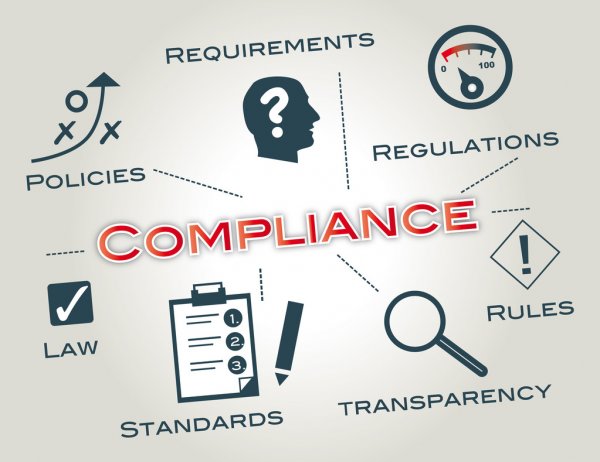
The global outbreak of the novel coronavirus has taken the world by storm. While the issue pertaining to the public health is the talk of the town, the impact of COVID-19 on businesses and corporates seems to be least talked about.

Day to day business of the corporates is being affected due to decreased inflow of the human resource and a decrease in the workflow. While technologies have provided a relief to the human resource for physical attendances and conferences, there seemed to be unsettled trouble regarding legal compliances that required various filings and physical meetings.

Pursuant to the ongoing global COVID-19 pandemic and the Finance Minister, Ms. Nirmala Sitharaman’s announcements on March 24, 2020, the Ministry of Corporate Affairs (“MCA”) has issued various circulars to provide relief to companies from certain compliances under the Companies Act, 2013 (“Act”) and associated rules. This has been done as a measure to reduce the compliance burden on entities during the unprecedented health and economic situation caused by COVID-19. Following are the measures:-

1. Company Affirmation of Readiness towards COVID-19
Social distancing has gained its importance as a way to contain the spread, morbidity, and mortality of COVID-19. Government of India (“GOI”), responsible for the public welfare at large, has realised that social distancing can be achieved in its true sense only if the employers of the Indian public make the same application in their respective premises.

Considering that major employers of the nation belong to the companies or limited liability partnership (“LLP”) type entity, GOI as part of disaster management have advised all companies/LLPs to put in place an immediate plan to implement the “work from home” policy as a temporary measure up till March 31, 2020.

Further, in case of a requirement of physical visits of the essential staff to such offices by the employers, staggered timings may be followed in order to minimize physical interactions of all kinds.

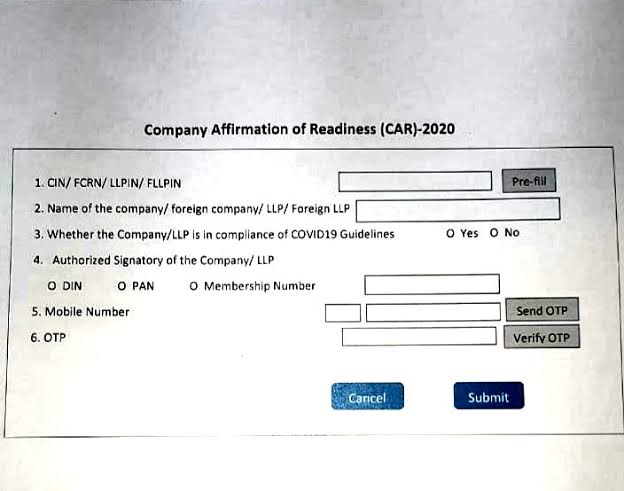
A simple webform for companies/LLP shall be deployed by MCA on March 23, 2020, in order to confirm the readiness of the employers to deal with COVID-19 threat. The webform shall be called CAR (Company Affirmation of Readiness towards COVID-19) and would be required to be signed and submitted by the authorised signatory of the company/LLP.

Therefore, it shall be expected by each company/LLP to ensure reporting of the compliance through CAR instantly from the date of its deployment.

2. Companies Fresh Start Scheme 2020

The MCA issued a circular on March 30, 2020, introducing the Companies Fresh Start Scheme, 2020 which, inter alia, grants a one-time opportunity to defaulting companies to complete all belated filings, including, without limitation, annual filings and filings required under IEPFA (Accounting, Audit, Transfer and Refund) Rules, 2016 in relation to transfer of money remaining unpaid or unclaimed for a period of seven years under Section 124(5) of the Act and transfer of relevant shares in the name of the ‘Investor Education and Protection Fund’ under Section 124(6) of the Act, with the MCA21 registry, without incurring additional fees on account of any delay.

This scheme came into force on April 1, 2020, and is valid till September 30, 2020. The application for seeking immunity for belated filings under this scheme should be made within a period of six months from September 30, 2020, through Form CFSS-2020. Thereafter, an immunity certificate will be provided by the designated authority on the basis of the declarations made in such form.

However, no immunity shall be provided under the scheme in a matter where (i) an appeal or management dispute is pending before any court or tribunal, or (ii) a court has ordered a conviction, or the adjudicating authority under the Act has imposed a penalty, and in respect of such orders, no appeal has been filed prior to the scheme coming into force.

Further, the scheme shall not apply: (i) where an application has been filed or an action for final notice for striking off the name of the company has already been initiated; (ii) where the company has been amalgamated; (iii) when application of obtaining dormant status has been filed; (iv) to vanishing companies; and/or (v) where charge related documents or an increase in authorised capital is involved.

3. CSR Spending
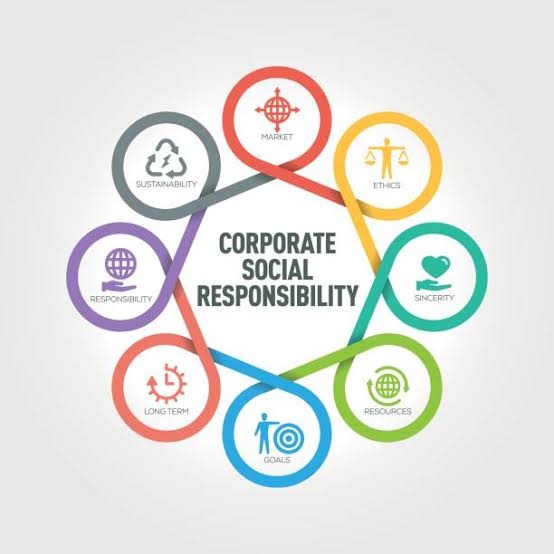
The MCA has by way of circular dated March 23, 2020 and the office memorandum dated March 28, 2020, clarified that the spending of CSR funds by companies in relation to COVID-19, including by way of contribution to the PM CARES Fund, is an eligible CSR expenditure under the Act.

The MCA has further clarified by way of FAQs dated April 10, 2020 that contributions made to the State Disaster Management Authority will also be eligible CSR activity, but contributions towards (a) ‘Chief Minister’s Relief Fund’ or ‘State Relief Fund for COVID-19’; and (b) payment of salary/ wages to employees and workers (including contract labour/ temporary/ casual/ daily wage workers) during the lockdown period will not be considered as eligible CSR expenditure.

However, ex-gratia payment over and above the disbursement of wages to temporary/ casual workers/ daily wage workers, specifically for the purpose of fighting COVID-19, will be admissible towards CSR expenditure, provided there is an explicit declaration to that effect by the board of the company, which is duly certified by the statutory auditor.

4. Meetings of Board and the Shareholders

  • The Companies (Meetings of Board and its Powers) Rules, 2014 were amended by a notification dated March 19, 2020, to enable companies to hold board meetings on the following matters (which earlier had to be necessarily held at a physical meeting) through video-conferencing or other audio-visual means (collectively “VCC”) till June 30, 2020: (i) approval of annual financial statements and board’s report; (ii) approval of prospectus; (iii) audit committee meetings for consideration of financial statements; and (iv) approval of amalgamation, merger, demerger, acquisition and takeover.
  • MCA has, by way of a general circular dated April 8, 2020, requested companies to pass all decisions of an urgent nature requiring shareholder approval, other than those of ordinary business or business where any person has right to be heard, through postal ballot/ e-voting in accordance with the relevant statutory provisions without holding a physical general meeting. However, in cases where holding an extraordinary general meeting (“EEGM”) is unavoidable, these have now been permitted to be held through VC until June 30, 2020. The circular further lays down certain conditions to be met for conducting an EGM through VC and the key conditions, inter alia, include: (i) attendance of at least one independent director (where a company is required to appoint one) and auditor (or his authorised representative who is qualified to be the auditor); (ii) maintenance of recorded transcripts of the EGM and, in case of a public company, such transcripts to be uploaded on the company website (if any); and (iii) e-voting facility being available. All other provisions relating to general meetings under the Act (and relevant rules) will continue to apply.
  • Due to difficulties faced by various stakeholders in serving and receiving notices/responses by post on account of COVID-19, the MCA, on April 13, 2020, provided that notice of EGMs to be held through VC (and for passing shareholder resolutions through postal ballot/ e-voting) may now be given to shareholders only through email addresses of the shareholders registered with the company or with the depository participant/ depository. This circular also specifies various conditions which companies must comply with while sending email notices to shareholders.

CONCLUSION

Business entities in India are requested and expected to keep an eye on the major government websites to ensure timely compliance with all such immediate requirements and mandates issued by GOI as need of the hour from time to time.

WEBSITES REFERRED:-

1)  MCA General Circular No. 10/20 dated March 23, 2020 on Clarification on spending of CSR for COVID-19.

2) MCA General Circular No. 12/20 dated March 30, 2020 on Companies Fresh Start Scheme, 2020

3) MCA Notification dated March 19, 2020 on Companies (Meetings of Board and its Powers) Amendment Rules, 2020

4) MCA General Circular No. 14/2020 dated April 8, 2020 on Clarification on passing of ordinary or special resolutions by companies under the Companies Act, 2013 and rules made thereunder on account of threat posed by Covid-19.

5) MCA General Circular No. 17/20 dated April 13, 2020 on clarification on passing ordinary and special resolutions by companies under the Companies Act, 2013 and rules made thereunder on account of threat posed by COVID-19.

6)http://www.conventuslaw.com/report/india-implications-of-covid-19-on-compliances/

7)https://www.lexology.com/library/detail.aspx?g=7862d71f-35ae-443c-964b-a381d11102bc

8)https://www.google.com/search?q=COMPANY+COMPLIANCE+India+Images+Copyright+Free+and+Royalty+Free&tbm=isch&ved=2ahUKEwjK6fe59tvqAhVZOCsKHTZKCh0Q2-cCegQIABAC&oq=COMPANY+COMPLIANCE+India+Images+Copyright+Free+and+Royalty+Free&gs_lcp=ChJtb2JpbGUtZ3dzLXdpei1pbWcQAzoECB4QCjoECCEQClCMPljJiQFgoIwBaARwAHgAgAHIAYgB4x2SAQYwLjI3LjGYAQCgAQHAAQE&sclient=mobile-gws-wiz-img&ei=qpoVX8rsBdnwrAG2lKnoAQ&bih=682&biw=393&client=ms-android-xiaomi-rev1&prmd=insv#imgrc=UEkUjY7KpsptxM

9)https://studycafe.in/2020/04/companies-fresh-start-scheme-2020-or-cfss-2020.html

10)https://www.a2ztaxcorp.com/mca-introduces-companies-fresh-start-scheme-2020-for-non-compliant-companies/

11)https://www.istockphoto.com/illustrations/corporate-social-responsibility?mediatype=illustration&phrase=corporate%20social%20responsibility&sort=mostpopular

12)https://www.istockphoto.com/illustrations/shareholders-meeting?mediatype=illustration&phrase=shareholder%27s%20meeting&sort=mostpopular
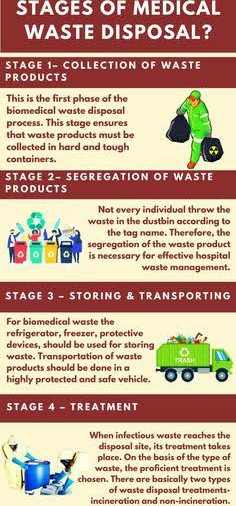
COVID-19 PANDEMIC: BIO-MEDICAL WASTE AND HOW THE HOSPITALS ARE LIABLE

Biomedical Waste Management & Handling Rules, 1998 (“1998 Rules”) in India govern the handling, disposal and management of bio-medical waste (“BM Waste”)in India have been notified by the Central Government in the exercise of the powers conferred by Section 6,8 & 25 of the Environmental Protection Act, 1986. These rules provide for the framework of the management and Handling of disposal and scientific management of BM Waste

In wake of the COVID-19 pandemic, the Centre Pollution Control Board (“CPCB”) recently issued guidelines dated March 27, 2020 for handling, treatment and safe disposal of BM Waste generated during treatment, diagnosis and quarantine of patients confirmed or suspected to have COVID-19 (“Guidelines”).

The Guidelines have been necessitated due to the super infectious nature of the Novel corona virus and provide for a mechanism for the segregation, packaging, transportation, storage and disposal of BM Waste in order to avoid further spread of the virus through BM Waste.

So what do you mean by the BM Waste and what are the categories of BM Waste that the hospitals generate?

The Bio-Medical Waste Management Rules 2016[1] (“2016 Rules”) define the BM Waste as any waste, which is generated during the diagnosis, treatment or immunisation of human beings or animals or research activities pertaining thereto or in the production or testing of biological or in health camps, including the categories mentioned in Schedule I the 2016 Rules.

The 2016 Rules apply to all persons who generate, collect, receive, store, transport, treat, dispose, or handle bio medical waste in any form. The next imminent question that comes to our minds is what are the categories of BM Waste that the hospitals generate?

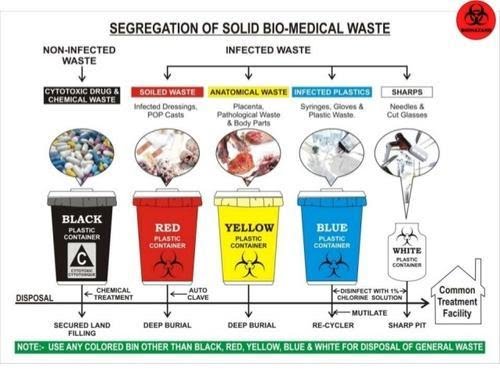
BM Waste generated from a hospital could be human anatomical waste, animal waste- microbiology & biotechnology, waste sharps, discarded medicines and cytotoxic drugs, solid & liquid waste.

Now that we know what’s the meaning and various categories of BM Waste, the most pertinent question arises that how is it supposed to be treated and disposed of by the hospitals in India during the ongoing COVID-19 pandemic? 

While the hospitals in their usual course deal with the segregation, management and storage of BM Waste, the situation in times of COVID-19 is extraordinary the reason being the highly contagious nature of the virus and also it’s transmission cycle and multiplicity rate.

As the hospitals are being flooded with the suspected and confirmed cases, the Ministry of Health and family welfare (“MoHFW”) and the CPCB have issued various guidelines for the handling and management of waste generated from the COVID-19 facilities.

Under the 2016 Rules, while the hospitals are required to ensure that there is a secured location within its premises for a spill/pilferage free storage of segregated BM Waste in labelled/coloured bags or containers, the duty to transport the stored BM Waste from the hospital premises onwards to the common BM Waste treatment and disposal facility is of an ‘operator’ as defined in the Rules.

Specifically, in wake of COVID-19, the CPCB has issued Revision 1 to the Guidelines dated March 25, 2020 for Handling, Treatment and Disposal of Waste Generated during Treatment/Diagnosis/ Quarantine of COVID-19 Patients (“CPCB Guidelines”).

[2] The said CPCB Guidelines inter-alia, state that hospitals are required to depute separate BM Waste sanitation workers to COVID-19 isolation wards and maintain records of all waste generated in such isolation wards and ensure that the BWM generated is collected and separately stored in separate leakproof color-coded double layered bags or bins /containers labelled as “COVID-19 waste” as per the 1998 Rules and the Guidelines.

In fact the Bombay High Court in a recent pending public interest litigation has, while issuing notices to local municipal corporations and the State Pollution Control Board, also directed the Maharashtra government to clarify whether it was ensuring that all COVID-19 related biomedical waste generated in the state was being disposed of in a safe manner[3].

Now that we have a thorough understanding of how the BM Waste is supposed to be treated and disposed of the most important and the widely discussed about topic is that what are the measures that a hospital is required to take for the safety of its employees doctors, nurses and other support staff who are known as the (“healthcare personnel”) from the dangerous diseases like COVID-19?

In order to answer this pertinent question which is often there in the limelight, one must keep in mind that the Healthcare personnel who are the Frontline workers have a high risk of contracting the COVID-19.

While the hospitals are taking precautions and measures to control any spread of infection within the premises, it is particularly difficult given the highly super-infectious nature and hyper-speed feature of the virus. Due to this feature it spreads widely and it becomes a bit difficult to contain it in an over-crowded environment but it’s not impossible to achieve that as we all have been deterrent enough to contain it’s spread but still there is always scope for improvement.

The first steps towards controlling the spread of a virus is personal protective equipment also known as PPE which should preferably be a two-layered fluid-resistant apron and basic items like N-95 masks, face shield, full cover gowns  and sanitisers but the same are rendered ineffective against the COVID-19 if the quality of these equipments is not up to the standard as required.

Greater emphasis is also to be laid upon the proper training and awareness of healthcare personnel towards proper use and disposal of the equipment. The spread of the COVID-19 virus is also particularly fast due to the heavy load of asymptomatic patients coming into the hospital and hence a greater need for the formulation of national COVID-19 protocol.

The MoHFW has vide its revised guidelines for clinical management of COVID-19 dated March 31, 2020[4] (“Clinical Management Guidelines”) impressed upon strict compliance of Infection prevention control (IPC) protocol for Hospitals and a consequent effect of the same is prevention and management of COVID-19 in the hospital staff.

This protocol inter-alia,  standard precautions such as hand hygiene, use of PPE to avoid direct contact with patients’ blood, body fluids, secretions (including respiratory secretions) and non-intact skin, prevention of needle-stick or sharps injury, safe waste management, cleaning and disinfection of equipment and cleaning of the environment around a COVID-19 patient.

The 2016 Rules also provide as follows that in order to and for ensuring the safety of the healthcare workers and others involved in the segregation and pre-treatment of BM Waste, the hospital is required to train to all its healthcare workers, immunise them for protection against diseases which likely to be transmitted by handling of BM Waste, in the manner as prescribed in the National Immunisation Policy[5].

Also, hospitals are required to ensure occupational safety of all its health care workers and others involved in handling of BM Waste by providing appropriate and adequate PPE and also they must conduct health check ups at the time of induction and at least once in a year maintain the records for the same.

Now due to the pandemic if one is an employee ie the Healthcare personnel of the hospital one must understand the Legal aspect and angle also and the most important aspect of all is that what is the Legal obligations of the hospital, if and when an employee of the hospital tests positive for COVID-19.

Let’s answer this as it’s the most crucial and critical aspect. The present COVID-19 pandemic is an unprecedented event and is unlike any other infectious disease known to mankind and the medical world which is yet to fully decipher its modus operandi of infecting humans.

In a hypothetical situation wherein a hospital employee contracts COVID-19, it will be imperative for the employee in such a situation to establish that his possible exposure to COVID-19 was in the Hospital itself not in the community after considering that the employee is spending time outside as well apart from the hospital premises.

While in an ideal case, if it is proved that a hospital staff has contracted it ,i.e., it shall amount to ‘a hospital acquired infection’, then the hospital would be ordinarily liable. However, in the case of COVID-19 since it is seemingly impossible to trace down the exact source of the infection, in absence of such evidence and in light of utmost safety measures and precautions taken by the hospitals as per the guidelines, fastening of any liability on the hospital would be peculiarly difficult.

The defence available to the hospital may be culpability and negligence of the employee and proving that the hospital itself took all possible measures to avoid any mass spread of the infection.

The next relevant point to be analysed and answered is that when a Non COVID-19 patient contracts the virus during his term of being admitted in the hospital what are the Legal obligations of the hospital when this happens?

The National Consumer Dispute Redressal Commission in the matter of Apollo Emergency Hospital vs Dr. Bommakanti Sai Krishna & Anr.[6] observed that “As already observed, the infection occurred during the stay of the Complainant at the hospital. On the other hand, there is nothing to show that the source of infection lay outside the hospital. Thus, there is preponderance of possibilities of the infection having been acquired in the hospital itself. We therefore, do not accept the contention that it was necessary for the Complainant to produce expert evidence to prove negligence on the part of the concerned doctors in the hospital.

The afore-stated judgement implies a presumption of liability on the hospital that in cases where the probability of acquiring the infection is much higher inside the hospital than from other sources. However, the same may not apply in COVID cases in light of the peculiar difficulty of tracing the source of acquiring the COVID-19 infection. Therefore, the presumption rendered by the aforesaid judgement will not be ipso facto applicable to cases of COVID patients.

As we have discussed the various pertinent relevant questions another one is that what are the legal obligations of the hospital, if and when a patient is misdiagnosed positive or negative for COVID-19 by the hospital due to a fault in the COVID-19 rapid testing kit (“testing kits”)?

The liability of a hospital in cases of misdiagnosis depends on the methodology of procuring of testing kits. A hospital may procure testing kit either from third party manufacturer or may manufacture them internally i.e. by itself or its subsidiary.

In cases where the misdiagnosis is on account of faulty testing kit procured externally, the hospital cannot be held directly liable as the liability may be shifted upon the manufacturer.

In cases where the misdiagnosis is on account of faulty testing kit is due to testing kits produced internally the hospital may be liable subject to it being proved that the misdiagnosed patient was indeed positive. However, factors such as the success rate of any testing kit not being 100% may have an interplay in determining the liability.

We have to be aware of what are the Legal liability of a hospital in a situation where the hospital discharges a mild/very mild/pre-symptomatic COVID patient to ramp up the capacity for serious COVID-19 patients.

 A hospital will not be held liable for a systematic discharge of a mild/very mild/pre-symptomatic/moderate COVID-19 patient as the same is directed by the Central Government. On May 8, 2020, the MoHFW released its revised policy for the discharge of COVID-19 patients.[7] This revised policy provides that hospitals can discharge mild/very mild/pre-symptomatic in accordance with the protocols given therein.

In the earlier advisory[8], COVID-19 patients could be discharged only after chest radiograph clearance, viral clearance in respiratory samples, and if two of the patient’s specimens were negative within a period of 24 hours. The discharged patient would then have to home quarantine themselves in accordance with the revised policy.

So what is the protocol to be followed by a Hospital while disposing of the dead bodies of the COVID-19 patients?

The corpses are a source of infection for healthcare personnel/ other patients and cannot be disposed of by usual methods of disposal and therefore, the MHFW issued guidelines dated March 15, 2020 on dead body management in COVID-19.[9] The guidelines provide inter-alia, the protocol to be followed at the time of removal from the isolation room or area, put in bio-hazard bag and disinfection. Further, all surfaces of the isolation area (floors, bed, railings, side tables, IV stand etc.) should be wiped with 1% Sodium Hypochlorite solution and then it should allow a contact time of 30 minutes, and allow it to air dry as well.

While treating patients infected with the COVID-19 virus, what is the protocol for the treatment?

The All India Institute of Medical Sciences (AIIMS) has issued clinical protocol dated April 21, 2020 for treatment of Covid-19 patients and states such as Madhya Pradesh and Delhi have directed Hospitals and health centres dedicated to treating COVID-19 patients to follow the said clinical protocol.[10]

Treatment must be affordable for all. One must know whether or not there is a standardisation of costs of treatment of a COVID-19 for private hospitals?

Government hospitals are reaching their intake capacities and for that reason COVID-19 patients have been resorting to treatment in private hospitals. While some private hospitals are charging exorbitant amounts as costs of treatment, the same is worrying not just for the patients but also to the insurers.[11] 

In a first, the State government of Maharashtra has capped treatment costs in private hospitals for people without medical insurance and for other patients, the capped prices will come into effect once they exhaust their medical insurance cover.[12]

The Hon’ble Gujarat High Court has vide its order dated May 22, 2020 directed the state government to issue a notification making it mandatory for all multi-speciality hospitals private/ corporate hospitals in Ahmedabad and on its outskirts to reserve 50% of their beds (or such other capacity as maybe specified by the state government) for COVID-19 patients.

In view of the same, the Government of Gujarat may come up with similar caps on costs as Maharashtra.[13]  The Hon’ble Gujarat High Court also observed that the certain private hospitals authorised by the government to treat COVID-19  patients in Ahmedabad are charging exorbitant fees which is unaffordable for a massive section of the society and directed the state government to ensure that private hospitals do not  charge exorbitant fees. [14]

Also in light of the same The Hon’ble Bombay High Court recently directed a charitable hospital to make court deposit of monies in a case pertaining to levy of exorbitant charges for treatment of COVID-19 patients belonging to poor strata of the society despite reserving 20% of its beds for poor and the needy.[15]


[1] Available at – https://dhr.gov.in/sites/default/files/Bio-medical_Waste_Management_Rules_2016.pdf last accessed on June 27, 2020 at 1000 hours.

[2] Available at https://www.mohfw.gov.in/pdf/63948609501585568987wastesguidelines.pdf last accessed on June 26, 2020 at 1243PM.

[3] https://www.hindustantimes.com/mumbai-news/bombay-hc-seeks-state-govt-s-reply-on-disposal-of-covid-19-biomedical-waste/story-ivVDDnsp6yMKgfqIYk2TEN.html last accessed on July 03, 2020 at 1243PM. As per reports, replies have to be filed by July 14, 2020.

[4]https://www.mohfw.gov.in/pdf/RevisedNationalClinicalManagementGuidelineforCOVID1931032020.pdf ; pre-revision guidelines are at https://www.mohfw.gov.in/pdf//National%20Guidelines%20for%20IPC%20in%20HCF%20-%20final%281%29.pdf

[5]Available at https://main.mohfw.gov.in/sites/default/files/108481119000.pdf last accessed on June 26, 2020 at 1400Hours.

[6] The Apollo Emergency Hospital vs Dr. Bommakanti Sai Krishna & Anr., MANU/CF/0051/2013

[7] Available at https://www.mohfw.gov.in/pdf/ReviseddischargePolicyforCOVID19.pdfhttps://www.mohfw.gov.in/pdf/FAQsonRevisedDischargePolicy.pdf last accessed on May 12, 2020 at 1300 Hours.

[8] Available at https://www.mohfw.gov.in/pdf/Corona%20Discharge-Policy.pdf ; also refer to https://www.mohfw.gov.in/pdf/FinalGuidanceonMangaementofCovidcasesversion2.pdf last accessed on May 13, 2020 at 1800 Hours.

[9]Available  at https://www.mohfw.gov.in/pdf/1584423700568_COVID19GuidelinesonDeadbodymanagement.pdf last accessed on May 4, 2020 at 1200Hours.

[10] Available at https://health.economictimes.indiatimes.com/news/hospitals/mp-hospitals-to-follow-aiims-protocol-for-covid-19-care/75470554; last accessed on May 23, 2020 at 1200Hours; Available at https://timesofindia.indiatimes.com/city/bhopal/mp-hospitals-to-follow-aiims-protocol-for-covid-19-care/articleshow/75463520.cms last accessed on May 23, 2020 at 1300Hours.

[11] Available at  https://www.livemint.com/money/personal-finance/insurers-want-standard-covid-19-treatment-cost-11589734285328.html last accessed on May 23, 2020 at 0214Hours.

[12]Available at  https://economictimes.indiatimes.com/news/politics-and-nation/regulate-fees-of-private-hospitals-treating-covid-19-patients-hc/articleshow/75758648.cms?from=mdr last accessed on May 23, 2020 at 1200Hours.

[13] Refer to order dated May 23, 2020 passed by the Hon’ble Gujarat High Court passed in  W.P.PIL No. 42 of 2020.

[14] Refer to order dated May 14, 2020 passed by the Hon’ble Gujarat High Court passed in  W.P.PIL No. 42 of 2020.

[15]https://www.thehindu.com/news/cities/mumbai/cant-expect-patients-to-submit-proof-of income/article31936388.ece ; https://www.thehindu.com/news/cities/mumbai/coronavirus-mumbai-charitable-hospital-treated-just-four-poor-patients-bombay-high-court-told/article31877330.ece  last accessed on July 3, 2020 at 2000 hours.

(16)https://corporate.cyrilamarchandblogs.com/2020/07/bio-medical-waste-and-liability-of-hospitals-in-wake-of-the-covid-19-pandemic/#more-3982

(17)https://www.civilsdaily.com/news/pib-regulation-of-bio-medical-waste/amp/

(18)https://www.google.com/search?q=Treatment+and+Disposal+of+Bio+Medical+Waste+Generated+by+COVID-19+virus+Animated+Image+Royalty+free+and+Copyright+free&tbm=isch&ved=2ahUKEwjnosG22tnqAhXWTCsKHeBjDqIQ2-cCegQIABAC&oq=Treatment+and+Disposal+of+Bio+Medical+Waste+Generated+by+COVID-19+virus+Animated+Image+Royalty+free+and+Copyright+free&gs_lcp=ChJtb2JpbGUtZ3dzLXdpei1pbWcQAzoECCMQJzoECB4QClCN8gFYjL0CYNnFAmgDcAB4AIABogGIAcQMkgEEMC4xMZgBB6ABAcABAQ&sclient=mobile-gws-wiz-img&ei=13AUX6fbDtaZrQHgx7mQCg&bih=682&biw=393&client=ms-android-xiaomi-rev1&prmd=inv#imgrc=f6k4LiLl7qKKwM

AN OVERVIEW OF INTELLECTUAL PROPERTY RIGHTS AND THE EFFECT OF COVID-19 PANDEMIC ON THE I.P. HOLDERS

INTRODUCTION

‘Intellect’ refers to the creations of the mind. Intellectual Property is a type of intangible property and includes inventions, literary and artistic works, symbols, names and paintings.

Intellectual Property Rights (IPRs) are the Rights granted to the creators of Intellectual Property (IP) by the Government. The nature of IPR is territorial. In any country an IP has to seek protection separately under the relevant laws.

Mechanisms which are Special in nature have been kept in place for various territories in order to provide protection to different types of IPRs. It confers an exclusive right to the inventor/ creator or assignee to fully utilize the invention/ creation for a given period of time.

It’s been established that the intellectual labor associated with the innovation should be given due importance so that public good emanates from it.

This is a strong tool, to protect investments, time, money, effort invested by the inventor/creator of an IP, since it grants the inventor/creator an exclusive right for a certain period of time for use of his invention/creation.

Hence it aids in the economic development of a country by promoting healthy competition and encouraging industrial development which shall also aid in the growth of the economy.

WHAT IS AN INTELLECTUAL PROPERTY?

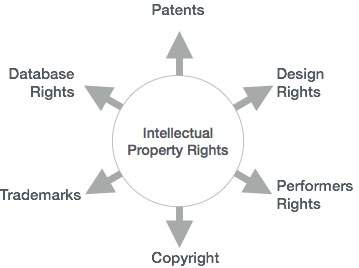
Intellectual Property(IP) refers to creations of the mind; inventions; literary and artistic works; and symbols, names and images used in commerce.

IP is divided into two categories: 1) Industrial Property:- includes patents for inventions,trademarks, industrial designs and geographical indications. 2) Copyright:- covers literary works (such as novels,poems and plays), films, music, artistic works (e.g., drawings, paintings, photographs and sculptures) and architectural design.

In Intellectual property(IP), there are Rights which relates to the rights of performing artists in their performances, producers of phonograms in their recordings, and broadcasters in their radio and television programs are included.

WHAT ARE INTELLECTUAL PROPERTY RIGHTS?

So what do you mean by intellectual
property rights? IP rights like any other property right allow creators, or owners, of patents, trademarks or copyrighted works to benefit from their own work or investment in a creation.

These rights are outlined in Article
27 of the UDHR which provides for the right to benefit from the protection of moral and material interests resulting from authorship of scientific, literary
or artistic productions.

The importance of intellectual property was first recognized in the Paris Convention for the Protection of Industrial Property (1883) and the Berne Convention for the Protection of Literary and Artistic Works (1886). Both treaties are administered by the World Intellectual Property Organization (WIPO).

There are various pros which are more compelling than the cons.

1) The progress and well-being of humanity rest on its capacity to create and invent new
works in the areas of technology
and culture.

2) The legal
protection of new creations and this encourages the commitment of additional resources for further innovation.

And Lastly the third pros is that the 3) Promotion and protection of intellectual property spurs economic growth, creates new jobs and industries,
and enhances the quality and enjoyment of life.

An efficient and equitable intellectual property system can help all countries to realize intellectual property’s potential as a catalyst for economic development and social and cultural well-being. The intellectual property system helps strike a balance between the interests of innovators and the public interest, providing an environment in which creativity and invention can flourish.

INTELLECTUAL PROPERTY HOLDERS IN A QUANDARY DUE TO COVID-19 PANDEMIC

While experts are in a combat mode and the race is on to discover the cure for COVID-19, the claim of intellectual property rights for exclusive use of the cure poses a dilemma as it is not considered the most rational thing to do at the moment.

Carlos Correa addressed to organizations like WHO, WTO and WIPO via an open letter to seek support for WTO countries that invoke the ‘security exception’ contained in Article 73 of the Agreement on Trade Related Intellectual Property Rights (TRIPS) Agreement, to take ‘actions it considers necessary for the protection of its essential ‘security interests’ in the wake of COVID-19 threat.

It has been suggested that invocation of exception under Article 73 will be warranted to procure medical products and devices or to use the technologies to manufacture them as necessary to take cue of the present public health emergency.

By suspending the enforcement of any Intellectual Property right as given under Article 73(b) of TRIPS Agreement, an obstacle for the procurement or local manufacturing of the medical equipments shall be necessary in order to protect the population of the world will be outlasted.

The question which is raised due to the above is regarding IP rights which are aimed to aid the public by promoting technological advancement in return of providing the inventor an exclusive right over the invention, though for a limited time. Though the IP rights are at a standstill due to the outbreak the IP Registry offices all over have limited their functioning.

TYPES OF INTELLECTUAL PROPERTY

  1. Trade Mark: –

A trademark is used in order to identify a business entity and it also differentiates the goods made or services offered by a company or an individual. Names, Words, Logos, Colors, Packaging, Sounds (audible), Signs (visual) or any combination thereof are considered and can be filed as trademarks.

A trademark must be Unique and Distinctive in nature and must also avoid adjectives for eg efficient and Names of person or places (E.g. India). Even Obscene words, Religious or Government words or symbols (E.g. OM) and Common Shapes (Square) should be avoided.

The Trade mark means a mark used in relation to goods for the purpose of indicating a connection in the course of trade between the goods and some person having the right as proprietor to use that mark.

The function of a trade mark is to give an indication to the purchaser or a possible purchaser as to the manufacture or quality of the goods, to give an indication to the trade source from which the goods come or the trade hands through which they pass on their way to the market.

The Trade Marks Act, 1999 is an act which provides for the registration and better protection of trademarks for goods and services and for the prevention of the use of fraudulent marks. A trade mark is valid for a period of 10 years.

Case Name: The Coca-Cola Company v. Bisleri International Pvt. Ltd
Case Citation: Manu/DE/2698/2009

  1. Copyright: –

Copyright is an exclusive legal right granted to the creators of an intellectual work. The owner of a Copyright has rights to reproduce, translate, adapt, perform, distribute and must be publicly allowed to display the work, etc.

Registration is not mandatory since copyright comes into existence as soon as the intellectual work is created but it is recommended to register a copyright for better enforceability, since registered copyrights have more evidentiary value in court.

(a) Types of Works covered under Copyright:-

(1) Literary including Software – Books, Essay, Compilations, Computer Programs.

(2) Artistic – Drawing, Painting, Logo, Map, Chart, Plan, Photographs, Work of Architecture.

(3) Dramatic – Screenplay, Drama.

(4) Musical – Musical Notations.

(5) Sound Recording – Compact Disc.

(6) Cinematograph Films – Visual Recording which includes sound recording.

(b) Duration of Copyright:-

(1) Literary, Dramatic, Musical or Artistic Works – Lifetime of the author + 60 years from the death of the author.

(2) Anonymous & Pseudonymous Works – 60 years from the year the work was first published.

(3) Works of Public Undertakings & Government Works – 60 years from the year the work was first published.

(4) Works of International Organizations – 60 years from the year the work was first published.

(5) Sound Recording – 60 years from the year in which the recording was published.

(6) Cinematograph Films – 60 years from the year in which the film was published.

Case Name:- Indian Performing Rights Society Ltd. v. Eastern India Motion Picture Association
Case Citation: – 1977 SCR (3) 206

  1. Designs: – The Design Act, 2000 states that it protects the aesthetic and ornamental features of an object. As per the Act a 2D or 3D pattern of a handicraft, a product, or even an industrial commodity.

The Unique Selling Point (USP), protects the looks and feels of the product and it prevents the duplication of the product. An industrial design helps in drawing a customer’s attention and helps in increasing the commercial value of an article.

Case Name:-Cello Household Products v. M/S Modware India and anr
Case Citation:- Notice of Motion (L) No. 209/2017 in Suit (L) No. 48/2017

  1. Patents On the 4th December, 2018, The Ministry of Commerce and Industry released the draft (rules amendment) for Patents Act 1970. These rules are mainly amended with respect to international applications, patent opposition and a few form related extensions. The Central Government proposes to make these amendments in exercise of the powers conferred by section 159 of the Patents Act, 1970.In order to align with TRIPS, inventions which are not patentable have been included even, wider rights of patentee is incorporated. Uniform period of protection is 20years. Case Name: Bajaj Auto Limited v.TVS Motor Company Limited. Case Citation: JT 2009 (12) SC 103

5. Integrated Circuits

Semiconductor Integrated Circuits Layout Design (SICLD) Act 2000 states the meaning of Semi conductor Integrated Circuit as, a product having transistors and other circuitry elements designed to perform an electronic circuitry function. There are 2 types of designs as per the act:-

(i) Layout Design – A layout of transistors and other circuitry elements including lead wires which connects semiconductor integrated circuits.

(ii) Layout-Design Registry (SICLDR) is the office where the applications on Layout-Designs of integrated circuits are filed for registration. The jurisdiction of this Registry is whole of India. The Registry, as per the guidelines laid down in the Semiconductor Integrated Circuits Layout Design (SICLD) Act 2000 and the Semiconductor Integrated Circuits Layout-Design (SICLD) Rules 2001, examines the layout-designs of the Integrated Circuits and issues the Registration Certificate to the original layout-designs of the Semiconductor Integrated Circuits.

Case Name: Sunil Alag v. Union of India and Others
Case Citation: W.P. (C) 8152/2013

6. Biological Diversity

The Biological Diversity Act 2002 was enacted to realize the objectives enshrined in the United Nations Convention on Biological Diversity (CBD) 1992 which was passed by the Lok Sabha on 2nd December 2002 and by the Rajya Sabha on 11th December 2002.

It recognizes the sovereign rights of states to use their own Biological Resources due to the scarcity and also to conserve it. The Act provides for a mechanism for equal sharing of benefits arising out of the use of traditional biological resources and knowledge. It is a federal legislation enacted by the Parliament of India for preservation of biological diversity in India.

Case Name: Environment Support Group vs National Biodiversity Authority
Case Citation: W.P. No.41532 / 2012

7. Plant Varieties and Farmers

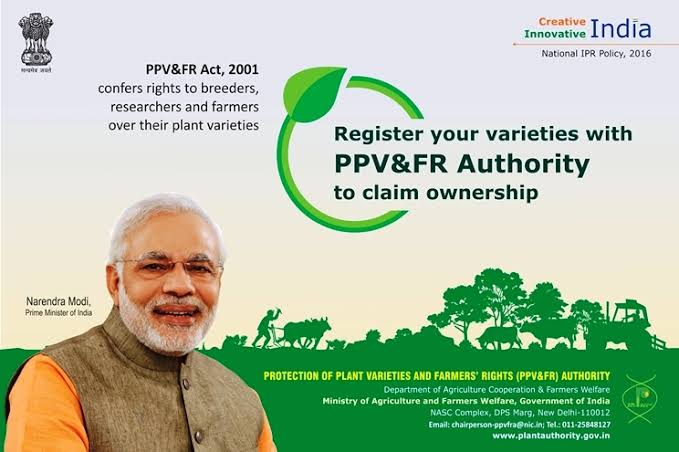
Protection of Plant Varieties and Farmer’s Rights Act of 2001(PPV & FR Act, 2001) confers right to breeders, researchers and farmers over their plant varieties. Reaching legislation with regards to establishing rights for farmers to save, use, exchange and sell farm saved seed.

The Act establishes nine rights for farmers of which the most important in this regard are the right to “seed” and the right to “compensation” for crop failure (Art. 39). Not only does the 2001 Act protect the rights of framers to save, use, exchange and sell farm- saved seed, it also seeks to ensure that these seeds are of good quality, or at least that farmers are adequately informed about the quality of seed they buy.

In addition, safeguards are provided against innocent infringement by farmers. Farmers who unknowingly violate the rights of a breeder are not to be punished if they can prove that they were not aware of the existence of such a breeder’s right (Art 42).

Case Name:- Monsanto Technology LLC & Ors Vs. Nuziveedu Seeds Ltd & OrsHigh Court of Delhi
Case Citation: CS (Comm) 132/2016

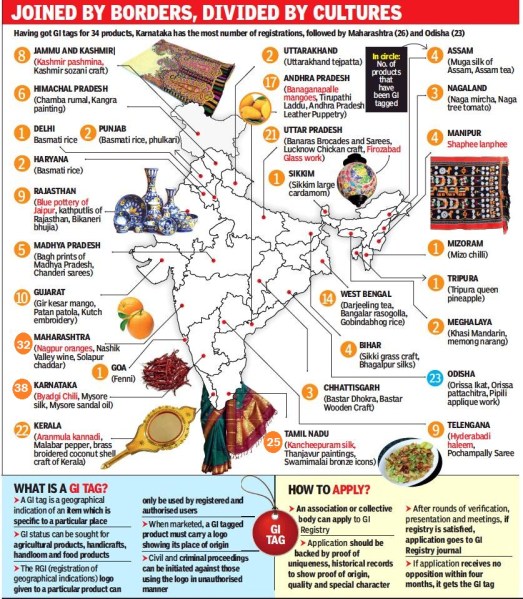
  1. The Geographical Indication of Goods:- The Geographical Indications of Goods (Registration and Protection) Act, 1999 states Geographical Indication as it is primarily an agricultural or food product, natural or a manufactured product (handicrafts, Handloom textiles or industrial goods) originating from a definite geographical territory. A product is considered to be manufactured in a territory if any one of the activities of either the production or of processing or preparation of the goods takes place there. It promotes the producers prosperity of goods which have been produced in the geographical territory.

It helps the producer community to differentiate its products from other competing products that are present in the market and generate goodwill around its products. Hence, it acts as a signaling device by helping consumers to identify genuine quality products.

Case Name:- Tea Board Vs ITC Limited on 20 April, 2011
Case Citation:- GA No. 3137 of 2010 CS No. 250 of 2010

It has been suggested that invocation of exception under Article 73 will be warranted to procure medical products and devices or to use the technologies to manufacture them as necessary to take cue of the present public health emergency.

CONCUSION

The above overview clearly depicts that India has adopted and adhered to the latest IPR Regime and it has forayed into the global trade competition with a double edged sword.

WEBSITES REFERRED

(i)https://www.ncbi.nlm.nih.gov/pmc/articles/PMC3217699/

(ii)https://www.mondaq.com/india/Intellectual-Property/656402/Patents-Law-In-India–Everything-You-Must-Know

(iii) http://sicldr.gov.in/

(iv)http://www.grkarelawlibrary.yolasite.com/resources/SM-Jul14-IPR-4%20-Samantha.pdf

(v)http://www.farmersrights.org/bestpractices/success_seed_1.html

(vi)https://www.latestlaws.com/articles/all-about-geographical-indications-of-goods-act-1999-by-ritik-dwivedi/

(vii)http://cipam.gov.in/wp-content/uploads/2017/09/bookletIPR.pdf

(viii)http://www.ipindia.nic.in/writereaddata/Portal/Images/pdf/Final_FREQUENTLY_ASKED_QUESTIONS_-PATENT.pdf

(ix)http://www.ipindia.nic.in/act-1999.htm

(x)https://taxguru.in/corporate-law/intellectual-property-rights-vis-a-vis-covid-19.html

(xi)https://www.google.com/url?sa=t&source=web&rct=j&url=https://www.wipo.int/edocs/pubdocs/en/intproperty/450/wipo_pub_450.pdf&ved=2ahUKEwjI-_TJxtTqAhWGlEsFHemYASEQFjAAegQIAhAB&usg=AOvVaw2iHkUR-AGDYkrLrntA3199

(xii)https://www.pngitem.com/middle/hRRmTJo_intelligent-clipart-human-brain-business-intelligence-brain-hd/

(xiii)https://www.istockphoto.com/photo/intellectual-property-rights-copyright-patent-or-trademark-infringement-gm1054513236-281758003

(xiv)https://www.tutorialspoint.com/information_security_cyber_law/intellectual_property_right.htm

(xv)https://www.discovermagazine.com/health/how-the-covid-19-pandemic-will-change-the-way-we-live

(xvi)https://depositphotos.com/stock-photos/registered-trademark-symbol.html

(xvii)https://www.shutterstock.com/video/clip-21491902-animated-copyright-red-3d-icon-loop-modules

(xviii)https://www.google.com/search?q=Design+Act+2000+India+Images&tbm=isch&ved=2ahUKEwiA6trXztTqAhUlnUsFHRUpDMQQ2-cCegQIABAC&oq=Design+Act+2000+India+Images&gs_lcp=ChJtb2JpbGUtZ3dzLXdpei1pbWcQAzIFCAAQzQI6BwgjEOoCECc6BAgjECc6AggAOgUIABCxAzoECAAQQzoHCAAQsQMQQzoECAAQHjoGCAAQBRAeOgQIABAYUPinCFjPjglg1pYJaApwAHgAgAGRAYgB5B-SAQQwLjMymAEAoAEBsAEFwAEB&sclient=mobile-gws-wiz-img&ei=cMURX4DyOaW6rtoPldKwoAw&bih=682&biw=393&client=ms-android-xiaomi-rev1&prmd=ivn#imgrc=SBSWXkD4ztdRZM

(xix)https://www.lexorbis.com/indian-patent-applications-and-the-biological-diversity-act/

(xx) http://www.plantauthority.gov.in/

(xxi)http://www.ipindia.nic.in/act-1999.htm