
Biography of “Mahatma Gandhi”

Full name- Mohandas karamchand Gandhi

Born- 2 October, 1869 (Porbander, Gujarat)

Death- 30 January, 1948

Father- Karamchand Gandhi

Mother- Putlibai Gandhi

Nationality- Indian

Professions- Politicians, Lawyer, Writer

Wife- Kasturba Gandhi.

The name ‘Gandhi’ needs no introduction. Any part of the world that understands civilisation and humanitarian values appreciates Mahatma Gandhi (October 2, 1869-January 30, 1948). Thus it doesn’t come as a surprise that you find Gandhi fans in a diverse range-from the present American President, Barack Obama to philanthropic groups working in Rio

Movements launched by Mahatma Gandhi:

Mahatma Gandhi overcame insurmountable odds to bring the mighty British Empire to its knees. It is not merely because of the Non-cooperation Movement or the Dandi March (1931) that we know him today. It is true, of course, that these movements, along with the Quit India Movement (1942), brought the British Government to its knees. Gandhi was a man of the masses. Such was his popularity that the British went weak in their knees at the prospect of arresting him. They were afraid of making a martyr of him and thus adding to his popularity. This was no mean achievement for a man described by Winston Churchill as a ‘half- naked fakir’. Gandhi’s idea of non-violent resistance against the British rule appealed to the conscience of the Indian society groaning under the unjust rule of the British since the Battle of Plassey in 1757.

When Gandhi put Satyagraha into action for the first time in South Africa in1906 and became a success there, it didn’t take much time to recognise and hail the arrival of a great leader. But Gandhi was more than a messiah in the world of politics. He was a powerful social reformer who campaigned relentlessly to end discrimination against India’s untouchable class, whom he called the Harijans (children of God).
Mahatma Gandhi Awards:

• In 1930, Gandhi was named the Man of the Year by Time’s Magazine. • In 2011, Time magazine named Gandhi as one of the top 25 political icons of all time. • He did not receive the Nobel Peace Prize despite being nominated five times between 1937 and 1948.

• The Government of India institutionalized the annual Gandhi Peace Prize to distinguished social workers, world leaders, and citizens. Nelson Mandela, the leader of South Africa’s struggle against apartheid was a recipient of the award

About Mahatma gandhi Personality:

The spiritual strength of Gandhi’s personality has to be given due recognition. His autobiography My Experiments with Truth bears a living testimony to this. Gandhiji used his spiritual strength to overcome all opposition. He walked across the country’s villages trying to make its people realise the importance of sanitation and healthy habits. If this does not prove his sincerity, let us remember his fast-unto-death in the riot-hit Calcutta of September 1947, which brought the Hindus and Muslims together again after a terrible violence.

Would any of our leaders today dare to walk the riot-hit streets of Noakhali with only a Tagore song to give him company? It is stupid to question the courage of this man who perhaps might even have achieved the impossible task of unifying India and Pakistan again had he not been shot dead by a fanatic called Nathuram Godse on January 30, 1948.

Film on Mahatma Gandhi:

Ben Kingsley portrayed Mahatma Gandhi in the 1982 film Gandhi, which won the Academy Award for Best Picture. Therefore, Mahatma Gandhi would be remembered forever as he spread the message of non-violence, truth, faith in God, and also he fought for India’s Independence. His methods inspired various leaders, youth not only in India but also out of India. In Indian history, he is considered as a most prominent personality and as the simplest person who wears dhoti. He spread the message of swaraj and taught Indians how to become independent.

Garhwali Culture

Garhwal is a beautiful place marked by the tall mountains, cold weather and green valleys. People from all over the country visit the place to meditate and attain peace in a life full of so much chaos. The very ancient wood carving can be seen even today on some of the doors as well temples of Garhwal. All the places such as Ransi temple, Srinagar temple, Chandpur fort, Padukeshwar and Devalgarh temple comprise of architectural remains even today.

Garhwali is the main language spoken here. Garhwali language has a number of dialects too including Jaunsari, Marchi, Jadhi and Sailani. The Garhwali language is believed to have originated from a combination of- Sauraseni Prakrit, Sanskrit and Western or Central Pahari language. Garhwal is inhabited by people belonging to a number of ethnic groups and castes. These include Rajputs who are believed to belong to Aryan origin, Brahmins who migrated after the Rajputs or later, tribals of Garhwal who stay in the Northern tracts and comprise of Jaunsaris, Jadhs, Marchas and Van Gujars.

It’s Very Difficult To Describe Garhwal Or Gadhwal In Few Words. This Place Has Worldwide Reorganization As Devbhoomi As Here You Can Find A Majority Of Temples, Holy Shrines, Spirituality, Tourism And Pilgrimage. Garhwal Region Is Surrounded By Splendid Beauty Of Snow-Capped Himalayan Peaks, Heavenly Rivers And Awesome Valley That Are The Major Attraction Of Garhwal. Along With That The Intense Woods, Prosperous Heritage And Friendly People Are Additionally Defines The Natural Beauty Of Garhwal. It Is Bordered On The North By Tibet, On The South By Uttar Pradesh, On The East By Kumaon Region And On The West By Himachal Pradesh. Pauri Or Pauri Garhwal Is The Administrative Division Of Uttaranchal.

People

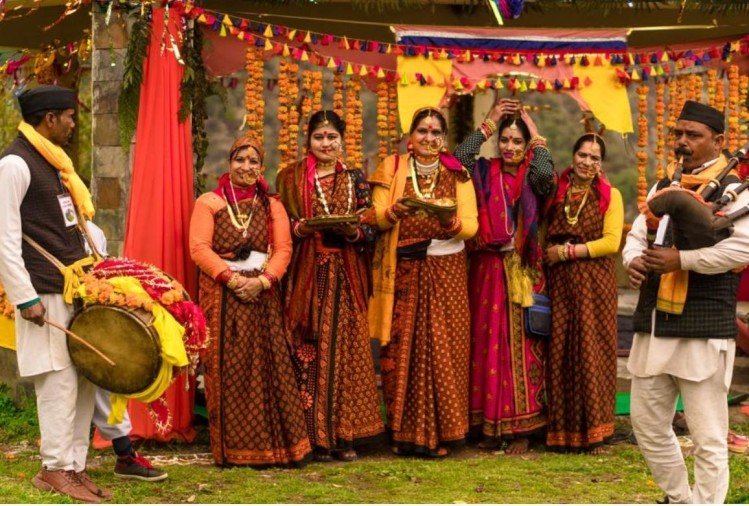
The culture of Garhwal presents an interesting blend of the indigenous population and traditions of other immigrants that settled here periodically. The local people of the region are associated with many tribes and work hard to earn their living. Folk dance and music forms an integral part of the people and culture of Garhwal.

Beauty of the place

Garhwal is a delightful spot set apart by the tall mountains, green valleys and chilly climate. Individuals from everywhere throughout the nation visit the spot to think and achieve harmony in an actual existence brimming with so much tumult. The extremely old wood cutting can be seen even today on a portion of the entryways also sanctuaries of Garhwal. This place has worldwide sort-out as devbhoomi and here everyone will majority of temples, holy shrines, spirituality, tourism and pilgrimage.

Language Spoken

Garhwali is the primary language spoken in this region. Garhwali language has various lingos also including Jaunsari, Marchi, Jadhi and Sailani. Garhwal is occupied by individuals having a place with various cultural gatherings and ranks. The principle languages spoken here are Hindi, Kumaoni, Garhwali, Bhotiya and Jaunsari.

Songs and dances

Folk songs of this area mirror an essential effortlessness and simple feelings generally got from the earth of harmony, peacefulness and the open nature all around. The subjects of tunes are justifiably connected with different farming exercises, their pillar and the incredible love for the land.

Folk dances of the area are a part for amusement and entertainment and applauding the nearby Gods. Normally most of the dances performed in groups. These society moves are primarily affected by the reverential connection of the individuals with Natraja, the God Shiva, and the relationship of Pandava of Mahabharata to the Garhwal Himalaya.

Dresses

Dresses for Men

The traditional clothing of men wears kurta and Pyjama or Churidar along with a Topi or a cap. The age of the men matters for wearing of topi or cap. During the occasion of the wedding the males wear yellow colour cotton Kurta with dhoti.

Dresses for Women

Married womenfolk are dressed in silvery jewellery known as Hansuli which decorates the spouse’s neck along with guluband. Even though they wear their old-style clothes to respect their heritage.