Interest Of Victim And Society At Large Must Also Be Kept In View While Sentencing: SC

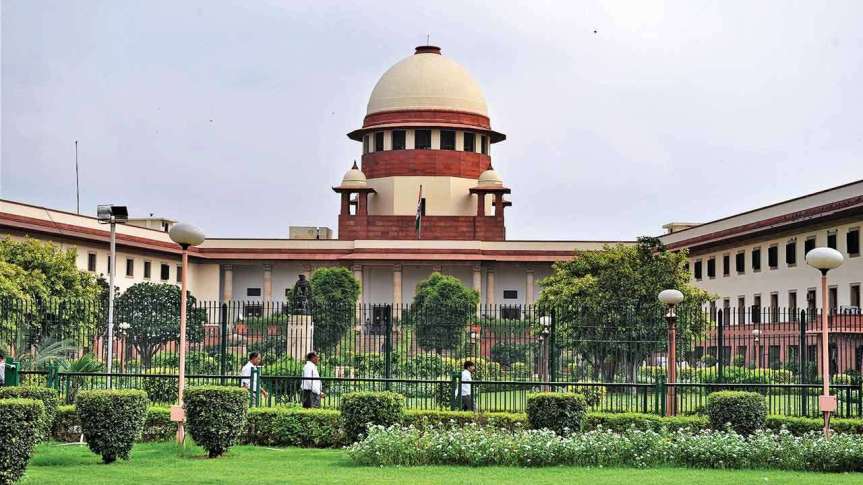
It is quite ostensible that in a recent judgment titled Suryakant Balurao @ Ramrao Phad vs State of Maharashtra and others in Criminal Appeal No. 1161 of 2019 (Arising out of SLP (Cri.) No. 8894 of 2018) delivered just recently on July 30, 2019, the Supreme Court has minced no words to unequivocally maintain the time tested dictum and endorsed by Supreme Court itself many times in the past that, “Interest of victim and society at large must also be kept in view while sentencing”. In this notable case, the Bombay High Court Bench at Aurangabad reduced the sentence of imprisonment from seven years to five years to an ‘attempt to murder’ accused. But the Apex Court disagreed with this and laid down the reason also as to why it disagreed which we shall deal with subsequently.

First and foremost, the ball is set rolling in para 2 wherein while stating the facts of this case, it is pointed out that, “This appeal arises out of the judgment dated 12.07.2018 passed by the High Court of Judicature of Bombay at Aurangabad in Criminal Appeal No. 11 of 2016 in and by which the High Court affirmed the conviction of respondent No. 2-accused No. 1 under Section 307 IPC read with Section 34 IPC and reduced the sentence of imprisonment imposed upon him from seven years to five years and imposed fine amount of Rs 25,000/-. Insofar respondent Nos. 3 and 4-accused Nos. 2 and 3, the High Court acquitted them from the charges under Section 307 read with Section 34 IPC and instead convicted them under Section 326 read with Section 34 IPC and reduced the sentence of imprisonment imposed upon them to the period already undergone and imposed fine amount of Rs 25,000/- upon each of them. The High Court maintained the conviction of accused Nos. 1 to 3 under Section 323 read with Section 34 IPC also the sentence of imprisonment imposed upon each of them.”

While elaborating further, it is then pointed out in para 3 that, “The appellant-Complainant has filed this appeal challenging the reduction of sentence of imprisonment of respondent Nos. 2 to 4. Case of prosecution is that on 24.01.2012 at about 05.30 PM, when Chandrakant (PW-6) was proceeding towards his land via Pangaon ‘T’ point, respondent No. 2-Devraj (A1) who along with respondent No. 3-Ashish (A2) and respondent No. 4-Balaji (A3) was standing near the mobile shop of one Prahlad Joshi, asked PW-6-Chandrakant why he obstructed respondent No. 4-Balaji (A3) from spreading the rubble in his field and there was some exchange of words between them. In this quarrel, Devraj (A1) took out pistol from his waist and fired one shot at PW-6-Chandrakant on his chest. Hearing the sound, Suryakant (PW-7), Shivaji (PW-5) and others rushed to the spot. Accused Nos. 2 and 3 were alleged to be holding stick and stone respectively in their hands. When Suryakant (PW-7) tried to intervene, accused No. 1 fired a bullet from his pistol which hit on the left knee of PW-7. When Shivaji Phad (PW-5) tried to intervene, accused persons beat him with fists and kicked and also inflicted a knife blow on him causing him grievous hurt and then accused fled away. Injured PW-6 and PW-7 were taken to hospital and were given treatment. Suryakant (PW-7) lodged the complaint based on which FIR was registered under Section 307 read with Section 34 IPC, Sections 323 and 506 IPC. On completion of investigation, charge sheet was filed against the accused under Sections 307, 323 and 506 read with Section 34 IPC and under Section 4 read with Section 25 of the Arms Act. Later, charge under Section 4 read with Section 25 of the Arms Act was altered to Section 3 read with Section 25 of the Arms Act.”

While elaborating on the chain of events in the Trial Court, it is then pointed out in para 4 that, “To prove the guilt of the accused, in the trial court the prosecution examined thirteen witnesses and produced number of documents. Relying upon the evidence of injured eye-witnesses Chandrakant (PW-6), Suryakant (PW-7) and eye-witness Ram Phad (PW-4) and also upon the medical evidence, the trial vide judgment dated 23.12.2015 convicted accused Nos. 1 to 3 under Section 307 IPC read with Section 34 IPC and sentenced each of them to undergo rigorous imprisonment for seven years and also to pay a fine of Rs 15,000/- each with default clause. The trial court also convicted them under Section 323 read with Section 34 IPC and sentenced each of them to undergo rigorous imprisonment for six months and to pay a fine of Rs 500/- each with default clause. The trial court directed that out of the fine amount paid by the accused, Rs 20,000/- be given to injured Chandrakant (PW-6) and Suryakant (PW-7) each as compensation as per the provision of Section 357 Cr.P.C.”

Now turning the focus to High Court, we find that para 5 then elaborates stating that, “In the appeal filed before the High Court, the High Court affirmed the conviction of accused No. 1-Devraj under Section 307 read with Section 34 IPC but reduced the sentence of imprisonment imposed upon him to five years. Additionally, the High Court directed accused No. 1-Devraj to pay a fine of Rs 25,000/- with default clause. The High Court also convicted accused No. 1-Devraj under Section 326 read with Section 34 IPC and reduced the sentence of imprisonment imposed upon him to the period already undergone by him and also directed to pay a fine of Rs 15,000/- with default clause. Insofar as conviction and sentence of imprisonment under Section 323 read with Section 34 IPC, the High Court maintained the same. The High Court acquitted accused No. 2-Ashish and accused No.3-Balaji from the charge under Section 307 read with Section 34 IPC and instead convicted them under Section 326 read with Section 34 IPC and imposed the sentence of imprisonment to the period already undergone by them and accused Nos. 2 and 3 were directed to pay a fine of Rs 25,000/- each with default clause. The High Court maintained the conviction and sentence of imprisonment under Section 323 IPC read with Section 34 IPC imposed upon accused No.2-Ashish and accused No. 3-Balaji. Out of the fine amount deposited by the accused, a sum of Rs 60,000/- was directed to be paid to PW-6-Chandrakant and a sum of Rs 30,000/- was ordered to be paid to PW-7-Suryakant as compensation under Section 357 Cr.P.C. Being aggrieved, injured complainant-Suryakant (PW-7) has preferred this appeal.”

Needless to say, para 6 then lays bare that, “We have heard Mr Uday B Dube, learned counsel appearing for the appellant and Mr Sudhanshu S Choudhari, learned counsel appearing for respondent Nos. 2 and 3-accused Nos. 1 and 2 and Mr Sandeep Sudhakar Deshmukh, learned counsel appearing for respondent No. 4-accused No. 3 and also Mr Nishant R Katneshwarkar, learned counsel appearing for the State and perused the impugned judgment and materials on record.”

While rapping the High Court on its knuckles for its undue leniency, it is then made clear by the Apex Court in para 7 that, “The learned counsel appearing for the appellant inter alia submitted that accused No.1-Devraj shot a bullet in the chest of PW-6-Chandrakant which pierced through his chest and came out from the back side and PW-11-Dr Manoj Landge opined that the injury sustained by PW-6-Chandrakant was grievous in nature which was capable of causing death and while so, the High Court was not right in showing undue sympathy to the respondents-accused and reducing the sentence of imprisonment imposed upon them.”

As it turned out, it is then unfolded in para 8 that, “The learned counsel appearing for respondent Nos. 2 to 4-accused Nos. 1 to 3 have submitted that considering the facts and circumstances of the case and the age of respondent Nos. 3 and 4 and other circumstances, the High Court exercised its discretion in reducing the sentence of imprisonment and at the same time increased the fine amount to be paid as compensation as per the provision under Section 357 Cr.P.C. and the impugned judgment reducing the sentence of imprisonment warrants no interference.”

To be sure, it is then clearly and convincingly held in para 9 that, “A person committing an offence under Section 307 IPC can be ordered to undergo imprisonment for life. To justify conviction under Section 307 IPC, intention of causing death or that it was done with the intention of causing such injury which is likely to cause death is necessary to constitute the offence. Although the nature of injury actually caused would be of considerable assistance in coming to a finding as to the intention of the accused. Such intention may also be deduced from other circumstances.”

Truth be told, it is then unravelled in para 10 that, “Accused No. 1-Devraj was serving in the Army and was possessing a licence for carrying the pistol. If the evidence of injured witnesses PW-6-Chandrakant and PW-7-Suryakant and eye-witness PW-4-Ram Phad is considered in its entirety, it becomes clear that the attempt by accused No. 1-Devraj was with intention to teach a lesson to PW-6-Chandrakant as to why he opposed accused No.3-Balaji from spreading the rubble in his field and there was some hot exchange of words between them. Accused No.1-Devraj carrying the pistol shot at PW-6-Chandrakant at his chest which pierced through his chest. When PW-7-Suryakant tried to interfere, accused No.1-Devraj shot at PW-7-Suryakant also.”

What’s more, it is then unearthed in para 11 that, “In the occurrence, PWs 6 and 7 sustained the following injuries:-

“Injuries noticed on person of PW-6-Chandrakant

1) Punctured wound over lower 1/3rd of Pre-sternal area 2 x 2 cm oval, age less than six hours.

2) Punctured wound over right side of chest post-axillary line about in 7 inter costal space 2 x 2 cm oval, age less than six hours.

3) Contused lacerated wound over scalp left parieto occipital region, 2 x 1 x 0.5 cm, age less than six hours, simple in nature.

Injuries noticed on person of PW-7-Suryakant

1) Punctured wound on lateral aspect of upper part of left knee 2 x 2 cm oval, age less than six hours, simple in nature.

2) Punctured wound over medical aspect of popliteal region 2 x 2 cm oval, age less than six hours. Grievous in nature. X-ray shows displaced fracture of supracondylor.

The bullet injury pierced through the chest of PW-6-Chandrakant and came out from the back side. In his evidence, PW-11-Dr Manoj Landge specifically stated that injuries No.1 and 2 caused to PW-6-Chandrakant were capable of causing death. So far as the injuries caused to PW-7-Suryakant are concerned, PW-11-Dr Manoj Landge opined that they were not fatal to life.”

More importantly, it is then held in para 12 that, “While considering the quantum of sentence, the courts are expected to consider all relevant facts and circumstances of the case, in particular, nature of injuries caused in the occurrence and the weapon used which will have bearing on the question of sentence and the Courts are bound to impose sentence commensurate with the gravity of the offence. Considering the nature of injuries caused to PW-6-Chandrakant i.e. gun shot wounds in the chest and the opinion of Doctor that the injuries caused to PW-6 are capable of causing death, in our view the High Court was not right in reducing the sentence of first accused-Devraj.”

Most importantly, while endorsing the trial court’s judgment and rapping the High Court on its knuckles, it is then very rightly held in para 16 that, “Considering the nature of the injuries caused to PW-6-Chandrakant and PW-7-Suryakant and the facts and circumstances of the case, the trial court convicted accused No.1-Devraj under Section 307 read with Section 34 IPC and sentenced him to seven years rigorous imprisonment with a fine of Rs 15,000/-. When the trial court has exercised its discretion in imposing seven years of imprisonment, the High Court ought to have kept in view the weapon used by accused No. 1 and the nature of injuries caused to PW-6-Chandrakant and the opinion of the Doctor. The courts must not only keep in view the right of the accused, but must also keep in view the interest of the victim and society at large. The courts have been consistent in approach that a reasonable proportion has to be maintained between the gravity of the offence and the punishment. While it is true that the sentence imposed upon the accused should not be harsh, inadequacy of sentence may lead to sufferance of the victim and the community at large. So far as the first accused-Devraj is concerned, the High Court was not right in reducing the sentence of imprisonment imposed upon first accused. As pointed out earlier, the High Court reduced the sentence of imprisonment from seven years to five years and increased the fine amount to Rs 25,000/- and part of the said fine amount was ordered to be paid as compensation to the injured PW-6-Chandrakant and PW-7-Suryakant. Since the enhanced compensation was paid by accused No. 1 which is said to have been withdrawn by injured-victims, for conviction under Section 307 read with Section 34 IPC, the first accused-Devraj shall undergo rigorous imprisonment for six years and six months.”

Be it noted, it is then observed in para 17 that, “So far as respondent Nos. 3 and 4-accused Nos. 2 and 3 are concerned, at the time of occurrence, they were not armed. Accused Nos. 2 and 3 are alleged to have attacked the injured with fist and kicked and with sticks. Considering the facts and circumstances of the case and the evidence on record, we are not inclined to interfere with the acquittal of accused Nos. 2 and 3 under Section 307 read with Section 34 IPC. So far as conviction under Section 323 read with Section 34 IPC, the High Court took into consideration that accused No.2-Ashish was nineteen years old at the time of occurrence and accusedNo.3-Balaji was thirty-eight years old and keeping in view their age and family circumstances and that they were not having criminal antecedents, the High Court thought fit to reduce the sentence of imprisonment from six months to the period already undergone by them. Since accused Nos. 2 and 3 were not armed with deadly weapons, we are not inclined to interfere with their acquittal under Section 307 read with Section 34 IPC and the reduction of sentence of imprisonment under Section 326 read with Section 34 IPC.”

It cannot be lost on us that it is then observed in para 18 that, “In the result, the impugned judgment of the High Court dated 12.07.2018 in Criminal Appeal No. 11 of 2016 is set aside. For conviction under Section 307 read with Section 34 IPC, the second respondent-accused No.1-Devraj is sentenced to undergo rigorous imprisonment for six years and six months and the appeal is partly allowed. The acquittal of respondent Nos.3 and 4-accused Nos. 2 and 3 under Section 307 read with Section 34 IPC is affirmed and the judgment of the High Court convicting them under Section 326 IPC read with Section 34 IPC and reducing the sentence of imprisonment imposed upon accused No. 2 and 3 to the period already undergone is also affirmed and the appeal qua respondent Nos. 3 and 4-accused Nos. 2 and 3 is dismissed. So far as the fine amount imposed upon the accused and the direction of the High Court to pay the compensation to the injured under Section 357 Cr.P.C. is maintained.” Lastly, it is then held in para 19 that, “The accused No.1-Devraj is directed to surrender within four weeks from today to serve the remaining sentence failing which, he shall be taken into custody.”

Before parting, it must be said that this landmark, latest and extremely laudable judgment has unquestionably once again reiterated what has been held earlier also in many cases like Sevaka Perumal and another v. State of Tamil Nadu (1991) 3 SCC 471, Ravinder Singh v State of Haryana (2015) 11 SCC 588, State of Punjab v. Bawa Singh (2015) 3 SCC 441 and others that the courts must not only keep in view the rights of the victim of the crime but also the society at large while considering the imposition of appropriate punishment. It has also been rightly held that justice demands that courts should impose punishment befitting the crime so that the courts reflect public abhorrence of the crimes and that undue sympathy to impose inadequate sentence would do more harm to the justice system to undermine the public confidence in the efficacy of law and society could not long endure under serious threats. This alone explains why the Apex Court in this case differed with High Court to reduce the sentence of imprisonment from seven years to five years to an ‘attempt to murder’ accused! Very rightly so!

Sanjeev Sirohi, Advocate,

s/o Col BPS Sirohi,

A 82, Defence Enclave,

Sardhana Road, Kankerkhera,

Meerut – 250001, Uttar Pradesh.

Punjab & Haryana HC Bans Use Of Loudspeakers Without Permission

While disposing off five writ petitions to curb excessive noise pollution in the States of Punjab, Haryana and the Union Territory of Chandigarh, the High Court of Punjab and Haryana has explicitly in a latest landmark ruling prohibited the use of loudspeakers in the territory without prior permission from the authorities. It minced no words in holding that glorification of violence has given rise to culture of gangsters. Therefore, it has rightly banned songs glorifying violence in public events.

It must be mentioned here that in these five writ petitions – 1. CWP No. 6213 of 2016 (O&M) Reet Mohinder Singh vs State of Punjab and others, 2. CWP-PIL No. 27011 of 2016 (O&M) Panditrao Dharenavar vs The Principal Secretary to Government, Punjab and others, 3. CWP-PIL No. 32 of 2018 (O&M) Court on its own motion vs State of Punjab and others, 4. CWP-PIL No. 42 of 2018 (O&M) Ram Kumar Garg vs Union Territory, Chandigarh and another, 5. CWP No. 11564 of 2018 (O&M) Serving in Organisations for Legal Initiatives vs Union of India and others, a two Judge Bench of the Punjab and Haryana High Court comprising of Justice Rajiv Sharma and Justice Harinder Singh Sidhu on July 22, 2019 while disposing off these five writ petitions filed to curb excessive pollution in the States of Punjab, Haryana and Union Territory of Chandigarh has clearly prohibited the use of loudspeakers in the territory without prior permission from the authorities. Very rightly so! We all know the ill effects of loud speakers very well.

To start with, this latest, landmark and extremely laudable judgment authored by Justice Rajeev Sharma for himself and Justice Harinder Singh Sindhu begins to unfold its cards by first and foremost pointing out in para 1 that, “This order will dispose of aforesaid five writ petitions as common questions of law and facts are involved therein.”

To put things in perspective, it is then brought out in para 2 that, “This Court vide order dated 14.3.2019 had constituted a Committee headed by Shri M.L. Sarin, Senior Advocate/Amicus Curiae together with Shri Akshay Bhan and Ms. Reeta Kohli, Senior Advocates and Shri Pankaj Jain, Senior Standing Counsel, U.T. Chandigarh, Shri Deepak Balyan, Additional Advocate General, Haryana and Shri Shireesh Gupta, Senior Deputy Advocate General, Punjab.”

While specifying the purpose of this Committee, it is then spelt out in para 3 that, “The Committee was ordered to make suggestions to this Court for formulating a policy to be implemented in the States of Punjab, Haryana and Union Territory, Chandigarh, for effective implementation of the provisions of law to control noise pollution and decide other allied issues.”

While elaborating further, it is then spelt out in para 4 that, “The Committee had invited suggestions from the Committee Members and various stakeholders from various parts of the States of Punjab, Haryana and Union Territory, Chandigarh. The first meeting of the Committee was held on 24.4.2019. The second meeting was held on 12.5.2019. The Committee opined that there are adequate provisions of law to control the menace of noise pollution but what is lacking is its effective implementation. The following suggestions were given for effective implementation of the provisions of law:-

i) To make the prevention of noise pollution an integral part of the Swachh Bharat Mission.

ii) Sensitize people, both the officials and the general public, about the hazardous effects of noise pollution and its ill-effects on human beings, birds and animals as well as nature.

iii) Sensitize religious institutions, marriage palaces and other noise producing institutions about the adverse impact of noise pollution in the vicinity. In this respect highlighting the Hukamnama issued by Sri Akal Takhat Sahib on use of loudspeakers only within the precincts of a Gurudwara.

iv) This process of sensitizing the public should be done through an aggressive campaign of 4-6 months through pamphlets, posters, newspapers, electronic media, advertisements, messages through mobile operators, etc., especially by taking the Health Department of the three governments on board.

v) The press and the media should also be requested to highlight the adverse effects of noise pollution.

vi) The authorities responsible for implementing the laws have to be warned that it is their duty to implement the laws. In this respect, the Chief Secretaries/Advisor and the DGPs should be made responsible for implementation of the law and to ensure that the supporting authorities under the Rules perform their duties effectively.

vii) As an aid to discharging their functions, the authorities should be equipped with modern noise monitoring devices.

viii) Each religious institution should be asked to nominate a responsible person to ensure the implementation of the law and in case of any breach, should be held accountable.

ix) Places which produce noise regularly e.g. Religious institutions, marriage palaces, barred industrial units, etc. should have noise monitoring devices installed to prevent them going above the permissible limit.

b) Setting up a common hotline for Punjab, Haryana and the U.T. Chandigarh

i) After creating a common command for Chandigarh region i.e. including Chandigarh, Mohali and Panchkula, there should be a common helpline where complaints can be made which can further be sent to the concerned Authorities in their respective areas accessible on phone, Whatsapp or email. Single phone number of email ID should cater to whole of the territory and the same should be widely advertised and published on radios and in newspapers, electronic media, etc.

ii) That the Authorities must have in House Standard Operating Procedure clearly defining steps that are to be taken after a complaint is received specifying outer time limit within which those steps shall be completed, so that the complaint can be taken to its logical end.

iii) The identity of the complainant should be kept confidential.

iv) Record of the complaints made should be maintained by the responsible enforcing authority under the Rules.

c) Registering of Complaints

i) As the enforcement of the noise pollution laws have to be through the Chief Secretaries/DGP, the supporting enforcing authorities would send weekly reports of the complaints received and the action taken.

ii) If a complaint is made, the guilty party should be let-off the first time with a warning.

iii) For the second violation, action in accordance with the applicable rules should be taken.

iv) For a third successive violation not only the guilty party but the enforcing agency should be held guilty of Contempt of Court or would necessitate the registering of a First Information Report.

d) Places requiring permission/licence

i) In places in which a licence/prior permission is required for holding functions etc., an undertaking should be obtained from the applicant to comply with the rules governing levels of sound. In case of any breach, the licence/permission would stand automatically revoked and the person would be liable to be proceeded against.

ii) The enforcing authorities could resort to video-recording of the noise pollution complaint which can easily be done with a good mobile phone, if equipment recording the level of noise is also photographed simultaneously.

OR

A mobile application can be developed (as was done by the Election Commission of India during the 2019 Lok Sabha Election) whereby a photograph/video showing a violation can be sent to the enforcing authority and action needs to be taken within 60 minutes.

In addition each PCR van should be equipped with a Noise Monitoring Device or a Decibel Meter.

e) Regarding Chandigarh

i) Whenever community centers in Chandigarh are allowed to be used for marriages or other functions, a certain sum of money should be kept in deposit to ensure that there is no noise pollution. In case of breach, the money should be confiscated while in case of compliance it should be refunded.”

It would be imperative to now mention that the Punjab and Haryana High Court has made it known in no uncertain terms in para 14 that, “We have gone through the report submitted by the Committee. We agree with the suggestions/inputs made by the Committee. Since the States of Punjab and Haryana and Union Territory, Chandigarh have not filed their response, we are not left with any option but to dispose of the writ petitions after accepting the suggestions/inputs made by the Committee.”

What’s more, it is then also made clear in para 15 that, “The Governments of Punjab, Haryana and Union Territory, Chandigarh have not taken sufficient measures to check the noise pollution either emanating from the factories or by way of indiscriminate use of loudspeakers/amplifiers even by religious bodies, may be by Temples, Mosques and Gurudwaras.”

Interestingly enough, para 16 then envisages that, “The Central Government has framed the Noise Pollution (Regulations and Control) Rules, 2000. According to Rule 3, the ambient air quality standards in respect of noise for different areas/zones shall be such as specified in the schedule annexed to these Rules. The State Governments are required to categorize the areas into industrial, commercial, residential or silence areas/zones for the purpose of the implementation of noise standards for different areas. It is the prime responsibility of the State Government under Rule 3 (3) to take effective measures for abatement of noise including noise emanating from vehicular movements; blowing of horns, bursting of sound emitting fire crackers, use of loudspeakers or public address systems and sound producing instruments and to ensure that the existing noise levels do not exceed the ambient air quality standards specified under these Rules. According to Rule 4, the noise level in an y area/zone shall not exceed 10dB(A) above the ambient noise standards specified in the schedule. The authority shall be responsible for the enforcement of noise pollution. The “authority” is defined under Rule 2(c). Rule 5 being important is reproduced as under:-

“5. RESTRICTIONS ON THE USE OF LOUD SPEAKERS/PUBLIC ADDRESS SYSTEM AND SOUND PRODUCING INSTRUMENTS. –

(1) A loud speaker or a public address system shall not be used except after obtaining written permission from the authority.

(2) A loud speaker or a public address system or any sound producing instrument or a musical instrument or a sound amplifier shall not be used at night time except in closed premises for communication within, like auditoria, conference rooms, community halls, banquet halls or during a public emergency.

(3) Notwithstanding anything contained in sub-rule (2), the State Government may subject to such terms and conditions as are necessary to reduce noise pollution, permit use of loud speakers or [public address systems and the like during night hours] (between 10:00 p.m. to 12:00 midnight) on or during any cultural or religious festive occasion of a limited duration not exceeding fifteen days in all during a calendar year] [The concerned State Government shall generally specify in advance, the number and particulars of the days on which such exemption would be operative.]

(4) The noise level at the boundary of the public place, where loudspeaker or public address system or any other noise source is being used shall not exceed 10dB(A) above the ambient noise standards for the area or 75dB(A) whichever is lower.

(5) The peripheral noise level of a privately owned sound system or a sound producing instrument shall not, at the boundary of the private place, exceed by more than 5dB(A) the ambient noise standards specified for the area in which it is used.

5A. RESTRICTIONS ON THE USE OF HORNS, SOUND EMITTING CONSTRUCTION EQUIPMENTS AND BURSTING OF FINE CRACKERS.-

(1) No horn shall be used in silence zones or during night time in residential areas except during a public emergency.

(2) Sound emitting fire crackers shall not be burst in silence zone or during night time.

(3) Sound emitting construction equipments shall not be used or operated during night time in residential areas and silence zones”.”

Needless to say, it is then stated in para 17 that, “According to plain reading of Rule 5, a loudspeaker or a public address system cannot be used except after obtaining written permission from the authority. The loudspeaker or any sound producing instrument or a musical instrument or a sound amplifier cannot be used at night time except in closed premises for communication within, like auditoria, conference rooms, community halls, Banquet halls etc. The State Government may subject to such terms and conditions as are necessary to reduce the noise pollution, permit use of loudspeakers or public address systems and like during night hours between 10.00 p.m. to 12.00 midnight on or during any cultural or religious festive occasion of a limited duration not exceeding fifteen days in all during a calendar year. The noise level at the boundary of the public place, where loudspeaker or public address system or any other noise source is being used cannot exceed 10dB(A) above the ambient noise standards.”

While pooh-poohing the lack of strict implementation of rules, it is then held in para 18 that, “The Governments of Punjab, Haryana and Union Territory, Chandigarh have not enforced the provisions of Rules 3, 4 and 5 effectively. The loudspeakers keep on blaring even beyond 12.00 midnight. The loudspeakers keep on blaring even beyond 12.00 midnight. The loudspeaker cannot be permitted to be used without the written permission from the authority even by the Temples, Mosques and Gurudwaras. It is only for limited period of festival and special occasions that for 15 days, the permission can be granted to use the loudspeakers and public address system between 10.00 p.m. to 12.00 midnight. The indiscriminate use of loudspeaker or amplifier or musical instrument causes annoyance, disturbance and discomfort. It disturbs the sleeping pattern of the patients. The study of the students is also adversely affected.”

More worryingly, it is then observed in para 22 that, “The glorification of violence has given rise to culture of gangsters in the States of Punjab, Haryana and Union Territory, Chandigarh.” Violence under no circumstances can ever be justified. Justification of violence under any circumstances only serves in contributing further to bring about more lawlessness and the culture of gangsters gets further promoted! How can this be ever justified?

Not stopping here, it is then further added in para 23 that, “The Court can also take judicial notice of the fact that glorification of the liquor, wine, drugs and violence in the songs in the States of Punjab, Haryana and Union Territory, Chandigarh, has increased in recent times. These songs affect the children of impressionable age. The children below the age of 12 years are not to be permitted to enter cinema halls/multiplexes, where “A” certificate films are screened. Semi-nude film posters are vulgar and display nudity. There is indecent representation of women, which is derogatory to women.”

Be it noted, it is then underscored in para 24 that, “As far as the frequent deaths and injuries caused by the persons using fire arms in marriage/religious processions/social gatherings/public/political rallies, this tendency is required to be curbed.”

Suffice it to say, para 26 then holds that, “It is thus evident that the fire-arms can be permitted to be carried for the purpose of sport/self-protection/protection of crops and cattle/display. The fire-arms are not permitted to be carried in a fair, religious procession or other public assemblage or within the campus or precincts of any educational institution.”

To say the least, while sounding a note of caution, it is then observed in para 27 that, “The licence for fire-arms is issued only for limited purposes. No person has a fundamental right to hold fire-arms. The State has absolute right to regulate acquisition and use of arms by laying down the norms.”

Finally and perhaps most significantly, it is then held in para 28 that, “Accordingly, the writ petitions are disposed of with the following mandatory directions:-

i) The States of Punjab, Haryana and Union Territory, Chandigarh are directed to ensure that no loudspeaker or public address system shall be used by any person including religious bodies in Temples, Mosques and Gurudwaras without written permission of the authority even during day time, that too, by getting an undertaking that the noise level shall not exceed more than 10dB(A) peripheral noise level.

ii) The States of Punjab, Haryana and Union Territory, Chandigarh are directed to ensure that the loudspeaker, public address system, musical instrument and sound amplifier are not played during night time except in auditoria, conference rooms, community halls, banquet halls as per norms laid down under the Noise Pollution (Regulation and Control) Rules, 2000.

iii) The States of Punjab, Haryana and Union Territory, Chandigarh are directed to ensure that loud speakers or public address systems are not used between 10.00 p.m. to 6.00 a.m., except between 10.00 p.m. to 12.00 midnight during any cultural or religious festive occasion of a limited duration not exceeding 15 days in all during a calendar year, that too, the noise level shall not exceed 10dB(A) above the ambient noise standards for the area. The peripheral noise level of a privately owned sound system or a sound producing instrument shall not, at the boundary of the private place, exceed by more than 5dB(A). The authority concerned shall keep on visiting and monitoring at the public places, private places, auditoriums, conference rooms, community halls, conference rooms, community halls, banquet halls, temples, mosques and Gurudwaras to ensure due compliance of the Rules.

iv) We direct all the Senior Superintendents of Police/Superintendents of Police in the States of Punjab, Haryana and Union Territory, Chandigarh to ensure that no horn shall be blown in silence zone or during the night time between 10.00 p.m. to 06.00 a.m. in residential areas except during public emergency. No sound emitting construction equipments shall be used or operated during the night time between 10.00 p.m. to 06.00 a.m. in residential areas or silence zone. The pressure horns are banned throughout the States of Punjab, Haryana and Union Territory, Chandigarh. The violators of the Rules be penalized under the Rule 6 of the Noise Pollution (Regulation and Control) Rules, 2000.

v) All the Senior Superintendents of Police/Superintendent of Police and Deputy Superintendent of Police in the States of Punjab, Haryana and Union Territory, Chandigarh are directed to ensure that motorcycles throughout the States of Punjab, Haryana and Union Territory, Chandigarh are duly fitted with silencers to avoid noise pollution and menace.

vi) No person, throughout the States of Punjab, Haryana and Union Territory, Chandigarh, shall carry any fire-arm to a fair, religious procession/marriage procession or other public assemblage or within the campus or precincts of any educational institution.

vii) The Licensing Authorities are also directed to ensure that no licence is issued to any person, who has not completed the age of 21 years.

viii) No licence shall be issued to a person who has been sentenced on conviction of any offence involving violence or moral turpitude to imprisonment for [any term] at any time during a period of five years.

ix) No licence shall be issued to a person who has been ordered to execute under Chapter VIII of the [Code of Criminal Procedure, 1973 (2 of 1974)], a bond for keeping the peace or for good behaviour, during the term of the bond.

x) The Director General of Police in the States of Punjab, Haryana and Union Territory, Chandigarh, are directed to ensure that no songs are played glorifying the liquor, wine, drugs and violence in any song even in live shows.

xi) The States of Punjab, Haryana and Union Territory, Chandigarh are also directed that no child below the age of 12 years is permitted to enter cinema halls/multiplexes, where “A” certificate films are screened.

xii) The District Administration is directed to ensure that nude posters, semi-nude posters, obscene posters should not be fixed/displayed in any district near the educational institutions in the States of Punjab, Haryana and Union Territory, Chandigarh.

xiii) The Deputy Commissioners in the States of Punjab, Haryana and Union Territory, Chandigarh are directed to ensure that no loudspeakers are permitted 15 days before the annual examinations and during the course of examinations.

xiv) The recommendations made by the Committee constituted by this Court are ordered to be implemented in letter and spirit for proper enforcement of law.

xv) The District Magistrates/Senior Superintendents of Police/Superintendents of Police of each district shall be personally responsible to ensure due compliance of the directions issued hereinabove.”

Before parting, the Punjab and Haryana High Court Bench comprising of Justice Rajiv Sharma and Justice Harinder Singh Sidhu observed in para 29 that, “We place on record our appreciation for the valuable assistance rendered by the Committee” and then finally in para 30 that, “A copy of this order be sent to the Chief Secretaries of the States of Punjab, Haryana and Home Secretary, Union Territory, Chandigarh, for compliance.”

All in all, it is a very well written judgment which demonstrates zero tolerance for noise pollution. It ably issues a series of mandatory directions to ensure that noise pollution is contained to a large extent. There can be no denying or disputing that this latest, landmark and extremely laudable judgment by the Punjab and Haryana High Court deserves to be implemented in letter and spirit and all the High Courts must emulate this landmark judgment to ensure that noise pollution is contained to a large extent! It also leaves no room for doubt in holding very rightly that those songs which glorify violence must be banned in public events!

Sanjeev Sirohi, Advocate,

s/o Col BPS Sirohi,

A 82, Defence Enclave,

Sardhana Road, Kankerkhera,

Meerut – 250001, Uttar Pradesh.

Launch of IRCTC iMudra

IRCTC since its inception has been one of the
front-runners of bringing e-commerce to the doorstep of common-man and
has also been a pioneer in bringing many digital innovations in
different railway domains.
Continuing with the same spirit, passion, and lots of enthusiasm, IRCTC has now launched its new product named “IRCTC iMudra” to increase its footprint in the digital payment’s domain.
IRCTC iMudra, a powerful prepaid card cum wallet is
safe, secure and easy to use customer oriented B2C product. It will open
a world of possibilities for you, empowering you with the true power of
going 
cashless on every transaction, whether you are doing a transaction
through POS machines, peer to peer money transfer, withdrawing cash at
ATMs or buying goods and services online.
  • Accessible Across All Channels like mobile app, tablet and desktop.
  • Comes with a virtual and physical card for purchasing goods online or offline.
  • Easy way to send or receive money to friends and family within the network.
  • Widely accepted across all VISA enabled ATMs in India to withdraw cash.
  • Hassle-free ticket booking on IRCTC through wallet as well as prepaid card.
  • Exclusive Launch Offers.

New Education Policy, the way to Nalanda, Takshasila glory

Expressing
concern over India’s slide from the heights of Nalanda and Takshasila
to not being among the world’s top 100 educational institutions now, the
Vice President of India and Chairman of Rajya Sabha, Shri M. Venkaiah
Naidu has said that the New Educational Policy will make India a global
educational hub. He urged the public to give their views and suggestions
on the draft NEP by the stipulated time of 15th of this month.
Shri
Naidu further called for a holistic and value-based education that will
lay strong foundations for the vibrant economy that India is emerging
as. He spoke on the challenges to Indian education after releasing a
book ‘The Dynamics of Indian Education’ authored by Prof. J.S. Rajput at
the Vice President’s residence, here today.
The
Vice President said; “These are the critical times for the country and
there is a need for having a fresh look at the education system. I have
been consistently advocating the need for revamping the education system
to not only make our universities world-class, but to make India the
knowledge hub. I am glad that the draft of the New Education Policy
makes several out of the box suggestions that have the potential to turn
India into a global education hub.”
Shri
Naidu stressed that primary education shall be in the mother tongue
which enables learning other languages effectively at later stages.
Highlighting the knowledge traditions of India, he referred to several
German Universities promoting Sanskrit to decipher ancient palm leaves
and scriptures for clues for scientific innovation.
Former
Union Minister Shri Arif Mohammad Khan who spoke on the occasion said
that the land of India for ages is marked by the tradition of knowledge
and wisdom. He referred to Prophet Mohammad as having said; “Sitting in
Mecca, I am feeling the cool breeze of Knowledge from India. I am an
Arab without Arabness; I am not an Indian but feel the Indianness.”
Prof.
Rajput, former Secretary-General of Lok Sabha, Shri Subhash Kashyap and
Chairman of Prasar Bharti, Shri A. Surya Prakash spoke on various
aspects of Indian Education.
Following is the text of Vice President’s address:
I am immensely pleased to release the book “The Dynamics of Indian Education” written by well-known educationist, Prof Rajput. 
The
book covers a whole gamut of issues relating to Indian education system
and I must compliment the author for this timely work on a topic that
is very close to my heart.
As
we all are aware, India has a rich history, tradition and culture of
education system from Vedic times. The Gurukul system of imparting
knowledge and skills used to focus on holistic development of
individuals. Education of women was also accorded huge importance during
ancient times and there were well-known women scholars during the Vedic
period.
In
fact, India was once known as Vishwaguru because of its world class
centres of learning like Takshashila, Pushpagiri, Nalanda and others. It
was stated that around 10,000 students, including many from foreign
shores used to study diverse subjects at Takshashila.
India
contributed not only in philosophy and spirituality, but in sciences,
mathematics, astronomy and other areas. The objective was “welfare of
one and all – Sarva Bhut Hite Ratah”
Subsequently,
following foreign invasions and the colonial rule, India lost its
pre-eminent position. Today, one finds that not a single Indian
university figures in the top-ranking global educational institutions.
These
are the critical times for the country and there is a need for having a
fresh look at the education system. I have been consistently advocating
the need for revamping the education system to not only make our
universities world class, but to make India the knowledge and innovation
hub.
We
need to recapture the past glory. Our education system must remain
deeply rooted to culture, while simultaneously steadfastly pursuing new
frontiers of knowledge.
Undoubtedly,
our post-Independence achievements in education are praiseworthy. We
have near total enrolment in schools in spite of over-threefold increase
in population!
The
recent launch of Chandrayaan -2 and other remarkable achievements in
space sciences have unveiled before the world the Indian tradition for
the quest of knowledge. It inspires and motivates young Indians and our
scientists deserve all the praise for making us proud. Elsewhere,
Indians working at NASA and Silicon Valley have made the country proud
with their contributions.
I
feel that the need of the hour is to provide quality education at all
levels to all people. I am glad that the draft of the New Education
Policy makes several out-of-box suggestions that have the potential to
turn India into a Global education Hub. With the draft report placed for
another round of receiving inputs, I hope that many more suggestions
would come forth to make Indian universities achieve their rightful
place in the global rankings.
I
must however, mention that in our march towards a knowledge society, we
need to strengthen our school education on priority basis. In
particular, special attention has to be bestowed to improve government
schools.
We
must reform the education system to do away with rote learning. We need
to promote concept learning, critical thinking, creativity, problem
solving skills as also multilingualism and digital literacy to enable
the students to confidently face challenges and successfully pursue
their careers.
I
need not once again enumerate the importance of teaching in mother
tongue from a young age. In fact, I have consistently been advocating
the need to make it mandatory for mother tongue to be the medium of
instruction up to primary level.
I
am told that some of the top universities in Germany teach Sanskrit to
enable the scholars of the subject decipher ancient palm leafs and
scriptures and find clues for scientific innovation. We should not
neglect Sanskrit. I feel that no language should be imposed, nor any
language opposed.
Teachers
are the pivot of national educational endeavors. We need best of the
minds in teaching profession. Once in the profession they need to
internalize “yavadjeevait adhiyate viprah” – the wise continue to gain knowledge throughout life.
Teachers
should be torchbearers of the society. I am told that there are around 1
crore teachers and 30 crore students from KG to PG level in the
country. Filling up all the vacant positions of teachers is equally
important to make our education effective.
Teachers
play the most crucial role in shaping the character of a child after
his or her parents. Therefore, teachers should have societal concerns.
We must develop a model of education that reflects Indian culture and
ethos. We need to inculcate cultural, moral, ethical and spiritual
values among children.
I
hope the new educational policy will address various concerns on
reforming the system and fulfill the need for India-centric education
architecture. The draft policy should be studied with an open mind.
People should give constructive suggestions rather than criticize it for
the sake of criticism.
We
need education for progress and development. Probably more than that,
we need Education for Character Development. Value based education that
prepares the young for an India that abounds in ‘social cohesion and
religious amity’ is our goal.
The
book practically covers all the aspects mentioned by me. Prof. Rajput
strongly pleads for value education, character formation and celebration
of unity in diversity. I wish him well in his efforts.

Commerce & Industry Minister holds discussions with CEOs of Indian IT Companies to explore new markets

Union
Minister of Commerce & Industry and Railways, Piyush Goyal,held a
meeting with senior managers of IT companies in New Delhi yesterday. The
meeting was held to discuss opportunities for Indian IT companies to
invest and grow their business in new markets like the Nordic countries,
Eastern and Central Europe, Canada, Australia and Africa and also
exploreavenues for greater investments and growth in East Asian markets
like China, Japan and Korea.
India’s
IT industry contributed 7.7% to the country’s GDP in FY 2017 and is
expected to contribute 10% of India’s GDP by 2025. According to NASSCOM,
the sector aggregated revenues of USD 160 billion in 2017. The United
States account for 2/3rds of India’s IT services exports.
India’s
IT and ITeS industry grew to USD 181 billion in 2018-19. Exports from
the industry increased to USD 137 billion in FY 2019 while domestic
revenues (including hardware) advanced to USD 44 billion.
During
the discussions with Commerce and Industry Ministry, the
representatives of the companies informed that although the Chinese IT
services market is the third largest in the world India’s investments
and business have not been able to grow in China due to various
non-tariff barriersand challenges faced by Indian companies to set up
their entity in China. Marketaccess issues that create hurdles for
Indian companies to open their business in China was also discussed.
The
top five Indian IT service companies like TCS, WIPRO, Infosys, Tech
Mahindra and HCL are doing business in China for more than a decade and
are employing 90% of local people in their China operations but returns
are very low and thereforeIndian IT service companies are not showing
much interest to invest and expand their operations in China.
Commerce
and Industry Minister during the discussions requested National
Association of Software and Services Companies (NASSCOM) and the senior
managers of the companies attending the meeting to share specific data
regarding non-tariff barriers being faced by them inChina and other East
Asian markets. Government of India will give all support for the global
growth of India’s flagship industry and will make all efforts to
facilitate the IT service industry and for that it is ready to engage
with China and also Japan and Korea, informed Piyush Goyal.
Commerce
and Industry Minister urged India’s IT services companies to explore
other markets and not be inhibited in operating in countries that are
non-English speaking. He urged the top five Indian IT firms to create a
corpus that will be spent on training manpower in languages like
Mandarin, Japanese and Korean for accessing the markets in these
countries.
The
meeting was attended by senior managers of TCS, Satyam Venture
engineering, HCL, NIIT Tech, Infosys, Invento Robotics, Tech Mahindra
and WIPRO. SangeetaGodbole, DG of Services Export Promotion Council
(SEPC) and President of NASSCOM, Debjani Ghosh, were also present during
the discussions with Commerce and Industry Minister.
India
is the largest exporter of IT services in the world and exports
dominate the Indian IT industry and constitutes about 79% of the total
revenue of theindustry. India’s IT service sector is now gearing up to
be the digital partner of intelligent automation like smart algorithms,
bots and AI tools, which arefast becoming a part of every industry and
an increasingly digital world.

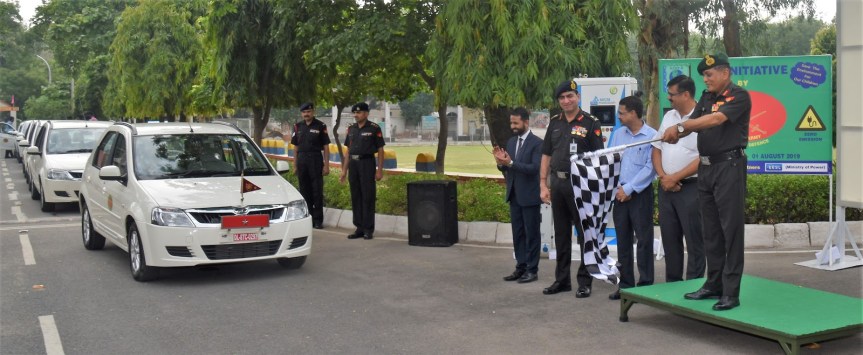
Army Launches E Car to Combat Pollution

The
Indian Army in step with government policies on environmental
protection has launched an ecological initiative with employing E Cars
for use of its officials in New Delhi in partnership with Energy
Efficiency Services Ltd (EESL), a joint Venture of Central PSUs under
Ministry of Power. The introduction of E-Car in Army at Delhi was
visualised on World Environment Day and launched on 01 Aug 2019 with
flagging off the first lot of E-Cars for Indian Army by QMG, Lt Gen
Gopal R. Army plans to operate the first batch of 10 E-Cars as a pilot
project and develop further on this initiative and increase the number
of E Cars in Delhi to ensure economy, efficiency and minimal emissions.
It
is pertinent to mention that Army has always been at the forefront of
environmental initiatives. Indian Army has a large number of Territorial
Army Battalions (ECO) which have done a yeoman service in environmental
protection initiatives such as forestation. Army units posted in remote
and ecologically sensitive areas from Kashmir to Kanya Kumari have been
carrying out various activities in close coordination with local
populace to conserve the ecological balance and protect the environment.
Air
pollution has been a major challenge in Delhi. Governments across the
World are investing a lot of resources in fighting this menace. Electric
vehicle technology has proved to be a viable alternative by reducing
the carbon emission footprint. Indian companies like Tata Motors and
Mahindra have taken a lead in R&D and manufacturing of Electric
Cars. EESL has been the main facilitator in providing these vehicles to
various Government agencies. Army’s initiative in encouraging these
electric vehicles will go a long way in further development of this
technology and its adoption for the general public in near future.

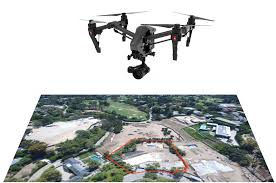
Drones to undertake Large scale Mapping of Village areas in Maharashtra

Survey
of India ,the national mapping agency of the country under the Min of
Science & Technology has signed an MoU with Department of revenue
& Land records, Govt of Maharashtra to undertake the Large scale
Mapping of Village Gaothan (Aabadi)  areas in the State of Maharashtra
using drones.
Chief
Minister of Maharashtra ,Shri Devendra Fadnavis inaugurated the Drone
based Mapping Project being carried out by Survey of India at Nimgaon
Korhale in Ahmednagar district on 31st July, 2019. Minister
of Rural Development, Women and Child Welfare Pankaja Gopinath Munde;
Surveyor General of India Lt Gen Girish Kumar, VSM; Commissioner Revenue
& Land Records; Commissioner Rural Development and Secretary, RDD
from Govt of Maharashtra along with other officials were also present
during the launch of the project. This large scale mapping project is
being carried out by Survey of India, Min of Science & Technology,
Govt of India for Dept of Revenue and Land Records, Govt of Maharashtra
using Professional Survey grade Drone covering more than 40,000 Village
Gaothan (Aabadi) areas in Maharashtra State. 
These
village Gaothan areas not been surveyed earlier will be mapped at 1:500
scale covering all land parcels in the village for preparing the
accurate revenue maps and GIS database. Drone survey will be pivotal to
fix locations of village boundaries, canals, canal limits and roads in
these villages.
A detailed presentation about this Large scale Mapping Project was also made in the National Workshop and Conference of Sarpanch and Upsarpanch organized
jointly by Department of Rural Development, Govt of Maharashtra and All
India Sarpanch Association Shirdi, Ahmednagar district on 31st July. This national conference was organized under the guidance of  CM Shri Devendra Fadnavis, presided by Minister
of Rural Development, Women and Child Welfare Pankaja Gopinath Munde
and attended by other Ministers, MP, MLAs and other dignitaries. This
conference was attended by thousands of Sarpanch, Upsarpanch and farmers
across the country and the Maharashtra state.

Sea to be The next Gateway for Tourism in The Country

The
Minister of State for Shipping (I/C) and Chemicals & Fertilizers,
Shri Mansukh Mandaviya and  Minister of State (I/C) for Tourism &
Culture, Shri. Prahlad Singh Patel discussed  the immense potential for 
maritime tourism in the country. In a  meeting between the two
Ministers held in New Delhi yesterday, the two  ministers  emphasised 
the need to promote the important tourist destinations in the coastal
areas of the country through coastal tourism .
It
was decided in the meeting to set up a committee of senior officials of
the two Ministries to explore the avenues for coastal tourism  in the
country and work out ways to promote the same. It was also  decided to
explore  the possibilities and opportunities in the areas of  Coastal
Tourism, Cruise Tourism, Sea Sports, Light House Viewing Gallery.  It
was suggested that every coastal area can create a calendar of events
for  tourist engagement, with activities like beach volleyball, sand
art, food festivals, dances of the fishing community, to name a few.
The
Shipping Ministry is promoting tourism in maritime states under the
Sagarmala Programme. This is being done in convergence with the Ministry
of Tourism and Tourism Development Departments of maritime state
governments.
These
new, unexplored tourism areas will open a door to coastal communities
of the maritime states where they will find many new and diverse job
opportunities. In the coming years, coastal and maritime tourism will be
a source for growth and job creation in the coastal states of India.
The
two Ministers  also underscored the need  for better coordination and
synergy between their respective Ministries so that desired results can
be achieved in a time bound manner.

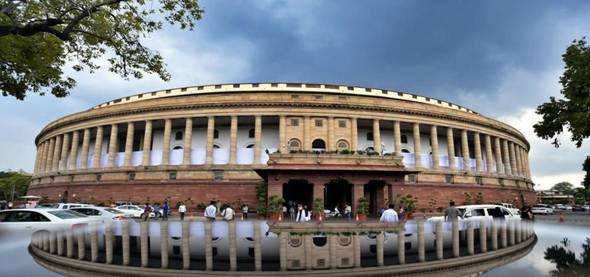
Lok Sabha passes Consumer Protection Bill, 2019

The
Lok Sabha todaypassed the Consumer Protection Bill 2019 after due
consideration and discussion.The Union Minister for Consumer Affairs,
Food and Public Distribution Shri Ram Vilas Paswan said that the bill
aims at protecting the interests of consumers by establishing
authorities for timely and effective administration and settlement of
consumers’ dispute. Moving the Bill, Minister of State for Consumer
Affairs, Food and Public Distribution, Shri Raosaheb Patil Danve said
the Bill aims to simplify a number of rules. Shri Danve said consumers
do not get quick redressal of their complaints and with the passage of
the Bill, consumers will be able to get speedy justice. He said the
government aims to simplify the entire process of redressal of consumer
grievances.
Under
the Bill, there is provision for central government to set up a Central
Consumer Protection Authority (CCPA) to promote, protect and enforce
the rights of consumers and will be empowered to investigate, recall,
refund and impose penalties. It will regulate matters related to
violation of consumer rights, unfair trade practices, and misleading
advertisements. There is also a provision for class action law suit for
ensuring that rights of consumers are not infringed upon. The authority
will have power to impose a penalty on a manufacturer or an endorser of
up to 10 lakh rupees and imprisonment for up to two years for a false or
misleading advertisement. 
Salient Features of the Bill
1.         Central Consumer Protection Authority (CCPA): Executive Agency to provide relief to a class of consumers. The CCPA will be empowered to-
  1. Conduct  investigations into violations of consumer rights and institute Complaints /Prosecution
  2. Order recall of unsafe goods and services
  3. Order discontinuance of Unfair Trade Practices and Misleading  Advertisements
  4. Impose penalties on Manufactures /Endorsers /Publishers of Misleading Advertisements
2.         Simplified Dispute Resolution process
i) Pecuniary Jurisdiction enhanced to-
  • District Commission –Up to Rs1 crore
  • State Commission- Between  Rs1 crore and Rs 10 crore
  • National Commission –Above Rs.10 crore
ii) Deemed admissibility after 21days of filing
iii) Empowerment of Consumer Commission to enforce their orders
iv) Appeals only on question of law after second stage
v) Ease of approaching consumer commission
  • Filing from place of residence
  • E-filing
  • Videoconferencing for hearing 
3.         Mediation
  • An Alternate Dispute Resolution (ADR) mechanism
  • Reference to Mediation by Consumer Forum wherever scope for early settlement exists and parties agree for it.
  • Mediation cells to be attached to Consumer Forum
  • No appeal against settlement through mediation
4.         Product Liability
A
manufacturer or product service provider or product seller to be
responsible to compensate for injury or damage caused by defective
product or deficiency in services
The Basis for product liability action will be:
  • Manufacturing  defect
  • Design defect
  • Deviation from manufacturing specifications
  • Not conforming to express warranty
  • Failing to contain adequate instruction for correct use
  • Services provided arefaulty, imperfect or deficient
New Bill- Benefit to Consumers
Presently
Consumer only have a single point of access to justice, which is time
consuming. Additional swift executive remedies are proposed in the bill
through Central Consumer Protection Authority (CCPA)
Deterrent punishment to check misleading advertisements and adulteration of products
Product liability provision to deter manufacturers and service providers from delivering defective products or deficient services
Ease of approaching Consumer Commission and Simplification of Adjudication process
Scope for early disposal of cases through mediation
Provision for rules for new age consumer issues: e-commerce & direct selling

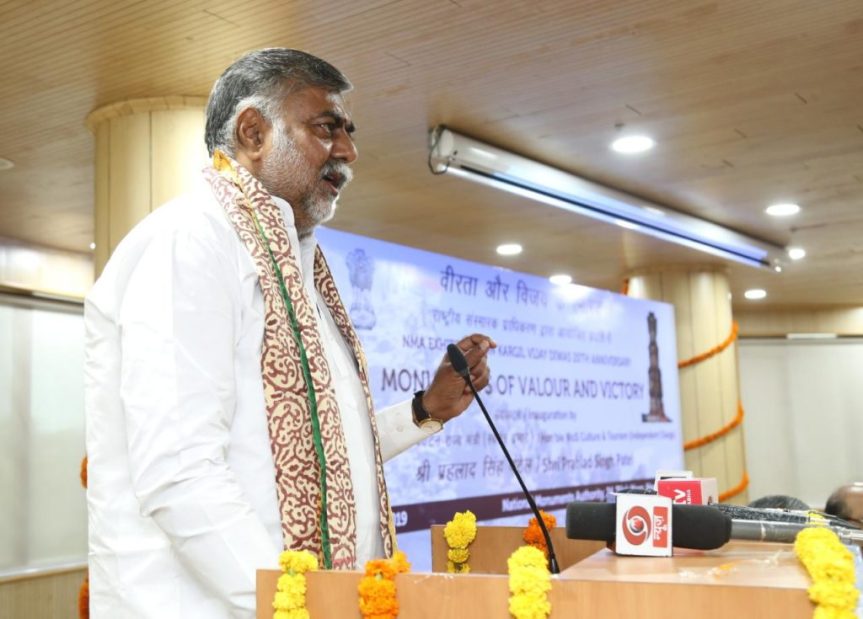
Nepali and Santhali languages in the Scheme for grant of Senior/Junior Fellowships of Culture Ministry

The
Union Minister of State for Culture and Tourism, Shri Prahlad Singh
Patel has announced to include the remaining 02 languages from the 8th 
Schedule of the Indian Constitution i.e. Nepali and Santhali in the
Sub-Field of Field “Literature” in the scheme component ‘Award of
Senior/Junior Fellowships to Outstanding Artistes in the Fields of
Culture’. The announcement was made by the Culture Minister during an
interaction with media in New Delhi today.

The
Ministry of Culture administers a scheme component namely Award of
Senior/Junior Fellowships to Outstanding Artistes in the Fields of
Culture. The fellowships are awarded for undertaking research oriented
projects.
Centre
for Cultural Resources and Training (CCRT), Dwarka is the Nodal
institute for handling the Scheme of Sr. /Jr. Fellowship till selection
process. “Literary Arts” is one of the Fields under this Scheme where
candidates can apply for research in 22 languages as their Sub-Field.
These 22 languages include the following 20 languages from the 8th Schedule of Articles 344(1) and 251 of the Indian Constitution along with English and Khasi:-
(1)
Assamese, (2) Bengali, (3) Bodo, (4) Dogri, (5) Gujarati, (6) Hindi,
(7) Kannada, (8) Kashmiri, (9) Konkani, (10) Maithili, (11) Malayalam,
(12) Manipuri, (13) Marathi, (14) Oriya, (15) Punjabi, (16) Sanskrit,
(17) Sindhi (18) Tamil, (19) Telugu and (20) Urdu.

Central Board of Secondary Education (CBSE) declares results of Central Teachers Eligibility Test (CTET) – July 2019

The
Central Board of Secondary Education (CBSE) declares results of Central
Teachers Eligibility Test (CTET) – July 2019 here today. The
12th edition of Central Teachers Eligibility Test (CTET) was conducted
on 7th July 2019 in 104 cities at 2942 centres all over country. Total
no of 114 City Coordinators, 2942 centre superintendents, 4335 observers
and 827 CBSE officials were deputed for smooth and fair conduct of
examination.

A
total no of 29.22 Lacs candidates were registered for this examination
out of which 23.77 Lacs candidates appeared in the examination.
The
result of this examination is declared in a record time of 23 days in
which 3.52 Lacs candidates declared qualified. Out of 3.52 Lacs, 2.15
Lacs from Paper -1(Primary school) & 1.37 Lacs from Paper-2 (Junior
high school) have qualified. The result is available at CTET website
i.e. www.ctet.nic.in and CBSE website i.e. www.cbse.nic.in.
The
mark sheet of candidates, who appeared in CTET examination July, 2019
will be available in the DigiLocker.  The qualifying certificate will be
uploaded in the DigiLocker & the qualified candidate will be
provided their login details on their registered mobile number.
The details of CTET July, 2019 Examination is as under:
Registered Candidates
Appeared Candidates
Qualified Candidates
Paper-I
1656091
1359478
214658
Paper-II
1266136
1017553
137172
TOTAL
29,22,227
23,77,031
3,51,830
The candidates are advised to check their result by login on website of CTET and CBSE.

Lok Sabha Passes the Code on Wages Bill, 2019

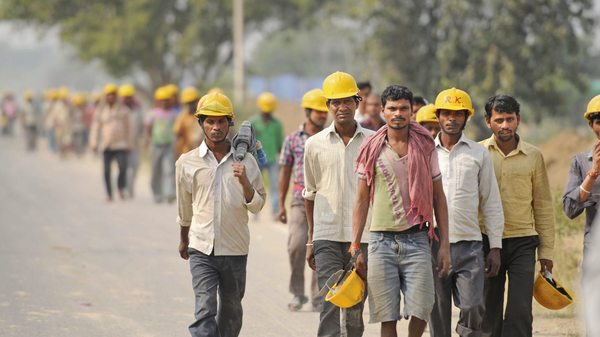
The
Lok Sabha today passed The Code on Wages Bill, 2019. While opening the
discussion for consideration and passing of the Bill,  Minister of State
(I/C) for Labour and Employment Shri Santosh Kumar Gangwar said that it
is a historic Bill which aims to transform the old and obsolete labour
laws into more accountable and transparent ones which is need of the
hour. As many as 17 present labour laws are more than 50 years old and
some of them even belong to pre-independence era.

Among
the four Acts being subsumed in The Code on Wages Bill, The Payment of
Wages Act, 1936 belongs to pre-independence era and The Minimum Wages
Act 1948 is also 71 years old. The Payment of Bonus Act, 1965 and The
Equal Remuneration Act, 1976 are also being subsumed in the Code. 
He
further said that wide consultations were held with trade unions,
employers and State governments and tripartite consultations were held
on 10th March, 2015 and 13th April, 2015. A draft
of Wage Code was made available in public domain through Ministry’s
website. Many persons gave their valuable suggestions. The Bill was
introduced in last Lok Sabha on 10 August, 2017 and was referred to
Parliamentary Standing Committee which submitted its Report on 18th December 2018. Out of 24 recommendations made by standing committee, 17 were accepted by government.
He
further said that the Code ensures minimum wages along with timely
payment of wages to all the employees and workers. Many unorganized
sector workers like agricultural workers, painters, persons working in
restaurants and dhabas, chowkidars etc. who were out of the ambit of
minimum wages will get legislative protection of minimum wages after the
bill becomes an Act. It has been ensured in the bill that employees
getting monthly salary shall get the salary by 7th of next
month, those working on weekly basis shall get the salary on last day of
the week and daily wagers should get it on the same day.
He
expressed hope that The Code on Wages will prove to be a milestone and
give respectable life to 50 crore unorganized sector workers. The
Minister responded to the debate in detail and thanked all the respected
members for cooperation in passing the Bill.
The salient features of the Code are as following:
The
Code on Wage universalizes the provisions of minimum wages and timely
payment of wages to all employees irrespective of the sector and wage
ceiling. At present, the provisions of both Minimum Wages Act and
Payment of Wages Act apply on workers below a particular wage ceiling
working in Scheduled
Employments only. This would ensure “Right
to Sustenance” for every worker and intends to increase the legislative
protection of minimum wage from existing about 40% to 100% workforce.
This would ensure that every worker gets minimum wage which will also be
accompanied by increase in the purchasing power of the worker thereby
giving fillip to growth in the economy. Introduction of statutory Floor
Wage to be computed based on minimum living conditions, will extend
qualitative living conditions across the country to about 50 crore
workers. It is envisaged that the states to notify payment of wages to
the workers through digital mode.

There are 12 definitions of wages in the different Labour Laws leading
to litigation besides difficulty in its implementation. The definition
has been simplified and is expected to reduce litigation and will entail
at lesser cost of compliance for an employer. An establishment will
also be benefited as the number of registers, returns, forms etc., not
only can be electronically filed and maintained, but it is envisaged
that through rules, not more than one template will be prescribed.

At present, many of the states have multiple minimum wages. Through
Code on Wages, the methodology to fix the minimum wages has been
simplified and rationalised by doing away with type of employment as one
of the criteria for fixation of minimum wage. The minimum wage fixation
would primarily based on geography and skills. It will substantially
reduce the number of minimum wages in the country from existing more
than 2000 rates of minimum wages.

Many changes have been introduced in the inspection regimes including
web based randomised computerised inspection scheme, jurisdiction-free
inspections, calling of information electronically for inspection,
composition of fines etc. All these changes will be conducive for
enforcement of labour laws with transparency and accountability.
 •
There were instances that due to smaller limitation period, the claims
of the workers could not be raised. To protect the interest of the
workers, the limitation period has been raised to 3 years and made
uniform for filing claims for minimum wages, bonus, equal remuneration
etc., as against existing varying period between 6 months to 2 years.

It can be said that a historical step for ensuring statutory protection
for minimum wage and timely payment of wage to 50 crore worker in the
country has been taken through the Code on Wages besides promoting ease
of living and ease of doing business.

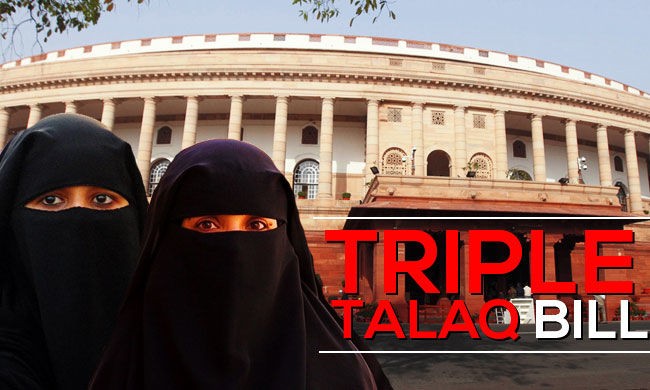
Parliament passes the Muslim Women (Protection of Rights on Marriage) Bill 2019

Parliament today passed the Muslim Women (Protection of Rights on Marriage) Bill 2019.

Expressing
satisfaction over this landmark moment, Union Minister for Home
Affairs, Shri Amit Shah congratulated Prime Minister Narendra Modi for
fulfilling his commitment and ensuring that a law is made to ban Triple
Talaq. 

The
Home Minister also congratulated Muslim women by saying, “On the
passage of this Bill, I congratulate the Muslim sisters across the
country on getting rid of the Triple Talaq curse. This act will free
Muslim women from the curse of this regressive practice”
Shri
Shah said that the Modi government is dedicated to protecting women’s
rights and ensuring their empowerment. This bill is a historic step to
protect the dignity of Muslim women and keep it intact. It will bring a
new era of hope and respect in the lives of Muslim women. From now on,
the door to unlimited possibilities will open for Muslim women and they
would now be able to play an effective role in the creation of ‘New
India’.
“Today
is a great day for India’s democracy. I thank all parties who supported
this historic bill”, Shri Shah said while thanking all the members of
Parliament.

Victory of Gender Justice and will Further Equality In Society: PM on the Passage of Triple Talaq Bill

PM Shri
Narendra Modi thanked all the parties and MPs who have supported the
passage of the Muslim Women (Protection of Rights on Marriage) Bill,
2019 in both Houses of Parliament. He said that they have risen to the
occasion and this step of theirs will be forever remembered in India’s
history.
In a series
of tweets he said that “An archaic and medieval practice has finally
been confined to the dustbin of history! Parliament abolishes Triple
Talaq and corrects a historical wrong done to Muslim women. This is a
victory of gender justice and will further equality in society. India
rejoices today!”
He further
tweeted that “This is an occasion to salute the remarkable courage of
those Muslim women who have suffered great wrongs just due to the
practice of Triple Talaq.The abolition of Triple Talaq will contribute
to women empowerment and give women the dignity they deserve in our
society.”

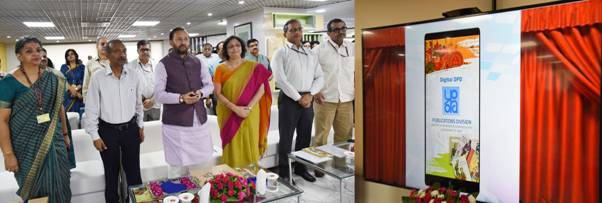
Shri Prakash Javadekar launches several e-projects of Publications Division

Union
Minister Shri Prakash Javadekar launched several e-projects of
Publications Division including its redesigned dynamic website, mobile
app “Digital DPD”, e-version of Rozgaar Samachar and  e-book “Satyagrah
Geeta” during his visit to Book Gallery at Soochna Bhawan in Delhi
today.
Speaking
on the occasion, Shri Javadekar said that in line with PM Modi’s call
to citizens in ‘Mann Ki Baat’ 2.0 programme, to make reading a habit, we
should revitalise the reading culture. He also urged for the creation
of Reading Clubs in the neighbourhood to improve the reading culture. He
added that the role of Rozgar Samachar can be improved when all the job
listing including the private jobs are listed in the newspaper. He
suggested that Rozgar Samachar when distributed in the Colleges will
help the students to improve their skill sets and make them better
suited for the job market. He said that the revamped website of
Publications Division looks attractive and dynamic, updating it daily
would make the people visit the site frequently. He was happy for the
launch of a mobile app for Publications Division which would help in
improving the reading habits of people in the era of e books and Kindle.
The details of the e-projects launched is as under:
1. Redesigned Dynamic Website: The newly revamped dynamic website (www.publicationsdivision.nic.in)
with integrated payment gateway is capable of providing real time
purchase facilities as well as updated information about Publications
Division’s books and  journals. The website will facilitate ease of
purchase. All books are available on the website for sale via payment gateway of Bharatkosh.
The website has an attractive look and feel and a well planned architecture. Catalogue of books and updates
and new books’ releases are displayed prominently for effective
engagement with aesthetic layout, soothing colour, well-designed icons
with good contrast between background and text for easy viewing. The
information is organised into different sections and categories,
catering to all stakeholders, viz. readers, authors, other publishers,
printers, agents etc.,in neatly stacked lists, with proper visual
material which is easy to understand.
The website is user-friendly with easily accessible Social Media tools. It is clutter-free with effective search feature and informative menus and sub-menu. The smooth
interface provides easy interactivity in English and Hindi. It is
accessible to everyone including specially-abled persons (with a screen
reader). Easy interface for feedback and suggestions with
Facebook and Twitter links for connecting with the organisation on Social Media have also been provided.
It has a special section on Gandhi@150. This
section details with the work undertaken with special features
including special Gandhi Catalogue, link to Gandhi Heritage Portal for
reading volumes of Collected works of Mahatma Gandhi and other Gandhian
publications.
2. Mobile App “Digital DPD”:  It
is available for free download on Google Play Store and will facilitate
tapping into the growing mobile commerce potential. The Mobile App is
synced with the Digital Rights Management System to keep a check on a
piracy and integrated with the Bharatkosh payment gateway for the ease
of payments.
3. e-version of Rozgar Samachar:
Rozgar Samachar,  a corresponding version of Employment News (English),
is a prominent job journal in Hindi  providing  information about job
opportunities in Central Government including  Public Sector
Enterprises.  It also provides information and guidance about admission
and career opportunities in various streams through career-oriented
articles by experts. 
The
e-Rozgar Samachar will provide the journal in digital form and is
available @ Rs.400 for yearly subscription The e- Rozgar Samachar is
expected to fulfil the growing needs of young readers, turning to
electronic modes of communication.
4. e-book “Satyagraha Geeta”:
The heritage value book written by eminent poet Dr Kshama Rao in 1930s
in Sanskrit verses presents the life and activities of Gandhiji. As part
of Gandhi@150 commemoration, DPD procured a PDF version of the book and
prepared the e-version of the book. English translation has also been
added to ensure wider reach.  Divided in eighteen chapters (like Adhyays of Bhagwat Geeta),
Satyagraha Geeta presents Gandhi’s ideas, philosophy of life and his
methods of action in Sanskrit verse form, capturing Gandhian ethos and
tenets.