
Death Sentence Only When The Alternative Option Is Unquestionably Foreclosed: SC

It has to be conceded right at the outset that the Supreme Court has by a catena of decisions in recent years sought to send out a loud and unequivocal message to the entire nation that death sentence shall not be imposed at the drop of a hat and it will be awarded only when the alternative option is unquestionably foreclosed. In this landmark, latest and laudable judgment also, the Supreme Court has sought to reiterate this in no uncertain terms. Human rights activists have welcomed this progressive mode of awarding punishment!
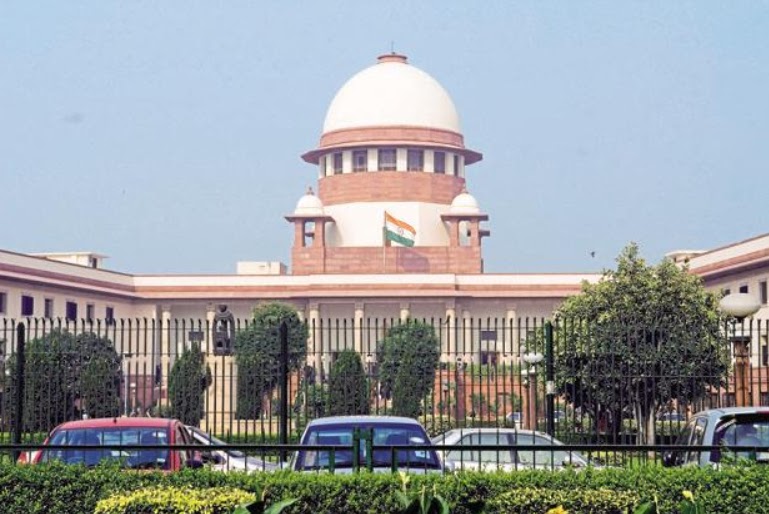
                                 Needless to say, the Apex Court three-Judge Bench comprising of Justice Sharad A Bobde, Justice L. Nageswara Rao and Justice R Subhash Reddy in this latest, laudable and landmark judgment titled Raju Jagdish Paswan v. The State of Maharashtra in Criminal Appeal Nos. 88-89 of 2019 (Arising out of SLP (Cri.) Nos. 5422-5423 of 2013) has commuted the death penalty of a man accused of rape and murder of a nine year old girl and sentenced him to 30 years imprisonment without remission. The Bench has observed clearly and categorically that, even though the murder involves exceptional depravity and the manner of commission of the crime is extremely brutal, a death sentence can be imposed only when the alternative option is unquestionably foreclosed. The Bench took note of the mitigating circumstances and rightly concluded that the accused does not deserve the sentence of death and the case does not fall within the rarest of rare cases.
                                To start with, para 1 first and foremost sets the ball rolling by observing that, “The issue that arises in these Appeals is whether the death penalty imposed on the Appellant is disproportionate to the crime committed by him.” Death penalty is not an ordinary punishment and before awarding it, the courts are expected to examine all the mitigating circumstances and then decide upon it. So the Apex Court Bench here too decided to examine the mitigating circumstances in detail.
                  To recapitulate, the Apex Court Bench then observed explicitly in para 2 while narrating the facts of this present case that, “At 20.45 hrs on 21.06.2010, Hanmant Sheshrau Shirsat gave a statement in the Miraj Rural Police Station that his daughter who was 9 years old and studying in the 4th standard at Shri Samarth Ashram School, Bedag was missing since 10.00 am. He stated that he could not find his daughter when he went to the school to bring her home at 5.15 pm on that day. He was informed by her class teacher that his daughter did not come to school. Shirsat started searching for his missing daughter. Akash (PW-4), a boy residing behind Marguaai Temple and his sister Pooja gave information that Shirsat’s daughter was taken by a person wearing black pant and black shirt to the sugarcane field ahead of Odya village. Shirsat accompanied the police in the search for his daughter in the sugarcane field where they found her school record book. On further inquiries made in the village, Sidram Sakharam Khade (PW-13) who owns a provision store at Bedag informed that he spotted a person wearing black clothes who came to his shop to buy tobacco. The villagers and the police reached Balakrishna Poultry Farm and inquired about the person wearing black clothes. It is relevant to state that Shirsat is also working in Balakrishna Poultry Farm. The Appellant initially denied any knowledge about the missing girl. However, on further interrogation by the police, he revealed that the girl was dragged to the nearby sugarcane field by closing her mouth tightly to stop her from screaming. He forcibly raped her and then pushed her into a nearby well. A search was conducted to find the body from the well which was unsuccessful. The police summoned an experienced driver Balu Mahadeo Patil (PW-5) who took out the dead body from the well. Shirsat identified the dead body to be that of his daughter. An FIR was registered under Section 302, 376, 201 of the Indian Penal Code, 1860 (hereinafter ‘IPC’). Postmortem was conducted by PW-3 Dr. Sunil Patil and PW-9 Dr. Juber Momin. They have stated in their evidence that froth was coming out of the mouth of the deceased and there was nasal bleeding as well. They found cutis anserine on both palms and sole of the feet. They also found that the mucosa of vagina was congested and redness present over mucosa of anus with congestion. There was a recent complete rupture of hymen. Some sticky liquid was coming out of the mouth of the deceased. All the injuries were found to be ante-mortem. The Doctors deposed that there was evidence of vaginal as well as anal intercourse. The course of death was stated to be drowning.”      
                                      On the face of it, what we then see is that in para 3, all the aggravating and mitigating circumstances are stated which the trial court took into account before sentencing the appellant. Para 3 states that, “After examining the evidence on record, the trial court convicted the Appellant under Sections 302, 376 (2) (f) and 201 IPC. The trial court considered the following aggravating and mitigating circumstances before sentencing the Appellant:
i.                  Accused was serving in the same factory where the victim’s father was serving and residing in the same factory premises.
ii.               There is strong circumstance of accused knowing the school timing of the victim and the fact that she used to go to school alone, which is far away from factory premises.
iii.            The road from village to factory has less traffic.
iv.            The girl was taken from Marguaai Temple to the sugarcane field. The distance is approximately 1 km.
v.               The height of the sugarcane in the field can be seen from the photographs on record. It makes the inside things not visible from the road going nearby.
vi.            Accused had natural as well as unnatural sexual intercourse with the girl, which resulted in the girl becoming unconscious.
vii.         Accused had pressed her mouth and nose in such a way that froth had come out of her mouth and there was nasal bleeding.
viii.      Accused had then taken the girl in unconscious state to the well at a distance of 150 sq. ft. away from the place of rape and then thrown her into the well.
ix.            The throwing of the girl in unconscious state in the well was with knowledge or reasonably given knowledge that death will occur. The said act was done in order to screen himself.
x.               There was no enmity between informant and accused.
xi.            No reasonable ground has been shown for alleged false implication.
xii.         The defence of false implication is unbelievable and unsustainable. Informant was not in any way connected to any political party, who had conducted agitation against Bihari persons.
xiii.      The minor child was helpless when the accused committed the cruel act.
xiv.      The girl was aged 9 years only and was innocent.
xv.         The girl was required to go through the torture as is evident from medical evidence.
The mitigating circumstance are almost nil. If at all they are to be searched then they are-
(i)                         Age of the accused is 22 years.
(ii)                      Case rests on circumstantial evidence.”
                                    Truth be told, it is then held in para 4 that, “By holding that the Appellant does not deserve any leniency in view of the heinous crime committed by him, the trial court sentenced the Appellant to be hanged by neck till his death for an offence under Section 302 IPC. The Appellant was also convicted for an offence punishable under Section 376(2)(f) of IPC and sentenced for life and under Section 201 IPC for an imprisonment of 7 years.”
                                   Going ahead, it is then observed in para 5 that, “The trial court made a reference to the High Court for confirmation of the death sentence awarded to the Appellant in accordance with Section 366 CrPC. After re-appreciation of the evidence on record, the High Court affirmed the conviction of the Appellant under Sections 302, 376 (2)(f) and 201 IPC. The High Court held that the Appellant was responsible for the horrendous crime of rape and murder of a 9 year old girl. The High Court observed that the Appellant threw the victim in the well while she was still alive and the victim died due to drowning. By observing that the Appellant did not show any compunction, regret or remorse after committing a gruesome and heinous act on a hapless child, the High Court was of the opinion that no leniency could be shown to the Appellant. A detailed examination of the aggravating and mitigating circumstances was carried out by the High Court before confirming the sentence of death imposed by the trial court for an offence under Section 302 IPC.”
                                Be it noted, it is then observed in para 6 that, “Notice was issued in this case on 08.07.2013 limited to the sentence. We have heard the learned counsel for the Appellant and the State on the justifiability of the sentence of death. The learned counsel for the Appellant took us through the evidence on record to support his submission that the entire case rests on circumstantial evidence and the circumstances proved do not warrant death penalty.”
                                 As it turned out, it is then clearly and convincingly held in para 7 that, “The maintenance of peace, order and security is one of the oldest functions of the civil society. The imposition of penal sanctions on those who have infringed the rules by which a society has bound itself are a matter of legitimate interest to the members of the society. [Tom Bingham, The Business of Judging Selected Essays & Speeches (Oxford United Press, 2005), p. 299] Punishment is the just desert of an offender. The society punishes not because it has the moral right to give offenders what they deserve, but also because punishment will yield social useful consequences: the protection of society by incapacitating criminals, the rehabilitation of past offenders, or the deterrence of potential wrongdoers. [Bruce W. Gilchrist, “Disproportionality in Sentences of Imprisonment”, Columbia Law Review, Vol. 79 No. 6 (Oct. 1979), pp. 1119-1167] The purposes of criminal sentencing have traditionally been said to be retribution, deterrence and rehabilitation. To these there may now perhaps be added: incapacitation (i.e. putting it out of the power of the offender to commit further offences) and the maintenance of public confidence. [Tom Bingham, The Business of Judging Selected Essays & Speeches (Oxford United Press, 2005), p. 302]”.
                               To put things in perspective, para 8 while elaborating on the earlier landmark decisions by the Apex Court states that, “The punishment prescribed under Section 302 IPC for committing a murder is death or imprisonment for life. This Court in Jagmohan Singh v. State of Uttar Pradesh [(1973) 1 SCC 20] turned down the challenge to Section 302 IPC which prescribes the sentence of death for murder. It became necessary for this Court to reconsider the validity of Section 302 IPC in view of certain findings of Justice V.R. Krishna Iyer, speaking for the majority in Rajendra Prasad v. State of U.P. [(1979) 3 SCC 646] being contrary to the judgment of the Constitution Bench in Jagmohan’s case (supra). This Court in Bachan Singh v. State of Punjab [(1980) 2 SCC 684] concluded that Section 302 providing death penalty for the offence of murder is unconstitutional. Another question regarding the sentencing procedure provided in Section 354(3) of the Code of Criminal Procedure, 1973 (CrPC) being unconstitutional in view of the unguided and untrammelled discretion of the court was considered in Bachan Singh’s case (supra). According to Section 354(3) CrPC, when the conviction is for an offence punishable with death or, in the alternative with imprisonment for life or imprisonment for a term of years, the judgment shall state the reasons for the sentence awarded, and, in the case of sentence of death, the special reasons for such sentence. It was held that imprisonment for life shall be the normal punishment for murder according to the changed legislative policy after introduction of Section 354(3) CrPC and death sentence an exception. It was further held that the sentencing discretion conferred on the courts cannot be said to be untrammelled or unguided. The discretion has to be exercised judiciously in accordance with well-recognized principles crystallised by judicial decisions after balancing all the aggravating and mitigating circumstances. What is the relative weight to be given to the aggravating and mitigating factors depends on the facts and circumstances of the case. More often than not, the aggravating and mitigating factors are so intertwined that it is difficult to give a separate treatment to each of them. [Bachan Singh (supra) 197, 201] A planned murder involving extreme brutality or exceptional depravity and the murder of any member of the armed forces or police force or a public servant were a few circumstances which were categorized as aggravating. The age of the accused, possibility of reformation and rehabilitation of the accused, probability that the accused would not indulge in a criminal act in future, the extreme mental or emotional disturbance due to which the offence was committed, the duress or domination of another person under which the accused committed the offence and the mental unsoundness or incapacity were listed as some of the mitigating circumstances. Every relevant circumstance relating to the crime as well as the criminal has to be considered before imposing a sentence of death under Section 302 IPC. This Court in Bachan Singh’s case (supra) ultimately concluded that life imprisonment is the rule and death sentence is an exception for persons convicted of murder. Taking a life through law’s instrumentality can be done only in the rarest of rare cases when the alternative option is unquestionably foreclosed. The application of the rule of the rarest of rare in Bachan Singh (supra) was considered by this Court in Machhi Singh & Ors v. State of Punjab. [(1983) 3 SCC 470, 11 33-37]. It was held that the manner and motive for commission of murder, magnitude of the crime, anti-social or abhorrent nature of the crime and the personality of the victim of murder are certain factors which have to be taken into account for deciding whether a case would fall in the category of the rarest of rare cases.”     
                                It cannot be lost on us that while elaborating on the mitigating circumstances due to which death penalty was not imposed, the Apex Court Bench then categorically and convincingly held in para 9 that, “The Appellant dragged a girl of nine years into a sugarcane field, raped her and dumped her in a well. The cause of death according to the medical evidence was signs of recent sexual intercourse with death due to drowning. There is no doubt that the murder involves exceptional depravity which is one of the aggravating circumstances. The manner of commission of the crime is extremely brutal. However, we are of the considered opinion that the Appellant does not deserve the sentence of death in view of the following mitigating circumstances:
a)  On a thorough examination of the offence, we are unable to accept the prosecution version that the murder was committed in a pre-planned manner.
b) The Appellant was a young man aged 22 years at the time of commission of the offence.
c)   There is no evidence produced by the prosecution that the Appellant has the propensity of committing further crimes, causing a continuing threat to the society.
d) The State did not bring on record any evidence to show that the Appellant cannot be reformed and rehabilitated.”
                                To be sure, it is then further observed specifically in para 10 that, “In view of the above, we are unable to agree with the courts below that the sentence of death is appropriate in this case. Applying the guidelines laid down by this Court for sentencing an accused convicted of murder and being mindful that a death sentence can be imposed only when the alternative option is unquestionably foreclosed, we are of the opinion that this case does not fall within the rarest of rare cases.”  
                        Truly speaking, it is then rightly enunciated in para 11 that, “Punishment should be proportionate to the offence. A savage sentence is an anathema to the civilized jurisprudence of Article 21. [(1983) 2 SCC 277, at 284] In Solem v. Helm 463 U.S. 277 (1983), the UJS Supreme Court held that the general principle of proportionality was applicable to a sentence of imprisonment. Helm was sentenced under the Recidivist Statute of South Dakota to undergo imprisonment for life without possibility of parole after being found guilty of uttering a “no account” check for US $ 100. The gravity of the offence and the harshness of the penalty was one of the criteria to be taken into account by the court in its proportionality analysis. Sentence of life imprisonment awarded to Helm was found to be disproportionate to the crime and hence prohibited under the 8th Amendment to the U.S. Constitution. Imposition of capital punishment for rape of an adult woman was found to be ‘grossly disproportionate’ and a violation of the ‘cruel and unusual punishments’ clause in Coker v. Georgia 433 U.S. 584 (1977). In another case, the sentence of death penalty on a participant in a felony which resulted in murder, without any inquiry into the participant’s intention to kill, was held to be violative of the 8th Amendment to the U.S. Constitution because of disproportionality. [Enmund v Florida 458 U.S. 782 (1982)] The U.S. Supreme Court treated this line of authority as an aspect of the death penalty jurisprudence rather than a generalizable aspect of the 8th Amendment to the U.S. Constitution. [Rummel v. Estelle, 445 U.S. 263 (1980)] Justice Scalia who delivered the plurality opinion in Harmelin v. Michigan 501 U.S. 957 (1991) reasserted that the proportionality review is applicable to cases involving death sentence. The principle of proportionality has been recognized by this Court in Vikram Singh @ Vicky v. Union of India (2015) 9 SCC 502, 152.1 wherein it was stated that punishment must be proportionate to the nature and gravity of offences.”  
                            Regarding imprisonment for life, it is then made absolutely clear in para 12 that, “Though imprisonment for life is a sentence for the rest of the convict’s life, in practice, it amounted to 12 years imprisonment prior to the introduction of Section 433-A, CrPC. After the insertion of Section 433-A, CrPC, imprisonment for life works out to 14 years. In Swamy Shraddananda’s case [Swamy Shraddananda @ Murali v. State of Karnataka (2008) 13 SCC 767], it was held that the court is empowered to substitute a death sentence by life imprisonment of a term in excess of 14 years and further directed that the convict must not be released from the prison for the rest of his life or for the actual term specified in the order, as the case may be. While not endorsing the death sentence that was imposed on Swamy Shraddananda, this Court found that since life imprisonment, subject to remission, normally worked out to 14 years, it would be grossly disproportionate and inadequate. The view expressed in Swamy Shraddananda’s case (supra) was upheld in Union of India v. Sriharan and Others (2016) 7 SCC 1 by a Constitution Bench.”
                                More importantly, while not awarding death penalty to appellant but making it clear that the appellant would have to spend 30 years in prison, it is then sought to be clarified in para 13 that, “Though we have already expressed our view that the Appellant does not deserve to be put to death, he is not entitled to be released on completion of 14 years while serving life imprisonment. The brutal sexual assault by the Appellant on the hapless victim of nine years and the grotesque murder of the girl compels us to hold that the release of the Appellant on completion of Appellant on completion of 14 years of imprisonment would not be in the interest of the society. Considering the gravity of the offence and the manner in which it was done, we are of the opinion that the Appellant deserves to be incarcerated for a period of 30 years. To arrive at this conclusion, we have taken into consideration the opinion of this Court in similar cases – Tattu Lodhi v. State of M.P., (2016) 9 SCC 675 (25 years), Selvam v. State, (2014) 12 SCC 274 (30 years), Rajkumar v. State of MP, (2014) 5 SCC 353 (30 yrs), Neel Kumar @ Anil Kumar v State of Haryana, (2012) 5 SCC 766 (30 years), Anil @ Antony v. State of Maharashtra, (2014) 4 SCC 69 (30 years).”  
                                     While underscoring the importance of yoga and meditation and its impact on prisoners, it is then held in para 14 that, “In the case of Rajendra Prasad (supra), the Court had suggested as follows:
     “114. Social defence against murderers is best insured in the short run by caging them but in the long run, the real run, by transformation through re-orientation of the inner man by many methods including neuro-techniques of which we have a rich legacy. If the prison system will talk the native language, we have the yogic treasure to experiment with on high-strung, high-risk murder merchants. Neuroscience stands on the threshold of astounding discoveries. Yoga, in its many forms, seems to hold splendid answers. Meditational technology as a tool of criminology is a nascent – ancient methodology. The State must experiment. It is cheaper to hang than to heal, but Indian life – any human life – is too dear to be swung dead save in extreme circumstances.”
           Taking note of the above suggestion, we asked Mr. Katneshwarkar, learned counsel for the State of Maharashtra, as to what steps were taken by the State for reformation and rehabilitation of the prisoners. An affidavit signed by the Deputy Inspector General of Prisons (Headquarters), Maharashtra was circulated on 27.11.2018 in which it was stated that Circulars were issued to all the Jail Superintendents to start Yoga and meditation classes for improvement of physical and mental health of the inmates in the penitentiaries. It was also stated that the Maharashtra Prison Department has started a programme namely “Prema Path” for which persons like Shri Ram Dev Baba and others were invited to Yerwada Central Prison, Pune for motivating the prisoners to participate in the programmes of Yoga. It was further stated that the Department was encouraging the prisoners to participate in Yoga and meditation and was even giving to prisoners who excelled in Yoga.”   
                              Lamentably, the Apex Court Bench then feels constrained to observe in para 15 that, “In spite of our direction, the Government of India did not file an affidavit regarding the status of rehabilitation of prisoners in jails in this country. As there was no response from the Government of India, we did our own research to find out about the reform and rehabilitation measures. An All India Model Prison Manual Committee was constituted in the month of November, 2000 under the Chairmanship of Director General of Bureau of Police Research and Development (BPR&D) to prepare a Model Prison Law for the superintendence and management of prisons in India in order to maintain uniformity in the working of prisons throughout the country. The Model Prison Manual of 2016 (“2016 Manual”) which was approved by the Ministry of Home Affairs refers to the education of prisoners which is vital for the overall development of prisoners. Para 14.06 of the Chapter 14 in the 2016 Manual deals with the nature of educational programmes which includes physical education such as Yoga, health/hygiene education, moral and spiritual education among others. We do not have any material on record about how many States have adopted the 2016 Manual. We direct the States to consider implementing the reformative and rehabilitation programmes contained in the 2016 Manual. In addition, it is open to the States to adopting any other correctional measures.”     
                                  Finally and most crucially, it is then observed in the last para 16 that, “Accordingly, the Appeals are partly allowed and the sentence of death is set aside. The Appellant shall suffer an imprisonment for a period of 30 years without remission.”
                                   All said and done, one has to appreciate and applaud the manner in which this latest, landmark and laudable judgment has been crafted and most importantly has shown genuine concern even for prisoners and underscored the importance of yoga and meditation in transforming their lives. While it has not awarded death penalty which is considered as most cruel, it has nevertheless ensured that the Appellant who raped a minor and killer her was made to spend at least 30 years in prison without remission. This extremely notable and laudable judgment certainly deserves to be emulated by all the courts from top to bottom! There can be no denying or disputing it!   
Sanjeev Sirohi, Advocate,
s/o Col BPS Sirohi,
A 82, Defence Enclave,
Sardhana Road, Kankerkhera,
Meerut – 250001, Uttar Pradesh.  

No Authority Can Claim Privilege Not To Comply With SC Judgment: SC

With much satisfaction it has to be remarked right at the outset that in a latest, landmark and laudable judgment by a two-Judge Bench of Apex Court titled Anil Kumar v Union of India and others in Civil Appeal No. 888 of 2019 (arising out of SLP (C) 32073 of 2016) and authored by Justice Dr Dhananjaya Y Chandrachud for himself and Justice Hemant Gupta delivered on January 21, 2019 very clearly and convincingly observed that no authority can claim a privilege not to comply with its judgment. Very rightly so! Who will respect Supreme Court if any authority is given the unfettered and untrammelled power not to comply with the Supreme Court judgment? Can any authority be ever given such power? Certainly not!   
                                Needless to say, the Apex Court Bench made this extremely relevant observation as pointed above while allowing an appeal filed by an employee of the Council for Scientific and Industrial Research. Starting from the scratch, it is first and foremost pointed out in this noteworthy judgment while granting leave that, “The appellant was aggrieved by the rejection of his claim for financial upgradation by the Council for Scientific and Industrial Research (“CSIR”) with effect from 10 May 2011. He was also aggrieved by not being promoted to the post of Senior Controller of Administration/Senior Deputy Secretary in Pay Band-4 i.e. Rs. 37,400-67,000 with a grade pay of Rs. 8700 in respect of vacancies for 2013-2014 under the CSIR Recruitment & Promotion Rules for Administrative Staff, 1982.”
                                          To be sure, it is then pointed out that, “He moved the Central Administrative Tribunal, Chandigarh. The Tribunal did not find any substance in his grievance for the reason that he did not fulfil the benchmark of “Very Good” for financial upgradation. The Tribunal was of the view that CSIR is an autonomous body and that the circulars issued by the Union of India would not ipso facto apply.” 
                                      As things stood, the Bench sought to make it clear that, “The grievance of the appellant was that the failure to communicate the Annual Confidential Reports in which he had failed to meet the benchmark violated the O.Ms issued by the Department of Personnel and Training. The Tribunal rejected that contention holding that since CSIR had adopted the requirement of conveying the ACRs from a particular date in the future, the decision could not be questioned.”
                                      Simply put, the Bench then specifies that, “On the issue of promotion, it has been held that this involved a selection on the basis of performance in service and in the interview and since the Departmental Promotion Committee had graded the appellant as “good”, he was not considered for promotion. This view of the Central Administrative Tribunal was challenged before the High Court of Punjab and Haryana. By a judgment dated 13 July 2006, the writ petition filed by the Appellant was dismissed.”
                                             As it turned out, the Apex Court Bench then spells out that, “The first grievance of the appellant was that he was entitled to financial upgradation under the MACP scheme adopted by CSIR. It is not in dispute that the benchmark prescribed was “Very Good” for financial upgradation to the grade pay of Rs. 7600/- and above. CSIR, by its letter dated 30 December 2013, notified the eligibility of the appellant for the grant of financial upgradation with effect from 10 May 2011.”
                               Going ahead, it is then pointed out that, “Similarly, by its circular dated 6 February 2014, CSIR issued an All India Final Seniority List of Common Cadre Officers as on 1 January 2014. The name of the Appellant stood at Serial No. 2 in the category of Deputy Secretary/Controller of Administration. On 9 May 2014, CSIR declared the result of the exercise conducted by the Screening Committee which met on 21 April 2014. The name of the appellant did not appear in the list of officers for financial upgradation from 10 May 2011.”
                               More to the point, it is then brought out that, “The ACRs of the appellant were below the benchmark required for certain years namely 2003-2004, 2008-2009 and 2009-2010. The gradings to the appellant on 9 July 2014 to which he submitted a representation and appeared for the interview for regular promotion for 2013-2014. The grievance is that the representation was not considered.”
                               What is more, it is then also brought out in this judgment that, “When the panel for the post of Senior Deputy Secretary/Senior Controller of Administration for 2013-2014 was notified, officers junior to the appellant were empanelled for promotion. The appellant was neither granted a financial upgradation nor was he promoted as a part of the exercise of regular promotion to the higher post. The High Court affirmed the view of the Tribunal and rejected the writ petition filed by the applicant.” 
                                      Be it noted, the Bench then while citing the relevant earlier decided cases observes that, “In Dev Dutt vs. Union of India & Ors, (2008) 8 SCC 725 a two Judge Bench of this Court held that fairness in public administration and transparency require that all entries in the Annual Confidential Reports of a public servant must be communicated within a reasonable period in order to enable the employee to make a representation for upgradation. The view of the Court was that non-communication of entries in the ACRs has civil consequences since it may affect the chances of the employee for promotion and other benefits. A failure to communicate would be arbitrary. This Court held that these directions would apply to employees of statutory authorities, public sector corporations and other instrumentalities of the State, in addition to government servants.”
                       Moving ahead, it is then pointed out by the Bench that, “A three Judge Bench of this Court has in Sukhdev Singh vs. Union of India & Ors. (2013) 9 SCC 566 affirmed the correctness of the view taken in Dev Dutt (supra) noting that an earlier  three Judge Bench in Abhijit Ghosh Dastidar vs. Union of India & Ors. (2009) 16 SCC 146 had adopted the same principle. The three Judge Bench in Sukhdev Singh (supra), held thus:
              “8. In our opinion, the view taken in Dev Dutt that every entry in ACR of a public servant must be communicated to him/her within a reasonable period is legally sound and helps in achieving threefold objectives. First, the communication of every entry in the ACR to a public servant helps him/her to work harder and achieve more that helps him in improving his work and give better results. Second and equally important, on being made aware of the entry in the ACR, the public servant may feel dissatisfied with the same. Communication of the entry enables him/her to make representation for upgradation of the remarks entered in the ACR.  Third, communication of every entry in the ACR brings transparency in recording the remarks relating to a public servant and the system becomes more conforming to the principles of natural justice. We, accordingly, hold that every entry in ACR – poor, fair, average, good or very good – must be communicated to him/her within a reasonable period”.”
                                  To put things in perspective, the Apex Court Bench then points out that, “In view of the above statement of law, both the Tribunal and the High Court were in error in coming to the conclusion that CSIR being an autonomous entity and having adopted the O.Ms of the Department of Personnel and Training with effect from a specified date, the appellant could not make a grievance of the non-communication of the ACRs for the relevant period. The failure to communicate the ACRs deprived the appellant of the opportunity to submit his representation in the matter of financial upgradation. Subsequently, the appellant was furnished with an opportunity to submit his representation before his case was taken up for regular promotion, but his representation was not considered.”
                             More importantly, the Bench then states that, “The appellant did not have the benefit of submitting his representation when the Screening Committee took up the case for financial upgradation. CSIR by reason of its autonomy may have certain administrative privileges. No authority can, however, claim a privilege not to comply with a judgment of this Court. Once the law was enunciated in Dev Dutt’s case (supra), all instrumentalities of the State were bound to follow this Court. CSIR was no exception.”
                            To say the least, the Bench then further states that, “The appellant has since retired from service on 30 September 2014. The grant of MACP benefit is not a matter of right and it is after the Screening Committee finds that the officer meets the benchmark that an upgradation can be granted. Hence, we are of the view that the appellant should be granted an opportunity, within a period of four weeks from today to submit his representation in respect of the ACRs for the concerned years where he did not fulfil the benchmark for financial upgradation.”
                      Continuing in same vein, the Bench then adds that, “Upon the submission of his representation, the respondents shall consider it and communicate the outcome to the appellant within a period of two months thereafter. Based on that decision, the case of the appellant for financial upgradation shall be considered afresh. In the event his ACRs for the relevant period are upgraded, the case for financial upgradation shall be determined within a period of three months thereafter.”
                                Finally and most importantly, the Bench then concludes by observing that, “We also direct that in the event that the ACRs for the relevant period are upgraded, the case of the appellant for promotion to the post of Senior Deputy Secretary/Controller of Administration shall be considered afresh by the Departmental Promotion Committee expeditiously. This exercise shall be carried out with reference to the date on which his junior in service came to be promoted. In the event that the case of the appellant is considered favourably, he would be entitled to all consequential benefits which flow from the financial upgradation and upon the grant of regular promotion to the post of Senior Deputy Secretary. The appeal is, accordingly, allowed and the judgment of the High Court shall stand set aside. Pending application(s), if any, shall stand disposed of. No order as to costs.”
                                All said and done, there is no valid reason why any person or authority dare to question what the Supreme Court has so rightly held in this landmark and laudable case! It is about time and all authorities must comply with it unconditionally and uniformly! No authority should ever cling to the false illusion that it can afford to claim privilege not to comply with the Supreme Court judgment.
                             Bluntly put: If they still refuse to even now comply, no one but they will themselves be responsible for facing the dire consequences which would follow from such refusal and then no one can save them! Do they want such unpalatable situation to arise and suffer the dire consequences? Certainly not! So, it is better for the authorities to wake up at the earliest right now and comply unconditionally with what the Supreme Court which is the top court of India has said so explicitly!   
Sanjeev Sirohi, Advocate,
s/o Col BPS Sirohi,
A 82, Defence Enclave,
Sardhana Road, Kankerkhera,
Meerut – 250001, Uttar Pradesh.

Lieutenant General (Rtd) Cannot Be Tried In A General Court Martial Consisting Of Members Below His Rank: SC

It has to be said right at the outset that a three-Judge Bench of the Supreme Court comprising of Justice AK Sikri, Justice S Abdul Nazeer and Justice MR Shah in Ex Lt Gen. Avadhesh Prakash v. Union of India & Anr. in Criminal Appeal No. 140 of 2019 (Diary No. 12371/2018) with Civil Appeal No. 9739/2018 decided on January 24, 2019 has set aside the punishment of dismissal imposed on Ex Lt Gen Avadhesh Prakash by a General Court Martial (GCM). This has certainly shaken the defence establishment and all those who court martialled him as the top court has not just validated his stand but also held that the entire proceedings held by the said GCM stood vitiated. It also held that the retired officer would be entitled to all the benefits; pensionary or otherwise.
Lieutenant General (Rtd) Cannot Be Tried In A General Court Martial Consisting Of Members Below His Rank: SC
                          While craving for the exclusive indulgence of my esteemed readers, it must be informed here that the top court right at the outset notes that the leave to appeal is granted. It then discloses that, “We have heard learned counsel for the parties at length.” The top court was apprised of their stand by both the parties.
                                      For my esteemed readers exclusive indulgence, it must be now disclosed that the three-Judge Bench then observed that, “The relevant facts, in a nutshell, are as follows. The appellant was commissioned in the Indian Army on 20.12.1970 and promoted to the rank of Lieutenant General in October, 2007. He was appointed as a Military Secretary on 01.05.2008 at the Army Headquarters, New Delhi. During the tenure of the appellant as the Military Secretary the so-called ‘Sukna Land Scam’ case broke out in the end of the year 2010.”
                             Going forward, the Bench then observes that, “The appellant’s name figured in the Court of Inquiry on 07.01.2009. Then provisions of Rule 180 of the Army Rules, 1954 were invoked against him. The Chief of Army Staff initially directed Administrative Action against the appellant and a show cause notice dated 11.01.2010 was saved upon him.”
                                    Continuing in the same vein, the Bench then goes on to add that, “However, just two days prior to his retirement on 31.01.2010, the appellant was informed about withdrawal of the above show cause notice and initiation of disciplinary proceedings against him under the provisions of Section 123 of the Army Act, 1950. The appellant filed an O.A. before the Armed Forces Tribunal (“the Tribunal”) challenging the Court of Inquiry for non-compliance of Rule 180 of the Army Rules, Para 518 of the Defence Service Regulations (“DSR”) and change of directions. The Tribunal gave partial relief to the appellant. Against the said order of the Tribunal, the appellant approached this Court by preferring Special Leave Petition. This Court dismissed the Special Leave Petition.”
                                     To be sure, the Bench then discloses that, “The General Court Martial (“GCM”) found the appellant not guilty on the first charge. However, the GCM found the appellant guilty on charges second, third and fourth and sentenced him to “Dismissal from Service”. The appellant preferred O.A. before the Tribunal against the rejection of Post-Confirmation Petition, setting aside GCM proceedings and payment of all retiral and consequential benefits. The Tribunal, after considering the rival contentions made by the parties, came to the conclusion that the appellant is guilty of the second charge, i.e., ‘Unbecoming conduct’ under Section 45 of the Army Act and he is not proved to be guilty for charges three and four with the direction that the appellant need not be given the arrears of pension from the date of his dismissal till the date of passing the order and the same shall be given to him w.e.f. 20.12.2017, i.e., the date of pronouncement of the order. Aggrieved by the order, passed by the Tribunal, the appellant is before this Court.”
                           To put things in perspective, the Bench then points out that, “The first and foremost challenge laid by the appellant was to the validity of the composition/constitution of the GCM. It is an admitted case that the appellant was holding the position of Lieutenant General in the Army. As per the provisions of Rule 40 of the Army Rules, 1954, in his case, members of the GCM could be of the rank of Lieutenant General or above.”
                          Needless to say, it is then pointed out that, “It is an admitted position that one Lieutenant General and four Major Generals constituted the GCM. The Tribunal in the impugned order, had accepted the aforesaid position/composition and even agreed with the counsel for the appellant that the respondents could have tried to make Lieutenant Generals available from over eighty such Lieutenant Generals in the Indian Army as members of the GCM. It is also recorded that Lieutenant Generals were in fact made available for the GCM of Lt-Gen PK Rath which was held a few month earlier. Notwithstanding the same, only on the ground that the appellant had already retired as Lieutenant General, the Tribunal has come to the conclusion that it does not find any legal infirmity in the constitution of GCM as the provisions of Rule 40(2) of the Army Rules have been complied with.”
                                        While shaking its head in disbelief on the lame stand taken by the Armed Forces Tribunal (AFT), the Bench of Apex Court then minces no words in clearly and categorically holding that, “We fail to understand the aforesaid reasoning and rationale given by the Tribunal. The appellant was holding the position of Lieutenant General. Allegations which were levelled against him for which GCM was convened was in his capacity as the Lieutenant General. Merely because the appellant had retired in the meantime cannot be a ground to discard and give a go by to the provisions of Rule 40(2) of the Army Rules. Needless to mention that the aforesaid Rules had statutory force.”
                             While pooh-poohing the shoddy manner in which the AFT conducted the GCM, it is then held by the Bench that, “It is a travesty of justice that a person holding the rank of Lieutenant General is tried by the GCM which consisted of members below his rank. Such a composition cannot be countenanced in law. We are therefore, of the opinion that the GCM was not validly constituted. Once that finding is arrived at, entire proceedings held by the said GCM stand vitiated.”
                                   As it turned out, the Bench then goes on to add that, “In normal course in such a case the Court would remit the case back to the respondents to constitute a proper GCM and hold the Court Martial. However, for various reasons it is not necessary to do this exercise in the instant case. First reason is that even the said GCM had exonerated the appellant of serious charge. It had held that only three charges stood proved against the appellant. Interestingly, out of these three charges, the Tribunal, in the impugned order, has come to the conclusion that two charges could not be held to be proved. Therefore, it is only one charge that ultimately stands established against the appellant. That charge is also not of a very serious nature. In fact, before the Tribunal, the counsel for the appellant had also raised the issue of proportionality of sentence.”
                                   Not stopping here, it is then pointed out that, “It was specifically contended that the punishment of dismissal which had been imposed upon the appellant is very harsh in comparison to the punishment of “severe reprimand” given to the other officials involved in the matter. The Tribunal, however, rejected this contention. We do not find any justifiable reason for adopting this course of action when the Tribunal itself held that the punishment of dismissal imposed upon the appellant was because of three charges held against him and also, according to the Tribunal, two charges out of the said three charges also could not be treated as proved. Furthermore, the appellant has already retired from service and the only issue now pertains to the grant of pensionary benefit. Even the Tribunal had granted these pensionary benefits from the date of its order, i.e. 20.12.2017.”
                                  Finally and perhaps most importantly, it is then held that, “For all these reasons, we are of the considered view that no useful purpose would be served in remitting the case back to the authorities for fresh GCM. As a result, this appeal is allowed, the impugned order of the Tribunal is set aside. The punishment of dismissal imposed upon the appellant also stands set aside. The appellant shall be entitled to all the benefits; pensionary or otherwise, which are admissible to him in law. Such benefits shall be computed and arrears be paid to the appellant within a period of three months. Regarding Civil Appeal No. 9739/2018, it is held that, “Having heard learned counsel for the parties, we find no merit in this appeal and it is, accordingly dismissed.”
                                 All said and done, this latest, landmark and laudable judgment will always serve as the biggest warning to AFT that under no circumstances any rule should be broken while conducting GCM against such a senior officer of the rank of Lieutenant General as we have seen here and if they do then they will be responsible for their stand being rejected by the highest court. This noteworthy ruling has certainly come as a huge relief for Ex Lt General Awadhesh Prakash who was dismissed from service by the GCM for his alleged involvement in ‘Sukna Land Scam’ who now stands vindicated. The three Judge Bench of the Apex Court found no credible evidence to upheld the GCM of Ex Lt General Awadhesh Prakash and he therefore now stands acquitted and would be entitled to all the benefits as pointed above!    
Sanjeev Sirohi, Advocate,
s/o Col BPS Sirohi,
A 82, Defence Enclave,
Sardhana Road, Kankerkhera,
Meerut – 250001, Uttar Pradesh.

Even Poem Can Help Save A Death Convict From Gallows

In a remarkable, bold and laudable judgment delivered by the Supreme Court in Dnyaneshwar Suresh Borkar v State of Maharashtra in Criminal Appeal No. 1411 of 2018 delivered just recently on February 20, 2019, it has vindicated what many say sometimes just casually that, “Even poem can help save a death convict from gallows”. The Apex Court has in this latest, landmark and laudable judgment commuted the death penalty of a kidnap cum murder convict who was just 22 years of age at the time of occurrence. This was mainly because the Bench concluded that the appellant could be reformed and rehabilitated as the poems written by him were most appealing and his conduct in jail was also good and there were many other reasons which could be considered rightly as mitigating circumstances that should save him from gallows.
                                  First and foremost, it must be pointed out that this commendable, courageous and classic judgment authored by Justice MR Shah for himself, Justice AK Sikri and Justice S Abdul Nazeer sets the ball rolling in para 1 wherein it is observed that, “Feeling aggrieved and dissatisfied with the impugned judgment and order dated 05.05.2006 passed by the High Court of Bombay in Confirmation Case No. 1 of 2005 with Criminal Appeal No. 618 of 2005 whereby the High Court has allowed the Confirmation Case filed by the State and dismissed the appellant’s Criminal Appeal and confirmed the conviction for the offences punishable under Section 302 of the Indian Penal Code (IPC) and confirmed the death sentence awarded by the learned Sessions Court, the accused viz Dnyaneshwar Suresh Borkar has preferred the present appeal.”
                                          For the uninitiated, it is then pointed out in para 2 that, “That the appellant herein-original accused was tried by the learned Sessions Court for the offences under Sections 302, 364 and Section 201 read with Section 34 of the IPC for having killed a minor child viz ‘Rishikesh’. That the learned Additional Sessions Judge, Pune held the appellant herein guilty for the offences punishable under Sections 302, 364 and Section 201 read with Section 34 of the IPC and awarded the capital punishment. The conviction and sentence imposed by the learned Additional Sessions Judge have been confirmed by the High Court by the impugned judgment and order. Hence the present appeal.”
                                 Simply put, it is then stated in para 3 that, “At the outset, it is required to be noted that Shri Anand Grover, learned Senior Counsel appearing on behalf of the appellant has fairly stated and conceded that so far as the conviction is concerned, the appellant is not challenging the same. However, he has prayed for to commute the capital punishment imposed by the learned Sessions Court, confirmed by the High Court. Therefore, as such the present appeal is now restricted to the sentence imposed by the learned Additional Sessions Judge of capital punishment confirmed by the High Court.”
                      More importantly, Grover then  pleaded for death penalty to be reduced to life imprisonment as is enumerated in para 4 wherein the Bench states that, “Shri Grover has pointed out the mitigating circumstances which warrant commutation of death sentence to life imprisonment. It is vehemently submitted that accused, at the time of crime, was aged of 22-23 years. That he neither have any criminal record nor was he a hardened criminal. That he was a student studying in a college without any history or misdemeanour noted in the college or in the village of his residence. That he has a widowed mother and is the eldest child. By now he has undergone 18 years of sentence without remission and with remission it would be 23 ½ years. It is submitted that conduct of the accused in the jail is very good. It is submitted that the appellant’s behaviour and conduct in jail has shown that though the appellant may have committed a crime when he was a young adult, he has used his incarceration to reflect on his actions and learnt from his mistakes. As an 18 years old boy, he was a young impressionable citizen trying to make something out of himself and in the process lost his way and made a fatal mistake. However, if there is anything the appellant’s years in prison have shown, it is that he is by no means a hardened criminal and most definitely not beyond the pale of reformation. He further submitted that during the span of 18 years in the jail, not only he has learned a lesson but he has realized the mistake committed by him and he has tried to become a civilized person and that he has completed his graduation in Bachelor of Arts (B.A.) and has also undergone training of Gandhian thoughts undertaken by Gandhi Research Foundation Jalgaon.”
                                        Be it noted, it is then noted in this same para 4 that, “It is further submitted that the poems written by the accused in the jail reflect his current mind of state and by which it can be said that he has realized the mistake committed by him at the time when he was just 22 years of age and that he is reformative. In view of the above submission and relying upon the decision of this Court in Sunil v. State of Madhya Pradesh (2017) 4 SCC 393, it is prayed to commute the death sentence to life imprisonment.”
                                 On the contrary, while opposing what Grover stated above, it is then pointed out in para 5 that, “Ms. Deepa Kulkarni learned Counsel appearing for the State has submitted that in view of the fact that the accused killed a minor child for ransom, which has ultimately affected the family members of the deceased and the manner in which the offence was committed was pre-planned, it is prayed not to show any leniency.”
                                  To be sure, after hearing both the parties, the Bench then notes in para 6 that, “We have heard the learned counsel appearing on behalf of the respective parties and the prayer made by the learned counsel appearing on behalf of the appellant to commute the death sentence to life imprisonment.”
                                  More crucially, while listing the mitigating circumstances, it is then observed in para 6 that, “Having heard learned counsel appearing on behalf of the parties on the sentence, we are of the opinion that, in the facts and circumstances of the case, capital punishment is not warranted. Striking the balance between the aggravating and mitigating circumstances, we are of the opinion that mitigating circumstances are in favour of the accused while commuting the death sentence to life imprisonment. The mitigating circumstances in favour of the accused are that:
a.  the accused at the time of commission of the offence was aged of 22 years;
b.  that, by now, he has spent 18 years in the jail;
c.   that, while in jail, his conduct is good;
d.  that, the accused has tried to join the society and has tried to become a civilized man and has completed his graduation in B.A. from jail. He has tried to become reformative;
e.  that, from the poems, written by him in the jail, it appears that he has realised his mistake which was committed by him at the time when he was of young age and that he is reformative;
f.     therefore the appellant can be reformed and rehabilitated.”
                               From the foregoing mitigating circumstances as illustrated above, it is then very rightly concluded as mentioned in para 7 that, “The above details show there is a possibility that accused would not commit similar criminal acts. That the accused would not be a continuing threat to the society. Considering the aforesaid facts and applying the law laid down by this Court in the case of Sunil (supra), we are of the opinion that in the facts and circumstances of the case, the decision of capital punishment is not warranted. We have considered each of the circumstance and the crime as well as the facts leading to the commission of the crime by the accused. Though, we acknowledge the gravity of the offence, we are unable to satisfy ourselves that this case would fall in the category of ‘rarest of rare case’ warranting the death sentence. The offence committed, undoubtedly, can be said to be brutal, but does not warrant death sentence. It is required to be noted that the accused was not a previous convict or a professional killer. At the time of commission of offence, he was 22 years of age. His jail conduct is also reported to be good.”
                                     No prizes for guessing what the Court had to conclude after considering all the facts and mitigating circumstances of the present case. It is a no-brainer that the Bench then aptly noted in para 8 that, “Considering the aforesaid mitigating circumstances and considering the decision of this Court in Bachan Singh v. State of Punjab (1980) 2 SCC 684 as well as another decision of this Court in Shyam Singh alias Bhima v. State of Madhya Pradesh (2017) 11 SCC 265 and the decision of this Court in Sunil (Supra), we think that it will be in the interest of justice to commute the death sentence to life imprisonment.”
                                Finally and perhaps far more importantly, para 9 which is the last para then winds up this entire noteworthy and commendable judgment by stating that, “In view of the reasons stated above, present appeal is allowed in part. The conviction of the accused for the offences under Sections 302, 364 and Section 201 read with Section 34 of the IPC is confirmed. However, in the facts and circumstances of the case and in view of the reasons stated above, we commute the death sentence to life imprisonment. It will be open to the accused to apply for remission to the State Government which may be considered in accordance with law and on its own merits. Present appeal is disposed of accordingly in terms of the above.”
                                   On a concluding note, it must be said that it is a very progressive and path breaking judgment which has very rightly commuted the death sentence to life imprisonment after taking into account various mitigating circumstances as illustrated above with most prominent being the poems he wrote wherein he expressed his remorse for the crime which he committed! All the courts from lowest to highest must always take into account what the 3 Judge Bench of Apex Court has laid down in this landmark, latest and laudable case so explicitly and only then deliver its judgment! All lawyers, judges, students and others must study this judgment which is not very lengthy yet very elegantly and excellently written! This is what at least I felt after reading it!
Sanjeev Sirohi, Advocate,
s/o Col BPS Sirohi,
A 82, Defence Enclave,
Sardhana Road, Kankerkhera,
Meerut – 250001, Uttar Pradesh.

Lawyers Resort To Seek Unnecessary Adjournments Amounts To Professional Misconduct: MP HC

It has to be noted right at the outset that in a sharp indictment against lawyers seeking repeated adjournments, the Gwalior Bench of Madhya Pradesh High Court in a recent case titled Nandu @ Gandharva Singh Vs. Ratiram Yadav and others in MP No. 1887/2017 dated January 9, 2019 has come down heavily against it! Justice Gurpal Singh Ahluwalia who delivered this verdict came down heavily on a lawyer for seeking repeated adjournments stated that seeking adjournment for no reason by lawyers amounts to professional misconduct. This judgment leaves no room for doubt that lawyers have to be always careful not to seek repeated adjournments without any valid reason!
                                    First and foremost, it is pointed out in this judgment that, “This petition under Article 227 of the Constitution of India has been filed against the order dated 6/12/2017 passed by the Civil Judge, Class-1, Bhander, District Datia in Civil Suit No. 29A/2014. Before considering the facts of the case, this Court feels it appropriate to consider certain incidents, which have taken place in the Court at the time of argument of this case.”
                           To recapitulate, it is then pointed out in this judgment that, “In the first half of the day when the case was called, the associate counsel of the counsel for respondent no. 1 prayed for time to argue the matter. Since this petition is pending from 2017 and the further proceedings of the civil suit have been stayed, therefore, this Court refused to adjourn the matter and at the request of the counsel for respondent no. 1, the matter was passed over. At 2:30 PM when the case was taken up, Shri Pratip Visoriya, counsel for respondent no. 1, the matter was passed over. At 2:30 PM when the case was taken up, Shri Pratip Visoriya, counsel for respondent no. 1, appeared and started his arguments by saying that “in the first half of the day his junior had prayed for adjournment and since this Court has refused to adjourn the matter, therefore, under compulsion he has come to argue the matter.” The submission made by the counsel for respondent no. 1 was not to the good taste, however, this Court ignored the said submission and requested the counsel for the respondent no. 1 to proceed further with his arguments.”
                             Needless to say, it is then pointed out that, “During arguments, on two occasions again Shri Pratip Visoriya, counsel for respondent no. 1, submitted that as he was not ready with the arguments, but since this Court has refused to adjourn the matter, therefore, under compulsion he is arguing the matter. It was further submitted by Shri Pratap Visoriya, counsel for respondent no. 1, that old matters are pending and, therefore, the old matters should be decided first and this matter is of the year 2017 and only because there is stay of the further proceedings in the civil suit, therefore, this matter cannot be treated as an old matter. When it was clarified by this Court that the cases are being taken up as per the serial numbers of the cause-list and the case has not been taken up out of turn, even then he stated that relatively new matter should not be decided first, even if they are listed in the cause-list.”
                                Be it noted, it is then pointed out that, “As the submissions made by Shri Pratip Visoriya, counsel for respondent no. 1, were beyond tolerance, this Court requested Shri Pratip Visoriya, counsel for respondent no. 1, to publicly take the responsibility of seeking adjournment by passing a resolution in the Bar Association to the effect that unless and until both the lawyers agree for arguing the matter, the Court should not hear the matter, then he fairly conceded that he is not ready to take the responsibility of delay. Under these circumstances, Shri Pratip Visoriya, counsel for respondent no. 1 was informed that he had filed his Vakalatnama on 20/2/2018 and today we are in the month of January, 2019 that means near about more than eleven months have passed, but still if he has failed to prepare the case, then only he is at fault.” Who can deny this?
                              Going forward, the Court then states that, “It is submitted by Shri Pratip Visoriya, counsel for respondent no. 1, that since his party (respondent no. 1) is a rustic villager, therefore, he is not in a position to obtain the certified copy of the order of the trial court, therefore, he could not prepare the case. The submission made by the counsel for respondent no. 1 cannot be accepted for the simple reason that if respondent no. 1 could have given him in writing the details of the documents, which he wants to go through before preparation of the case and respondent no. 1 could have informed his local counsel for obtaining the copies of the said documents. For the lapses on the part of the counsel for respondent no. 1 or respondent no. 1 himself, this Court cannot keep the matter pending unnecessarily and specifically when the counsel for respondent no. 1 is not ready to take the responsibility of delay in decision of the petition, then the counsel for respondent no. 1 has no authority either legally or morally to make prayer for adjournment.” Very rightly said!     
                                It cannot be lost on us that it is then held by the Madhya Pradesh High Court that, “As already observed by the Supreme Court, that adjournments are growing like a cancer, which is eroding the system. A time has come, where the Bar has to raise its standard and must fulfill the expectations of the litigating parties, for early disposal of the cases. Justice delayed justice denied.”
                        What’s more, the Court then also minces no words in putting across its message in plain and simple words by stating that, “The Bar must not try to create hurdles in the justice dispensation system, by unnecessarily seeking adjournments and above all, must not try to pinch the Court, by saying that since, the adjournment has been refused, therefore, under compulsion, they are arguing the matters. Once, the lawyer has accepted the brief, then it is his bounden duty towards the institution. They have a duty towards their client, they have a duty to prepare the case and present the case properly without suppressing any fact, so that they can effectively assist the Court.”
                                          Not stopping here, the Court also underscores that, “Seeking adjournments for no reason does amount to professional misconduct and the Bar Councils must also rise to the occasion either by issuing necessary instructions to the Advocates on its roll or by taking disciplinary action against the Advocate, if any complaint with regard to seeking unnecessary adjournments by the Advocate is made.” Both advocates and the Bar Councils must pay heed to what the Court has said so explicitly! It cannot be dismissed lightly!
                                        Of course, the Court then also makes it a point to remind the lawyers that, “The Advocates are not the mouth piece of their clients for the purposes of delaying the Court proceedings, nor should they avoid hearing but being the officers of the Court, they have sacrosanct duty towards the Court. Once, the case is listed in the Cause list, then any Advocate cannot refuse to argue the matter on the ground that older matters are also pending, therefore, the comparatively new matter should be adjourned, and should not be heard unless and until it becomes old. The lawyers must not forget, that by seeking unnecessary adjournments, they are frustrating the legitimate right of one of the litigating party and thus by adopting dilatory tactics, they are creating a situation, where the litigating party may lose its faith in the judiciary.”
                                  Furthermore, the Madhya Pradesh High Court then also does not shy away from telling the Courts also along with advocates point blank that, “It is the duty of the Courts to decide the matters as early as possible, and if the lawyers refuse to co-operate with the Courts, then a time has come, where the Court would be left with no other option but to decide the matters on its own, by going through the record, and this situation would never help the litigating party and the lawyers must understand that when they have been engaged by their clients with a hope and belief, that their Counsel would place their case before the Court, in a most effective manner, then after having accepted the brief, it is the duty of the lawyer to live upto the expectation of his client, so that the faith and belief of the client on his lawyer may continue. It is also high time, when the Bar must either accept its responsibility for unnecessarily seeking adjournments, or must teach their members, that having joined the noble profession, it is the duty of every lawyer to devote full time to prepare the cases.”    
                                         As it turned out, the Madhya Pradesh High Court then fervently hoped that, “Under the hope and belief, that the lawyers would live upto the expectations of the litigants as well as of the Court, this Court, at this stage is not inclined to take any action in the matter.” A very balanced and commendable decision indeed! All lawyers and all Judges must go through it in its entirety! The Madhya Pradesh High Court while rightly underlining what it expected from lawyers and also the courts below while conducting cases also ensured that no action was taken against the respondent’s counsel even though as the Court itself admitted were ‘not in good taste’ and ‘beyond tolerance’.   
Sanjeev Sirohi, Advocate,
s/o Col BPS Sirohi,
A 82, Defence Enclave,
Sardhana Road, Kankerkhera,
Meerut – 250001, Uttar Pradesh.

Educated Woman Supposed To Be Fully Aware Of Consequences Of Having Sex With A Man Before Marriage: J&K HC

It has to be acknowledged, appreciated and applauded right at the outset that in a landmark and laudable judgment delivered by the Jammu and Kashmir High Court in a recent case titled Sunil Kumar vs State of J&K and anr. CRMC No. 512/2017, Nos. 01/2018, 02/2018, 01/2017 dated December 14, 2018, Justice Sanjay Kumar Gupta has held in no uncertain terms that an educated woman is supposed to be fully aware of consequences of having sex with a man before marriage. She cannot voluntarily first have sex with her own free will and later term it as rape or a sexual assault on her. In other words the Jammu and Kashmir High Court has vindicated the time tested adage that, “You cannot eat the cake and keep it too”. Every Court which includes even the top court that is Supreme Court must appreciate it and implement it always in all such similar cases.
                            To start with, it is first and foremost observed specifically in para 1 that, “Petitioner invokes the inherent jurisdiction of this Court under Section 561-A Cr.P.C. to seek quashing of FIR No. 50/2017 registered with the Police Station, Ghagwal for commission of offences under Sections 376/506 RPC on the complaint of respondent No. 2 who got the FIR registered in terms of Section 156(3) Cr.P.C. on the directions of Learned Chief Judicial Magistrate, Samba by alleging that she was subjected to sexual assault on the marriage promise which the petitioner deny though there was marriage proposal, but the petitioner after coming to know about the antecedent of the respondent No. 2 refused the marriage proposal and there was no relation between the petitioner and respondent No. 2.”
                                    Now coming to para 2, it further illustrates the background and the points on which the petitioner relied stating that, “The case of the petitioner is that he who belongs to respectable family and is serving in the Indian Army recruited in the year 2012 in 5 JAKLI, after recruitment the petitioner underwent initial training for a period of two years without any break. Thus, in the year 2016, there was marriage proposal from the parents of the respondent No. 2 which the parents of the petitioner agreed  and marriage was to be solemnized in the month of June 2017. During this period, the petitioner came to know from the respondent No. 2 herself who while making telephonic conversation admitted to have a love affair with somebody else and narrated her physical relation with that person. On knowing this fact, the petitioner refused the marriage proposal upon which the respondent No. 2 and her parents started insisting for marriage and threatened the petitioner to implicate him for the commission of offence. It is stated that petitioner is having the telephonic recording in order to substantiate this plea. Thus, there was no physical relationship between the petitioner and respondent No. 2 as alleged in the complaint.”
                               To put things in perspective, it is then rightly held in para 12 that, “From bare perusal of contents of complaint, it is apparent that there is no specific mention of date, time and place of alleged rape. General allegations have been leveled that accused has committed sexual intercourse with the complainant in 2014 when he took her to Mc. Lodganj (HP), where he assured for marriage and on account of this developed physical relations with her; that complainant then got pregnant and was duly treated by the accused; that again in 2015-16 accused took her to Dharamshalla and Mc Lodganj, where they again developed physical relations; that she was again taken to Patnitop and Katra by the accused person and developed the physical relations; that whenever accused person had come on leave he used to meet the applicant/complainant here and there and developed physical relations on assurance that he will marry her.”
                          As it turned out, para 13 then goes on to disclose that, “All allegations of sexual relationship have been leveled on the ground that accused promised to marry with the complainant. If one carefully examines the contents of complaint it is evident that complainant has admitted the fact of her relationship with accused since 2010 and there was a love affair between them. Complainant has admitted that she started her studies at the instance of accused person and presently doing her graduation 3rd year at Degree College, Samba. The accused has shown all his loyalty, love and affection towards the applicant/complainant during all this period. She has also admitted her shagun ceremony took place on 10.2.2017 at Chichi Mata Mandirnadni Hills Samba; she has also stated that marriage was fixed for 11.11.2017; as per complainant accused has refused to solemnize marriage now.”
                                       More importantly, it is then very rightly made clear by the Jammu and Kashmir High Court in para 14 that, “Under Ranbir Penal Code, Section 375(4) states that a man is said to have committed rape if he has sexual intercourse with a woman with her consent, when the man knows that he is not her husband, and that her consent is given because she believes that he is another man to whom she is or believes herself to be lawfully married. Now-a-days there are cases where boy and girl having love affair, indulging into sexual relationship and ultimately ending into a breakup. Undoubtedly that amounts to consensual sexual relationship as they were in love with each other. In a case of rape, the act of sexual intercourse is forcible and without consent of the woman. However, the consent obtained by fraud amounts to no consent and therefore, if there is sexual intercourse with consent but obtained by fraud, it amounts to rape.”
                                      Most importantly, it is then also made clear in no uncertain terms in this very same para 14 that, “When a woman is major and educated, she is supposed to be fully aware of the consequences of having sexual intercourse with a man before marriage. In the event of consent obtained by fraud, inducement is a necessary ingredient. There should be some material on record to believe prima facie that the girl was induced by the accused to such an extent that she was ready to have sexual intercourse with him. Promise to marry cannot be said to be an inducement in all cases, it differ from facts of case. Thus, promise to marry in all cases cannot be a condition precedent to have sex. Had the petitioner fraudulent intention not to solemnize marriage right from the day he met victim in 2010, then he would have not asked the prosecutrix to study further and bore her education expense. Where there is mere breach of promise of marriage, and before breach they have sexual relationship, that sexual indulgent may amount to consensual one and not rape as defined in section 376 RPC.”
                              What’s more, it is then made absolutely clear in para 15 that, “So even if the allegations made in complaint are taken as it is, no case of rape is made out, as the prosecutrix is major and she has known the petitioner since 2010; she would be aware of the result of sexual relationship; she had herself gone with accused at various places as per complaint and indulged into sexual relationship. I am conscious that statement of prosecutrix cannot be brushed aside especially in rape case; but her statement has to be read along with other attending circumstances. Except bald version of prosecutirx, there is nothing on record from which it can prima facie be proved that intention of accused was fraudulent right from the beginning.”
                                         Furthermore, para 17 points out that offence u/s 506 RPC has also been registered. It is then pointed out in para 18 that, “From bare perusal of contents of complaint, it is evident that there is no iota of allegation in this regard.” So the conclusion was foregone and no wonder that petitioner’s contention was accepted by the Jammu and Kashmir high Court!
                                                Finally and perhaps once again most importantly, it is then held very rightly in para 19 that, “In view of the above, I am of considered opinion that the allegations made in the first information report on the basis of complaint, even if they are taken at their face value and accepted in their entirety do not prima facie constitute any offence or make out a case against the accused. The allegations made in the FIR are so absurd and inherently improbable on the basis of which no prudent person can ever reach a just conclusion that there is sufficient ground for proceeding against the accused. This FIR is manifestly attended with mala fide intention and has been maliciously instituted with an ulterior motive for wreaking vengeance on the accused and with a view to spite him due to private and personal grudge. This petition is allowed and impugned FIR No. 50/2017 registered with the Police Station, Ghagwal for commission of offences under Sections 376/506 RPC, is quashed.”
                     No doubt, it is a commendable, creditworthy and courageous decision by the Jammu and Kashmir High Court which has minced just no words in making it absolutely clear that an educated woman is supposed to be fully aware of consequences of having sex with a man before marriage. She cannot just get up one day and start screaming that she has been raped since last many years! All women and girls must always bear this in mind before having sex with men!
                        Each and every woman and girl in India must read this latest, landmark and laudable judgment by the Jammu and Kashmir High Court so that they never again land themselves in trouble by first voluntarily having sex with consent and then later after many years start weeping that she has been sexually assaulted! If they do, then they will be themselves responsible for Courts not stepping up to provide them any relief as we have seen in this case also! Also, all Judges and lawyers must go through this noteworthy judgment which leaves no room  for doubt what course of action should be adopted in such cases which keep cropping up time and again!    
Sanjeev Sirohi, Advocate,
s/o Col BPS Sirohi,
A 82, Defence Enclave,
Sardhana Road, Kankerkhera,
Meerut – 250001, Uttar Pradesh.

Attack Is The Best Form Of Defence To Rely Upon Always

 “I assure all Indians that the country is in safe hands. I swear upon India’s soil. I won’t let the country be erased. I won’t let it come to a halt. My soul says today is the day to reiterate what I had said in 2014. I swear by my land I won’t let my country be destroyed. I will not let the country stop. I will not let the country bow. I pledge to the motherland that I will not let her head down.”

        Narendra Damodardas Modi
                                    Let me be candid enough to admit right at the outset that I was not expecting India to retaliate so soon and so hard and that too deep inside Pakistan! I was caught completely off the guard when I first learnt that Indian Air Force had bombed Jaish camp deep inside Pakistan about 80 km away from the Line of Control in Pakistan’s Khyber Pakhtunkhwa province! I too went through the same emotions like my fellow countrymen that finally the dastardly and cowardly attack on our brave CRPF soldiers has been avenged with more than 350 terrorists belonging mainly to Jaish group and some of Lashkar-e-Taiba along with their trainers who were retired from ISI and Pakistani Army being neutralised!
                                      It is most heartening to see that finally Narendra Damodardas Modi has chosen to do what every true Indian wanted him to do! This alone explains why all major parties have hailed this action! Even Asadduddin Owaisi who is the worst critic of Modi has justified it categorically as he said that under Article 51 of the UN Charter, India had the right to act in self-defence!
                                    He further said that he expected India to retaliate within two to three days but finally India retaliated within 12 days! For me killing terrorists and Pakistani soldiers who attack India is the best tribute to our soldiers and everything else comes down the ladder! National War Memorial for those soldiers who have laid down their lives is most welcome and PM Modi’s relentless endeavours in this direction must be appreciated due to which it could see the light of the day after many years but real tribute to soldiers who have died is to ensure that Pakistani soldiers, terrorists and all those who dare to attack India including stone pelters who act as Pakistani soldiers are eliminated most ruthlessly!
                                       Let me also be candid enough to admit that PM Modi’s recent bold action of masterminding air attacks against terrorists just like the one at Uri which was a ground surgical attack by Army was a pleasant surprise. I always believed that PM Modi comes from a party that believes in always compromising with Pakistan, inviting ISI agent as we saw after Pathankot terror attack most foolishly, inviting Pakistani invader Gen Pervez Musharraf just two to three months after Kargil war, declaring frequently Ramzan ka ceasefire for terrorists and Pakistani Army refusing to learn anything from history as we saw in former PM late Atal Bihari Vajpayee’s term thus giving a free hand to terrorists and Pakistan to attack our soldiers, behead them and take away their head as has happened with many soldiers like Hemraj as long as Ramzan continued,  tolerating stone pelters, allowing Mehbooba Mufti to withdraw all cases from stone pelters thus further emboldening them to intensify their attacks which culminated in two daughters of Army Officers filing PIL demanding security for soldiers and a National Policy to be framed in this regard and spending crores of rupees on security of Hurriyat leaders who are nothing but Pakistani agents! The list is endless!
                                           This often led me to ponder over which country – UK who ruled us till 1947 or some Muslim country like Saudi Arabia is dictating India’s foreign policy and Kashmir’s stupid and disastrous self-suicidal policy governed primarily by Article 370 and Article 35A of Constitution which initially were not there but entered through backdoor Presidential Order and it must be kicked out similarly without caring for those Pakistani agents who warn India of similar situation like 1947 cropping up as they are playing in Pakistan’s hands which does not want any Indian to settle in Jammu and Kashmir even while they have right to settle anywhere they want! But till now no action has been taken in this regard by any political party including BJP! It may be recalled how a Pakistani General had vowed in UK to avenge the surgical strike by India after the Uri attack on our soldiers which claimed lives of 19 soldiers!
                                      It is in UK that slogans against India by Khalistani and Kashmiri separatists are heard openly! UK’s overt and covert support to anti-India agenda and to economic fugitives like Vijay Mallya who has siphoned off more than 13,000 crores of taxpapyers money, Nirav Modi, Lalit Modi and several others is too well known! It cannot be taken just lying down!
                                           Let me be candid enough to also concede that this one great step by PM Narendra Damodardas Modi has certainly softened my blind hatred for BJP’s extremely soft approach towards Pakistan just like that of Congress which I always believed was “blind betrayal of India’s supreme national interests”! Finally now my views on BJP led by PM Narendra Damodardas Modi have changed significantly! The bold steps taken by him most recently have compelled me to change my views about him and about his party and appreciate him lavishly!     
                               If Pakistan has been able to kill more than a lakh of our soldiers in last three decades, it is all because of our politicians who ruled in Centre whether of BJP or Congress who always followed the worst appeasement policy not of Indian Muslims or Pakistani Muslims but of Pakistani Army and Pakistan’s notorious ISI which only culminated in more and more terror attacks and even Parliament and Red Fort were not spared! Why did politicians earlier just kept tolerating terror attacks repeatedly? At whose instance?
                                       That is why I strongly believe like many others that, “Fear politicians and not Pakistan”! Never forget this that it was politicians of India who created Pakistan which alone explains why Khan Abdul Ghaffar Khan said to Jawaharlal Nehru that, “Nehru, what have you done! You have made me a foreigner in my own country”! Politicians control all power and yet act only under unrelenting public pressure when situation goes from bad to worse or from worse to worst!
                                    If politicians want they can teach lesson to Pakistan within no time as Indira Gandhi did when she ensured partition of Pakistan into Pakistan and Bangladesh! But she too did not ensure that PoK was taken away from Pakistan and released more than 93,000 Pakistani soldiers even though more than hundred of our soldiers were not released by them! How can this be justified?
                             All so called “secular parties” proudly hailed Atal Bihari Vajpayee as the “tallest leader” for his always being extremely soft towards Pakistan which I term as “stupidity of the highest order which was the brainwork of Brajesh Mishra and those close to him” but what did he get in return? People boxed him out of power as they could not tolerate how Gen Musharraf ensured the slaughter of more than 600 of our brave soldiers and how he was accorded still a red carpet welcome in India! It was Gen Musharraf who wanted to see Vajpayee being defeated decisively in elections which alone explains why he repeatedly backstabbed Vajpayee and ensured that soldiers like Captain Saurav Kalia and 5 soldiers of 4 Jat Regiment were brutally tortured for nearly a month and all their crucial body parts were maimed not sparing even their private parts  and our secular leaders foolishly kept hailing Vajpayee as “Shanti ka Messiah” as he did not rake up this at any international forum even though father of Captain Kalia kept demanding the same and kept fighting a lonely battle in Supreme Court demanding the same!
                                 But did that ensure Vajpayee’s victory? No, he got a crushing blow because people could not forget how a Pakistani invader like Gen Musharraf was treated like a royal emperor even after Kargil war and how even RSS watched everything like a helpless spectator! Not stopping here, even after attack on Parliament, still India did not retaliate hard and Musharraf enjoyed India’s hospitality and mocked at India after the failed Agra talks!
                                Anyway, coming back to PM Modi, finally at the fag end of his tenure, he has chosen to strike at terrorists in a big way which must be applauded and appreciated by every true Indian! It is better to be late than never! We should not wait for terrorists to attack at us and should attack them whenever they assemble at border! But this we never saw until recently!
                                    It is being reported in media that many top rung leaders of Jaish have been eliminated including those like Yusuf Azhar alias Mohammad Salim, Ibrahim Athar among others who masterminded the hijacking of IC-814 Indian Airlines flight on 31 December 1999 which led to release of Masood Azhar, Ahmad Omar Saeed Sheikh and Mushtaq Ahmed Zargari in exchange of 179 passengers and 11 crew memebrs! But let me stress here that just one big strike again is not enough! We must be always on the guard for Pakistan will retaliate very hard, is a nuclear power state, can stoop to any level and unlike us will show no mercy for our civilians or soldiers! Even as I am writing this, news is pouring in that India has gunned down 1 F-16 Pakistani aircraft which entered India!  
                                  It is imperative that we must control our emotions! We should not get too overjoyed and this latest incident of gunning down F-16 Pakistani aircraft confirms what I feel! We should nuke all relations with Pakistan and for God sake put an end to this useless Wagah border ceremony, ensure that all potential entry routes for terrorists like Kartarpur corridor are closed immediately for we saw how while this route was being opened a Khalistani terrorist standing with Pakistani Army Chief Bajwa was feeling overjoyed and how posters of dreaded terrorist Bhindrawale were pasted all over including the Gurudwara where Sikhs go to worship Guru Nanak! For God sake, place nation first and religion later!
                                    It must be ensured that all Pakistanis are identified and deported from India as they are a potential security threat along with Rohingyas, Bangladeshis and other illegal immigrants but politicians never want to do this unpalatable job as they feel that this can cut into their votebank! This must change now immediately!  
                             All steps must be taken to safeguard India’s national interest which stands above everything else! I fully welcome withdrawal of Most Favoured Nation (MFN) status which India unilaterally conferred on Pakistan most foolishly in 1996 just few years after Pakistan ensured through their paid terrorists that lakhs of Kashmiri Pandits and Hindus were either killed or forced to leave Kashmir Valley! I also welcome withdrawal of security to all Hurriyat leaders but a lot more remains to be done like not allowing Pakistan water from our soil through Indus Water Treaty etc!
                                   We can face war with Pakistan any time now! So, let me reiterate: This is not the time to relax or celebrate or make merry but to be on guard always so that we are not caught napping again foolishly as has happened earlier many times! We all must back PM Narendra Damodardas Modi’s strong steps against Pakistan and it is high time that Centre stop according kid glove treatment with stone pelters! They must be warned of being killed if they dare to attack our soldiers!
Sanjeev Sirohi, Advocate,
s/o Col BPS Sirohi,
A 82, Defence Enclave,
Sardhana Road, Kankerkhera,
Meerut – 250001, Uttar Pradesh.  

Jammu and Kashmir HC Upholds PM’s Employment Package (2009) ForKashmiri Pandits Living In The Valley

There can be no two views that in a landmark, latest and laudable judgment delivered by the Jammu and Kashmir High Court in Kashmiri Sikh Community and others v. State of J&K and others in OWP no. 2048/2017 just recently on February 14, 2019, it has very rightly upheld PM’s Employment Package (2009) for Kashmiri Pandits living in the Valley.  Every Indian must salute the heroic determination of all those Kashmiri Pandits who did not flee the Valley despite all round pressure on them and terrorists breathing down their neck since such a long time from 1990s onwards! No doubt, the Jammu and Kashmir High Court has very rightly turned down the plea challenging special dispensation in the matter of employment given in favour of Kashmiri Pandits living in Kashmir Valley for which it must be applauded and appreciated in no uncertain terms.
Jammu and Kashmir HC Upholds PM’s Employment Package (2009) For Kashmiri Pandits Living In The Valley
                            First and foremost, this commendable and noteworthy judgment delivered by Justice Sanjeev Kumar of Jammu and Kashmir High Court sets the ball rolling in para 1 by bringing out that, “The petitioner no. 1 claims to be a body of Kashmiri Sikhs, represented by one Shri Santpal Singh, resident of Aloochi Bagh, Srinagar. The petitioners 2 & 3 claim to be the unemployed Kashmiri Sikh youth. The petitioners are aggrieved of special dispensation in the matter of employment given in favour of Kashmiri Pandits, living in Kashmir Valley, by amending J&K Migrants (Special Drive) Recruitment Rules 2009 (for short “Rules of 2009”) in terms of SRO 425 dated 10th October 2017. They are also aggrieved by the subsequent Government Order, issued by respondent no. 1, bearing no. 96-DMRR&R of 2017 dated 13th November 2017. It is asserted that SRO425 dated 10th October 2017, whereby the Rules of 2009 have been amended violates the equality clause, bedrock of Articles 14 and 16 of the Constitution, by treating the Sikh Community staying in Kashmir Valley differently than the similarly placed Kashmiri Pandits, for the purposes of extending the Prime Minister’s Employment Package. In essence, the petitioners seek mandamus to respondents to treat them at par with Kashmiri Pandits, staying in Valley, for the purposes of providing the employment pursuant to the Prime Minister’s Package of Return and Rehabilitation.”
                                        Of course, it is then pointed out in para 2 that, “Before adverting to the grounds of challenge urged in support of the claim made in the writ petition, it would be pertinent to briefly narrate the factual background leading to issuance of the impugned SRO.”
                  In hindsight, it is then brought out in para 3 that, “It is a historical known fact that during the year 1990, there was a sudden spurt of militancy and terrorism in Kashmir Valley. There were stray instances of target killings of minority community (Kashmiri Pandits) and political workers. This led to scare in the minds of such people who feared for their life and honour in the wake of happenings which were taking place at the relevant point of time. The happenings created a sort of fear of psychosis and instilled strong sense of insecurity in the mind of aforesaid community. In the result, the Nation witnessed large scale exodus of Kashmiri Pandits along with the political workers from Kashmir Valley. This was unprecedented situation witnessed by the Nation. The condition in the Valley at the relevant point was such that no authority of the State could prevent such mass exodus. There are different versions on the reasons for such mass exodus of a particular community. Different political parties hold different views. The Court may not be concerned as to what were actual reasons of the mass exodus of Kashmiri Pandits from Kashmir Valley but at the same time is not oblivious to the plight and miseries that befell on these migrants. They had to leave their home and hearth and settle in camps in Jammu, New Delhi and various other places of the country, where they felt sense of security.”
                                 It cannot be lost on us that it is then further noted in para 4 that, “There can be no dispute that sufferings of all these Kashmiri Migrants, who had to leave their home and hearth in peculiar law and order situation in the State, were of high magnitude. The Government of India as also the Governments of various States came up with different measures of rehabilitation and provided relief and succor to these families by all possible means. Despite all efforts made by the Government of India at its level, there was no discernible improvement in the living standard of this migrant community. This led the Government of India to come up with a comprehensive package and policy of relief and rehabilitation in the year 2008. This package/policy was first announced by the then Prime Minister during his visit to the State on April 25-26, 2008. The package was meant to ameliorate the lot of Kashmiri Pandit Community, who had been forced to migrate from Kashmir Valley and to facilitate their return and rehabilitation. Apart from other incentives contained in the package formally announced in June 2008, it was also decided to provide the jobs to the educated among migrant youth in the State Government services and financial assistance (grant of loans to unemployed to help them engage in self-employment through vocational training. Accordingly, 3000 supernumerary posts were created in various Departments for providing employment to migrant youth who were willing to return and serve in Kashmir Valley. With a view to filling up these posts and providing employment exclusively to the unemployed youth from amongst the migrants, the Government came up with the Rules of 2009, which were notified by the Government vide SRO 412 dated 30th December 2009. These Rules, as is apparent from their recital, are statutory rules framed by the Governor under proviso to Section 124 of the Constitution of J&K. The supernumerary posts created under the Prime Minister’s package were, accordingly, filled up under the aforesaid Rules and the employment to several migrant youth, came to be provided.”         
                                   Going ahead, it is then elaborated in detail in para 5 stating that, “It appears that despite all efforts made by the Central Government and issuance of the employment package under the name of the Prime Minister’s package for relief and rehabilitation of Kashmiri Migrants, the things did not improve at the desired pace. This led the Government of India to do rethinking on the matter. With a view to going deep into the living conditions of the Kashmiri Migrants and to suggest better means and ways to improve upon their living standards, a Joint Parliamentary Committee was constituted, which submitted its 137th report on the rehabilitation of J&K Migrants. Apart from the general suggestions, various measures for improving the pitiable condition of migrants were suggested. The Committee, in its observations/conclusions/recommendations at serial no. 4.2, expressed its deep concern over the pathetic condition of about 4000 Kashmiri Pandits, living in Kashmir Valley. The Committee felt that there should be special budgetary provision for Kashmiri Pandits left behind in the Valley for fulfilling their genuine needs of the housing, employment/self-employment, for improving their living conditions. Subsequently, the Parliamentary Standing Committee of Home Affairs submitted its 179th report on the action taken by the Government on the recommendations/observations contained in 137th Report on rehabilitation of the J&K Migrants. The report elaborately deals with the action on different aspects but with regard to the condition of Kashmiri Pandits living in the Valley. The Parliamentary Committee in paragraph 2.1.21 observed that a large number of Kashmiri Pandit families were living in Kashmir Valley in a pathetic condition. A  number of such families living in the Valley, was pegged at 600. The Committee, thus, recommended that courage of such Kashmiri Pandit families, who continued to reside in the Valley despite the adverse conditions, needed to be appreciated and they should be provided appropriate security and other facilities as may be required. It appears that in light of the report of the Parliamentary Standing Committee on the rehabilitation of Kashmiri Migrants and also taking note of pathetic condition of Kashmir Pandit community, which had decided not to migrate because of many reasons as also to extend the Prime Minister’s Package of Return and Rehabilitation, the Government of India sanctioned additional 3000 government jobs for Kashmir Migrants vide its communication dated 4th December 2015. This package of employment was meant for all Kashmiri Migrants and the category of Kashmiri Pandits, who had not migrated from the Kashmir Valley during the terrorist violence, was first time included for the benefit of the aforesaid employment package. As is apparent from the aforesaid communication, the Government of India desired that while providing the jobs to the Kashmiri Pandit families under the package, preferably the formula of one job per family be adopted. This sanction of the additional package of employment prompted the Kashmiri Pandits residing in the Valley to approach this Court by way of OWP no. 1986/2013 titled Kashmiri Pandit Sangarsh Samiti and others v. Union of India and others. The petition was essentially filed to implement the package of incentive particularly in part pertaining to the benefit of jobs to be given to the Kashmiri Pandit families on the formula of one job per family. The petition was disposed of by this Court on 31st May 2016, with a direction to the respondents to consider the claim of the petitioners therein in accordance with the rules. The decision was directed to be taken within a period of six weeks from the date of receipt of copy of the order. It appears that the State Government did not move in the matter, which made the petitioners in the aforesaid petition to file a contempt petition, seeking implementation of the directions passed on 31st May 2016. The notice in the contempt appears to have waken the State from its slumber, which immediately came up with Government Order no. 58-DMRR&R of 2017 dated 29th July 2017, and created 3000 supernumerary posts in different departments. Since in the revised package of the employment and rehabilitation issued by the Government of India, the Kashmiri Pandit families residing in the Valley who had not migrated in the wake of onslaught of militancy in 1990, had also been included for the benefits, it was necessary for the Government to amend the Rules of 2009. It may be noted that under the Rules of 2009, as they then stood, the employment package was meant for all migrants, who had fled from the Valley leaving their home and hearth for settlement in safer places irrespective of their caste, community or religion. These migrants include the internally displaced persons as well, but this package of employment under Rules of 2009 was not available to the Kashmiri Pandit community, which had decided to stay back in the Valley despite the prevailing adverse security scenario and despite the fact that there was large scale exodus of their community from the Valley in the year 1990. The State Government, after going through the formal procedure, ultimately amended the rules of 2009 vide SRO 425 of 2017 dated 10th October 2017 and included such Kashmiri Pandit families also for the benefit under the Rules of 2009. Since the Government of India, while sanctioning the additional 3000 supernumerary posts, had indicated that for the purposes of providing the employment to Kashmiri Pandit families, preferably the formula of one job per family, should be adopted, as such, the State Government decided to set apart 500 posts for Kashmiri Pandit families to be filled up by a different committee, constituted vide Government Order no. 96-DMRR&R of 2017 dated 13th November 2017. A separate committee was necessitated as these posts could not have been filled up through J&K Services Selection Board, which is enjoined to make the selection on the basis of merit. It is worthwhile to notice that the State Government, instead of effecting appropriate amendment in the Rules of 2009, did so by executive fiat.”     
                                        In essence, it is then aptly stated in para 6 that, “From the sequence of events given hereinabove, it is clear that the amendment impugned has enured to the benefit of a particular community, i.e. Kashmiri Pandit community, which stayed back in the Valley despite adverse conditions. It does not make any provision for the petitioners’ community, which claims to have suffered in the similar manner and which like the Kashmiri Pandit families also decided to stay back and did not migrate from the Valley. This deprivation appears to have led to heartburning in the petitioners’ community. The petitioners feel that the State has ventured into class legislation and has treated persons in the same class differently. They claim that the similar benefit needs to be extended to them and the Rules of 2009 as amended vide SRO impugned are ultra vires the Constitution. It is in this background that the instant petition has been filed by the members of the Sikh community living in the Valley.”  
                      As a consequence, it is then pointed out in para 7 that, “The respondents have filed their reply and have explained the reasons for coming up with the special package of employment in favour of Kashmiri Pandit families staying in the Valley. Referring to some empirical data which respondents claim was analysed before grant of the package of employment to Kashmiri Pandit families, it is pleaded that the two communities, i.e. Kashmiri Pandits and Sikhs living in the Valley do not form the same class and, therefore, classification made by the respondents for providing the benefit of employment to one person per family to the Kashmiri Pandits living in the Valley is a valid classification and meets the requirement of Article 14 and 16 of the Constitution.”
                             More importantly, it is then pointed out in para 8 that, “Kashmiri Pandits living in the Valley too have intervened in the matter and have filed a separate set of objections raising several issues with regard to maintainability of the petition. In short, they too have sought to justify the classification made by the respondents for the purposes of employment on the formula of one job per family to the Kashmiri Pandit families living in the Valley. In their objections they have relied upon the Parliamentary Standing Committee reports and other material to demonstrate that Kashmiri Pandit community which decided against migration and stayed back due to various reasons viz. economical, security or the assurances by the community in the neighbourhood etc, have suffered more than those who migrated from the Valley. The Parliamentary Standing Committee, which went deep into the matter has clearly highlighted the pitiable and pathetic condition of the Kashmiri Pandit community living in the Valley. It is, thus, pleaded that the decision to extend the special benefit of employment to the Kashmiri Pandit community was on the basis of the empirical data collected by the Government with regard to the living conditions of the Kashmiri Pandit community living in the Valley. It is, thus, pleaded that looking to the empirical data, it cannot be said that the Sikh Community, which stayed in the Valley and did not migrate, suffered in the same manner.”
                                        Having said this, let us now turn to para 23. It states that, “From reading of Rules of 2009, in their entirety, it is abundantly clear that the posts specially created from time to time in the Valley under the Prime Minister’s Special Package are meant to be filled up from ‘Migrants’ as defined in Rule 2(d). From the definition of migrant given in the Rules, it is evident that the benefit envisaged under the Rules is available to all migrants fulfilling the three conditions enumerated herein above irrespective of their caste, community or religion. The Rules of 2009 treats all migrants as a class and do not make any discrimination on any ground whatsoever.”
                                 Be it noted, what cannot be missed out here is that it is then added in para 24 stipulating that, “However, the amendment incorporated in the Rules of 2009, vide SRO 425 dated 10th October 2017, introduces a class of Kashmiri Pandits, who have not migrated from Kashmir Valley after 1st of November 1989, and are presently residing in Kashmir Valley. The Rules of 2009, which prior to amendment were called J&K Kashmiri Migrants (Special Drive) Recruitment Rules, 2009, now after amendment would be known as J&K Kashmiri Migrants or Kashmiri Pandits (Special Drive) Recruitment Rules 2009. The expression “Kashmiri Pandits” has been defined by inserting Clause (ca) after Clause © of Rule 2. Similarly, other necessary amendments have been made to give effect to the intendment of the amendment, which is to confer the similar benefit of the package of employment on Kashmiri Pandit community, who did not migrate during turmoil of 1989-90 and decided to stay back in the Valley. Interestingly, SRO 425 of 2017 does not make any amendment to the definition of post given in Rule 2 (c), which when read with Rule 3 would mean that amended Rules would apply to the posts which are sanctioned from time to time in the Valley under the Special Package for return and rehabilitation of Kashmiri Migrants to the Valley, issued by the Prime Minister. It would also mean that the posts becoming available on account of supernumerary creation under the Prime Minister’s Special Package cannot be filled up otherwise than in accordance with the Rules of 2009 as amended vide SRO 425 of 2017.”    
                                Enumerating on the various reasons why Kashmiri Pandits who did not migrate from Kashmir were given reservation, para 25 then goes on to elaborate stating rightly that, “From careful reading of the Rules of 2009 and amendments carried thereto vide SRO impugned in this petition, it is abundantly clear that a class different from the migrants has been created for conferring the benefit of the Prime Minister’s Package for return and rehabilitation of Kashmiri Migrants. The class identified under the impugned SRO is a community of Kashmiri Pandits, who did not migrate in the wake of turmoil in the Valley and stayed back despite adverse conditions perceivably prevailing for their community. This classification has been necessitated pursuant to the several representations received for and on behalf of this community, which was living in a very pitiable and pathetic condition in the Valley. The Government of India also took note of the fact that these handful families had not migrated due to reasons of their poverty, economic conditions, a sense of security instilled in them by their supporting neighbourhood, etcetera, etcetera. They stayed back and braved the adverse conditions in the Valley, which seriously impacted growth of their families educationally and economically. Taking note of their plight and the persistent pitiable conditions, a policy decision was taken to confer the benefit of the Prime Minister’s Package of return and rehabilitation on this community as well. As noted above, this was not a hollow exercise by the Government of India. Not only it collected the relevant empirical data but also appointed a Standing Parliamentary Committee to go into all these aspects and make their recommendations. As is averred by the respondents in their affidavit that as per the records available with the Relief and Rehabilitation Commissioner (Migrant), Jammu, there are 15700 Hindu Relief families and 22062 Hindu Non-Relief families, consisting of 49859 souls and 82740 souls respectively. Besides there are 1336 Relief Sikh families and 353 Non-Relief Sikh families consisting of 5043 souls and 1502 souls respectively registered with the Relief Organisation. In the light of the aforesaid data placed on record, the respondents have pleaded that the effect of migration in the wake of turmoil in the Valley was more on the Kashmiri Pandit community than other communities. It is though conceded that handful of Sikh families too migrated from the Valley but majority decided to stay back and has been residing peacefully. It is on the basis of this empirical data and the recommendations of the Parliamentary Standing Committee constituted for the purpose that the Government appears to have taken a policy decision to extend some helping hand to this distressed Kashmiri Pandit community.”  
                                    Needless to say, para 25 makes it abundantly clear why Kashmiri Pandits who did not migrate from Kashmir Valley were given reservations. It also specifies why Sikhs were not given reservation. This was because majority of them did not migrate from Kashmir as opposed to majority of Kashmiri Pandits who had migrated from the Kashmir Valley! The stand taken by the Government was a well thought out decision which has to be appreciated and applauded! No wonder that Jammu and Kashmir High Court too endorsed it!
                                        Viewed from this perspective, there can be no gainsaying that para 26 then further goes on to explain stating that, “From the aforesaid discussion and in view of the stand taken by the respondents, it cannot be said that the Sikh Community is similarly placed with the Kashmiri Pandits. There appears to be intelligible differentia, which distinguishes Kashmiri Pandits, who have stayed back in the Valley and did not migrate when lakhs of their community members left their home and hearth in view of the then prevailing security scenario in the Valley. The classification clearly distinguishes Kashmiri Pandit community from Sikh Community living in the Valley, which has been left out of group. The classification based on intelligible differentia has a definite nexus with the object sought to be achieved by the Rules of 2009 as amended vide impugned SRO, and is meant to ameliorate the lot of Kashmiri Pandits who preferred to stay back and did not flee despite unsavoury security conditions in the Valley in the year 1989-90. The target killings of members of their community instilled sense of fear and insecurity in their minds, which made their living in the Valley possible only at the cost of their lives. This sense of insecurity was all pervasive. In the milieu, there were certain families who decided not to migrate either because they were poverty ridden or did not have resources to move out or that they were assured by the community in their neighbourhood not to be afraid of. Whatever be the reasons, they decided to stay back but suffered due to unsavoury and not too good conditions in the Valley for the community. As per 137th report of the Standing Parliamentary Committee, their condition continued to worsen. They lacked behind in education and fared very bad on the economic front. Taking into account all these factors and the historical background responsible for en masse exodus of the community, the Central Government decided to provide some relief and succor to these families of Kashmiri Pandits. It is in this background that a policy decision was taken by the Government to treat these families of Kashmiri Pandits, staying in the Valley, at par with the migrants for the purposes of providing the employment package. This necessitated the amendment in the Rules of 2009, so as to include Kashmiri Pandits, staying in the Valley, also as beneficiary of the Prime Minister’s Package for return and rehabilitation of Kashmiri Migrants, issued from time to time.”
                        It is then underscored in this same para 26 that, “Viewed thus, it cannot be said, by any stretch of imagination or reasoning, that the classification made by the impugned SRO is not based on intelligible differentia or that differentia has no nexus with the object sought to be achieved. If the object of the Rules of 2009 is return and rehabilitation of migrants, it would make no sense if the same does not provide for rehabilitation of those who have not fled from the Valley despite adverse conditions and have stayed back.”
                                  Not stopping here, it is then held in para 27 that, “In view of the foregoing discussion, I find that the impugned SRO does not amount to class legislation but makes a valid classification which is permissible under Article 14 and 16 of the Constitution.” 
                                      It would be imperative to mention here that para 33 then envisages that, “Going by the aforesaid considerations, the respondents have carved out the classification on the parameters of data as well as the recommendation of Parliamentary Standing Committee. Such a decision is based on policy considerations. It cannot be said that this decision is manifestly arbitrary or unreasonable. It is settled law that policy decisions of the Executive are best left to it and a court cannot be propelled into the unchartered ocean of Government policy. [See: Bennett Coleman & Co. v. Union of India, 1972 (2) SCC 788]. Public authorities must have liberty and freedom in framing the policies. It is well accepted principle that in complex social, economic and commercial matters, decisions have to be taken by governmental authorities keeping in view the several factors and it is not possible for the Courts to consider the competing claims and to conclude which way the balance tilts. The Courts are ill-equipped to substitute their decisions. It is not within the realm of the Courts to go into the issue as to whether there could have been a better policy and on that parameters direct the Executive to formulate, change, vary and/or modify the policy which appears better to the Court. Such an exercise is impermissible in policy matters. The scope of judicial review is very limited in such matters. It is only when a particular policy decision is found to be against a Statute or it offends any of the provisions of the Constitution or it is manifestly arbitrary, capricious or mala fide, the Court would interfere with such policy decisions. No such case is made out. On the contrary, views of the petitioners have not only been considered but accommodated to the extent possible and permissible.”
                                      What’s more, it is then clarified in para 34 that, “The Court cannot sit in judgment over the wisdom of the policy evolved by the Legislature and the subordinate regulation-making body. It may be a wise policy which will fully effectuate the purpose of the enactment or it may be lacking in effectiveness and hence calling for revision and improvement. But any drawbacks in the policy incorporated in a rule or regulation will not render it ultra vires and the Court cannot strike it down on the ground that in its opinion, it is not a wise or prudent policy, but is even a foolish one, and that it will not really serve to effectuate the purposes of the Act. The Legislature and its delegate are the sole repositories of the power to decide what policy should be pursued in relation to matters covered by the Act and there is no scope for interference by the Court unless the particular provision impugned before it can be said to suffer from any legal infirmity, in the sense of its being wholly beyond the scope of the regulation-making power or its being inconsistent with any of the provisions of the parent enactment or in violation of any of the limitation imposed by this Constitution. Reference in this regard may be made to Maharashtra State Board of Writ Secondary Education v. Paritosh Bhupeshkumar Sheth, 1984 (4) SCC 27; and Federation Haj PTOs of India v. Union of India, 2019 SCC Online SC 119.”     
                                  To be sure, it is then reiterated in para 35 that, “I have already elaborately discussed all the aspects in detail herein above and reaffirm that the impugned SRO only makes a valid classification which falls within the scope and purview of Articles 14 and 16 of the Constitution of India. The impugned SRO is affirmative action and a policy decision on the part of the State to bring a particular community, staying in the Valley under peculiar circumstances, at par with their counterparts, so that they could compete and avail of the employment opportunities after they are brought in a position to compete with them. Having said that, I hold the amendment to the Rules of 2009 intra vires the Constitution.”
                                 Continuing in the same vein, it is then brought out in detail in para 36 that, “This brings me to the second question, which pertains to the competence of the Government to set apart 500 posts out of 3000 supernumerary posts created by the Government under the Prime Minister’s Package for return and rehabilitation of Kashmiri Migrants. Although the issue was not well articulated and debated by the parties before this Court, yet while going through the records and appreciating their contentions, I have reached a conclusion that filling up of the posts as defined in Rule 2 (e) of the Rules of 2009 as amended vide impugned SRO, which are sanctioned by the State from time to time under the Prime Minister’s package for return and rehabilitation of Kashmiri Migrants, is regulated by the Rules of 2009, which are statutory in character, having been issued by the Governor in exercise of the powers conferred by proviso to Section 124 of the Constitution of J&K. The SRO, as amended, makes a provision for Kashmiri Pandit community by treating them at par with the migrants and, therefore, takes care of their rehabilitation. It is equally true that the implementation of the Rules of 2009 as amended would pose some difficulty in allocating one job per family for this community of Kashmiri Pandits, staying in the Valley. In this background, perhaps, it was advisable on the part of the Government to take out 500 posts out of the Package to be appropriated for achieving the aforesaid end but that could have been done by adopting proper process countenanced by law. Needless to say, that the Government Order can supplement, but cannot supplant the Statutory Rules and, therefore, without effecting appropriate amendment in the Rules and providing for a separate allocation of posts for Kashmiri Pandits, the respondents could not have set apart 500 posts to be filled up in the manner provided in the impugned Government order. If the Government Order impugned is allowed to stand, it would mean that not only Kashmiri Pandit community would be entitled to one job per family to be provided by the Government from out of 500 posts created under the Prime Minister’s Package and set apart for the purpose, but it would also entitle them to compete with other migrants for rest of 2500 posts under the Rules of 2009. I am sure this is not intended by the Government.”     
                                    Needless to add, it is then stated in para 37 that, “In view of the aforesaid, I do not find the impugned Government Order no. 96-DMRR&R of 2017 dated 13th November 2017 sustainable in law, for the same has the effect of modifying the Statutory Rules which is impermissible. All the posts created in pursuance to the Prime Minister’s Package for Return and Rehabilitation are required to be filled up as per the Rules of 2009 and in no other manner.”
                         Finally, it is then held in para 38 that, “In view of the aforesaid analysis, I find no merit in the petition so far as challenge to the vires of SRO 425 dated 10th October 2017 is concerned and the same is accordingly, rejected. However, the impugned Government Order no. 96-DMRR&R of 2017 dated 13th November 2017 is held unsustainable in law and is accordingly quashed. The respondents may proceed in the matter in accordance with law.”
                                   All said and done, it is a comforting, commendable and courageous decision which clearly takes into account the unpardonable trauma and innumerable sufferings faced by those Kashmiri Pandits who inspite of being subjected to repeated harassment still refused to shun their homes and courageously face the situation! This alone explains why it upheld PM’s Employment Package (2009) for Kashmiri Pandits living in the Valley! Very rightly so! A majority of Sikhs preferred to stay back in Kashmir Valley in 1989-90 and therefore the Jammu and Kashmir High Court very rightly refused to accord them the same position which was accorded to those hapless Kashmiri Pandits who decided not to leave the Kashmir Valley even though a majority of them decided to shift to other places!   
Sanjeev Sirohi, Advocate,
s/o Col BPS Sirohi,
A 82, Defence Enclave,
Sardhana Road, Kankerkhera,
Meerut – 250001, Uttar Pradesh. 

If This Is Not A War Then Please Tell What Else Is

It would be the biggest lie if someone says that such a dastardly and worst terror attack witnessed by India since independence at Pulwama on February 14 has been committed by few individuals without the active support of Pakistani Army and ISI. The dreaded terror organisation Jaish-e-Mohammad whose founder Maulana Masood Azhar India had freed in 1999 after Indian plane was hijacked along with other terrorists has openly claimed responsibility for the same! If this is not a war against India then please tell what else is?
It is most intriguing to note that India continued with the Most Favoured Nation (MFN) status to Pakistan even after Kargil war in 1999 in which we officially lost more than 600 soldiers, Mumbai attacks of 26/11 in 2008, repeated attacks on our border states, attack on Parliament in 2001, hijacking of our plane by terrorists trained by Pakistan’s ISI and Army, and repeated beheading of our soldiers in last couple of years! The withdrawal of MFN status to Pakistan just recently in wake of the Pulwama attacks is welcome but this alone won’t suffice! It is a very small step!
Needless to say, it must be accompanied by various other measures like stopping all water which Pakistan gets by virtue of the Indus Water Treaty which India had signed with Pakistan in 1960! Why should we allow them to gain water when they are so bloodthirsty and keep slaughtering our soldiers and people not sparing even women and children? Why should we not stop all cultural exchanges with them?
Going forward, it must be said that we must also stop playing all games with them till all terror leaders are arrested in Pakistan and strictest action is not initiated against them which includes deportation of Masood Azhar to India along with other terror leaders like Hafiz Saeed of Lashkar-e-Taiba and Syed Salaluddin of Hizbul Mujahideen! All visits by Indian pilgrims to Pakistan at any site must be immediately discontinued for no religion can be above the unity and integrity of our nation and there can be no compromise on the security of our nation!
Why can’t Centre discontinue all exchanges with Pakistan and boycott them on every platform? Not stopping here, why can’t India even go ahead and declare Pakistan as “Aataankistan” or “Terroristan” as demanded by Maulana Mehmood Madani of Jamiat-e-Ulema-e-Hind and Rajeev Chandrashekhar who is BJP MP from Bangalore? Why can’t India retaliate very hard whenever any anti-India procession is taken out anywhere in India and make sure that those who pelt stones at our soldiers are not spared under any circumstances?
Why can’t we nuke all relations with Pakistan? Why for politicians ruling in Centre are relations with Pakistan more important than our soldiers? Why play sports with Pakistan when they send terrorists to kill our soldiers after training and arming them to the teeth and their soldiers especially BAT come to Indian side of border to behead our soldiers and carry away their head to be played as football or presented as trophy to Pakistani generals as we saw during 2000 when the head of an Indian soldier was presented to Gen Musharraf by dreaded Al Qaeda terrorist Iliyas Kashmiri who earlier was in Pakistan’s BAT and to whom Gen Musharraf gave Rs 1 lakh as cash prize for presenting him a severed head of an Indian soldier as was reported in many English dailies?
Why have any kind of exchanges with them or business of any kind? Why should Wagah border retreat ceremony not be scrapped? Why should Kartarpur corridor be opened to which Punjab CM Captain Amarinder Singh had voiced his strong disapproval?
Why presence of dreaded Khalistani terrorists who were present with Pakistani Army Chief Gen Bajwa while border was being opened not compel the government to cancel it? Why politicians don’t realize that by allowing Pakistanis to freely come to India and for Indians to freely go to Pakistan as we see happening in case of Kartarpur corridor is the surest recipe to disaster? Why we ignore that posters of dreaded terror leader were pasted not just in the Guruidwara where Guru Nanak was born but also at all places along the way? How can we maintain relations with a nation that glorifies terrorists and vows to “inflict thousands cuts on India” and “break India to thousand pieces”? 
Why inspite of lakhs of soldiers killed by Pakistani soldiers and terrorists trained by Pakistan Army and Inter Services Intelligence (ISI) since last so many years have we not nuked all relations with Pakistan? Why have we not recalled our ambassador from Pakistan and told Pakistani diplomats to leave India immediately? Why have we not closed our embassy in Pakistan and ordered Pakistan to do the same in India? Why we repeatedly trust Pakistan only to be backstabbed?
We have lost more than 44 soldiers in one single attack by a suicide bomber belonging to Jaish-e-Mohammad which is a terror organization based in Pakistan and the casualty is bound to rise further as many are still struggling for their lives in various hospitals! Can we still overlook everything? Just one surgical strike as we saw after Uri attacks in which we lost about 19 soldiers is just not enough!
Why can’t we implement what former Army Chief Gen Shankar Roychowdhury said about an year ago of sending suicide squad to Pakistan and hurting them where it hurts them the most by attacking their Army locations? Why we have no strategy to give Pakistan a befitting reply? Why we always tend to fool ourselves that let us give peace one more chance?
Why our soldiers are repeatedly facing cross border firing as and when Pakistani Army wants and yet why we keep engaging them and keep extending them all benefits like MFN which till recently was fully in operation and it was India which unilaterally was conferring Pakistan with all the trade benefits? Why give security to Hurriyat leaders who rant against India and openly favour Pakistan? Why inspite of facing innumerable terror attacks sponsored directly from Pakistan have we not declared Pakistan a terror state and on the contrary allowed them to accrue all benefits to which they should never have been as they just don’t deserve it?
How can any sovereign country behave like this? How can any self-respecting nation behave like this? How can we allow Pakistan to take all benefits from Indus Water Treaty from 1960 till 2019 even though they are mercilessly killing our soldiers and masterminding attacks on them and innocent people?
No doubt, Rahul Gandhi who is the Congress President has very rightly said that this is an attack on the very soul of India! Even PM Narendra Modi has not just strongly condemned the dastardly terror attack but has also vowed to take revenge most ruthlessly! This is welcome but just one attack won’t suffice.
All benefits being unilaterally extended to Pakistan must stop henceforth just like Centre has done in case of MFN for which it must be appreciated but this alone is just not enough! A lot more needs to be done and Pakistani actors and Pakistani players and all Pakistanis must be boycotted so that a very loud and clear message goes out to Pakistan that India will no more take any more just lying down and it will strike and hit hard where it hurts Pakistan the most! All interactions of all kind must stop with Pakistan and this should continue till Pakistan agrees in principle to give up its proxy war by terror against India and itself hands over physically all big names of terrorists like Hafiz Saeed who is chief of Lashkar-e-Taiba, Masood Azhar who is chief of Jaish-e-Mohammad and Syed Salaluddin who is chief of Hizbul Mujahideen among others to India!
It will certainly not amount to an exaggeration if I say that, “If this is not war then please tell what else is?” We must all including our political leaders sink all our differences, internal bickerings and join hands to boycott Pakistan in every manner and support the strongest possible action against them and terrorists sponsored by them so that they never dare to take India for granted again! Those who pelt stones at our soldiers or dare to attack our soldiers in any manner must be immediately killed because they are acting as soldiers of Pakistan which is an enemy state and this no nation can ever afford to tolerate under any circumstances!
Not just this, those who swear by Pakistan must be thrown out of India and not allowed to remain in India for a single second! My best friend Sageer Khan very rightly said to me way back in 1993-94 that, “Repeated killings of our brave soldiers should never go unpunished. If they are allowed to go unpunished then Pakistan and terrorists sponsored by them would be more encouraged to retaliate even more strongly against us and this can never be allowed under any circumstances but we see this happening most unfortunately right in front of our eyes. This must stop now. Those who chant slogans of Pakistan must be thrown out of India and should never be tolerated and allowed to remain in India because no person can be a Pakistani and an Indian at the same time. All benefits given to them should be withdrawn and their citizenship should be terminated forthwith.” Why is this not being done?
There has to be now strict zero tolerance policy not just against Pakistan which has declared war against India since last many decades especially after it suffered its worst defeat in 1971 which saw Pakistan splitting into Pakistan and Bangladesh but also against all their supporters who are in India yet profess to be Pakistani but are not prepared to leave India under any circumstances! We can afford to be complacent only at the cost of our own peril! 
Sanjeev Sirohi, Advocate,
s/o Col BPS Sirohi,
A 82, Defence Enclave,
Sardhana Road, Kankerkhera,
Meerut – 250001, Uttar Pradesh.

Why Most Favoured Nation Status For Pakistan?

It was nothing but stupidity of the highest order that India unilaterally granted Most Favoured Nation (MFN) status to Pakistan at a time when Pakistan had completed about 5 to 6 years waging proxy war against India in 1996 especially in Jammu and Kashmir where lakhs of Kashmiri Pandits and other Hindus and even those Muslims who helped them became refugees in their own country and yet Pakistan never granted us the same till date! It was nothing but stupidity of the highest order that India decided to continue MFN status to Pakistan even after Kargil war even after more than 600 soldiers sacrificed their lives in 1999 as per official figures even though unofficially the figure was quite high and our soldiers like Captain Saurav Kalia and 5 soldiers of 4 Jat Regiment were brutally tortured for about 22 days, blinded, maimed and then killed and after cutting their private parts put them in their mouth and handed over their bodies back to India and all politicians ruling in Centre felt proud in doing so and the Pakistani invader Gen Pervez Musharraf was given a red carpet welcome and treated like a royal emperor! It was nothing but stupidity of the highest order that India decided to continue with MFN status to Pakistan even after terrorists sponsored directly by Pakistan attacked our Parliament in which we lost many of our brave cops and soldiers!
It was nothing but stupidity of the highest order that even after our plane was hijacked and we had to free dreaded terrorists including Maulana Masood Azhar who founded Jaish-e-Mohammad in 1999 that politicians ruling in Centre decided to continue with MFN status for Pakistan! It was nothing but stupidity of the highest order that even after terrorists trained in Pakistan attacked Akshardham temple and killed innocent pilgrims not sparing even children and women and killing then after asking them to sing national anthem did politicians ruling in Centre decided not to withdraw MFN status for Pakistan as they treasured good relations with Pakistan!
It was nothing but stupidity of the highest order that Pakistan regularly sent its Border Action Team (BAT) to India to most brutally kill Indian soldiers, behead them and then take away their head as trophy yet politicians ruling in Centre decided to continue with MFN status for Pakistan as relations with Pakistan were more important for them than the dignity of our soldiers! It was nothing but stupidity of the highest order that even after repeated killing of our soldiers and attack on Mumbai which is our financial capital on 26/11/2008 did politicians ruling in Centre decided to continue with MFN status for Pakistan as if nothing had happened!
It was nothing but stupidity of the highest order that when terrorists trained in Pakistan attacked Pathankot in which we lost our soldiers and Army officers of the rank of Major and Colonel that politicians ruling in Centre decided not just to continue with MFN status for Pakistan but also decided to welcome Pakistan’s notorious and dreaded Inter Services Intelligence officials to come to India and visit the site where terrorists had attacked even though Pakistan never allowed India to interrogate those accused in Pakistan!
It was nothing but stupidity of the highest order that even after facing repeated attacks from Pakistan including the one on Jammu and Kashmir Assembly did politicians ruling in Centre decided to continue with MFN status for Pakistan? It was nothing but stupidity of the highest order that even after losing more than a lakh soldiers in last more than 30 years of proxy war sponsored directly by Pakistan did politicians ruling in Centre decided to continue with MFN status for Pakistan! 
How can any sovereign country behave like this? How can any self-respecting nation behave like this? How can we allow Pakistan to take all benefits from Indus Water Treaty from 1960 till 2019 even though they are mercilessly killing our soldiers and masterminding attacks on them and innocent people?
Is it some foreign power at whose behest all this is happening? Why the hell then did we grant them MFN status at the first place and that too unilaterally? Why we never raised the brutal killing of our soldiers in international forum as was promised by former late PM Atal Bihari Vajpayee and the then Defence Minister Jaswant Singh to the parents of late Captain Saurav Kalia?
Why can’t we nuke all relations with Pakistan? Why for politicians ruling in Centre are relations with Pakistan more important than our soldiers? Why play sports with Pakistan when they send terrorists to kill our soldiers after training and arming them to the teeth and their soldiers especially BAT come to Indian side of border to behead our soldiers and carry away their head to be played as football or presented as trophy to Pakistani generals as we saw during 2000 when the head of an Indian soldier was presented to Gen Musharraf by dreaded Al Qaeda terrorist Iliyas Kashmiri who earlier was in Pakistan’s BAT and to whom Gen Musharraf gave Rs 1 lakh as cash prize for presenting him a severed head of an Indian soldier as was reported in many English dailies?
Why have any kind of exchanges with them or business of any kind? Why should Wagah border retreat ceremony not be scrapped? Why should Kartarpur corridor be opened to which Punjab CM Captain Amarinder Singh had voiced his strong disapproval?
Why presence of dreaded Khalistani terrorists who were present with Pakistani Army Chief Gen Bajwa while border was being opened not compel the government to cancel it? Worst of all, why this MFN status for Pakistan has been so brazenly extended to Pakistan inspite of repeated and merciless killings of our soldiers and never scrapped till date? Pakistan must be declared a terror state!
Sanjeev Sirohi, Advocate,
s/o Col BPS Sirohi,
A 82, Defence Enclave,
Sardhana Road, Kankerkhera,
Meerut – 250001, Uttar Pradesh.

Successive Applications For Recalling Witnesses Should Not Be Encouraged: SC

To begin with, while strongly deprecating the reprehensible and retrograde tendency of filing of successive applications for recalling witnesses, the Supreme Court has in a latest, landmark and laudable judgment titled Swapan Kumar Chatterjee v Central Bureau of Investigation in Criminal Appeal No. 15 of 2019 (Arising out of S.L.P. (Cri.) No. 7748 of 2017) delivered on January 4, 2019 has observed clearly and convincingly that filing of successive applications for recall of a witness under Section 311 of the Code of Criminal Procedure should not be encouraged. This commendable and noteworthy judgment authored by Justice S Abdul Nazeer for himself and Justice AK Sikri came after this two Judge Bench of Apex Court considered the appeal against a Calcutta High Court order which had upheld the Trial Court order permitting the application filed by the prosecution for summoning a hand writing expert in a corruption case of which the trial had started in 1985. On expected lines, the Bench accordingly delivered its significant judgment thus laying down the correct proposition of law to be followed always in such cases!  
                                       First and foremost, para 1 of this judgment begins by stating that, “Leave granted”. Para 2 then goes ahead to state that, “The appellant – Swapan Kumar Chatterjee has challenged the order dated 04.05.2017 in CRR No. 440/2015 passed by the High Court at Calcutta, whereby the High Court confirmed the order dated 05.12.2014 passed by the Trial Court permitting the examination of one witness Mr. H.S. Tuteja.”  
                                      Before reverting to para 4, let us see first what para 3 says. It states that, “Brief facts necessary for disposal of this appeal are as under:”. Now coming to para 4, it lays the groundwork and points out emphatically that, “A complaint was lodged by one Mr. P.N. Khanna before the Superintendent of Police, Central Bureau of Investigation (for short ‘CBI’), Economic Offences Wing, Church Lane Calcutta, where the present appellant with others was arrayed as accused in CBI case No. 7/E/83 dated 20.8.1983 under Sections 477A/471/468/420/120B of the Indian Penal Code, 1860. After completion of the investigation, investigating agency filed chargesheet under the aforesaid sections and also under Section 5(1)(c)(d) read with Section 5(2) of the Prevention of Corruption Act, 1947 against the appellant and three others. The case was put on trial. Twenty nine prosecution witnesses were examined. The Public Prosecutor filed a petition praying for examination of handwriting expert Mr. H.S. Tuteja, which was allowed and a date was fixed on 24.03.2004 and then to 26.03.2004 for his examination. Prosecution was directed to issue summons to the witnesses well in advance of the date of evidence. However, Mr. H.S. Tuteja failed to appear before the Court due to which Prosecutor further sought time for fixing of a schedule till next day for his examination. This request of the Prosecutor was accepted by the Magistrate with a direction that the schedule is fixed on and from 10.05.2004 to 12.05.2004, and prosecution was directed to summon all the witnesses including Mr. H.S. Tuteja. The said witness yet again failed to turn up. The Prosecutor did not pray for re-issuing of summons and bailable warrant, but a separate petition was filed by the Prosecutor for re-summoning the witnesses including Mr. H.S. Tuteja. Such prayer was considered by the Magistrate as a last chance. From then onwards, whenever a date is fixed for examining Mr. H.S. Tuteja, he would fail to turn up and the prosecution would invariably come up with a petition either praying for time or for adjournment of the matter.”
                        Interestingly enough, it is then brought out in para 5 that, “Interestingly, this practice has been going on unopposed for a period of thirteen years starting from the year 2004. It is necessary to notice here that the High Court of Calcutta in CRR No. 3436 of 2006 in CRR No. 3436 of 2006 disposed of on 28.07.2011 gave a last opportunity to the CBI to procure attendance of Mr. H.S. Tuteja. It was observed that in case of failure on the part of the CBI to procure his attendance, and the attendance of other witnesses and get them examined, the Trial Court will proceed further with the trial without granting any further adjournment to the CBI keeping in mind that the case is still pending from the year 1985.”
                                         Truth be told, in an unbeatable irony, it is then pointed out in para 6 that, “However, the Trial Court still allowed the prosecution time to present their witness Mr H.S. Tuteja on 03.02.2012, who by now was nothing short of a creature of fiction and whose presence has been warranted yet unattained for over a decade. Despite summon was duly served upon, he was not present on that date also. Again, the matter was adjourned to 24.02.2012 for his evidence. Even thereafter on several dates, the CBI failed to produce the said witness.”
                          Going forward, it was then pointed out in para 7 that, “Again, the High Court of Calcutta in Criminal Revision Application No. 2696 of 2014 dated 15.09.2014 observed that since the trial is pending in the Trial Court for a long time, all steps must be taken by the Trial Court to conclude the trial as expeditiously as possible, preferably within coming six months.” Para 8 then states that, “On 25.11.2014, the appellant was examined as DW-1. On the same day the prosecution again filed an application to examine Mr. H.S. Tuteja. This application was allowed by the Magistrate on 05.12.2014 and said order has been confirmed by the High Court.”
                                  To be sure, it is then enunciated in para 10 that, “Section 311 of the Code of Criminal Procedure, 1973 (for short ‘the Code’) provides for the power of the court to summon material witness or examine person present. It reads as follows:
“311. Power to summon material witness, or examine person present. – Any Court may, at any stage of any inquiry, trial or other proceeding under this Code, summon any person as a witness, or examine any person in attendance, though not summoned as a witness, or recall and re-examine any person already examined; and the Court shall summon and examine or recall and re-examine any such person if his evidence appears to it to be essential to the just decision of the case.”
                                       As it turned out, para 11 then goes on to disclose that, “The first part of this Section which is permissive gives purely discretionary authority to the criminal court and enables it at any stage of inquiry, trial or other proceedings under the Code to act in one of the three ways, namely, (i) to summon any person as a witness; or (ii) to examine any person in attendance, though not summoned as a witness; or (iii) to recall and re-examine any person already examined. The second part, which is mandatory, imposes an obligation on the court (i) to recall and re-examine any such person if his evidence appears to be essential to the just decision of the case.”
                                  More importantly, we all including all the courts must pay heed to what the Apex Court Bench in this case held so clearly and convincingly in para 12 that, “It is well settled that the power conferred under Section 311 should be invoked by the court only to meet the ends of justice. The power is to be exercised only for strong and valid reasons and it should be exercised with great caution and circumspection. The court has wide power under this Section to even recall witnesses for reexamination or further examination, necessary in the interest of justice, but the same has to be exercised after taking into consideration the facts and circumstances of each case. The power under this provision shall not be exercised if the court is of the view that the application has been filed as an abuse of the process of law.”
                            Not stopping here, it is then further very rightly held in para 13 that, “Where the prosecution evidence has been closed long back and the reasons for non-examination of the witness earlier is not satisfactory, the summoning of the witness at belated stage would cause great prejudice to the accused and should not be allowed. Similarly, the court should not, encourage the filing of successive applications for recall of a witness under this provision.” In fact, this is the very essence of this judgment which makes it so special! There can be no denying or disputing it!
                                     To put things in perspective, it is then stipulated in para 14 that, “In the instant case, the case was registered in the year 1983. 29 prosecution witnesses have already been examined. The application of the prosecution to examine Mr. H.S. Tuteja was allowed in the year 2004. However, prosecution has failed to keep him in court for his examination. Therefore, multiple applications have been filed to summon him and all of them have been allowed. However, the prosecution has failed to procure his attendance in the court.”
                                   It cannot be lost on us that it is then mentioned in para 15 that, “As mentioned earlier, on 28.07.2011 the High Court of Calcutta gave the prosecution a last opportunity to procure his attendance and declared that in case of failure on the part of the CBI to procure the attendance of witnesses and get them examined, the Trial Court will proceed further with the trial without granting any further adjournment to the CBI. Even thereafter, the applications filed by the CBI have been allowed.”
                                   It would be imperative to mention here that it is then revealed in para 16 that, “On 15.09.2014, yet again, the High Court in a criminal revision application observed that since the trial is pending for a long time, steps must be taken by the trial court to conclude the trial as expeditiously as possible, preferably within six months. Even thereafter, the trial court has allowed the application filed by the prosecution for summoning Mr. H.S. Tuteja, which order has been confirmed by the High Court. In our view, the High Court ought to have accepted the appeal and rejected the application of the prosecution for summoning the witness, Mr. H.S. Tuteja.”
                             Before winding up, it would be pertinent to have a look at what the last para 17 enunciates. It states that, “In the result, the appeal succeeds and is accordingly allowed. The orders of the High Court dated 04.05.2017, as well as of the Trial Court dated 05.12.2014 are hereby quashed and the application filed by the Prosecutor for summoning Mr. H.S. Tuteja is hereby dismissed.”
                               All said and done, this latest, landmark and laudable judgment by the top court leaves not even an iota of doubt that the real crux of it is that, “Successive applications for recalling of witnesses should not be encouraged by the courts.” Briefly stated, all courts must abide by it unconditionally and uniformly in letter and spirit. It has also made it amply clear in unequivocal terms that, “The summoning of the witnesses at belated stage would cause great prejudice to the accused and should not be allowed”. There can be no denying or disputing it!     
Sanjeev Sirohi, Advocate,
s/o Col BPS Sirohi,
A 82, Defence Enclave,
Sardhana Road, Kankerkhera,
Meerut – 250001, Uttar Pradesh.

Punjab & Haryana HC Issues Slew Of Directions To Curb Drug Abuse In State

To begin with, it is most heartening to note that in a latest, landmark and laudable judgment which shall certainly go a long way in curbing drug abuse in the state, the Punjab and Haryana High Court on January 22, 2019 has issued a slew of directions. This commendable and noteworthy judgment titled 1. Baljinder Singh v State of Punjab in CRA-D-917-DB-2011 2. Ms. Khushi Khan v State of Punjab in CRA-D-923-DB-2011 was authored by Justice Rajiv Sharma for himself and Justice Harinder Singh Sidhu. It is a no-brainer that these directions were certainly the crying need of the hour also and it is most heartening to note that we finally see them also being issued by a two Judge Bench of the Punjab and Haryana High Court which will help greatly in curbing drug abuse in the state.    
                                Truth be told, the 2 Judge Bench of Punjab and Haryana High Court was hearing two appeals, one filed by Baljinder Singh and another by Khushi Khan who had challenged their being convicted under Section 15 of the Narcotic Drugs and Psychotropic Substances Act, 1985. They were both sentenced to undergo rigorous imprisonment for a period of 12 years and were directed to pay a fine of Rs 2 lakhs each. The Punjab and Haryana High Court, however, set aside their conviction but took serious note of the problem of drug abuse which has gripped the State.
                                     To start with, it is first and foremost noted in para 1 that, “Since common questions of law and facts are involved in both these appeals, therefore these are taken up together and disposed of by a common judgment.” It is then observed in para 2 that, “These appeals have been instituted against the judgment and order dated 08.09.2011 rendered by the learned Judge, Special Court, Patiala, in Sessions Case No. 11T/17.11.2009/11 whereby the appellants were charged with and tried for offences punishable under Section 15 of the Narcotic Drugs and Psychotropic Substances Act, 1985 (hereinafter referred to as “NDPS Act” for the sake of brevity). The appellants were convicted and sentenced to undergo rigorous imprisonment for a period of 12 years and to pay a fine of Rs 2 lacs each and in default of payment of fine, they were ordered to further undergo rigorous imprisonment for a period of two years, for the offence punishable under Section 15 of the NDPS Act.”
                                       As it turned out, it is then disclosed in para 3 that, “The case of the prosecution in a nutshell is that on 19.08.2009 ASI Rakesh Kumar along with other police officials in connection with patrolling duty were present at Sirhind bye-pass, Rajpura. Lachhman Singh son of Sarwan Singh came on the spot. When Rakesh Kumar was talking with Lachhman Singh, a Qualis bearing registration no. PB-13-D-7000 was seen coming from Ambala side. On seeing the police party, the driver of the vehicle tried to reverse the vehicle. On suspicion, the vehicle was stopped. One lady was sitting with the driver. On enquiry the driver and passenger disclosed their identities. ASI Rakesh Kumar suspected them to be carrying some contraband in the bags lying in the vehicle. He wanted to search them. He apprised the accused of their right to get the search conducted in the presence of Magistrate or gazette Police Officer. However accused reposed confidence in him. Joint consent statement of accused was reduced into writing. On search 7 bags containing poppy husk were receovered. Two samples of 250 grams each from each bag were separated and the residual poppy husk of each bag weighed 34 kgs. All the sample parcels and bulk parcels were sealed with the seals bearing impression ‘RK’. Specimen seal was prepared and the seal after use was handed over to HC Malwinder Singh. The case property was taken into possession. Ruqa was sent to the police station, on the basis of which FIR was registered. The case property was deposited in the Malkhana. On receipt of chemical report and after completing all the codal formalities, challan was put up in Court against the accused.”
                               While acquitting the appellant, it is then observed in para 45 that, “Accordingly the appeals are allowed and judgment and order dated 08.09.2011 are set aside. The appellants are acquitted. The appellant Baljinder Singh is on bail. His bail bonds and surety bonds are discharged. The appellant Khushi Khan is in custody. Registry is directed to prepare her release warrants immediately.”
                        While expressing its grave concern on the rapidly expanding drug abuse, it is very rightly observed in para 36 that, “The drug abuse is very serious issue. The drug abuse has broken the social fabric and has destroyed number of families. The main concern of the Court is that Charas, Heroin and artificial drugs should not be available in the State at all. It is intriguing to note that the students i.e. boys and girls are getting the prohibited drugs but the police is not in a position to catch hold of kingpins and peddlers. The focus of the entire police force should also be to catch hold of kingpins and peddlers. The focus of the entire police force should also be to catch hold of kingpins and to bring them to justice. The kingpins should also be booked under the provisions of the Prevention of Money Laundering Act, 2002 to uproot this menace from the society.”    
                          Not stopping here, it is then added in para 43 that, “According to National Policy on Narcotic Drugs and Psychotropic Substances, the drug addiction is increasingly becoming an area of concern as traditional moorings, effective social taboos, emphasis on self-restraint and pervasive control and discipline of the joint family and community are eroding with industrialization and urbanization. Both traditional and semi-synthetic drugs are abused. Intravenous drug use and HIV/AIDS driven by such use have added a new dimension to the problem, especially in the Northeastern states of the country. The Policy has also addressed the issue of sale of drugs to schools children. It is highlighted in the policy that Local police shall pay special attention to areas surrounding schools and colleges in their efforts to tackle drug peddlers. Schools and colleges shall be encouraged to conduct surveys. The issue of street peddlers has also been discussed in paragraph no. 52 quoted hereinabove. According to this paragraph, the peddlers sell drugs to addicts and often carry a small quantity of drugs at a time. Many of them are also addicts themselves and peddle drugs to earn for meeting their own requirement of drugs. Peddlers are the 10 final link in the chain from manufacturer to addicts and hence an effective strategy is required to handle them.” It is then further illustrated in para 44 that, “The issue of smuggling of drugs in prisons has also been discussed in the Policy. Prison staff is required to be sensitized and trained in detecting and apprehending drugs. Prisons shall be equipped with sniffer dogs to check the visitors and packages for drugs. All addicts within the prison are to be registered and compulsorily sent for drug de-addiction etc.”
                                  Finally and perhaps most importantly, it is then held in para 46 that, “However before parting with the judgment, we issue following mandatory directions to the State of Punjab to eradicate the menace of drugs in the State of Punjab including on the analogy of the directions issued by the Hon’ble Delhi High Court in the case WPCRL No. 2401 of 2017, in the case of Aasha vs. State Government of N.C.T. of Delhi and another:-
1.  The State Government is directed to launch special awareness drives to make the people aware of the ill-effects of drugs on the society. The Deputy Commissioner of the district shall be the Nodal Officer to make the citizens aware of the ill-effects of the drugs and controlling the same. The State Government shall make sufficient provisions for awareness drives through electronic media, print media, internet, radio television etc.
2.  The State Government is directed to provide latest kits to the Investigating Officers to investigate the matters under the Opium Act, NDPS Act and other allied Acts and also to hold refresher course periodically to apprise the police personnel the procedure to be adopted while conducting investigation under the NDPS Act. The State of Punjab is directed to issue direction to the police department that complainant should not be I.O. to obviate bias.
3.  The State Government through the Director General of Police is directed to register cases against the kingpins under the Prevention of Money Laundering Act, 2002 at the time of lodging the FIR under the NDPS Act and Opium Act and also, if necessary, by attaching their properties provisionally relating to supply of poppy straw, coca plant and coca leaves, prepared opium, opium poppy and opium, opium by cultivator, cannabis plant and cannabis, manufactured drugs and preparation and psychotropic substances including artificial drugs etc.
4.  Since the drugs menace has attained alarming proportion, the State Government is directed to establish Rehabilitation Centers in each district of the State within a period of six months from today. The rehabilitation centers shall provide all the basic necessities to the inmates including boarding, lodging, counseling etc.
5.  The State Government is directed to appoint one Psychiatrist for counselling in each Rehabilitation Center. The Counsellor appointed in rehabilitation center shall also visit all the schools falling in his jurisdiction advising the students about the ill-effects of drugs.  
6.  All the educational institutions i.e. government run, government aided, private schools, minority institutions, are directed to appoint the senior-most teacher as the Nodal Officer to counsel the students on every Friday of the month about the ill-effects of drugs. In case, he finds any drugs abuse or symptoms, he shall be at liberty to summon the parents of students. The parents will be sensitized against the drugs abuse in parent-teacher meetings.
7.  The State Government is directed to ensure to post one plain-clothes policeman from 8 AM to 6 PM around all the educational institutions to nab the drugs peddlers and kingpins. The local intelligence units are directed to keep a close watch on the shops including Dhabas, tuck shops, Khokas, tea stalls to ensure that the owners thereof are not permitted to indulge in the sale of drugs etc.
8.  The Drugs Inspector while raiding the factories, industries, medical shops shall be accompanied by a person not below the rank of the Assistant Commissioner of Police including the Gazetted Officer from the Food and Supplies Department.
9.  The Assistant Commissioner of Police of the concerned district shall personally monitor all the cases registered under the Opium Act and the NDPS Act, 1985 to plug the loopholes during the course of enquiry and investigation to increase the conviction rate.
10. The Executive Magistrates and the Gazetted officers throughout the State shall be informed about their duties to be discharged under the NDPS Act more particularly, under Section 50 and the latest law laid down by the Hon’ble Supreme Court of India and by this Court from time to time.
11. The Police Officers shall ensure that no minor is served any drugs, alcoholic beverages in any medical shops, bars, restaurants and through vend. No vend shall supply/sell the liquor to any minor. In the eventuality of liquor being supplied/sold to a minor, the licence issued for bar/vend shall be cancelled after putting them to notice. This direction shall be complied with by the police force as well as by the Excise Department. The concerned Assistant Commissioner of Police shall visit every medical shop at least within 24 hours to check the supply of drugs to any minor.
12.  The Director General of Police, State of Punjab, is directed to revamp, restructure, strengthen special task force.
13.  The District Narcotics Cells constituted by the State of Punjab shall immediately undertake the following tasks:-
i)   Each Anti Narcotics Cell is directed to identify such area in the district in which there are complaints of sale of drugs or where the drug addicts are found operating based on these information, the local police shall immediately take necessary steps to bust/apprehend such peddlers who are active in drugs trafficking.
ii)   As a further action, such potential suppliers shall also be identified by Anti Narcotics Cell as well as local police and action as per law should be taken against them.
iii) The Anti Narcotic Cell shall take action against the abettors and conspirators, aiding the sale of drugs as per Section 29 of the NDPS Act.
iv) Each Police station throughout State of Punjab shall prepare database/record of all individuals, who were previously involved in NDPS Act cases or have pending cases registered against them under NDPS Act and requisite surveillance will be undertaken qua on them so that substantive as well as preventive actions can be taken against them.
v) The Director, Education is directed to provide the list of vulnerable Government schools, Government aided Schools, Public Schools and Minority Schools for monitoring and curbing availability and peddling the drugs and narcotics substances among school going children to the police authorities. Local Police shall take proactive and ensure Zero Tolerance on this issue. All out efforts shall be made to identify such elements and in case any peddler is identified, immediate action shall be taken against him.
vi) The Anti Narcotic Cell shall take action against unscrupulous elements who are involved in sale of Pharmaceutical product without prescription which is to be used as a narcotics substance.
vii) There shall be regular training for capacity building and improving the investigating as well as intelligence collection skills of the investigating officer with regard to detection and investigation of NDPS Act related cases.
viii) The emphasis shall also be on the public schools. The Director Higher Education and Director School Education shall also visit the public schools. The free access shall be given to the Management to the School to the high ranking officers.
14. The State Government is directed to increase public awareness in the society. The Police shall be sensitized qua street peddlers. The Police shall be trained to deal with peddlers.
15. The State Government is directed to develop special, mobile, anti-peddling squads of police with jurisdiction of all over the cities and adjoining areas.
16. The State Government through the Secretary, Education is directed to include a mandatory and comprehensive chapter on drug abuse and illicit trafficking and its socio-economic cost to self, society and the country in the syllabus for 10+1 and 10+2 students.  
17. The local police is directed to pay special attention to areas surrounding schools including Government schools, Government aided Schools, Public Schools and Minority Schools, colleges, Universities and coaching Centres in their efforts to tackle drug peddlers.
18. The School Management, Principals and Teachers shall be encouraged sensitized to look out for peddlers in their vicinity and report them to police immediately.
19. All the schools throughout of State Government including Government, Government aided, minority institutions, public schools, Universities, colleges, Polytechnic colleges and Coaching Centres are directed to constitute anti-drug clubs to promote a drug free life among its members and also in the institution.
20. The State Government is also directed to sensitize the Prison staff in detecting and seizing drugs in prisons.
21. The Prisons shall be equipped with sniffer dogs to check the visitors and packages for drugs in the entry and exiting points. All the addicts within the prison including open jail shall be registered and compulsorily sent for de-addiction.
22. Every prisoner entering in the prison shall be tested for addiction and shall be de-addicted if he is found to be addicted.
23. All the prisoners who are arrested in crimes before their production in a court by an arresting agency shall be examined by the doctor and Doctor shall record their history or symptoms, if any of drug abuse. Wherever an arrested person shows signs of addiction, the police should take him to a doctor or a hospital to determine, if he is an addict, and if so, take measures to treat him.
24. There should be coordination amongst the school authorities, police authorities and hospitals/rehabilitation centres.
25. The State is directed to strictly enforce Section 71 of the NDPS Act.”
                             To be brutally honest, this is one of the “rarest of rare judgment” by any Court till now in which one has read so many learned, landmark and laudable directions. These must be strictly and swiftly implemented in letter and spirit. There is no reason why drug abuse cannot be checked and curbed to a great extent if not entirely if these historic and commendable directions are swiftly and strictly implemented! It brooks no delay!
Sanjeev Sirohi, Advocate,
s/o Col BPS Sirohi,
A 82, Defence Enclave,
Sardhana Road, Kankerkhera,
Meerut – 250001, Uttar Pradesh. 

Court Has to Confine Itself To The Four Corners Of Disobeyed Order While Exercising Contempt Jurisdiction: SC

To start with, in a significant observation, the Supreme Court just recently on February 6, 2019 in a latest case titled Er. K. Arumugam v. V. Balakrishnan & Ors in Civil Appeal No. 1510 of 2019 (arising out of SLP(C) No. 30317 of 2017) has firmly reiterated that while exercising the contempt jurisdiction, the court has to confine itself to the four corners of the order alleged to have been disobeyed. This latest, landmark and laudable judgment authored by Justice R Banumathi for herself and Justice R Subhash Reddy made this noteworthy observation in an appeal while challenging a Madras High Court order in a contempt case, which passed directions beyond the order allegedly disobeyed. It clearly and convincingly held that, “In the contempt jurisdiction, the court has to confine itself to the four corners of the order alleged to have been disobeyed.”
Supreme Court of India
                               As it turned out, the Bench while first and foremost granting leave then proceeds on to observe in para 2 that, “This appeal arises out of the judgment dated 23.08.2017 passed by the High Court of Madras in Contempt Appeal No. 2 of 2017 affirming the order passed by the learned Single judge dated 13.02.2017 in and by which the appellant-TWAD Board was directed to pay Rs. 600/- per sq. ft. to the first respondent for the land which the appellant-Board entered possession in 1991 with the consent of the first respondent.”
                                       Elaborating further, it is then pointed out in para 3 that, “During the year 1991-1992, land to an extent of 86.5 cents in Survey No. 271/2A SE – “Dry Land” in Walajabad Village was entered upon by the appellant – Tamil Nadu Water Supply and Drainage Board (TWAD Board) with the consent of the first respondent – land owner for the construction of Head works and Staff quarters. In the year 1993, the appellant-Board constructed the Head works for supply of drinking water and residential Staff quarters. Accepting the recommendation of the Revenue Divisional Officer, Kancheepuram made in the year 1991, by an order dated 30.03.2015, the District Collector Kancheepuram fixed the value of the land at the rate of Rs. 260/- per cent and the total value of the land was arrived at Rs. 22,490/-. Giving incentive of 12% for every year up to 2012, the value of the land was fixed at Rs. 2,43,001/-. A demand draft of Rs. 2,43,001/- had been sent to the first respondent by the appellant-Board vide its letter dated 14.05.2015 vide its letter dated 14.05.2015 which the first respondent refused to receive and the same was returned.”
                                      Now coming to the next para 4, it then goes on to state that, “On 31.01.2016, the first respondent filed Writ Petition No. 3874 of 2016 and on the third day of filing of the petition i.e. on 03.02.2016, the High Court disposed of the said writ petition with direction to the appellant-Board to submit a report to the District Collector and to ensure that a fair and reasonable compensation be sanctioned to the first respondent at an early date not later than two months. The said order reads as under:-
“6. In the light of the above, there will be a direction to the 3rd respondent to submit his report/response to the 4th respondent as requested in the letter of the 4th respondent dated 23.09.2015, within a period of three weeks from the date of receipt of a copy of this order. On receipt of such response shall place appropriate proposal for the consideration of the 2nd respondent within a period of three weeks thereafter. Thereafter, the 2nd respondent shall consider the matter and ensure that fair and reasonable compensation is sanctioned to the petitioner and paid at the earliest, not later than two months from the date on which the proposal is submitted by the 4th respondent. The authorities are well advised to adhere the time schedule fixed by this Court, failing which, it would amount to disobedience of the order, warranting action under the Contempt of Courts Act”.”
                         As a consequence, it is then observed in para 5 that, “In compliance of the above direction, the Managing Director of the appellant-Board had sent a letter dated 03.03.2016 to the District Collector, Kancheepuram stating that the District Collector, Kancheepuram is the authority to fix the land value and requested him to fix a fair and reasonable value of the land as ordered by the High Court. A State Level Committee meeting attended by High Level Officers had been convened on 25.04.2016. As seen from the Minutes of the Meeting, the entire matter has been thoroughly discussed and considered. It was decided in the said meeting that the case neither comes under the ambit of the Land Acquisition Act nor under ‘Private Negotiation’ and only the District Collector is fully competent to fix the value of the land in such cases.” It is then pointed out in this same para 5 that, “Accordingly, it was decided to remit the matter to the District Collector to determine the value of the land and communicate the same to the Managing Director, TWAD Board so that a fair and reasonable compensation is sanctioned to the first respondent and to ensure compliance of the order of the High Court.”
                                Needless to say, it is then brought out in para 6 that, “The District Collector accordingly held a detailed enquiry and examined various aspects of the matter and also took into consideration the prevailing guideline value as on 01.04.2012. After elaborate consideration, the District Collector vide proceeding dated 23.05.2016 fixed the land value at the rate of Rs. 200/- per sq. ft. which was the guideline value as on 01.04.2012 and the said order reads as under:-
“7. During the Private Negotiation meeting conducted on 09.04.2012, it was decided to go for value as per the prevailing guideline value as on 01.04.2012. The Sub-Registrar, Walajabad recommended and reported that the guideline value was at the rate Rs. 200/- per sq. ft. for the land in S. No. 271/2A5E in his letter no. 114/2012, dt 16.04.2012. Accordingly, the District Collector, Kancheepuram in his proceedings dt. 19.05.2012 has fixed the land value at Rs. 200/- per sq. ft. which was the guideline value as on 01.04.2012 and the total value of the land was arrived at Rs. 75,42,800/-.”
The District Collector also observed that the land value at Rs. 200/- per sq. ft. is fixed and the same may be paid with interest at the rate of 12% per annum from 19.05.2012 till date of payment. The District Collector opined that land value fixed at Rs. 200/- per sq. ft. as on 01.04.2012 is a fair and reasonable value considering the classification of the land at the time when Board entered upon the land. Based on the land value fixed by the District Collector, calculating the amount at the rate of Rs. 200/- per sq. ft. along with interest, TWAD Board calculated the total amount of compensation at Rs. 1,11,80,723/- as under:-
Land area                         ……        86 ½ cent or 37714 Sq. ft.
Cost of land at the          ……         Rs. 75,42,800/-
rate of Rs. 200/-
per sq. ft.   
Interest @ the rate of    …….        Rs. 36,37,923/-        
12% per annum from
19.05.2012 to 25.05.2016 –
4 years and 7 days
Total                                ……..        Rs. 1,11,80,723/-
The first respondent received the said amount of Rs. 1,11,80,723/- with protest on 31.05.2016 and issued a receipt for the said amount.”   
                                     To put things in perspective, para 7 then goes on to reveal that, “The first respondent did not challenge the rate fixed by the District Collector at Rs. 200/- per sq. ft. in a manner known to law. On the other hand, the first respondent filed Contempt Petition No. 2626 of 2016 in W.P. No. 3874 of 2016 on 28.09.2016 alleging disobedience of the order passed by the High Court on 03.02.2016. The learned senior counsel appearing for the appellant-Board submitted that when the contempt petition came up before the learned Single Judge on 25.11.2016, though no orders were passed, some instructions appeared to have been given to the TWAD Board. It was submitted that apprehending that she might be hauled up for contempt of court, the District Collector vide order dated 30.11.2016 fixed the value of the land at the rate of Rs. 500/- per sq. ft. When the contempt petition came up for hearing on 13.02.2017, going beyond the order passed in Writ Petition No. 3874/2016, the learned Single Judge fixed the value of the land at Rs. 600/- per sq. ft. and directed the balance amount to be paid to the first respondent at the rate of Rs. 400/- per sq. ft. The order passed by the High Court reads as under:-
“6. Considering the facts and circumstances of the case, this Court is inclined to fix a reasonable amount of compensation and accordingly, the same is fixed at Rs. 600/- per sq. ft. has been paid on 25.05.2016 together with interest, the balance amount payable per square feet is Rs. 400/-. However, the interest for the differential amount shall be calculated only at the rate of Rs. 300/- per sq. ft. from 19.05.2012 till 25.05.2016. The above direction shall be complied with by the respondents within a period of four weeks from the date of receipt of a copy of this order. On receipt of the amount, the erstwhile owner shall execute a sale deed in favour of the TWAD Board and the expenses be borne by the TWAD Board”………..”
                                     Be it noted, it is then pointed out in para 8 that, “Being aggrieved by the above order passed in the contempt proceedings, the appellant-Board preferred appeal before the Division Bench. The said appeal came to be dismissed by the impugned order.” Para 9 then further points out that, “We have heard learned senior counsel appearing for the appellant-Board and learned senior counsel for the first respondent and perused the impugned order and materials on record.”
                       More importantly, the Bench then observes in para 10 that, “The question falling for consideration in this appeal is, in exercise of contempt jurisdiction, whether the learned Single Judge was right in travelling beyond the four corners of the order in W.P. No. 3874 of 2016 dated 03.02.2016 and directing the appellant-Board to pay the compensation at the rate of Rs. 600/- per sq. ft.”
                        To put it succinctly, it is then noted in para 11 that, “In Writ Petition No. 3874/2016, the High Court passed the order dated 03.02.2016 with direction to the authorities to ensure a fair and reasonable compensation be sanctioned to the first respondent and paid at the earliest. Immediately after the order of the High Court, the Managing Director, TWAD Board wrote a letter dated 03.03.2016 requesting the District Collector, Kancheepuram to fix a fair and reasonable value of the land. Thereafter, the State Level Committee meeting attended by the High Level Officers had been convened and the matter was considered and discussed at length. The State High Level Committee felt that the case would neither fall under the ambit of Land Acquisition Act nor under ‘Private Negotiation’ and therefore, the Committee felt that it has no role to play and that the District Collector is competent to fix the value of the land and the State Level Committee remitted the matter to the District Collector to fix the value of the land and communicate the value determined by him to the Managing Director, TWAD Board so that a fair and reasonable compensation is sanctioned to the first respondent within the time limit fixed by the High Court in the order passed in Writ Petition No. 3874/2016.”
                                It cannot be lost on us that it is then pointed out in para 12 that, “A party can be proceeded for disobedience of the order of the court only when there is willful disobedience and non-compliance of the order passed by the court. On perusal of the order dated 03.02.2016 passed in Writ Petition No. 3874/2016, it is seen that in the said order, court has only directed the authorities to ensure fair and reasonable compensation be sanctioned to the first respondent and be paid at the earliest. The officers quickly acted in order to comply with the direction of the High Court. When the direction was only to consider the case of the first respondent foe ensuring fair and reasonable compensation and having regard to the swift action taken by the appellant and other officials, in our view, there was no disobedience of the order of the court, much less willful disobedience to invoke contempt jurisdiction.”
                                   More pertinently, it is then disclosed in para 13 that, “After the State Level Committee remitted the matter to the District Collector, the District Collector conducted a detailed enquiry and took into consideration the prevailing guideline value as on 01.04.2012. After examining the report of the Sub-Registrar, Walajabad and taking into consideration the guideline value, by proceeding dated 23.05.2016 the District Collector fixed the land value at Rs. 200/- per sq. ft. which was the guideline value as on 01.04.2012. As pointed out earlier, the total value of the land was arrived at Rs. 75,42,800/- and the interest at the rate of 12% totalling Rs. 1,11,80,723/- was paid to the first respondent which the first respondent received under protest. In compliance of the order of the High Court, the District Collector passed the order fixing the land value at the rate of Rs. 200/- per sq. ft. as on 01.04.2012 (though the land came to be in occupation of TWAD Board way back in 1991). The first respondent has not challenged the said compensation fixed at the rate of Rs. 200/- sq. ft. as on 01.04.2012 in the manner known to law. In compliance of the order of the High Court, when the amount has been paid to the first respondent, in our considered view, there was no disobedience or non-compliance of the order of the court to entertain the contempt petition.”
                                It must be highlighted here now that in para 14, while citing the relevant case law, it is pointed out exclusively, eruditely and explicitly that, “In Sushila Raje Holkar v. Anil Kak (Retired) (2008) 14 SCC 392, the Supreme Court held that whether contempt has been committed or not is a matter of mechanical application of mind. In a given case, it has to be tested having regard to the subject matter of the proceeding in which it is made and the nexus between the alleged contumacious act. In the Writ Petition No. 3874/2016, the High Court only directed TWAD Board and its officials to ensure just and reasonable compensation be paid to the first respondent which has been duly complied with by the Board by paying the compensation fixing the land value at the rate of Rs. 200/- per sq. ft. as on 01.04.2012 as per guideline value. In compliance with the order passed by the High Court, when the compensation has been paid to the first respondent, there was no question of disobedience of the order of the court to maintain the contempt petition. Without appreciating that the order of the High Court has been duly complied with, the learned Single Judge erred in entertaining the contempt petition. Apart from entertaining the contempt petition, the learned Single Judge further fell in error in issuing positive direction to the authorities to pay further compensation at the rate of Rs. 600/- per sq. ft., which, in our considered view, is arbitrary and unsustainable.”
                                 Broadly speaking, it is then pointed out in para 15 that, “The learned senior counsel Mr. Ramamoorthy appearing for the Board submitted that when the contempt petition came up for hearing on 25.11.2016, the learned Single Judge issued oral instructions to the TWAD Board and the appellant Board was compelled to take further steps in fixing the higher land value. It is stated that though no orders were passed by the learned Single Judge on 25.11.2016, oral directions were issued by the learned Single Judge. The same is reflected in the proceeding of the District Collector dated 30.11.2016 as seen from the following:-
“….. Thereafter, the land owner filed the contempt of court petition in No. 2626/2016 before the Chennai High Court. When the aforesaid case was on trial, on 25.11.2016, as per the instructions given by the honourable Judge, today (30.11.2016) the Superintending Engineer of the TWAD Board and the District Registrar, Kanchipuram, in the meeting held by them, it is informed to the land owner as follows……”
Though much reliance was placed upon the proceedings of the District Collector dated 30.11.2016, we are constrained to observe that the said proceeding of the District Collector dated 30.11.2016 fixing the land value at the rate of Rs. 500/- per sq. ft. as on 30.11.2016 was passed under the fear of contempt of court which, in our view, is liable to be quashed. In any event, when the entry into land was way back in 1990-91, the first respondent cannot claim that compensation be paid to him on the value of the land fixed in the year 2016 as of 30.11.2016.”  
                   What’s more, it is then emphatically observed in para 16 that, “The learned senior counsel appearing for the first respondent placed reliance upon the statement of the learned Additional Advocate General who represented the Board in the Contempt Petition No. 2626/2016 who has stated “…..that the court should confirm itself to order compensation at the rate of Rs. 500/- per sq. ft.” This contention does not merit acceptance. Be it noted that when the matter was heard by the learned Single Judge on 13.02.2017, no affidavit has been filed by any responsible officer that the compensation may be paid to the first respondent at the rate of Rs. 500/- per sq. ft. Since we are quashing the order of the District Collector dated 30.11.2016, in our considered view, the first respondent cannot fall back upon statement of the learned Additional Advocate General made in the court. The respondent cannot take advantage of such oral concession made by the learned Additional Advocate General.”
                                   Finally and perhaps most importantly, let us now turn to what the concluding paras 17 and 18 says. Most of all, para 17 which is the bedrock of this entire latest, landmark and laudable judgment sums up by stipulating that, “In the contempt jurisdiction, the court has to confine itself to the four corners of the order alleged to have been disobeyed. Observing that in the contempt jurisdiction, the court cannot travel beyond the four corners of the order which is alleged to have been floated in Sudhir Vasudeva, Chairman and Managing Director, Oil and Natural Gas Corporation Limited and others v. M. George Ravishekaran and others (2014) 3 SCC 373, speaking for the Bench, Justice Ranjan Gogoi held as under:-
“19. The power vested in the High Courts as well as this Court to punish for contempt is a special and rare power available both under the Constitution as well as the Contempt of Courts Act, 1971. It is a drastic power which, if misdirected, could even curb the liberty of the individual charged with commission of contempt. The very nature of the power casts a sacred duty in the Courts to exercise the same with the greatest of care and caution. This is also necessary as, more often than not, adjudication of a contempt plea involves a process of self determination of the sweep, meaning and effect of the order in respect of which disobedience is alleged. The Courts must not, therefore, travel beyond the four corners of the order which is alleged to have been flouted or enter into questions that have not been dealt with or decided in the judgment or the order violation of which is alleged. Only such directions which are explicitly in a judgment or order or are plainly self-evident ought to be taken into account for the purpose of consideration as to whether there has been any disobedience or willful violation of the same. Decided issues cannot be reopened; nor can the plea of equities be considered. The Courts must also ensure that while considering a contempt plea the power available to the Court in other corrective jurisdictions like review or appeal is not trenched upon. No order or direction supplemental to what has been already expressed should be issued by the Court while exercising jurisdiction in the domain of the contempt law; such an exercise is more appropriate in other jurisdictions vested in the Court, as noticed above. The above principles would appear to be the cumulative outcome of the precedents cited at the Bar, namely, Jhaneswar Prasad Pani v. Tarak Nath Ganguly (2002) 5 SCC 352, V.M. Manohar Prasad v. N. Ratnam Raju (2004) 13 SCC 610, Bihar Finance Service House Construction Coop. Society Ltd. V. Gautam Goswami (2008) 5 SCC 339 and Union of India v. Subedar Devassy PV (2006) 1 SCC 613.” [underlining added]
Applying the above principles to the present case, it is clear that the Single Judge fell in error in entertaining the contempt petition and further erred in directing the TWAD Board to pay compensation at the rate of Rs. 600/- per sq. ft. which works out to more than Rs. 4,00,00,000/-. It is public money and having implications on the public exchequer, the public money cannot be allowed to be taken away by an individual by filing contempt petition thereby arm-twisting the authorities. The order passed by the learned Single Judge affirmed by the Division Bench is ex-facie erroneous and liable to be set aside.” Lastly, para 18 concludes by holding that, “In the result, the impugned order of the Division Bench in Contempt Petition No. 2/2017 and the order of the learned Single Judge in Contempt Petition No. 2626/2016 are set aside and the appeal is allowed.”
                                  No doubt, all the courts from top to bottom must abide by what the Apex Court has said so clearly and convincingly here! The Apex Court in this noteworthy judgment has left no one in doubt that, “Court has to confine itself to the four corners of disobeyed order while exercising contempt jurisdiction.” Very rightly said! There can be no denying or disputing it!
Sanjeev Sirohi, Advocate,
s/o Col BPS Sirohi,
A 82, Defence Enclave,
Sardhana Road, Kankerkhera,
Meerut – 250001, Uttar Pradesh.

Long Pendency Amounts To A Special Reason For Imposing Lesser Penalty In Corruption Case Involving Meager Bribe Amount: SC

To begin with, it has to be said right at the outset that in a rare departure from the past, the Supreme Court has just recently in a notable case titled Ambi  Ram v State of Uttarakhand in Criminal Appeal No. 1723 of 2009 dated February 5, 2019 has taken a lenient view in a corruption case involving meager bribe amount on the ground that long pendency amounts to a special reason for imposing lesser penalty. This landmark, latest and laudable judgment authored by Justice Abhay Manohar Sapre for himself and Justice Dinesh Maheshwari has reduced punishment imposed on a man who was convicted for receiving a bribe of Rs. 1200 in the year 1985 to ‘period already undergone’. It must be noted that the counsel for the accused vociferously contended in front of the Apex Court that he is now aged around 78 years and is suffering from heart ailment and deserves leniency and his contention was accepted also!
                                      First and foremost, the ball is set rolling in para 1 in which it is pointed out that, “The appeal is filed against the final judgment and order dated 14.05.2009 passed by the High Court of Uttarakhand at Nainital in Criminal Appeal No. 258 of 2001 (Old No. 1518/1991) whereby the High Court partly allowed the appeal filed by the appellant herein.”
                                   To be sure, para 2 then illustrate that, “A few facts need mention to appreciate the short controversy involved in this appeal.” Starting from the scratch, para 3 then points out that, “The appellant was working as “Kanoongo/Patwari” at Didihat, Uttarakhand. He was prosecuted for commission of the offences punishable under Section 5(2) of the Prevention of Corruption Act, 1947 (hereinafter referred to as “the PC Act”) read with Section 161 of the Indian Penal Code, 1860 (hereinafter referred to as “IPC”).”
                              Needless to say, it is then brought out in para 4 that, “The charge against the appellant was that he assured one Gopal Singh that he would not arrest him nor would implicate him in one pending criminal case, if he pays him Rs. 1200/-.” What para 5 then brings out is that, “It was the case of the prosecution that the appellant while accepting the illegal gratification of Rs. 1200/- from Gopal Singh on 30.09.1985 was caught by S.P. (Vigilance) in a trap arranged for this purpose at the behest of Gopal Singh.”
                                    As it turned out, para 6 then reveals that, “The Sessions Judge, Pithoragarh, by order dated 05.08.1991, found the case of the prosecution proved beyond reasonable doubt and accordingly convicted the appellant for the offences punishable under Section 5(2) of the PC Act read with Section 161 IPC and sentenced him to undergo rigorous imprisonment for a period of four years and to pay a fine of Rs. 5000/- under Section 5(2) of the PC Act and in default of payment of fine, to undergo further rigorous imprisonment for a period of three years under Section 161 IPC. Both the sentences were to run concurrently.”
                                        To put things in perspective, it is then illustrated in para 7 that, “The appellant felt aggrieved by his conviction and sentence and filed an appeal in the High Court. By impugned order, the High Court partly allowed the appeal. The High Court maintained the conviction insofar as it pertains to the offence punishable under Section 5(2) of the PC Act but interfered in quantum of sentence awarded and accordingly reduced the jail sentence from four year to one year and in default of payment of fine to further undergo rigorous imprisonment for three months. So far as the offence punishable under Section 161 IPC is concerned, the High Court upheld the conviction but reduced the sentence from three years to one year. Both the sentences were to run concurrently.”
                                      It is a no-brainer that the accused felt aggrieved by the punishment inflicted on him. So no prizes for guessing that he decided to go in for appeal. As has been pointed out in para 8 that, “The appellant (accused) felt aggrieved and has filed this appeal by way of special leave in this Court.”
                                  By the way, it is then pointed out in para 9 that, “Heard Mr. Arun K. Sinha, learned counsel for the appellant (accused) and Mr. Ashutosh Kumar Sharma, learned counsel for the respondent (State).” It is then specifically brought out in para 10 that, “Learned counsel for the appellant (accused) has argued only one point. He did not question the legality of the conviction. All that he argued was that the jail sentence awarded to the appellant be reduced.”
                                        Going forward, para 11 then while referring to appellant pleading reduction of sentence points out that, “According to him, having regard to the fact that the appellant is now aged around 78 years and suffering from heart ailment and further the incident is of the year 1985 and, in the meantime, 34 years have elapsed and lastly the appellant has undergone around one month and 10 days imprisonment, this Court should exercise its powers under proviso to Section 5(2) of the PC Act and reduce the jail sentence from one year to what is undergone by the appellant, i.e., 1 month and 10 days as his total jail sentence and may, if considered proper, instead enhance the fine amount.”
                                  Of course, para 12 then states that, “Learned counsel for the respondent, in reply, supported the impugned order and contended that having regard to the factual circumstances, no case of further reduction in the sentence awarded by the High Court is made out and, therefore, the appeal is liable to be dismissed.” The Bench then goes on to add in para 13 that, “Having heard the learned counsel for the parties and on perusal of the record of the case, we are inclined to allow the appeal in part and reduce the sentence as indicated below.”
                              For esteemed readers exclusive benefit, it must be mentioned here that para 14 then states that, “Section 5(2) of the PC Act reads as under:
“(2) Any public servant who commits criminal misconduct shall be punishable with imprisonment for a term which shall not be less than one year but which may extend to seven years and shall also be liable to fine:
Provided that the court may, for any special reasons recorded in writing, impose a sentence of imprisonment of less than one year”.”
                                     Truth be told, para 15 then makes it absolutely clear that, “Reading of Section 5(2) of the PC Act shows that it provides that any public servant, who commits criminal misconduct, shall be punishable with imprisonment for a term which shall not be less than one year but which may extend to seven years and shall also be liable to fine.”
                                   Be it noted, it is then clarified in para 16 that, “The proviso then empowers the Court to impose sentence of imprisonment of less than one year provided any special reasons are recorded in writing in support of imposing such reduce sentence of less than one year.”
                             More importantly, para 17 then makes it crystal clear that, “It is, therefore, clear that the Court is empowered to impose a sentence, which may vary from 1 year to 7 years with fine. However, in a particular case, the Court finds that there are some special reasons in favour of the accused then the Court is empowered to impose imprisonment of less than one year provided those special reasons are set out in writing in support of imposing sentence less than one year. So far as imposing of fine is concerned, it is mandatory while imposing any jail sentence. How much fine should be imposed depend upon the facts of each case.”
                                  No doubt, it is not at all easy for any Judge to award imprisonment of less than one year. This is all the more so because the Judge is then required to state the special reasons in writing in support of imposing sentence of less than one year. If the concerned Judge fails to give adequate reasons for reducing the sentence below the minimum level then he/she can only land himself/herself in trouble and in a piquant situation and this no sensible Judge would ever like to find himself/herself in!
                               It would be imperative to mention here that it is then pointed out in para 18 that, “In the case of K.P. Singh vs State (NCT) of Delhi, (2015) 15 SCC 497, this Court on somewhat similar facts considered the question as to what factors/circumstances should be taken into consideration for reducing the jail sentence.” It is then pointed out in para 19 that, “In his concurring opinion, Justice T.S. Thakur (as his Lordship then was and later CJI) in his distinctive style of writing in detail examined this question in the light of law laid down by this Court in earlier cases on the subject and held as under:
“10. Determining the adequacy of sentence to be awarded in a given case is not an easy task, just as evolving a uniform sentencing policy is a tough call. That is because the quantum of sentence that may be awarded depends upon a variety of factors including mitigating circumstances peculiar to a given case. The courts generally enjoy considerable amount of discretion in the matter of determining the quantum of sentence. In doing so, the courts are influenced in varying degrees by the reformative, deterrent and punitive aspects of punishment, delay in the conclusion of the trial and legal proceedings, the age of the accused, his physical/health condition, the nature of the offence, the weapon used and in the cases of illegal gratification the amount of bribe, loss of job and family obligations of the accused are also some of the considerations that weigh heavily with the courts while determining the sentence to be awarded. The courts have not attempted to exhaustively enumerate the considerations that go into determination of the quantum of sentence nor have the courts attempted to lay down the weight that each one of these considerations carry. That is because any such exercise is neither easy nor advisable given the myriad situations in which the question may fall for determination. Broadly speaking, the courts have recognized the factors mentioned earlier as being relevant to the question of determining the sentence. The decisions of this Court on the subject are a legion. Reference to some only should, however, suffice.
19. Given the fact that the trial and appeal proceedings have in the case at hand continued for nearly 17 years by now causing immense trauma, mental incarnation (sic incarceration) and anguish to the appellant and also given the fact that the bribe amount was just about Rs 700 and that the appellant has already undergone 7 ½ months imprisonment against the statutory minimum of 6 months imprisonment, the reduction of the sentence as proposed by my esteemed Brother appears to be perfectly in order. I, therefore, concur with the view taken by his Lordship”.”     
                                    To say the least, while justifying its reduction of sentence with logical reasons, the Bench then very brilliantly and commendably observes in para 20 that, “Keeping in view the aforementioned statement of law laid down by this Court when we examine the facts of the case at hand, we find that Firstly, the incident is of the year 1985; Secondly, this case is pending for the last 34 years; Thirdly, the appellant has now reached to the age of 78 years; Fourthly, he is suffering from heart ailment, as stated by the learned counsel for the appellant, and is also not keeping well; Fifthly, he has so far, during the trial and after suffering conviction, undergone total jail sentence of one month and 10 days; Sixthly, he has been on bail throughout for the last 34 years and did not indulge in any criminal activities nor breached any conditions of the bail granted to him; Seenthly, the bribe amount was Rs 1200/-; and lastly, in the last 34 years, he has suffered immense trauma, mental agony and anguish.”
                                     It cannot be lost on us that it is then pointed out in para 21 that, “The aforesaid 8 reasons which, in our view, are the special reasons satisfy the requirements of proviso to Section 5(2) of the PC Act. This Court, therefore, invoke the powers under proviso to Section 5(2) of the PC Act and accordingly alter the jail sentence imposed on the appellant by the two Courts below and reduce it to “what is already undergone by the appellant”, i.e., 1 month and 10 days.”
                                 Simply put, para 22 then further states that, “In other words, this Court alter the jail sentence of the appellant and award him “what is already undergone by him” and at the same time enhances the fine amount of Rs. 3000/- to Rs. 10,000/- to meet the ends of justice.” It is then clarified in para 23 that, “The appellant is, therefore, now not required to undergo any more jail sentence. However, in case he fails to deposit a fine amount of Rs. 10,000/- after adjusting the sum of Rs 3000/-, if already paid by the appellant, he will have to undergo simple imprisonment for a period of one month.”  
                     Moving ahead, it is then held in para 24 that, “If the appellant deposits the fine amount of Rs. 10,000/- within 3 months from today, he will not be required to undergo any default jail sentence. If he has already deposited Rs. 3000/- then he will only deposit Rs. 7000/-.” Lastly, para 25 then concludes by stating that, “In view of the foregoing discussion, the appeal succeeds and is partly allowed. The impugned order is modified to the extent indicated above.”
                                               To conclude, it is a landmark, latest and laudable judgment which clearly lays down  that long pendency certainly amounts to a special reason for imposing lesser penalty in corruption cases involving meager bribe amount! Besides this, it also convincingly cites eight cogent reasons for reducing the penalty which are valid and strong reasons for the same! Every Judge and every lawyer as also every person interested in reading about corruption cases must read this noteworthy judgment which is certainly commendable and classic!
Sanjeev Sirohi, Advocate,
s/o Col BPS Sirohi,
A 82, Defence Enclave,
Sardhana Road, Kankerkhera,
Meerut – 250001, Uttar Pradesh.

Autonomy Of the Bar Cannot Be Taken Over By The Court: SC Quashes Madras HC Disciplinary Rules For Lawyers

It has to be said with consummate ease that in one of the most commendable, significant and noteworthy judgments delivered by the top court in the last couple of years, the Supreme Court has just recently on January 28, 2019 very rightly quashed Rules 14-A to 14-D of the Rules of High Court of Madras, 1970 holding most emphatically that they are ultra vires to Section 34 of the Advocates Act and usurps the power of the Bar Council in Disciplinary matters. The latest, landmark and laudable judgment by a two-Judge Bench of Supreme Court titled R. Muthukrishnan v The Registrar General Of The High Court Of Judicature At Madras in Writ Petition (C) No. 612 of 2016 authored by Justice Arun Mishra for himself and Justice Vineet Saran observed that the Advocates Act never intended to confer the disciplinary powers upon the High Court or Supreme Court except to the extent dealing with an appeal under Section 38 of the Act. There can be no denying or disputing it! 
                                        Starting from the scratch, the ball is set rolling in para 1 wherein it is first and foremost pointed out that, “The petitioner, who is an Advocate, has filed the petition under Article 32 of the Constitution of India, questioning the vires of amended Rules 14-A, 14-B, 14-C and 14-D of the Rules of High Court of Madras, 1970 made by the High Court of Madras under section 34(1) of the Advocates Act, 1961 (hereinafter referred to as ‘the Advocates Act’).”
                                      To be sure, para 2 then brings out that, “The High Court has inserted Rule 14A in the Rules of High Court of Madras, 1970 empowering the High Court to debar an Advocate from practicing. The High Court has been empowered to take action under Rule 14B, where any misconduct referred to under Rule 14-A is committed by an Advocate before the High Court then the High Court can debar him from appearing before the High Court and all subordinate courts. Under Rule 14-B(v) the Principal District Judge has been empowered to initiate action against the Advocate concerned and debar him from appearing before any court within such District. In case misconduct is committed before any subordinate court, the concerned court shall submit a report to the Principal District Judge and in that case, the Principal District Judge shall have the power to take appropriate action. The procedure to be followed has been provided in the newly inserted Rule 14-C and pending inquiry, there is power conferred by way of Rule 14-D to pass an interim order prohibiting the Advocate concerned from appearing before the High Court or the subordinate courts. The amended provisions of Rule 14A, 14B, 14C and 14D are extracted hereunder:
“14-A: Power to Debar:
(vii) An Advocate who is found to have accepted money in the name of a Judge or on the pretext of influencing him; or
(viii) An Advocate who is found to have tampered with the Court record or Court order; or
(ix) An Advocate who browbeats and/or abuses a Judge or Judicial Officer; or
(x) An Advocate who is found to have sent or spread unfounded and unsubstantiated allegations/petitions against a Judicial Officer or a Judge to the Superior Court; or
(xi) An Advocate who actively participates in a procession inside the Court campus and/or involves in gherao inside the Court Hall or holds placard inside the Court Hall; or
(xii) An Advocate who appears in the Court under the influence of liquor;
shall be debarred from appearing before the High Court or Subordinate Courts permanently or for such period as the Court may think fit and the Registrar General shall thereupon report the said fact to the Bar Council of Tamil Nadu.
14-B: Power to take action:-
(iv) Where any such misconduct referred to under Rule 14-A is committed by an Advocate before the High Court, the High Court shall have the power to initiate action against the Advocate concerned and debar him from appearing before the High Court and all Subordinate Courts.
(v) Where any such misconduct referred to under Rule 14-A is committed by an Advocate before the Court of Principal District Judge, the Principal District Judge shall have the power to initiate action against the Advocate concerned and debar him from appearing before any Court within such District.
(vi) Where any such misconduct referred to under Rule 14-A is committed by an Advocate before any subordinate court, the Court concerned shall submit a report to the Principal District Court within whose jurisdiction it is situated and on receipt of such report, the Principal District Judge shall have the power to initiate action against the Advocate concerned and debar him from appearing before any Court within such District.
14-C: Procedure to be followed:-
The High Court or the Court of Principal District Judge, as the case may be, shall before making an order under Rule 14-A, issue to such Advocate a summon returnable before it, requiring the Advocate to appear and show cause against the matters alleged in the summons and the summons shall if practicable, be served personally upon him.
14-D: Power to pass Interim Order:-
The High Court or the Court of Principal District Judge may, before making the Final Order under Rule 14-C, pass an interim order prohibiting the Advocate concerned from appearing before the High Court or Subordinate Courts, as the case may be, in appropriate cases, as it may deem fit, pending inquiry”.”
                                    Going ahead, it is then pointed out in para 3 that, “Rule 14-A provides that an Advocate who is found to have accepted money in the name of a Judge or on the pretext of influencing him; or who has tampered with the court record or court order, or browbeats and/or abuses a Judge or judicial officer; or is responsible for sending or spreading unfounded and unsubstantiated allegations/petitions against a judicial officer or a Judge to the superior court, or actively participates in a procession inside the court campus and/or involves in gherao inside the court hall or holds placard inside the court hall or appears in the court under the influence of liquor, the courts have been empowered to pass an interim order of suspension pending enquiry, and ultimately to debar him from appearing in the High Court and all other subordinate courts, as the case may be.”        
                           More importantly, it is then very rightly brought out in para 4 that, “The aforesaid amended Rule 14-A to 14-D came into force with effect from the date of its publication in the Gazette on 25.5.2016. Petitioner has questioned the vires of amended Rules 14A to D on the ground of being violative of Articles 14 and 19(1)(g) of the Constitution of India, as also Sections 3C, 34(1), 35 and 49(1)(c) of the Advocates Act, as the power to debar for such misconduct has been conferred upon the Bar Council of Tamil Nadu and Puducherry and the High Court could not have framed such rules within ken of section 34(1) of the Advocates Act. The High Court could have framed rules as to the ‘conditions subject to which an advocate shall be permitted to practice in the High Court and the courts subordinate thereto’. Debarment by way of disciplinary measure is outside the purview of section 34(1) of the Act. The Bar Council enrolls Advocates and the power to debar for misconduct lies with the Bar Council. The effort is to confer the unbridled power of control over the Advocates which is against the rule of law. Misconduct has been defined under section 35 of the Advocates Act. Reliance has been placed on a Constitution Bench decision of this Court in Supreme Court Bar Association v. Union of India & Anr. (1998) 4 SCC 409.” It was a lawyer named R Muthukrishnan who had filed a writ petition in the Apex Court challenging the vires of amended Rules 14-A to 14-D of the Rules of High Court of Madras, 1970 made by the High Court of Madras under Section 34(1) of the Advocates Act, 1961.
                                  What is more, it is then brought out in para 5 that, “The High Court of Judicature at Madras in its counter affidavit has pointed out that the rules are kept in abeyance for the time being and the Review Committee is yet to take a decision in the matter of reviewing the rules. In the reply filed the High Court has justified the amendment made to the rules on the ground that they have been framed in compliance with the directions issued by this Court in R.K. Anand v. Registrar, Delhi High Court (2009) 8 SCC 106 in which this Court has directed the High Courts to frame rules under section 34 of the Advocates Act and to frame the rules for having Advocates-on-Record based on the pattern of this Court. It has been further pointed out that the conduct and appearance of an advocate inside the court premises are within the jurisdiction of a court to regulate. The High Court has relied upon the decision in Pravin C. Shah v. K.A. Mohd. Ali (2001) 8 SCC 650 in which vires of similar rule was upheld as such the rules framed debarring the advocates for misconduct in court are thus permissible.”       
                            Be it noted, it is then brought out in para 6 that, “The High Court has also relied upon the decision in Ex-Capt. Harish Uppal v. Union of India (2003) 2 SCC 45 to contend that court has the power to debar advocates on being found guilty of contempt and/or unprofessional or unbecoming conduct, from appearing before the courts. The High Court has referred to the decision in Bar Council of India v. High Court of Kerala (2004) 6 SCC 311”.
                        Of course, it is then further also brought out in para 7 that, “The High Court has contended that the rules have been framed within the framework of the directions issued by this Court and in exercise of the power conferred under section 34(1) of the Advocates Act. Pursuant to the directions issued in R.K. Anand’s case (supra), the matter was placed before the High Court’s Rule Committee on 17.3.2010. The Committee consisting of Judges, Members of the Bar Council and members of the Bar was formed, and the minutes were approved by the Full Court on 23.9.2010. Thereafter the Chief Justice of the High Court of Madras on 2.9.2014 constituted a Committee consisting of two Judges, the Chairman of Bar Council of Tamil Nadu & Puducherry, Advocate General of the High Court, President, Madras Bar Association, President, Madras High Court Advocates Association and the President of Women Lawyers’ Association to finalise the Rules.”
                                             Elaborating further, it is then pointed out in para 8 that, “The High Court has further contended in the reply that the Director, Government of India, Ministry of Home Affairs vide communication dated 31.5.2007 enclosed a copy of the ‘Guidelines’ and informed the Chief Secretaries of the State Governments to review and strengthen the security arrangements for the High Courts and District/subordinate courts in the country to avoid any untoward incident. The High Court has further contended that there have been numerous instances of abject misbehaviour by the advocates within the premises of the High Court of Madras in the year 2015. The advocates have rendered the functioning of the court utterly impossible by resorting to activities like holding protests and waving placards inside the court halls, raising slogans and marching down the corridors of the court. Some advocates had resorted to using hand-held microphones to disrupt the proceedings of the Madurai Bench and even invaded the chambers of the Judges. There were two incidents when there were bomb hoaxes where clock-like devices were smuggled into the court premises and placed in certain areas. The Judges of the High Court were feeling totally insecure. Even CISF had to be employed. Thus, there was an urgent need to maintain the safety and majesty of the court and rule of law. After various meetings, the Rules were framed and notified. Order 4 Rule 10 of the Supreme Court Rules, 2013 is similar to Rules which have been framed. In Mohit Chaudhary, Advocate, In re, (2017) 16 SCC 78, this Court had suspended the contemnor from practicing as an Advocate on Record for a period of one month.”
                                It cannot be lost on us that it is then observed in para 9 that, “In Mahipal Singh Rana v. State of U.P. (2016) 8 SCC 335, the court has observed that the Bar Council of India might require restructuring on the lines of other regulatory professional bodies, and had requested the Law Commission to prepare a report. An Advisory Committee was constituted by the Bar Council of India. A Sub-Committee on ‘Strikes, Boycotts & Abstaining from Court Works’ was also constituted. Law Commission had finalized and published Report No. 266 dated 23.3.2017 and has taken note of the rules framed by the Madras High Court. Court has a right to regulate the conduct of the advocates and the appearances inside the court. As such it is not a fit case to exercise extraordinary jurisdiction and a prayer has been made to dismiss the writ petition.” It is then noted in para 10 that, “The petitioner in person has urged that rules are ultra vires and impermissible to be framed within scope of section 34(1) of the Advocates Act. They take away the independence of the Bar and run contrary to the Constitution Bench decision of this Court in Supreme Court Bar Association v Union of India (supra).”
                      While strongly and strenuously espousing the High Court’s contention by its learned senior counsel Mohan Parasaran, it is then narrated about it in para 11 that, “Shri Mohan Parasaran, learned senior counsel appearing on behalf of the High Court, has contended that the rules have been framed within the ambit of section 34(1) and in tune with the directions issued by this court in R.K. Anand v. Registrar, Delhi High Court (supra). He has also referred to various other decisions. It was submitted that under section 34 of the Advocates Act, the High Court is empowered to frmae rules to debar the advocate in case of unprofessional and/or unbecoming conduct of an advocate. Advocates have no right to go on strike or give a call of boycott, not even on a token strike, as has been observed in Ex-Capt. Harish Uppal (supra). It was also observed that the court may now have to frame specific rules debarring advocates, guilty of contempt and/or unprofessional or unbecoming conduct, from appearing before the courts. Advocates appear in court subject to such conditions as are laid down by the court, and practice outside court shall be subject to the conditions laid down by the Bar Council of India. He has also relied upon Bar Council of India v. High Court of Kerala (2004) 6 SCC 311 in which the validity of Rule 11 of the Rules framed by the High Court of Kerala came up for consideration. Learned senior counsel has also referred to the provisions contained in Order IV Rule 10 of the Supreme Court Rules, 2013 framed by this Court with respect to debarring an Advocate on Record who is guilty of misconduct or of conduct unbecoming of an Advocate-on-Record, an order may be passed to remove his name from the register of Advocates on Record either permanently or for such period as the court may think fit. This Court has punished an advocate on record and has debarred him for a period of one month in the case of Mohit Chaudhary, Advocate (supra). The High Court has framed the rules to preserve the dignity of the court and protect rule of law. Considering the prevailing situation, it was necessary to bring order in the premises of the High Court. Thus framing of rules became necessary. The Bar Council of India and the State Bar Council have failed to fulfil the duties enjoined upon them. Therefore, it became incumbent upon the High Court to act as observed in Mahipal Singh Rana (supra) by this Court.”
                         Simply put, para 12 then brings out that, “This Court has issued a notice on the petition on 9.10.2017 and on 4.9.2018. The Court observed that prima facie the rules framed by the High Court appear to be encroaching on the disciplinary power of the Bar Council. As the time was prayed by the High Court to submit the report of the Review Committee, time was granted. In spite of the same, the Review Committee has not considered the matter, considering the importance of the matter and the stand taken justifying the rules. We have heard the same on merits and have also taken into consideration the detailed written submissions filed on behalf of the High Court.”
                                 To put it succinctly, para 13 then makes it amply clear that, “The Advocates Act has been enacted pursuant to the recommendations of the All India Bar Committee made in 1953 after taking into account the recommendations of the Law Commission on the subject of the reforms of judicial administration. The main features of the Bill for the enactment of the Act include the creation of autonomous Bar Council, one for the whole of India and one for each State. The Act has been enacted to amend and consolidate the law relating to the legal practitioners and to provide for the constitution of the Bar Council and an All India Bar.”
                                 Also, there can be no gainsaying the irrefutable fact as stated in para 14 that, “The legal profession cannot be equated with any other traditional professions. It is not commercial in nature and is a noble one considering the nature of duties to be performed and its impact on the society. The independence of the Bar and autonomy of the Bar Council has been ensured statutorily in order to preserve the very democracy itself and to ensure that judiciary remains strong. Where Bar has not performed the duty independently and has become a sycophant that ultimately results in the denigrating of the judicial system and judiciary itself. There cannot be existence of a strong judicial system without an independent Bar.”
                          No doubt, it is then rightly underscored in para 70 that, “The debarment cannot be ordered by the High Court until and unless advocate is prosecuted under the Contempt of Courts Act. It cannot be resorted to by undertaking disciplinary proceedings as contemplated under the Rules 14-A to 14-D as amended in 2016. That is a clear usurpation of the power of the Bar Council and is wholly impermissible in view of the decision of this Court in Supreme Court Bar Association vs Union of India (supra) that has been followed in all the subsequent decisions as already discussed. There is no doubt about it that the incidents pointed out were grim and stern action was required against the erring advocates as they belied the entire nobility of the lawyer’s profession.”  
                            It is then conceded in para 71 that, “It is also true that the disciplinary committee of the Bar Councils, as observed by this Court in Mahipal Singh Rana and Mohit Chowdhary (supra), has failed to deliver the good. It is seen that the disciplinary control of the Bar Council is not as effective as it should be. The cases are kept pending for a long time, then after one year they stand transferred to the Bar Council of India, as provided under the Advocates Act and thereafter again the matters are kept pending for years together. It is high time that the Bar Council, as well as the various State Bar Councils, should take stock of the situation and improve the functioning of the disciplinary side. It is absolutely necessary to maintain the independence of the Bar and if the cleaning process is not done by the Bar itself, its independence is in danger. The corrupt, unwanted, unethical element has no place in bar. If nobility of the profession is destroyed, Bar can never remain independent. Independence is constituted by the observance of certain ideals and if those ideals are lost, the independence would only remain on paper, not in real sense.”
                             Alarmingly, it is then observed in para 72 that, “The situation is really frustrating if the repository of the faith in the Bar fails to discharge their statutory duties effectively, no doubt about it that the same can be and has to be supervised by the Courts. The obligatory duties of Bar Council have found statutory expression in Advocates Act and the rules framed thereunder with respect to disciplinary control and cannot be permitted to become statutory mockery, such as non-performance or delayed performance of such duties is impermissible. The Bar Council is duty bound to protect Bar itself by taking steps against black sheeps and cannot bely expectation of Bar in general and spoil its image. The very purpose of disciplinary control by Bar Council cannot be permitted to be frustrated. In such an exigency, in a case where the Bar Council is not taking appropriate action against the advocate, it would be open to the High Court to entertain the writ petition and to issue appropriate directions to the Bar Council to take action in accordance with the law in the discharge of duties enjoined upon it.”
                                 But let us not forget that a caveat is then added in this same para 72 and it is then made amply clear that, “But at the same time, the High Court and even this Court cannot take upon itself the disciplinary control as envisaged under the Advocates Act. No doubt about it that the Court has the duty to maintain its decorum within the Court premises, but that can be achieved by taking appropriate steps under Contempt of Courts Act in accordance with law as permitted under the decisions of this Court and even by rule making power under Section 34 of the Advocates Act. An advocate can be debarred from practicing in the Court until and unless he purges himself of contempt.”
                                What is even more alarming is that it is then further observed in para 73 that, “It has been seen from time to time that various attacks have been made on the judicial system. It has become very common to the members of the Bar to go to the press/media to criticize the judges in person and to commit sheer contempt by attributing political colours to the judgments. It is nothing less than an act of contempt of gravest form. Whenever any political matter comes to the Court and is decided, either way, political insinuations are attributed by unscrupulous persons/advocates. Such acts are nothing, but an act of denigrating the judiciary itself and destroys the faith of the common man which he reposes in the judicial system. In case of genuine grievance against any judge, the appropriate process is to lodge a complaint to the concerned higher authorities who can take care of the situation and it is impermissible to malign the system itself by attributing political motives and by making false allegations against the judicial system and its functionaries Judges who are attacked are not supposed to go to press or media to ventilate their point of view.”
                                Striking a note of caution, the Bench then observes in para 74 that, “Contempt of court is a weapon which has to be used sparingly as more is power, same requires more responsibility but it does not mean that the court has fear of taking action and its repercussions. The hallmark of the court is to provide equal and even handed justice and to give an opportunity to each of the system to ensure that it improves upon. Unfortunately, some advocates feel that they are above the Bar Council due to its inaction and they are the only champion of the causes. The hunger for cheap publicity is increasing which is not permitted by the noble ideals cherished by the great doyens of the bar, they have set by their conduct what should be in fact the professional etiquettes and ethics which are not capable of being defined in a narrow compass. The statutory rules prohibit advocates from advertising and in fact to cater to the press/media, distorted versions of the court proceedings is sheer misconduct and contempt of court which has become very common. It is making it more difficult to render justice in a fair, impartial and fearless manner though the situation is demoralizing that something has to be done by all concerned to revamp the image of Bar. It is not open to wash dirty linen in public and enter in accusation/debates, which tactics are being adopted by unscrupulous elements to influence the judgments and even to deny justice with ulterior motives. It is for the Bar Council and the senior members of the Bar who have never forgotten their responsibility to rise to the occasion to maintain the independence of the Bar which is so supreme and is absolutely necessary for the welfare of this country and the vibrant democracy.”
                                Going forward, it is then enunciated clearly and convincingly in para 75 that, “The separation of powers made by the forefathers, who framed the Constitution, ensured independent functioning. It is unfortunate that without any rationale basis the independence of the system is being sought to be protected by those who should keep aloof from it. Independence of each system is to come from within. If things are permitted to be settled by resorting to the unscrupulous means and institution is maligned by creating pressure of any kind, the very independence of the system would be endangered. Cases cannot be decided by media trial. Bar and Bench in order to protect independence have their own inbuilt machinery for redressal of grievance if any and they are supposed to settle their grievances in accordance therewith only. No outside interference is permissible. Considering the nobility, independence, dignity which is enjoined and the faith which is reposed by the common man of the country in the judiciary, it is absolutely necessary that there is no maligning of the system. Mutual respect and reverence are the only way out.”
                                  Continuing in the same vein, Justice Arun Mishra who authored this judgment for himself and Justice Vineet Saran then in this very same para 75 very rightly and commendably points out that, “A lot of sacrifices are made to serve the judiciary for which one cannot regret as it is with a purpose and to serve judiciary is not less than call of military service. For the protection of democratic values and to ensure that the rule of law prevails in the country, no one can be permitted to destroy the independence of the system from within or from outside. We have to watch on Bar independence. Let each of us ensure our own institution is not jeopardized by the blame game and make an endeavor to improve upon its own functioning and independence and how individually and collectively we can deliver the good to the citizen of this great country and deal with every tear in the eye of poor and down-trodden as per constitutional obligation enjoined on us.”    
                                  Needless to say, it is then fervently hoped in para 76 that, “Soul searching is absolutely necessary and the blame game and maligning must stop forthwith. Confidence and reverence and positive thinking is the only way. It is pious hope that the Bar Council would improve upon the function of its disciplinary committees so as to make the system more accountable, publish performance audit on the disciplinary side of various bar councils. The same should be made public. The Bar Council of India under its supervisory control can implement good ideas as always done by it and would not lag behind in cleaning process so badly required. It is to make the profession more noble and it is absolutely necessary to remove the black sheeps from the profession to preserve the rich ideals of Bar on which it struggled for the values of freedom.” In this same para, it is then further clarified that, “It is basically not for the Court to control the Bar. It is the statutory duty of Bar to make it more noble and also to protect the Judges and the legal system, not to destroy the Bar itself by inaction and the system which is important pillar of democracy.”
                           Finally and perhaps most importantly, let us now deal with the concluding paras 77 and 78. Para 77 while giving a rap on the knuckles of the High Court minces no words in holding that, “We have no hesitation to hold that the High Court has overstretched and exceeded its power even in the situation which was so grim which appears to have compelled it to take such a measure. In fact, its powers are much more in Contempt of Courts Act to deal with such situation. Court need not look for Bar Council to act. It can take action, punish for Contempt of Courts Act in case it involves misconduct done in Court/proceedings. Circumstances may be grim, but the autonomy of the Bar in the disciplinary matters cannot be taken over by the Courts. It has other more efficient tools to maintain the decorum of Court. In case power is given to the Court even if complaints lodged by a lawyer to the higher administrative authorities as to the behaviour of the Judges may be correct then also he may be punished by initiating disciplinary proceedings as permitted to be done in impugned Rules 14A to D that would be making the Bar too sycophant and fearful which would not be conducive for fair administration of justice. Fair criticism of judgment and its analysis is permissible. Lawyers’ fearlessness in court, independence, uprightness, honesty, equality are the virtues which cannot be sacrificed. It is duty of the lawyer to lodge appropriate complaint to the concerned authorities as observed by this Court in Vinay Chandra Misra (supra), which right cannot be totally curtailed, however, making such allegation publicly tantamounts to contempt of court and may also be a professional misconduct that can be taken care of either by the Bar Council under the Advocates Act and by the Court under the Contempt of Courts Act. The misconduct as specified in Rule 14-A may also in appropriate cases tantamount to contempt of court and can be taken care of by the High Court in its contempt jurisdiction.”
                    Lastly, para 78 envisages that, “Resultantly, we have no hesitation to strike down impugned Rules 14-A to 14-D as framed in May, 2016 by the High Court of Madras as they are ultra vires to Section 34 of the Advocates Act and are hereby quashed. The writ petition is allowed. No costs.”
                           All said and done, it has to be said in all fairness that this latest, landmark and laudable judgment by the Supreme Court has sought to send out a loud and clear message to all the High Courts and even the top court itself that autonomy of the Bar cannot be taken away by the Courts. It has clearly and convincingly quashed all the disciplinary rules enacted by Madras High Court for lawyers as has been explained above! All courts from top to bottom must comply with it unconditionally and uniformly! For the judicial system to work smoothly, it is imperative that there is a fearless and independent Bar with full autonomy to function and to take action against members who break rules and this has been underscored also very rightly in this commendable and noteworthy judgment! No denying it!
Sanjeev Sirohi, Advocate,
s/o Col BPS Sirohi,
A 82, Defence Enclave,
Sardhana Road, Kankerkhera,
Meerut – 250001, Uttar Pradesh.