Central GST Delhi-West Commissionerate unearthed racket of issuance of fake invoices

Central GST Delhi-West Commissionerate has unearthed racket of issuance of fake invoices without actual supply of goods and services by M/s Royal Sales India and 27 other dummy companies.  Two persons have been arrested in this matter and remanded to judicial custody for 14 days by Duty Magistrate, Patiala house Courts, New Delhi. The accused were found to be operating 28 fake companies to facilitate fraudulent Input Tax Credit (ITC), thus defrauding the exchequer. Prima facie, fraudulent ITC of about Rs 108 Crore has been passed on using invoices involving amount of Rs 900 Crore. Final duty is subject to outcome of the investigation.

On basis of search at various suppliers & recipients of goods of the said firms, it was revealed that Modus operandi of these 28 bogus firms involved obtaining GST registration of fake firms all across Delhi using KYC documents of lowly paid individuals and generating goodless invoices and e-way bills of these firms. On preliminary scrutiny, it was seen that the inward supplies of the said firm were not in correlation with outward supplies. All these firms have resorted to sale or cause effect of sale of goods, by issuing good-less invoices and on collection of the payment by cheque, pay back in cash to the party in question. This is done in order to facilitate these firms under investigation to avail Input Tax Credit for offsetting any likely tax liability and in some cases availing IGST refund etc.
Till now, 15 buyer firms have already admitted their liability vide their Voluntary Statement and further deposited voluntarily approx Rs.1.30 Crore towards ITC wrongly availed, Interest and Penalty under Section 74(5) of CGST Act, 2017 till date. Further, approx. Rs 1.58 Crore has been frozen in Bank Accounts of these fake firms.
Therefore, both accused have committed offence under the provisions of Section 132(1)(b) and (c) of CGST Act 2017, which are cognizable and non-bailable under section 132(5) being punishable under Section 132(1)(i) of the said Act and have been remanded to judicial custody for 14 days on 15.11.2019. Investigations are underway to identify key beneficiaries of this fraud and to further recover GST involved.
***********

MIG fighter Aircraft Crashes near Goa Both Pilots Safe

At about noon on 16 Nov 2019, a MiG-29K twin seater aircraft, on a routine training sortie, encountered a flock of birds after take off from the naval Air Base at Dabolim Goa.

The pilot observed that the left engine had flamed out and the right engine had caught fire. Attempts to recover the aircraft following the standard operating procedures were unsuccessful due to nature of emergency. The pilot, showing huge presence of mind, pointed the aircraft away from populated areas and both pilots ejected safely. An inquiry to investigate the cause of accident has been instituted by the Navy. The pilots Capt M Sheokhand and Lt Cdr Deepak Yadav are safe and have been recovered. There has been no loss of life or damage to property on ground.

*****

Union Minister of Consumer Affairs, Food & Public Distribution Shri Ram Vilas Paswan releases Water Quality Report for State Capitals & Delhi as analysed by BIS

Delhi
Objective is not to demotivate anyone rather it is to encourage State Governments to ensure quality potable tap water is provided to all – Shri Ram Vilas Paswan
The Union Minister of Consumer Affairs, Food and Public Distribution Shri Ram Vilas Paswan has always exhorted providing quality products to consumers which includes providing clean & safe drinking water for all. This is also in line with Jal Jeevan Mission, announced by Prime Minister Shri Narendra Modi which aims to provide tap water to all households by 2024. In order to ensure that clean and safe drinking water is provided to all, Department of Consumer Affairs decided to undertake a study through the Bureau of India Standards (BIS) on the quality of piped drinking water being supplied in the country and also rank the States, Smart Cities and even Districts based on the quality of tap water.
In the first phase, the samples of drinking water were drawn from various locations across Delhi and in the second phase samples were drawn from  20 State capitalsand sent for testing as per Indian Standard 10500:2012 (Specification for DrinkingWater) as set by the BIS. Tests were conducted on various parameters such asOrganoleptic and Physical Tests,Chemical test, Toxic substances and Bacteriological tests in the first stage. A vast majority of the samples have failed to comply with the requirements of IS 10500:2012 in one or more parameters.
In Delhi, all the 11samples drawn from various places did not comply with the requirements of the Indian Standard& failed on several parameters.All the 10 samples drawn from Mumbai were found to comply with the requirements. In the cities of Hyderabad, Bhubaneshwar, Ranchi, Raipur, Amravati and Shimla, one or more samples did not comply with the requirements of the Standard and none of the samples drawn from 13 of the State Capitals i.e. Chandigarh,Thiruvananthapuram, Patna, Bhopal, Guwahati, Bengaluru, Gandhinagar, Lucknow, Jammu, Jaipur, Dehradun, Chennai, Kolkata complied with the requirements of the Indian Standard.
Addressing media after releasing the report, Shri Paswan said that all should get clean drinking water and that is the objective of this activity. He said that the objective is not to demotivate anyone rather it to encourage State Governments to ensure quality potable tap water to all citizens. Shri Paswan further added that in the third phase, samples from Capital cities of North Eastern States and SmartCities identified by Ministry of Housing and Urban Affairs have been drawn and are being tested. The result of these are expected by 15th January 2020. While in the fourth phase, it is proposed to test samples drawn from all the district headquarters of the country and their testing is planned to be completed by 15th August 2020.Shri Paswan also said that the Union Government wants to make BIS Standards mandatory for Tap Water so as to ensure quality drinking water for all households.
*****

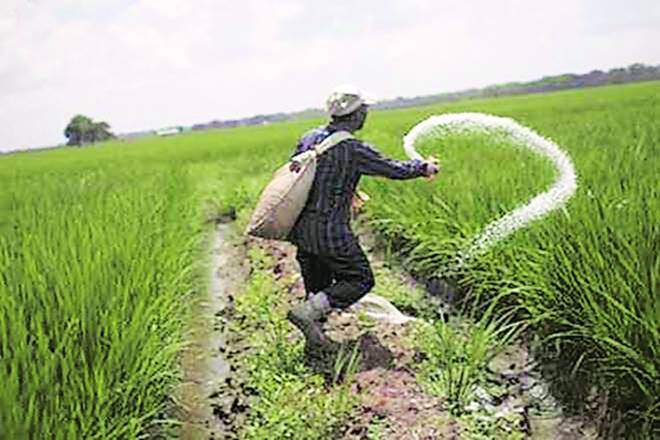
4 day long National Agrochemicals Congress concludes with recommendations for safe and judicious pesticide use in the country

The four day long National Agrochemicals Congress with the theme Country’s Status on Various Fronts of Agrochemicals concluded here today. The plenary sessions had deliberations on Issues and Concerns of Agrochemicals for sustainable farming. Recommendations from the congress included labelling of pesticide indicating the mode of action, status of country’s preparedness in invasive exigencies, to rethink on restrictive banning of pesticides in view of risk based considerations, policy regarding data protection of imported technical pesticides, policy for introduction of safe nano-formulations and empowerment of farmers through training and extension.

In the concluding session, Prof. Ramesh Chand, Member NitiAyog outlined the importance of responsible use of agrochemicals utilising precision technologies to reduce wastageof applied chemicals into environments.Prof. Chand advised the stakeholders to discourage false claims about agrochemicals and tackle the spread of wrong perception in public about agrochemicals. He exhorted agrochemicals scientists and microbiologists to workout on chemical and microbial interventions to transform biomass waste into a wealth.
DrTrilochanMohapatra, DG ICAR addressing the session said that agrochemicals will continue to play a major input in agriculture to meet the crop production targets and we must strive to ensure its safe and judicious use. He requested the scientists to comprehensively work upon the aspects of nano-pesticide approach to ensure safety of humans, livestock and environment.
Speaking at the session, Dr. Ashok Dalwai, CEO NRAAsaid that there is a need for reorientation in the thought process of society with regard to agrochemicals and experts have a big role in this exercise. He emphasized upon liberalization of registration procedures, enforcement of regulations at state level and access to technical pesticides.
This was the first ever National Agrochemicals Congress and this will hereafter be conducted in three years. The Congress is conducted in view of the role chemical pesticides still continue to play in pest management as more and more target specific and environment friendly products are being introduced. The benefits of pesticide use are high relative to their risks. New concepts in crops, human health, resource management, nanotechnology, smart formulations and related sciences are likely to boost agricultural productivity. With this background, current status of agrochemicals on various fronts have been collated for researchers and policy makers in order to ensure agriculture grow in a sustainable manner.
***

ECI to establish a Visiting Chair on Interdisciplinary Approach to Electoral Studies in memory of former CEC Sh T N Seshan

To commemorate and celebrate Sh T N Seshan’s special connect with the young and aspiring India, Election Commission of India has decided to establish and fund a Visiting chair on interdisciplinary approach to Electoral Studies in the Centre for Curriculum Development at India international institute of Democracy and Election Management( IIIDEM ), New Delhi from 2020-2025. The Chair will be mentored by Sh N Gopalaswami Former CEC.
Chief Election Commissioner Sh Sunil Arora today announced this decision while delivering the Keynote address at the Institute of Law, NIRMA University, Ahmedabad. President of NIRMA University, Dr Karsanbhai K Patel, Sh.Umesh Sinha Secretary General ECI, Vice Chancellor-Dr. Anup Singh, Dr Purvi Pokhariyal, Director, Institute of Law, faculty and students were present on the occasion. Sh Arora had been invited by the University on the occasion of Law Conclave organized in memory of the legendary Constitutional expert, economist and jurist par excellence Shri Nani Palkhiwala.  
Speaking on the occasion Sh Arora said “Sh T N Seshan’s enduring contribution to the cause of probity, transparency and integrity in various aspects of the electoral process in India has made his name synonymous with electoral best practices worldwide. In his memory thus ECI would establish the Chair. It shall be our endeavour to ensure that the Chair becomes fully functional during the next academic session  August- September, 2020.” The detailed modalities of the establishment of the Chair shall be worked out by Sh. Umesh Sinha, Secretary General, Sh. Dharmendra Sharma, DG IIIDEM and Mona Sreenivas, Director ECI and will be presented to the Commission by March 15, 2020. The Visiting Chair programme will be targeted to young academics with proven track record in fields relatable to electoral studies. The Chair will also be expected to curate one National Level Seminar on specific aspects of Electoral Studies. The Visiting Chair will also supervise designing and development of interdisciplinary curriculum/ modules for further training and research at the IIIDEM.
photo.jpg         
Delivering his lecture on Electoral law – its evolution and practice in India, Chief Election Commissioner said “Coincidentally, the 70th Anniversary of the adoption of the Constitution of India on 26th November, 1950 is close at hand, affording an opportunity for all of us to deliberate upon the path ahead”.
Sh Arora said “Our Constitution is a living document. In many ways, it is also an evolving document which has endured the test of times. From its very inception, the Constitution has spelt, for each and every Indian, a vocabulary of rights, entitlements, duties as well as the trinity of equality, freedom and dignity which make life meaningful” CEC said. The Election commission, like any institution, has to constantly reinvent itself in order to confront new and emerging challenges”, CEC stated.
 Shri Arora said “The electoral journey has been remarkable. Yet we cannot sit on past laurels. The Commission is committed to bring more reforms to ensure that the process become more in sync with the times, the current technologies and enhanced voter participation. Recently, the concept of Absentee voters has been made part of our process. We hope to have more than one qualifying dates for eligibility of voters. We have large number of overseas population and we need to devise a mechanism to facilitate their participation in the electoral process. We also need to work harder to curb the menace of money power, misinformation and to check the criminal elements in the arena of elections.” He added that “the roots of democracy run deep in our consciousness. So does an inherent sense of what constitutes right and wrong. Given this, I can say with conviction that the voter of this country is no longer naïve, passive recipient in the play of political democracy. Despite the fact that voting is not compulsory, more than 67% people come out to vote especially the women, senior citizens and persons with disability. “The strength lies in “We the People”. It is the collective power of the People that is invoked through the Constitution” Sh Arora emphasized.

Journalism is a pious mission for the cause of nation – Vice President

The Vice President, Shri M. Venkaiah Naidu today urged the media to not color news with views and stressed the need to maintain objectivity, fairness and accuracy. “The neutrality and sanctity of newsrooms should be upheld at all times”, he said.
Speaking at an event organized by Press Council of India on the occasion of National Press Day, in New Delhi today, he said that the cardinal principle of journalism is to present fair, objective, accurate and balanced information to the reader and viewer without journalists assuming the role of the gatekeepers.
The Vice President further said that this has become all the more critical in the present times after the advent of the ‘fake news’ phenomenon and the huge impact the social media is creating. “Sensationalism, biased coverage and paid news have become the modern-day afflictions of the media, he said adding that under no circumstances can slanted and opinionated reporting be termed as ‘interpretative reporting’.
Shri Naidu expressed concern over the fact that business groups and even political parties setting up newspapers and TV channels to further their interests.“With this the core values of journalism are getting eroded”, he said.
Maintaining that freedom and responsibility cannot be considered as inseparable, he opined that media must not only act as the watchdog to protect democracy but must also act as the true champion of the underdog. It has to be in the vanguard of fighting the ills that are plaguing the society.
The Vice President said that media landscape has transformed dramatically over the years and so have the values of journalism. In the past, journalism was treated as a mission for the nation’s service. Talking about the present state of affairs, he asked journalists’ bodies like PCI to do a serious introspection.

Shri Naidu said that time has come for media bodies to come out with a code of conduct for journalists. “In view of the critical role journalism plays in protecting democracy and in serving the larger good of the society, we should strengthen this important fourth pillar by ensuring that ‘truth’ is never compromised”, he added.
Noting that mobile phones are revolutionizing the manner in which we share information, he said every smart phone user has become a potential journalist. “No doubt, the internet and mobile telephony have democratized the availability of information. However, the glut of information is also generating fake news and fake narratives”, he added cautioning that, “journalists must guard against such news and fake narratives as they can be used by vested interests to create dissensions and divisions in our pluralistic society”.
The Vice President also appealed to media to provide greater space to development news andimportant sectors such as agriculture.
Admitting that legislations alone can not bring desired change, he called upon the media to play a positive role in creating public opinion on the need to eradicate corruption and social evils like gender and caste discrimination. “We have seen the positive impact created by the media in promoting the campaign for a Clean India”, he said.
Talking about the abrogation of Article370, he said that it was only a temporary provision which was removed by the Parliament with huge majority. He appealed to Indian journalistic community to convey the right facts to the world about Kashmir.
During this occasion, the Vice President also gave away the awards to the winners of ‘National Awards for Excellence in Journalism 2019’ under various categories.Eminent journalist Shri Gulab Kothari was awarded the prestigious ‘Raja Ram Mohan Roy Award’ for his outstanding journalism.
Shri Naidu also released three publications namely – the Directory of Press Council of India since 1966, the updated Norms of Journalistic Conduct Edition -2019 and a souvenir, ‘Reporting-Interpretation–A journey’  on the occasion.
Union Minister, Shri Prakash Javadekar, PCI Chairperson, Justice Chandramauli Kumar Prasad, Convener, Jury Committee and Member, PCI, Shri Jai Shankar Gupta and Secretary, PCI, Smt. Anupama Bhatnagar were among the dignitaries who graced the occasion. Representatives from various foreign countries such as Bangladesh, Nepal, Bhutan and Myanmar also attended the event.
Following is the full text of the speech –
“I am indeed extremely delighted to be amidst you all and share my views on the occasion of the National Press Day, which symbolizes the important role played by a free and responsible press.
It was on this day in 1966, the Press Council of India, a quasi-judicial body, started functioning as a watchdog body.
I am happy that several journalists in different areas are being honored for excellence in journalism today. My congratulations to all the winners!
Dear sisters and brothers,
Ever Since the launch of the first newspaper in India-‘The  Bengal Gazette’ by James Augustus Hickey in 1780, the presshas been playing an outstanding role in empowering the people.
The press played a pioneering and stellar role in inspiring the masses to fight against the Britishduring the freedom struggle and in strengthening the democratic foundations in the country since Independence. The nationalist role played by the newspapers and journals contributed in no small measure to influencing and moulding the public opinion during the freedom struggle.  However, during the Emergency, barring few exceptions like ‘The Indian Express’, ‘The Statesman’ and ‘The Mainstream’, the response of the Indian press by and large was muted during the Emergency.
The blank editorial published by The Indian Express during Emergency, under the leadership of Ramnath ji, was perhaps one of the strongest protests ever published against censorship in India.
It spoke more loudly than any words could have.
When asked about his fight for the truth in the face of stiff resistance, Ramnath Goenka ji was reported to have said : “I had two options–to listen to the dictates of my heart or my purse. I chose to listen to my heart”.
The media landscape has transformed dramatically over the years and so have the values of journalism. In the past, journalism was treated as a mission and those who wielded the pen were committed to ethics and highest standards of journalism. They used to work with undiminished enthusiasm and were overzealous in protecting its values.
The topic chosen for discussion on National Press Day this year–“Reporting-Interpretation–A journey” is quite appropriate. News used to be news in the past and it was neither interpreted nor misinterpreted.News and views were easily distinguishable.
The times have changed and so have the trends. These days, there appears to be a very thin dividing line between news and views. The news story is not only interpreted in tune with the management’s line of thinking, but the treatment it gets conveys a lot.
Occasionally, we do find that even important and newsworthy developments do not merit place on the front page and are rather buried in the inside pages.
The cardinal principle of journalism is to present fair, objective, accurate and balanced information to the reader and viewer without journalists assuming the role of the gatekeepers.
Fortunately for us there are a number of journalists who follow these principles. And that is what makes the Indian media so credible and unshackled by constraints.
However, there are aberrations like in any system. It is one thing to provide an insightful analysis of a news development by substantiating it with facts and figures and another thing to build a story on conjecture. The essential challenge is when this trend tends to become a new normal. Under no circumstances can slanted and opinionated reporting be termed as “interpretative reporting”.
Perhaps, it would be appropriate here to recall the views of Mahatma Gandhi on newspapers. He had said:“One of the objects of a newspaper is to understand popular feeling and to give expression to it; another is to arouse among the people certain desirable sentiments; and the third is fearlessly to expose popular defects.”
Instead of giving expression to popular feeling, some newspapers these days are giving expression to coloured and partisan views.For instance, reading any one major newspaper in the past used to give a fairly good understanding of what was happening around the country and the world. But it is not the case now. One will have to read a minimum of four to five major newspapers to get a complete sense of the current developments. Same is the case with the news channels.
Time and again, I have urged the media to not color news with views and stressed the need to maintain objectivity, fairness and accuracy. The neutrality and sanctity of newsrooms should be upheld at all times.
This has become all the more critical in the present times after the advent of the ‘fake news’ phenomenon and the huge impact the social media is creating.
With the electronic and social media providing news by the minute with alerts and flashes on smart phones, journalists will have to exercise greater caution and guard against ‘fake news’, disinformation and misinformation.
Sensationalism, biased coverage and ‘’paid news’’ have become the modern-day afflictions of the media.
With business groups and even political parties setting up newspapers and TV channels to further their interests, the core values of journalism are getting eroded.
Without delving further into the reasons for the present state of affairs, I would like journalists’ bodies like yours to do a serious introspection.
In such a context, freedom and responsibility of the media acquire far greater significance than ever before. Freedom and responsibility cannot be considered as inseparable and are inter-dependent on each other. The media has the onerous responsibility to not only provide unadulterated and correct information, but also educate the people on their rights as well.
It should also be remembered that freedom of media is not absolute and is circumscribed by certain reasonable restrictions relating to security of State, public order, decency or morality, defamation and contempt of court and sovereignty and integrity of India.
It should also be noted that during sensitive developments, vested interests use the social media to spread fake news and disinformation.
Finally, media must not only act as the watchdog to protect democracy but must also act as the true champion of the underdog. It has to be in the vanguard of fighting the ills that are plaguing the society. 
The media must also provide greater space to development news andimportant sectors such as agriculture.
Since the press has the power to influence public opinion, the credibility of newspapers in particular and the media in general is extremely crucial. A newspaper with credibility will gain the trust of the readers and has the chance to establish long-standing relationship with them.
In view of the huge influence in shaping the public opinion, the role of mass media assumes greater significance in the present era. It can play a positive role in creating public opinion on the need to eradicate corruption and social evils like gender and caste discrimination. The investigative journalism that uncovered the Watergate scandal and the subsequent downfall of an American President is still fresh in memory. There are many instances in which the media and of late the social media played a critical role—take the example of Egyptian uprising some years ago.
We have seen the positive impact created by the media in promoting the campaign for a ‘Clean India’. Thus, I feel that the press, TV and even the social media must educate the people on important health issues such as lifestyle changes and growing incidence of Non Communicable Diseases.
Of course, mobile phones are revolutionizing the manner in which we share data, information and visuals. With the number of smart phone users crossing 450 million in the country, every smart phone user has become a potential journalist. In fact, there are many instances where smart phone users have become “citizen journalists and virtually provided breaking news alerts to TV news channels. No doubt, the internet and mobile telephony have democratized the availability of information. However, the glut of information is also generating fake news and fake narratives. Journalists must guard against such news and fake narratives as they can be used by vested interests to create dissensions and divisions in our pluralistic society.
Apart from enforcing self-regulation, the media must ensure that the core values of accuracy, fairness, objectivity, news worthiness and independence are never compromised.Instead of focusing on negativity, it is important for newspapers in a country like India to accord importance to development journalism.
May be the time has come for media bodies to come out with a code of conduct for journalists. In view of the critical role journalism plays in protecting democracy and in serving the larger good of the society, we should strengthen this important fourth pillar by ensuring that “truth” is never compromised.
I compliment the Press Council of India for its role in promoting responsible journalism in the country.
Jai Hindi!”
*****


Finally Hindus Get The Right To Worship At Entire Disputed Land And Muslims Get 5 Acre In Ayodhya

“The court does not decide title on the basis of faith or belief but on the basis of evidence…it applies settled principles of evidence to adjudicate upon which party has established a claim to the immovable property.”
– CJI Ranjan Gogoi while reading the verdict
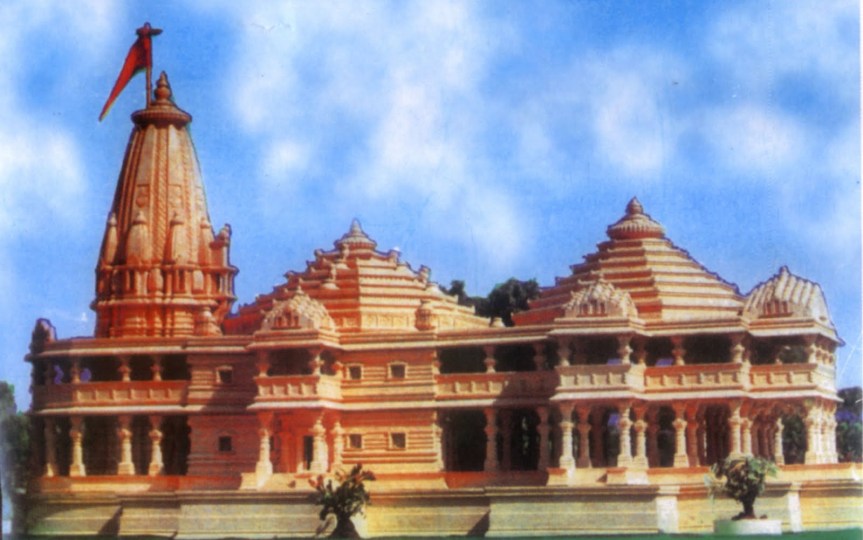
To start with, the name of the incumbent Chief Justice of India (CJI) Ranjan Gogoi who is due to retire shortly on November 17 along with the other 4 Judges – Justice Sharad Arvind Bobde who is the new designated CJI, Justice DY Chandrachud, Justice Ashok Bhushan and Justice S Abdul Nazeer who all were part of the five-Judge Bench that have put a supreme closure on the centuries-old Hindu-Muslim dispute by finally deciding it shall always be written in golden letters in the annals of history because they all have not just decided it finally but also decided it unanimously which must be applauded, admired and appreciated in no uncertain terms! Now there can be no more violence on this issue as the highest court of the country has now finally settled it once and for all which has to be accepted now by all of us most gracefully! The Ram Janambhoomi-Babri Masjid disputed land shall be handed over for the construction of a Ram temple at the entire site thus accepting Hindus claim and simultaneously also ordering that Muslims shall be allocated five acres at a prominent place in Ayodhya for a mosque. 
Needless to say, in a unanimous judgment titled M Siddiq (D) Thr Lrs. Vs. Mahant Suresh Das & Ors in Civil Appeal Nos. 10866-10867 of 2010 along with other Civil Appeals delivered just recently on November 9, a Bench headed by CJI Ranjan Gogoi has asked the Centre, which had acquired the entire 67.73 acres of land including the 2.77 acres of the disupted Ramjanambhoomi-Babri Masjid premises in 1993 to constitute a trust in three months for overseeing the construction of a temple and frame a scheme for its functioning as well as on matters pertaining to management of trust and construction of temple. For the time being, the possession of the disputed property would continue to vest with the Centre until a notification is issued by it investing the property in the trust. The Bench also directed that the Sunni Central Waqf Board should be given a five acre plot, either by the Centre from within its acquired area, or by the Uttar Pradesh government “at a suitable, prominent place in Ayodhya”. The Board would be at liberty to construct a mosque there. This should be done simultaneously with the transfer of the property to the proposed trust. 
Speaking for myself, I most politely beg to differ with Supreme Court on this as I very strongly believe that why can’t a temple and mosque coexist and why can’t Hindus and Muslims pray peacefully at any place together anywhere in India? Why can’t we be more respectful for each other? Why can’t we respect religion of those different from us just like we respect our own?
Speaking for my best friend Sageer Khan, he inspite of being a Muslim differed very strongly with me on this and said way back in 1993-94 directly to about 4 to 5 Muslims in my absence but which I overheard as I had just returned after attending my BSc classes at Sagar University which shocked me also to the hilt and which he repeated in my presence also then that, “Centre must declare Ayodhya, Kashi and Mathura as Hindu sites and not a single shrine of any other religion should ever be constructed at any of these three places. Should a temple be built in Mecca or Medina? What if Hindus also demand similarly? Will any Muslim anywhere in world agree to building of a temple anywhere in Mecca or Medina or anywhere in Saudi Arabia or any other Gulf country? Why do we then not do with others what we expect from others to do with us? Moreover, no true Muslim should offer namaz at any disputed place or by disturbing others like on roads and Hindus consider these 3 places as most sacred since lakhs of years. How can all this be overlooked? Will we become small if we accord Hindus due respect just like they respect Mecca and Medina. I don’t consider disputed site at Ayodhya as mosque because no namaz has been offered there since last many decades and moreover it is disputed where no true Muslim should ever go and Hindus have considered it always as Lord Ram’s birthplace and even Archeological Survey of India has found remains of temple at the disputed site! A very prominent Imam of Iran has also upheld Hindus strong claim on Ayodhya. We must be large hearted and accept the deepest sentiments which Hindus share with these 3 places – Ayodhya, Kashi and Mathura just like we do with Mecca and Medina. How will we feel if Hindus demand temple at these two sites? We will get mad in anger than why do we also not respect Hindus sentiments just like they respect ours? Allah never accepts prayers offered by hurting the sentiments of others. I will prefer not praying at all rather than pray by hurting my Hindu brothers! Muslims enjoy maximum freedom in India all over the world. No place can be more safe for Muslims than India where they enjoy maximum liberty. Indian Muslims are always discriminated in Pakistan which alone explains that why no Muslim from India ever wants to reside permanently in Pakistan and they are still termed as “Mohajjir”. I am proud to be an Indian and shall certainly die as an Indian. Religion are just different path to reach the common goal. God is called by different names but he is one.” There can certainly be no communal violence ever in India if all Indians always think like him! 
It is this same Sageer Khan who when I expressed to him my desire to become a Muslim like him as he always stood by me in my most difficult times took a vow from me in 1994 by placing my hand on his head with tears in his eyes saying that, “You shall never renounce your religion” as he (Sageer) felt always that, “Anything can be changed but nation, religion and parents can never be changed” and also the God Shiva in whom I believed till then but had lost faith in him shall continue worshipping him till my last breath just like he (Sageer) shall never renounce his Allah and his religion! It is this same Sageer who regularly ensured that I worshipped Lord Shiv while he used to offer namaz and it was a coincidence that whenever he took me to different temples which he did regularly from April 1993 to April 1995, the idol was always of Lord Hanuman due to which I started believing in him also fully along with Mata Durga where Sageer always bowed his head in a temple in Sagar in Madhya Pradesh for my faith to stay intact! I must acknowledge that the utmost sincerity with which he used to bow entirely in front of idols of Lord Hanuman and Mata Durga and shake his head on ground with fullest dedication when I never at that time liked to even bow down injected in me fresh lease of faith in not just Lord Shiva but also in Lord Hanuman and Mata Durga whom I never worshipped earlier for which I shall forever be indebted to him! It is again Sageer who took a vow from me that I shall never enter any mosque in my life nor bow my head ever in front of mosque as I am Hindu and should always visit only temple and bow head there only or in dargah as both Hindus and Muslims go there! 
Speaking now for Supreme Court who delivered this path breaking judgment, it was also made clear that, “In exercise of the powers vested in this Court under Article 142 of the Constitution, we direct that in the scheme to be framed by the Central Government, appropriate representation may be given in the Trust or body, to the Nirmohi Akhara in such manner as the Central Government deems fit.” Prime Minister Narendra Modi has hailed the restraint following the Supreme Court’s judgment in the Ayodhya case saying it should be seen as a message of unity which proves that the most difficult of problems can be solved within the framework of the Constitution and Courts. He very rightly tweeted saying that, “This verdict shouldn’t be seen as a win or loss for anybody. Be it Ram Bhakti or Rahim Bhakti, it is imperative that we strengthen the spirit of Rashtra Bhakti. May peace and harmony prevail!” I hail PM Modi for saying so!
It is most heartening to see that after giving the disputed land to Hindus and a separate five acres of land at a prominent place to Muslims for construction of a mosque in Ayodhya, the Supreme Court shut the door for fresh litigation to alter the status quo of religious sites such as those in Kashi and Mathura which has also seen discord over worship. I had the honour to visit Kashi in 2012 along with my advocate friend Amit Sharma and his family where we did pooja freely and I did not see any Hindu-Muslim tension at all! This clear assertion by top court must put to rest all doubts and speculations over such claims being presented at other disputed sites also by Hindus! 
It cannot be overemphasized that leaders from all parties must refrain from expressing unfounded fears on this and should recognize that the top court has itself said clearly and categorically on this which cannot be questioned by anyone! Central and state governments to follow Religious Places (Special Provision) Act, 1991, which mandates maintenance of status quo on character of the disputed sites as it existed in 1947. Only Ram Janambhoomi-Babri Masjid excluded from ambit of this law.
It is for the first time in history of Supreme Court that such a landmark decision was given on Saturday! It is also for the first time that the name of the author of judgment has not been mentioned and so it can be termed as a collective judgment even though as pointed out in Sunday Times dated November 10 that, “It was clear from the printed version of the judgment that the author was none other than Justice DY Chandrachud. It was a valid surmise. SC judges have their own styles and use distinct fonts. For those familiar with the style of Chandrachud, the matter was settled; well, almost beyond reasonable doubt.”
It is also for first time that the main judgment is accompanied by a 116-page “addenda” which was in the shape of a complete judgment and could well have been passed off as a separate, although concurring judgment which is believed to be authored by Justice Ashok Bhushan! No doubt, it is certainly remarkable and historic from all angles!
This noteworthy judgment also pulled back no punches to conclude that, “The destruction of the mosque took place in breach of the order of status quo and an assurance given to this Court. The destruction of the mosque and the obliteration of the Islamic structure was an egregious violation of the rule of law.” The court concluded that the Muslims were ousted from the 1,500 square yards of the mosque through acts of damage during communal riots in 1934, desecration in the intervening night of December 22-23 of 1949 when idols were placed inside the mosque and finally, the demolition of the mosque in 1992.” It also concluded that, “All forms of belief, worship and prayer are equal.” There can be no denying it! This landmark verdict cannot be interpreted either as victory for Hindus or defeat for Muslims! 
Zufar Faruqi of UP Sunni Central Waqf Board said that, “We welcome and humbly accept the verdict…we will not go in for any review of the apex court’s order or file any curative petition.” Maulana Tauqeer Raza Khan who is national President of Ittehad-e-Millat Council said that, “I respect the SC decision. Our faith has taught us to express gratitude to God in happiness and be patient while in sorrow. However, the verdict has ended the politics in the name of temple and will eliminate the hatred in the name of faith. I hope that the focus of politics will now be betterment of the country.” PM Modi too has already made his noble intentions clear on this and said unequivocally that, “The SC verdict has brought a new dawn. Now the next generation will build a new India! Maulana Shahbudin Razvi who is General Secretary of Tanzeem Ulama-e-Islam said that, “I welcome the decision of Supreme Court. The matter had become a major issue of contention between two communities of the country and today’s decision has ended a decades old dispute. I appeal to the people that they should maintain communal harmony in the country.” Pawan Arora who is VHP’s Divisional President also said that, “We welcome the decision which has been passed in the country’s interest.” 
To conclude, Supreme Court has accepted what many Muslims like Sageer Khan and Sufi Khan have steadily maintained that Hindus have always considered the disputed site in Ayodhya as the birth place of Lord Ram since lakhs of years and their unflinching faith in this stands vindicated by the report of Archaeological Survey of India which found proof of temple beneath the disputed site which can be considered as an expert opinion! The Apex Court conceded that Hindus and Muslims had a competing right over the disputed site but Hindus showed better evidence of their continuous worship at the disputed structure for centuries. It also maintained that no evidence produced by Muslims to indicate that their possession of disputed structure was exclusive and that offering of namaz was exclusionary of Hindus. 
It was also conceded that Muslims have never been in possession of outer courtyard. Inner courtyard has been a contested site with conflicting claims of Hindus and Muslims. But there has been no abandonment of mosque by Muslims as namaz was offered till December 1949. It held that, “The allotment of land to Muslims is necessary because though on balance of possibilities, evidence regarding claim of Hindus to the composite whole of the disputed property stands on a better footing than the evidence adduced by Muslims, but Muslims were dispossessed upon desecration of mosque on 22/23 December 1949, which was ultimately destroyed on 6 December 1992.”
Thus we see that Hindus get the entire disputed site and as a balancing act Muslims also get 5 acre of land at some prominent place in Ayodhya to be decided later! The Apex Court has thus set aside the September 30, 2010 verdict of Allahabad High Court which had divided the core disputed area into three equal parts and allotted one part each to Ram Lalla (the area under the central dome of the demolished mosque), Nirmohi Akhara (outer courtyard including Ram Chabutra and Sita Rasoi) and the rest to Sunni Waqf Board. Let’s earnestly hope now both Hindus and Muslims would be able to pray peacefully as directed by the top court!
Sanjeev Sirohi, Advocate,
s/o Col BPS Sirohi,
A 82, Defence Enclave,
Sardhana Road, Kankerkhera,
Meerut – 250001, Uttar Pradesh.

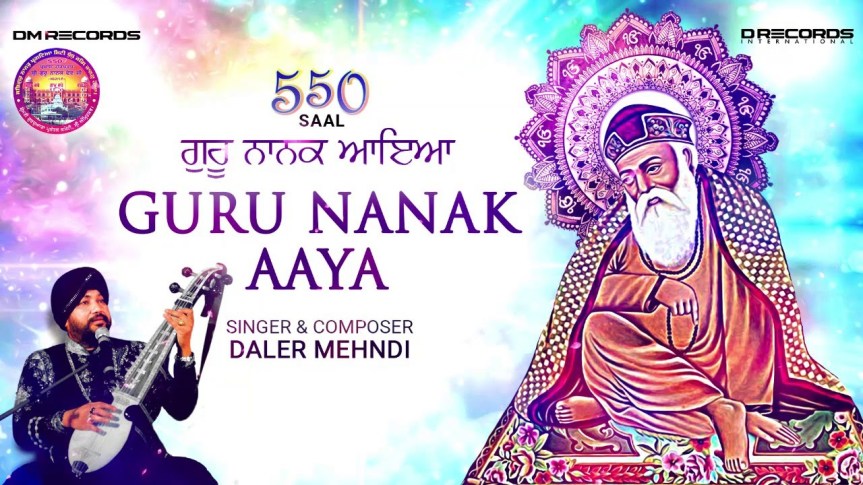
550 Birth Anniversary of Guru Nanak Dev & the Golden Temple

On this date of 12
November 2019, 550 birth anniversary of Guru Nanak Dev ji is being celebrated
across the world particularly in India and Pakistan with full dedication,
devotion and gaiety.
    His sayings and messages are still relevant
and will also continue till the day human beings survive. I am quoting from one
of his sayings which has greatly influenced me, “There is but One God. His name
is Truth; He is the Creator. He fears none; he is without hate. He never dies;
He is beyond the cycle of births and death. He is self-illuminated. He is
realized by the kindness of the True Guru. He was True in the beginning; He was
True when the ages commenced and has ever been True. He is also True now”.
Another one, “Even Kings and emperors with heaps of wealth and vast dominion
cannot compare with an ant filled with the love of God”.

    Guru Nanak ji was born at present place of Nankana Sahib, near Lahore of Pakistan.
According to various literatures and beliefs, the birth and initial years of
Guru Nanakji’s life were marked with
many astonishing incidents that validated that Nanak ji was born with divine
power.
 Guru Nanak Dev ji later on settled down at Kartarpur (now in Pakistan) which was
founded by him in 1522 and spent the rest of his life there (1522-1539). Kartarpur is now great news in the world
as 3-kilometre  corridor which connects Darbar Sahib in Kartarpur with Dera Baba
Nanak shrine in Gurdaspur district of
Punjab (India) has  allowed pilgrims’
mainly Sikh pilgrims’ direct access to the historic Gurdwara Darbar Sahib in
Kartarpur
, where Guru Nanak Dev
passed away. Hope this corridor will bring peace in the region so that no
mothers have to lose their sons or children had to suffer because death of
their fathers. Guru Nanak Dev ji long ago rightly said, “Dwell in peace in the
home of your own being, and the Messenger of Death will not be able to touch
you”.       
  Although Guru Nanak ji was the founder of
Sikhism and the first of the ten Sikh Gurus but all the other Gurus had done
excellent work for human beings. In this context, the Golden Temple is a
glaring example. The Golden Temple of Amritsar (Sri Harmandir Sahib) is not only a central religious place of the
Sikhs, but also a symbol of human brotherhood and equality. Everybody
irrespective of caste, creed, religion or race can visit the place.
Regarding the Temple it
may be mentioned that, as advised by Sri Guru Amar Dass Ji (3rd Sikh Guru), Sri Guru Ram Dass Ji (4th Sikh Guru)
started the digging of Amrit Sarovar
(Holy Tank) of Sri Harmandir Sahib in
1577 A.D., which was later on brick-lined by Sri Guru Arjan Dev Ji (5th Sikh Guru) on 15 December, 1588 and he
also started the construction of Sri Harmandir
Sahib
. Sri Guru Granth Sahib
(scripture of the Sikhs) was first installed at Sri Harmandir Sahib on 16 August 1604 A.D.
     The Golden Temple (Sri Harmandir Sahib Amritsar) has a unique
Sikh architecture. Built at a level lower than the surrounding land level, the Gurudwara teaches the lesson of
egalitarianism and humility. The four entrances of this holy shrine from all
four directions signify that people belonging to every walk of life are equally
welcome. The Sikhs and others of different religions all over the world daily
visit Sri Harmandir Sahib.  
    The author had the opportunity to visit
holy Golden Temple (Sri Harmandir
Sahib) in August 2017. So the author’s first visit to Golden Temple created different
feelings in the mind and heart of the author as everywhere selfless service was
observed- whether serving of food, water, cleaning of utensils, making of roti etc. were concerned. It is
heartening to mention by quoting Hindustan Times, 19th May 2016,
epaper, that “The Golden Temple (Harmandir
Sahib) in Amritsar has been ranked number 3 in the country on the travellers’
choice landmarks list of a leading travel planning and booking site
TripAdvisor. Surrounded by a holy ‘sarovar’,
its construction was completed in 1604 and presently runs one of the largest
free kitchens in the world, which serves an average of 1,00,000 people daily”.

Dr Shankar Chatterjee
Former Professor & Head (CPME),NIRD & PR ( Govt. of India), Hyderabad,  India
Former Associate Professor, Eritrea
Former Assistant Prof, Govt. Degree College, Tripura, India
Former Senior Planning Officer, Govt of Assam, India

Interim Mandatory Injunctions Can Be Granted After Giving Opportunity Of Hearing To Opposite Side: SC

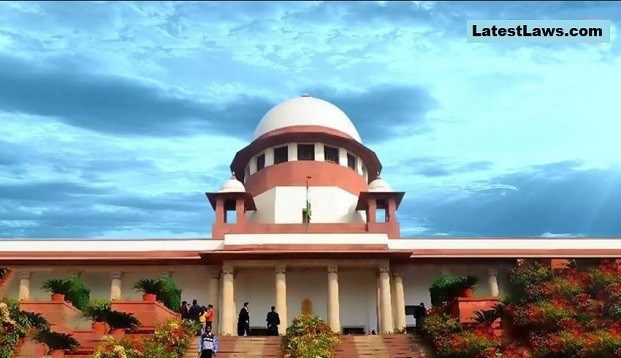
It has to be stated right at the outset before stating anything else that in a latest, landmark and laudable judgment titled Dr Syed Afzal (Dead) Through Lrs. & Ors. Vs Rubina Syed Faizuddin & Ors in Civil Appeal Nos. 8447-8449 of 2019 (Arising out of SLP (C) Nos. 25368-25370/2019), the Supreme Court has clearly and convincingly observed that the Civil Courts while considering the application seeking interim mandatory injunction in long pending cases, should grant opportunity of hearing to the opposite side. In other words, the Apex Court has sought to make it abundantly clear in this noteworthy case that interim mandatory injunctions can be granted after granting opportunity of hearing to the opposite side. Very rightly so!

While granting leave, this notable judgment delivered by a Bench of Apex Court comprising of Justice NV Ramana and Justice V Ramasubramanian on November 4, 2019, first and foremost sets the ball rolling by observing that, “Aggrieved by an interim order passed in three interlocutory applications, pending a Regular Appeal arising out of a preliminary decree for partition, the legal representatives of one of the plaintiffs in the suit have come up with the present appeals.”

To put things in perspective, the Bench then after hearing both sides says that, “We have heard Mr. Kapil Sibal, learned senior counsel appearing on behalf of the appellants and Mr. Ranjit Kumar, learned senior counsel appearing on behalf of respondent Nos. 1 to 5.” The Bench then goes on to clarify that, “Service of notice on the other respondents is not necessary as these appeals arise out of an order passed in the interlocutory applications filed before the High Court by respondent Nos. 1 to 5 alone.”

Needless to say, it is then brought out that, “The appellants herein are the legal representatives of one Dr. Syed Afzal, who along with his brother Syed Hamza, filed a suit – O.S. No. 123 of 1997 in the Court of the IX Additional Chief Judge, City Civil Court, Hyderabad for partition and separate possession of their lawful shares in the suit schedule properties. By a judgment dated 24.09.2012, the trial court granted a preliminary decree for partition.”

As it turned out, the Bench then notes that, “Aggrieved by the preliminary decree for partition, defendant Nos. 26 to 30 (respondent Nos. 1 to 5 herein) filed a Regular Appeal in CCCA No. 18 of 2013 on the file of the High Court of Judicature at Hyderabad. Initially, the High Court granted an interim stay of all further proceedings pursuant to the preliminary decree, but the same was later modified confining the stay only to the passing of final decree. The appeal is still pending and the interim order staying the passing of final decree is in force.”

To put it succinctly, it is then disclosed that, “During the pendency of the appeal, respondent Nos. 1 to 5 herein moved three interlocutory applications – I.A. Nos. 3, 4 and 5 of 2019 praying inter alia for (i) an interim mandatory injunction directing respondent Nos. 27, 35, 37 and 38 in the appeal to remove their henchmen from Item Nos. 2 and 3 of the decree schedule properties (ii) an injunction restraining the respondents in the appeal from interfering with their alleged peaceful possession of Item Nos. 1 to 7 of the decree schedule properties and (iii) a direction to grant police and to them for removing the so-called henchmen of respondent Nos. 27, 35, 37 and 38 from Item Nos. 2 and 3 of the decree schedule properties.”

To say the least, the Bench then points out that, “It appears that all the three interlocutory applications were filed on 14.10.2019 and the same were listed for hearing on 16.10.2019. According to the appellants herein, they sought time to file counter affidavits in all the three interlocutory applications. However, the High Court passed an order on 16.10.2019 granting an interim mandatory injunction as well as police aid. Therefore, contending that without granting an opportunity of hearing, an interim mandatory injunction and police aid have been granted, the appellants have approached this Court with the instant appeals.”

More importantly, it is then rightly pointed out that, “It is obvious from the impugned order that what was granted was only by way of interim measure and the interlocutory applications are not finally disposed of. We are informed that the interlocutory applications are likely to be listed before the High Court next week. Therefore, at this stage, we do not wish to enter into the merits of the dispute, as the same may prejudice either of the parties. Suffice it to say that the regular appeal pending before the High Court is of the year 2013 and the applications, out of which the present appeals arise, are of the year 2019. These applications are purportedly necessitated by the events that allegedly happened in the recent past. Therefore, this was not a case where an ad-interim mandatory injunction and police aid were required to be granted without affording an opportunity to the appellants herein to file a counter affidavit and to put forth their case.”

Most importantly, it is then very rightly observed that, “It is true that the Civil Court is not powerless to grant interim mandatory injunction, as such a power has been recognised by this Court in a long line of decisions, the important among them being Dorab Cowasji Warden vs. Coomi Sorab Warden & Ors, (1990) 2 SCC 117. But it does not mean that the same could be granted even without an opportunity to the other side, especially when the main appeal is pending for the past six years. By the impugned order, the High Court has not only granted an interim mandatory injunction, but also granted police aid, leaving all the interlocutory applications lifeless, though the applications are technically pending.”

Finally and perhaps no less importantly, it is then held that, “Therefore, we are of the considered view that the impugned order is liable to be set aside and the High Court should be allowed to decide the interlocutory applications on merits after allowing the appellants herein to file a counter affidavit. Accordingly, the appeals are allowed and the impugned order is set aside. The High Court is requested to permit the appellant herein to file a counter affidavit in all the three interlocutory applications. The High Court is further requested to hear both sides and dispose of the applications in accordance with law, preferably within a period of four weeks. In the meantime, both the parties shall maintain status quo, as it exists today, till the disposal of the interlocutory applications.”

On a concluding note, it may well be said with a considerable degree of satisfaction that the Apex Court has very rightly held that it is true that the Civil Court is not powerless to grant interim mandatory injunction as the Court has itself recognized in many cases, the most prominent being Dorab Cowasji Warden vs. Coomi Sorab Warden & Ors, (1990) 2 SCC 117. But the Court also in the same breath does not miss out in holding that it does not mean that the same could be granted even without an opportunity to the other side, especially when the main appeal is pending for the past six years. All the courts must always abide by what the Apex Court has held so clearly and convincingly in this landmark, latest and laudable judgment while adhering to what was held earlier also in similar such cases as has already been pointed out which deserves to be emulated also!

Sanjeev Sirohi, Advocate,

s/o Col BPS Sirohi,

A 82, Defence Enclave,

Sardhana Road, Kankerkhera,

Meerut – 250001, Uttar Pradesh.

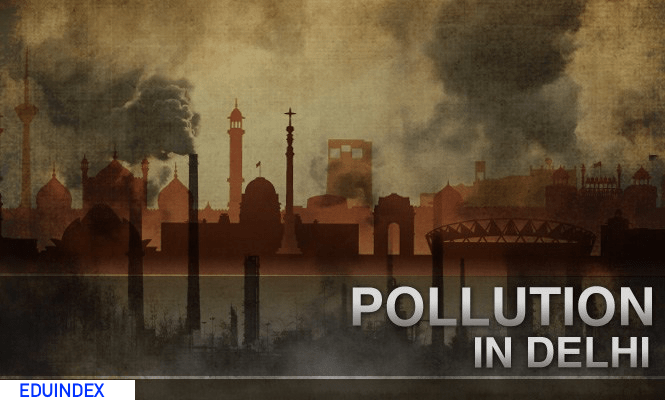
SC Issues Slew Of Directions To Curb Air Pollution

We all know fully well that air pollution in Delhi and even adjoining regions like several districts of West UP are crossing all limits and this year even in districts adjoining Delhi like Meerut where air pollution was never felt so much as is now being felt. Delhi is obviously the worst affected and this is most concerning for our nation as it is the national capital of India. India’s reputation in containing air pollution right in the capital itself is at stake and it is high time that a host of strong steps are taken in the right direction to ensure that it is checked immediately.

It must be mentioned here that the Apex Court Bench of Justices Arun Mishra and Deepak Gupta on November 4, 2019 took up the issue of air pollution in Delhi-NCR in the wake of the Environment Pollution Control Authority (EPCA) declaring a public health emergency taking note of the severely deteriorated air quality. First and foremost, it is pointed out by the Bench that, “We have heard Mr Bhrelal who has pointed out about irrigation. We have also heard some experts from the Ministry and the IIT and learned senior counsel for the parties and Amicus Curiae.” 
Without wasting any time, the ball is then set rolling by pointing out that, “Today everyone is concerned about level of pollution in Delhi and NCR region. This is not something new, every year this kind of piquant situation arises for a substantial period. It is compounded by the fact that year to year in spite of various directions issued by High Court, other authorities including this Court, the State Governments, Government of NCT of Delhi and the corporations of Delhi and nearby States are not performing their duties as enjoined upon them. This is a shocking state of affairs in which we are put as on today. This is blatant and grave violation of right to life of the sizable population by all these actions and the scientific data which has been pointed out indicates that life span of the people is being reduced by this kind of pollution which is being created and that people are being advised not to come back to Delhi or to leave the Delhi due to severe pollution condition which has been created. There cannot be large scale exodus. People have to perform their duty in Delhi also and people cannot be evacuated from Delhi being a capital city. We are at a loss to understand why we are not able to create a situation in which this kind of pollution does not take place, that too in a routine manner every year. Obviously, it is writ large that the State Governments, Government of NCT of Delhi and civic bodies have miserably failed to discharge their liability as per the Directive Principles of State Policy which have found statutory expression, they are being made statutory mockery and also the directions of this Court and High Courts in this regard are being violated with impunity.”
Why should heavy fine not be imposed on the respective State Governments and those civic bodies who have failed utterly to discharge their liability as enshrined in the Directive Principles of State Policy? Why should they be allowed to get away freely or lightly? Why should they not be taken to task forthwith?
Without mincing any words, the Bench then goes forth to very rightly point out in simple and straight language that, “Time has come when we have to fix the accountability for this kind of situation which has arisen and is destroying right to life itself in gross violation of Article 21 of the Constitution of India. No farmer can be said to be having a right under the guise that he is not having sufficient time to use the stubble for the purpose of manure, since they have less time between two crops, cutting and sowing of next crop. As such, they cannot by burning it in their fields, put life of sizeable population in jeopardy.” Farmers too must understand their responsibility which they owe to the nation! Centre and respective State Governments too must do all that they can to ensure that the farmers are helped in every possible manner to help dispose of the remains without polluting the atmosphere! They have so far not done enough adequately in this direction!
Furthermore, it is then pointed out in the next para that, “It is apparent from the satellite images which has been produced before us for the period 30.10.2019 to 04.11.2019. The satellite image clearly indicates that in Punjab there is widespread stubble burning which has taken place as compared to Haryana, in which only in four districts it has taken place. There is some burning in Western U.P. also. It could not have taken place even in a singular district or gram panchayat area as we live in a civilized country in which such kind of activities which create such menacing pollution not only in the area concerned but to the neighbouring States also, by ill-effects of that people cannot be left to die or to suffer various ailments.”
While apportioning liability on all, it is then held by the Bench in the next para that, “Everybody has to be answerable including the top state machinery percolating down to the level of gram panchayat. The very purpose of giving administration power up to the panchayat level is that there has to be proper administration and there is no room for such activities. The action is clearly tortuous one and is clearly punishable under statutory provisions, besides the violation of the Court’s order. In the circumstances, as widespread stubble burning has taken place, we direct the States of Punjab and Haryana and adjoining State of Uttar Pradesh where there is blatant violation which has taken place, to halt it. We direct the Chief Secretaries of the States of Punjab, Haryana and Uttar Pradesh to be present in this Court on 06.11.2019 and Chief Secretary of Government of NCT of Delhi.” 
Not stopping here, it is then further added very rightly in the next para while issuing strict directions that, “We direct the Chief Secretaries of the State Governments, District Collectors, Tehsildars, Director General, IG/SP and other police officers of the area of concerned police station and the entire police machinery to ensure that not even a single incident takes place of stubble farming henceforth. If it is found that any stubble burning has been made not only that person doing it will be hauled up for the violation of the order passed by this Court but the entire administration, right from the Chief Secretary, Commissioner, Collector and all other concerned functionaries and Panchayats. Gram Pradhan/Sarpanch Panchayat are also directed to ensure that no such stubble burning takes place.” 
What’s more, it is then further strongly observed in the next para that, “Let the State Governments of Punjab, Haryana and Uttar Pradesh and officials also explain that why they should not be asked to pay the compensation for tortuous liability as they have acquiesced and due to their failure in preventing stubble burning which is in utter violation of the Public Trust doctrine, why they should not be held liable to compensate, and also the incumbents who are burning the stubble in spite of clear restrictions imposed by this Court and statutory prohibition.” In other words, the Apex Court has made it abundantly clear that it is not just the farmers who indulge in stubble burning who will be held accountable but also the State Governments of Punjab, Haryana and Uttar Pradesh will have to be held accountable for not doing enough to check air pollution in their respective states and allowing stubble burning with impunity by not taking any strict action against those indulging in it!
As if this is not enough, it is then also further added in the next para while fixing accountability that, “We also direct the Sarpanch of each and every Panchayat and SHO of the concerned area to prepare inventory of the incumbents who have burnt the stubbles in their fields. We also direct the Sarpanch, Gram Panchayat as well as the concerned police of the area and local administration including the Collector and all subordinate authorities to ensure that no further stubble burning takes place. In case, any stubble burning takes place responsible machinery from top to bottom and Sarpanch, Gram Panchayat shall be liable for tortuous act and for not complying with the order passed by this Court and let the Gram Panchayat also advise forthwith the villagers not to involve in stubble burning anymore and take appropriate action.” Very rightly so! Unless accountability is fixed and very strict action is taken against all those violating the rules, we cannot control air pollution under any circumstances no matter how much day dreaming we continue to indulge in! This was exactly what eminent and senior Supreme Court lawyer and former Solicitor General of India – Harish Salve also very rightly pointed out while talking in a news channel! 
Be it noted, the Bench then very rightly directs and underscores in the next para that, “We also direct the State Governments, Central Government as well as the Government of NCT of Delhi to take immediate steps to take care of the emergent situation due to air pollution which has taken place. No doubt about it that everybody knows the situation, let the steps be taken forthwith with the help of the experts. We direct the Government of NCT of Delhi as well as various corporations to work in tandem and to see that waste and garbage which is contributing to air pollution is tackled at war level. The efforts should be made right from today without any loss of time.”
Each and every one of us who stay in India must adhere to what the top court has said so rightly, elegantly and commendably! If we abide by what the top court has said, we would only be improving not just our own lives but also other lives and the lives of the coming generations! No time should be wasted on this score as the Apex Court has rightly emphasised!
While elaborating further, it is then pointed out by the Bench that, “Let the EPCA consider as it was suggested by Ms. Aprajita Singh, learned senior counsel and the learned Amicus Curiae that diesel vehicle should not enter the Delhi. Let the EPCA immediately take the steps in this regard as may be considered appropriate as it has the power to do the needful taking care of the emergent situation.”
Going forward, it is then envisaged that, “With respect to demolition and construction activities we direct that no demolition and construction activities take place in Delhi and NCR region. In case it is found that such activity is done, the local administration as well as the municipal authorities including the Zonal Commissioners, Deputy Zonal Commissioners shall be personally held responsible for all such activities. They have to act in furtherance of the Court’s order and to ensure that no such activity takes place.”
It must be brought out here that the Bench then adds that, “We are informed that use of coal based industries have been stopped. In case any violation of this is found the concerned person including Zonal Deputy Commissioner would be liable for violation of the order of this Court and liable to be punished for contempt of Court.”
Coming to odd/even scheme, the Bench then notes that, “It was also pointed out by Mr. Sanjiv Sen, learned senior counsel, that during odd/even scheme in Delhi more use of two wheelers has taken place and they are being plied more causing equal pollution, as such no useful purpose is being served by stopping the use of certain vehicles only on the basis of odd and even numbers. He has also pointed out that it would be appropriate to stop the use of diesel vehicle, in case it is necessitated as the diesel vehicles cause more pollution as compared to petrol and CNG vehicles. Let the Government of NCT of Delhi explain this aspect and file the data in this regard in the Court on the basis of the previous experience and whether if three wheelers and taxies are plying more on road during such restriction and relevant data be placed.” Definitely, if this is done carefully and correctly, we would come know the real picture on air pollution! 
Briefly stated, while questioning the Odd/Even Scheme sponsored by the Delhi state government, it is then mentioned in the next para that, “During Odd/Even Scheme what is the difference being caused by stopping use of four wheelers when various other contributing factors are not taken care of by Government of NCT of Delhi.”
To put things in perspective, the Bench rightly points out the reasons for air pollution that, “As per the Air Quality Inspection Construction and Demolition Activities in Delhi/NCR region causing damage in Noida, Faridabad, Gurugram, Ghaziabad as well as instances of Delhi have also been mentioned.
1. Construction and demolition.
2. There is open dumping of waste/garbage.
3. Unpaved road/pit.
4. Road dust.
5. Garbage burning.
6. Traffic congestion.
As it turned out, the Bench then holds that, “We direct that construction, demolition and activities be stopped forthwith as well as garbage burning. In case, any person is found in construction and demolition activity and garbage burning in Delhi and NCR region, he/she shall be penalized. Any person doing construction and demolition activity in violation of this order, shall be penalized with Rs. 1 Lac for such activity. For garbage burning he/she shall be penalized with Rs. 5,000/- and besides liable for violation of the order passed by this Court to be dealt with in accordance with law.”
Moving on, the Bench then further holds that, “With respect to open dumping of waste and garbage, we direct the Government of NCT of Delhi as well as the concerned Municipal Corporation to chalk out immediate plan and to ensure that waste and garbage to be removed to safe places forthwith and also to ensure that no open dumping takes place. We direct Zonal Deputy Commissioner to be responsible with other officers in this respect. Let road-maps be prepared so as to provide proper amenities in order to prevent open dumping of waste and garbage, and be placed before this Court within four weeks.” 
Now come to think of roads, the Bench on this score lays down that, “For taking care of the road dust let water sprinklers/dust suppressors be used on the roads. An IIT expert suggested about the appropriate water pressure for the sprinklers. At what pressure water should be sprinkled so as to reduce the pollution and dust so that it does not add to the pollution. Let the Corporations act on advice of the expert of the IIT. Such roads where traffic congestion is more, let traffic plan be also prepared in such a manner so that there is no extra burden on a particular road so that traffic congestion is taken care of. It is for the concerned traffic authorities to take immediate steps in this regard.”
More importantly, it is then observed in the next para that, “Since we are fixing the liability on the person responsible for inaction at the village level as well as three States in the NCR regions as well as Delhi, let the widest publicity by all means of publication i.e. Television, Media, newspapers, Radio be made. In Gram Panchayats by beat of drums also and other modes to ensure that villagers are made aware of their responsibility and liability towards the other humans so that they do not involve in such acts. Let the Gram Panchayat, police station, district and taluk levels by the concerned administration take steps in this regard. Let the State Governments also take the requisite steps to extinguish the stubbles which are burning and for that let State Level High Level Committee meet forthwith and take appropriate decision and implement it. Steps taken be informed to this Court on 06.11.2019 by the concerned Chief Secretaries of the three States and Government of NCT of Delhi.”
No less important is what is then stated in next para that, “Let the concerned authorities of EPCA meet forthwith and take a call in this regard with respect to industrial activities which are causing pollution on how to control it. We also direct all pollution control Boards of three States and Government of NCT of Delhi that polluting industries/activities against norms are put to halt forthwith.”
In addition, it is also then directed that, “It was also submitted by M/s. Sanjiv Sen and Gopal Sankaranarayanan, learned senior counsel that in certain States generators are also being used which increase pollution mainly due to cut off in the electricity supply. Generators in Delhi also add to pollution in Delhi as well as in NCR region. Let the State Governments and Government of NCT of Delhi ensure that electricity is not cut so that generators are not used and let no generators be used till next day of hearing except in emergency/healthcare services.”
Last but not the least, it is then held that, “Let the State Governments, NCT of Delhi and also the Government of India prepare a road map for preventing this kind of situation in future and be placed before this Court, within three weeks. Let the Action Taken Report be submitted within four weeks. Directions/order to be effective unless otherwise ordered.”
In conclusion, it is high time and there is no reason why Centre, Delhi government and governments of neighbouring states of Delhi like Punjab, UP and Haryana among others should not obey strictly the directions laid down by this top court in this latest, landmark and extremely laudable judgment. There is no reason why pollution of air can’t be controlled if the commendable directions laid down by the Apex Court in this noteworthy case are followed in letter and spirit. We all also must as good citizens do our best to contribute as much as possible to control air pollution as it is we ourselves who are worst affected by it! 
Sanjeev Sirohi, Advocate,
s/o Col BPS Sirohi,
A 82, Defence Enclave,
Sardhana Road, Kankerkhera,
Meerut – 250001, Uttar Pradesh.

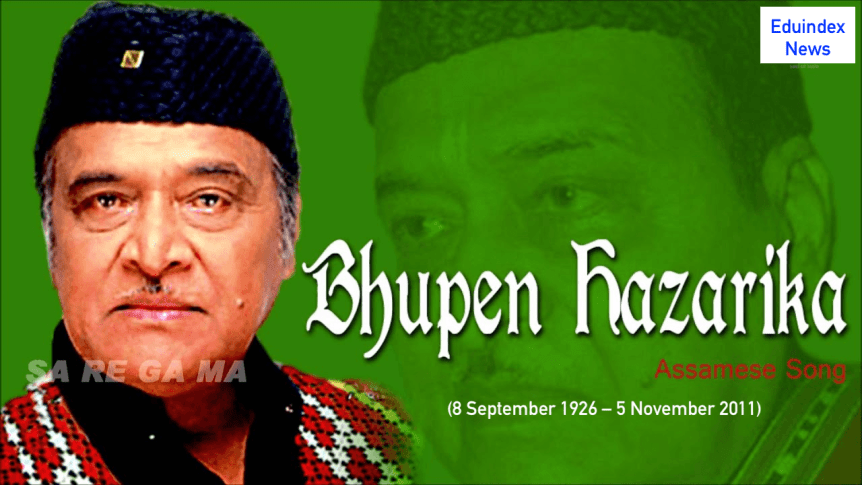
Bhupen Hazarika: A Legend in the Music World

Death of Dr. Bhupen Hazarika is a loss of music lovers of the world. His songs contained rhythm of Indian classical music vis-a-vis a lucid meaning depicting nature, Indian culture, language, unity etc. For example “Mahabahu Brahmaputra, Maha Milonor Thirtha…….. “(Assamese song -Meaning River the Brahmaputra is symbol of national integration….). Another song in Bengali explains ‘love to human being ……’ i.e. in Bengali, “Ami Bhalobasi Manuske….” 

In one of his songs, Dr Hazarika sang “Can anyone provide a person whose blood is white or any person whose blood is black. That is when colour of blood is same then why the differentiation among the human beings”. Meaning is so nice that after listening any human being will feel for others. All the songs carried specific meanings and very touchy. His songs enthralled us. 
I had the opportunity to listen him in Guwahati in many occasions at the ‘Bihu-toli’ (where Bihu functions are held normally in mid of April i.e. in Assamese New Year).I have observed he sings with core of his heart. His songs are not only popular in India but also in Bangladesh and other countries. While I was in Bangladesh many persons told about him and his songs were highly esteemed by them, because of music and meaning. During my two years stint in Eritrea, (a country located in north east Africa) I carried mainly Dr. Hazarika’s CDs and evening always used to listen his songs. My Indian, Pakistani and Eritrean friends used to visit my residence and highly charmed by his melodious songs. I was explaining meaning of the songs so they were more excited and appreciated his talent. 
Born at Sadia, in upper Assam on September 8, 1926, father Sri Nilakanta Hazarika was a high school teacher. Dr Bhupen Hazarika had his schooling in different places of Assam viz., at Dhubri, Guwahati and Tezpur. He completed his matriculation in 1940; Intermediate in Arts (IA) from Cotton College in 1942 and then joined Banaras Hindu University (UP) for higher study and subsequently completed his B.A. (1944) and M.A. (1946). The maestro rendered his services as music director in as many as 36 Assamese films, 8 Bengali films and 5 Hindi films. His activities were rightly recognized by conferring various awards. These inter alia, include Dada Saheb Phalke, Sangeet Ratna, Padma Bhusan, Asam Ratna, Srimanta Sankardev etc. He was the architect of the movement that culminated in the establishment of a film studio in Guwahati, a first full-fledged film studio in Assam. He made many films such as Era Bator Sur (1956), Mahut Bandhure (1958), Shakuntala (1961), Pratidhvani (1964), Loti Ghoti (1966), Chik Mik Bijuli (1969), Siraj (1988) and a tele- film Miri Jiori (1990), documentaries like For Whom the Sun Shines (1974), Amuthi Chaulor Kahini (1974), Rupkonwar Jyotiprasad aru Joymoti (1976), Through Melody and Rhythm (1977), Along the River Brahmaputra (1981), Satras and Namghars of Assam, Glimpses of the Misty East (1996) and The Brahmaputra, An Endless Journey (2006). Due to his endeavour ‘Sattriya dance’ (a form of dance performed at Holy places, i.e.Namghar) got national recognition. He published books for the children — Bhupen Mamar Geete-Mate, A, Aa, Ka, Kha and a transcript autobiography — Moi eti jajabor.
Although he passed away on 5th November 2011 in Mumbai but he will be remembered in this world through his melodious songs. 
Sri Tej Hazarika, only son of Dr Bhupen Hazarika performed his last rites on 9th November 2011 at the cremation ground prepared for him at Jalukbari campus of Gauhati University, Guwahati. Before the pyre was lit, Jawans of the Assam Police offered 21-gun salute. During rituals many dignitaries including Governor of Assam, Sri JB Patnaik, Chief Minister Sri Tarun Gogoi, and opposition leader of Lok Sabha Smt. Sushma Swaraj, Union Minister of State (Independent) for Development of the North East Region (DoNER) Sri Pawan Singh Ghatowar, Secretary of All India Congress Committee Sri Jaydev Jena and many ministers of Assam were present. Sri Ghatowar represented the Prime Minister, while Jena represented UPA chairperson Sonia Gandhi. In addition to the dignitaries, millions of people irrespective of caste, creed, religion, language attended to adieu Dr Hazarika which vividly reveals that he was in the heart of all sections of people. 
Dr Shankar Chatterjee
Former Professor & Head (CPME),NIRD & PR ( Govt. of India), Hyderabad,  India
Former Associate Professor, Eritrea

Former Assistant Prof, Govt. Degree College, Tripura, India
Former Senior Planning Officer, Govt of Assam, India 

Azad Hind Fauj/Indian National Army and Freedom Movement of India

ESTABLISHMENT OF AZAD HIND FAUJ 

Indians remember this 21 October as Great Day and it is celebrated with full gaiety in many parts of the country as on this date in 1942, the Indian National Army (INA/ Azad Hind Fauj) was formed by two stalwarts and Indians Sri Rash Behari Bose and Sri Mohan Singh (in 1942) in Southeast Asia during World War II. Its main objective was to secure Indian independence from British rule. To attain the same Azad Hind Fauj/INA formed an alliance with the Empire of Japan in the latter’s campaign in the Southeast Asian theatre of WWII ( name given to the campaigns of the Pacific War in Burma, Ceylon, India, Thailand, the Philippines, Indochina, Malaya and Singapore). 
The first INA collapsed and was disbanded in December 1942 after differences between the INA leadership and the Japanese military over its role in Japan’s war in Asia. It is pertinent to mention that the Japanese Imperial General Headquarters in October, 1942 set up the Fujiwara Kikan, or the F-kikan, in Bangkok, headed by the Major Fujiwara Iwaichi, chief of intelligence of the 15th army. As INA member, Mohan Singh had good relation with the members of Fujiwara Kikan, but he was soon disillusioned with the Japanese Army’s behaviour. It is believed that they wanted to use the Indian National Army only as a part of Japanese army to fulfil their own objectives. In meantime, Netaji Subhas Chandra Bose arrived in Japan in 1943 and INA was invigorated. More than 60,000 soldiers of Indian origin were associated with Azad Hind Fauj/Indian National Army who were prisoners of war in those days and because of initiative of Sri Mohan Singh they joined in INA/Azad Hind Fauj to fight against the British. Out of them about 26,000 soldiers sacrificed their lives so their sacrifice must be saluted. 

SUCCESS STORY OF AZAD HIND FAUZ

The INA/Azad Hind Fauj first success was capturing of Moirang of Manipur. On 18 April 1944, the suicide squads led by Col. Shaukat Malik broke through the British defence and captured Moirang. After Moirang, INA penetrated the Kohima road, creating a threat to the British positions in both Silchar (presently in Assam) and Kohima (now capital of Nagaland state). Col. Gulzara Singh’s column had entered 250 miles into India. Anyway rest is history as Azad Hind Fauj/INA could not succeed to come up to Delhi. 
But the INA’s activities influenced the decision to leave India by the British is reflected by the views of Mr. Clement Richard Attlee, who was the Prime Minister of the United Kingdom from 1945 to 1951. Mr. Attlee cited several reasons, the most important of which were the INA activities of Subhas Chandra Bose, which weakened the very foundation of the British Empire in India, and the Royal Indian Navy Mutiny which made the British realise that the support of the Indian armed forces could no longer be relied upon. In the book written by Indian army scholar, General G D Bakshi, mentioned that in 1956, Mr. Clement Attlee had come to India and stayed in Kolkata (then Calcutta) as a guest of Sri P.B. Chakraborthy then Chief Justice of the Calcutta High Court and also serving as acting Governor of West Bengal. During the course of discussion, Sri Chakraborthy asked about the contribution of Mahatma Gandhi and Subhas Chandra in independence movement. This may be quoted from the book itself, ‘Bose An Indian Samurai: Netaji and the INA A Military Assessment’, “Toward the end of our discussion I (means Sri Chakraborthy) asked Mr. Attlee what was the extent of Gandhi’s influence upon the British decision to quit India. Hearing this question, Attlee’s lips became twisted in a sarcastic smile as he slowly chewed out the word, m-i-n-i-m-a-l!” Regarding the Royal Indian Navy Mutiny it may be mentioned that it took place in the context of the Indian National Army trials (INA trials), which are also known as the Red Fort trials, took place between November 1945 and May 1946. In the first trials, INA persons were Colonel Prem Sahgal, Colonel Gurbaksh Singh Dhillon, and Major General Shah Nawaz Khan. And in the second trials the INA officials were Abdul Rashid, Shinghara Singh, Fateh Khan and Captain Munawar Khan Awan. Most of the INA soldiers were set free after cashiering and forfeiture of pay and allowance. 
No Indians can forget Azad Hind Fauj/INA’s contribution in freedom movement. While I was in abroad even many Pakistanis and Bangladesh persons told about Subhas Chandra and INA/ Azad Hind Fauj.

Dr Shankar Chatterjee
Former Professor & Head (CPME),
NIRD & PR (Govt. of India), 
Hyderabad-500091 , India
Email <shankarjagu@gmail.com>


University Bound To Provide Answer Sheets Under RTI: Madras HC

In a remarkable decision, the Madras High Court very recently on October 14, 2019 in The Tamil Nadu Dr Ambedkar Law University, Represented by its Registrar vs 1. The Tamil Nadu State Information Commission Represented by its Assistant Registrar 2. Pavan Kumar Gandhi 3. Paras Jain 4. Kumar Shanu (R-3 & R-4 impleaded via order of Court dated 14.10.2019 made in WMP No. 29201 of 2019) in WP No. 16108 of 2019 and WMP No. 15866 of 2019 has very rightly and commendably held that evaluated answer sheets are ‘information’ under the Right to Information Act, 2005 and Universities are bound to provide them to the Respondent-students. This latest, landmark and extremely laudable judgment was pronounced in response to a writ petition filed under Article 226 of the Constitution of India praying for issuance of a Writ of Certiorari, calling for the records in proceedings No. SA4393/D/2018 dated 17.12.2018 passed by the first respondent and quash the same. This historic judgment was delivered by Justice SM Subramaniam while disposing of a petition filed by the Tamil Nadu Dr Ambedkar Law University (Petitioner), through Advocate VMG Ramakkannan, lambasting the order of the Tamil Nadu State Information Commission, whereby the Petitioner that is ‘The Tamil Nadu Dr Ambedkar Law University’ was directed to supply the copies of answer-sheets sought by the Respondent-students under the RTI Act. 

To start with, the ball is set rolling in para 1 of this noteworthy judgment wherein it is observed first and foremost that, “The writ on hand is to quash the order dated 17.12.2018 issued by the first respondent in proceedings No. SA4393/D/2018 dated 17.12.2018.” It is then pointed out in para 2 that, “The writ petitioner is the Tamil Nadu Dr Ambedkar Law University.”
What we then see being pointed out in para 3 is this: “The learned counsel appearing on behalf of the writ petitioner-University states that the second respondent is the student of the writ petitioner-Law University. The second respondent filed an application under the Right to Information Act, 2005, to furnish copies of the answer scripts, which were not furnished and consequently, the second respondent approached the Tamil Nadu State Information Commission, who in turn passed an order on 17.12.2018, directing the writ petitioner-Law University to supply the copies of the answer scripts sought for by the second respondent under the provisions of the Right to Information Act, 2005.”
While presenting the version of Law University, it is then pointed out in para 4 that, “Challenging the said order, the learned counsel for the writ petitioner states that the writ petitioner-Law University has got its own Rules and Regulations for the purpose of furnishing copies of the answer scripts. The writ petitioner-Law University has to follow the procedures and under these circumstances, they have rejected the claim of the second respondent for furnishing copies of the answer scripts sought for by him.”
While continuing in the same vein, it is then stated in para 5 that, “The learned counsel for the writ petitioner-Law University states that the writ petitioner-Law University is ready and willing to furnish copies of answer scripts on payment of charges prescribed under the Rules and Regulations of the Law University. The said reply was communicated to the second respondent also. Under these circumstances, it is contended that the writ petitioner-Law University has not refused to provide copies of the answer scripts, contrarily, they have insisted the second respondent that the procedures contemplated under the University Regulations are to be followed. Thus, the writ petitioner-Law University has not rejected the claim of the second respondent, but they have insisted him to follow the procedures prescribed under the Rules and Regulations of the University.”
On the contrary, para 6 then states that, “The second respondent, appearing in person, opposed the contentions of the learned counsel for the writ petitioner-Law University, by stating that he submitted an application under the Right to Information Act, 2005. However, the writ petitioner-Law University by reply dated 23.01.2018 states that, the University Regulations are to be followed and the answer scripts will not be supplied under the provisions of the Right to Information Act, 2005. However, the fact remains that the writ petitioner-Law University expressed their willingness to supply the answer scripts in the event of following the procedures contemplated under the Rules and Regulations of the University.”
Furthermore, it is then mentioned in para 7 that, “The first respondent Tamil Nadu State Information Commission, citing the judgment of the Supreme Court, passed an order directing the writ petitioner-Law University to furnish the copy of the answer scripts to the second respondent under the provisions of the Right to Information Act, 2005.”
To be sure, it is then conceded in para 8 that, “As far as the application submitted by the second respondent under the provisions of the Right to Information Act, 2005 to the writ petitioner-Law University is concerned, it is not in dispute that the Right to Information Act is applicable. Accordingly, the second respondent is entitled to get informations under the provisions of the Right to Information Act, 2005, unless such informations are prohibited specifically under Section 8 of the Right to Information Act, 2005.” 
To put things in perspective, it is then noted in para 9 that, “Shri Paras Jain and Shri Kumar Shanu filed an impleading petition in WMP No. 29201 of 2019 and Ms. V. Chethana, learned counsel appearing on behalf of the impleading petitioners, solicited the attention of this Court that the Supreme Court has settled the issue in respect of furnishing of the answer scripts to the students, who all are submitting their applications under the Right to Information Act, 2005.”
While citing the relevant case law, it is then illustrated in para 10 that, “In the Case of CENTRAL BOARD OF SECONDARY EDUCATION (CBSE) AND ANOTHER Vs. ADITYA BANDOPADHYAY & OTHERS [(2011) 8 SCC 497], the Apex Court held that “if CBSE was required to re-evaluate the answer-books or grant inspection of answer-books or grant certified copies thereof, it would interfere with its effective and efficient functioning, and will also require huge additional staff and infrastructure. It was submitted that the entire examination system and evaluation by CBSE is done in a scientific and systemic manner designed to ensure and safeguard the high academic standards and at each level utmost care was taken to achieve the object of excellence, keeping in view the interests of the students”.”
More pertinently, it is then rightly underscored in para 11 that, “In the judgment, cited supra, the Hon’ble Supreme Court further observed in paragraph-23 that “when a candidate participates in an examination and writes his answers in an answer book and submits it to the examining body for evaluation and declaration of the result, the answer-book is a document or record. When the answer-book is evaluated by an examiner appointed by the examining body, the evaluated answer-book becomes a record containing the ‘opinion’ of the examiner. Therefore, the evaluated answer-book is also an ‘information’ under the Right to Information Act”.”
What’s more, para 12 then further narrates that, “The Apex Court of India in an unequivocal terms held that “evaluated answer is an information under the Right to Information Act”. Thus, there is no option for the writ petitioner-Law University but to supply the evaluated answer scripts to the second respondent under the provisions of the Right to Information Act, 2005. When the evaluated answer books are construed as an information, the same cannot be denied and therefore, the second respondent is entitled to get the evaluated answer scripts as per the application submitted by him under the provisions of the Right to Information Act, 2005.”
Be it noted, para 13 then holds that, “It is relevant to extract paragraphs 26 and 27 of the judgment, cited supra, which are extracted as under:-
“26. The examining bodies (Universities, Examination Boards, CBSE, etc.) are neither intelligence nor security organisations and therefore the exemption under Section 24 will not apply to them. The disclosure of information with reference to answer books does not also involve infringement of any copyright and therefore Section 9 will not apply. Resultantly, unless the examining bodies are able to demonstrate that the evaluated answer books fall under any of the categories of exempted “information” enumerated in clauses (a) to (j) of sub-section (1) of Section 8, they will be bound to provide access to the information and any applicant can either inspect the document/record, take notes, extracts or obtain certified copies thereof.
27. The examining bodies contend that the evaluated answer books are exempted from disclosure under Section 8(1)(e) of the RTI Act, as they are “information” held in its fiduciary relationship. They fairly conceded that evaluated answer books will not fall under any other exemptions in sub-section (1) of Section 8. Every examinee will have the right to access, his evaluated answer books, by either inspecting them or take certified copies thereof, unless the evaluated answer books are found to be exempted under Section 8(1)(e) of the RTI Act.”” 
While citing a recent and relevant case law, it is then elucidated in para 14 that, “In the case of Institute of Companies Secretaries of India (ICSI) vs. Paras Jain [decided on 11.04.2019 in Civil appeal No. 5665 of 2014] (the impleaded respondent in the present writ petition), the Apex Court held that “the avenue for seeking certified copies as well as inspection is provided both in the Right to Information Act as well as the statutory guidelines of the appellant”.” 
As it turned out, para 24 then enumerates that, “Under these circumstances, the writ petitioner-Law University is bound to follow the Act as well as the Rules scrupulously, while dealing with the applications submitted under the provisions of the Right to Information Act and therefore, there is no infirmity, as such, in respect of the reasonings furnished in the order impugned by the first respondent. The order of the first respondent is in consonance with the spirit of the Act and therefore, the writ petitioner-Law University is bound to follow the procedures contemplated under the Act and the Rules at the time of dealing with the applications, if any, submitted under the Right to Information Act, by the information seekers.” 
Needless to say, it is then made absolutely clear in para 25 that, “The very object of the Right to Information Act, 2005, stipulates that democracy requires an informed citizenry and transparency of information which are vital to its functioning and also to contain corruption and to hold Governments and their instrumentalities accountable to the governed. Undoubtedly, the purpose and object of the Act, is noble and to achieve the constitutional philosophy and goals. The principles of equality can be achieved only if there is a transparency in public administration. The accountability in the public administration is of paramount importance, as ‘We, the People of our Great Nation’ are sandwiched between corrupt and non-corrupt. Identification of corrupt and non-corrupt may be difficult in the event of non-transparency in public administration.”
It goes without saying what is stated clearly, correctly and convincingly in para 26 that, “Irregularities in public administration cannot be sorted out if there is no transparency in the public administration. Thus, the Right to Information Act, is a Noble Legislation, which ensures transparency in the public administration, which would be undoubtedly helpful to the citizen of our Great Nation to make the public servants accountable and responsible regarding the administrative actions.”
As a corollary, it is then further very rightly held in para 27 that, “In this context, this Court would like to emphasise that the Law University, being a Public Institution, is bound to implement the provisions of the Right to Information Act, scrupulously in its letter and spirit. The moot question is that why should any public authority shy for providing public informations to the information seekers. Undoubtedly, confidential files are protected under the provisions of the Act itself and therefore, the officials should not shy about providing all informations to the public domain, enabling the citizen to understand the manner in which the Public Institutions are administered.”
It cannot be lost on us that it is then very rightly harped upon in para 28 that, “After all, ‘We, The People of India’ solemnly resolved to constitute India into a Sovereign Socialist Secular Democratic Republic and to secure to all its citizens Justice, Liberty, Equality and Fraternity. Therefore, ‘We, The People of India’ enacted the Right to Information Act, through its Parliament, then the instrumentality of the State or the Public Institutions cannot take a stand that they will adopt their own procedure for furnishing the informations under the Right to Information Act. When the Parliament enacted the law in order to develop transparency in public administration, undoubtedly, the other procedures or regulations formulated by any other institutions, cannot prevail over the Act of Parliament and those Rules and Regulations of such individual institutions can never override the purpose and object of the Right to Information Act, 2005.”
Of course, it is then pointed out in para 29 that, “The second respondent, in person, articulated his points by stating that large number of such applications are kept pending, by citing the pendency of the present writ petition. Further, the second respondent states that all such information seekers are waiting for the answer scripts and other informations sought for in their respective applications.”
To put it succinctly, it is then envisaged in para 30 that, “Under these circumstances, the writ petitioner-Law University has not established any acceptable ground for the purpose of assailing the order impugned. Per contra, the order impugned is well reasoned and candid. Thus, the second respondent is entitled to receive the answer scripts as sought for in his application under the Right to Information Act, 2005. All such similar applications are also to be disposed of by the writ petitioner-Law University, as expeditiously as possible, without causing any undue delay, as the students would be anxious in seeing their answer scripts and on account of the pendency of the writ petition, their applications are kept pending.”
Coming to the concluding paras, para 31 holds that, “This being the factum, the writ petitioner-Law University is directed to dispose of all the RTI applications filed under the Right to Information Act, 2005, as expeditiously as possible, by following the procedures contemplated under the RTI Act as well as the Rules in force. In respect of the application submitted by the second respondent, the answer script had already been furnished to him and no further directions are required in this regard.” Lastly, it is then held in the last para 32 that, “Accordingly, the writ petition stands dismissed. However, there shall be no order as to costs. Consequently, connected miscellaneous petition is also dismissed.”
In conclusion, it is very rightly held by the Madras High Court in this notable case that an evaluated answer sheet is an information as defined under the RTI Act and so a university cannot deny access to students. This is more so true because the information sought by students does not fall under the exempted category for national security or copyright infringement. We thus see that Justice SM Subramaniam of Madras High Court dismisses a plea made by the Tamil Nadu Dr Ambedkar Law University challenging the Tamil Nadu State Information Commissioner’s order allowing students to get copies of answer scripts through RTI. Justice Subramaniam directed the University to supply the answer scripts to students who wanted them and rejected the University’s contention that it is governed by its own rules and maintained that the RTI Act overrides the University’s statute. Very rightly so! This is a commendable judgment which will certainly address the genuine grievances of students and make them see for themselves whether justice has been done with them or not actually in evaluating the answer scripts!
Sanjeev Sirohi, Advocate,
s/o Col BPS Sirohi,
A 82, Defence Enclave,
Sardhana Road, Kankerkhera,
Meerut – 250001, Uttar Pradesh.

Whistle Blowing Protection Should Be Extended To Judges: UK Supreme Court

In a latest development with far reaching consequences not for India but for England, the Supreme Court of UK has gone all guns blazing by categorically and courageously pronouncing in Gilham (Appellant) v Ministry of Justice (Respondent) [2019] UKSC 44 on appeal from [2017] EWCA Civ 2220 and delivered on October 16, 2019 wherein it was explicitly held that the whistle-blowing protection envisaged under Employment Rights Act should be extended to the holders of judicial office. It was held that the exclusion of Judges from the whistle-blowing protection in Part IVA of the Employment Rights Act is in breach of their rights under Article 14 read with Article 10 of the European Convention on Human Rights. Very rightly so! 

To start with, this latest, landmark and extremely laudable and unanimous judgment delivered by Lady Hale who is President of UK Supreme Court for herself, Lord Kerr, Lord Carnwath, Lady Arden and Sir Declan Morgan sets the ball rolling in para 1 of this noteworthy judgment wherein it is observed that, “This case is about the employment status of district judges, but it could apply to the holder of any judicial office. The issue is whether a district judge qualifies as a “worker” or a “person in Crown employment” for the purpose of the protection given to whistle-blowers under Part IVA of the Employment Rights Act 1996 (“The 1996 Act”). If a district judge does not on the face of it qualify for whistle-blower protection, the further question is whether this is discrimination against her in the enjoyment of her right to freedom of expression under the European Convention on Human Rights. And if it is, what is the remedy?”
While defining worker, para 2 then states that, “In section 230(3) of the 1996 Act, a “worker” is defined as
“an individual who has entered into or works under (or where the employment has ceased, worked under) – (a) a contract of employment, or (b) any other contract, whether express or implied and (if it is express) whether oral or in writing, whereby the individual undertakes to do or perform personally any work or services for another party to the contract whose status is not by virtue of the contract that of a client or customer of any profession or business undertaking carried on by the individual.””
To be sure, para 3 then states that, “The appellant does not claim that a judge works under a contract of employment within limb (a) of that definition, but contends that she does fall within limb (b) of the definition.”
The history of the case
To recapitulate, it is then enumerated in para 4 that, “The appellant was appointed a district judge by the then Lord Chancellor, Lord Falconer of Thoroton, with effect from 6 February 2006. Under section 6 of the County Courts Act 1984, as it then stood, district judges were appointed by the Lord Chancellor. As it now stands, they are appointed by Her Majesty the Queen on the recommendation of the Lord Chancellor. In October 2005, the appellant had been sent a letter offering her appointment which talked in terms of her accepting that offer. The letter itself contained several stipulations as to the duration of her appointment, her salary, her pension on retirement, and other matters. Enclosed with the letter was a memorandum entitled “District Judges – Memorandum on conditions of employment and terms of service”. This was a detailed document, which included terms as to sitting days, sick pay, maternity, paternity and adoption leave, training, the prohibition of legal practice, relations with the press and media, outside activities and much more. The memorandum made it clear that the salary was taxed under Schedule E to the Income Tax Act and that the judge was an employed earner for the purpose of national insurance contributions. Although described as a “lifetime” appointment, a judge is required to vacate office on her 70th birthday (unless extended) and can resign before that date. The appellant’s Instrument of Appointment, signed by the Lord Chancellor on 27 January 2006, simply talked in terms of his approving her to sit at each of the country courts on the Wales and Chester circuit.”
Truth be told, para 5 then specifies that, “In fact, she first sat at the Crewe County Court and in 2009 transferred to the Warrington County Court. In 2010, the Cheshire courts were transferred to the Northern Circuit and major cost cutting reforms were announced. In 2011, the Runcorn County Court was closed and the business transferred to Warrington, as were some tribunal sittings. The appellant raised a number of concerns relating to the cuts, in particular about the lack of appropriate and secure court room accommodation, the severely increased workload placed upon the district judges, and administrative failures. She raised these with the local leadership judges and senior managers in Her Majesty’s Courts and Tribunals service and eventually in a formal grievance.”
To be sure, it is then disclosed in para 6 that, “She claims that her complaints fell within the definition of “qualifying disclosures” under section 43B of the 1996 Act, in particular as tending to show a failure to comply with legal obligations that miscarriages of justice were likely, or that the health and safety of any individual had been, is being or is likely to be endangered. The disclosures were made to an employer or other responsible person within the meaning of section 43C of the 1996 Act and thus they were “protected discloures” within the meaning of section 43A.”
As things stand, para 7 then lays bare that, “Under section 47B(1) of the 1996 Act, a worker has the right “not to be subjected to any detriment by any act or any deliberate failure to act, by his employer done on the ground that the worker has made a protected disclosure”. The appellant claims that she was subjected to a number of detriments as a result of her complaints a significant delay in investigating her grievance; being seriously bullied, ignored and undermined by her fellow judges and court staff, being informed that her workload and concerns were simply a “personal working style choice”; and inadequate steps to support her in returning to work; she also claims that a severe degradation in her health, resulting in psychiatric injury and a disability under the Equality Act 2010, was such a detriment. The appellant was signed off work due to stress from the end of January 2013 but has recently returned.”
Importantly, it is then pointed out in para 8 that, “In February 2015 the appellant made a two-part claim in the Employment Tribunal. Both parts of her claim depended, upon her being a “worker” within the meaning of section 230(3) of the 1996 Act (or having the same protection as such a worker). One part of her claim was for disability discrimination under the Equality Act 2010, as a result of failure to make reasonable adjustments to cater for her disability. This claim is derived from European Union Law. It is therefore accepted that, as a result of the decision of this Court in O’ Brien v Ministry of Justice (formerly Department for Constitutional Affairs) [2013] UKSC 6 [2013] 1 WLR 522, in the light of the guidance given by the Court of Justice of the European Union in ((Case C-393 10) [2012] ICR 955), a judge is a “worker” for the purpose of European Union law and national law has to be interpreted in conformity with that. That case concerned discrimination against part-time workers, but the same result was reached by the Court of Appeal for Northern Ireland in Perceval-Price v Development [2000] IRLR 380, that tribunal judges were “workers” for the purpose of discrimination on grounds of sex. Hence the disability discrimination claim will continue in any event.”
Furthermore, it is then pointed out in para 9 that, “The other part of her claim was under the “whistle-blowing” provisions in Part IVA of the 1996 Act, inserted by the Public Interest Disclosure Act 1998. These provisions are not derived from European Union law and accordingly the definition of “worker” does not have to be read so as to conform to the requirements of EU law. This means that a judge may have a different status in employment law depending upon whether or not the employment right in question is derived from EU law.”
More importantly, it is then explicitly and elegantly laid down in para 44 that, “Bearing in mind, therefore, the parallel seen in Ghaidan v Godin-Mendoza between section 3(1) and conforming interpretation in EU law, its strictures against attaching decisive importance to the precise adjustment needed to the language of the provisions, and the ease with which this court interpreted identical language to include judges as limb (b) workers in O’ Brien. I can reach no other conclusion than that the Employment Rights Act should be read and given effect so as to extend its whistle-blowing protection to the holders of judicial office.”
Most importantly, it is then held eloquently and effectively in para 45 that, “The relevant provisions of the Employment Rights Act extend to both England and Wales and Scotland (section 244) but not Northern Ireland. However, the equivalent provisions of the Employment Rights (Northern Ireland) Order 1996 (as amended by the Public Interest Disclosure (Northern Ireland) Order 1998) are to the same effect; article 3(3) defines “worker” in the same times as section 230(3); articles 67A, 67B, 67C define protected disclosures, qualifying disclosures and those to whom such disclosures may be made in the same way as in Part IVA of the 1996 Act and articles 70B and 71(1A) provide that a maker of a protected disclosure shall not be subjected to any detriment for doing so and for complaints to an employment tribunal. Those provisions too should be read and given effect so as to extend the protection given to whistle-blowers to the holders of judicial office.”
Lastly, it is then held in para 46 that, “I would therefore allow this appeal and remit the case to the Employment Tribunal on the basis that the appellant is entitled to claim the protection of Part IVA of the 1996 Act.”
On a concluding note, it may well be said that the UK Supreme Court has very rightly minced just no words in reaching the palpable conclusion that whistle blowing protection should be extended to Judges. It rightly deduced that, “To give the judiciary such protection might be thought to enhance their independence by reducing the risk that they might be tempted to “go public” with their concerns, because of the fear that there was no other avenue available to them, and thus unwillingly be drawn into what might be seen as a political debate.” No doubt, judiciary is the bedrock of democracy and Judges are the most important pillars of judiciary and so it has been very rightly held by the UK Supreme Court that whistle blowing protection should be extended to the holders of judicial office! 
Sanjeev Sirohi, Advocate,
s/o Col BPS Sirohi,
A 82, Defence Enclave,
Sardhana Road, Kankerkhera,
Meerut – 250001, Uttar Pradesh.

Nobel Peace Prize in 2019: My Experience in Eritrea

Nobel Peace Prize 2019 has been awarded to Ethiopian Prime Minister Mr. Abiy
Ahmed Ali for his effort to resolve 20-year-long border conflict between
Ethiopia and Eritrea. I congratulate the Norwegian Nobel Committee for
conferring the award to him.
  I was in Eritrea as senior
faculty from 2005 to 2007 and observed both Ethiopia and Eritrea had awful
relation as a sequel under United Nations Mission in Ethiopia and Eritrea
(UNMEE), Indian army was posted as peace –keeper. It is pertinent to mention
that fighting between Eritrea and Ethiopia erupted in May 1998, as a result of
border dispute. The Secretary-General of Security Council immediately contacted
the leaders of the countries, urging restraint and offering assistance in
resolving the conflict peacefully. Despite all efforts, the fighting between
Eritrea and Ethiopia erupted again on 12 May 2000.

      While I was in Eritrea many locals
(Eritreans) told against Ethiopian rulers but they highly appreciated our armed
personnel. Our army had great image in Eritrea.  I visited our army camp two times – one on
Republic Day and in another time I had the opportunity to visit for my ailment
(little injury in eye while playing volleyball).  During the time of my visit medical staff
after examining me gave some medicines – eye drops and tablets at free of cost;
in addition they offered me tea and snacks also. Within couple of days I was
cured. I was joyous to observe their hospitality.
After completion of my
assignment from Eritrea, I came back to my home town in Hyderabad but still
following news etc. about Eritrea and Ethiopia. Anyhow when Mr. Abiy Ahmed
became Prime Minister in Ethiopia in April 2018, he made it clear that he
wished to resume peace talks with Eritrea, so he was in close touch with Mr. Isaias
Afwerki, the President of Eritrea. Both Ethiopia and Eritrea are not
economically strong so the war had created huge economic loss to both the
countries in addition to death of thousands. According to,wikipedia.org/wiki/Eritrean%E2%80%93Ethiopian_War,
“Eritrea claimed that 19,000 Eritrean soldiers were killed during the conflict;
most reports put the total war casualties from both sides as being around
70,000. All these figures have been contested and other news reports simply
state that ‘tens of thousands’ or ‘as many as 100,000’ were killed in the war”.
Whatever the number of casualties but damage was severe, human lives were lost,
property was damaged, citizens of both the countries suffered.  Mr. Abiy Ahmed Ali immediately after becoming
President took some positive steps. The steps inter alia were a) in May, 2018 he ordered to free thousands of
political detainees, including opposition leader Andargachew Tsege b) in June,
2018 he lifted state of emergency two months early and in same month he agreed
to give disputed territory to Eritrea c) in 2018, July he along with the
Eritrean President declared ‘the end of war between the two countries’, d) also
in September itself, he arranged to reopen land border with Eritrea. Mr. Abiy
Ahmed’s another praiseworthy contribution was appointment of women members to
half of ministerial posts. I personally feel awarding Noble Peace Prize to such
peace activist of 43 years aged-person is a great step by the Noble Committee.
Hope peace will prevail in entire Africa and thus all the 54 countries will
economically flourish. All rational persons and all regions never endorse war, terrorism,
violence etc. I remember the statement of one of Saudi’s top Islamic clerics,
the Grand Mufti Sheikh Abdul Aziz al-Sheikh, who told “Islam does not allow
terrorism at any cost. Islam condemns all violence and terrorism plaguing the
world today. Muslims should demonstrate a love for peace and unity,”
I wish to conclude by
quoting Swami Vivekananda, “Lovers see this world as full of love, and haters
as full of hatred; fighters see nothing but strife, and the peaceful nothing
but peace.”
Dr. Shankar Chatterjee
Former Professor& Head (CPME)
NIRD &PR,
Hyderabad-500 030
Telangana, India