

Mahabharata is one of the greatest epic in the Hindu Mythology which has universality all around the world. We all are familiar with Mahabharata and its crucial turning point which was the Game of Dice. This great epic can be considered as a real breakthrough nondiscriminatory future for universal humanity. We find the existence of 18 Parva in which the book is divided where there are various episodes present.
Game of Dice has a significant role in this great epic as it sown the seeds of the most destructive Kurukshetra War. It all started with the establishment of the new city at Indraprastha which was opposite to Hastinapur where the Kauravas lived. Yudhishthira was the eldest of all the Pandavas and decided to invite large numbers of king which also includes their cousin’s Kauravas. As Duryodhana visits The Place of Illusion which was the Maya Bhavan made by Maya Sura he faced an extremely insulted from the harsh comment of Draupadi. She commented as:
“Is a blind man’s son blind man too?”
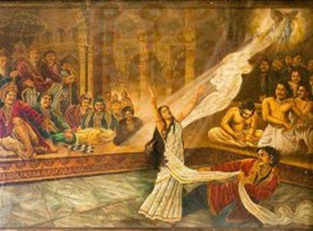
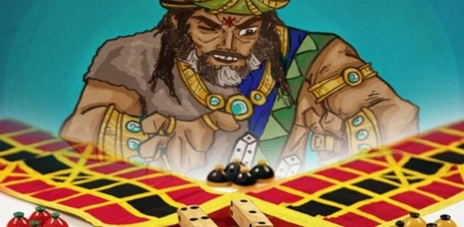
Duryodhana felt deeply humiliated and after returning to Hastinapur he narrated this entire scenario to his cunning uncle Shakuni and thus he planned to invite the Pandavas for the Game of Dice. After Dhritarastra permission, Yudhishthira accepted the invitation with his brothers. Shakuni who was the master of the magical dice placed on behalf of Duryodhana whereas on the other side it was Yudhishthira. As the game started Yudhishthira stared to lose everything. First his lost his entire wealth, then his loving brothers, then his own self and finally her Draupadi. When Draupadi was called to the court she refused this proposal and was extremely horrified as well as angry on Yudhishthira. Revengeful Duryodhana ordered Dushana to bring Draupadi vehemently which he did by forcing her and dragging her long hairs to the court. Duryodhana insulted her even more by slapping in his thigh and asking her to sit there. But this was not the end furious Duryodhana ordered Dushana to disrobe Draupadi. Finally, to prevent herself from such grave humiliation Draupadi prayed Lord Krishna to help her and unexpectedly a miracle happened where Dushana keep on unwrapping the layers and parts of her clothes but unable to do so due to exhaustion. Seeing this disheartening scene Dhritarastra was extremely depressed and decided to return Yudhishthira the entire thing which he lost in the game. As Duryodhana started to find everything going against his will he requested for a second chance of Game of Dice in which the Pandavas lost and have to succumb all their wealth, kingdom and have to go for an exile for 13 years and 1 year in incognito.
The Game of Dice was the traumatic turning point and had a crucial significance in the great epic Mahabharata because if there would have been no Game of Dice there would have been no disgrace and humiliation of the Pandavas and molestation of Queen Draupadi. This molestation was the real provocation point which sown the seeds of the Kurukshetra War and the destruction on the Kuruland. This Game and its consequences can be taken as a great lesson for generation to generation that woman are meant to be respected and admired and the one who disrespects or humiliate them have to face grave consequences with the course of time.
 Eduindex
You must be logged in to post a comment.