Safety Tips for Blue-Collar Workers in the Electrical Equipment Manufacturing Industry

The electrical equipment manufacturing industry stands as a vital sector in the dynamic world of manufacturing. It provides essential components for various applications across numerous sectors.

According to Statista, the global electrical equipment market is likely to amount to a value of $0.40 trillion in 2024. This market is set to see a compound annual growth rate of 2.99 percent between 2024 and 2028.

In the US alone, according to IBISWorld, the electrical equipment manufacturing market was valued at $56.8 billion as of 2023. Such a high value for this market was to be expected. After all, from circuit breakers to transformers, electrical equipment plays a crucial role in powering our modern world. 

However, working in this industry comes with its own set of challenges, particularly concerning safety for blue-collar workers. Safety in the electrical equipment manufacturing industry isn’t just about compliance with regulations. It’s about fostering a culture of awareness, responsibility, and proactive risk management. 

Blue-collar workers, who are often at the forefront of manufacturing processes, play a pivotal role in maintaining safety standards. Here are a few crucial safety tips that can significantly enhance workplace safety for blue-collar workers in the electrical equipment manufacturing industry.

Comprehensive Training Programs

Blue-collar workers should receive thorough training on handling electrical equipment, understanding safety protocols, and recognizing potential hazards. Training sessions should cover topics such as electrical safety procedures, proper use of protective equipment, emergency response protocols, and safe handling of machinery. 

Regular refresher courses should be conducted to reinforce safety practices and update workers on any new procedures or equipment.

Strict Adherence to Safety Protocols

In the fast-paced environment of manufacturing, it’s easy for workers to become complacent or overlook safety protocols. However, strict adherence to safety protocols is non-negotiable when working with electrical equipment. This includes following lockout/tagout procedures when servicing machinery, using insulated tools when working on live circuits, and wearing appropriate PPE at all times. 

Supervisors and managers should regularly monitor compliance with safety protocols and address any deviations immediately to prevent accidents or injuries.

Risk Assessment and Hazard Mitigation

Conducting regular risk assessments is essential for identifying potential hazards in the workplace and implementing measures to mitigate risks.

Blue-collar workers should actively participate in the risk assessment process, as they are often the ones with firsthand knowledge of potential hazards. Encouraging workers to report near misses or unsafe conditions fosters a culture of safety and enables proactive risk management.

Also, according to TorHoerman Law, workers in this industry need to be aware of exposure to synthetic chemicals like polychlorinated biphenyl (PCB). PCBs are widely used in the electrical manufacturing industry. Exposure to these chemicals can cause severe health problems including cancer. 

In fact, PCB products causing cancer are what led to the PCB exposure lawsuit. In this legal battle, lawyers are investigating health problems resulting from exposure to PCBs in schools. The PCB exposure at these educational institutions resulted from old fluorescent lighting fixtures. 

Workers need to be aware of the chemicals around them and exercise maximum caution. They must also ensure that their employers do proper risk assessments to make sure that no worker is exposed to any hazardous chemical. 

Proper Maintenance of Equipment and Machinery

Faulty or poorly maintained equipment and machinery pose significant safety risks in the manufacturing industry, particularly when working with electrical equipment. Regular inspection, maintenance, and servicing of machinery are crucial to ensuring safe operation. 

Blue-collar workers should be trained to recognize signs of equipment malfunction or deterioration and report any issues to maintenance personnel promptly. Implementing a preventive maintenance schedule helps prevent unexpected breakdowns and reduces the risk of accidents caused by equipment failure.

Effective Communication and Collaboration

Clear communication and collaboration among team members are essential for maintaining a safe working environment in the electrical equipment manufacturing industry. Blue-collar workers should feel comfortable communicating safety concerns, asking questions, and seeking clarification when needed. 

Regular safety meetings, toolbox talks, and safety huddles provide opportunities for open dialogue and the exchange of ideas for improving safety practices. Encouraging teamwork and looking out for one another fosters a sense of responsibility and solidarity among workers. This, in turn, ensures that safety remains a top priority for everyone.

Continuous Training and Skill Development

The electrical equipment manufacturing industry is constantly evolving, with new technologies, processes, and safety standards emerging regularly. To stay abreast of these changes and ensure optimal safety, blue-collar workers should undergo continuous training and skill development. 

This includes staying updated on the latest safety regulations, advancements in equipment and machinery, and best practices in risk management.

According to Payscale, those working in the electrical equipment manufacturing industry earn around $84,000 a year. However, blue-collar workers from this sector earn a lot less than this.

Thus, employers shouldn’t expect them to have prior safety training experience. Instead, employers should invest in ongoing training programs and provide opportunities for workers to enhance their skills and knowledge through workshops, seminars, etc.

In conclusion, safety is paramount in the electrical equipment manufacturing industry. Here, blue-collar workers play a vital role in maintaining a safe and healthy work environment. 

By prioritizing the suggestions above, employers can significantly enhance workplace safety and prevent accidents and injuries. This way, employers can foster a culture of safety and empower blue-collar workers to be more responsible. 
Laser marking on metal

Metals are inorganic materials with high thermal and electrical conductivity. Metals can be rolled to form plates or sheets, or they can be cast or machined to form more complex shapes. Metals can be pure elements such as iron or chrome. Metals can also be alloys, or mixtures of two or more elements. For example, stainless steel contains both iron and chrome. Laser marking is a common application for metals. Laser cutting and engraving are also possible with sufficient laser power.

For almost any metals, fiber laser machines provide readable marks quickly and efficiently. They’re ideal for engraving all types of metal surfaces. Examples include aluminum, anodized aluminum, steel, stainless steel, magnesium, lead, and zinc.

Fiber laser machines are low maintenance, use no consumables, and create high-contrast marks. You can use them to permanently mark data matrix codes, QR codes, serial numbers, barcodes, logos, and more.

Laser engraving metals with barcodes, serial numbers, and logos are very popular marking applications on both CO2 and fiber laser systems.

Thanks to their long operational life, lack of required maintenance and relatively low cost, fiber lasers are an ideal choice for industrial marking applications. These types of lasers produce a high-contrast, permanent mark that does not affect part integrity. 

When marking bare metal in a CO2 laser, a special spray (or paste) is used to treat the metal prior to engraving. The heat from the CO2 laser bonds the marking agent to the bare metal, resulting in a permanent mark. Fast and affordable, CO2 lasers can also mark other types of materials – such as woods, acrylics, natural stone, and more.The laser has been serving well for many years, particularly when it comes to laser engraving and laser marking metals. Not only soft metals, such as aluminum but steel or very hard alloys can also be marked accurately, legibly and quickly using a laser. With certain metals, such as steel alloys, it is even possible to implement corrosion-resistant markings without damaging the surface structure using annealing marking. Products made of metal are marked with lasers in a wide range of industries: The applications range from the marking of industrially produced series products for traceability to the personalization of promotional items with logos or names.

Laserbeschriftung Metall is useful for working with metals and is mostly used in the manufacturing and construction industry.

Main Processing Types

Cutting

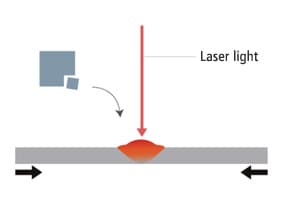
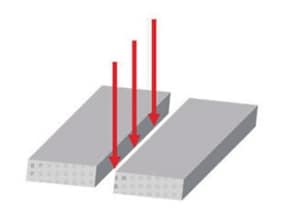
Laser light irradiates a fixed point, usually with repetition to melt the material. The laser can easily melt through thin metals, fabrics, and leather. Because there is no contact, it does not cause a reaction with the item processed. Deformation and cracking is kept to a minimum. In addition, because it is possible to specify processing areas in extreme detail, it is possible to create localized holes or cuts in places where traditional cutting tools cannot fit.

Soldering

Laser irradiation is used to heat solder paste that then joins metals. This irradiation is highly localized allowing for extremely precise soldering compared to traditional methods. This precision also reduces the head effected zone on the parts.

Solder Barrier

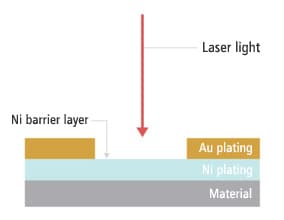
Electronics continue to get smaller and thinner. As a result, connector terminals need solder barriers (nickel barriers) to stop the soldering from expanding. Conventionally, masking was used on locations where electroplating was not necessary. However, removing the mask material took time and effort. Surface layer removal using laser light is effective in these cases.

Welding

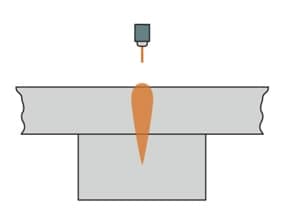
Laser welding irradiates two targets at the focal point and joins them together by melting and the soldifying the metal. It is possible to irradiate a pinpoint with high density energy and complete the process at high speeds. Material distortion due to heat is kept to a minimum. In the past, deformation occurred easily, but now even thin materials can be welded.


Suitable metals for laser marking and engraving:

  • Stainless Steel
  • Aluminum
  • Anodized aluminum
  • Hardened metals
  • Alloyed steels
  • High-speed steels
  • Titanium, titanium alloys
  • Carbides
  • Brass
  • Copper
  • Precious metals (e.g. silver, gold)
  • Coated metals

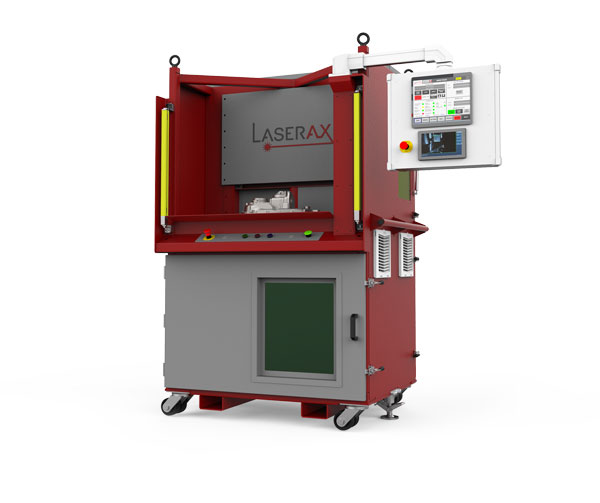
Manually Loaded Laser Marking Machines 

  • Flex laser marking workstation

    Flex Workstation

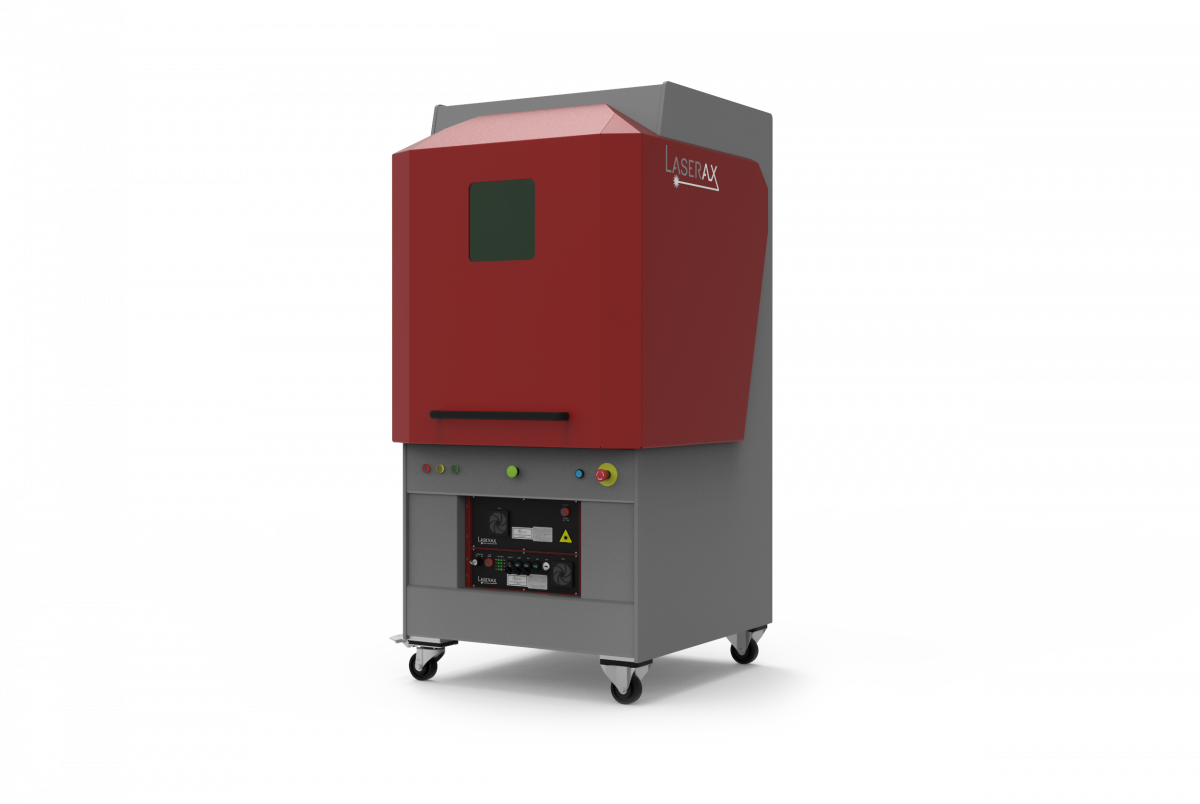
    The Flex is our simplest turnkey machine since it includes the least amount of automation, but it can be automated with minimal upgrade any time. It is ideal when a fast marking time isn’t a priority, or when part loading represents a minor portion of the total marking time.

    VIEW MACHINE

  • Rotary-Table Workstation

    Rotary-Table Workstation

    Designed to minimize the impact of part loading on your cycle time, this machine uses a rotary table to allow multiple operations at the same time. The operator can load and unload parts, trigger table rotations, and start laser marking. 

    VIEW MACHINE

Fully Automated Laser Marking Machines 

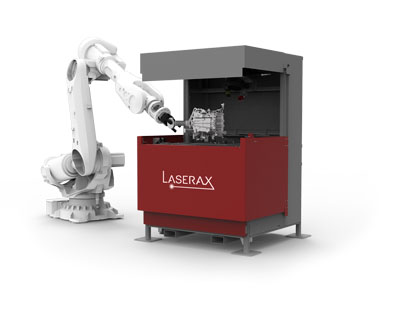
  • Rotary-Table Machine

    Rotary-Table Machine

    With challenging requirements, the key to prevent bottlenecks is to mark in hidden time. This machine achieves this using a rotary table. While a robot arm loads a part, another part is engraved at the same time.

    VIEW MACHINE

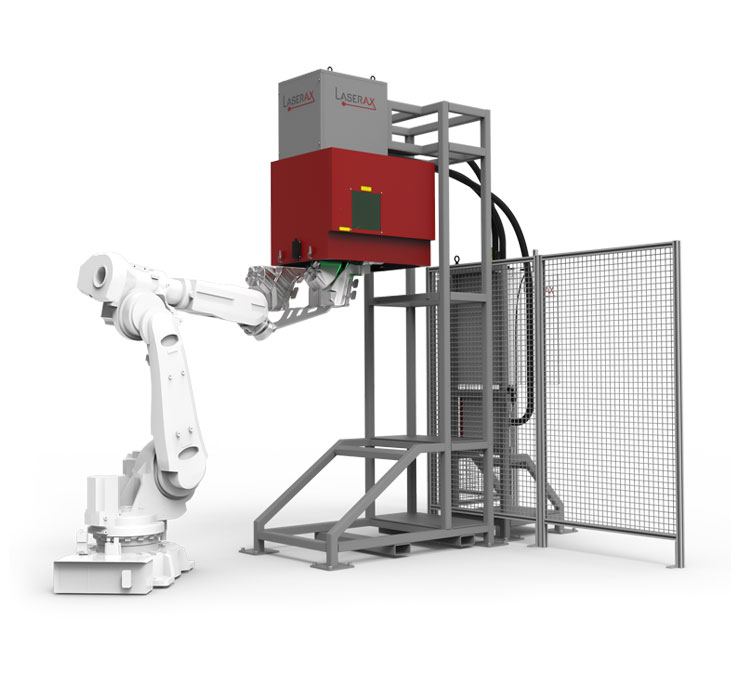
  • Open-Air Machine

    Open-Air Machine

    Robots used for multiple operations can be leveraged by opting for an open-air design, where the robot moves parts between stations and hold them during marking. This design easily supports multiple parts and cavities.

    VIEW MACHINE

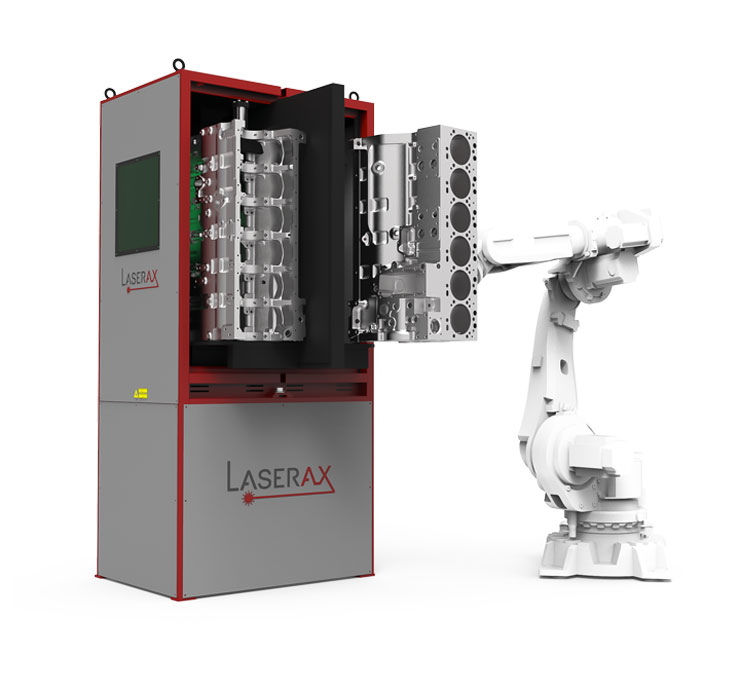
  • Door Machine

    Door Machine 

    With a flexible door machine design, markings can be positioned anywhere, and robot arms can load parts from any direction. These machines are perfect when the robot needs to perform other  tasks during the marking operation.

    VIEW MACHINE

  • Automative conveyor laser marking machine

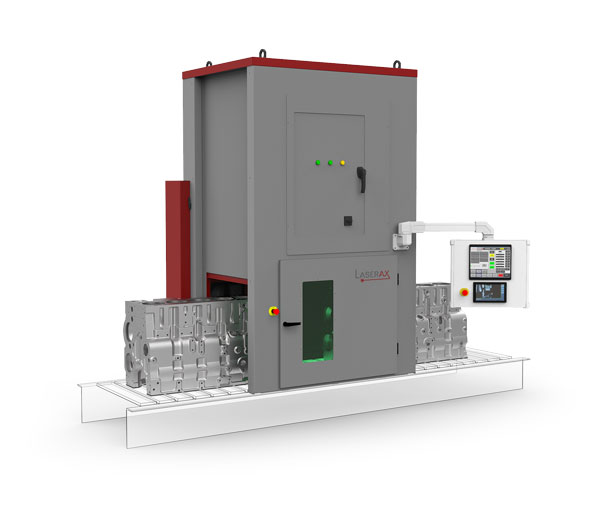
    Conveyor Machine  

    Conveyor machines can account for all types of positioning variations that occur on conveyors. They can mark parts on the fly or while the conveyor is stopped for other processes like quality control, bundling, or weighting.

    VIEW MACHINE