South India Is Better For Women Than North India

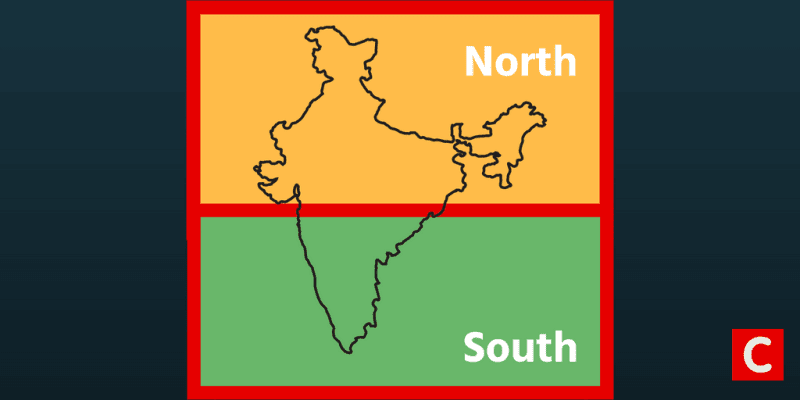
Hi everybody, If you were to ask an Indian woman, to prefer between living in North India or South India, imagine what would her answer be? Don’t worry, it’s not a trick question? Most women would prefer to live in South India. And it shouldn’t come as a surprise. In South India, women marry late, live longer, and are more educated. 

The gender gap in education is 26% for the north and while for the south it’s only 9%. Other than economic and social benefits, safety is another factor that could explain the woman’s preference. Compared to North India there could be less crime against women in the south. If you notice, I used the word ‘could’. It’s because data suggest that states like Kerala have high crime rates against women. But it’s not clear why the crime rate is higher in Kerala. 

NORTH INDIA VS SOUTH INDIA

Due to which a woman and her family will feel safer to lodge a police complaint against a crime. compared to the north Indian states? We’re aware that the family of a sexual assault victim doesn’t lodge a complaint in India. Around 99% of the sexual assault cases go unreported. Like the data we studied before, due to many socioeconomic indicators, women of South India live better lives than that of North India. But what’s the reason?

 It’s very interesting to find an answer to such a question. Because this difference didn’t arise in the past 70 years. It dates back to the 19th century. According to research, due to a famine in the 19th century, the women in Punjab got affected more severely than the women in Madras. Around that time the sex ratio of South India was better compared to the north. 

So Maharastra has been included in South India and West Bengal in North India. Professor Alice Evans wrote a detailed article on this subject. In her article, she wrote that when during the 19th century a group of Marathi women traveled to Calcutta, they got surprised by what they saw. According to the group of Marathi women, a woman in Calcutta could scarcely stand in presence of her relatives. Her face was always veiled. 

She wasn’t allowed to speak to any man, muss less laugh with him. Before discussing the factors that could explain this difference, let’s first understand the factors that can’t explain it. One such factor is Poverty. Many might think South India has more female empowerment given how rich the state is. But it’s not necessarily the truth. According to the GDP, Punjab and Haryana are one of the richest states in India. But these states have the worst sex ratio too.

 Doctor Evans uses these charts to prove that it’s not necessary that a woman belonging to a rich state will find better job opportunities. The second factor that can’t explain the difference, is the marriage custom or traditions. In North India, women are generally married into other villages. When they go away from their families, the chances of them ever getting their share of inheritance of property becomes nil. 

In South India, women are most probably married into the same village. And according to research when a woman marries into the same village, she’s more likely to move freely, and earn more cash. And the logic behind this is that in an intra-village marriage, you get more freedom as you live within the security of your parents and a community with whom you’ve grown accustomed. But can this norm of intra-village marriage explain the gender difference? Alice believes that it can’t. As we can see the examples of cousin marriages in the Middle East and North Africa. 

Even though after marriage the women live among their relatives, the cases of women empowerment weren’t reported in these regions. The third reason is that of colonialism. This map shows the years Britishers governed a certain region of India. They governed some regions for more than 200 years and on the other hand, they scarcely governed some regions at all. Given this, we never saw much difference in the terms of women empowerment. 

As you can notice, Britishers governed the regions of Tamil Nadu and UP for the same time period. But there’s a huge difference in the female literacy rate of UP and Tamil in the data of the 19th and 20th centuries. Now let’s discuss the factors that can better explain the difference. And one of the factors relied largely on the British administration. Looking at a broader level we won’t sense the difference that the Britishers created in the women empowerment between North and South India. 

But we dig deeper, it becomes clearer. According to Hindu law, there are two types of property inheritance rights. One is called Mitakshara and another is called Dayabhaga. Dayabhaga originated in the Bengal region. According to Dayabhaga, women could inherit property. Mitakshara operated in Madras and Bombay presidency. According to this law, women had no inheritance rights.

 Looking at the surface level, you might think that the Bengal region should have more women empowerment given it had Dayabhaga law, which ensured property to women. But we saw in research how surprised the women of Madras were on seeing restrictions on the women of Calcutta. So what’s going on here? If Bengali women held more rights, why didn’t they have a better position? According to research, the district governed by Dayabhaga saw an increase in the practice of Sati Pratha (widow immolations) too. 

Instead of improving a women’s position in society, inheritance rights led to an average increase of between 115 and 437 widow immolations in Dayabhaga districts. This law was enacted at the time of extreme elite patriarchy. This suggests that women were subjected to torments. This positive law backfired. Many joint families argued that by implementing Dayabhaga law they would tarnish their traditions. Due to this, the districts where women were given the rights of inheritance, saw an increase in the practice of sati too.

 The second factor that can explain this difference is the tradition of Ghunghat (veil). This system originated in the Arabic region and was introduced to India during the Islamic invasions. This was a mode of ensuring status. The families that belonged to higher status wanted their women to practice Purdah (veil) to maintain their status of superiority. The cast system of India was already had several restrictions for women. If a woman from an upper-caste married a man belonging to a lower caste, the family of the woman lost its honor. And the Purdah system got added to that.

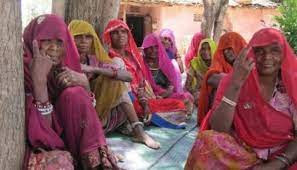
 This was common among the Rajput families belonging to North India. This practice severely affected the way the women lived their lives. In rural Haryana, if a woman failed to cover her face with a veil, she was subjected to afflictions and her character was questioned too. This affected the women’s ability to earn a living. As researches have shown that due to Purdah or Ghunghat, women become more dependent on men for financial support. 

Many of you might wonder who would be practicing an age-long tradition of the Purdah system nowadays. But that’s not true. In rural Rajasthan, 98% of women in the age group of 18-25 cover their faces with a veil. The third reason is the difference in the agricultural practices between North and South India. In India, crop cultivation has two patterns. One is the cultivation of wheat by plowing of fields as seen in North India. 

Another one is the wet and intensive cultivation of rice in South India. If we take wheat for an instance, the intensive plowing isn’t carried out by women. And cultivation of wheat isn’t labor-intensive. This lowers the demand for female labor in the field. Whereas cultivation of rice is labor-intensive. Here women are required to contribute to the workforce. Dr. Evans states in her research that, women are required to step out and contribute to the workforce for the cultivation of rice. And that’s the reason why women in South India are better empowered as compared to their North Indian compatriots.

 These three factors can explain the difference in the condition of women in North and South India. Inheritance rights, Purdah/Ghunghat system (veil system), and the agricultural practices. But we need to let go of the delusion that women living in south India are leading a perfect life. They too have to face problems of their own. 

Our government shouldn’t have an objective that they should somehow provide North Indian women the quality of life as that of South Indian women. They should have a broader objective. If you consult the rankings, India is further low in gender issues. In the UN’s Gender Inequality Index, India ranks 131st, even lower than Iraq. According to World Bank, nations not well off as India, like Bangladesh and Nepal, have better literacy rates among girls. 

Our politicians dream about making India a superpower. But it would never become a reality until Indian women are given opportunities to contribute too. Through this video, we learned the differences in the situation of women in North and South India. But North Indian women shouldn’t take the lives of South Indian women as their ideal. They should aim for something better than that. This is the way India will become a superpower.

Compelling A Married Woman To Live In Her Parental Home Amounts To Cruelty

While displaying zero tolerance towards act of cruelty against women, the Madhya Pradesh High Court has just recently on June 22, 2021 in a learned, laudable, latest and landmark judgment titled Amar Singh Vs Smt Vimla minced just no words to observe that compelling a married woman to live in her parental home after marriage amounts to cruelty and that for this reason, it cannot be said that she was living separately without reasonable reason. To ensure that women is protected from being harassed, humiliated and harangued by her husband and his relatives, it is imperative that Courts speak out firmly in favour of women where she is compelled to stay at her parental home without any cogent reason whatsoever! It must be apprised here that this significant development came from a Single Judge Bench of Justice GS Ahluwalia who was dealing with a criminal revision petition challenging the Family Court’s order directing the husband to pay Rs 7,000/- per month to wife under Section 125 CrPC. 

To start with, a Single Judge Bench of Justice GS Ahluwalia of Madhya Pradesh High Court who has authored this cogent, commendable, composed and convincing judgment sets the ball rolling through video conferencing by first and foremost observing that, “This criminal revision under Section 397/401 of Cr.P.C. r/w Section 19(4) of Family Court Act has been filed against the order dated 10/10/2020 passed by Principal Judge, Family Court Guna in case MJC No.72/2018, by which the application filed by the respondent under Section 125 of Cr.P.C. has been allowed and the applicant has been directed to pay Rs.7,000/- per month from the date of the order.”
While elaborating on the facts of the case, the Bench then puts forth that, “The necessary facts for disposal of present revision in short are that, the respondent filed an application under Section 125 of Cr.P.C. on the ground that she got married to the applicant on 25/05/2013 in accordance of Hindu Rites and Rituals. Since, the applicant and her in-laws were not satisfied with the dowry, therefore, they used to beat her, harass her for demand of a four wheeler and cash amount. About seven months prior to filing of the application i.e. in the month of September, 2017, the respondent was ousted from her matrimonial house and thereafter, she is residing in her parental home. In the meanwhile, neither the applicant came to take her back nor made any efforts to look after her. The respondent is on the verge of starvation. Her father is poor and is not in position to bear her expenses and accordingly, it was prayed that for meeting out necessary expenses, the applicant be directed to pay Rs.15,000/- per month by way of maintenance amount. It was further pleaded that the applicant belongs to a rich family and is having 50 bigha of agriculture land with two tube wells. The applicant has cattles, tractor and other agriculture equipments. He has a house and accordingly, the yearly income of the applicant is Rs. 50,00,000/-.”
Furthermore, the Bench then points out that, “The applicant filed his reply to the application filed under Section 125 of Cr.P.C. He admitted that he got married to the respondent on 25/05/2013. It was claimed that since, both the parties are poor and since they were not in a position to bear the expenses of marriage and therefore, the marriage was performed in Sammelan. The marriage was performed without any dowry. The allegation of harassment due to non fulfillment of demand of four wheeler and cash amount was denied. It was also denied that the respondent was ousted from her matrimonial house about seven months prior to the filing of application. It was pleaded that for the first time the respondent had resided in her matrimonial house for a period of four days and during this period her behavior towards her in-laws was cruel. It was further pleaded that the respondent never allowed the applicant to consummate the marriage and she was continuously challenging the potency of the applicant in the society. The respondent is an expert in stitching and is also running beauty parlor and earning rupees thirty to forty thousand per month. She is maintaining her parents out of her own income that is why the parents of the respondent are not permitting her to come to her matrimonial home. It was further pleaded that in fact the parents of the respondent are insisting that the applicant should reside in the parental home of the respondent as Gharjamai. When the applicant refused to do so, then a false criminal case under Section 498-A of IPC was instituted against the applicant and his family members. Later on the applicant and his family members were acquitted. It was further denied that the applicant is having any agriculture land, house, two tube wells, tractor and agricultural equipments. He also denied that he had any cattles, it was also denied that yearly income of the applicant is Rs.50,00,000/-. It was further pleaded that the applicant is a student and is working on a part time basis in a shop from where he is getting Rs.2,000/- per month and apart from that, the applicant has no source of income. It was further pleaded that after the marriage, when the applicant went to the parental home of the respondent to take her back, then for half an hour, the respondent and her family members did not open the door and thereafter, they insisted that the respondent should be permitted to reside in her parental home for next 8 to 10 days. Accordingly, the applicant came back from the door of the parental home of the respondent. Thereafter, the applicant again went to the parental home of the respondent to take her back. However, although the respondent was 4 permitted to come back to her matrimonial home but the applicant was disrespected. Whenever the applicant informed the parents of the respondent about her cruel behavior then every time they replied that if the applicant wants to leave the respondent then he can do so but he has to pay an amount of Rs.15 to 20 Lacs. In reply several allegations were made against the respondent and her parents about cruel behavior.”
Going ahead, the Bench then points out that, “The respondent in support of her case examined herself. In cross-examination, she admitted that the applicant was acquitted for offence under Section 498-A of IPC. However, she denied that the marriage was performed without any dowry. She further admitted the suggestion given by the applicant that the applicant and his mother did not like the food prepared by the respondent. It was further denied that she did not allow the applicant to consummate marriage. She further denied that the applicant was detained in her parental home. She further denied that the applicant is a land less laborer. She further accepted that the marriage has not been consummated so far. She Further denied that she is doing the work of stitching or beauty parlor. She further denied that she is running a beauty parlor in the name of Sunena beauty parlor and Sunena Ladies Tailor. She further denied that she is earning Rupees 30 to 40 thousand per month. She further denied that the applicant is doing a part time job in a shop on monthly income of Rs.2,000/-. The respondent examined her father Kedari as P.W.2.”
On the contrary, the Bench then also brought out in the next para that, “The applicant examined himself in his defence and apart from alleging the allegations of cruelty by the respondent and her parents, it was claimed by the respondent that he does not have any property or land or agriculture equipments. He also denied that the respondent was ever harassed for demand of four wheeler and an amount of ten lacs. He further claimed that the marriage has not been consummated however, he denied that because of non consummation of marriage, he had started beating the respondent.”
To put things in perspective, the Bench then after considering the version of both the sides goes on to point out that, “The Court below after considering the totality of the facts and circumstances of the case, came to a conclusion that it cannot be said that the respondent is residing separately without any reasonable reason. It was further held that the applicant is an able bodied person and certain allegations have been made by the applicant, which have not been proved by him. It was also found that the respondent is not doing any work and she is unable to maintain herself.”
Frankly speaking, the Bench then holds in the next para that, “So far as the question of quantum of maintenance amount is concerned, it was held that according to the respondent, the applicant is having 12 bigha of land whereas his father is having 38 bighas of land. He is the only son of his parents. Kedari P.W.2 has also claimed that the applicant is having forty to fifty bigha of land.”
As against what is stated above, the Bench then brings out in the next para that, “On the contrary, it was the claim of the applicant that he is a student and is working as a part time job in a shop from where he is earning Rs.2,000/- per month.”
Interestingly enough, the Bench then envisages in the next para that, “The Court below after considering the evidence came to a conclusion that although, the respondent has failed to prove that the applicant is having any agriculture land but from the pleadings as well as evidence of the parties, it appears that the applicant belongs to a financially sound family and accordingly, he is in a position of maintaining the respondent. Accordingly, an amount of Rs.7,000/- has been awarded by way of monthly maintenance.”
As we see, the Bench then goes on to add in the next para that, “Challenging the order passed by the Court below, it is submitted by the counsel for the applicant since the applicant was acquitted for offence under Section 498-A of IPC, therefore, the Court below has committed material illegality by holding that the respondent is residing separately because of reasonable reason. It is further submitted that the respondent has failed to prove the monthly income of the applicant, therefore, the maintenance amount of Rs.7,000/- per month is on higher side. None for the respondent though served.”
It cannot be glossed over that the Bench then observes in the next para that, “It is true that the applicant has been acquitted for offence under Section 498-A of IPC. However, it is equally true that the applicant had leveled serious allegations against the respondent and her parents. However, the applicant did not file even a single document to show that he had ever lodged any report regarding the illegal confinement or mal-treatment by the respondent her parents. Leveling serious allegations and failing to prove the same, may also amount to cruelty. Undisputedly the marriage between parties could not be consummated. On one hand the applicant has claimed that the respondent is defaming him in the society by alleging that he is impotent but he did not bring any evidence on record to show that he is not impotent. Further, the applicant had leveled a false allegation that the respondent is running a beauty parlor as well as a stitching center. He did not even file the photographs of the shops.”
What’s more, the Bench then further most significantly holds in the next para that, “Under these circumstances, this Court of the considered opinion that after having leveled serious allegations against her and her parents and having failed to prove the same, it cannot be said that the respondent is residing separately without any reasonable reason. Furthermore, it is not the case of the applicant that he had ever tried to take the respondent back from her parental home. Thus, it is also clear that the applicant has deserted the respondent and he cannot take advantage of his own wrong. Further, compelling a married women to live in her parental home, is also a cruelty. Accordingly, it is held that it cannot be said that the respondent is residing separately without any reasonable reason.”
Be it noted, the Bench then also makes it clear in the next para that, “Thus, if the husband is healthy and is an able bodied person, then he is under legal obligation to support his wife. It is the claim of the applicant that he is working on a part time basis in a shop and is earning Rs.2,000/- per month. The applicant has not examined owner of the shop in support of his claim. The applicant has also not examined his father to establish that the applicant does not belongs to a financially sound family. The applicant has not filed any document to show that he is a student. Under these circumstances, this Court is of the considered opinion that since the applicant is a healthy and able bodied person therefore, he cannot run away from his legal obligation to support the respondent.”
While citing the relevant case law, the Bench then holds that, “So far as the question of quantum of maintenance is concerned, the Supreme Court in the case of Jasbir Kaur Sehgal v. Distt. Judge, Dehradun reported in (1997) 7 SCC 7 has held as under:- 
“8. The wife has no fixed abode of residence. She says she is living in a Gurdwara with her eldest daughter for safety. On the other hand the husband has sufficient income and a house to himself. The wife has not claimed any litigation expenses in this appeal. She is aggrieved only because of the paltry amount of maintenance fixed by the courts. No set formula can be laid for fixing the amount of maintenance. It has, in the very nature of things, to depend on the facts and circumstances of each case. Some scope for leverage can, however, be always there. The court has to consider the status of the parties, their respective needs, the capacity of the husband to pay having regard to his reasonable expenses for his own maintenance and of those he is obliged under the law and statutory but involuntary payments or deductions. The amount of maintenance fixed for the wife should be such as she can live in reasonable comfort considering her status and the mode of life she was used to when she lived with her husband and also that she does not feel handicapped in the prosecution of her case. At the same time, the amount so fixed cannot be excessive or extortionate. In the circumstances of the present case we fix maintenance pendente lite at the rate of Rs 5000 per month payable by the respondent-husband to the appellant-wife.””
In addition, the Bench then states in the next para that, “The Supreme Court in the case of Chaturbhuj v. Sita Bai reported in (2008) 2 SCC 316 has held as under:- 
“6. The object of the maintenance proceedings is not to punish a person for his past neglect, but to prevent vagrancy by compelling those who can provide support to those who are unable to support themselves and who have a moral claim to support. The phrase “unable to maintain herself” in the instant case would mean that means available to the deserted wife while she was living with her husband and would not take within itself the efforts made by the wife after desertion to survive somehow. Section 125 CrPC is a measure of social justice and is specially enacted to protect women and children and as noted by this Court in Captain Ramesh Chander Kaushal v. Veena Kaushal [(1978) 4 SCC 70 : 1978 SCC (Cri) 508 : AIR 1978 SC 1807] falls within constitutional sweep of Article 15(3) reinforced by Article 39 of the Constitution of India. It is meant to achieve a social purpose. The object is to prevent vagrancy and destitution. It provides a speedy remedy for the supply of food, clothing and shelter to the deserted wife. It gives effect to fundamental rights and natural duties of a man to maintain his wife, children and parents when they are unable to maintain themselves. The aforesaid position was highlighted in Savitaben Somabhai Bhatiya v. State of Gujarat [(2005) 3 SCC 636 : 2005 SCC (Cri) 787 : (2005) 2 Supreme 503].””
Quite significantly, the Bench then also points out that, “Thus, it is clear that the applicant has made every effort to suppress his income as well as the financial condition of his family. It is well established principle of law that a wife is entitled to enjoy the same status, which she would have enjoyed in her matrimonial house. The Wife cannot be compelled to leave the life of rectitude.”
While rejecting the contention of the counsel of the applicant that the Trial Court should not have awarded maintenance from the date of application, the Bench then while citing a recent, remarkable and relevant case law holds that, “The Supreme Court in the case of Rajnesh v. Neha reported in (2021) 2 SCC 324 has laid down guide lines for determining the quantum of maintenance and has held as under:- 
“113. It has therefore become necessary to issue directions to bring about uniformity and consistency in the orders passed by all courts, by directing that maintenance be awarded from the date on which the application was made before the court concerned. The right to claim maintenance must date back to the date of filing the application, since the period during which the maintenance proceedings remained pending is not within the control of the applicant.””
As a corollary, the Bench then holds in the next para that, “Accordingly, this Court is of the considered opinion that Court below did not commit any mistake by awarding the maintenance from the date of the application. Consequently, the order dated 10/10/2020 passed by Principal Judge, Family Court Guna in case MJC No.72/2018 is hereby affirmed.”
Finally, the Bench then holds in the last para that, “It appears that by order dated 06/02/2019, Court had below awarded an amount of Rs.3,000/- by way of interim maintenance. Accordingly, it is directed that the amount paid by the applicant by way of interim maintenance is liable to be adjust in the arrears of maintenance amount. With aforesaid observation, this petition is hereby dismissed.”
In essence, this brief, brilliant, balanced and bold judgment by a Single Judge Bench of Justice GS Ahluwalia of Madhya Pradesh High Court leaves no room of doubt that compelling a married woman to live in her parental home amounts to cruelty. It is the bounden duty of the husband to keep his wife with her. If the husband compels a married women to live in her parental home then he is guilty of cruelty and shall be accordingly held liable!
Sanjeev Sirohi

Despite Marrying Willingly A Minor Girl Can’t Be Allowed To Stay With Husband Till She Attains Majority

In a significant judgment titled Pradeep Tomar And Another v. State of U.P. and Another [Matters Under Article 227 No. 4804 of 2020] delivered on January 27, 2021, the Allahabad High Court has recently, righteously and remarkably held that a minor girl cannot be allowed to live in a matrimonial relationship with a man she claims to be her husband even if she had left her home of her own accord and married the man out of her own free will. The Single Judge Bench of Justice JJ Munir ruled thus while taking into account her High School Certificate which “clearly indicated” that she is minor as her date of birth is 04 November 2004. The Bench specifically stated that, “So long as the prosecutrix is a minor, she cannot be permitted to accompany the accused Pintoo, whom she claims to have married.”

To start with, the ball is set rolling by first and foremost observing in para 1 that, “This petition under Article 227 of the Constitution has been filed seeking to set aside an order of the learned Judicial Magistrate-I, Hapur, dated 24.11.2020, passed in Case Crime No. 516 of 2020, under Section 363 IPC, P.S. Pilakhuwa, District Hapur, directing that the prosecutrix Km. Shivani be permitted to go along with her husband, the accused Pintoo son of Omvir.”
To be sure, it is then stated in para 2 that, “A counter affidavit has been filed on behalf of the second opposite party by Mr. Rama Shankar Mishra, Advocate, which is taken on record. The petitioner has filed a rejoinder.”
On the one hand, it is put forth in para 6 that, “The submission of Mr. Sudhir Mehrotra, learned counsel for the petitioners, briefly said, is to the effect that the date of birth of the prosecutrix, according to her High School Examination Certificate issued by the U.P. Board of High School and Intermediate Education, is 04.11.2004. She is, thus, a minor, aged 16 years and 2 months approximately. She would attain majority on 05.11.2022. Mr. Mehrotra submits that the Magistrate has erred in permitting the prosecutrix to accompany her husband, an accused in the crime, going by the marriage acknowledged by the parties to be solemnized on 21.09.2020 at the Pandav Kalin Neeli Chhatri Mandir Sanatan Dharam Vivah Padti Trust, Yamuna Bazar, Delhi. Mr. Mehrotra submits that the prosecutrix, being a minor, cannot be permitted to stay in a matrimonial relationship, where the marriage would be void under Section 12 of the Prohibition of Child Marriage Act, 2006 (for short, ‘the Act of 2006’). He submits that in any case the prosecutrix, who is not a major, cannot be permitted to stay with her husband and ought not to be allowed to accompany him. Doing so, would be permitting statutory rape and also an offence under Section 5/6 of the Protection of Children from Sexual Offences Act, 2012.”
On the other hand, it is then brought out in para 7 that, “Mr. Rama Shankar Mishra, on the other hand, submits that the prosecutrix in her stand before the Magistrate has made it clear that she has married the accused Pintoo of her free will and wishes to stay with him. He emphasizes that the parties’ marriage has been registered under the U.P. Marriage Registration Rules, 2017 by the Marriage Registration Officer, Ghaziabad on 21.09.2020. He has drawn the attention of this Court towards a certificate of the registration of marriage, dated 21.09.2020.”
To put things in perspective, it is then pointed out in para 8 that, “This Court has perused the impugned order and considered the entire facts and circumstances. The prosecutrix is a little over 16 years of age. The Magistrate has been swayed to permit the prosecutrix to go along with the accused, her husband on ground that the father of the prosecutrix made an application that he would not take her back home and that he had lodged an FIR, out of social embarrassment. The Magistrate has relied upon the decisions of this Court in Smt. Rajkumari vs. Superintendent, Nari Niketan, 1998 Cr.L.J 654 (All) and Smt. Ramsati @ Syamsati vs. State of U.P., Habeas Corpus Writ Petition No. 245 of 2015, decided on 07.09.2005 to hold that upon marriage of a minor according to her wishes, she could be left free to live her life.”
As it turned out, it is then stated in para 10 that, “So far as the age of the prosecutrix is concerned, in the face of the High School Certificate, there is no cavil that evidence about her being a major, which is her stand, cannot be accepted. She cannot be referred to medical examination for determination of her age, so long as her date of birth founded on her High School Certificate, is available. This certificate clearly indicates that she is a minor. There, her date of birth is 04.11.2004. Section 94 of the Juvenile Justice (Care and Protection of Children) Act, 2015 makes the following provision regarding presumption and determination of age: 
“94. Presumption and determination of age.– (1) Where, it is obvious to the Committee or the Board, based on the appearance of the person brought before it under any of the provisions of this Act (other than for the purpose of giving evidence) that the said person is a child, the Committee or the Board shall record such observation stating the age of the child as nearly as may be and proceed with the inquiry under section 14 or section 36, as the case may be, without waiting for further confirmation of the age.
(2) In case, the Committee or the Board has reasonable grounds for doubt regarding whether the person brought before it is a child or not, the Committee or the Board, as the case may be, shall undertake the process of age determination, by seeking evidence by obtaining –
(i) the date of birth certificate from the school, or the matriculation or equivalent certificate from the concerned examination Board, if available; and in the absence thereof; 
(ii) the birth certificate given by a corporation or a municipal authority or a panchayat; 
(iii) and only in the absence of (i) and (ii) above, age shall be determined by an ossification test or any other latest medical age determination test conducted on the orders of the Committee or the Board:
Provided such age determination test conducted on the order of the Committee or the Board shall be completed within fifteen days from the date of such order.
(3) The age recorded by the Committee or the Board to be the age of person so brought before it shall, for the purpose of this Act, be deemed to be the true age of that person.”
Be it noted, it is then stated in para 11 that, “The provisions of Section 94 (2) of the Act, which are designed to determine the age of a juvenile, have been extended to the victim in Jarnail Singh v. State of Haryana; (2013) 7 SCC 263 and by a Division Bench decision of this Court in Smt. Priyanka Devi through her husband vs. State of U.P. and others 2018 (1) ACR 1061, to which I was a party. It has been held in Smt. Priyanka Devi thus: 
“13. Learned counsel for the petitioner lastly urged that provisions of Section 94 of the Juvenile Justice Act, 2015 do not apply to the case in hand as the same are available for the purposes of determination of age for a juvenile or a child in conflict with the law but would not apply to the determination of age in the case of a victim.
14. We are afraid that the aforesaid submission is not correct. The issue was examined by the Supreme Court in the case of Mahadeo S/o Kerba Maske v. State of Maharashtra and Another; (2013) 14 SCC 637 where in paragraph no. 12 of the report it was held as under: “Under rule 12(3)(b), it is specifically provided that only in the absence of alternative methods described under Rule 12(3)(a)(i) to (iii), the medical opinion can be sought for. In the light of such a statutory rule prevailing for ascertainment of the age of the juvenile in our considered opinion, the same yardstick can be rightly followed by the courts for the purpose of the ascertaining the age of a victim as well.” 
15. This issue has also been considered in an earlier judgment of the Supreme Court in Jarnail Singh v. State of Haryana; 2013 (7) SCC 263, where too it has been held that rule 12(3) of the Juvenile Justice (Care and Protection of Children) Rules, 2007 must apply both to a child in conflict with law as well as to a victim of a crime. Paragraph 23 of the said report reads thus: 
“Even though Rule 12 is strictly applicable only to determine the age of a child in conflict with law, we are of the view that the aforesaid statutory provision should be the basis for determining age, even for a child who is a victim of crime. For, in our view, there is hardly any difference in so far as the issue of minority is concerned, between a child in conflict with law, and a child who is a victim of crime. Therefore, in our considered opinion, it would be just and appropriate to apply Rule 12 of the 2007 Rules, to determine the age of the prosecutrix VWPW6. The manner of determining age conclusively, has been expressed in sub-rule (3) of Rule 12 extracted above. Under the aforesaid provision, the age of a child is ascertained, by adopting the first available basis, out of a number of options postulated in Rule 12(3). If, in the scheme of options under Rule 12(3), an option is expressed in a preceding clause, it has overriding effect over an option expressed in a subsequent clause. The highest rated option available, would conclusively determine the age of a minor. In the scheme of Rule 12(3), matriculation (or equivalent) certificate of the concerned child, is the highest rated option. In case, the said certificate is available, no other evidence can be relied upon. Only in the absence of the said certificate, Rule 12(3), envisages consideration of the date of birth entered, in the school first attended by the child. In case such an entry of date of birth is available, the date of birth depicted therein is liable to be treated as final and conclusive, and no other material is to be relied upon. Only in the absence of such entry, Rule 12(3) postulates reliance on a birth certificate issued by a corporation or a municipal authority or a panchayat. Yet again, if such a certificate is available, then no other material whatsoever is to be taken into consideration, for determining the age of the child concerned, as the said certificate would conclusively determine the age of the child. It is only in the absence of any of the aforesaid, that Rule 12(3) postulates the determination of age of the concerned child, on the basis of medical opinion.”
16. Thus, principles applicable to the determination of age in the case of a juvenile would in terms apply to cases of determination of the age of a victim as well. It may be pointed out that at the point of time when Mahadeo (supra) was decided by their lordships of the Supreme Court, the Juvenile Justice Act, 2000 was in force and their lordships were interpreting the provision of Rule 12(3) of the Juvenile Justice (Care and Protection of Child) Rules, 2007. The said Act of 2000 has since been repealed and has been replaced by the Juvenile Justice Act, 2015. The rules framed under the Act of 2000 are thus no longer on the statute book. However, the provisions that found place in Rule 12(3) of the Juvenile Justice (Care and Protection of Child) Rules, 2007 framed under the Juvenile Justice Act, 2000 are now, with certain modifications engrafted into the Principal Act vide section 94 of the Juvenile Justice Act, 2015. The inter se priority of criteria to determine age under Rule 12(3) of the Rules, 2007 (supra) and section 94 of the Act, 2015 remains the same albeit with certain modifications which are of no consequences to the facts in hand. In short, provisions of Rule 12(3) of the Rules, 2007 framed under the Juvenile Justice Act, 2000 are para meteria to the provision of Section 94 of the Juvenile Justice Act, 2015. This being the comparative position, the principles of law laid down by their lordships in the case of Mahadeo (supra) would apply with equal force to the provisions of section 94(2) of the Juvenile Justice Act, 2015 while determining the age of a victim of an offence under Sections 363 and 366 IPC. Thus, the submission of the learned counsel for the petitioners, on this score, is not tenable.””
It is also worth noting that it is then stated in para 12 that, “The provisions of Section 94(2) makes it vivid that in the face of a date of birth certificate from the school or the matriculation or equivalent certificate from the concerned examination Board, the other evidence about the age of a victim cannot be looked into. If the date of birth certificate as envisaged in clause (i) of sub-Section (2) of Section 94 of the Act is not available, the birth certificate given by a corporation or a municipal authority or a panchayat is the next evidence to be considered in the rung. It is only when the evidence about age envisaged under clauses (i) and (ii) of Sub-Section (2) of Section 94 of the Act is not available, that a victim can be referred to a medico-legal examination for the determination of her age. Therefore, even if it is the prosecutrix’s stand, which this Court assumes to be so that she is 18 years old, and has married Pintoo of her free will, she cannot be regarded as a major or permitted to prove herself a major, by asking herself to be referred to medical examination by a Board of Doctors, so long as her High School Certificate is clear on the point. After the decision of their Lordships of the Supreme Court in Suhani vs. State of U.P., 2018 SCC Online SC 781, there was some confusion whether a victim could be referred to the medical examination of a Board of Doctors for determination of her age, in the face of a recorded date of birth in the High School certificate. But, after the decision of a Division Bench of this Court in Smt. Nisha Naaz alias Anuradha and another vs. State of U.P. and others 2019 (2) ACR 2075 holding that the decision in Suhani does not lay down any law but is a decision on facts, the principles in Smt. Priyanka Devi, following the decision in Jarnail Singh, is law that would govern the fate of this case. In Smt. Nisha Naaz alias Anuradha, it was held: 
“14. A plain reading of Section 94 of the 2015, Act would reveal that only in absence of: (a) the date of birth certificate from the school, or the matriculation or equivalent certificate from the concerned examination Board; and (b) the birth certificate given by a corporation or a municipal authority or a panchayat, age is to be determined by an ossification test or any other latest medical age determination test conducted on the orders of the Committee or the Board. A Division Bench of this court in the case of Smt. Priyanka Devi Vs. State of U.P. and others in Habeas Corpus Petition No.55317 of 2017, decided on 21st November, 2017, after noticing the provisions of the 2015, Act and the earlier 2000, Act and the rules framed thereunder, came to the conclusion that as there is no significant change brought about in the 2015, Act in the principles governing determination of age of a juvenile in conflict with law, in so far as weightage to medico legal evidence is concerned, the law laid down in respect of applicability of those provisions for determination of a child victim would continue to apply notwithstanding the new enactment. The Division Bench in Priyanka Devi’s case (supra) specifically held that as there is on record the High School Certificate, the medico legal evidence cannot be looked into as the statute does not permit.
15. The judgment of the apex court in Suhani’s case (supra) does not lay down law or guidelines to be used for determination of the age of child victim. Further, it neither overrules nor considers its earlier decisions which mandated that the age of child victim is to be determined by the same principles as are applicable for determination of the age of juvenile in conflict with law. From the judgment of the apex court in Suhani’s case (supra), it appears that the concerned victim (petitioner no.1 of that case) was produced before the court and the court considered it apposite that she should be medically examined by the concerned department of All India Institute of Medical Sciences (for short AIIMS). Upon which, AIIMS, by taking radiological tests, submitted report giving both lower as well as higher estimates of age. On the lower side the age was estimated as 19 years and on the higher side it was 24 years. Therefore, even if the margin of error was of 5 years, the victim was an adult. Hence, on the facts of that case, in Suhani’s case, the first information report was quashed by the Apex Court. The decision of the Apex Court was therefore in exercise of its power conferred upon it by Article 142 of the Constitution of India which enables it to pass such decree or make such order as is necessary for doing complete justice in any cause or matter pending before it. The said decision cannot be taken as a decision that overrules the earlier binding precedents which lay down the manner in which the age of a child victim is to be determined.””
No less significant is what is then stated in para 13 that, “So long as the prosecutrix is a minor, she cannot be permitted to accompany the accused Pintoo, whom she claims to have married. In order to determine whether the prosecutrix was enticed away from her guardian’s lawful custody, or she went away of her own, this Court ascertained the prosecutrix’s stand, who is present in Court. Her stand is recorded verbatim:
Q. Aapka Naam? 
Ans. Shivani 
Q. Aapki Aayu Kya Hai? 
Ans. 04.01.2002 (18 years) 
Q. Aap Pintoo Ko Janti Hain? 
Ans. Haan. 
Q. Pintoo Kaun Hain? 
Ans. Mere Pati. 
Q. Pintoo Aapko Bahla Fusla Kar Le Gaya Tha? 
Ans. Nahi, Mai Apni Marzi se Uske Saath Gayi Thi. 
Q. Aap Apne Mata-Pita Ke Pass Jaana Chahti Hain? 
Ans. Nahi. Main Apne Pati Ke Pass Jana Chahti Hun.”
As a corollary, it is then stated in para 14 that, “Looking to Shivani’s stand, it is evident that she has not been enticed away by Pintoo. Rather, she has left her home of her own accord and married him. In this view of the matter, the marriage would not be void under Section 12 of the Act of 2006, but would be voidable under Section 3 of the said Act.”
Interestingly enough, it is then envisaged in para 15 that, “The conclusion is evident from the provisions of Sections 3 and 12 of the Act of 2006 which read as under: 
“3. Child marriages to be voidable at the option of contracting party being a child.—(1) Every child marriage, whether solemnised before or after the commencement of this Act, shall be voidable at the option of the contracting party who was a child at the time of the marriage:
Provided that a petition for annulling a child marriage by a decree of nullity may be filed in the district court only by a contracting party to the marriage who was a child at the time of the marriage.
(2) If at the time of filing a petition, the petitioner is a minor, the petition may be filed through his or her guardian or next friend along with the Child Marriage Prohibition Officer.
(3) The petition under this section may be filed at any time but before the child filing the petition completes two years of attaining majority. 
(4) While granting a decree of nullity under this section, the district court shall make an order directing both the parties to the marriage and their parents or their guardians to return to the other party, his or her parents or guardian, as the case may be, the money, valuables, ornaments and other gifts received on the occasion of the marriage by them from the other side, or an amount equal to the value of such valuables, ornaments, other gifts and money: Provided that no order under this section shall be passed unless the concerned parties have been given notices to appear before the district court and show cause why such order should not be passed.
12. Marriage of a minor child to be void in certain circumstances.—Where a child, being a minor— 
(a) is taken or enticed out of the keeping of the lawful guardian; or
(b) by force compelled, or by any deceitful means induced to go from any place; or 
(c) is sold for the purpose of marriage; and made to go through a form of marriage or if the minor is married after which the minor is sold or trafficked or used for immoral purposes,
such marriage shall be null and void.””
Needless to say, it is then rightly asserted in para 16 that, “It would, therefore, be open to the prosecutrix to acknowledge the marriage or claim it to be void, once she attains the age of majority. It would also be open to her, once she attains the age of majority, to go wherever she likes and stay with whomsoever she wants.”
Simply put, the Bench then holds in para 17 that, “Since, she is not inclined to go back to her parents, for the present, this Court is left with no alternative but to direct the State to place her in a suitable State facility other than a Nari Niketan, may be a Safe Home/Shelter Home.”
What’s more, the Bench then also holds in para 18 that, “The District Magistrate, Hapur and the Superintendent of Police, Hapur are ordered to ensure that the prosecutrix is immediately housed in a suitable Safe Home/Shelter Home, or other State facility where she would be safe and taken care of.”
Furthermore, para 19 then states that, “The learned District Judge, Hapur is also directed to ensure that a Lady Judicial Officer, posted in his Judgeship, will visit the prosecutrix once a month and inquire about her welfare. In case there is anything objectionable, she will immediately report the matter to the District Judge, who will take appropriate steps to ensure the prosecutrix’s welfare during her stay in the State facility/Safe Home/ Shelter Home, wherever she is housed.”
Thereafter, it is then held in para 20 that, “Shivani would be permitted to live in State facility/Safe Home/ Shelter Home till 04.11.2022, and thereafter, she may go wherever she wants and stay with whomsoever she likes, including Pintoo, whom she claims to be her husband.”
As we see, it is then stated in para 21 that, “In the result, this petition succeeds and is allowed. The impugned order dated 24.11.2020, passed by the learned Judicial Magistrate-I, Hapur in Case Crime No. 516 of 2020 under Section 363 IPC, P.S. Pilakhuwa, District Hapur is hereby set aside. The prosecutrix shall be dealt with in accordance with the directions made hereinabove.”
Adding more to it, para 22 then states that, “Let Shivani, who is present in person, be forthwith taken into the care of the Court Officer and conveyed through the Registrar General to the Senior Superintendent of Police, Prayagraj. The Senior Superintendent of Police, Prayagraj shall cause the prosecutrix to be conveyed in safety to the Superintendent of Police, Hapur, who, along with the District Magistrate, Hapur will carry out the directions carried in this order forthwith.”
Now coming to concluding paras. Para 23 states that, “The Court Officer shall convey Shivani to the Registrar General, who shall make immediate arrangement to take her into his immediate care and ensure compliance of this order.” Finally, the last para 24 holds that, “Let this order be communicated to the learned District Judge, Hapur, the District Magistrate, Hapur, the Senior Superintendent of Police, Prayagraj and the Superintendent of Police, Hapur by the Joint Registrar (Compliance) within 24 hours.”
To sum it up, what can be inferred from this noteworthy ruling of Allahabad High Court is that despite marrying willingly a minor girl can’t be allowed to stay with her husband till she attains majority. This is so because if she is permitted to stay with her husband it would tantamount to permitting statutory rape and also would constitute an offence under Section 5/6 of the Protection of Children from Sexual Offences Act, 2012. Such a marriage of minor would not be void under Section 12 of the Prohibition of Child Marriage Act, 2006 but would be voidable under Section 3 of the said Act. It would be open to the minor girl to either acknowledge the marriage or claim it to be void once she attains the age of majority. It is left entirely on her own discretion to take what decision she likes once she attains the age of majority. This is the real crux of this commendable judgment! 
Sanjeev Sirohi