
The present day syllabus of masculinity

On the evening of 30 January 1948, five months after the independence and partition of India, Mohandas Karamchand Gandhi was walking to a prayer meeting at his home in New Delhi when he was shot three times, at point-blank range. He collapsed and died instantly. His assassin originally feared to be Muslim, turned out to be Nathuram Godse, a Hindu Brahmin from western India. Godse, who did not attempt to escape, said in court that he felt compelled to kill Gandhi since the leader with his womanly politics was emasculating the Hindu nation – in particular, with his generosity to Muslims. Godse is a hero today in an India utterly transformed by extreme Hindu Patriotism – an India in which Mein Kampf is a bestseller, a political movement inspired by European ultranationalism dominates politics and culture. For the first years of his life he was raised as a girl, with a nose ring, and later tried to gain a hard-edged masculine identity through Hindu supremacism. Yet for many struggling young Indians today Godse represents, along with Adolf Hitler, a triumphantly realised individual and national manhood.

The moral prestige of Gandhi’s murderer is only one sign among many of what seems to be a global crisis of masculinity. Luridly retro ideas of what it means to be a strong man have gone mainstream even in so-called advanced nations. In January Jordan B Peterson, a Canadian self-help writer who laments that “the west has lost faith in masculinity” and denounces the “murderous equity doctrine” espoused by women, was hailed in the New York Times as “the most influential public intellectual in the western world right now”.

But gaudy displays of brute manliness in the west, and frenzied loathing of what the alt-rightists call “cultural Marxists”, are not merely a reaction to insolent former weaklings. Such manic assertions of hyper-masculinity have recurred in modern history. They have also profoundly shaped politics and culture in Asia, Africa and Latin America. Osama bin Laden believed that Muslims “have been deprived of their manhood” and could recover it by erasing the phallic symbols of American power. Beheading and raping innocent captives in the name of the caliphate, the black-hooded young volunteers of the Islamic State were as obviously a case of psychotic masculinity as the Norwegian mass-murderer Anders Behring Breivik, who claimed Viking warriors as his ancestors. Last month, the Philippines President Rodrigo Duterte told female rebels in his country that “We will not kill you. We will just shoot you in the vagina.”

<

p style=”text-align: justify”>Certainly, men would waste this latest crisis of masculinity if they deny or underplay the experience of vulnerability they share with women on a planet that is itself endangered. Masculine power will always remain extremely rare to find, prone to periodic crises, breakdowns and panicky reassertions. It is an unfulfillable ideal, a hallucination of command and control, and an illusion of mastery, in a world where all that is solid melts into thin air, and where even the seemingly powerful are haunted by the spectre of loss and displacement. As a straitjacket of onerous roles and impossible expectations, masculinity has become a source of great suffering – for men as much as women. To understand this is not only to grasp its global crisis today. It is also to sight one possibility of resolving the crisis: a release from the absurd but crippling fear that one has not been man enough. 
TOXIC MASCULINITY

BY: VAIBHAVI MENON

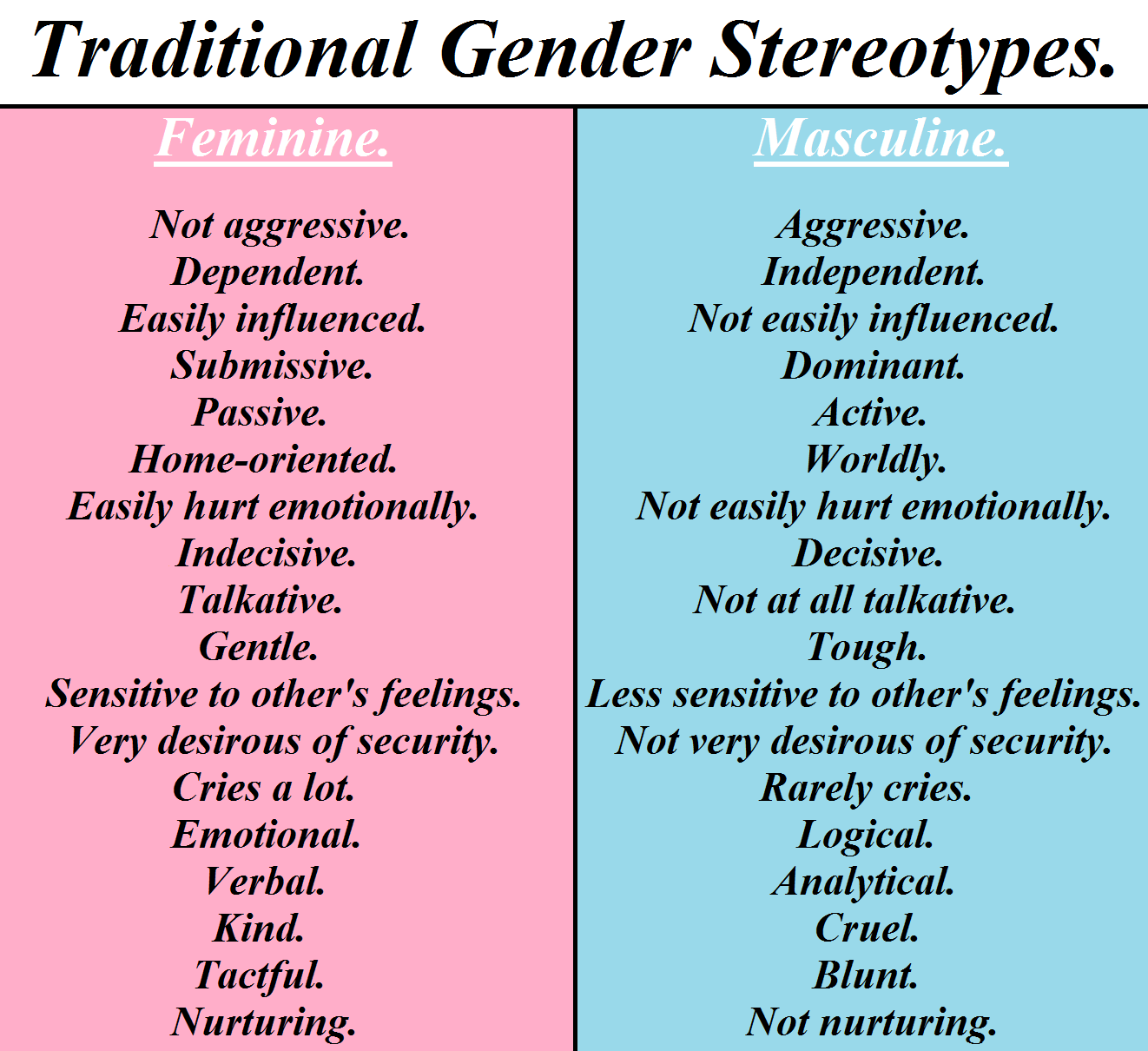
The concept of toxic masculinity is used in academic and media discussions of masculinity to refer to certain cultural norms that are associated with harm to society and men themselves. Traditional stereotypes of men as socially dominant, along with related traits such as misogyny and homophobia, can be considered “toxic” due in part to their promotion of violence, including sexual assault and domestic violence. The socialization of boys in patriarchal societies often normalizes violence, such as in the saying “boys will be boys” about bullying and aggression. Self-reliance and emotional repression are correlated with increased psychological problems in men such as depression, increased stress, and substance use disorders. Toxic masculine traits are characteristic of the unspoken code of behavior among men in prisons, where they exist in part as a response to the harsh conditions of prison life.

Other traditionally masculine traits such as devotion to work, pride in excelling at sports, and providing for one’s family, are not considered to be “toxic”. The concept was originally used by authors associated with the mythopoetic men’s movement such as Shepherd Bliss to contrast stereotypical notions of masculinity with a “real” or “deep” masculinity that they say men have lost touch within modern society. Critics of the term argue that its meaning incorrectly implies that gender-related issues are caused by inherent male traits. The concept of toxic masculinity, or certain formulations of it, has been criticized by some conservatives as an undue condemnation of traditional masculinity, and by some feminists as an essentialist concept that ignores the role of choice and context in causing harmful behaviors and attitudes related to masculinity. toxic masculine norms are a feature of life for men in American prisons, where they are reflected in the behavior of both staff and inmates. The qualities of extreme self-reliance, domination of other men through violence, and avoiding the appearance of either femininity or weakness, comprise an unspoken code among prisoners. Suppressing vulnerable emotions is often adopted to successfully cope with the harsh conditions of prison life, defined by punishment, social isolation, and aggression. These factors likely play a role in suicide among male prisoners. Toxic masculinity can also take the form of bullying of boys by their peers and domestic violence directed toward boys at home. The often violent socialization of boys produces psychological trauma through the promotion of aggression and lack of interpersonal connection. Such trauma is often disregarded, such as in the saying “boys will be boys” about bullying. The promotion of idealized masculine roles emphasizing toughness, dominance, self-reliance, and the restriction of emotion can begin as early as infancy. Such norms are transmitted by parents, other male relatives, and members of the community. Media representations of masculinity on websites such as YouTube often promote similar stereotypical gender roles.

The concept of toxic masculinity has also been criticized from a feminist perspective. Andrea Waling and Michael Salter have argued that the concept of “toxic masculinity” in contradistinction to “healthy masculinity” emerged from a misunderstanding of Raewyn Connell’s 1987 work on hegemonic masculinity. To Waling, “toxic masculinity” is problematic because it presents men as victims of an unavoidable pathology, an essentialist approach that ignores the surrounding social and material context and the personal responsibility of men. Instructing men to practice “healthy masculinity” dismisses androgyny and adopting aspects of femininity as valid options for men, thereby perpetuating gender binaries and privileging masculinity over femininity.

Role of family in the social construction of gender

Gender in contrast to sex is a social construct. It is an established set of characteristics of society according to which people are categorized into males or females. Gender roles vary from society to society. There are many agencies present in society that facilitate the social construction of gender. Family is one such agency.

In this article, I will try to show the various processes through which gender identity is established in children by their families. 

As a child grows the gender identity is established through four processes namely:

  1. Reinforcement or moulding-Parents at home treat their children differently depending on their sex. Boys are normally given more freedom than girls while girls are treated more protectively. Any ‘effeminate’ behaviour on the part of the boy is highly discouraged and if such tendencies continue they are regarded as ‘psychological disturbances.’As a result of this training, children learn their sex roles effectively and quickly. 
  2. Opportunities-Opportunities go a long way in determining gender roles. While boys are encouraged to take up technical jobs girls are discouraged . Girls are encouraged to go along the ‘the feminine way’ and boys are expected to develop themselves along ‘the masculine way’.Boys are given cars, building blocks etc to play with while girls are given kitchen set, dolls to play with. The boys are expected to help their fathers and girls are expected to help their mothers.
  3. Role modelling-It is a major mechanism of gender socialisation. By the age of three, nearly all children know whether they are male or female and by the age of four, they have very definite ideas of what masculinity and femininity must involve. A male child usually identifies with his father and a female child with her mother. The boys considering their father as a role model emulates them and the same is the case with girls who look up to their mothers. Role modelling is more effective when the child has a strong and warm relationship with the role model.
  4.  Explicit verbal instruction-Certain instructions also determine gender identity.” Boys don’t cry like girls”,” Pink is the colour of girls”,” You are a girl you should know how to cook” etc are some very common instructions. Hearing the same everywhere and on daily basis influences the mind of an individual and determines the gender identity.

Hence, families give the earliest reinforcement for acting appropriately according to one’s gender, and the environment continues to teach what is acceptable for men and women.