Community: meaning and characteristics

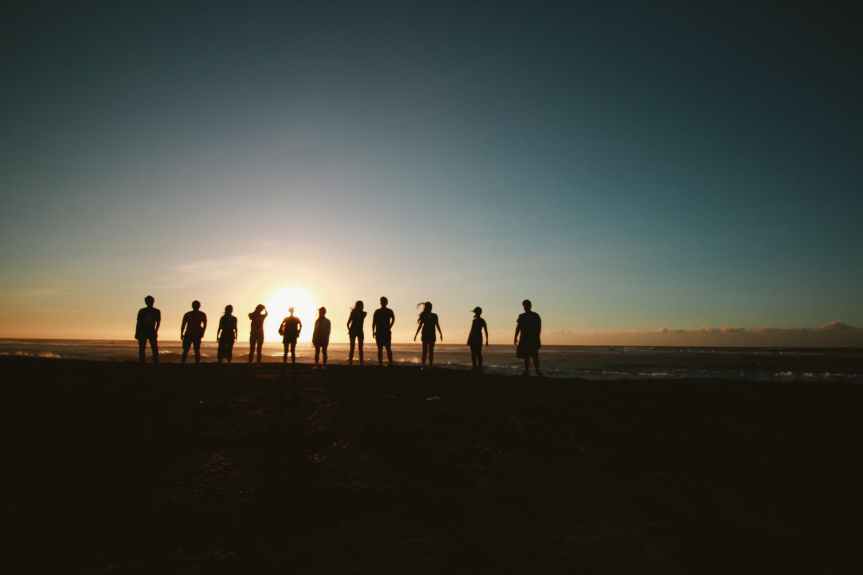
Photo by Keith Wako on Pexels.com

The term ‘community’ is given different interpretations and used in different ways to mean different things. People often use the term community to refer to a racial community, or a religious community, or a national community, etc. It is used in various contexts.

Some definitions of community:

1. Bogardus defined community as “a social group with some degree of ‘we-feeling’ and living in a given area”.

2. Talcott Parsons said “Community is the aspect of all social units.”

3. Lundberg defined community as “a human population living in a limited geographical area and carrying on a common interdependent life”.

4. MacIver said “Community is an area of social living marked by some degree of social coherence”.

5. According to Duncan Mitchell, “community denotes the collectivity of people who occupied a geographical area, are engaged in economic and political activities and constitute a self- governing social unit.

A community is essentially an area of social living. It is marked by some sorts of social coherence. ‘Community’ is an all-inclusive term. It includes all our social relationships. Elements of community: The main bases of community are: 1. Locality and 2. Community sentiment.

1. LOCALITY: A community is a territorial group. It always occupies some geographical area. Locality is the physical basis of community. In contrast to a society, a community is more or less locally limited. Even the wandering tribe or nomad community, for example, has a locality, though changing habitation. A group of people forms community only when it begins to reside definite locality. For example, caste is not a community since it is not necessary that all the members belonging to a certain cast live together in a definite location, whereas a village and a city can be called a community under certain conditions. Living together facilitates people to develop social contacts, gives protection, safety and security. It helps the members to promote and fulfil their common interests.

2. COMMUNITY SENTIMENT: Locality alone cannot make a group, a community. There are cases where people do live together but do not have any contacts or communications. These cannot be placed under community. For example, in a city there can be different localities. The members of these locality need not be sharing any common interests or may not have common outlook. A community is essentially an area of common living with a feeling of belonginess. ‘Community sentiment’ means a feeling of belonging together. The members must be aware of their staying together and sharing common interests. The members develop a sense of ‘we-feeling’. Without a sense of identification, a sense of awareness, a sense of living and sharing some common interests in life, there cannot be a community.

Other Aspects of Community:

1. Stability: A community is not a temporary group like a crowd or a mob. It is relatively stable. It includes a permanent group life in a definite place.

2. Naturalness: Communities are not created deliberately. They are not created by an act of will or by planned efforts. Individuals become its members by birth itself. Membership, hence, is not voluntary. This does not mean that caste is a community.

3. Size of the community: A community can be big or small. A small community can be included in a bigger community. For example, a city and a village may be included in a wider community called district. Thus, the term community is used in a relative sense.

4. Regulation of relations: System of traditions, customs, morals as well as set of rules and regulations are there to regulate the relation between its members.

Nostalgic Nightmares

Introduction

Dreams and Psychology

“Dreams are as simple or as complicated as dreamers.” The interpretations of the dreams are the royal road to a knowledge of the unconscious activities of the mind. The theories state that dreams don’t mean anything. These are just images put in by the brain from the memories. These are the stimulants that help one face the tragedies of life. As it’s truly said, “an individual suffers more in imagination than in reality” proves in this situation. Before facing it in person if a being conquers it in the dreams, then it will encourage him to win easily in real life. Its history goes back to the early stages when it was used as a tool to fool enemies because though our bodies get paralyzed while dreaming minds stay active. There is a whole psychology behind the dream theory and an explanation of why we dream in the way we do?

You dream, what you believe!!

Interesting Facts

“I always dream about falling from great heights.” It symbolizes that something in your life isn’t well. It might mean you need to rethink a choice or consider a new direction in some areas of life. It characterizes fear in existence, perhaps falling in work or love. It often expresses a need to let go and enjoy more. 

“I was attacked by a chaser in my dream.” These types can be quite terrifying. It might indicate a desire to escape from your fears. Running away from an animal often depicts that you are hiding from your anger, passions and other feelings. If your pursuer is mysterious, it represents childhood trauma. And if a person is of opposite sex then it reveals that you are haunted by love or past relationships.

“I died, no not in real….in my sleep.” Death is a very common subject of dreams. People imagine death either of loved ones or about themselves. It reflects anxiety about a change. Just like death, change can be scary. Those approaching the end of life and loved ones around them experience significant and meaningful dreams, often relating to a confronting presence, preparing to go, watching or engaging with the deceased, loved ones waiting, distressing experiences, and unfinished business. 

 “I flew like a bird while dreaming.” It can be liberating at the same time, quite frightening. It can represent two sides. One, independence and freedom. On the other hand, escape from the realities of life. 

There are a lot of things that influence dreams. The first thing includes health conditions that affect the secretions of the brain causing sleep to disrupt. The type of food one intakes can also become the factor for the feeling of sickness and in turn affect the types of dreams one visualize. Daily exercises and a little change in daily activities can help improve sleep and at last the dreams. There are two ways to remember dreams; one by telling yourself that you want to remember them when you wake up and the other by grasping as many images as you can before getting out of bed or using a smartphone.

Dreams are more profound when they seem the craziest. “Life is only a dream and we are the imagination of  ourselves.”

SUPERSTITION- IS IT TRUE?

MEANING OF SUPERSTITIONS 

However, there is no sole definition for strange notions. It, for the most part, implies faith in extraordinary powers. Like destiny, the longing to impact unusual components and a need to manage vulnerability. Singular convictions and encounters drive strange notions. This clarifies why it is generally unreasonable and normal to stand up to logical knowledge.  Numerous therapists have examined which job strange notions play. They have tracked down these from the supposition that a connection exists between co-happening, non-related occasions. For instance, the possibility that charms acquire the best of luck or shields one from misfortune. 

Individuals, including those with odd practices, give some a feeling of control and diminishes uneasiness. This is the reason levels of strange notion increment when there is pressure and apprehension. This is predominantly during the financial emergency and social vulnerability, especially wars and clashes. Scientists have identified how in Germany, somewhere in the range of 1918 and 1940, proportions of financial danger interrelated straightforwardly with that of strange notion. 

WHY DO WE BELIEVE THEM? 

The enthralling thing about notions is that individuals frequently have faith in it, notwithstanding knowing, in some capacity, that it can’t be valid. For what reason do individuals do this?  Jane Risen, a teacher of conduct science, utilized the double cycle model of insight to clarify the confidence in notions. As indicated by Risen, people can think both “quick” and “slow.” The quick method of reasoning is touchy and natural. The idle mode is more regular, and it supersedes the instinctive judgment when blunders happen. 

This double reasoning model is a remembered one, however, not intended for strange notions. Risen recommends that the model ought to go through alterations. Be that as it may, the odd idea isn’t only a showcase of defective cognizance. Now and again, it offers a large group of advantages.  The vast majority have something like a bit odd conviction. It may be the case that setting trust in lucky numbers or attempting to keep away from terrible signs. Offbeat beliefs are customary universally. Only a couple of them that individuals actually accept to date is additionally talked about. 

Offbeat Beliefs Globally 

666 

Figure 666 anyplace is regularly highlighted in accounts of setbacks. The most renowned one was the number plate “ARK 666Y”. Individuals accept this to have caused curious vehicle flames and terrible energies for travelers. 

Hope for the best 

This practice followed back to European church admirers. Individuals in the US utilize the expression “hope for the best” to pursue away misfortune. However, this has begun in Europe. 

Brandishing strange notions 

The strange notion is likewise pervasive inside sports. These practices change across sports. However, there are similitudes. For instance, petitioning God for triumph, looking at an appearance in the mirror, and sprucing up well to feel great arranged. They likewise include customized activities and practices, such as wearing suitable garments, packs, and charms. 

Toasting with water 

Toasting with a glass of water brings misfortune, or even passing is a generally held notion in Germany. 

Sewer vent covers set apart with ‘K’ or ‘A.’ 

Stepping on a sewer vent cover set apart with “K” is the best of luck as it connotes the Swedish word for affection. Furthermore, a body denoted “A” brings misfortune as it means the Swedish word for grievousness. 

The number 4 

Scarcely any individuals in China would keep away from anything having to do with the number 4. The way to express “four” in Chinese is basically the same as the word for “death.” Thus it is considered as an indication of misfortune. 

Odd notions sporadically have a quieting impact, delivering uneasiness of the obscure and providing a feeling of order over lives. This is additionally the motivation behind why it has made due for such a long time. 

Odd notions have progressed to make a misguided feeling of having command over outside conditions. This is an ideal justification to win in states of nonappearance of certainty, vulnerability, dread, and risk. These convictions have been displayed to empower a positive mental demeanor even though they can prompt unreasonable choices, for example, confiding in excellent good fortune and predetermination instead of settling on a quality choice. 

TOWARDS THE END 

Conveying charms, wearing specific garments, visiting places related with favorable luck, choosing detailed shadings, and utilizing particular numbers are all components of odd notions. Even though these practices and activities can seem trivial, they can frequently influence decisions made in the real world for specific individuals. It is suitable to be offbeat, as long as it doesn’t hurt anybody!

HUMAN TRAFFICKING

BY: VAIBHAVI MENON

Human trafficking is the trade of humans for the purpose of forced labour, sexual slavery, or commercial sexual exploitation for the trafficker or others. This may encompass providing a spouse in the context of forced marriage, or the extraction of organs or tissues, including for surrogacy and ova removal. Human trafficking can occur within a country or trans-nationally. Human trafficking is a crime against the person because of the violation of the victim’s rights of movement through coercion and because of their commercial exploitation. Human trafficking is the trade in people, especially women and children, and does not necessarily involve the movement of the person from one place to another. People smuggling (also called human smuggling and migrant smuggling) is a related practice which is characterized by the consent of the person being smuggled. Smuggling situations can descend into human trafficking through coercion and exploitation. Trafficked people are held against their will through acts of coercion, and forced to work for or provide services to the trafficker or others. According to the International Labour Organization (ILO), forced labour alone (one component of human trafficking) generates an estimated $150 billion in profits per annum as of 2014. In 2012, the ILO estimated that 21 million victims are trapped in modern-day slavery. Of these, 14.2 million (68%) were exploited for labour, 4.5 million (22%) were sexually exploited, and 2.2 million (10%) were exploited in state-imposed forced labour. 

The International Labour Organization has reported that child workers, minorities, and irregular migrants are at considerable risk of more extreme forms of exploitation. Statistics shows that over half of the world’s 215 million young workers are observed to be in hazardous sectors, including forced sex work and forced street begging. Ethnic minorities and highly marginalized groups of people are highly estimated to work in some of the most exploitative and damaging sectors, such as leather tanning, mining, and stone quarry work. Human trafficking is the third largest crime industry in the world, behind drug dealing and arms trafficking, and is the fastest-growing activity of trans-national criminal organizations. Human trafficking is condemned as a violation of human rights by international conventions. In addition, human trafficking is subject to a directive in the European Union. According to a report by the U.S. State Department, Belarus, Iran, Russia, and Turkmenistan remain among the worst countries when it comes to providing protection against human trafficking and forced labour. Trafficked people are held against their will through acts of coercion, and forced to work for or provide services to the trafficker or others. The work or services may include anything from bonded or forced labour to commercial sexual exploitation. 

The arrangement may be structured as a work contract, but with no or low payment, or on terms which are highly exploitative. Sometimes the arrangement is structured as debt bondage, with the victim not being permitted or able to pay off the debt. In India, the trafficking in persons for commercial sexual exploitation, forced labour, forced marriages and domestic servitude is considered an organized crime. The Government of India applies the Criminal Law (Amendment) Act 2013, active from 3 February 2013, as well as Section 370 and 370A IPC, which defines human trafficking and “provides stringent punishment for human trafficking; trafficking of children for exploitation in any form including physical exploitation; or any form of sexual exploitation, slavery, servitude or the forced removal of organs.” Additionally, a Regional Task Force implements the SAARC Convention on the prevention of Trafficking in Women and Children.