UNEMPLOYMENT IN INDIA

New job creation is a critical endeavour that has a significant economic impact. For most countries, the economic crisis has morphed into a social crisis, resulting in a high rate of unemployment. Unemployment is a condition in which people have the aptitude and ability to work and earn money but are unable to do so due to a lack of suitable employment opportunities. It is also known as “involuntary inactivity.” Unemployment does not imply that there isn’t any work available. It literally means ‘lack of work.’ Unemployment can be characterized as a situation in which a substantial number of able-bodied people of working age are willing to work but are unable to do so at the present wage rate.
The number of persons who are unable to acquire work in relation to the available people in the labor market measures the rate of unemployment in a given country.
Seasonal, Frictional, Cyclical, and Structural unemployment are the most common types of unemployment. In terms of population density, India is the world’s second largest country. The country’s unemployment rate is quite high, owing to the large number of people who are unable to find work.

TYPES OF UNEMPLOYMENT IN INDIA :

Rural Unemployment in India: India’s rural population accounts for around 70% of the total population. However, there is insufficient employment in rural areas for everyone. This can result in two types of unemployment. Unemployment and underemployment are problems that exist in the rural economy at the same time.

Frictional Unemployment: It occurs when people are unemployed for a brief period of time while looking for a new job or changing occupations. The time gap between jobs is known as frictional unemployment, also known as Search Unemployment. Frictional unemployment is referred to as voluntary unemployment because the source of unemployment is not a lack of jobs, but rather the workers’ own decision to leave in search of better chances. It exists because people move from places, jobs, and sectors where their productivity is low to places where their productivity is high, and they should be encouraged to do so.

Disguised Unemployment: This refers to the large number of rural people who are employed in agriculture in excess of what is required due to increased pressure on land. Uncovering hidden unemployment is most common in the unorganized sector or in agriculture.

Seasonal Unemployment: This word is self-explanatory. Seasonal unemployment is common in industries including construction, agriculture, canning, and tourism, where the weather or the calendar dictates when production can be carried out or demand levels. It is common to utilize seasonally adjusted unemployment figures for measuring the business cycle and the strength of demand in the labor market.
Underemployment is a word that can be used to describe this situation. That state of unemployment in which people are unemployed for part of the year, such as in India, where laborers are rarely employed all year.

Structural Unemployment: When a country’s economic structure changes dramatically, structural unemployment occurs. Normally, these changes have an impact on the demand for or supply of a production factor. In other words, structural unemployment is a result of global technological and economic development in every field. This type of unemployment occurs when a worker’s abilities do not meet the market’s job availability. Many people in India do not acquire occupations that match their talents or do not get positions owing to a lack of essential skills, and because of their low education level, it is critical to offer them with relevant training.

Technological Unemployment: Technological unemployment develops as a result of specific changes in production procedures that do not necessitate a large amount of manual labor. Modern technology has overtaken the need for and significance of physical labor in recent years, resulting in technical unemployment. According to World Bank data from 2016, the proportion of jobs in India threatened by automation increased by 69 percent year over year.

Causes of Unemployment in India:

  • The Joint Family System
  • Specialization in the Workplace
  • Low Rates of Economic Growth
  • Mobility of the workforce
  • Norms of Conduct
  • Cottage and small-scale industries are on the decline.
  • Population growth and technological advancements
  • A Scarcity of physical capital

Greed vs Generosity: Which Gives a Better Competitive Advantage?

Many people think that in the professional world, selfishness and greed are the characteristics that pay dividends. But the truth is, excepting win-lose situations, that the most successful people in the medium and long term are those who are the most generous in their business and personal lives.

Ambition is a desire to take on more than you can realistically accomplish, to constantly strive for improvement, to grow both personally and professionally, and, of course, the desire to generate more income. However there comes a time when ambition crosses a line, and when that happens it becomes greed. Greed is the desire to chew more than you can eat, a desire that distracts you from realistically possible goals. Greed is wanting to get more than what you have actually earned, obtaining maximum profit at minimum cost, or as an old adage has it: “Grasp all, lose all.”

Today there is an abundance of courses and books on finance, limitless knowledge on hand with a simple click. But to know what is right, to subdue the pirates of greed and to follow your trading plan- this is another story. People who look for easy money invariably find that there is no such thing, paying a heavy price for this lesson. Ego, vanity, and revenge play a part, causing people to fail on their trading accounts. This is one of the factors that explains why people might not fall into the exclusive 10% that ‘win’, and find themselves one of the 90% that lose.

Literature and film are full of greedy and stingy characters, and the moral of films like ‘A Christmas Carol’ or ‘The Wolf of Wall Street’ is always the same: the fate of the greedy is heartbreaking. Their addiction to work means that they live a lonely life, and their search for wealth means that at the end of their lives, they have only the sober memory of their friends from the Stock Exchange.

GIVE AND TAKE

People do not realize that giving without expecting something in return could be a competitive advantage, as well as making ones outlook more positive. Studies have shown that the most successful people are generous. At least this is the affirmation of Adam Grant, a psychologist and professor at Wharton and author of “Give and Take”.

A generous person builds bigger and stronger networks, improves communication with their existing contacts, and also finds it easier to interact with people outside of their core network- this gives them access to new contacts and valuable sources of information. Generous people inspire in others a predisposition, or positive receptivity, to reconnect with them, as well as a greater willingness to collaborate.

Moreover, being a giver encourages persistence because givers are able to enthusiastically motivate people, inspiring confidence, because they are liberal with praise. They create a generally positive environment. Talent is important, but the most important factor in success is persistence. And what’s even more interesting is that being a giver has an energizing effect that increases levels of happiness.

According to Bill Williams, famous trader and writer of “Trading Chaos”, people with a ‘giving’ mindset enjoy more happiness and success. For example, later in his career Bill always traded two accounts, one for himself and one for his charities. The charity account always made more money, even though he traded using the same method with both accounts. In the charity account he never veered from his strategy, while in his own account he would sometimes take a trade based on a “feel”, or get in a trade before the actual signal. This shows us the importance of sticking to a plan, but also the importance of being a ‘giver’.

Giving distracts us from our problems, adds meaning to our lives and helps us feel valued by others. This explains why avidity and egoism are the trader’s worst enemy. Having a benevolent mindset while trading helps the trader to increase performance. Happy people earn more money on average, score higher yields, make better decisions and contribute more to their organizations. Furthermore, traders who are givers are at the top of the most successful trading operations.

THE GREED EFFECT

Focusing only on money results in the ‘greedy effect’, something that all professional traders know. In fact, one of the most common pieces of (rarely followed) advice that newbies receive is to shift their focus from trade results to the trading process, analyzing and following the rules of their trading system. Another suggestion is to start reasoning in pips and ticks instead of dollars. This reduces the greedy mindset and develops a more reliable attitude.

However we can make a further effort to improve our performance by shifting our focus to be more generous. One example is trading for charitable purposes like the aforementioned Bill Williams, another could be simply committing a small part of your monthly or annual profit to microcredits, which promote a world of stability and self-sufficiency, key to overcoming poverty.

Material things can be recovered, but feelings of guilt, helplessness and loneliness cannot be solved with money. If humans would be more understanding of and generous to others, the world would be a very different place. And that is why those who practice generosity, making it part of their daily lives, experience an uplifting of their mental and emotional state, and are generally filled with more satisfaction in their professional and personal lives.

In conclusion, we see that generous people are the most successful in their daily trading performance for the reasons described above. Having a giving mindset helps professionals become part of that exclusive group, the 10% of winners.

Money and it’s Functions

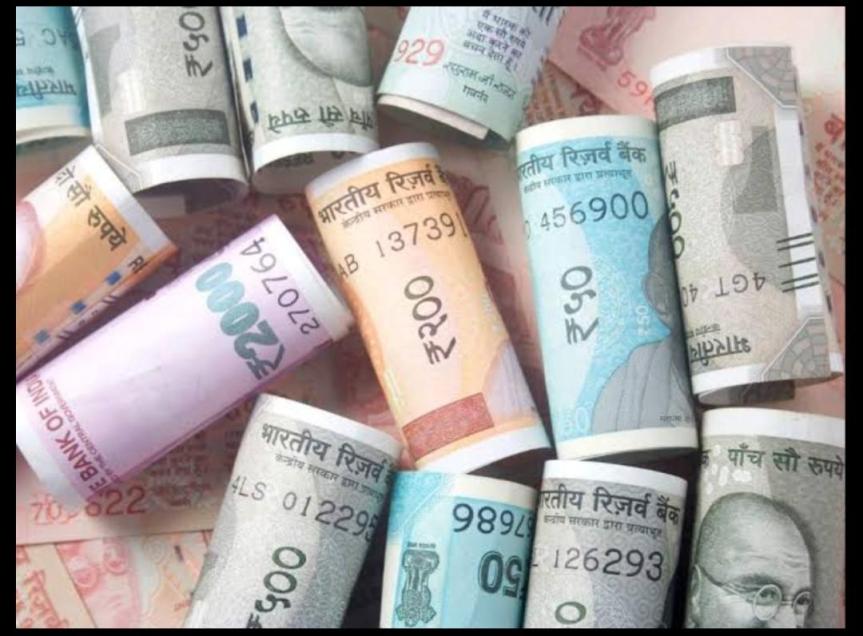
Money a commodity accepted by general consent as a medium of economic exchange. It is basically the legal tender of exchange. The paper currency which we use today has a long history behind it’s origin and evolution. Even today, money is continuously evolving, going from paper to plastic to digital. Over the years, money has changed it’s forms several times but what hasn’t changed is it’s functions. No matter what form it is used in, money almost always serves the same functions.
The functions of money are categorised as primary, secondary and contingent functions.

Primary Functions of Money:

Under this category, money performs it’s two main functions that are medium of exchange and unit of value. In the former case, money has removed the need of double coincidence of wants, something which was very much needed in the batter system which was used earlier. Being a medium of exchange means being generally acceptable. This gives the user freedom of choice and economic independence. It also acts as an intermediary and facilities exchange.
Money as unit of value means money is the standard for measuring values of all goods and services. This value is expressed in terms of price. Price is in terms of monetary unit and money acts as the determiner of rate of exchange. It also helps in calculating important economic parameters like costs, revenue, profits etc.

Secondary Functions of Money:

Under this, money performs three functions. It acts as a standard of deferred payments, it acts as a store of value and as a transfer of value. Money as a standard of deferred payments means that money acts as a standard for payments, which are to be made in future.
Money as a store of value means that money can be used to transfer purchasing power from present to future. Money is a way to store wealth. Although wealth can be stored in other forms also, but money is the most economical and convenient way. Money as a transfer value refers to the fact that money has velocity. It keeps transferring from person to other person.

https://www.yourarticlelibrary.com/economics/money/primary-and-secondary-functions-of-money/30307

Contingent Functions of Money:


Money performs certain contingent functions. These include: distribution of national income, maximization of satisfaction, basis of credit system, money as the most liquid asset. Money helps in distribution of the national product in the form of rent, wage, interest and profit, which are expressed in money terms. Money helps the consumers and producers in maximizing their satisfaction. A consumer derives maximum satisfaction when marginal utility is greater than marginal cost. Money helps in credit creation for banks. Money as a store of value has encouraged savings by people in the form of demand deposits in banks. These deposits are used for generating credit. Money is the most liquid asset of all assets in which wealth is healed. Individuals hold wealth in numerous forms ranging from currency, demand deposits, time deposits to bonds , savings, treasury bills etc. All these forms can be converted into money and vice versa.

https://www.yourarticlelibrary.com/economics/money/contingent-functions-of-money-in-economics/30310