

Communalism in India: Threat to National Integration

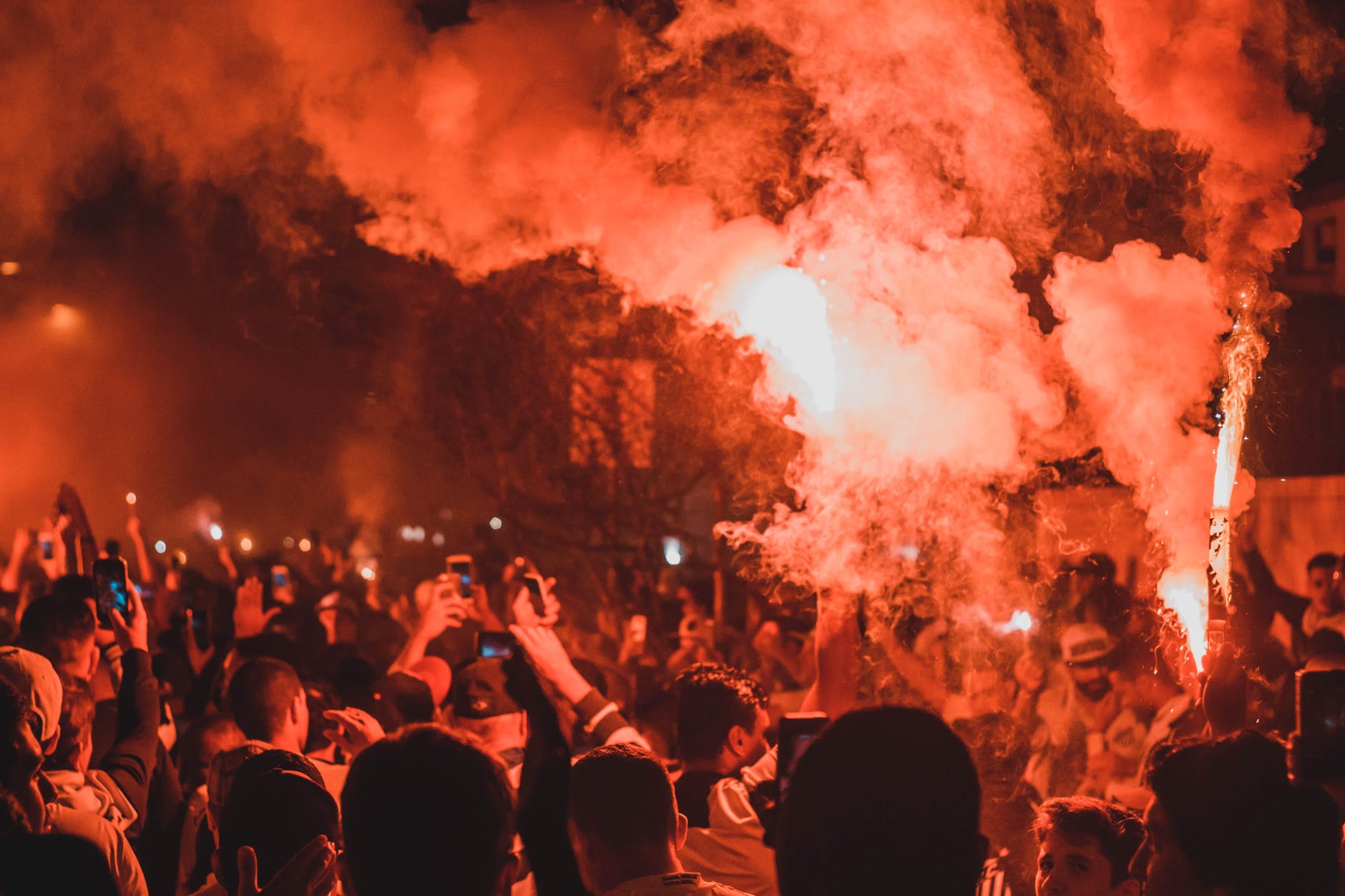
Photo by Mauru00edcio Mascaro on Pexels.com

National Integration is a process by which divisive people and culture are synthesized into a unified whole, along with higher levels of cooperation, mutual understanding, shared values, common identity and above all national consciousness. In the process of national integration, people of a nation develop the sense of we feeling and are unified. The broader objective of national integration has been the attainment of ideological goals such as secularism and democracy. But these are some negative forces lurking within the society which pose as a rising threat to the national integration of India in the form of communalism, regionalism, linguism, etc.

India represents a divirse religions and cultures. Hinduism, Islam, Sikhism, Christianity, Zoroastrianism, Buddhism, etc have flourished here. Whereas the Hindus constitute the major segment of India’s population, the Muslims constitute the largest minority. But the irony is that the adjustment between the Hindus and Muslims has been a failure several times, resulting in violent outbursts and communal riots. The inhuman behavior seen in the communal riots during the period of Independence of India, has no parallel instances in the entire history of the world. In fact, communalism is not a new phenomenon and has tended to exist since the times of the Muslim rule in the medieval period.

Communalism is described as a tool to mobilize people for or against, by raising an appeal on communal lines. Asghar Ali Engineer, Moin Shakir and Abdul Ahmed try to explain communalism as an ideological tool for propagation of economic and political interests. According, to them it I an instrument in the hands of the hands upper class to concentrate power by dividing people.

Communalism as an ideology may be perceived as:

  • A total commitment to a set of beliefs,
  • Far from rationality,
  • Commiting of self to the community alone,
  • Unwillingness to accept other belief patterns and faiths,
  • Closing of self and being highly emotional to it, to the extent of crossing the bounds of law at times.
  • It mostly rests on prejudices,
  • It causes rivalry and violence among masses,
  • It effects are disastrous,
  • It strikes at the roots of secularism and national integration.

There are many factors that lead to the emergence of communalism in the society. Some of these factors include provocation of enemy countries, negative effect of mass media, geographical causes, weak economic status of minorities, historical causes, organized and militant fundamentalist organization, orthodoxy and obscurantism and failure of government policies.

There stands an urgent need of eradication of communalism in our society. Some policies that can be undertaken in this regard include abolition of communal parties in our country, healthy public opinion, inter- religious marriages, declaration of national festivals, etc. These are few measures that may help in curbing communalism from causing any threat to the National integration of our country.

National Integration in India

National Integration

Introduction

The development of a country lies in its unity. Peace, tolerance, humanity, religious harmony, all are possible only through national unity. In this article we will see how important national unity is.

National Integration

India is a multi-lingual, multi-ethnic, multi-cultural and multi-religious country. Even though we are different in so many ways, we are all one in the same thing. We are all one race in the sense of being Indian. There is no place for minor alternatives. Equality and fraternity can only be nurtured through national unity. That is the only thing that unites us all. 

It is a matter of pride for us that we are all united in unity and united with the feeling of being one voice Indian at a time when foreign powers are dividing and differentiating us. 

The Nature of Integrity

No one can deny that national unity plays a vital role in determining the security of a country. No matter how many cannons, bombs and bullets pierce, only our national unity has the power to crush all dictatorships. 

We are able to breathe the air of freedom today only because we have forgotten the various differences that existed within us during the freedom struggle and fought with the lofty principle of my nation, my motherland. 

The Benefit of Integrity

The freedom we enjoy today is not easy. The heroism that fertilized our unity, shed tears and bloods, spent time in prisons and faced many atrocities, was born out of a sense of nationalism.  Every citizen has a moral duty to protect his homeland. We have the right to progress the motherland. The need to build the future of India with strength can only be achieved through national unity.

Conclusion

Let us set aside all selfishness and work together for the progress, security, unity and peace of the nation.

The Greatest Religion – National Integrity.

The problem of National Integration is universal and it involves reconciliation of all diversities to build up national solidarity. Nationalism and regionalism do not go together. If Nationalism represents the ‘forces of unity and cohesion’, regionalism is a symbol of ‘Particularistic identity’.

The process of National Integrations, therefore, tries to achieve both —the forces of national unity, solidarity and cohesion and the regional identity and freedom. In brief, national integration helps building up the national character out of the individual character. It involves national cohesiveness through territorial unity. Amidst socio-cultural, regional, religious, linguistic and economic diversities, national integration aims at the process of uniting together various parts of the society into a “functions whole”, where in there shall be “reduction of all barriers and tolerance of all differences unity, shared values and consensus.”

However, national integration lacks a precise definition. To a common man, the term ‘integration’ implies ‘the process of becoming a whole’. It is more a psychological, behavioural and emotional concept. In a limited sense, it (National integration) believes in a sense of territorial nationality which overshadows or eliminates the subordinate parochial loyalties .

National integration is highly necessary in a multi-religious, multi-ethnic, multi-caste, multi-regional society like India. Realizing the need of it, the National Integration Conference organised in 1961, had suggested a code of conduct for political parties. Besides the suggestions of the National Integration Conference, some other steps can be recommended for securing high level of national integration.

(1) Promotion of Secularism:

The spirit of secularism is highly necessary in Indian multi-religious society. For this reason the National Integration Conference of 1961, suggested that no political party should indulge in any activity aggravating the differences or causing any tension between various castes, communities or linguistic groups. There is a demand to ban all communal parties and communal organisations by which the danger of communalism can be made less serious. Any sorts of activities creating communal reactions in the public mind should be prohibited. No discrimination among the people on the grounds of religion should be made.

2) Cultural Integration:

Recognizing the existence of a wide range of groups, inter-group relations should be promoted in India. Though not uniformity, yet unity among the people can be created with a common set of values. National goal or national objectives generate cultural integration which partially favours emotional integration of the nation.

(3) Economic Development:

Regional imbalance in economic development and acute poverty of certain section of the people impose serious impediments in the achievement of national integration. Despite the adoption of five-year economic planning’s and a number of socio-economic welfare measures, poverty continues as a serious problem. A great chunk of people remain far away of national mainstream. Economic development means the development of whole people and the development of entire nation. Special efforts are necessary in this direction to ensure common national prosperity.

Education:

Illiterate and ignorant people cannot be conscious of the values of national integration. Education only can promote faith in the integrity and the moral worth of the individual. The educational institutions can play important role as forums for arousing the spirit of national integration.

The study and solution of various social problems can be assigned to the educational institutions. In case of higher educational institutions like colleges and universities, exchange of teachers and students from one institution to another for lectures or seminars can promote national integration. Reading materials used by students in schools and colleges should be properly examined to avoid communalization of text books.

Political and Administrative Measures:

Since India is a federal-democratic country, its integration in all respects should also be done on a democratic basis. Each ethnic, caste, tribal, religious and linguistic group should have freedom for protecting and promoting their own culture and traditions. Analyzing the process of national integration in India, Prof. Rasheeduddin Khan has observed that it means cohesion not fusion, unity but not uniformity, reconciliation but not merger, agglomeration but not assimilation, solidarity but not regimentation of the people constituting our political community. Emotional integration with the development of a strong brotherhood among the people, discourage the growth of separatism, regionalism or secessionism.

The agencies of media both electronic and print should be used for inculcating a national outlook. Academic seminars and entertainment programmes on the theme of communal harmony should be organised. Cultural Academies should be established and they should work for strengthening the movement for unity.

Non-Government Organisations:

Besides the govern­mental steps, non-government social service organisations can play an important role in strengthening the process of national integration. These organisations can create necessary social awareness for bringing social reforms and change in the mind set of the people. Emergence of awareness can subsequently promote national integration .

RTP Mela of NIRD & PR (Government of India) Promotes National Integration

Hyderabad is an important city of India as it is endowed with many historical places, mouth-watering dishes including veg and non-veg biryani, different types of fruits and vegetables, ornamental items (pearl and related items), famous for medical tourism, etc. Hyderabad is also a city of national integration and above caste, creed, and religion all live amicably. As an example, a legendary figure may be mentioned here as known to all that Sarojini Naidu being a Bengali lady was born in Chattopadhyay/Chatterjee family in 1879 in Hyderabad and married to a Telugu man, Dr. Govindarajulu Naidu and finally settled down in Hyderabad. Her parental home was in undivided Bengal.

RTP Mela of NIRD
RTP Mela of NIRD

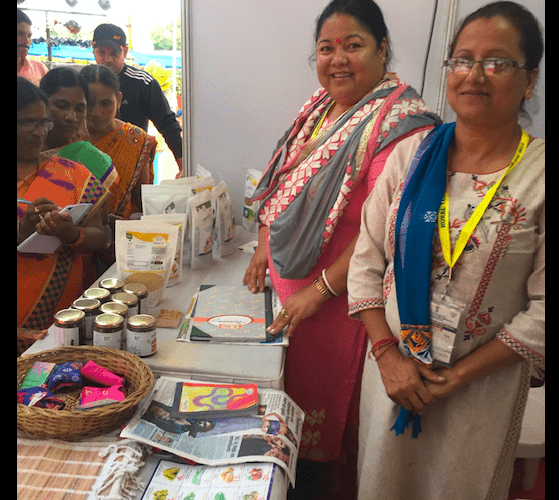
In this section, a case of national integration promoted by the National Institute of Rural Development and Panchayati Raj (popularly known as NIRD&PR), an autonomous organization of the Ministry of Rural Development, Government of India is presented. The NIRD&PR, apart from its academic activities, has been organizing Mela every year from 2003 where across India, rural artisans mainly self-help group (SHG) members participate with their products for scaling up of selling.

In 2019, 17th Mela held from 29 November to 3 December 2019 was inaugurated by the Governor of Telangana, Dr. Tamilisai Soundararajan on 29 November 2019.  As reported by Mr Md. Khan, Sr. Consultant of RTP-NIRD&PR, in the Mela mainly women members of Self Help Groups (SHG) from 24 states across the country including Arunachal Pradesh, Meghalaya, Mizoram, Manipur, Tripura, Sikkim, J&K participated. The participation of so many states from north-east in other years of the Mela was seldom. Further, around 200 stalls were set up covering various items like veg and non-veg foods, dress materials for ladies, gents and children, different types of ornamental items, etc.

RTP Mela of NIRD
RTP Mela of NIRD

The author interacted during the time of Mela with few members who came with their products from different parts of the country. And all in unison appreciated stay, food, etc. which were provided free of cost to the guests by the NIRD&PR. Of course, travel costs had to be borne by the respective state or organisation or by the SHG may be from their corpus fund.

While interacting, Mrs Ronita, a member of Laxmi SHG, from Imphal East district of Manipur observed she (also her woman friend) was absolutely happy as for the Mela both of them could visit Hyderabad. She informed that albeit their SHG was established in January 2018 but earlier did not visit Hyderabad. Their travel cost was borne by the district officials. They brought a special variety of black rice, different types of pickles, fruit candies, etc. Both have enjoyed Hyderabad as a huge city with peaceful environment. Mrs Kamal Kumari Jamatia of Tripura, a member of Golap SHG (10 women members in SHG and all ST) also expressed her happiness as first time she attended the Mela. She brought different types of ladies dresses made by tribal women, craft and bamboo products etc. From Sikkim, two women came first time came in Hyderabad with local products such as ginger powder,   raw turmeric, and other local food products. Also from Haryana two women participated as well as their first visit in Hyderabad. They brought and made in the stall different types of food items and I tasted their delicious ‘laddus’. From West Bengal of Birbhum district, two women with different types of Sarees first time attended the Mela.  Also near Darjeeling area of West Bengal few Lepcha women members came who were well versed with ‘Momo’ preparation. On the spot, they prepared tasty ‘Momo’ and such taste may not be found in other restaurants.  Mrs. Shalini of Kerala also expressed her happiness after participating first time in the Mela. She along with her husband participated Mela with a different types of clay items used in cooking. Although the SHG was established in 2003 with 16 women members this was their first visit.

It is evident that Mela is an important place of marketing of SHGs’ products.  It acts as an important forward linkage as sellers can bring their products from far-flung areas and buyers can get within their area with reasonable price and thus both are benefitted. Further, Mela has been promoting national integration. In view of this, it is suggested that such Mela should be organised across the country more in numbers. NIRD&PR can organise two times in a year.

Dr Shankar Chatterjee
Former Professor & Head (CPME),NIRD & PR ( Govt. of India), Hyderabad,  India
Former Associate Professor, Eritrea

Former Assistant Prof, Govt. Degree College, Tripura, India
Former Senior Planning Officer, Govt of Assam, India