Really Walmart ? Plumbing ??

 
Walmart closed down five stores in the US. What\’s new ? This happens all the time – stores are closed and stores are opened. So what ? What is strange is the reason it was done and the manner in which it was done.

Walmart announced to its employees two hours before store closing time on Monday last week that the stores were closing from the next day.  The reason stated was plumbing problems !! That is the most unusual reason you might have heard for stores to close.

Walmart has a history of treating its workers, shall we say, a little less generously than most other businesses. But , even by their standards, this closure is curious. One of the stores that was closed was at the forefront of a strike a couple of years ago.  The whiff, that this was retaliation against the workers is strong. But the other four stores weren\’t the leaders of the strike – so why these five ? Where the four simply lumped together to deflect the real intention to get at those b%^&*s who dared go on strike ?

Telling people two hours before shift ends that they don\’t have to come tomorrow does not appear to be a humanly good thing to do. But there is no place for human feelings  in the business world it seems, at least in Walmart. To be fair Walmart is saying that all employees would be paid two months paid leave when they can apply for jobs in other Walmart stores and that if they didn\’t succeed in two months, the permanent employees would be paid some severance pay.

The ostensible logic for the short notice to employees is that apparently if you give them a longer notice, they would all steal the store blind ! A more \”acceptable\” reason is  that they don\’t have to legally do any better.  Is this what employee relations in Walmart have come to ?

The stated reason for closure is urgent and pressing plumbing problems that have to be fixed. Really ??? Nobody the city or amongst the employees seem to have heard of the \”ongoing and pervasive\” sewer problems before. No permissions have been sought from city councils for any repairs. Its difficult to believe that the emergency closure of stores is really because the loo is leaking.

Even the most charitable view of the issue has to concede that Walmart could have handled the whole thing better. But this is probably a symptom of the real problem – Walmart management does not rank handling employees with care and concern very highly amongst its business priorities. That\’s a sad commentary on the business world. If one of the largest corporations and employers in the world, treats its employees as impersonally as a pallet of stock, then it is no wonder that they are hated as viciously as they are. The very word corporation has become a four letter word. And by their actions,  corporations are doing their very best to justify that tag.

What a stink !

The most valuable activity of the human race

In a free world, the price of anything is a reflection of its true worth to people. Something is valued high if it is important to a lot of people. It is valued low if its not so important – OK you can quibble about supply and demand, but in the end, value is a reflection of the worth in which people hold it.
What can you then make of the \”fight of the century\” that is taking place on May 2nd. Floyd Mayweather versus Manny Pacquiao. A fight between two of the finest boxers of their generation. The usual outlandish hype and outrageous build up , that is predictable for every major boxing match, is on display in ample measure. Where else will it be held, but in the most over the top place on earth – Las Vegas.  I don\’t know about the \”fight of the century\”, but it certainly is the richest fight in history.
Each boxer is expected to make upwards of $ 100 million for the fight. Yes, one hundred million dollars. Perhaps nearer $ 150 m. To give you a perspective, the next highest paid sportsman in the world – Cristiano Ronaldo – makes $ 80m in a year. The highest paid CEO of any company in the world , Charif Souki of Cheniere Energy Inc made $ 142 million in a year. And these two boxers are going to make probably $100-$150 m for one fight.
Of all the revenue streams, the biggest will be pay per view subscription for watching the bout on TV. The price  just for watching the one fight is likely to be $ 90. Ninety dollars for sitting on your couch to watch a max of 12 rounds. 3 million Americans are expected to sign up.
There is nothing in the sporting world, in any sport, that can remotely match the earnings of this fight. Come to think of it, there is nothing in any field of human endeavour that came come close to this level of money. Let us assume that the bout will last an hour (it could even last 3 seconds but we\’ll be charitable). That\’s a gross revenue of $ 500 m in one hour. Walmart the largest company in the world, in comparison makes a measly $50 m in an hour. Yes, I know this is not a sensible comparison, but you get my point.  Mankind places the Mayweather-Pacquiao fight as the most valuable of all human endeavour to be done in an hour. Ever.
I am not a great boxing fan, but I do know a bit about it. Both Mayweather and Pacquiao are past their prime. Mayweather is 38, Pacquiao is 36. They were great boxers, but the past tense is probably right. Both are larger than life certainly. Pacquiao, in his native Philippines, is probably second only to God.  But from a purely sporting perspective, its not even the finest boxing bout ever, leave alone the greatest sporting spectacle of all time.
I know that many readers , including this good friend, will argue that boxing is not a sport at all and should simply be banned. Certainly public interest in boxing is declining, but other forms of entertainment which involves one guy trying to beat the hell out of another , like martial arts, kick boxing and , with apologies to God,  WWF are all booming. I won\’t pass judgements on tastes of people, but it does strike me as a little odd that human society places the greatest value of all in two ageing fighters trying to knock each other down.

I have long had a dilemma on this matter of the value society places on different occupations. Ask anybody what are the professions which they consider most valuable to society and you are likely to get answers like teachers, nurses, etc. Ask them the professions that they detest and you would probably get bankers as the answer. And yet, look at the where we place monetary value.

Doesn\’t it say something about us all.

Two and three quarters cheers for Dan Price

It would be really churlish to sing anything but the loudest praise for Dan Price. And yet this blogger is falling short of raising three cheers for him.
Dan Price is the CEO of a privately held small company called Gravity Payments with about 120 employees. About two weeks ago, he called all his employees for a huddle and told them that he was raising everybody\’s salary to $ 70,000 a year, because that will make a big difference to their lives and help them be happy. Simultaneously he also announced that he would cut his own salary from $1m to $ 70,000. Considering that the average salary in Gravity was $48,000, he certainly made 120 people very happy. To read more about this heartwarming story click here.
In a world of cynical CEOs, astronomical pay differences , of treating employees like (pallets, or worse, shit, ) this is a refreshingly good story. Mr Price must be commended for what is undoubtedly a noble act. He is a CEO with a difference, unlike the many who sometimes don\’t seem to belong to the species we normally understand as Homo Sapiens.
And yet …………… , this blogger, while praising Price\’s actions to the sky, thinks he is wrong to do this.
People who are employed, even in Walmart, actually have a good deal in today\’s world. They have a job. They earn a salary, which while seeming to be inadequate, is at least something. They have the government looking out for them in terms of labour legislation designed to ensure that they are treated fairly. They have the unions watching their back. Although they may not believe it, they actually are in a great position.
Consider the larger number of people who are unemployed. They have nothing. Nobody looks out for them. They are called scroungers and worse. Its damned difficult to get a job. Nobody who is not unemployed can understand the feelings of worthlessness, desperation and worse.
Mr Price – you have a heart and are a good man. If you had not raised anybody\’s salary, but instead employed 120 more people,  you will deserve to be a saint in my books. Those who have a job should be paid fairly – I know that there will be a big dispute as to what constitutes fair pay, but pay them fairly by whatever standards you consider appropriate. But even more important, hire lots of people.

A tough ethical issue

Businesses are often considered as machines without a heart. But even businesses face some gut wrenching ethical issues , where the \”right\” course of action is by no means obvious.  Take the case of the compassionate care issue face by pharmaceutical companies.
Drugs produced by pharmaceutical companies are marketed after years, and sometimes, decades of clinical trials. They have to be approved by a regulating body – in the case of the US, the FDA – before they can be made available for use by doctors and patients. This is a justifiably stringent process.
It is therefore obvious that at any point in time, there are a number of experimental drugs which are at various stages of testing or approval. They may or may not finally make it to the market place. But the fact of their existence, their performance in the trials, the stage of FDA approval (relevant since most drugs are discovered in the US) are all fairly common knowledge and often in the public domain.
The ethical issue comes when there is say a terminally ill patient who does not have much time left and where conventional approved forms of treatment have failed. The patient, or his family, makes the appeal to a pharmaceutical company for an experimental drug that is not yet fully tested and has not been approved by the FDA. Is it ethical for the company to release an experimental drug for such a patient ? They may not even be making the drug outside of the lab as yet. Should they actually produce it in a pilot facility to make it available ?
I learnt from this news article that hundreds of such requests actually come to the FDA every year . The regulator examines each such request and apparently they are mostly approved. But for any serious evaluation of a request, they need time and that is probably what the patient does not have. Even if there was a little time, the patient and the family would be understandably anxious to try the treatment tomorrow if possible. So, even with an FDA approval of the case, how does a company respond to such a request.
On one hand, it is absolutely cruel to withhold a possibility of a chance, however slim, from somebody who will otherwise die. The case for release of experimental drugs is very strong. It doesn\’t need any further elaboration.
But consider the risks. Doctors will be the first to tell you that there are many grey cases where it is not easy to determine if the patient is terminally ill. What if there are are horrendous side effects which are not yet known – at what stage of experimentation of a drug is it OK for it to be released to a live patient. What about the risks of lawsuits – after all we are talking about the US a notoriously litigious society. What about the risks that companies may simply use terminal patients as clinical trials if compassionate care becomes widespread. What about non terminal cases (say Parkinson\’s or Alzheimer\’s, which are non fatal but horrible diseases) where an experimental treatment might drastically alter the quality of life.
Thorny ethical issues. I would hate to be in a position making the decision. Johnson & Johnson, a famously ethical company has moved to set up an independent panel to be organised by the New York University to decide on each case. That is probably the best course of action, but each decision would be extremely difficult to make.

What do you think – in which direction would you lean ?

Who\’s who in Chinese politics

Xi Jinping, the current Chinese leader is easily the most powerful leader that China has had ever since Deng Xiaoping faded away in the early 90s. But in order to understand his power, we have to go back a bit in time in modern Chinese history.
Mao was a tyrant and supremely powerful in China and until his death, he was simply the sole power centre. But that degree of concentration of power resulted in chaos in China – the Great Leap Forward and the Cultural Revolution being two big disasters. When he died, the elders decided that no single person should ever be allowed to accumulate such power. Deng Xiaoping became the preeminent leader, but there was a rival power centre in Chen Yun and to a lesser extent in Li Xiannian. Multiple purges later,  Jiang Zemin was appointed the Secretary of the Communist Party immediately after the infamous Tiananmen incident in 1989.
Jiang accumulated a fair degree of power, but was never all powerful. He led the party out of the post Tiananmen crisis and then earned his own notoriety by the brutal suppression, and virtual extermination, of  Falun Gong – a cult loosely based on mysticism, but which was feared by the Party as a political movement. By the norms set by Deng, which he followed and reinforced,  he stepped down after some 12 years as the Secretary of the Party and handed over to Hu Jintao, who was handpicked by Deng himself before his death. However, Jiang continued to remain the Chairman of the Central Military Commission and therefore in his first term Hu really did not have much power and had to constantly \”handle\” Jiang. Jiang continues to remain a power centre and is the leader of the Shanghai faction. However he is getting old (he\’s past 90) and his power is fading, helped along by Xi\’s efforts to undermine this faction.
Hu Jintao is a colourless and plodding leader, who even while he was the Secretary of the Party, was never a charismatic leader. His hold on power was weaker. When he handed over the reins to Xi Jinping, he quit all his formal roles. He leads the Youth League, another faction, but is not a powerful leader.
Xi Jinping comes from a group called the \”princelings\” – their fathers were revolutionary leaders in the Mao era and their positions, at least to some measure, is owed to their parentage. When Xi took over, he swiftly started to consolidate his power with a massive anti corruption drive, the likes of which China has never seen.
Ostensibly Xi was tackling one of the greatest scourges of China – corruption. The scale of corruption in China is simply unbelievable. Nowhere has mankind seen anything like this. It is all pervasive . I won\’t say anything more – I still wish to travel to China !! Let me just say that whatever you think is the level of corruption in China, the reality is probably tenfold worse. It is an existential threat to the Party.  Therefore tackling corruption was a popular thing to do.
But the anti corruption drive was also a big consolidation of power by Xi. It was positioned as catching \”tigers and flies\” – both the small fry as well as the really powerful.  Unsurprisingly, the people targeted the most were political opponents. More than 100,000 flies have been indicted, but more importantly so have nearly 200 tigers. This includes some 100 senior people in the military including two former Vice Chairmen of the Central Military Commission (the equivalent would be Defence Secretary and the Joint Chiefs of Staff in the US military being purged). The biggest tiger of all who was jailed is clearly Zhou Yongkang, a past member of the Standing Committee. Such a thing is simply not done in Chinese politics – the upper echelon of the Communist Party was thought untouchable.
Xi\’s main ally who has carried out the anti corruption drive is Wang Qishan, a current member of the Standing Committee and 6th in the formal order of seniority. But clearly the real no 2 in China is Wang Qishan. He is a star economic leader in China – having held a number of economic portfolios in the past. But for the last 5 years he has been Xi\’s enforcer in the anti corruption drive. Crucially he is 69 and by the tenets of the unofficial retirement policy, he should retire in October. All the rumours swirling around China are that Xi will keep him. 
The formal No 2 is the Premier Li Keqiang. His job is to run the economy and the general consensus is that he has not been successful. His power base is small and he belongs to the Youth League faction of Hu Jintao. In fact at the time of Xi\’s succession it was rumoured that Hu actually wanted Li to succeed him and not Xi. Li is only 62 and can continue as Premier for one more term.  This blogger has a view (wild guess) as to what might happen to both Wang Qishan and Li Keqiang and he will boldly articulate a prediction in a subsequent post !
Two other names need mention. When Xi and Li were appointed, there was also speculation as to who would succeed them in 10 years time (the next generation of leaders). Two names were mentioned – Hu Chunhua and Sun Zhengcai. Both were included in the politburo last time around and given important positions. Just two months ago, Sun Zhengcai was summarily replaced and an anti corruption investigation started against him. Clearly he lost out in a power struggle.
How do the Chinese themselves view all this ? You may be surprised ! Watch out for the next post.
PS – Chinese names are not easy to pronounce to Western tongues. Here is an approximation

Mao Zedong – Mao Tze Dhong
Deng Xiaoping – Dhung Hsiao Ping
Jiang Zemin – Jiang Tze Min
Hu Jintao – As written
Xi Jinping – Hsi Jin Ping
Li Keqiang – Li Khe Chiang
Wang Qishan – Waang Chi Shaan

Call the SNP\’s bluff


Just in case you were not following the British elections, a small earthquake happened. The Tories won, the Lib Dems were wiped out, Labour performed poorly, and UKIP performed well but got no rewards. The bigger earthquake happened north of the border where the Scottish Nationalist party (SNP) won all seats bar three in a landslide, essentially running on a plank of Scottish independence.
This blog is a politics free zone and this blogger does not comment on political matters although he has (obviously !) strong views on every matter under the sun including Scottish independence 🙂 But he can and will argue a point of view on the economics of the issue of Scotland\’s secession.
Scotland runs a much higher level of expenditure as compared to the income it generates. If it were a separate nation, it will be running a deficit of 8% of GDP, as against the UK\’s 4%. The SNP is even more to the left than Labour and wants to spend more. In the cuckooland of irresponsibility that all opposition parties operate in, this is all very possible. 
Scotland\’s economy is tiny and is heavily influenced, even now, by oil. With the current low prices of crude, Scotland\’s already iffy finances would be in dire straits if it was an independent country. But thankfully it is not and is currently being bailed out by the English tax payer.
When the referendum was held last year (and Scotland voted to narrowly stay in the UK), it was promised to the Scots that the powers to tax and spend would be devolved to the Scottish parliament. What the SNP wants is the power to tax and spend, but continue to get the bailout by the English tax payer. For a period of transition this is acceptable, but this is not a sustainable proposition. What the Tory government would probably do is to immediately devolve the powers to tax and spend, but set a graded target of deficit reduction to the UK average over , say a five year period. That is enough to turn the squeeze on any government in Scotland. Independence would start to look an increasingly unattractive proposition.
The issue of independence will never be settled on economic grounds. Everywhere in the world it is settled on emotional and political grounds, even when it is blindingly obvious that it would be a case of economic suicide. It is for the electorate to decide, although every Anglophile, including this blogger, has a view. But one thing is certain. If the UK called the bluff and handed over the management of finances to a Scottish parliament, in an election five years later, whether Scotland is an independent nation by then or not, there is no chance that the SNP will win 56 seats. Its time to make the SNP accountable.

China\’s Issues

Every country faces challenges and China is no exception. But by global yardsticks, China\’s issues are less critical than what most other countries face.  It is after all the one country in the world which does not face a serious growth challenge (at least as of now).  China is however such a large country that even a seemingly minor issue is of gigantic scale and one that will affect the whole world. This is why everybody in the world ought to take a much greater interest in this country.
This post is a compendium of social, political, economic and moral issues that China faces at this point of time, in no particular order
Maintaining GDP Growth : The \”contract\” between the Communist Party and the people is a simple one – Economic growth for political control. When economic growth falters, this contract will be put under strain. There are a number of challenges to maintaining economic growth and some of them are articulated below. You can\’t grow endlessly at 8%+. The inflexion point has come.
Quantum of Debt  : China\’s debt to GDP ratio is galloping and is now above 300%. Much of the growth over the last decade has been debt fuelled. Growth will seriously falter if debt is cut. That\’s why the elusive \”soft landing\” is proving so difficult for China. Just for comparison, India\’s debt to GDP %, which I often cry about is \”only\” 130%. The United States, of course is a leader at 350% !
Income inequality : Every country faces this problem, but China faces it as bad as the US. The Gini coefficient, a measure of income inequality is 0.42 (higher the number, greater the inequality). The US is 0.46. India is 0.35. China is starting to have first world problems
Ageing population : Because of the one child policy that was rigidly enforced until recently, China is rapidly ageing. It will be the first country in history to have an ageing problem before it got rich (remember, on a per capita basis, China is still middling). With a poor social security network, who is going to pay for the aged and take care of them in a decade or two. China has the peculiar problem of one grandchild for four grandparents.
Corruption : We have spoken of it in previous posts. It is a serious problem.
Environment : China faces an acute environmental problem. The government is actively tackling it, but the problem is a huge one and one that was allowed to build up to crisis levels over decades. China also faces an acute water problem (worse than India\’s). There aren\’t easy solutions. Much of the north is virtually a desert, but with teeming populations.
Restive provinces : The one thing China is absolutely terrible at is integrating people who are culturally different. 93% of China is a homogeneous Han (those who talk about diversity in China have no clue what diversity really means – come to India).  The two largest provinces Tibet and Xinjiang are restive and brutally suppressed
Rising nationalism : Very few Chinese would recognise this as an issue, but it really is. Anti foreigner sentiment is high – its easy for a large number of Chinese to be fanatically against a nation if whipped into a frenzy of perceived slights. The Chinese government is increasingly bullying in its approach – Japan (Senkaku), entire East Asia (Nine dash line), India (Doklam and Arunachal). The average citizen who only has access to government propaganda gets whipped into dangerous nationalism. The Chinese would do well to ponder over this – why do they have so few friends ?
A moral vacuum : To an outsider, this might seem to be a strange issue, but many Chinese would immediately relate to it. Firstly during the Cultural Revolution and then in the breakneck speed of economic growth, its ancient culture, beliefs and traditions have gone. Today money is the predominant (only) religion.  In other countries, religious and  social organisations provide a balance to the materialism. In China they do not exist, or if they rise, are brutally exterminated by the government (see what happened to Falun Gong). So many Chinese wonder – after money what? And they may then turn their attention to demanding a level of freedom not in consonance with what the party is comfortable with.
And so this is the real major issue that China has faced since the mid 1980s and continues to face now. What is the balance between economic freedom and growth and political and other freedoms. The first flare up came when Zhou Enlai died in 1976. The second major flare up came during the Tiananmen incident in 1989. Since then there has been an uneasy truce, but one which has never gone away. Some day it will rear its head again. How China confronts it, and who is in power in China to confront it, will have tremendous consequences for the world. 

How does an American pronounce Pallagoundenpalayam ?

The most unlikely of bedfellows can come together in the business world. Consider this rather unusual \”marriage\”.

The bride is the city of Detroit. We shouldn\’t be uncharitable to a bride, but the immediate words that come to mind when you mention Detroit are decay, dilapidated, joblessness,  decline, etc etc. Can any good news come out of Detroit these days ?
The groom is Sakthi Group. Sakthi who ? – even my Indian readers are entitled to ask. It\’s an unknown, small conglomerate from the South of India. They were essentially a sugar company, but have dipped their fingers into a bewildering array of businesses. They are still small by global standards – some $2 bn in size. One of their businesses is Automotive Components – a business in which Indian companies have excelled and are starting to lead the world. 
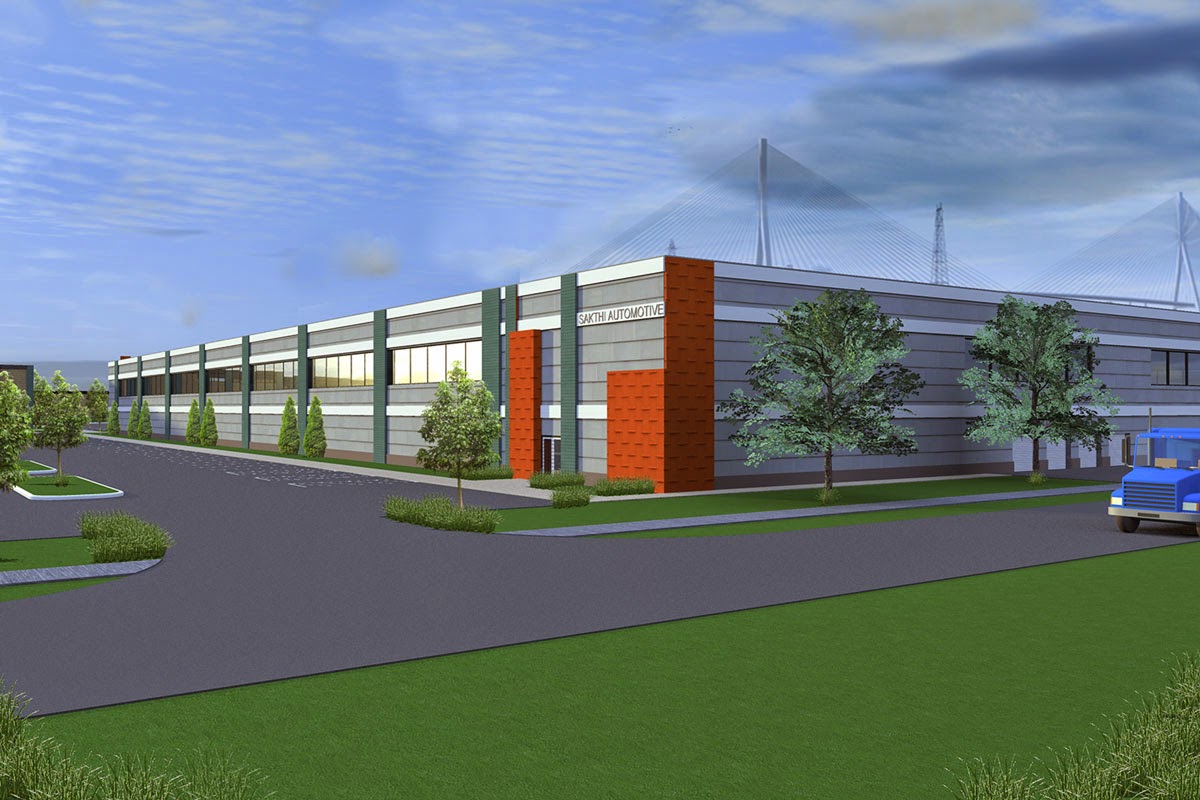
Sakthi announced a $ 31 m investment in a manufacturing facility in Detroit to make aluminium castings. GM and Ford are big customers for them and their logic for this investment is being close to customers.  Of course they have milked the incentives and subsidies – some $4 m.  But Sakthi has played the PR angle perfectly. The castings will substitute imports from China. The facility will create 650 jobs over 2 years. They have committed to hire at least 2 ex felons a month ( both a brilliant and a movingly human move). And the site they are developing is a historic school, now closed and left in ruins. Can there be a better feel good story ?
The sight of Michigan Governor Rick Snyder, waving a casting, as he welcomed Sakthi makes interesting viewing. And the Sakthi\’s chairman calling the marriage a Catholic marriage (meaning,  for the long term), is equally interesting Whether Sakthi will succeed in the most challenging location of all in the US remains to be seen. But you have to give it full marks for daring and boldness. It may fall flat on its face. But it will still have been an interesting experiment.
Meanwhile the American employees have to learn to pronounce Mukasi Pallagoundenpalayam ! That\’s where Sakthi\’s auto component headquarters is located in India. Even my good friend Sriram is going to struggle with that !

China\’s new lineup

Anybody who predicts what the next Standing Committee and the Politburo will be is almost certain to be wrong ! This is why most newspaper columnists are content with naming possible candidates and leaving it at that. This blogger does not care if he is proved wrong or even as a fool. There are no consequences to getting it dead wrong. So here\’s my prediction what\’s going to happen !
There are only two near certainties in this political game. One is that Xi Jinping will continue as Secretary of the Communist Party, Chairman of the Central Military Commission and as the President. The second is that Zhang Dejiang, Yu Zengsheng, Liu Yunshan and Zhang Gaoli will retire from the Standing Committee . Everything else is up for grabs.
Two of the key moves that is the subject of much speculation is what will happen to Li Keqiang the current Premier (most views are that he will stay on as Premier) and that of Wang Qishan (Xi\’s ally in the anti corruption drive, but who is crossing the informal retirement age of 68).
My guess is that Li Keqiang will be pushed out and Wang Qishan will replace him as the Premier. This is not considered likely today and if it happens, will be radical and  unexpected. If it indeed does happen, it will indicate that Xi has taken total control of the Party. My reasoning is that Li has been a disappointment as  Premier  with his management of the economy, his key job. He will also carry the can for the stock market troubles of 2015. Li belongs to the Youth League faction which has been systematically defanged. There is precedence in China of the Premier being replaced – Li Peng giving way to Zhu Rongji in 1998. Wang Qishan , as we have seen in earlier posts, is the de facto No 2 in China today.  He is an expert on the economy and if he were to be appointed Premier, he will be Xi\’s trusted lieutenant in the soft landing of the economy that is a big imperative for China. This will mean Xi is bending the retirement rule – something I am guessing he will do as a strawman for his own options 5 years from now when he will face this retirement rule himself.
I think Li Zhanshu is a shoo in for the Standing Committee. He is currently the Director of the General Office of the Party and is a right hand man of Xi.  Stacking the Standing Committee with his people will be a primary objective of Xi.
There is a good chance that Wang Yang, currently Vice Premier will be elevated to the Standing Committee. He is not a Xi loyalist  and was potentially a candidate for the Standing Committee  even the last time around. He is however efficient and strong and has quelled his reformer (read political) instincts. He has kept his head low over the last five years and for sheer ability is likely to rise.
Another likely name is Wang Huning. He is currently the head of the central policy research office. A  non controversial choice who doesn\’t belong to any faction. A theoretician whom Xi seems to rely on and is often seen on Xi\’s overseas trips as an important adviser.
If Xi is in total control of the Party and has not needed to cut any deals, then this is the likely Standing Committee – cut down to five members . Xi Jinping, Wang Qishan, Li Zhanshu, Wang Yang and Wang Huning.
If Xi however decides to stay with a seven member standing committee, then the two additional names, would be as my guess, Zhao Leji and Han Zheng. Both are \”senior\” but not powerful and therefore likely to simply make up the numbers and duly nod their heads to anything Xi says.
If my prediction is even 75% right, then it is clear that Xi is all powerful. None of these members can be a potential successor to Xi and it will also indicate that Xi is preparing to stay on after 2022 as he hasn\’t groomed a successor unlike what his predecessors Jiang Zemin and Hu Jintao did.
 Just as important as who gets in, is who doesn\’t get in. The disappointed persons would be
– Li Keqiang, the current Premier. He would be the biggest casualty if he were to fall. If he doesn\’t get dropped, Xi is just being cautious not to make too many changes. Li\’s power will continue to wane and he will, at best be a bureaucrat continuing to run the economy. Real decisions will  made by Xi.
– Hu Chunhua, the current party chief of Guangdong. He is of the next generation and had been touted as a potential successor to Xi even five years ago. He has recently been making noises pledging loyalty to Xi.  His elevation to the Standing Committee will mean he is the clear front runner next time around. His non inclusion will be a strong signal that Xi intends to stay on even after 2022.
– Chen Min\’er, current party chief of Chongqing. He was just brought in there to replace the disgraced Sun Zhengcai, a potential successor to Xi who fell in a power struggle. Chen is a staunch Xi loyalist. Its unlikely that he would be nominated, but if he were, it would be a clear signal that he would take over from Xi at least nominally in 2022, while Xi holds real power from the backroom.
A team like the one I have predicted will mean the following for China
– Xi Jinping is all powerful. He will start to acquire Mao like cult status. It is only hoped that he wouldn\’t unleash horrors on the country as Mao did.
– The Party will become even more ruthless in suppressing dissent. Personal freedoms will be even more curtailed and censorship will worsen.
– The economy will be managed efficiently. Economic troubles will come but they will be managed as best as could be.
– On foreign policy China will become increasingly belligerent and muscular.  They will be difficult to deal with diplomatically and might pick up fights with other countries. The current US administration will constantly lose on anything they pick up with China.
– The anti corruption drive and the defanging of political opponents will intensify. Xi might however face a challenge when Jiang Zemin dies. Major political activity tends to happen when somebody important dies.  The two major upheavals in China happened in 1976 after Zhou Enlai died and more famously in 1989 when Hu Yaobang died which led to the Tiananmen incidents. Jiang is nowhere near as liked as Zhou or Hu were, but it may be a trigger for old timers and those who had lost out in the Xi era to maybe flex their muscles.
– Xi will stay on post 2022 and will be the main power for at least another decade. He will install one of his men as the General Secretary, but will stay on as the Chairman of the CMC and wield real power. He may even be appointed Chairman of the Party, a post that was abolished after Mao.
How wrong I am would be revealed in the days after October 18th when the line of 5 or 7, which I alluded to in the first sentence of this series of posts will walk in and be introduced.  Even if I am 50% right, I will lay claim to being a \”Zhōng guó tōng\” (China expert) !
Enough of politics. This blog will go back to plodding on business and economic matters. It will return briefly to China and politics when the actual line up is announced in end October.


In defence of TPP

The Trans-Pacific Partnership (TPP) is a trade deal that 12 countries bordering the Pacific Ocean are negotiating. The countries include the USA, Japan, Australia and Canada, but exclude China. The TPP is being vigorously opposed by a collection of groups – Democrats in the US, environmental groups, labour unions  and even Medicines Sans Frontiers. There is much fear mongering and shrill yelling, especially from US politicians, and this blogger believes a reasoned debate on the real issues would be useful. This series is also in response to this post from my good friend.
Firstly, we must clarify what TPP is. It is an attempt at a trade deal between 12 countries. The WTO was (is ?) an attempt to do a trade deal across most of the countries in the world. The TPP is far less ambitious – it attempts to cover only 12 countries, most of whom see eye to eye on many issues. And yet, this is proving to be very difficult to achieve, with much of the noise in opposition emanating from the US.
Why do we need any trade deals at all ? It is necessary simply to make imports and exports between countries possible. It can be as simple as a Double Taxation Agreement – two countries agree that the same income will not be taxed by both countries. It can be an agreement between both countries not to raise huge tariff barriers that make trade impossible. It can be to respect intellectual property rights in both countries, etc etc. It can be an agreement on a single issue (piecemeal and suboptimal) or a more comprehensive multi issue pact (preferred and in which case it becomes a full blown trade deal) .
In the past countries did bilateral trade deals with one another. This led to a complex plethora of agreements which came in the way of trade, as the world started to become more and more globalised. Therefore countries tried to form groups and do a single trade deal amongst themselves in order to create level playing fields and facilitate trade and commerce between all of them. The European Economic Community is perhaps the earliest and deepest bloc. NAFTA tried to create a far less ambitious trade deal in the Americas. Trade zealots tried to achieve a global deal amongst all countries – first called GATT and then WTO, but this is proving impossible to achieve and perhaps a pipe dream. The TPP is a far more modest attempt by 12 countries, but even this is proving so tough to do.
I hope you would agree that some sort of trade deals are necessary for the globalised world of today. If you are in the camp that says all globalisation is wrong and no trade deals should ever be done at all, then I will not debate the matter with you as our positions are on different ends of the universe. If you accept that trade deals are good in principle, then let us turn our attention to the TPP and the issues which are most objected to by the opponents of the deal.
 * The setting up of arbitration panels to decide disputes, including where a government is a party to the dispute, instead of taking the matter to national courts (This has what got my friend\’s goat in his post referred to earlier and is also the point on which a certain Elizabeth Warren is making the maximum noise)

 * The fear of loss of jobs in the US , which is the chief complaint of the trade unions

* The fear of increased economic activity creating more pollution and climate change, which is the chief objection of the environmentalists

* The enforcement of intellectual property rights, which is the chief objection of Medicines Sans Frontiers

There is also the added objection in the US that the negotiations are being done in secret by the US government- another issue that has aroused my friend\’s ire.
I will cover each of these issues in detail in subsequent posts.

In defence of TPP – the arbitration clause

One of the big issues in a trade relationship involving multiple countries is what happens if a country unilaterally decides to ban a product, or raise import duties astronomically, or take a similar form of unilateral action that dramatically affects the viability of a foreign investor\’s project. This might go against something that the government itself contractually agreed with the investor. What does the investor do.
The investor can take the government of that country to court, but in many countries of the world  there is no hope of winning, or it would take years in court. After all a government can simply change laws retrospectively (as India often does) and the courts can do little else but enforce them. It is precisely for this reason that the United States for many years has been insisting on independent forums for resolving Investor-State Disputes (ISDs). The US position has been that the legal system of every country outside the US cannot be trusted and therefore there must be an independent mechanism for resolving disputes. In current bilateral trade agreements with 5 of the 12 countries in TPP, the US already has ISD clauses.  In recent years the US has an ISD mechanism in every trade agreement it has signed, bar the US-Australia one. In fact the biggest opponent of the ISD clause has been Australia, rather than the US. In a blatant double facedness, Australia has ISD clauses in trade agreements with developing countries, but refuses with developed countries.
The principle is not new either in the commercial arena or in governmental ones. Every commercial contract has arbitration clauses – parties submit to the jurisdiction of arbitrators rather than courts. This is both cost effective as well as time saving and is universally used in commercial contracts. There are well established global rules governing arbitration – the \”capitals\” of arbitration being London, New York and Singapore. If each commercial dispute came to the courts, the judicial system in every country in the world will come to a grinding halt – it is partly for this reason that courts themselves encourage arbitration.
It is therefore rich for US politicians, and especially Elizabeth Warren to argue against the ISD clause on grounds of loss of sovereignty. Firstly it is the US itself over successive Republican and Democrat administrations that has championed this principle. Secondly it the US which is usually the gainer in such matters – for example it prevents countries from outrightly nationalising companies and industries, as say for example, Argentina is wont to do. 
Two cases are often used to illustrate how \”greedy companies are milking countries\” – the Veolia Egypt case and the Philip Morris Uruguay case.
Veolia , a French firm was executing a project to reduce greenhouse gases in Alexandria in Egypt. The firm executed a contract with the government whereby the government would compensate the company for cost increases because of governmental action. Egypt then raised the minimum wages in the country and Veolia then took the Alexandria authorities to arbitration for compensation for rising costs. The matter is in dispute and has not yet been decided. This is a contractual matter and the spin that Warren & Co are mouthing that this is a corporation suppressing minimum wages in a poor country is pure balderdash.
The Philip Morris case is more nuanced. Uruguay passed laws requiring that 80% of the pack contain graphic images and the risks of smoking. It raised taxes, banned advertising, and sponsorships. Philip Morris took this to arbitration on the grounds that this makes it virtually impossible to do business. The matter is yet to be decided. Uruguay is a signatory to an ISD arbitration and hence this came up before the arbitration panel rather than the courts in Uruguay. There  is no evidence that just because it has gone to arbitration  the ruling would be \”unfair\” or \”unjust\”.
As a consequence of this case, in the TPP negotiations, the US has sought to prevent misuse of the arbitration clause by recognizing each country’s “inherent right” to regulate for health and safety. This will probably get incorporated into the final deal so that unilateral action by governments on grounds of health or safety  cannot be legally challenged.
As far as the US is concerned, the TPP provisions are no different from the existing situation it already has in some 50 odd agreements.  So why all this noise from Warren ? The noise is not because she has a better mechanism for dealing with an investor government dispute. It is in reality because she is against globalisation & trade. That is a different argument and battle.

In defence of TPP – the loss of jobs

The opposition from labour unions in the US ( and labour activists everywhere in the world) to the TPP is that it will lead to the loss manufacturing jobs (read in the US) and therefore it is anti labour. I have some sympathy for the view of the labour unions in the US, but absolutely no sympathy for the \”global labour activists\”.
In every change of  the status quo, including opening up of trade, there will be winners and losers. When international trade is made more easy, by whatever means, the risk of American manufacturing jobs being lost is real. Labour intensive activity will migrate from higher cost locations to lower cost locations – that\’s an indisputable fact of economics. Therefore there has to be some sympathy for the US unions\’ opposition to every trade deal with a foreign country.
The balance sheet of wins and losses for the US looks like this. Jobs will be lost, especially in manufacturing. US consumers win in terms of lower costs of products. If international trade were to be substantially reduced, inflation will soar in the US. Prices of all goods will rise to levels which will put them out of reach of many people making it hard for even the poor in the US to enjoy the quality of life they currently have. Increased economic activity leads to rise in taxes for the US government – don\’t believe all that spin about evil corporations hiding their money overseas ; this is a point I am happy to debate separately. The increased economic activity does create more jobs, but not enough to compensate for the loss of jobs and in any case it is mismatched in terms of skill levels. So the only constituency that has some case for objecting to the TPP ( and every trade deal) is the US labour unions.
The group that deserves utter contempt are the international \”labour activists\” who are protesting against the TPP.  As we have seen, jobs will be lost in the US, but they will migrate to lower cost, and poorer countries . These are the societies that desperately need economic betterment through jobs.  Secondly, by lowering the cost of labour, there is a defence against machines taking over these jobs. That is why iPhones are still assembled by hand in China and clothes stitched by hand in Bangladesh. In sum total, there are more jobs created and preserved in the world than it would have been if manufacturing were to be done in high costs countries. You would have thought this is in net good for the world.
It is also an indisputable fact that labour is exploited in poor countries.The US, to its credit, through various trade agreements and via the TPP, is trying to minimise this. In particular, US negotiators want TPP members to implement and enforce the 1998 Declaration on Fundamental Principles and Rights at Work of the ILO. This includes the freedom of association, right to collective bargaining, a ban on forced or compulsory labor, the abolition of child labor, and a ban on discrimination in employment. The US also wants countries not to exempt their special economic zones from the labour laws of the rest of their country. These are all sticking points in the negotiations, but this is what the US has been strongly negotiating for.  If there were no TPP, it would be laissez faire for labour exploitation in each country. The TPP at least attempts to get some common protection for labour in every country. And the \”international activists\” are opposing this.
So yes, international trade will hurt US jobs. It has been doing so for many decades. But if you see it from a global perspective, the world would be a better place with the TPP, than without it. Having said that, I have sympathy for, and would not argue against the opposition of the US trade unions.

In defence of TPP – Environment and Intellectual property

In this post I\’ll tackle the  issues raised against the TPP in the areas of environment and intellectual property.
The opposition to the TPP from environmental activists comes from two contradictory positions – one is that any promotion of trade and economic activity leads to degradation of the environment and therefore must be stopped. The second argument is that the TPP does not go far enough to make environmental and climate change issues at the heart of any trade deal.
The first argument is not worth debating, for it is a loony left idea that deserves contempt. Denying the opportunity of economic advancement to the world\’s poor should be treated as a crime; for that is what it is. It would be far better if these activists were to specify how growth can happen with minimum effects on the environment (for eg what energy sources could be acceptable) and what the trade offs and choices should be. This they do not do and simply oppose everything. Such a position is not worth a shouting match.
The second argument is worth serious consideration. The US over many bilateral trade agreements has been pushing the following principles
* A binding agreement that countries would not lower their environmental standards in order to attract investment
* That their obligations under other multilateral climate control agreements would override any provisions of the Free Trade Agreement
* A long list of prohibited activities – like logging, deforestation, trade in wildlife, etc
In the TPP negotiations, the US is actually on the defensive as internally the Republicans will block any deal that contains significant provisions on climate change. Countries like New Zealand and Australia which are far more advanced on climate change issues are pushing for tighter provisions. These will have to be negotiated through, but given that the US is such an important player, it is unlikely that they would be able to do much progress. The activists are right to push for greater environmental standards. But the TPP is the wrong place to fight this. They should force the US, which single handedly screwed up the Kyoto Protocol, to come with an alternative.
I approach the second issue of intellectual property rights with some trepidation as that would mean arguing with Medicines Sans Frontiers (MSF) , a saintly organisation, which I am neither competent nor entitled to do. The issue is primarily of patent protection to pharmaceuticals. The US would like patent protection similar to what it has inside its own country. This would mean high prices for drugs for a long time in other countries and inhibition of development of far cheaper generic drugs. As this would disproportionately hurt the poor, MSF has been objecting to patent advancement through Free Trade Agreements. It is a difficult and thorny issue on which there are no easy answers . I am ducking this issue as this is not a big issue with the opposition to the TPP in the US, which is the prime theme of this series of posts. To its credit, the US negotiating team is trying to promote the principle  of \”active window\” – a period of time which would be longer for developed countries and shorter for developing countries when patent protection would exist and after that the country would be free to promote generics. That might be the best compromise.
This is probably an easy post – neither of these issues are ones on which US politicians should  kill the TPP. Despite the lunacy of a not insubstantial number of US politicians, this is unlikely to happen.
Tomorrow I will conclude this series with examining the secrecy surrounding the negotiations which is common cause made both by my good friend and Elizabeth Warren !!

In defence of TPP – Secrecy in Negotiations

One of the biggest criticisms of the TPP in the US has been that the negotiations with other countries have been carried on in secrecy by the US government. US politicians have been falling over to yell themselves hoarse against this. When Wikileaks published confidential negotiation documents in their expose, there was much ballyhoo of how evil the government was.
Stuff and Nonsense. (The Queen would appreciate this remark !!)
I have not read Wikileaks and the very fact that I, an outsider sitting a million miles away with no access to any negotiating document, is able to write this series should be ample evidence that there is no Fort Knox secrecy. The principles with which the US (and every other country) are negotiating are well known and have been well known for years. None of the contentious issues are any different from what the US has been stating and signing in bilateral agreements for the last 20 years. Neither is any of this different from the positions the countries took in the Doha round of  the WTO. The arbitration clause I referred to three posts ago has been touted as a major googly being slipped in secretly through the back door. Bullshit. It has been there in every US bilateral agreement for years. The principles and the US stand have all been open and perfectly well known. You may agree or disagree with them, but you can\’t say they are secret.
What has certainly been kept secret are the details, the fine print and the negotiating documents. Yes, I know, the devil is in the details. In fact there is an unprecedented levels of security including telling pompous US Senators that they can\’t take notes – a tactic designed to exploit their infantile memory. You can disagree with this level of secrecy, but it is at least understandable. Negotiations involve give and take and involve messy compromises. When they are made in the glare of publicity, no agreement can be reached at all. Nobody negotiates under the glare of television cameras. Single issue activists and voluble gassy politicians (you know who I am referring to) will pump money lobbying and make so much noise that no agreement is ever possible.  For example the US is currently leaning towards accepting agricultural tariffs being retained in Japan with a quid pro quo that tariffs on Japanese automobiles will also remain in the US. This is an ugly compromise, but there is no way any deal is possible without bowing at the sacred altar of Japanese rice. As it stands the American sugar producers are vigorously lobbying for TPP (since it will protect their domestic subsidies), while the US Chamber of Commerce is furiously lobbying against and are being egged on by Australian sugar exporters. This is just on one minor item – sugar. Imagine the chaos and cacophony if every lobby group were to be shouting at 10000 decibels on Clause 4a, subsection ii of a negotiating document. We might as well not attempt any agreement at all. Anybody who wants negotiations in the full glare of publicity is either a cynical manipulator with a huge self interest or has never done a negotiation in her life (notice the gender).
The second big  controversy is the granting of fast track authority to the President to negotiate trade deals. Fast track gives authority to the President to negotiate a trade deal which Congress cannot subsequently amend or filibuster – they can either approve in toto or reject in toto. Predictably, the biggest noise on this is coming from the good lady. Of all the self serving and pompous stands, this takes the cake.
Firstly the fast track procedure is nothing new. It has been in existence since 1975. Successive Republican and Democrat presidents have been granted this power. This is not some Obama evil invention.
Secondly how, and with who, does any other country negotiate with the US ? You only negotiate with somebody who has the power to negotiate. Who is that person in the US ? What is the use of spending 3 years negotiating with the President when after a deal has been reached, 100 Senators and 435 Representatives can then amend at their will. This is the US Congress which can attach completely unrelated amendments to any bill – they of the crowning glory of killing a human trafficking bill by attaching a clause on abortion. So if the President cannot make a commitment on behalf of the US, then who can ? Does Japan have to negotiate with 535 Congressmen ? Or with a committee of Congressmen ? – imagine negotiating with an American team comprising of Elizabeth Warren, Ted Cruz,  Bernie Sanders and Eric Cantor !!!!!! There is no greater laughable concept than that.
I will conclude this series with an appeal to the Americans I know. You have elected a President. Give him some credit – he is not a traitor selling off Mom and Apple Pie. Sure, disagree with any policy, but be prepared to negotiate and make compromises with the rest of the world . Do not listen to Elizabeth Warren and Ted Cruz – both the loony left and the rabid right will lead you to a hell hole. Not only are they unhinged, they act with zero responsibility. Weigh the pros and cons of any policy in total – there are always positives and negatives. It is easy to throw out any initiative simply because you strongly disagree to a single clause.
The TPP may not be the best deal ever. It is however not a bad deal. It is to America\’s benefit. You have been the champion of free trade in the world. Your own prosperity arose because of your commitment to enterprise and trade. The world has grown following your footsteps. Do not kill your greatest strength.

    The land of the dinosaurs

    The dinosaurs missed a trick when the comet (asteroid ?) hit the Yucatan peninsula 65 million years ago. They should have taken refuge in India. They wouldn\’t have gone extinct. India is veritably the land of the dinosaurs.
    Well, at least corporate India is. In India, no company ever dies. It is extremely difficult to shut a company down in this country. They will live on for ever. Take the case of Andrew Yule.
    If you had lived in British India and looked for a job, the bonanza would have been a job in Andrew Yule. It was one of the largest conglomerates of that time with businesses in jute, cotton, coal, tea, engineering, electrical, power, chemicals, insurance, railways, shipping, paper and printing, in addition to being a zamindar (land owner). The company was founded by, yes, a Mr Andrew Yule in 1863. He and his family ran it until India\’s independence in 1947.  The Indian government took majority control in 1948 under circumstances not very clear – perhaps it was socialism, perhaps the family decided to leave. It became a government majority owned company and then under the wave of socialism that Mrs Gandhi championed, the government took it over entirely.
    It today is a pale shadow of its British India days. It currently does some engineering business and also owns some tea gardens. Long ago it became \”sick\” – Indian euphemism for bankrupt. Dinosaurs which fall sick come under the umbrella of the Bureau of Industrial and Financial Restructuring (BIFR), which is Ramamritham\’s idea of socialist utopia. Today , it has a turnover of Rs 400 crores ($ 70 m) and is still lumbering along. This year it managed to turn a small profit and declared its first dividend in 21 years.
    Companies like this abound . Many have been taken over by the government under the misguided view that nothing should ever be closed down. The taxpayer funds this indulgence. The accumulated losses of such dinosaurs is Rs 60,000 crores ($10 bn). Veritable luminaries adorn this list. Air India is of course, numero uno, but there are other stars like Hindustan Photo Films (which still makes  the old film rolls), ITI (which presumably turns out analog telephone exchanges) and HMT (which makes mechanical watches). I have little doubt that there is also a company existing which makes music cassette tapes, or the telex machine, or something like that.
    India is a culture that believes in the cycle of birth, death and rebirth. Regeneration is intrinsic to the belief of the Hindu faith. And yet, when it comes to companies, we do not accept the same philosophy. Maybe the companies are not Hindu !
    And yes, in case you wondered, the East India Company is very much alive. In a nice twist of fate, it is now majority owned by a Mr Sanjiv Mehta !