Letting go

When your child is born, it is probably the greatest moment of your life. It\’s your child. It is the creation of you and your partner. It\’s a new life created out of the blue. And only because of you.
You then slog your butt off to raise the child. You shower it with love and affection. In the first years of the child\’s life, you don\’t have a single night\’s sound sleep. You worry about your child every minute. You take joy in every smile and gurgle. You get terrified if the child were to as much sneeze.
As the child grows up, you continue to sweat over it. You work hard to earn money to provide for the child. You are willing to sacrifice anything to ensure a top quality education. You try and impart your values. You even discipline the child when she does something wrong. You have every possible aspiration for the child – she will be famous, she will be wealthy, she will excel; above all she will be happy. You even transfer your own aspirations, which you were not able to achieve, on to her.
All too soon, the child grows up. She is now a teenager. She has her own wishes. She does not want to ask your permission for everything. She perhaps listens to music that you cannot even understand how it could be called such. She wants to stay out late. You want to impose your will on her, because in your eyes, she\’s still the baby and you want to protect her. She rebels. You argue. 
And then, in the blink of an eye, she is an adult. She leaves home; first to study somewhere else and then to work and be independent. You have a lump in the throat. 
What do you do as a parent ? You have to let go.
What if she wants to marry somebody from a different world and the polar opposite of what you determine to be a \”good man\”. You have to let her go and warmly and enthusiastically embrace both of them.
What if she takes up a profession (maybe singing in a night club). It\’s against all your values. But you have to let her go. Wish her every success.
What if she takes up something unpleasant. Like, say, smoking. You can certainly give her a hug and say quietly that this isn\’t good for her health. But is she going to listen ? No way. You have to let her be.  Yes, you can worry inside your heart. But that\’s all you should do.
You came from a very middle class family where you lived frugally and never bought anything for yourself. She decides to blow her first salary on 25 designer dresses. She flaunts bling. Yes, the neckline is too low. Do you chide her ? Of course not. You let her be.
The worst thing you can ever ever do, is to bitch about her to all and sundry and say what a disappointment she has turned out to be.  You will gain absolutely nothing from it. You will only demean yourself in the eyes of everybody else. And she is not going to be one inch different.
For you see, its her life. The values you tried to drill into her are all very much there. She just sees life very differently from you. That doesn\’t mean she doesn\’t love you. It doesn\’t mean that she is \”bad\”. She is just she. The angel she always was, is, and will be. Let her be.
I know its not easy. But its a mark of your greatness, if you can let her go. It does not negate the immense effort and everything you have done for her.
Mr Murthy; I am talking to you.

Who\’s who in Chinese politics

Xi Jinping, the current Chinese leader is easily the most powerful leader that China has had ever since Deng Xiaoping faded away in the early 90s. But in order to understand his power, we have to go back a bit in time in modern Chinese history.
Mao was a tyrant and supremely powerful in China and until his death, he was simply the sole power centre. But that degree of concentration of power resulted in chaos in China – the Great Leap Forward and the Cultural Revolution being two big disasters. When he died, the elders decided that no single person should ever be allowed to accumulate such power. Deng Xiaoping became the preeminent leader, but there was a rival power centre in Chen Yun and to a lesser extent in Li Xiannian. Multiple purges later,  Jiang Zemin was appointed the Secretary of the Communist Party immediately after the infamous Tiananmen incident in 1989.
Jiang accumulated a fair degree of power, but was never all powerful. He led the party out of the post Tiananmen crisis and then earned his own notoriety by the brutal suppression, and virtual extermination, of  Falun Gong – a cult loosely based on mysticism, but which was feared by the Party as a political movement. By the norms set by Deng, which he followed and reinforced,  he stepped down after some 12 years as the Secretary of the Party and handed over to Hu Jintao, who was handpicked by Deng himself before his death. However, Jiang continued to remain the Chairman of the Central Military Commission and therefore in his first term Hu really did not have much power and had to constantly \”handle\” Jiang. Jiang continues to remain a power centre and is the leader of the Shanghai faction. However he is getting old (he\’s past 90) and his power is fading, helped along by Xi\’s efforts to undermine this faction.
Hu Jintao is a colourless and plodding leader, who even while he was the Secretary of the Party, was never a charismatic leader. His hold on power was weaker. When he handed over the reins to Xi Jinping, he quit all his formal roles. He leads the Youth League, another faction, but is not a powerful leader.
Xi Jinping comes from a group called the \”princelings\” – their fathers were revolutionary leaders in the Mao era and their positions, at least to some measure, is owed to their parentage. When Xi took over, he swiftly started to consolidate his power with a massive anti corruption drive, the likes of which China has never seen.
Ostensibly Xi was tackling one of the greatest scourges of China – corruption. The scale of corruption in China is simply unbelievable. Nowhere has mankind seen anything like this. It is all pervasive . I won\’t say anything more – I still wish to travel to China !! Let me just say that whatever you think is the level of corruption in China, the reality is probably tenfold worse. It is an existential threat to the Party.  Therefore tackling corruption was a popular thing to do.
But the anti corruption drive was also a big consolidation of power by Xi. It was positioned as catching \”tigers and flies\” – both the small fry as well as the really powerful.  Unsurprisingly, the people targeted the most were political opponents. More than 100,000 flies have been indicted, but more importantly so have nearly 200 tigers. This includes some 100 senior people in the military including two former Vice Chairmen of the Central Military Commission (the equivalent would be Defence Secretary and the Joint Chiefs of Staff in the US military being purged). The biggest tiger of all who was jailed is clearly Zhou Yongkang, a past member of the Standing Committee. Such a thing is simply not done in Chinese politics – the upper echelon of the Communist Party was thought untouchable.
Xi\’s main ally who has carried out the anti corruption drive is Wang Qishan, a current member of the Standing Committee and 6th in the formal order of seniority. But clearly the real no 2 in China is Wang Qishan. He is a star economic leader in China – having held a number of economic portfolios in the past. But for the last 5 years he has been Xi\’s enforcer in the anti corruption drive. Crucially he is 69 and by the tenets of the unofficial retirement policy, he should retire in October. All the rumours swirling around China are that Xi will keep him. 
The formal No 2 is the Premier Li Keqiang. His job is to run the economy and the general consensus is that he has not been successful. His power base is small and he belongs to the Youth League faction of Hu Jintao. In fact at the time of Xi\’s succession it was rumoured that Hu actually wanted Li to succeed him and not Xi. Li is only 62 and can continue as Premier for one more term.  This blogger has a view (wild guess) as to what might happen to both Wang Qishan and Li Keqiang and he will boldly articulate a prediction in a subsequent post !
Two other names need mention. When Xi and Li were appointed, there was also speculation as to who would succeed them in 10 years time (the next generation of leaders). Two names were mentioned – Hu Chunhua and Sun Zhengcai. Both were included in the politburo last time around and given important positions. Just two months ago, Sun Zhengcai was summarily replaced and an anti corruption investigation started against him. Clearly he lost out in a power struggle.
How do the Chinese themselves view all this ? You may be surprised ! Watch out for the next post.

Politics and the average Chinese

The man in the street simply does not care ! At least politically !!
In a country of 1.2 billion, such a sweeping  statement is an outrageous generalisation. But it is broadly true. The average Chinese does not care because (a) what is the real choice (b) she has very little access to information that is even remotely political in nature and (c) she doesn\’t seem to be hugely interested anyway
And this is despite a startling fact; the country with the maximum number of protests from citizens is actually China ! On any given day, there are probably 800 odd protests happening throughout China. If there is such vigorous activity, how come the assertion that the average Joe (Mrs Li) doesn\’t care ?
Two sweeping statements can be made about the average Chinese\’s views (a) she believes (and it does not matter where or who she is) that the local government is utterly corrupt and inefficient
and (b) she believes that the central leaders in Beijing are extremely efficient, working hard for the country, are the best humans on earth and if only they knew of their specific problem, it would be instantly fixed.
All the protests are predominantly on local issues, and mostly against land grabs by local officials. It is therefore mainly economic in nature, not political. There are simply no political protests of any sort.
A major issue in China is that public opinion is greatly hampered because of virtually no access to true political information. The following is the information environment in which the average Chinese lives
– There are no independent newspapers at all. Foreign newspapers are mostly not available.
– There is only government TV . No foreign channels, except in top end hotels. Even those are censored – can you believe that CNN\’s broadcast to China is routed through a Chinese government controlled satellite !
– All films are subject to censorship. Foreign films are severely limited in number and if you have anything remotely political in your film, fat chance of being cleared. Ditto books. Ditto music. Pirated DVDs are freely available but then the market is mostly for sexually explicit stuff rather than political content.
– The Great Firewall of China, behind which the internet sits in a parallel universe, is one of the most remarkable operations of all. The Hall of Fame of sites that are completely banned and inaccessible from China includes Facebook, Twitter, YouTube, Google plus, Maps, Docs, Picasa, Dropbox, Flickr, ….. I can keep going. Every one of these have local equivalents which are of course severely censored by the authorities
– The Chinese are avid users of social media, but only on domestic providers. These are hugely monitored by armies of machines, men and software. Every offending post is deleted . If you realise that there are half a billion internet users in China and they are as active as anybody in online activities, you can imagine the scale at which censorship takes place.
Consequently, the average Chinese is poorly informed on political matters and therefore has limited and not fully informed views. In any social gathering in the West (even more so in India), the conversation will turn political. Not so in China.  Mao has been glorified as \”70% right\” – very few of the younger generation know anything about the horrors of the Great Leap Forward and the Cultural Revolution. The Tiananmen incidents of 1989 have been airbrushed from history – when I lived in China I was amazed that my colleagues knew virtually nothing about what happened.
The sum total of all this is that public opinion in China is less intense and formed than in virtually any other country. Therefore the Party and the government are under less pressure than anywhere else. You see, the true check on any government in any country is not judiciary , or the constitutional checks and balances – it is really public opinion  represented by the media. In China, that check does not exist. The Chinese have made a pact with the Party – give us continuous economic advancement and we won\’t care about the politics. Thus far, that pact has held good.

Rajya Sabha passed 3,817 Bills in the last 67 years; Held 5,466 sittings since 1952

The first ever effort by the Rajya Sabha secretariat to quantify and analyse the legislative work done by the Upper House since it came into being in 1952 has revealed that the House has passed 3,817 Bills till the end of the last and the 249th session. Of these, 60 Bills had lapsed due to the dissolution of Lok Sabha at various points of time while 63 Bills were deemed to have been passed by the Upper House while two Bills cleared by it are still to be taken up in Lok Sabha. In effect, a total of 3,818 Acts of Parliament have been made since the first general elections in 1952.
A wide range of such statistical summary and other details on various aspects of the functioning  of the House are contained in a publication “Rajya Sabha : The Journey since 1952” released by Chairman Shri M.Venkaiah  Naidu at a meeting of the leaders of various parties and groups here today. Shri Naidu convened the meeting to seek cooperation of the parties for smooth functioning of the landmark 250th session of Rajya Sabha beginning tomorrow.
The 118 page publication with 29 chapters is a ready reckoner with interesting statistics, details of the first moves and some unique events besides details of major Bills passed by the Rajya Sabha in respect of social change, economic transformation, industrial development, health, education, agriculture, environment, national security and the objectives of 103 Constitution amendments so far made etc.
A glimpse of the content relating to the journey of Rajya Sabha during the last 67 years since it’s first sitting on 13.5.1952 is furnished below:
Members :
Total members of Rajya Sabha so far including those with more than one term is 2,282 including 208 women and 137 nominated members. Dr.Mahendra Prasad is serving the highest number of 7th term followed by Dr.Manmohan Singh serving 6th term. Dr.Najma Heptulla and late Shri Ram Jethmalani are the other two with six terms each.  Shri Ghulam Nabi Azad, Shri A.K.Anthony, Shri Ahmed Patel and Smt.Ambika Soni are into their fifth term while Shri Pranab  Mukherjee, late Shri Bhupesh Gupta, Shri Sitaram Kesri, Ms.Sajor Khaparde, Shri B.V.Abdulla Koya  were among the 11 members with five terms in the Upper House. Rajya Sabha Chairman Shri Naidu is among the 45 members with four terms each.
The representation of women in Rajya Sabha increased from 15 (6.94%) in 1952 increased to 31(12.76%) in 2014 and is now  26(10.83%) in 2019.
Some unique events relating to Rajya Sabha:
1.Casting vote by the Chair: The first and the only time when a Presiding Officer of Rajya Sabha cast his  vote was when the Panel Chairman Shri M.A.Baby did so on 5.8. 1991 when the voting was tied 39-39 on the Statutory Resolution moved by the opposition seeking disapproval of the Code of Criminal Procedure (Amendment) Ordinance resulting in the victory of the opposition in the House.
2.President Rule approved only by Rajya Sabha: It happened only twice in respect of extension of President Rule in Tamilnadu and Nagaland in 1977 and in case of Haryana in 1991 when Lok Sabha was dissolved.
3.Removal of a Judge: The only time Rajya Sabha adopted a motion for removal of a Judge was in respect of Justice Soumitra Sen of Calcutta High Court on 18.8.2011 but he resigned before the motion was taken up in Lok Sabha.
4.Expulsion of members: Rajya Sabha adopted a motion on 15.11.1976 for expulsion of Dr.Subramanian Swamy whose conduct and activities were found by a Committee to be derogatory to the dignity of the House and it’s members. Dr.Chatrapal Singh was expelled on 23.11.2005 after Ethics Committee found him guilty of accepting money for asking questions. Dr.Swami Sakhsi Ji Maharaj was expelled on 21.3.2006 for irregularities in recommending projects under MPLAD scheme.
5.Suspension of members for the remainder of the session:  7 members viz.,Shri Kamal Akhtar,Shri Veer  Pal  Singh Yadav, Dr.Ejaz Ali, Shri Sabir Ali, Shri Subhash Prasad Yadav, Shri Amil Alam Khan and Shri Nand Kishore Yadav were on 9.3.2010 suspended for the remainder of the 219th session for willfully obstructing the Business of the House during discussion on women’s reservation bill.
6. Reprimand: Former Member of Rajya Sabha Shri K.K.Tiwari was summoned to the Bar of the House and was reprimanded on 1.6.1990 for a statement published in newspapers the same day that brought the office of Chairman and the House to indignity and contempt.
7. Bill passed by Rajya Sabha but negative by Lok Sabha: The Constitution (Sixty-fourth Amendment) Bill, 1990 seeking to amend Article 356 relating to extension of President’s Rule in Punjab.
8. Bills passed by Lok Sabha but negatived by Rajya Sabha (5): The Constitution (Twenty-fourth Amendment) Bill, 1970 seeking to terminate privy purses and privileges of former Indian States, The Banking Service Commission (Repeal) Bill, 1977, The Constitution (Sixty-fourth Amendment) Bill, 1989 seeking to insert a new Part IX in the constitution relating to Panchayats, The Constitution (Sixty-fifth Amendment) Bill, 1989 relating to Nagar Panchayats and Municipalities and The Prevention of Terrorism Bill, 2002.
9.Bill reconsidered by Rajya Sabha: Rajya Sabha passed the Parliament (Prevention of Disqualification) Amendment Bill on 17.5.2006 as earlier passed by Lok Sabha but the President referred the same for reconsideration on 30.5.2006. Rajya Sabha reconsidered the same and passed as it was on 27.7.2006 and Lok Sabha passed it four later and was later assented to by the President on 18.8.2006.
10. Bills passed at the joint sittings of both the Houses of Parliament (3):
-The Dowry  Prohibition Bill, 1959 was first introduced in and passed by Lok Sabha. Rajya Sabha later insisted on some amendments to which Lok Sabha did not agree. The Bill was passed on 9.5.1961 at a joint sitting.
-The Banking Service Commission (Repeal) Bill, 1978 first introduced in and passed by Lok Sabha was later rejected by Rajya Sabha. It was passed on 16.5.2018 at a joint sitting.
-The Prevention of Terrorism Bill, 2002 passed by Lok Sabha was negatived by Rajya Sabha and was later passed at a joint sitting on 26.3.2002.
Some firsts relating to Rajya Sabha:
First sitting of the House was held on 13.5.1952
First Bill passed : The Indian Tariff (Second Amendment) Bill, 1952
First Bill concerning social change: The Special Marriages Bill, 1952
First Constitution Amendment Bill passed by Rajya Sabha: The Constitution (Second Amendment) Bill, 1953 for readjustment of  representation in Lok Sabha by increasing the size of population per constituency.
First Bill on Law and Order: The Preventive Detention (Second Amendment) Bill, 1952
First Bill on imports: The Live-stock Importation (Amendment) Bill, 1953
First media related Bill: The Press (Objectionable Matters) Amendment Bill, 1953
First on reorganization of States: The Andhra State Bill, 1953
First Bill on health education: The All India Institute of Medical Sciences Bill, 1955
First on urban development : The Faridabad Development Corporation Bill, 1955
First on agriculture: The Agriculture Produce (Development and Warehousing Corporations) Bill, 1956
First Bill on all-India services: The All India Services (Amendment) Bill, 1958
First security related Bill: The Armed Forces (Assam and Manipur) Special Powers Bill, 1958
First relating to animals: The Prevention of Cruelty to Animals Bill, 1959
First on corporate take over: The Jayanti Shipping Company (Taking Over of Management) Bill, 1966
First on pollution: The Prevention of Water Pollution Bill, 1969
First nationalization Bill: The Banking Companies (Acquisition and Transfer of Undertakings) Bill, 1970
First against economic offences: The Economic Offences (Incapability of Limitation) Bill, 1974
First Money Bill deemed to have been passed by Rajya Sabha: The Appropriation (Railways) No.4 Bill, 1978
First Bill referring to terrorism: The Terrorist Affected Areas (Special Courts) Bill, 1984
Bills passed by Lok Sabha and amended by Rajya Sabha : The 120 such  Bills include; The Companies Bill, 1953, The UGC Bill, 1954, The Constitution (Forty-fourth Amendment) Bill, 1978, The Chit Funds Bill, 1982, The Prevention of Corruption Bill, 1988, The Prevention of Money Laundering Bill, 2002, The Special Economic Zones Bill, 2005, The Right to Fair Compensation and Transparency in Land Acquisition Bill, 2013, The Lok Pal and Lok Ayuktas Bill, 2016, The National Medical Council Bill, 2019 and The Motor Vehicles (Amendment) Bill, 2019.
The most impactful Bills passed by Rajya Sabha sector-wise since 1952 include:
-The  Hindu Marriage and Divorce Bill, 1952, The Hindu Succession Bill, 1954, The Sexual Harassment of  Women at Workplace (Prevention, Prohibition and Redressal) Bill, 2012, The Muslim Women (Protection of Rights on Marriage) Bill, 2019 and the Constitution (One Hundred and Third) Amendment Act, 2019 providing for reservation for the economically weaker sections.
The Companies Bill, 1953 (and of 1956 and 2013), Banks Nationalisation Bill, 1970, Coal Mines Nationalisation Bill, 1973, the Prevention of Money Laundering Bill, 1999, the Fiscal Responsibility and Budget Management Bill, 2003, the Black Money (Undisclosed Foreign Income and Assets) and Imposition of Tax Bill, 2015, the Constitution Amendment Bill, 2016 introducing GST, The Fugitive Economic Offenders Bill, 2018 and the Insolvency and Bankruptcy Code, 2016.
The States Reorganisation Bill, 1956, The North-Eastern Council Bill, 1969, The National Capital Region Planning Board Bill, 1985, The Constitution 73rd and 74th Amendment Acts, 1992 providing for direct elections to Panchayats and Municipal bodies with one third reservation for women and The Jammu and Kashmir Reorganisation Bill, 2019.
The National Bank for Agriculture and Rural Development Bill, 1981, The Agricultural and Processed Food Products Export Development Authority Bill, 1985 and The National Dairy Development Board Bill, 1987.
The All India Institute of Medical Sciences Bill, 1955, The Pre-Natal Diagnostic Techniques (Regulation and Prevention of Misuse) Bill, 1991, The Transplantation of Human Organs (Amendment) Bill, 2011 and the National  Medical Commission Bill, 2019
The University Grants Commission Bill, 1954 and the Right of Children to Free and Compulsory Education Bill, 2009.
The Wild Life (Protection) Bill, 1972, The Forest (Conservation) Bill, 1980, The Environment (Protection) Bill, 1986, The Compensatory Afforestation Bill, 2016.
The Unlawful Activities (Prevention) Bill, 1967, The Maintenance of Internal Security Bill, 1971, The National Security Bill, 1980, The Terrorists and Disruptive Activities (Prevention) Bill, 1985, The Prevention of Terrorism Bill, 2002, The National Investigation Agency Bill, 2008 and The Unlawful Activities (Prevention) Amendment Bill, 2019.
Other impactful Bills passed by Rajya Sabha include; The Official Languages Bill, 1963, The Prevention of Black Marketing and Maintenance of Supplies of Essential Commodities Bill, 1980, The Consumer Protection Bill, 1986, The Prasar Bharati (Broadcasting Corporation of India) Bill, 1989, The Places of Worship (Special Provisions) Bill, 1991, The Acquisition of Certain Areas at Ayodhya Bill, 1993, The Cable Television Networks (Regulation) Bill, 1995, The Electricity Regulatory Commission Bill, 1998, The Information Technology Bill, 2000, The Right to Information Bill, 2005, The National Rural Employment Guarantee Bill, 2005, The Lok Pal and Lok Ayuktas Bill, 2013, The Aadhar (Targeted Delivery of Financial and Other Subsidies, Benefits and Services) Bill, 2016 and the Motor Vehicles (Amendment) Bill, 2019.
In his foreword to the publication, Chairman Shri Venkaiah Naidu said; “Indeed, Rajya Sabha has all through been a lively and sagacious institution. It should continue to function with even greater vigor and zeal towards fulfilling the aspirations of the people, especially, the younger ones. Still, some missed opportunities may not be ruled out. We need to learn from the experience of the last 67 years and strive to make our Parliament even more effective towards building a New India which compares favorably with the better placed in the comity of the nations. Time is the essence in doing so and for making up for the missed opportunities.”
**********


A tough ethical issue

Businesses are often considered as machines without a heart. But even businesses face some gut wrenching ethical issues , where the \”right\” course of action is by no means obvious.  Take the case of the compassionate care issue face by pharmaceutical companies.
Drugs produced by pharmaceutical companies are marketed after years, and sometimes, decades of clinical trials. They have to be approved by a regulating body – in the case of the US, the FDA – before they can be made available for use by doctors and patients. This is a justifiably stringent process.
It is therefore obvious that at any point in time, there are a number of experimental drugs which are at various stages of testing or approval. They may or may not finally make it to the market place. But the fact of their existence, their performance in the trials, the stage of FDA approval (relevant since most drugs are discovered in the US) are all fairly common knowledge and often in the public domain.
The ethical issue comes when there is say a terminally ill patient who does not have much time left and where conventional approved forms of treatment have failed. The patient, or his family, makes the appeal to a pharmaceutical company for an experimental drug that is not yet fully tested and has not been approved by the FDA. Is it ethical for the company to release an experimental drug for such a patient ? They may not even be making the drug outside of the lab as yet. Should they actually produce it in a pilot facility to make it available ?
I learnt from this news article that hundreds of such requests actually come to the FDA every year . The regulator examines each such request and apparently they are mostly approved. But for any serious evaluation of a request, they need time and that is probably what the patient does not have. Even if there was a little time, the patient and the family would be understandably anxious to try the treatment tomorrow if possible. So, even with an FDA approval of the case, how does a company respond to such a request.
On one hand, it is absolutely cruel to withhold a possibility of a chance, however slim, from somebody who will otherwise die. The case for release of experimental drugs is very strong. It doesn\’t need any further elaboration.
But consider the risks. Doctors will be the first to tell you that there are many grey cases where it is not easy to determine if the patient is terminally ill. What if there are are horrendous side effects which are not yet known – at what stage of experimentation of a drug is it OK for it to be released to a live patient. What about the risks of lawsuits – after all we are talking about the US a notoriously litigious society. What about the risks that companies may simply use terminal patients as clinical trials if compassionate care becomes widespread. What about non terminal cases (say Parkinson\’s or Alzheimer\’s, which are non fatal but horrible diseases) where an experimental treatment might drastically alter the quality of life.
Thorny ethical issues. I would hate to be in a position making the decision. Johnson & Johnson, a famously ethical company has moved to set up an independent panel to be organised by the New York University to decide on each case. That is probably the best course of action, but each decision would be extremely difficult to make.

What do you think – in which direction would you lean ?

Union HRD Minister Shri Ramesh Pokhriyal ‘Nishank’ addresses education

Union HRD Minister Shri Ramesh Pokhriyal ‘Nishank’ addressed education ministers/representatives of of nearly 190 countries at the 40th UNESCO General Conference today in Paris. Speaking on the occasion he said that age-old immortal Indian culture has considered the whole world as family. Spreading the great idea of ​​VasudhaivaKutumbakam all over the world,  India has prayed for the welfare of the entire humanity by accepting the hypothesis of “SarveBhavantuSukhinah, Survey SantuNiramaya”, he added.By contemplating the idea of Integral Human Debate, we have pledged to reach out to the last person in the society.
The HRD Minister said that the motto of India is “Collective efforts, for growth of all, with everyone’s trust” as it was mentioned by thePrime Minister of India, Mr Narendra Modi, at the 74thConference of the United Nations General Assembly.
The Minister said that this session of UNESCO has another significance as it is being held at a time when the whole world is celebrating the 150th birth anniversary of Mahatma Gandhi. His message on truth and non-violence is even more important and relevant today.Through education, we are trying to pursue and spread the spirit of universal brotherhood, social harmony, cordiality, human values and love to each and every citizen of India, he added.
Shri Nishank said that being the third largest education system in the world, it is important for India to be committed in building a bright future of more than 33 crore students.There are more than 1000 universities andmore than 45000 degree colleges in India and is the country with the largest number of young population. India has been playing a positive and constructive role to carry forward the UNESCO’s mission and realize our common objectives.
He assured continuous support of India to UNESCO in its effort to pursue its core mandate of building peace through international cooperation in  Education,Science,Environment and Culture. He said that our philosophy, our thinking and our feeling everything remains focused for the welfare of humanity,”Asato Ma SadgamyaTamaso Ma Jyotirgamya”meansleadall creatures from  falsehood to truth and from  darkness to  light.
He appreciated the efforts of UNESCO to ensure that every child and citizen receives quality education. He said that according to our mandate, we were able to reach every child across India by implementing the Right to Education Act 2009. He said that India has one of the oldest centres of learning in the world, the Nalanda University. Nalanda, Vikramashila, Vallabhi University have been the centre of attraction for students and scholars from different parts of the world.
He informed the gathering that in a span of 33 years, some radical changes have been made  in the education sector of the country. Through our new education policy, we are committed to achieve the target fixed in the areas of quality, employability, creativity, inclusiveness, human values, science & innovation, skill, Social interest, practical research, and environmental education.
The HRD Minister further said that India is highly determined to make higher education qualitative and affordable.Through SWAYAM-portal, we are trying to provide free online education not only Indian students but also to foreign students. In India, already  12.3 million students are taking online education under the SWAYAM portal. We are also providing free online education through E-VidyaBharati and Arogyabharati, through SWAYAM PRABHA, DTH Channel. He also informed that we have already entered in to an agreement with African Countries for providing the same at free of cost.
He also informed the gathering that India has provided 1000 scholarships to all of the ASEAN countries for research, in our excellent IITs. He said that IMPRINT, SPARC, STRIDE, NIRF Ranking, IMPRESS and GIAN are some of our schemes by which students from other countries are getting education in India. He said that more than 100 excellent educational institutes of India are available as attractive destination for students all over the world under Study in India program.
While speaking about teachers’ training he said that we understand the importance of training programs for the teachers therefore we have started the world’s largest teacher training programme “Nishtha” under which more than 4.2 million teachers will be trained. In the same manner, more than 1 million higher education teachers will be trained under ARPIT programme, he added.
The HRD Minister conveyed his thanks to UNESCO for including the city of Jaipur in the World Heritage List. He also thanked UNESCO for including KumbhMela, the world’s largest human gathering, in the list of intangible heritage. Likewise he also welcomed the selection of Mumbai and Hyderabad in list of network of creative cities.The Minister said that we are in favour of strengthening the 1970’s conference which discussed the illegal import, export and transfer of ownership of cultural property.
He said that this year UNESCO has declared “International Year of Indigenous Languages”. Hesaid that there are more than 2000 indigenous languages in India and India is committed to preserving and strengthening Hindi, Sanskrit and all other Indian languages ​​and their script.
He said that India is committed to achieve UNESCO’s sustainable development goals with the help of science and technology. In this context, the Prime Minister of India, Shri Narendra Modi has unveiled ‘India Technology Vision 2035’ at the 103rd Indian Science Congress, which focuses on 12 subjects.
The Minister said that new schemes like clean energy, research, solar energy and water technology have been introduced to protect our environment. India Has led the “International Solar Alliance” to reduce the growing climate imbalance in the field of environment in India, he added.
The challenge before the world of climate change is to face it together.Climate change is a major challenge before all of us.India wants to take this kind of initiative with other countries in the fields of education, culture, science, technology, water and sanitation. He requested the entire world that together we can meet the Sustainable Development Goals of the UNESCO Environment Sector.
The Minister reiterated that India is in favor of integrating UNESCO into the broader framework of UN reform in the organization. We believe that the amendment to the UNESCO Constitution will have far-reaching effects and will encourage mutual cooperation and committee, he added.
He also reiteratedthat India needs to integrate into the broader framework of UN reform in UNESCO’s organization. We believe that amending the UNESCO Constitution will have far-reaching effects, he added.
*****

Rashtrapati Bhavan to Host Conference of Directors of IITS, NITS and IIEST on November 19

Rashtrapati Bhavan will host a conference of the Directors of IITs, NITs and IIEST, Shibpur on November 19, 2019. This Conference is part of regular interactions of the President of India, Shri Ram Nath Kovind, with such institutions in his capacity as visitor to 152 Central Universities and institutions of higher learning.
The agenda items of the conference will include – deliberations on challenges / opportunities along broad parameters on which NIRF rankings are based; participation and contribution of alumni in activities of the institutes; steps to increase representation of women in faculty and student intake; ways to involve students in nation building; promotion of research, innovation and entrepreneurship; filling up of vacancies, including faculty from foreign universities;  and review of major infrastructure projects.

Apart from the Directors of 23 IITs, 31 NITs and IIEST, Shibpur, the Conference will be attended by the Union Minister for Human Resource Development, Minister of State in the Ministry of Human Resource Development, Secretary (Higher Education), Secretary, Department of Science and Technology and Chairman AICTE.
****

Rashtrapati Bhavan to Host Conference of Directors of IITS, NITS and IIEST on November 19

Rashtrapati Bhavan will host a conference of the Directors of IITs, NITs and IIEST, Shibpur on November 19, 2019. This Conference is part of regular interactions of the President of India, Shri Ram Nath Kovind, with such institutions in his capacity as visitor to 152 Central Universities and institutions of higher learning.
The agenda items of the conference will include – deliberations on challenges / opportunities along broad parameters on which NIRF rankings are based; participation and contribution of alumni in activities of the institutes; steps to increase representation of women in faculty and student intake; ways to involve students in nation building; promotion of research, innovation and entrepreneurship; filling up of vacancies, including faculty from foreign universities;  and review of major infrastructure projects.

Apart from the Directors of 23 IITs, 31 NITs and IIEST, Shibpur, the Conference will be attended by the Union Minister for Human Resource Development, Minister of State in the Ministry of Human Resource Development, Secretary (Higher Education), Secretary, Department of Science and Technology and Chairman AICTE.
****

Dr. Harsh Vardhan inaugurates 6th National Summit on Good, Replicable Practices and Innovations in Public Health Care Systems.

This NHM National Summit is a celebration of ideas, innovations and knowledge sharing and we all must take back these and ensure that we implement at-least a few of them” said Dr. Harsh Vardhan, Union Minister for Health & Family Welfare as he inaugurated the Sixth National Summit on Good, Replicable Practices and Innovations along with Union Minister of State for Health & Family Welfare Shri. Ashwini Kumar Choubey, Shri. Vijay Rupani, Chief Minister, Gujarat, Shri. Nitinbhai Ratilal Patel, Dy. CM & Minister of Health & Family Welfare, Gujarat and Dr. Vinod K Paul, Member (Health), NITI AAYOG at Gandhinagar (Gujarat), today.
Calling the Summit as the aggregating ground of new ideas, t

houghts and expression, the Union Health Minister stated “MoHFW endeavors to foster cross learning amongst the State Governments, NGOs, Healthcare organizations and other academic institutions so that these work in concordance to achieve the overarching public health goals.” Dr. Harsh Vardhan suggested that similar to the National NHM Summit, the States also can have State/Regional conferences for sharing of knowledge within the districts. “Let the national knowledge and ideas be transmitted to the districts level health workers, functionaries through the state/regional conferences”. He added that in addition to presenting best practices, states must also emulate and roll out the best practices from other states. He stressed the importance of self-auditing for performance assessment.

Dr. Harsh Vardhan also highlighted the noteworthy achievements in the health sector during the past few years such as Ayushman Bharat, Telemedicine, NHP 2017, Medical Education, and Health Systems Strengthening.
Shri. Ashwini Kumar Choubey, Minister of State for Health & Family Welfare appreciated the efforts made by the Centre and States to reach out to the beneficiaries and provide access to quality healthcare services. He said that “The Summit provides a valuable platform for sharing of knowledge and experiences. This will immensely contribute to meeting our health outcomes”. He also highlighted the initiatives taken for providing preventive, promotive, affordable and quality healthcare services including AYUSH services.
Dr. Vinod K Paul, Member (Health), NITI AAYOG addressing the summit emphasized the importance of system level change for greater strides in healthcare and termed NHM as great program for healthcare delivery to the populace. He said ”There are seven building blocks for the future advances in the health sector- focused stewardship, adequate finance, capable HR, health commodities, service delivery which is equity & quality driven, information systems, and community participation for social and behavior change.”
The Summit saw the launch of SAANS campaign i.e. “Social Awareness and Action to Neutralise Pneumonia Successfully” to control Pneumonia. This campaign will mobilize people’s for protecting and preventing children from pneumonia; and health personnel, governments & other stakeholders to prioritize treatment towards the control of Pneumonia — one of the most fatal childhood illnesses. Under the SAANS campaign, new interventions have been included like a child suffering from Pneumonia will be treated with pre-referral dose of Amoxicillin by ASHA; Pulse Oximeter will be used at the Health and Wellness Centre for identification of low oxygen levels in the blood and if required treated by use of Oxygen. The initiative also aims to create mass awareness about the most effective solutions for pneumonia prevention like breast feeding, age appropriate complementary feeding, immunization, good quality air etc.
The web portal for home based care of children including newborn visited by ASHA, was also launched at the Summit. This portal has all the resource materials (training materials, IEC videos, audios, banners, posters etc.) for the home visits of ASHAs. The portal will also be used to monitor the progress of programs regarding home visits by ASHAs and referral of sick newborns, an intervention considered globally as game changer to improve child survival and also improve nutritional status and overall development of children.
The dignitaries also unveiled the Coffee Table Book documenting the Good and Replicable Practices presented during the Summit. Dr. Harsh Vardhan along with other dignitaries acknowledged the exemplary progress of States and Union Territories in key health indicators and programme areas by presenting them with awards for excellent performance.
The Ministry of Health & Family Welfare, GoI holds National Summit on Good, Replicable Practices and Innovations in Public Healthcare Systems in India annually to recognize, showcase and document various best practices and innovations adopted by States and UTs for addressing their public health challenges and to improving their health outcomes though better implementation of programmes under National Health Mission (NHM). More than 300 participants attended the summit. At the summit 37 good practices were presented and 73 emerging good practices were showcased in the form of poster presentations.
Also present at the event were senior officers from MoHFW; State Health Secretaries and NHM MDs; Health Care Officers from almost all States and Union Territories along with Programme Officers, heads of Programme Divisions, MoHFW; Development Partners; Civil Society representatives and other healthcare organizations.
***

Central GST Delhi-West Commissionerate unearthed racket of issuance of fake invoices

Central GST Delhi-West Commissionerate has unearthed racket of issuance of fake invoices without actual supply of goods and services by M/s Royal Sales India and 27 other dummy companies.  Two persons have been arrested in this matter and remanded to judicial custody for 14 days by Duty Magistrate, Patiala house Courts, New Delhi. The accused were found to be operating 28 fake companies to facilitate fraudulent Input Tax Credit (ITC), thus defrauding the exchequer. Prima facie, fraudulent ITC of about Rs 108 Crore has been passed on using invoices involving amount of Rs 900 Crore. Final duty is subject to outcome of the investigation.

On basis of search at various suppliers & recipients of goods of the said firms, it was revealed that Modus operandi of these 28 bogus firms involved obtaining GST registration of fake firms all across Delhi using KYC documents of lowly paid individuals and generating goodless invoices and e-way bills of these firms. On preliminary scrutiny, it was seen that the inward supplies of the said firm were not in correlation with outward supplies. All these firms have resorted to sale or cause effect of sale of goods, by issuing good-less invoices and on collection of the payment by cheque, pay back in cash to the party in question. This is done in order to facilitate these firms under investigation to avail Input Tax Credit for offsetting any likely tax liability and in some cases availing IGST refund etc.
Till now, 15 buyer firms have already admitted their liability vide their Voluntary Statement and further deposited voluntarily approx Rs.1.30 Crore towards ITC wrongly availed, Interest and Penalty under Section 74(5) of CGST Act, 2017 till date. Further, approx. Rs 1.58 Crore has been frozen in Bank Accounts of these fake firms.
Therefore, both accused have committed offence under the provisions of Section 132(1)(b) and (c) of CGST Act 2017, which are cognizable and non-bailable under section 132(5) being punishable under Section 132(1)(i) of the said Act and have been remanded to judicial custody for 14 days on 15.11.2019. Investigations are underway to identify key beneficiaries of this fraud and to further recover GST involved.
***********

4 day long National Agrochemicals Congress concludes with recommendations for safe and judicious pesticide use in the country

The four day long National Agrochemicals Congress with the theme Country’s Status on Various Fronts of Agrochemicals concluded here today. The plenary sessions had deliberations on Issues and Concerns of Agrochemicals for sustainable farming. Recommendations from the congress included labelling of pesticide indicating the mode of action, status of country’s preparedness in invasive exigencies, to rethink on restrictive banning of pesticides in view of risk based considerations, policy regarding data protection of imported technical pesticides, policy for introduction of safe nano-formulations and empowerment of farmers through training and extension.

In the concluding session, Prof. Ramesh Chand, Member NitiAyog outlined the importance of responsible use of agrochemicals utilising precision technologies to reduce wastageof applied chemicals into environments.Prof. Chand advised the stakeholders to discourage false claims about agrochemicals and tackle the spread of wrong perception in public about agrochemicals. He exhorted agrochemicals scientists and microbiologists to workout on chemical and microbial interventions to transform biomass waste into a wealth.
DrTrilochanMohapatra, DG ICAR addressing the session said that agrochemicals will continue to play a major input in agriculture to meet the crop production targets and we must strive to ensure its safe and judicious use. He requested the scientists to comprehensively work upon the aspects of nano-pesticide approach to ensure safety of humans, livestock and environment.
Speaking at the session, Dr. Ashok Dalwai, CEO NRAAsaid that there is a need for reorientation in the thought process of society with regard to agrochemicals and experts have a big role in this exercise. He emphasized upon liberalization of registration procedures, enforcement of regulations at state level and access to technical pesticides.
This was the first ever National Agrochemicals Congress and this will hereafter be conducted in three years. The Congress is conducted in view of the role chemical pesticides still continue to play in pest management as more and more target specific and environment friendly products are being introduced. The benefits of pesticide use are high relative to their risks. New concepts in crops, human health, resource management, nanotechnology, smart formulations and related sciences are likely to boost agricultural productivity. With this background, current status of agrochemicals on various fronts have been collated for researchers and policy makers in order to ensure agriculture grow in a sustainable manner.
***

ECI to establish a Visiting Chair on Interdisciplinary Approach to Electoral Studies in memory of former CEC Sh T N Seshan

To commemorate and celebrate Sh T N Seshan’s special connect with the young and aspiring India, Election Commission of India has decided to establish and fund a Visiting chair on interdisciplinary approach to Electoral Studies in the Centre for Curriculum Development at India international institute of Democracy and Election Management( IIIDEM ), New Delhi from 2020-2025. The Chair will be mentored by Sh N Gopalaswami Former CEC.
Chief Election Commissioner Sh Sunil Arora today announced this decision while delivering the Keynote address at the Institute of Law, NIRMA University, Ahmedabad. President of NIRMA University, Dr Karsanbhai K Patel, Sh.Umesh Sinha Secretary General ECI, Vice Chancellor-Dr. Anup Singh, Dr Purvi Pokhariyal, Director, Institute of Law, faculty and students were present on the occasion. Sh Arora had been invited by the University on the occasion of Law Conclave organized in memory of the legendary Constitutional expert, economist and jurist par excellence Shri Nani Palkhiwala.  
Speaking on the occasion Sh Arora said “Sh T N Seshan’s enduring contribution to the cause of probity, transparency and integrity in various aspects of the electoral process in India has made his name synonymous with electoral best practices worldwide. In his memory thus ECI would establish the Chair. It shall be our endeavour to ensure that the Chair becomes fully functional during the next academic session  August- September, 2020.” The detailed modalities of the establishment of the Chair shall be worked out by Sh. Umesh Sinha, Secretary General, Sh. Dharmendra Sharma, DG IIIDEM and Mona Sreenivas, Director ECI and will be presented to the Commission by March 15, 2020. The Visiting Chair programme will be targeted to young academics with proven track record in fields relatable to electoral studies. The Chair will also be expected to curate one National Level Seminar on specific aspects of Electoral Studies. The Visiting Chair will also supervise designing and development of interdisciplinary curriculum/ modules for further training and research at the IIIDEM.
photo.jpg         
Delivering his lecture on Electoral law – its evolution and practice in India, Chief Election Commissioner said “Coincidentally, the 70th Anniversary of the adoption of the Constitution of India on 26th November, 1950 is close at hand, affording an opportunity for all of us to deliberate upon the path ahead”.
Sh Arora said “Our Constitution is a living document. In many ways, it is also an evolving document which has endured the test of times. From its very inception, the Constitution has spelt, for each and every Indian, a vocabulary of rights, entitlements, duties as well as the trinity of equality, freedom and dignity which make life meaningful” CEC said. The Election commission, like any institution, has to constantly reinvent itself in order to confront new and emerging challenges”, CEC stated.
 Shri Arora said “The electoral journey has been remarkable. Yet we cannot sit on past laurels. The Commission is committed to bring more reforms to ensure that the process become more in sync with the times, the current technologies and enhanced voter participation. Recently, the concept of Absentee voters has been made part of our process. We hope to have more than one qualifying dates for eligibility of voters. We have large number of overseas population and we need to devise a mechanism to facilitate their participation in the electoral process. We also need to work harder to curb the menace of money power, misinformation and to check the criminal elements in the arena of elections.” He added that “the roots of democracy run deep in our consciousness. So does an inherent sense of what constitutes right and wrong. Given this, I can say with conviction that the voter of this country is no longer naïve, passive recipient in the play of political democracy. Despite the fact that voting is not compulsory, more than 67% people come out to vote especially the women, senior citizens and persons with disability. “The strength lies in “We the People”. It is the collective power of the People that is invoked through the Constitution” Sh Arora emphasized.

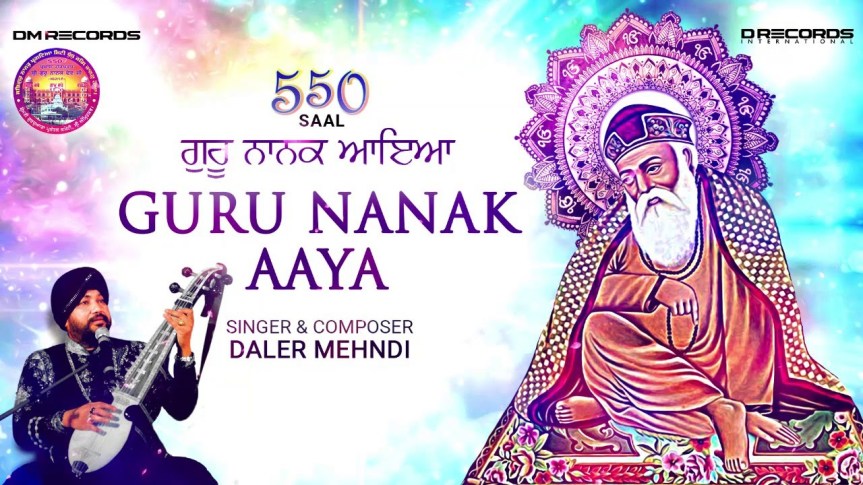
550 Birth Anniversary of Guru Nanak Dev & the Golden Temple

On this date of 12
November 2019, 550 birth anniversary of Guru Nanak Dev ji is being celebrated
across the world particularly in India and Pakistan with full dedication,
devotion and gaiety.
    His sayings and messages are still relevant
and will also continue till the day human beings survive. I am quoting from one
of his sayings which has greatly influenced me, “There is but One God. His name
is Truth; He is the Creator. He fears none; he is without hate. He never dies;
He is beyond the cycle of births and death. He is self-illuminated. He is
realized by the kindness of the True Guru. He was True in the beginning; He was
True when the ages commenced and has ever been True. He is also True now”.
Another one, “Even Kings and emperors with heaps of wealth and vast dominion
cannot compare with an ant filled with the love of God”.

    Guru Nanak ji was born at present place of Nankana Sahib, near Lahore of Pakistan.
According to various literatures and beliefs, the birth and initial years of
Guru Nanakji’s life were marked with
many astonishing incidents that validated that Nanak ji was born with divine
power.
 Guru Nanak Dev ji later on settled down at Kartarpur (now in Pakistan) which was
founded by him in 1522 and spent the rest of his life there (1522-1539). Kartarpur is now great news in the world
as 3-kilometre  corridor which connects Darbar Sahib in Kartarpur with Dera Baba
Nanak shrine in Gurdaspur district of
Punjab (India) has  allowed pilgrims’
mainly Sikh pilgrims’ direct access to the historic Gurdwara Darbar Sahib in
Kartarpur
, where Guru Nanak Dev
passed away. Hope this corridor will bring peace in the region so that no
mothers have to lose their sons or children had to suffer because death of
their fathers. Guru Nanak Dev ji long ago rightly said, “Dwell in peace in the
home of your own being, and the Messenger of Death will not be able to touch
you”.       
  Although Guru Nanak ji was the founder of
Sikhism and the first of the ten Sikh Gurus but all the other Gurus had done
excellent work for human beings. In this context, the Golden Temple is a
glaring example. The Golden Temple of Amritsar (Sri Harmandir Sahib) is not only a central religious place of the
Sikhs, but also a symbol of human brotherhood and equality. Everybody
irrespective of caste, creed, religion or race can visit the place.
Regarding the Temple it
may be mentioned that, as advised by Sri Guru Amar Dass Ji (3rd Sikh Guru), Sri Guru Ram Dass Ji (4th Sikh Guru)
started the digging of Amrit Sarovar
(Holy Tank) of Sri Harmandir Sahib in
1577 A.D., which was later on brick-lined by Sri Guru Arjan Dev Ji (5th Sikh Guru) on 15 December, 1588 and he
also started the construction of Sri Harmandir
Sahib
. Sri Guru Granth Sahib
(scripture of the Sikhs) was first installed at Sri Harmandir Sahib on 16 August 1604 A.D.
     The Golden Temple (Sri Harmandir Sahib Amritsar) has a unique
Sikh architecture. Built at a level lower than the surrounding land level, the Gurudwara teaches the lesson of
egalitarianism and humility. The four entrances of this holy shrine from all
four directions signify that people belonging to every walk of life are equally
welcome. The Sikhs and others of different religions all over the world daily
visit Sri Harmandir Sahib.  
    The author had the opportunity to visit
holy Golden Temple (Sri Harmandir
Sahib) in August 2017. So the author’s first visit to Golden Temple created different
feelings in the mind and heart of the author as everywhere selfless service was
observed- whether serving of food, water, cleaning of utensils, making of roti etc. were concerned. It is
heartening to mention by quoting Hindustan Times, 19th May 2016,
epaper, that “The Golden Temple (Harmandir
Sahib) in Amritsar has been ranked number 3 in the country on the travellers’
choice landmarks list of a leading travel planning and booking site
TripAdvisor. Surrounded by a holy ‘sarovar’,
its construction was completed in 1604 and presently runs one of the largest
free kitchens in the world, which serves an average of 1,00,000 people daily”.

Dr Shankar Chatterjee
Former Professor & Head (CPME),NIRD & PR ( Govt. of India), Hyderabad,  India
Former Associate Professor, Eritrea
Former Assistant Prof, Govt. Degree College, Tripura, India
Former Senior Planning Officer, Govt of Assam, India

Journalism

Journalism alludes to the generation
and circulation of reports on late occasions. The word news-casting
applies to the occupation, just as native writers utilizing strategies
for social affair data and utilizing abstract methods. Journalistic
media incorporate print, TV, radio, Internet, and, previously,
newsreels.
Ideas of the suitable
role for journalism shift between nations. In certain countries, the
news media are constrained by government mediation and are not
completely independent. In others, the news media are free of the
legislature yet rather work as private industry propelled by benefit.
Notwithstanding the changing idea of how media associations are run and
financed, nations may have varying executions of laws taking care of the
right to speak freely and criticism cases.
The coming of the Internet and cell phones has conveyed critical
changes to the media scene as of late. This has made a move in the
utilization of print media stations, as individuals progressively devour
news through tablets, cell phones, and other individual electronic
gadgets, instead of the more customary arrangements of papers,
magazines, or TV news channels.

Mass Media

Mass media are apparatuses for the exchange of data, ideas, and thoughts
to both general and explicit groups of onlookers. They are critical
instruments in propelling general wellbeing objectives. Conveying about
wellbeing through broad communications is unpredictable, in any case,
and difficulties experts in assorted orders. Utilizing mass media can be
counterproductive if the channels utilized are not gathering of people
fitting, or if the message being conveyed is excessively enthusiastic,
dread exciting, or disputable.
 Bothersome reactions more often than not
can be kept away from through appropriate developmental research,
information of the gathering of people, involvement in connecting media
channels to groups of onlookers, and message testing. Each mass medium
has its own substance types, innovative specialists, professionals, and
plans of action. For instance, the Internet incorporates web journals,
digital recordings, sites, and different advances worked on the general
conveyance arrange. Some contend that computer games have formed into an
unmistakable mass type of media.