The White Revolution in India

Photo by Engin Akyurt on Pexels.com

The revolution associated with a sharp increase in milk production in the country is called the White Revolution in India also known as Operation Flood. White revolution period intended to make India a self-dependent nation in milk production.
Verghese Kurien ,the founder of Amul introduced White revolution in India. He is known as the father of white revolution in India.
Operation Flood started the White Revolution in India and made our country self-sufficient in milk and this was achieved entirely through the cooperative structure.One of the largest of its kind, the programme objective was to create a nationwide milk grid. It resulted in making India one of the largest producers of milk and milk products, and hence is also called the White Revolution of India. It also helped reduce malpractices by milk traders and merchants. The White Revolution in India was successful in transforming the country from a milk deficient nation to a world leader in milk production. It helped dairy-farming become India’s largest self-sustaining industry and also, India’s largest rural employment provider.

Advantages and disadvantages of white revolution
Advantage:
1) ended imports of milk solids in India.
2) India started exporting milk powder to many foreign nations.
3) dairy industries and infrastructures modernised and expanded.
4) more employment in the field of dairy farming.
5) dairy needs are met locally.
Disadvantage:
1) since livestock are prone to many diseases, milk obtained from them during such conditions leads to disease spreading.
2) adulteration of milk and dairy products.

A state in India that is free of patriarchy

Photo by Angshu Purkait on Pexels.com

Meghalaya – a state in northeastern India has always been a far cry from the rest of India.The state is home to the Khasi and the Garo people, two of the few tribes to follow a matriarchal structure of society.

In a country like India, where the status of women is considered to be lower to that of men, where daughters of the household are treated as paraya dhan who are supposed to get married one day and go to her husband’s family , and the patriarchal system that subjugates women, oppresses women and tells them that they are not up to the mark and not as important as men,the fact that there are societies with a culture of dominant women is a wonder in itself! Unlike many places in India, where the birth of a girl is accompanied by reactions ranging from subdued acceptance to outright rage, the birth of a girl in places like Shillong is celebrated with mirth and laughter.There is no disparity in the treatment of women in urban and rural households of the Khasis and the Garos.In Khasi marriages, the men go and live with the wife and her family which is in stark contrast to most other communities in India, which see tearful goodbyes between the woman’s family.
An interesting and little known fact is that Khasi children take the title of their mother and her clan. This effectively means there are no illegitimate children among them.
It is refreshing to know that such a rare scene exists in our own country. For a nation plagued by a mindset of misogyny, the culture and traditions found in Meghalaya serves as a beacon of hope and change.

The empowering story of BTS Leader RM

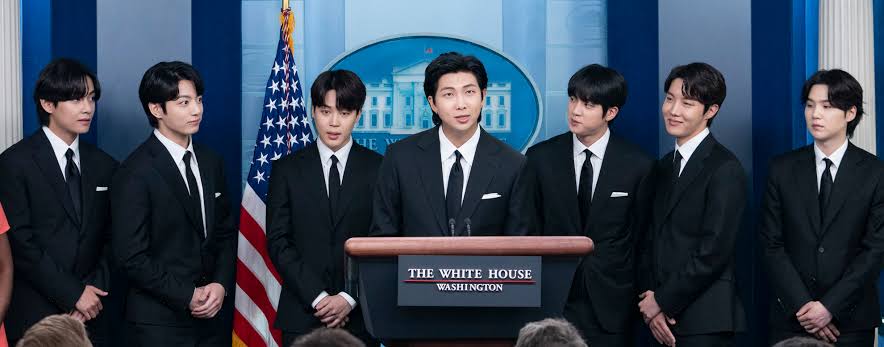
BTS recently stood up for the Asian community and spoke to the US presidant about Anti-Asian hate. RM, the leader of BTS and a global icon was himself a victim of hate and negativity. He was ridiculed for his looks and the negativity was so intense that he even started to hate himself too. At the age of 16, RM left his family, his good grades, and his more secured future to become a K-pop Idol. But, unlike other trainees, he didn’t have an experience with dancing and even after practising for longer hours and pushing his limits, he would still make a lot of mistakes. He started to blame himself for not being as good as others and even almost quit being a trainee. Luckily, his fellow member J- hope and his dance teachers encouraged him to stay and the rest was history, BTS succeeded. RM thought everything would be better once he debuted but it only made things worse for him. When BTS was starting, netizens called RM ugly and talentless and even asked him to leave the group. We live in a world where beauty, money and perfection are the standards of success. And those of us who fall short in comparison turn to self-hate and RM too fell into that trap. So, how did RM with so much strong self-hate and negativity around him lead the biggest boyband in the world? First, he used his insecurities to fuel his passion for music. Then he apologised for his mistakes and strived to be better. All of this taught him to stand up for himself, stand up for BTS and stand up for the Asian Community. RM chose to be defined by his hard work and passion rather than his faults and limitations. He learned to accept the imperfect. His empowering journey with self love has been changing the world. He inspires his bandmates to make music about the importance of accepting oneself. He inspires their fans, the Army’s to find beauty in their imperfections and just recently, his self love became so powerful that it created a movememt for people to love others as well.

Retail inflation eases to 7.04% in May

Food price inflation, which had hit 8.31% in April, eased a little to 7.97% in May thanks to a decline in rural food inflation from 8.5% to 7.76%. 

Inflation faced by rural consumers fell from 8.38% in April to 7.01% in May, but for households in urban areas, the pace of price rise was virtually flat month-on-month, moving from 7.09% in April to 7.08% in May.

Bajaj Auto's new EV production line

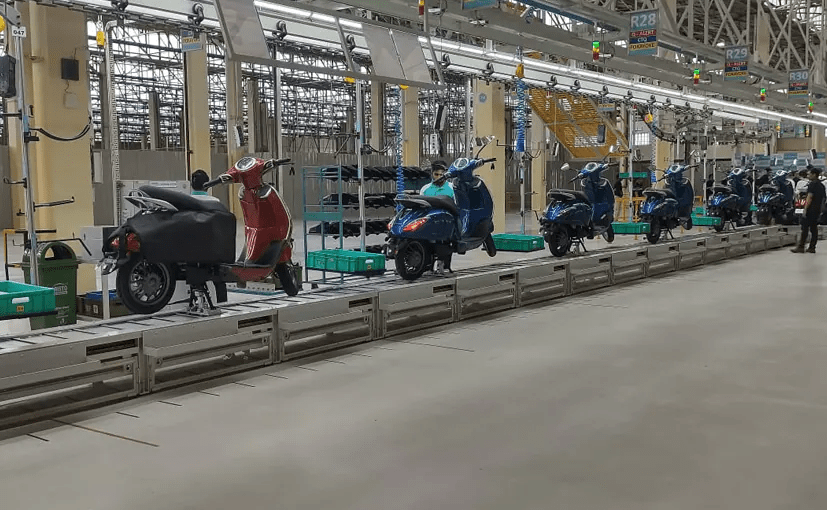
Bajaj Auto shares rose in early trade on Friday but were back in the red territory ahead of the two-wheeler maker’s new electric vehicle production line launch due later in the day. On Thursday, the firm also announced that its board would consider a buyback of shares next week.

Shares of the company gained 2.2 percent in early trade but soon dropped 2.7 percent from that level to the day’s low of Rs 3,857. At 11:18 am, the stock was trading 0.4 percent lower at Rs 3,860.50 on BSE.

Chetak EV will be produced at the factory where the Chetak IC scooter was manufactured till 2005. Bajaj Auto has a booking backlog of approximately 16,000 Chetak EVs due to the supply crunch. The new EV factory will have a capacity of 400 units per day initially. Meanwhile, EV production will continue at Chakan simultaneously for some time.

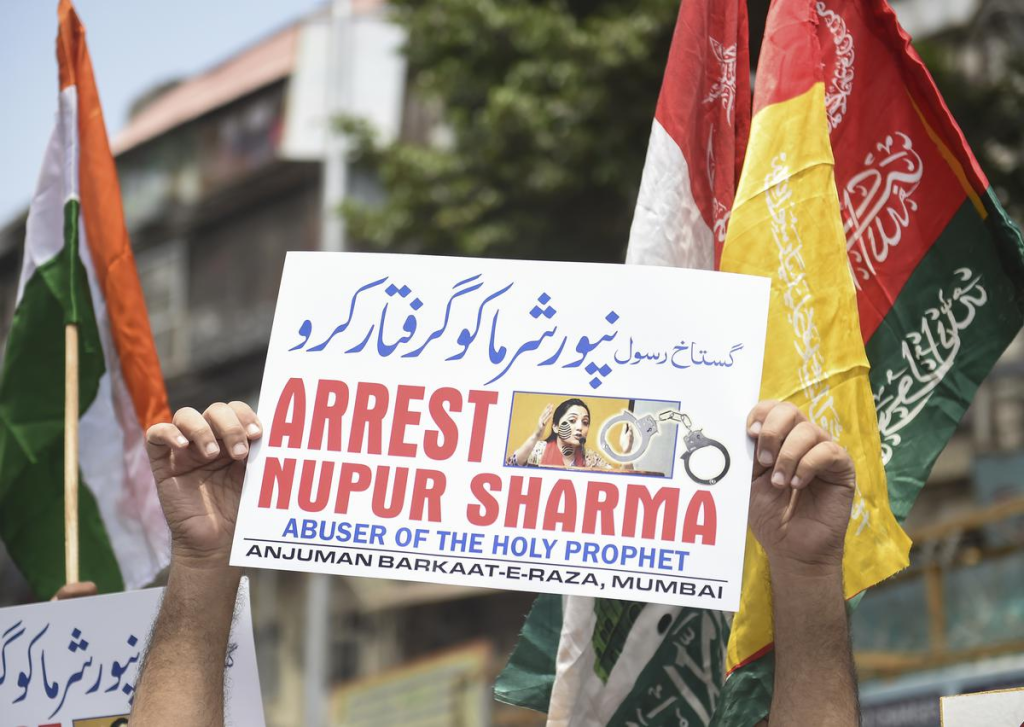
Protests in several places over remarks against the Prophet

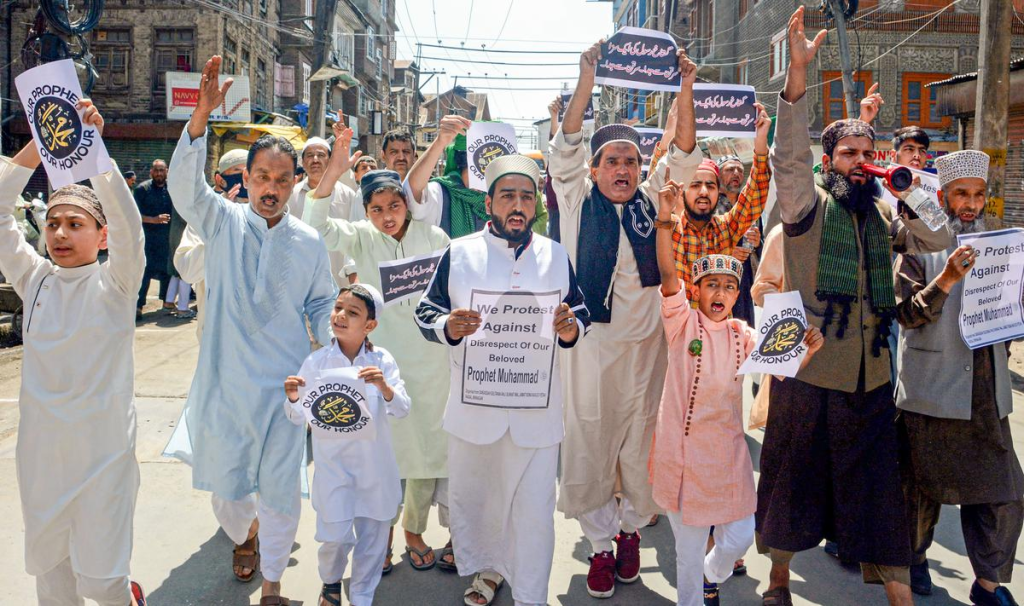
Protesters raise slogans against the controversial remarks by two now-suspended BJP leaders against Prophet Mohammad in Srinagar.

Tension mounted in Jammu’s Bhaderwah and some areas of Kishtwar prompting authorities to impose a curfew while parts of Kashmir observed a shutdown over the controversial remarks against Prophet Muhammad by two now-suspended BJP leaders, Nupur Sharma and Naveen Jindal. In Jharkhand, some policemen were injured in Ranchi while trying to control an irate mob after protests erupted with hundreds of people demanding the arrest of Ms. Sharma.

Indian economy well placed to deal with challenges, says RBI Governor

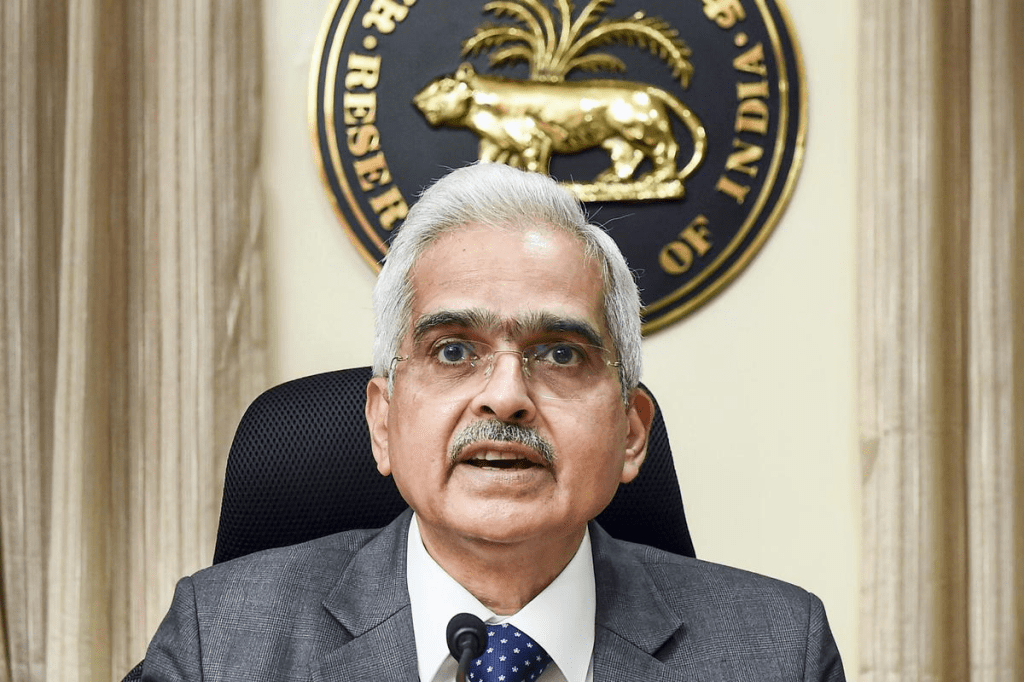
Reserve Bank of India (RBI) Governor Shaktikanta Das addresses a press conference at RBI headquarters, in Mumbai, on June 8, 2022.

“Recognising” the Indian government’s “great efforts” in supporting Sri Lanka, China on Wednesday expressed willingness to work with India and the international community to help Sri Lanka tide over its crushing economic crisis.

Twitter bots bug Elon Musk no end

Elon Musk has accused Twitter of “resisting and thwarting” his right to information regarding the fake accounts issue that he had raised earlier. He has also called Twitter apparent refusal to not share the information a “clear material breach” of the terms of the merger agreement. “Mr. Musk does not agree with the characterizations in Twitter’s June 1 letter. Twitter has, in fact, refused to provide the information that Mr. Musk has repeatedly requested since May 9, 2022 to facilitate his evaluation of spam and fake accounts on the company’s platform,” the letter signed by Musk’s attorney Mike Ringler states.

Boost for space PSU

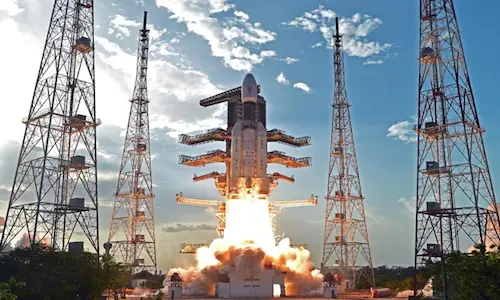
The Union Cabinet, chaired by Prime Minister Narendra Modi, on June 8 approved the transfer of 10 in-orbit communication satellites from the government of India to NewSpace India Ltd (NSIL), a commercial arm of ISRO.

The Cabinet has also approved increasing the authorised share capital of NSIL from Rs 1,000 crore to Rs 7,500 crore.

“NSIL functioning as a single-window operator will also facilitate the ease of doing business in the space sector. NSIL Board will now be empowered to price the transponders as per the market dynamics and global trends in the satellite communication sector. NSIL is also authorised to offer and allocate capacity as per its internal policies and guidelines,” it added.

The transfer of these assets to NSIL will further provide the desired financial autonomy to the company to realise capital-intensive programmes or projects, thereby offering huge employment potential and technology spin-off to other sectors of the economy.

OIC pursuing divisive agenda, says India

India’s strong response came while several countries, including India’s crucial Gulf partner, the United Arab Emirates (UAE), and security partners Oman and Jordan condemned the remarks.

India on Monday hit out at the Organisation of Islamic Cooperation (OIC) after it condemned the derogatory comments made by two former BJP leaders on Prophet Muhammed and Islam.

Arrival of British in India

On May 20, 1498, Vasco da Gama arrived in Calicut, establishing a sea route connecting Europe and East Asia. Following this, India became a focal point for European trade, as well as the scope of European ambitions to gain control of the Spice Islands trade monopoly, resulting in numerous naval conflicts. The British East India Company arrived in India to conduct business, primarily in spices. They also traded silk, cotton, indigo dye, tea, and opium, among other things.

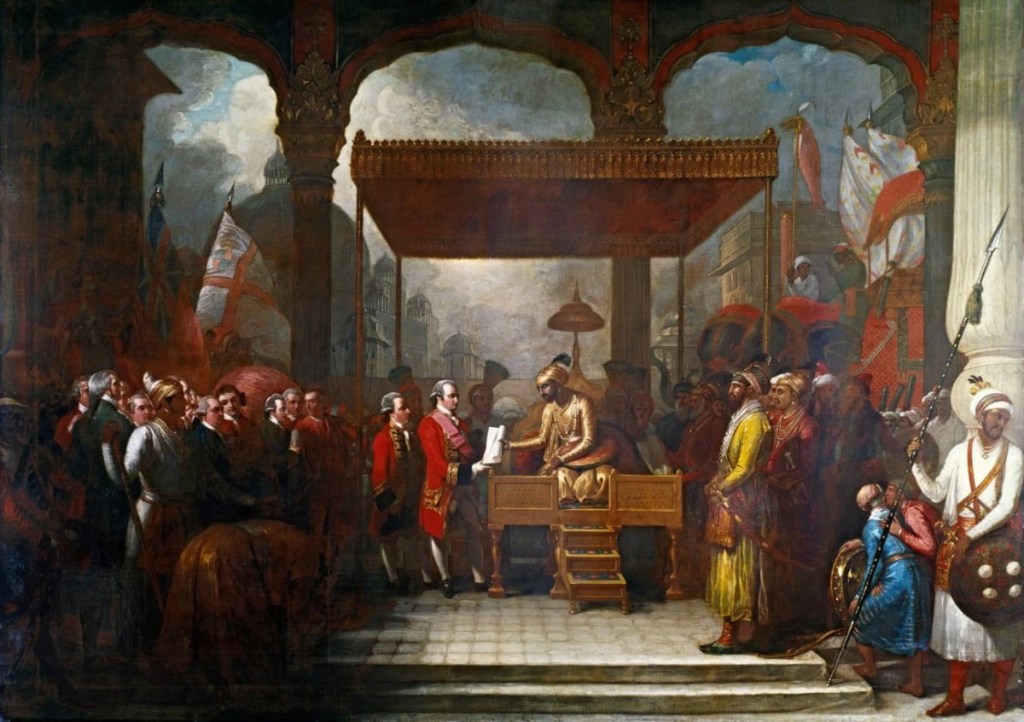
John Watts and George White created the British Joint Stock Company, or East India Company, in 1600 AD to seek trade with South and South-East Asian nations. The majority of the shares in these joint-stock companies were owned by British merchants and nobles. The British government had no direct relationship with the East India Company. Initially, the British enter the Indian subcontinent as spice dealers. Prior to the modern era, spices were the principal means of preserving meat in Europe. The subcontinent was then dragged into the Empire by force, thanks to more modern and effective weapons. “The sun never sets on the British Empire,” as the saying goes. It would have been more true to argue that the British Empire was primarily made up of regions that were occupied and controlled under force. On August 24, 1608 AD, the British arrived in the Indian Subcontinent at the port of Surat for the purpose of trade, but it was not until 7 years later that they received a royal order (i.e. Farman) to construct a factory in Surat under the command of Sir Thomas Roe (Ambassador of James I). Following this, the Vijaynagara Empire granted the East India Company permission to build a second factory in Massulipatnam. The British gradually surpassed the other European commercial companies, and their trading operations in India grew dramatically over time. Numerous trading posts sprang up around India’s east and west coastlines, and significant English settlements grew up around the presidential capitals of Calcutta, Bombay, and Madras. Silk, Indigo Dye, Cotton, Tea, and Opium were their main commodities. By establishing a facility in Kolkata 20 years later, the Company had expanded its footprint to the East of India. During their time as a trade corporation, they recognized that the entire Indian Subcontinent was divided into regional kingdoms in fact, therefore they began to consider how to consolidate all of the resources. The East India Company began interfering in Indian politics in the 1750s. When one of the Company’s military officials, Robert Clive, beat the armies of the Nawab of Bengal, Siraj-ud-daulah, in the Battle of Plassey in 1757, the Company’s fortunes rose and it transformed from a commercial endeavor to a ruling enterprise. After the First War Independence in 1857, also known as the Revolt of 1857, the East India Company’s reign finally came to an end in 1858. Following the breakup of the East India Company in India, the British Crown assumed direct authority of the country, ushering in the British Raj.

Arrival of British in India

On May 20, 1498, Vasco da Gama arrived in Calicut, establishing a sea route connecting Europe and East Asia. Following this, India became a focal point for European trade, as well as the scope of European ambitions to gain control of the Spice Islands trade monopoly, resulting in numerous naval conflicts. The British East India Company arrived in India to conduct business, primarily in spices. They also traded silk, cotton, indigo dye, tea, and opium, among other things.

John Watts and George White created the British Joint Stock Company, or East India Company, in 1600 AD to seek trade with South and South-East Asian nations. The majority of the shares in these joint-stock companies were owned by British merchants and nobles. The British government had no direct relationship with the East India Company. Initially, the British enter the Indian subcontinent as spice dealers. Prior to the modern era, spices were the principal means of preserving meat in Europe. The subcontinent was then dragged into the Empire by force, thanks to more modern and effective weapons. “The sun never sets on the British Empire,” as the saying goes. It would have been more true to argue that the British Empire was primarily made up of regions that were occupied and controlled under force. On August 24, 1608 AD, the British arrived in the Indian Subcontinent at the port of Surat for the purpose of trade, but it was not until 7 years later that they received a royal order (i.e. Farman) to construct a factory in Surat under the command of Sir Thomas Roe (Ambassador of James I). Following this, the Vijaynagara Empire granted the East India Company permission to build a second factory in Massulipatnam. The British gradually surpassed the other European commercial companies, and their trading operations in India grew dramatically over time. Numerous trading posts sprang up around India’s east and west coastlines, and significant English settlements grew up around the presidential capitals of Calcutta, Bombay, and Madras. Silk, Indigo Dye, Cotton, Tea, and Opium were their main commodities. By establishing a facility in Kolkata 20 years later, the Company had expanded its footprint to the East of India. During their time as a trade corporation, they recognized that the entire Indian Subcontinent was divided into regional kingdoms in fact, therefore they began to consider how to consolidate all of the resources. The East India Company began interfering in Indian politics in the 1750s. When one of the Company’s military officials, Robert Clive, beat the armies of the Nawab of Bengal, Siraj-ud-daulah, in the Battle of Plassey in 1757, the Company’s fortunes rose and it transformed from a commercial endeavor to a ruling enterprise. After the First War Independence in 1857, also known as the Revolt of 1857, the East India Company’s reign finally came to an end in 1858. Following the breakup of the East India Company in India, the British Crown assumed direct authority of the country, ushering in the British Raj.

Apple to Release Software Updates to iPhone, iPad

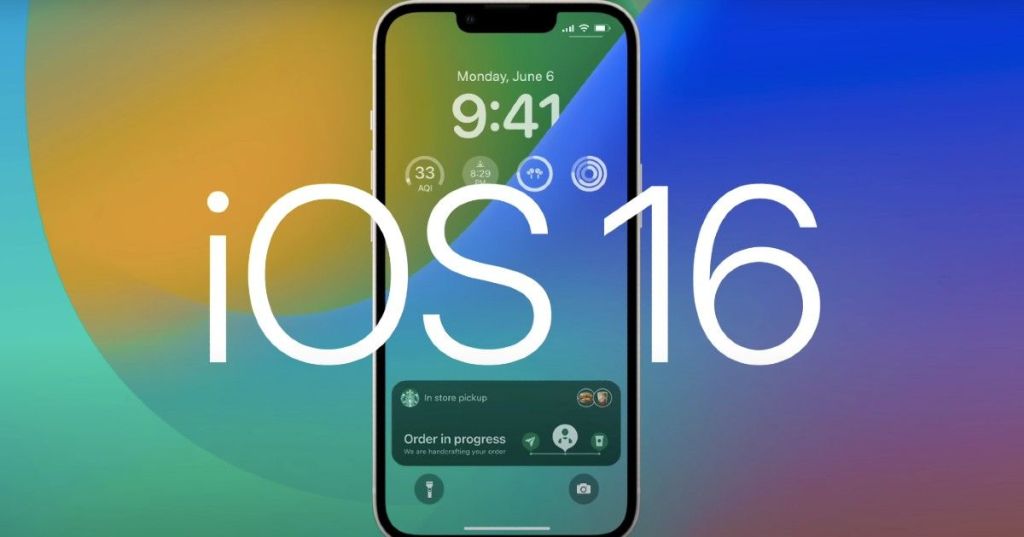
While Samsung took top spot in Q1 in terms of smartphone market share, rival Apple is not taking the news lying down. In fact, the biggest tech company in the world will reportedly be releasing new updates to iPhones and iPads with its upcoming software updates, iOS 16 and iPadOS 16, according to NBC News. The company is expected to announce during its WWDC 2022 developer keynote on June 6.

According to Bloomberg, iOS 16 includes updates to notifications, messages and the Health app. The software will also include new multitasking panels for iPads.

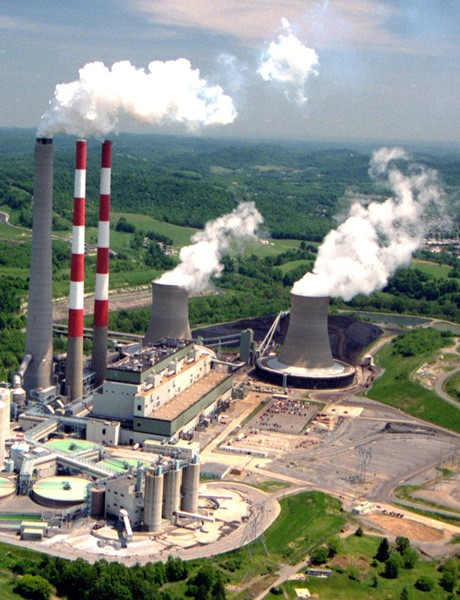
India expected to commission 10 thermal coal power plants in 2022-23, add 7,010 MW

India is expected to commission 10 thermal power units of an aggregate 7,010 MW capacity in fiscal year 2022-23 (April-March), the largest such addition since 2017-18, according to a status report by the federal power ministry released June 3.

Market participants believe the capacity addition may bode well for coal consumption in the coming years.Of the 7,010 MW capacity, 3,580 MW will be under the union government and 3,430 MW will be under various states.

Most of the upcoming generation units already have fuel supply agreements with various subsidiaries of state-run Coal India Ltd., according to Central Electricity Authority, or CEA.As much as 3,300 MW of upcoming capacity is expected to source coal from captive coal blocks allocated to these units, while the 1,600 MW Telangana plant will procure coal from state-run Singareni Collieries Company Ltd.

Essar Power to sell transmission asset to Adani for Rs 1,913 crore

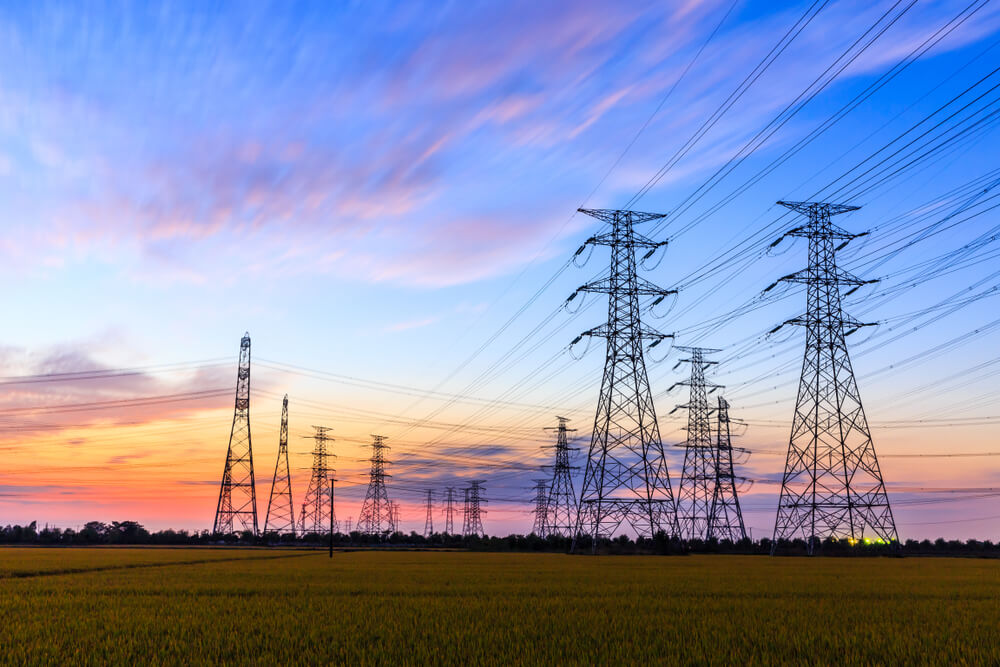
Essar Power Transmission Company Limited (EPTCL), an arm of Essar Power, has 465-km transmission lines across three Indian states. The asset transacted is an operational 400 kV (kilovolt) inter-state transmission line linking Mahan in Singrauli, Madhya Pradesh to Sipat pooling substation in Bilaspur, Chattisgarh.

Essar Power Limited, has entered into a definitive agreement with Adani Transmission Limited (ATL) to sell one of its two transmission lines for Rs 1,913 crore, the companies said Friday.

Essar Power Transmission Company Limited (EPTCL), an arm of Essar Power, has 465-km transmission lines across three Indian states.