What we don’t know about Ocean?

Ocean cover 70 % of Earth’s surface and still we human know more about the surface of the mars than Earth’s oceans,but just about time scientist our making progress but there is still lot of work in targeting the fully-mapping of Earth’s Ocean.The Seabed 2030 Project launched in 2017 have made a progress , the scientist have successfully mapped 19 percent of the Earth’s ocean.The GEBCO_2019 Grid was the first global bathymetric grid released which remarkably collected depth data of 5.6 million squares for the seabed 2030 project.The project is a collaboration between the Nippon Foundation of Japan and GEBCO. This initiative has been assisted by 133 contributors,and partners.The seabed project 2030 target to generate the definite map of the earth oceans so that it can be available to all.

However ,the fulfillment of this project would improve the human understanding about the Earth’s ocean all together with tides and tsunami and even it help in underlying data cables evidently improving data access for everyone .

Let’s start exploring the facts about Earth’s oceans which might you don’t know.

Internet |Undersea Cable

Since most of you might not know that 99 % of International data is transferred by wires at the bottom of the ocean surface.Recently ,Google has announced about its third private undersea internet cable network which will run between Europe and Africa.

Gold in the Ocean

It might make you surprise that according to National Ocean Service, Earth’s oceans hold somewhat about 20 million pounds of gold,but you fortunate to take it since it so diluted that it’s measured in parts per trillion. For over a years scientist are trying to find a way to extract gold from sea water but everything has proven to be pointless.

Marine Life

Marine life is still unexplored by humans .We have only explored 10% of marine life.An estimated 50-80% of all life on earth is found under the Earth’s ocean surface .But there’s a progress ,on average 2000 species are found every year.

Tsunami

Tsunami is a series of wave produced by an underwater earthquake .In 2004 ,Tsunami takes way 230,000 lives in a matter of hours.This was the deadliest tsunami ever experienced .

Ocean helps us breathe

Over more than half of the oxygen come from Earth’s ocean .That’s right .Every time we breathe we should thank oxygen Since 70 percent of the oxygen in atmosphere come from arine photosynthesizers , like phytoplankton and seaweed.

Ocean is really very very deep than that we imagine

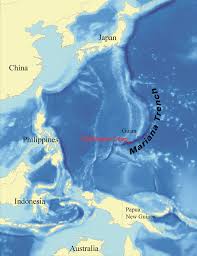
The average ocean depth is 2.3 miles.The deepest part of the ocean is known as Challenger Deep and is located below the western Pacific Ocean in the southern end of the Mariana Trench.Challenger Deep is approximately 36,200 feet deep.

In last i want to say save the ocean.Don’t forget it provide to oxygen to survive and they contain 97% of water and moreover it take carbon dioxide from atmosphere hence reduce risk of climate change .To live we need healthy oceans. We have to take precautionary measure from our side.Unfortunately people are becoming careless,over 50% of sea turtles found dead because they are eating lot of plastic .If we want to save marine life ,stop using plastic.Even your small steps will altogether help to make a big change .Encourage your friends and family to help in saving the oceans.

Please let me know your thoughts in the comment below and have a wonderful day.

First American Woman to Walk in Space Reaches Deepest Spot in the Ocean

The geologist and former astronaut Kathy Sullivan, 68, is now also the first woman to reach the deepest spot on earth – challenger deep which is about about seven miles below the ocean’s surface.

She was the first American woman to walk in space and now has set another record to  become the first woman and the 8th person in the history  to reach the deepest known spot in the ocean on Sunday 7th June.

Kathryn Dwyer Sullivan (born October 3, 1951) is an American geologist and a former NASA astronaut. A crew member on three Space Shuttle missions, she was the first American woman to walk in space on October 11, 1984. She was Under Secretary of Commerce for Oceans and Atmosphere and Administrator of the National Oceanic and Atmospheric Administration 

Dr.sullivan always had a longing fascination for oceans and has participated in several oceanographic expeditions that studied the floors of the Atlantic and Pacific oceans.

In 1988, Sullivan joined the U.S. Naval Reserve as an oceanography officer, retiring with the rank of captain in 2006. Sullivan joined NASA in 1978 and was part of the first astronaut groups to include women.

Sullivan served as Payload Commander on STS-45, the first Spacelab mission dedicated to NASA’s Mission to Planet Earth. During this nine-day mission the crew through constant experiments obtained a vast array of detailed measurements of atmospheric chemical and physical properties, which will contribute significantly to improving our understanding of our climate and atmosphere.

After leaving NASA, Sullivan served as chief scientist of the National Oceanic and Atmospheric Administration (NOAA). Sullivan became Acting Under Secretary of Commerce for Oceans and Atmosphere and Acting NOAA Administrator on February 28, 2013, following the resignation of Jane Lubchenco. President Obama nominated Sullivan to serve as the Under Secretary of Commerce for Oceans and Atmosphere and NOAA Administrator on August 1, 2013 and she was confirmed by the Senate on March 6, 2014.

The challenges faced while getting to the challenger deep

Challenger Deep — the deepest point in the Mariana Trench, which is itself the deepest part of the ocean — is therefore the deepest point on Earth, more than 36,000 feet below the ocean’s surface. For scale, if Mount Everest, the highest point on Earth, were dropped into Challenger Deep, its summit would still not breach the surface

Dr. Sullivan and Victor L. Vescovo, an explorer funding the mission, spent about an hour and a half at their destination, nearly seven miles down in a muddy depression in the Mariana Trench, which is about 200 miles southwest of Guam.

It took four hours to descend to the crushing depth of 35,810 feet (10,941 metres). They spent 1 1/2 hours on the ocean floor, then another four hours ascending. At those depths, the water is perpetually dark and barely above freezing. The pressure is a skull-crushing 8 tons per square inch – about 1,000 times the pressure at sea level.

After capturing images from the Limiting Factor, a specially designed deep-sea research submersible, they began the roughly four-hour ascent. Upon returning to their ship, the pair called a group of astronauts aboard the International Space Station, around 254 miles above earth.

As a hybrid oceanographer and astronaut this was an extraordinary day, a once in a lifetime day, seeing the moonscape of the Challenger Deep and then comparing notes with my colleagues on the ISS about our remarkable reusable inner-space outer-spacecraft

Dr. Sullivan said in a statement released by EYOS Expeditions on Monday.

What interests scientists in deep ocean areas ?

“Ocean exploration, however, is not randomly wandering in hopes of finding something new. It is disciplined and organized and includes rigorous observations and documentation of biological, chemical, physical, geological, and archaeological aspects of the ocean,” the NOAA website says.

Further, finding out more about the deep ocean areas can potentially reveal new sources for medical drugs, food, energy resources and other products. Significantly, information from the deep oceans can also help to predict earthquakes and tsunamis, and help us understand how we are affecting and getting affected by the Earth’s environment.

Endless blues: World’s Ocean Day.

What is it About?

World Oceans Day is a worldwide initiative by the United Nations to spread knowledge and awareness about the vast expanse of oceans on Earth. It is based on the idea of preserving the infinite number of life forms and coral reefs that are a part of the ocean and being aware of how human actions can harm their natural habitat. The principal focus of this initiative is to bring the oceans at the forefront of global environmental discussions, and plan and execute a sustainable method to save our oceans and the planet at large.

When is World Oceans Day?

We celebrate World Oceans Day on June 8, and a lot of activities at global, national and community levels are organised worldwide to observe this event.

What is the History of World Ocean Day?

World Oceans Day was first proposed by Canada’s International Centre for Ocean Development and the Ocean Institute of Canada in 1992, at the Earth Summit in Rio de Janeiro. Since 2002, the World Ocean Network has been instrumental in garnering support and organising worldwide activities on June 8. A huge network of more than 2000 organisations worldwide are invested in making sure that the ocean is protected from any damage due to technology or other human actions.

Why is World Oceans Day Important?

The composition, temperature, currents and life in the oceans drive every natural system that makes Earth habitable for humankind. Even the balance of oxygen that we breathe is primarily dependent on the ocean. The health of our oceans has become a matter of grave concern, due to the damage they have endured.

Dedicating a particular day to this cause not only helps in spreading awareness among people, but also in mobilising conscientious civic and political efforts towards addressing this global problem. Though spending just one day celebrating the oceans is not enough to bring about the changes required to conserve marine ecology, it works wonders as a starting point for people, especially young minds, to come together to take action against any damage done to ocean.

Other Important Facts About World Oceans Day

Knowing about World Oceans Day is not enough for your children to be able to grasp the whole concept of how important the ocean is for human survival. To encourage your children to celebrate our oceans and strive to make a difference, you could share some fun facts on World Oceans Day and how important the oceans are:

• 97% of Earth’s water is in the oceans, which is home to more than 200, 000 known species and millions of unidentified organisms.

• The oceans purify the air we breathe by absorbing 30% of the carbon dioxide in the air, which also helps in reducing the effects of global warming and climate change.

• Oceans are the world’s largest source of protein, and more than 2.6 billion people depend on the oceans as their primary source of protein.

• 40% of the oceans of the world are today affected by human actions causing pollution, depletion of fisheries, loss of coral reefs and endangerment of marine species. Seven out of the 13 great whale species are endangered today.

•13, 000, 000 tonnes of plastic leak into the ocean water each year. It has been predicted that there will be more plastic than fish in the ocean by 2050. Over 100, 000 marine wildlife animals are killed each year due to plastic contamination of the oceans.

• Each year a new theme is assigned to this day to cover different aspects of marine life and human dependency on oceans. In 2020, the celebratory theme on World Oceans Day is “Gender and The Ocean”, which emphasises the harm that gender disparity can bring to our oceans.

• The President of UN General Assembly has launched a global campaign “Play It Out”, against the use of plastic.

• Marine Protected Areas have been chalked out as an initiative to protect the oceans from illegal fishing.

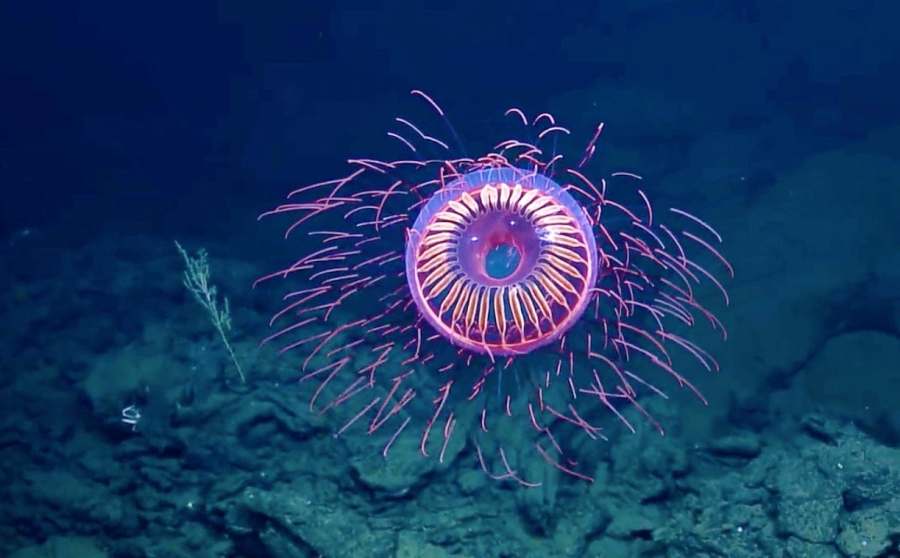
• Jellyfish as a species is older than dinosaurs and has been on this earth for more than 650, 000 years.

• 75% of the world’s volcanoes are located under the Pacific Ocean around Ring of Fire, the largest zone of active volcanoes.

World Ocean Days Activities for Kids

It doesn’t matter how small their hands are, children can drive this movement and even inspire adults to participate. Here are a few activities that your kids can organise on World Oceans Day:

  1. Clean-up Drive

Invite all the children in the neighbourhood to the beach or any water body close by to clean the area. This will help them to understand how much litter ends up in the oceans through different waterways polluting the habitat of marine life.

  1. Ocean Themed Programme

An ocean theme-based arts and crafts competition can attract a lot of attention from children of all ages. You can engage kids in a drawing competition and then display their creative works. You can even inspire a few young writers to submit stories and poems based on marine life.

  1. Ocean Hunt

Treasure hunts are an intriguing way to engage children. Keeping the spirit of World Oceans Day, you can organise an ocean hunt by creating puzzles around facts from the oceanic world, leading to prizes like ornaments made out of sea-shells, passes to any nearby aquarium, books with interesting facts about the ocean, etc.

  1. Storytelling Competition

It is safe to say that all kids love stories, especially when they get to be the judge of who is the best storyteller. Engage the adults around and encourage them to bring in their theatrical talents to entice the kids with amazing storytelling skills. You can always use the sounds of the waves or wild animals from the ocean to enhance your performance.

5.Let the Kids Instruct

No child will say no to an opportunity to give some sound advice to his/her parents. Ask the children to make a list of human actions that harm our oceans and come up with instructional ideas to preserve them. Organise a session with all the adults, where the kids present their points of view on how to keep our oceans and planet safe.