
Organ trafficking

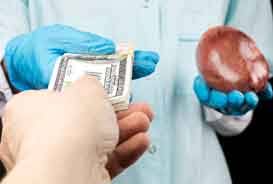
Organ trafficking is a very big issue which the world is facing right now. It is a deadly crime which robs human beings of their healthy life. It is essentially an illegal business of human organs, tissues and body parts. They use them for transplantation. It is bringing down the human body to the worth of an object. They trade them off for a little money or some other commodities. There are various reasons why this happens greatly in all parts of the world.
Causes of Organ Trafficking

When we look at the problems people are facing in today’s world, a lack of organ donors is the main one. There are too many patients nowadays and too few volunteers. Thus, when the supply and demand do not match, crimes like these will rise.

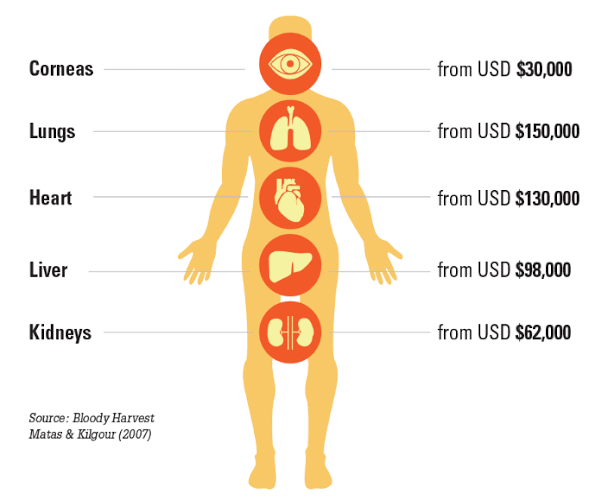
Most importantly, poverty is a great cause of this. People who are in great debt or in need of money sell off their organs to get some temporary relief. They get very less amount than the actual worth. Furthermore, illiteracy is also a great cause. Those who are not educated are not aware of the consequences of selling their organs. They do not know the health hazards and are very vulnerable to this crime.
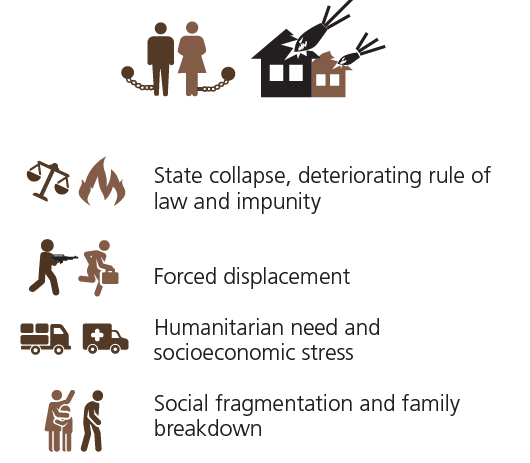
The children in war and developing regions are also very vulnerable to organ trafficking. When they get displaced from their homes, the traffickers make them easy targets. Furthermore, deceiving and dishonest medical firms and people also are a major cause. As organ transplant cannot be done without proper knowledge of it, people of the medical field who are corrupt contribute to it.

The lack of proper implementation of laws also contributes largely to this problem. As there are no stringent laws against this crime, the traffickers have no fear. Moreover, they also get off easy which makes it easy to commit this crime.
Impact of Organ Trafficking
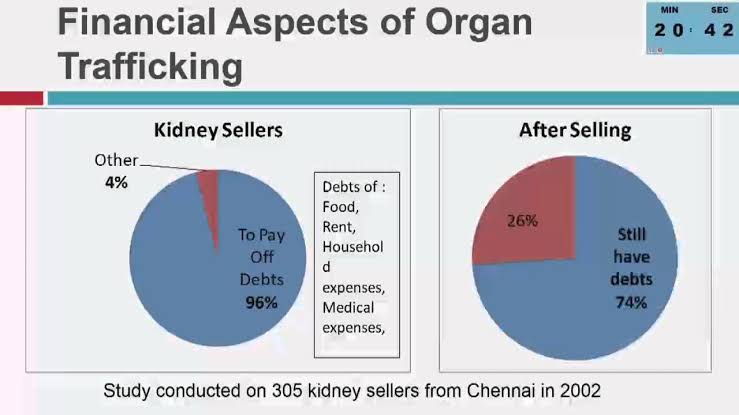
Organ trafficking has a negative impact on society as a whole. The poor people get robbed off their good health due to this crime. The traffickers exploit them endlessly to make sure they do not betray them.

Moreover, kidnapping and human trafficking also happen due to this crime only. The traffickers abduct and traffic children into selling their organs. Some also murder them after their work is done to not leave any proof behind.
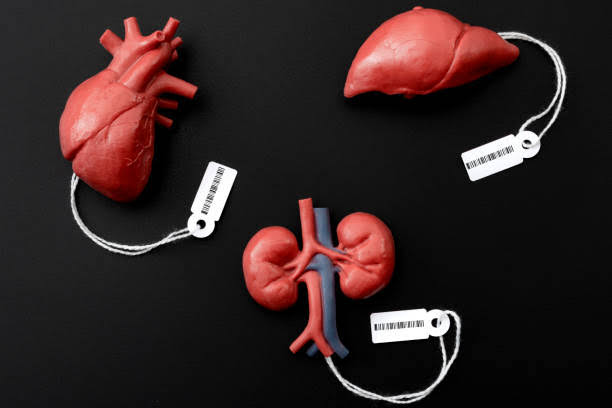
Organ trafficking also impacts the health of a person as well as their safety. The high demand for organs results in diseases and illnesses amongst people whose organs are trafficked. People also rob others so they can sell their organs. Even medical firms are losing their credibility because of such illegal practices.
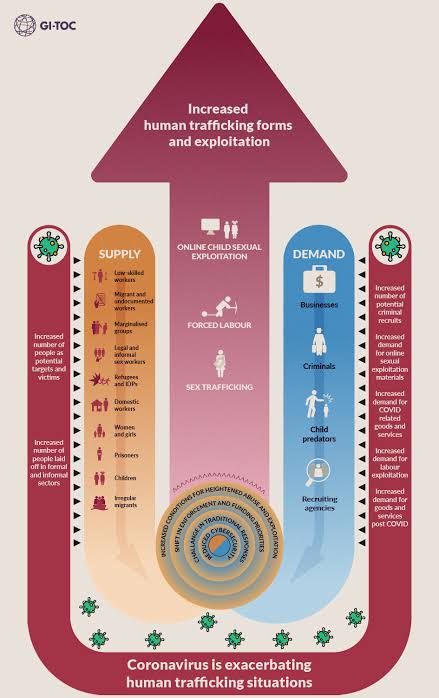
Therefore, we need to eliminate this crime to protect people. The government must take strict measures and implement stringent laws against this crime. We must spread awareness about organ donation so people can donate their organs after death so the supply meets the demand. This will ensure no organ trafficking happens. Moreover, people must also be made aware of the dangers of organ trafficking so they can be better prepared and aware of the consequences.
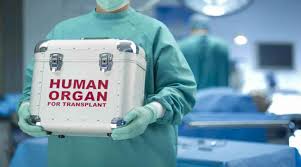
“life is a gift of our creater…And it should NEVER Be for SALE”

Organs to DNAs: Zooming Into the Human Beings

For many people, terms like gene, DNA and chromosome are hard to be interlinked. Which thing makes up what? A very common confusion indeed. So, why don’t we try to ‘zoom in’ into the human body and see what makes us what we are!

Upto the Cellular Level

Human body is a complex system of organs working in tandem, producing necessary hormones, energy and other requirements that are needed to keep the body healthy and active.. This whole organ system is made up of different constituent organs, which have one or several particular functions. Damage or decrease in function of even one organ may through the whole body in a serious condition. These organs, in turn, are systematic aggregates of different kinds of tissues. Tissues are structures of related cells, which function together to perform a specific function. Connective tissues are present in almost every organ, and their main purpose is to provide support and elasticity to the related organs. It forms a large part of the skin, blood vessels, muscles etc. Now, tissues, if broken down, would result into constituent cells. Cells, which are also known as the building blocks of life. Organisms can either be unicellular, or can multiply in a systematic way to finally form a multicellular organism. Cells are of different kinds, performing a variety of functions by themselves, or by clustering together to develop into subsequent structures. 

Zooming Past The Cellular Stage

The cell itself has a range of organelles that ensure the proper development, and when the time comes, reproduction and finally, the destruction of the cell. The edge of the cells is demarcated by the plasma membrane, which allows a semi-osmotic connection with the surrounding. Cytoplasm is the solution which fills up the space inside the cell, the organelles being situated over it. These organelles include mitochondria, Golgi bodies, endoplasmic reticulum, ribosome, amongst the others. The nucleus is a very important component of the cell, as for they contain the key to transmission to the future, the chromosomes. The nucleus has its own set of organelles, separated from the cytoplasm and other organelles by the nuclear membrane. Those are: nucleolus, nucleoplasm and the chromosomes. The somatic or the non reproductive cells in the human body are diploid, that is, all the chromosomes are  paired to a  similar sized chromosome.  But in the reproductive cells (gamates) in humans, such as the sperm and ova, only one chromosome of each type is present. These cells are also known as the haploid cells. In other words, n is the number of chromosomes in a haploid cell and 2n is the number of chromosomes in the diploid cell. In human beings, n=23. During the fertilization, the merging of cells will result in the restoration of two sets of each type of chromosome, thus forming a diploid cell, also known as the zygote. 

The chromatins (one arm of a single chromosome) actually consists of tightly bound nucleosomes, which in turn are made up of densely coiled DNA strands over a protein called histone. The DNA molecule, which is also known as the genes of an individual, is responsible for the continuation of traits from parents to offspring. Also, the function of each cell in making a specific protein is also determined by the DNA, or more specifically, by a particular code in the DNA. These codes are responsible for dictating what enzymes will be released to drive specific chemical reactions related to various processes in the human body. These codes, and hence, in turn, the biochemical processes determine the appearance and some other innate characteristics in an individual. 

The Most Basic Structure

The information is coded in the DNA using four chemical bases: adenine (A), guanine (G), thymine (T) and cytosine (C). The pattern or sequence of these bases gives the information for the development and maintenance of an organism. It can be equated with how letters are used to form words. These base pairs can only pair with their complementary bases; adenine with thymine and guanine with cytosine. Along with these base pairs, a sugar and a phosphate molecule attach up, collectively known as nucleotide. The nucleotides are the basic building blocks of the DNA. When these are arranged in two long strands, which wound up and form a spiral structure, then it is called a double helix, which constitutes a DNA molecule.

Website Reference:

https://ghr.nlm.nih.gov/primer/basics/dna

https://www.yourgenome.org/facts/what-is-a-chromosome

Image Credit: Genome Research Limited