
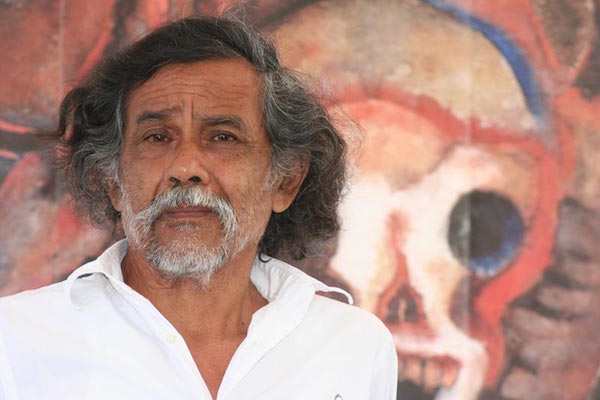
Franciso Toledo

Francisco Benjamn López Toledo was born on this day in 1940 in Juchitán, Oaxaca, the centre of the Indigenous Zapotec culture. His exceptional ability for sketching was discovered when he was just 9 years old, and by the age of 19, he had staged his first solo show. Francisco Toledo was a painter, sculptor, and graphic artist from Mexico. Toledo’s paintings mirror Mexican mythology and frequently show the influence of Surrealism and Paul Klee’s whimsical style. This is seen in his work Hidden Scorpion (1996), in which the artist uses curling fractals to suggest a scorpion’s body. 

“What I do is a mash-up of things,” he added, “but the pre-Hispanic world has been a source of inspiration.” “There are certain decorative solutions that originate from pre-Hispanic art, and there is a lot of primitive art that is polished or basic but yet quite modern.” Toledo, self-described as a grillo (cricket) who thought his work reflected the restless Oaxacan spirit, travelled to Paris in the 1960s to study sculpture, painting, and printing. But he soon ached for the simpler life he had left behind. In 1965, he went to Oaxaca, where his skill and activism played an important part in the development of the southern Mexican state into a centre of the worldwide art community.
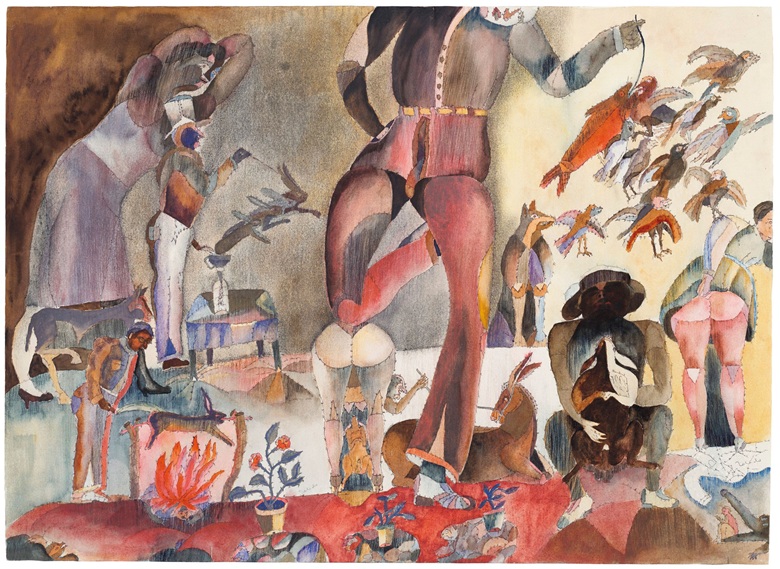
During this period, Toledo first gained worldwide popularity with a watercolour series of animal-human hybrids that formed his distinctive style steeped in Indigenous art traditions, Zapotec mythology, and influence from artists such as Francisco Goya. For over seven decades, Toledo experimented with every visual media imaginable, creating around 9,000 pieces ranging from a scorpion sculpture made of turtle shells to cloth puppets. His legacy lives on through the libraries, cultural institutes, and museums he created in Oaxaca, many of which are open to the public.
Indian Miniature Paintings

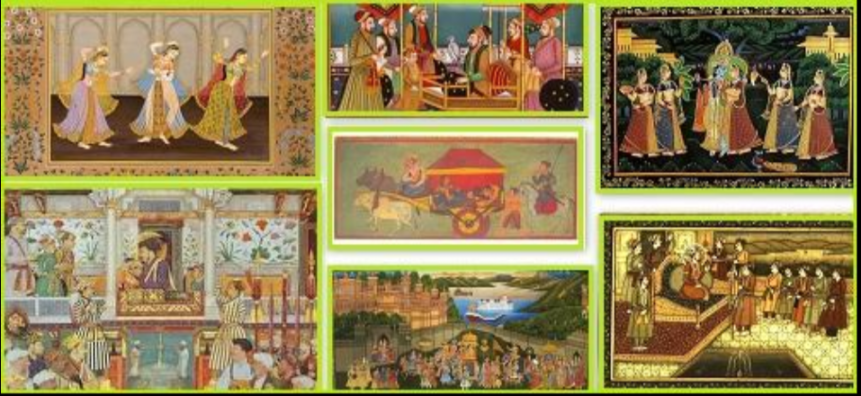
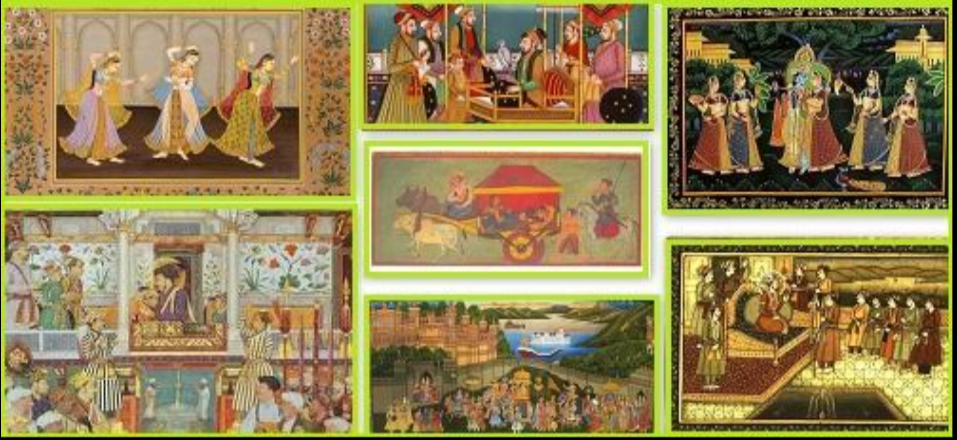
Miniature Art refers to paintings, sculptures, engravings etc. That have small dimensions. Though they are small, they are well detailed. The origin of miniature paintings dates back to the prehistoric times and is profoundly influenced by Indian literature. A miniature painting is generally less than 25 square inches or 100 square centimetres. The subjects in the painting are one -sixth of their actual sizes. Miniature paintings were generally done on materials like cloth, paper, leaves etc. which are quite perishable. These paintings are handmade and very delicate.
Miniature paintings are considered as an ancient art in India and there were many schools for the same, including those of the Rajput’s, Deccan’s and the Mughals. These paintings give an insight into the life of the royals and the common man, the beauty of their womenfolk and the inspirations and devotions of the artists themselves. These paintings are often associated with the Ragas i.e. the melodies of Indian classical music.
Rajasthani School of Miniature Paintings:
This school developed around the areas of Rajasthan, Bundelkhand and Punjab regions. The Rajasthani paintings were greatly influenced by Tulsidas and Kabir. The main theme observed in the illustrations of this school is love in all of its form. Main emphasis is given on the love between human soul and god. This might have been influenced by the Bhakti cult which originated in those days. Paintings are left to the imagination and emotion of the viewers for interpretation.
Features:
Compositions are clear and simple. All figures are in same dimensions. The figure of a woman are duplicated for other women. This is painted as a symbol of femininity. Colours are used harmoniously and are bright with each colour having it’s own specific meaning. The medium mostly used was water colour in tempera hand made paper. The colour scheme is flat and paintings are two dimentional.
Some of the famous Rajasthani miniature paintings:
‘Radha Bani Thani’by Nihal Chand
‘Maru Ragini’ by Sahibdin
‘Chaugan Players’ by Dana

Mughal School of Miniature Painting:
With the advent of Mughal, the Indian miniature paintings shifted to the portraits and richness of colour effects with the unique Persian flavour. During this period, the art specialises in Court and Palace scenes. Themes from Indian epics such as Ramayana, Mahabharata, Bhagvata Purana etc. Are also included. The Indian Miniature painting was at it’s prime time during the period of Mughal Emperor Shah Jahan because he was a great patron of miniature painting. But after his regime, paintings lost their charm and started to decline in the 18th century.
Features:
Mughal paintings denoted the habits of the ruling class. Portraiture was done. Figures were drawn in profile or quarter profile. A decorative border called hasiah was also used. Calligraphy was also done in the paintings. The paintings were male dominated. Portraits of women were drawn from imagination. The medium generally used was water colour in tempera handmade paper.
Some of the famous Mughal Miniature Paintings:
‘Kabir and Raidas’ by Ustad Faquirullah Khan
‘Falcon on a Bird Rest’ by Ustad Mansoor
‘Babur Crossing River Sone’ by Jagannath

https://m.jagranjosh.com/general-knowledge/do-you-know-that-how-indian-art-of-miniature-painting-evolves-1532003322-1

https://artsandculture.google.com/exhibit/indian-miniature-paintings-the-rajasthan-school-academy-of-fine-arts-and-literature/PgLSknKVv0F_JQ?hl=en