
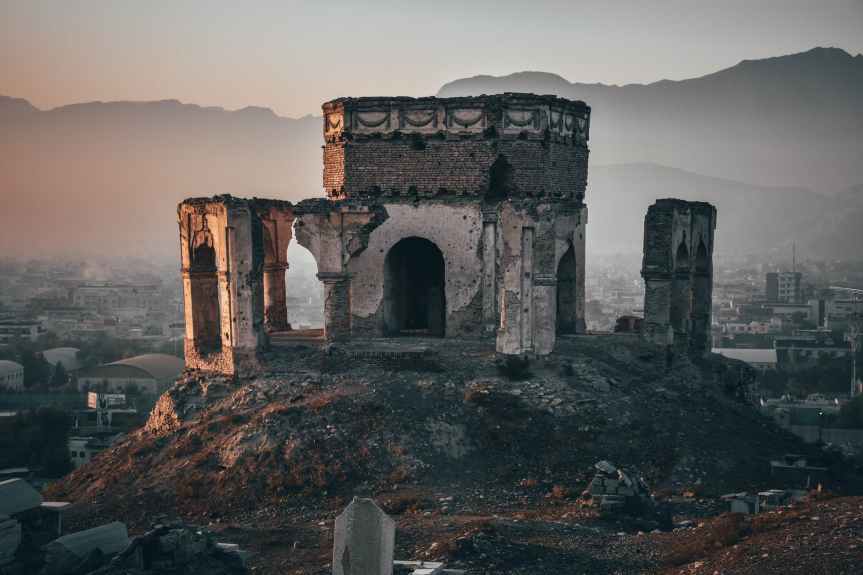
Afghanistan – A tragedy that has no saving

The President of the USA, Joe Biden chose to play the card that the presidents before him had put on the game – the complete withdrawal of armed personnel from Afghanistan. This would mean an end to about 20 years of war in the country that had pitched the NATO and the US against a radical Islamic militant group to a supposed war on terrorism.

The Taliban controlled about 90% of all Afghanistan before 2001. It even had embassies established in Pakistan and Saudi Arabia – the only two countries to give recognition to the government. It was after the 9-11 attacks that it suddenly became an enemy to every state on the planet that supported USA. The US and its NATO allies invaded the Afghanistan that was already torn between the Taliban led groups and the democratic rebels. 20 years have passed since then. From young adults born after 2001 to a now estranged prince of the British royal family, a lot of people fought in Afghanistan. The results were visible with the Taliban clearly on the loss. But, the results were never conclusive. And now, when the US and the NATO would finally withdraw from a war that never reached a conclusion, Taliban has all good reasons to take back what it owned for a brief period of time.

Afghan politics has become highly broken – factions that want peace but not the loss of a theologically driven Taliban government and many more of people wanting a democracy – the government promised in the first Afghan republic in the late 1960s. For the present state of a mujahideen within the once flourishing nation has always been there, but the present state of catastrophe is a result of the Soviet-American rivalry. It was due to the establishment of the Afghan Socialist state that the mujahideen and the Soviet-Afghan war erupted and it was because of obvious and many-a-times accepted training by the Pakistani(Parvez Musharaff, the Army general of Pakistan and later President of Pakistan accepted on a TV show that the Taliban and Lashkar were heroes to him and his people) and American forces (American newspapers have routinely praised not just Taliban but also the infamous Osama Bin Laden during the war) that the logistics, tactics and power of these mujahideen forces reached to a point where they could establish an emirate that spanned most of Afghanistan.

Afghanistan - Wikipedia
Is there any redemption for Afghanistan?

The return of Taliban will not only usher a new era of repression for the Afghans – especially women, children and the now diminished minorities, but also to the neighbouring nations of India, Iran and Central Asia – where the rise of Taliban may lead to new found difficulties in security and trade. The radical Islamists founded the Indian mujahideen as a cause to create a similar situation in India a couple of decades ago. The specific case of India is being raised here because it has strong cultural and economic interests in Afghanistan. The Chabahar port in Iran is India’s strongest option against China’s CPEC and the Gwadar port. Other than this, with an unfortunate history of militancy and extra state actors in North Western India, to have a neighbour ruled by groups of similar ideologies is dangerous for it. India should find ways to support Kabul militarily, for the statements made by Pakistan Prime Minister where he expressed his inadequacy in pressuring Taliban for a ceasefire leaves no neighbour but India to hold the hands of a now weaker government at Kabul. However, India has so far refused to be involved militarily, let alone be involved now, when it could end being the only player in the game.

Afghanistan looks grim. So does its future. The case is unlike ISIS. Common people had supported the Taliban insurgency. And the opium rich state an fund the group for years once it comes to power. Afghanistan looks like a lost cause, with no friends to support it in the problem that should have the highest priority to be solved – the problem of insurgency.
NARCO-TERRORISM DANGER IN INDIA

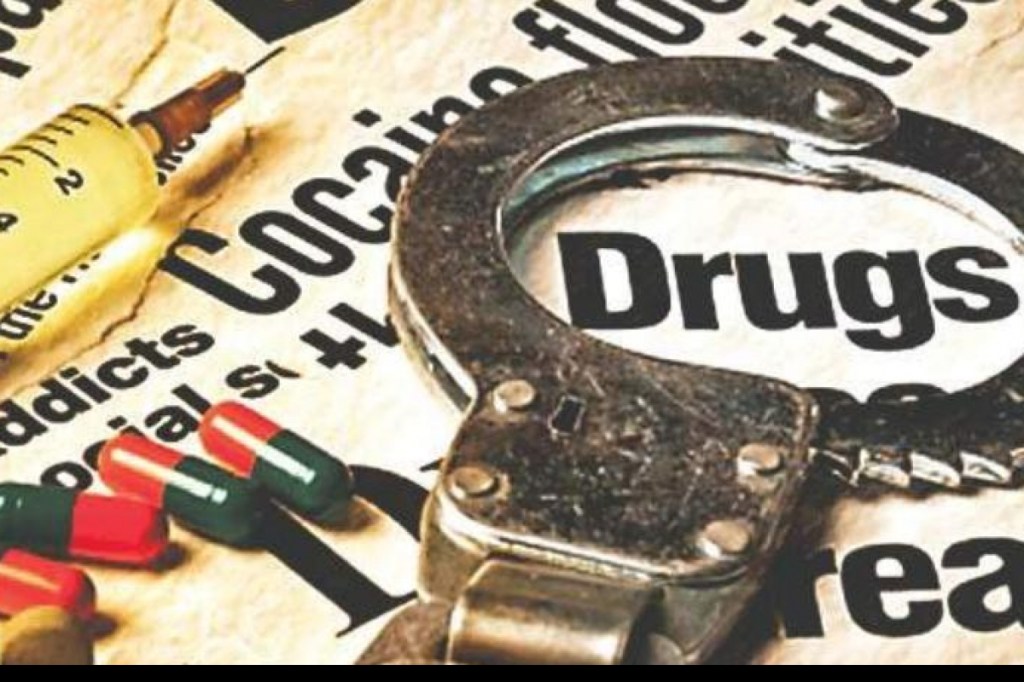
 The theory of narco-terrorism stems from the realization that the two phenomena of drugs trafficking, and terrorism are inextricably linked, and that, as a result, a coordinated anti-drug and anti-terror policy can and must be employed to effectively combat both threats. Because of its nefarious partnership with terrorist groups, narcotic trafficking, which began as an organized cross-border crime, has now evolved into a menace to nation states. 

Although it has been known for decades that there is a relationship between the drugs trade and terrorist organizations, as suggested by the name narco-terrorism, the international focus on terrorism after September 11, 2001, has intensified the attention given to the issue of narco-terrorism.

The Golden Crescent is the world’s greatest illegal opium production. In 1999, Afghanistan and Pakistan alone accounted for over 6000 metric tonnes of total illegal output. Because of this high-level production, narco-terrorism is increasingly linked to the reigns of central and southeast Asia. India being the southern part of Asia  is concerned because these narcotics are a key source of money for Pakistani-sponsored terrorism in our nation. Also, India is the sole licit provider of opium to the international pharmaceutical sector, with an annual export income of roughly Rupees 209 crores in 1999. The economy of the Pak-Afghan border is based on poppy and cannabis cultivation. The drug money is being smuggled into the Indian money market in an unorganized but methodical way because of which financial institutions suffer. 

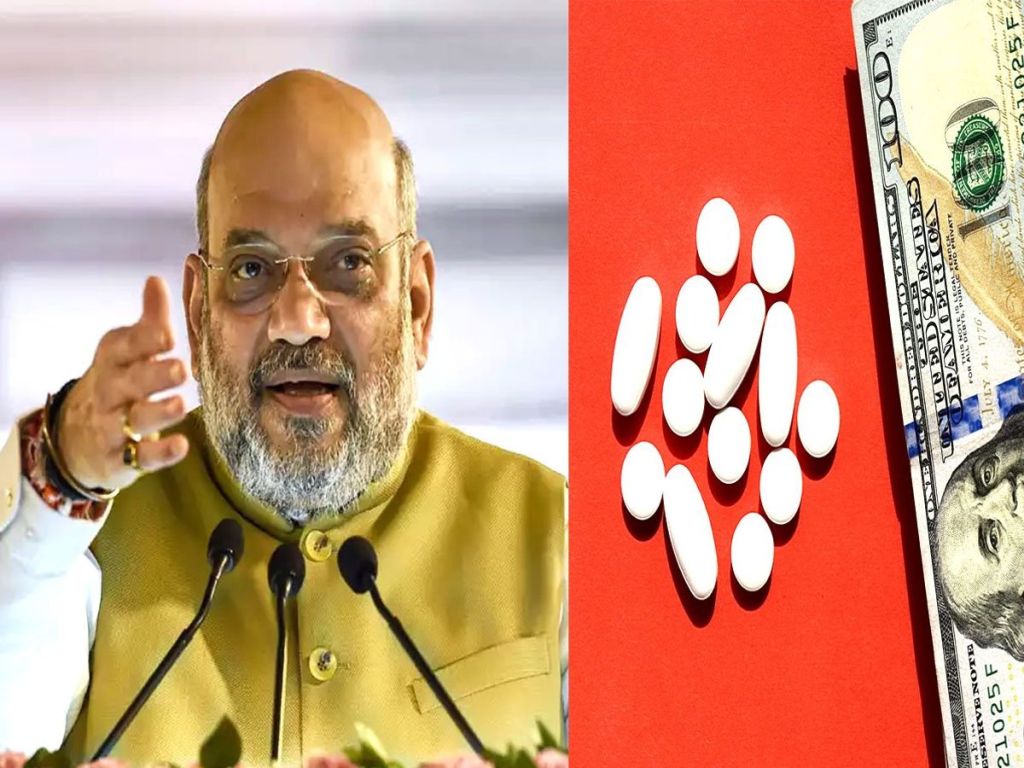
Because of illicit drug trafficking from Afghanistan and Pakistan poses a threat to India’s polity and economy. This issue requires serious attention from policymakers and law enforcement organizations before it is too late to intervene. Similar contention was also made by India’s home minister, Amit shah. He recently visited the National Forensic Sciences University (NFSU) in Gandhinagar to unveil the Centre of Excellence for Research and Analysis of Narcotic Drugs and Psychotropic Substances, which was established during Prime Minister Narendra Modi’s term as Chief Minister of the State of Gujrat. There he announced that India now faces the threat of narco-terror because of the rise of narcotics where drug traffickers and peddlers use drug money to promote their unlawful and disruptive operations. So to tackle this ongoing issue the Government has determined that narcotics would not be let into the nation, and that India will not be used as a transit point. He also mentioned that It is critical to put an end to this threat. 

Talking about the inauguration he said that this Centre was chosen to be connected to Gujarat’s Forensic Science University when the government was constituted for the second time under Prime Minister Narendra Modi because to appreciate the university’s outstanding services, the union government had designated it as a national center of excellence. He further added that the administration emphasized the need of using scientific techniques to conduct faster and more effective criminal investigations. Therefore, Forensic science will play a significant part in this. He also commended the forensic science institution for its contributions to criminal investigations into cyber and drug-related crimes.

The theory of narco-terrorism stems from the realization that the two phenomena of drugs trafficking, and terrorism are inextricably linked, and that, as a result, a coordinated anti-drug and anti-terror policy can and must be employed to effectively combat both threats. Because of its nefarious partnership with terrorist groups, narcotic trafficking, which began as an organized cross-border crime, has now evolved into a menace to nation states. 

Although it has been known for decades that there is a relationship between the drugs trade and terrorist organizations, as suggested by the name narco-terrorism, the international focus on terrorism after September 11, 2001, has intensified the attention given to the issue of narco-terrorism.

The Golden Crescent is the world’s greatest illegal opium production. In 1999, Afghanistan and Pakistan alone accounted for over 6000 metric tonnes of total illegal output. Because of this high-level production, narco-terrorism is increasingly linked to the reigns of central and southeast Asia. India being the southern part of Asia  is concerned because these narcotics are a key source of money for Pakistani-sponsored terrorism in our nation. Also, India is the sole licit provider of opium to the international pharmaceutical sector, with an annual export income of roughly Rupees 209 crores in 1999. The economy of the Pak-Afghan border is based on poppy and cannabis cultivation. The drug money is being smuggled into the Indian money market in an unorganized but methodical way because of which financial institutions suffer. 

Because of illicit drug trafficking from Afghanistan and Pakistan poses a threat to India’s polity and economy. This issue requires serious attention from policymakers and law enforcement organizations before it is too late to intervene. Similar contention was also made by India’s home minister, Amit shah. He recently visited the National Forensic Sciences University (NFSU) in Gandhinagar to unveil the Centre of Excellence for Research and Analysis of Narcotic Drugs and Psychotropic Substances, which was established during Prime Minister Narendra Modi’s term as Chief Minister of the State of Gujrat. There he announced that India now faces the threat of narco-terror because of the rise of narcotics where drug traffickers and peddlers use drug money to promote their unlawful and disruptive operations. So to tackle this ongoing issue the Government has determined that narcotics would not be let into the nation, and that India will not be used as a transit point. He also mentioned that It is critical to put an end to this threat. 

Talking about the inauguration he said that this Centre was chosen to be connected to Gujarat’s Forensic Science University when the government was constituted for the second time under Prime Minister Narendra Modi because to appreciate the university’s outstanding services, the union government had designated it as a national center of excellence. He further added that the administration emphasized the need of using scientific techniques to conduct faster and more effective criminal investigations. Therefore, Forensic science will play a significant part in this. He also commended the forensic science institution for its contributions to criminal investigations into cyber and drug-related crimes.