
😲😲😲 WOW FACTSSSSS

Wow facts are the facts that will amaze you and will challenge your General knowledge and today I am here to challenge your quiz capacity…..wowwwww factssssssss …hope you will enjoy today’s blog….. So here are 10 wow facts

WOW FACTS 😊💞

Glaciers and ice sheets hold about 69 percent of the world’s freshwater….. To find the bulk of the world’s freshwater you need to trek to the poles, as 68.7% of it is encased in ice caps, permanent snow, and glaciers.

The best place in the world to see rainbows is in Hawaii. If you’re an avid rainbow gazer and want to get your fill of the beautiful phenomenon, look no further than the state of Hawaii.

New creatures have been found in deep-sea volcanoes. over 90 putative bacterial and archaeal genomic families and nearly 300 previously unknown genera.” Some research has linked hydrothermal vents, like deep-sea volcanoes, to the “origin of life.” So are we looking at the early signs of future land-dwellers?

North Korea and Cuba are the only places you can’t buy Coca-Cola. this fizzy drink is sold practically everywhere, it still hasn’t (officially) made its way to North Korea or Cuba, according to the BBC. That’s because these countries are under long-term U.S. trade embargoes.

There are more twins now than ever before. twins is it lucky to see twins well now it’s becoming common..From about 1915, when the statistical record begins, until 1980, about one in every 50 babies born was a twin, a rate of 2 percent

The world’s most densely populated island is the size of two soccer fields. Santa Cruz del Islote in the Archipelago of San Bernardo off the coast of Colombia may only be about the size of two soccer fields (two acres), but the artificial island has four main streets and 10 neighborhoods. Five hundred people live on the island in around 155 houses. With so many people packed into such a small space, it’s the most densely populated island in the world, according to The Guardian.
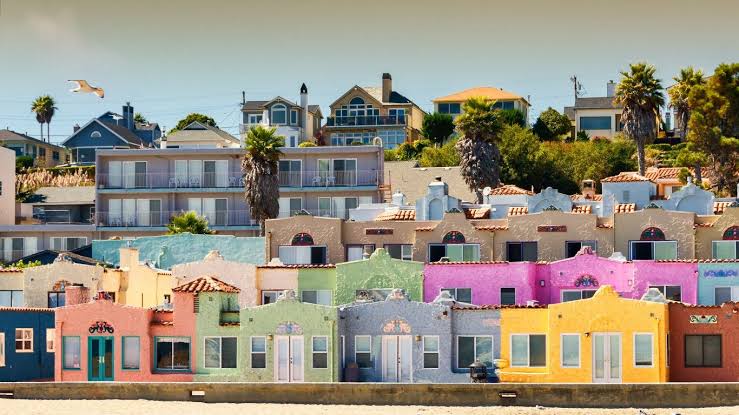
Indonesia is home to some of the shortest people in the world.
Aerial view of Indonesia …. Though there are short people and tall people everywhere, Indonesia is home to some of the shortest people in the world, according to data compiled from various global sources

LIBERIA is only one country in the world that doesn’t use the metric system. Liberia is the only country with no metric system. For simplicity’s sake, most of the more than 200 countries in the world use the metric system when describing things like length or mass. However, there were recently three countries that stood out: Liberia, Myanmar, and the United States.

In 2018, Liberia commerce and industry minister Wilson Tarpeh said the government planned to adopt the metric system in order to promote accountability and transparency in trade, according to the Liberian Observer. Myanmar made a similar commitment, which leaves the U.S. as the lone holdout

The longest place name on the planet is 85 letters long.

People who live in Mamungkukumpurangkuntjunya Hill, Australia, need a little patience when it comes to learning to spell their hometown’s name. But you know what? So do the folks from Lake Chargoggagoggman-chauggagoggchaubunagungamaugg in Massachusetts and Tweebuffelsmeteen-skootmorsdoodgeskietfontein, South Africa.
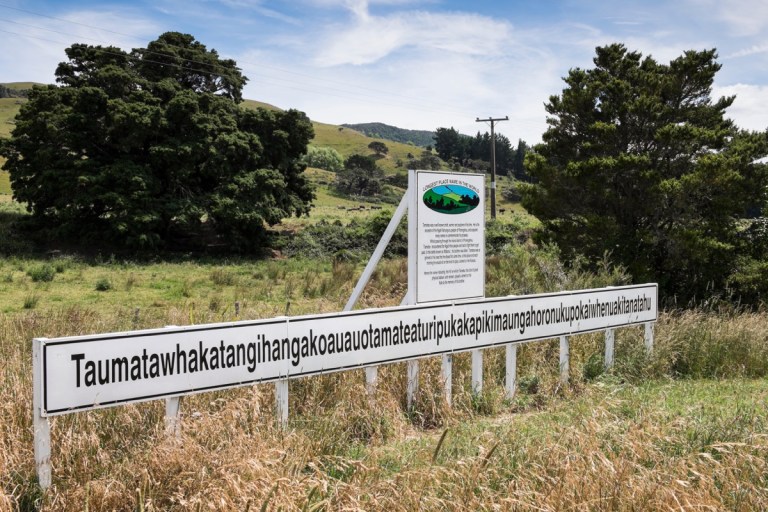
I can’t read it

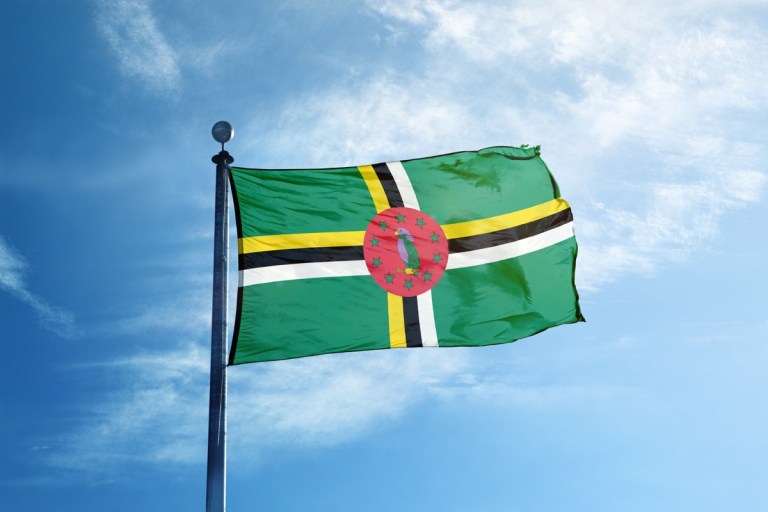
Only two countries use purple in their national flags. The flag of Nicaragua features a rainbow in the center that includes a band of purple, while the flag of Dominica boasts a picture of a sisserou parrot, a bird with purple feathers. These elements make them the only two flags in the world that use the color purple.
Paris Facts

Paris, the capital of France, is located in the north-central portion of the country. It constitutes one of the départements of the Île-de-France administrative region and is France’s most important centre of commerce and culture. The city is home to the Eiffel Tower, one of the world’s premier tourist attractions, which opened to the public on May 15, 1889. Paris, city and capital of France, situated in the north-central part of the country. People were living on the site of the present-day city, located along the Seine River some 233 miles (375 km) upstream from the river’s mouth on the English Channel (La Manche), by about 7600 BCE. The modern city has spread from the island (the Île de la Cité) and far beyond both banks of the Seine. Paris occupies a central position in the rich agricultural region known as the Paris Basin, and it constitutes one of eight départements of the Île-de-France administrative region. It is by far the country’s most important centre of commerce and culture. Area city, 41 square miles (105 square km); metropolitan area, 890 square miles (2,300 square km). Pop. (2012) city, 2,265,886; (2015 est.) urban agglomeration, 10,858,000.

Character of the city
For centuries Paris has been one of the world’s most important and attractive cities. It is appreciated for the opportunities it offers for business and commerce, for study, for culture, and for entertainment; its gastronomy, haute couture, painting, literature, and intellectual community especially enjoy an enviable reputation. Its sobriquet “the City of Light” (“la Ville Lumière”), earned during the Enlightenment, remains appropriate, for Paris has retained its importance as a centre for education and intellectual pursuits. Paris’s site at a crossroads of both water and land routes significant not only to France but also to Europe has had a continuing influence on its growth. Under Roman administration, in the 1st century BCE, the original site on the Île de la Cité was designated the capital of the Parisii tribe and territory. The Frankish king Clovis I had taken Paris from the Gauls by 494 CE and later made his capital there. Under Hugh Capet (ruled 987–996) and the Capetian dynasty the preeminence of Paris was firmly established, and Paris became the political and cultural hub as modern France took shape. France has long been a highly centralized country, and Paris has come to be identified with a powerful central state, drawing to itself much of the talent and vitality of the provinces.

Climate of Paris
In its location on the western side of Europe and in a plain relatively close to the sea, Paris benefits from the balmy influences of the Gulf Stream and has a fairly temperate climate. The weather can be very changeable, however, especially in winter and spring, when the wind can be sharp and cold. The annual average temperature is in the lower 50s F (roughly 12 °C); the July average is in the upper 60s F (about 19 °C), and the January average is in the upper 30s F (about 3 °C). The temperature drops below freezing for about a month each year, and snow falls on approximately half of those days. The city has taken measures to decrease air pollution, and a system of water purification has made tap water safe for drinking.
City layout
Over the centuries, as Paris expanded outward from the Île de la Cité, various walls were built to enclose parts of the city. After the Roman town on the Left Bank was sacked by barbarians in the 3rd century CE, the fire-blackened stones were freighted across to the Île de la Cité, where a defensive wall was constructed. Neglected in times of peace, it was rebuilt several times over the course of the centuries. The earliest of the bridges to the Left Bank, the Petit Pont (Little Bridge), which has been rebuilt several times, was guarded by a fortified gate, the Petit Châtelet (châtelet meaning a small castle or fortress). The bridge to the Right Bank, the Pont au Change (Exchange Bridge), was guarded by the Grand Châtelet, which served as a fort, prison, torture chamber, and morgue until it was demolished in 1801.

Around the Eiffel Tower
Back within the city limits, south of Place Charles de Gaulle, is the Chaillot Palace (Palais de Chaillot). Standing on a rise on the Right Bank of the Seine, where the river begins its southwestward curve, the palace is an impressive spot from which to view what is arguably the most recognized symbol of Paris, the Eiffel Tower. The palace, which dates from the International Exposition of 1937, replaced the Trocadéro Palace, a structure left over from the 1878 International Exposition. It is made up of two separate pavilions, from each of which extends a curved wing. Several museums, including the Museum of Mankind, the Naval Museum, the Museum of French Monuments, and the Cinema Museum, are located there. Under the terrace that separates the two sections are the National Theatre of Chaillot and a small hall that serves as a motion-picture house of the national film library.
The terrace, which is lined by statues, gives a splendid view across Paris. The slope descending to the river has been made into a terraced park, the centre of which is alive with fountains, cascades, and pools. The Trocadéro Aquarium (Cinéaqua) is a few steps away in the park. From the bottom of the slope the five-arched Jena Bridge (Pont d’Iéna) leads across the river. It was built for Napoleon I in 1813 to commemorate his victory at the Battle of Jena in 1806.
On the Left Bank rises the Eiffel Tower itself, an unclad metal truss tower designed by Gustave Eiffel. The tower was built for the International Exposition of 1889, against the strident opposition of national figures who thought it unsafe or ugly or both. When the exposition concession expired in 1909, the 984-foot (300-metre) tower was to have been demolished, but its value as an antenna for radio transmission saved it. Additions made for television transmission added about 79 feet (24 metres) to the height. From the topmost of the three platforms, the view extends for more than 40 miles (64 km). From the 2-acre (0.8-hectare) base of the tower, the Champ-de-Mars (Field of Mars), an immense field, stretches to the Military Academy (École Militaire), which was built from 1769 to 1772 and later became the site of the War College (École Supérieure de Guerre). The Champ-de-Mars, which originally served as the school’s parade ground, was the scene of two vast rallies during the French Revolution: the Festival of the Federation (1790) and the Festival of the Supreme Being (1794). From 1798 there were annual national expositions of crafts and manufactures, which were followed by world’s fairs between 1855 and 1900. Behind the Military Academy stands the headquarters of UNESCO (United Nations Educational, Scientific and Cultural Organization). The building, erected in 1958, was designed by an international trio of architects and decorated by artists of member nations.