


CAVEAT
Section 148-A of the Civil Procedure Code,1908 provides for lodging of a Caveat.
A caveat is a caution or warning given by a party to the court not to take any action or grant any relief to the applicant without notice or intimation being given to the party lodging the caveat and interested in appearing and objecting to such relief.
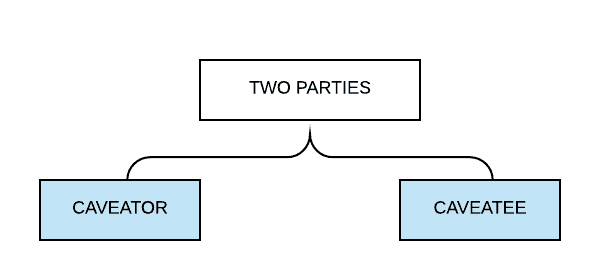
The person filing the caveat is known as “CAVEATOR“.
OBJECT OF CAVEAT
To safeguard the interest of a person against an order that may be passed on an application filed by a party in a suit or proceeding instituted or about to be instituted.
It seeks to avoid multiplicity of proceedings.
WHO MAY LODGE CAVEAT ?
A Caveat may be filed by any person who is going to be affected by an interim order likely to be passed on an application which is expected to be made in a suit or proceeding instituted or about to be instituted in a court.
A person who is stranger to the proceeding cannot lodge a caveat.
FORM
No form of caveat has been prescribed under the Code. A caveat may, therefore, be filed in the form of a petition.
TIME-LIMIT
A Caveat lodged will remain in force for ninety days from the date of its filing.
After the prescribed period of ninety days is over, caveat may be renewed.

 Eduindex