
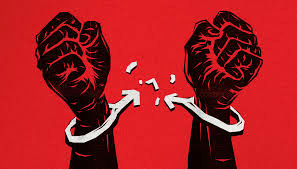
Breaking The Chain Of Patriarchy

We live in a society where our everyday behaviours, thoughts and emotions are shaped by the patriarchal notions, that prevails in the structure of the society. A woman at every stage of her life, in fact even before her birth, was being subjected to the evils of the male-dominated society. Patriarchy is unique, as this oppression is prevalent globally but still many of its aspects are undermined by the society or remain hidden in the structure such that it was noticed by none, even man of the women who are subjected to it fails to notice. In Indian society, in particular, the patriarchal norms and values are also a result of caste and religious inequalities that haunts the society. The most familiar example is the restriction of women entry into Sabarimala Temple in Kerala.

Normalisation of Patriarchy

The transmission of patriarchal values and ideas from one generation to another occurs in the socialisation process. Socialisation is the process of internalising the norms and ideologies of society. During and at the end of the process, the individuals, be it men or women adjusts to the group or the society from which they socialised, and learns to behave in a manner as approved by the society.  This socialisation process forms the basis for the normalisation of patriarchy in society. So, any attempt for a social change that is sustainable and egalitarian, should start from the socialisation process.

Primary and Secondary Socialisation

Socialisation occurs at two levels – primary and secondary.

In primary socialization, a child accepts and learns a set of norms, values, attitudes. For example, if a child sees his or her mother expressing hatred towards anybody, the child may think this behaviour is acceptable and could continue to practice hatred towards others.

In secondary socialization, the child learns what is the appropriate behaviour as a member of a smaller group in a larger society. Secondary socialization takes place outside the home. The children and adults learn how to act in an appropriate way in a situation. Schools require very different behaviour from the home, and children must act according to new rules.

The Chain of Transmission

So, the social institutions involving in the process of socialisation- both primary and secondary-should undergo a radical change from the present, in their approaches of socialising the new generation. Socialisation by any of these institutions is influenced by the patriarchal values of the society. Identifying the patriarchal values and norms in these institutions and replacing them with egalitarian value will break the transmission chain that helps in carry patriarchy across generations.

Let us see with some examples,

The key social institution in the primary socialisation process is the Family. The behaviour of the parents has a great influence on the child. In Indian society, there is a notion that males are breadwinners and women are homemakers, which itself is a result of the patriarchal norms. So, any child witnessing his/her father going to job and mother doing. Thus, the occupational segregation that we see in the labour market has its root in the Family. During this, the child ability to think critically about such a notion is not developed. Hence the child accepts this uncritically. This is a vicious cycle – the socialisation process leads to an unequal labour market, the unequal labour market again has its worst effects on the socialisation process.

Even the toys are given to the girls and boys during their childhood also has their effects. Often the boy child was given a bike or car toy, whereas the girl child was given a barbie doll-like toys. Over time this will give a superiority notion to the boy child, against the other gender as possessing a bike or car was often seen in terms of the status of a family in our society and is often associated with boys.

Schools are important secondary social institutions. The present arrangement in schools and colleges is such that the patriarchal notions went unnoticed and hence normalised. Even women who are subjected to this, often accept this as a legible one. Let us look at this with a simple example

Even today many school books of lower classes contain a picture of a family where the father was depicted as going to a job and the mother was doing household chores. Here comes the coincidence of the primary and secondary socialisation. As mentioned above a child sees the same kind of situation as in the book, in his/her home. This makes the child believes that this is how society operates.

But a big relief is that there are men and women who, over the years become aware of this pattern of socialisation and absolves themselves from the clutches of the patriarchal norms of the society and are being gender-neutral.

Breaking the chain

Redefining the socialisation process will be the solution.

Primary Socialisation: Make your child believe that the world is for everyone through your actions. A working male in a household, cooking for some time with his wife or helping her in her work will make a great difference to the child. This develops a sense in the child that no job is restricted to no one and no one is restricted from doing any job.

Secondary Socialisation: Making the words and pictures in the school books of lower classes gender-neutral, helps a lot. Say a picture of a family can be shown as a father and mother doing household chores together. This will make the child thinks that why the family shown in the book and his/her own family was totally different (in the case of a household where the father goes to job and mother do household chores).

The selection process in any kinds of posts in schools or colleges should not be based on gender. This makes every student (boy/girl/another gender) work together under the leadership of another student (boy/girl/another gender).

Thus, a permanent social change is in the hands of future generations.

I am not sure whether the youths and students are the future of India. But every youth will be a parent in the future. So, the responsibility of these youths/parents should be to make their child, being men or women, not to act as men or women.
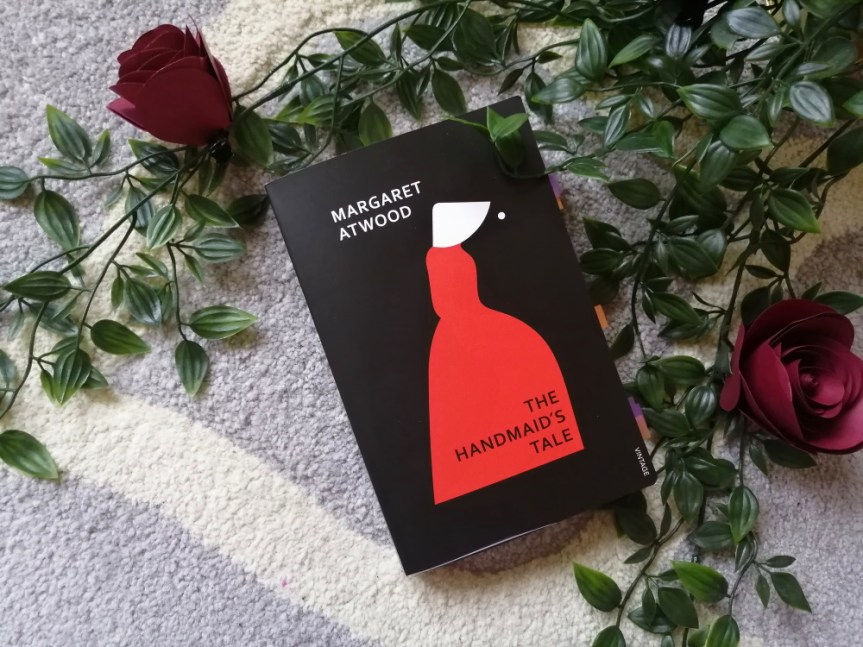

The Handmaid’s Tale – A Terrifying dystopian Novel

As readers, we travel through many stories and live in those unrealistic worlds that make us feel more realistic the way it is written, some stories imprint in readers’ minds, and some of these imprints in a writer’s mind. However “Handmaid’s Tale” is a novel that is a tormented dystopian story and a novel that kept the readers in an Appalling state throughout the story.

The Gileadean Era: A Foundation intended for the destruction of Humans.

This particular Novel is a dystopian novel that begins with the creation of the “Republic of Gilead” which is formed by a political group namely, the Sons of Jacob which tries to suppress the people of the USA by a strict but environment which is not less than a hell.

The Handmaid’s Tale is a perfect example of How hell would look like if it’s situated on earth. The Gilead Regime is a perfect example of how humans can be hazardous to each other and how they can create a place of agony by being inhuman towards each other and take all rights from the people who are less powerful than them.

This novel is not just about Marxist Feminism,  it is not even feminism, it is a  novel which talks about suppressing humans who are fragile and powerless and taking away the Right to Speak and Right to express themselves, but this novel is also about how religion is misused against the humans and haunt them in the name of Almighty.

“My Name isn’t Offred. I have another name, which nobody uses now because it’s forbidden. I tell myself it doesn’t matter, your name is like your telephone number useful only to others, but what I tell myself is wrong, it does matter. I kept the knowledge of this name like something hidden, some treasure I’ll come back to dig up, one day.”

– The Handmaid’s Tale

A very Important quote highlighting the crux of the novel in these lines is beautifully written by the author who explains to us about the protagonist of the story: June Osborne who was forcibly turned into Offred who was a mere Handmaid of a commander.

This quote draws us the image that how a person loses their identity when their name is taken away from them. It is the very weird fact that we as a human never use our word, but when someone takes our names from us ultimately, we even lose our identity and our real self-fades away with the spark of our name.

The very same situation happened with June and other women whose names were taken away from them and in return, they were made as Handmaids or we can say a sexual pleasure for their following commanders.

As mentioned in the “Historical Notes” of the novel where Dr. Piexoto explains to the readers that this novel is a transcript of a tape recording which portrays us that the whole novel is written with the perception of an imaginary Character named Offred/June.

Gilead has proved that even advanced technology fails in front of religion. This is a very controversial line that even can hurt people’s sentiments. Gilead abused the people by giving them physical, mental and emotional torcher and treated them as an object for satisfying their pleasure.

A Dystopian story that breaks all norms of society –

If you dig into the story, then “The Handmaid’s Tale” is a dystopian novel that is not one element centric novel, but a novel that has divergent themes and elements. The Protagonist of the story, Offred tells the novel with her viewpoint as a form of a tale where she talks about her sufferings in a form of nostalgia and this novel keeps the reader in curiosity through the suspense drawn in the novel. the story has a nostalgia within a nostalgia. Offred living in a hell called “The Republic of Gilead” makes her a fragile woman cause of the injustice she and other women goes through. The sufferings made her a different person as such she came to a state where she was accustomed to be living like a handmaid and for her freedom was never a word to be dreamt of.

She explains to us how not only women but people who belong to other genders were treated like slaves by the patriarchal society. The author shows us that the patriarch society crossed all the boundaries to break down humanity from the regime and The commander’s wives, the aunts, Martha’s, all were like puppets under this awful patriarch world.

When Humankind is lost, it’s the end of Humanity!

There are many segments of the novel which describe to us the real picture of  Gilead and how people in this place are humans but are apathetic towards each other. Gilead is a place where things like emotions, respect, pity don’t exist rather is invisible in this hell-like place.

These handmaids are not allowed to do anything of their own choice as such; going out alone, shopping, watching movies, reading magazines, roaming around the streets, and even having their real names are forbidden in this place. Offred reminiscent of her went days when she was an editor, wife, and a mother and lived a bustling life but in peace. Her freedom is taken away and her bustling life is turned into a life that is just a nightmare for every day.

However now she just has to be fruitful to bear fruits and complete the Procreation ceremony, which is a holy custom for the Gilead community but is merely a form of rape that all handmaids go through. “The Rachel and Leah center “also unofficially known as the “Red Centre” is a cell for those handmaids who disobeyed the law and are followed through the punishment which is a form of clearing mistakes of the young handmaids by making them perfect in the eyes of almighty to bear the seeds planted by the commanders according to the aunts.

In Gilead everything was uncanny, love was substituted with lust, Humans were like slaves, those genders who were not under the category of male and female were sent to “The Colonies” which was not less than a concentration camp that ultimately brings death towards them.

Yet offered never lost hope and always protected herself from the devastation and chose many paths to get over from this hell. Later in the story, we see that his beloved “Nick” who was assumed to be the part of “The eyes” helped him to get out of the regime but in the end, they failed to do so.

We can conclude that; this sci-fi dystopian novel was terrifying at all levels which can devastate human minds. It shows that a sinister human can reach any level of madness and destroy each other by being greedy and sinful.

“You see, Humans are always egoist and sometimes they destroy themselves in search of satisfying themselves with worldly pleasures.”