PERSONALITY THEORIES

According to the American Psychological Association,Personality refers to an individual differences in characteristic patterns of thinking, feeling and behaving. The study of personality focuses on two broad areas: One is understanding individual differences in particular personality characteristics, such as sociability or irritability. The other is understanding how the various parts of a person come together as a whole.

So this blog will introduce the readers to some important theories used to describe personality.Let’s get started!

1) FREUD PSYCHOANALYTICAL PERSPECTIVE:

 According to Sigmund Freud Father of Psychoanalysis, an adult personality generally has three determinants: Id, Ego and Super Ego.The outcome of the combination of all the three determinants shapes an adult personality. Freud believed than an individual’s personality has three parts and thus is often called as tripartite personality.

  • Id:Irrational demands and urge.
  • Ego:Helps in fulfillment of Id after taking into consideration the reality.
  • Superego:Moral constraints of the individual.

Defense mechanisms play an important role in pushing unrealistic thoughts out of awareness. Stressful thoughts which are threatening to an individual’s survival should be pushed into unconscious mind to reduce anxiety through them.

2)ERIK ERIKSON:PSYCHOSOCIAL DEVELOPMENT THEORY:-

Erikson believes there are 8 stages in a person’s life and to enter into the next stage,a virtue has to be learnt from the previous stage and this leads to personality development.He focuses on different identity crisis in a person’s lifespan.As in

STAGE 1:Trust v/s Mistrust;Virtue:Hope

STAGE 2:Autonomy v/s Doubt;Virtue:Will

STAGE 3:Initiative v/s Guilt;Virtue:Sense of Purpose.

STAGE 4:Industriousness v/s Inferiorty;Virtue:Competence

STAGE 5:Identity cohesion v/s Role confusion;Virtue:Fidelity

STAGE 6:Intimacy v/s Isolation;Virtue:Love

STAGE 7:Generativity v/s Stagnation;Virtue:Care

STAGE 8:Ego Integrity v/s Despair;Virtue:Wisdom

3)CARL JUNG:INTOVERSION V/S EXTRAVERSION

Carl Jung established a theory, which saw universal types in human personality. The types categorized by Carl Jung are present in all of us. But, certain types are predominant over the normal mode of organizing our experience.Carl Jung also developed a theory of personality. His theory is one of the type theories of personality, as it involved typology of introversion and extraversion.There are 4 functions :Sensing,intuiting,thinking and feeling.

4)JULIAN ROTTER-LOCUS OF CONTROL

“Locus of Control.” For many people, their only exposure to the ideas of Julian B. Rotter is his concept of generalized expectancies for control of reinforcement, more commonly known as locus of control. Locus of control refers to people’s very general, cross-situational beliefs about what determines whether or not they get reinforced in life. People can be classified along a continuum from very internal to very external.
People with a strong internal locus of control believe that the responsibility for whether or not they get reinforced ultimately lies with themselves. Internals believe that success or failure is due to their own efforts. In contrast, externals believe that the reinforcers in life are controlled by luck, chance, or powerful others. Therefore, they see little impact of their own efforts on the amount of reinforcement they receive.

Thus we come to the end of the blog.This blog is aimed at introducing the readers to the world of personality analysis.However one must remember that human beings are complex and not one theory explains all the human behavior.The readers are requested to read more articles about the same and fill themselves with knowledge.

Give a like,if you all felt this article was informative and interesting.

Thankyou!
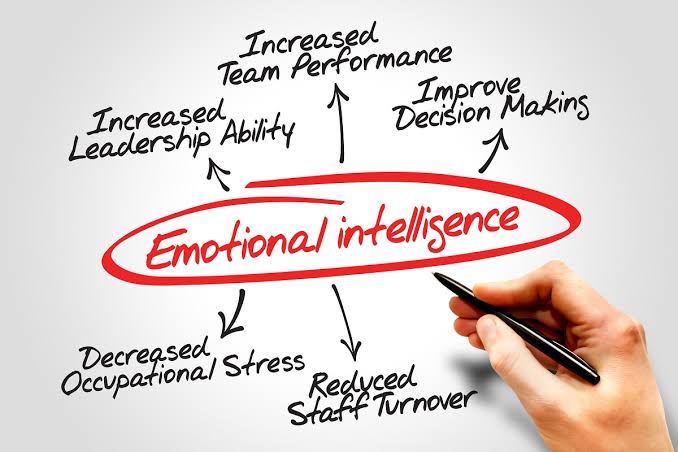
How Emotional Intelligence contributes to IQ+EQ=SUCCESS.

When we visit our relatives, we often hear this child is so intelligent. But that’s not actually what they are defining. They basically complement the kid’s emotional intelligence and not on their IQ. Emotional intelligence is a slippery topic, people usually have misconceptions about it. We all have different ways to show our emotions and different ways to deal with them too. 

Emotional intelligence or emotional quotient (EQ) is the ability to understand and recognize your emotions and how to deal with numerous emotional situations of an individual. People with high emotional intelligence have more chances to become successful in most aspects of their life. If a job requires emotional labor, it is demanding to be emotionally intelligent.

Characteristics of Emotional Intelligence.

In a book titled “Emotional Intelligence – Why It Can Matter More Than IQ” 1995, Daniel Goleman, an American psychologist, expanded a framework of five components that characterize emotional intelligence:

  • Social skills– People find it attractive to talk with individuals with good social skills. People with emotional intelligence are good communicators too and are excellent in maintaining relationships.
  • Motivation– High emotional intelligence improves motivation. These people are usually motivated and make the surroundings too. These are productive and very effective in whatever they do.
  • Self-regulation– They can easily regulate their emotions which means they can control emotions and can tackle every situation and these think before they act. 
  • Self-awareness– These people understand their emotions and don’t let them rule them. These are super confident and believe in their intuition.

More the emotional intelligence, more maturity.

How to improve?

The biggest mistake that people make is that they are judgemental. They make a judgment without even knowing the whole story. This stuff should be avoided. Put yourself in their situation and then react. Humility can be a good thing and practicing this can make you confident about things. Just give opportunities to outshine others and don’t bother much to get applause for yourself. Self- evaluation also plays a crucial role. Admit your weakness and know where you have to work on in spite of giving false gratification that you’re perfect. In the business world or any other sector, it is highly necessary to be patient. Also taking responsibility, the responsibility of your work, or even hurting someone and apologizing. By being empathic and responding to their feelings we can make them feel comfortable. 

For example, if you ask an employee overtime and even if he agrees you may see a slight disappointment in his voice, so in spite of just ordering and walking off, appreciate his will to work.

What emotional intelligence affects.

Physical health – If you’re unable to manage your emotions probably you may affect your health by suffering from various diseases.

Mental health – Anxiety and depression can be a result of a lack of emotional intelligence.

Relationships – Communicating emotionally can be a booster in a relationship. Lacking this skill can also ruin your relationship.

Social intelligence – Tuning with your emotions may help you connect with the surrounding. Whereas being anti-social may cut your presence and make you feel less loved and less needed.

The basic idea of EQ:

  1. Identify your feelings.
  2. Identify other’s feelings.
  3. And then reacting accordingly.

Yes, of course, IQ matters but EQ enhances the value of IQ and every organization expects employees to be emotionally strong and intelligent.

Personal Development

Personal development can include any skill that you build to improve yourself—your emotions, thoughts, or behaviors. It doesn’t really matter which skills you want to improve; the key to personal development is taking the right steps — steps that help ensure that you reach whatever goal you are pursuing.

What are the most important personal development skills? It really depends on what you’re trying to achieve. But here are 9 that I have found to be important to successful personal development.

1. Start by figuring out which personal development skills you need to build. The first step in any personal development strategy is to figure out how to best use your time. It makes little sense to learn how to code if you don’t plan to be a coder or to bench press 400 pounds if you don’t plan to be a weight lifter. These can be hobbies, but personal development is more about building skills to reach your goals. So it’s good to take some time to self-reflect. (If well-being is a goal of yours, take this well-being quiz to see which skills you need to build.)

2. Develop entrepreneurial thinking. Everyone can benefit from learning how to think like an entrepreneur, regardless of whether or not you are one. Why? Because entrepreneurs are innovative, good at planning for all possible outcomes, and skilled at getting others to buy into their vision or dream. And perhaps more importantly for personal development, they tend to be adaptable to all sorts of situations.

By developing entrepreneurial thinking, you better adapt to whatever your circumstances are so you can more easily achieve your goals, whether those goals are to start a business that makes a positive impact in the world, to set yourself up for an early retirement, or climb Mount Everest.

3. Develop a growth mindset. If we have a “fixed mindset,” we may shy away from challenges that could help us grow. But this can be problematic because our fear of making mistakes can lead us to avoid challenges and new experiences—experiences which would help us grow, improve ourselves in important ways, and create the life we desire.

If we have a “growth mindset” we seek out challenges because we value learning and growth more than we value feeling smart or knowing what we’re doing. That’s why those with a growth mindset often build new skills more easily: They believe they can and so they really work at it.

4. Develop your self-soothing mechanism. High levels of stress are not only bad for our health and well-being, they can prevent us from effectively pursuing and achieving our self-development goals. By learning effective, long-lasting stress-reducing strategies, your body and mind will be more equipped to handle the inevitable challenges that arise when you’re trying to develop yourself.

5. Develop resilience. Resilience is that super-important skill that helps you bounce back quickly after being knocked down. This is one of the most important skills for success because none of us will achieve anything if we don’t keep trying when we fail. We can build resilience by improving skills like emotion-regulation, mindfulness, and positivity.

6. Develop your value compass. It’s not always easy to live by our core values. But when we go through life without following our personal values, we can easily get lost. We may suddenly “wake up” and realize that we are not who we want to be or where we want to be. This is why it’s so important to stay in alignment with our personal values.

What are your values? Perhaps: kindness, curiosity, creativity, hard work, or personal relationships. Define your personal values so you know which actions are in alignment with those values.

7. Create a personal development plan. A good personal development plan takes all these factors into consideration — the WHAT, the HOW, the WHY, and the WHEN. So ask yourself:

What skills will you build?

How will you build them?

Why will you build them?

And when will you build them?

8. Record your progress towards personal development. Keeping track of our progress as we move toward our personal development goals is key to making sure we’re on the right track. Then we can pause and take a different direction if we’ve gone off course. By maintaining self-awareness and frequently checking in with ourselves, we can identify things that we need to devote more attention to. As a result, we can make better progress toward our personal development.

9. Keep developing yourself in new ways. The science is clear: The more ways we develop ourselves, the broader our skill set, and the more success we tend to have. So try learning some new emotional skills or do some activities to build new skills. You just might learn something that changes your life.

HOW TO STUDY PROPERLY

Studying for long hours is only beneficial if done in the proper way. If you are not studying in the right manner, it is a certainty that all those hours would not lead to desired results. By tweaking your studying techniques backed by research project you’ll improve the standard of the content learnt and may also retain it for a extended time. 

1. Focused and diffused learningUse both focused and diffuse modes of learning. Focused mode is when you focus attentively on a topic and study it with no distraction. After doing this for some time (can follow the Pomodoro technique), you can switch over to some other tasks. In this time period, the brain works on the material learnt, processing and understanding it. This is a reason why if you can’t understand something, you’ll grasp it easily once you visit it later. 

2. Play hard, study smartInclude activities like exercising, walking, playing any sport in your daily timetable. These physical activities assist your brain in understanding unfamiliar topics and ideas . Do not think of them as just another pastime. It is not smart to only study for the whole day with zero physical activity. 

3. Sleep!Sleeping is very crucial to your learning. Waking up the night before the exam and cramming the entire night can help in the short term but it is not at all helpful when it comes to longer retention span. Sleeping helps in clearing the toxins produced in the brain during the day and consolidates the material learnt.

4. Spaced studyingMake sure that your learning is spaced over a period of days. Learn every day, this gives the time to make the previous concepts stronger and understand the new things in a better way. It is not smart to study a lot one day and then not studying anything for the next five days.

5. Apply what you have learntPractice what you have learnt. If you cannot solve a problem, do not see the solution immediately. Try using the concepts that you have learnt and if you are still stuck use hints if available. After exhausting all paths, you can check the solution but make sure to actually work it out. Just reading the solution is not enough. 

6. Mixing up thingsAfter mastering one topic do not stick to it, move to newer concepts. This might seem difficult and it is quite likely that you would end up procrastinating, but start anyhow. Reading the same concepts might give you the sense of progress but you should be real to yourself. 

7. Learning from basicsWhen learning a new concept, approach it right from the basics and then explain it to yourself in simpler terms. This is also known as Feynman’s technique and it is very effective when dealing with difficult and layered topics.

8. Watch out for new ideasBe open to new ideas and techniques when solving problems. If you are acquainted with a method, you might often feel that it is the most effective approach. This can block you from knowing and trying better techniques that exist. So be receptive to learning new things.

9. Consistent learningLearning compounds with consistency. Even if you’ve got started late, do a daily portion everyday. An essential aspect of smart study is to spot the facility of normal learning. Throughout human history, there are many samples of people that have started late and achieved mastery in their field.

IMPROVE YOUR FOCUS

In this fast-paced world we’ve created, we’re only going to feel more overwhelmed by the ever-increasing directions and distractions we feel pulled toward. With exponentially increasing demands on us in our work and personal lives, sustaining and improving focus on things which matter is getting tougher and tougher.
You’ll be pleasantly surprised to learn that keeping focused is no longer about trying to discover secret weapons of willpower or self-discipline. With these initial self-reflective exercises and different brain-training exercises, you’ll no longer be having arguments with yourself to get on with the job!
Here’re 7 ways on how to improve focus.
1. Have a Plan You Feel Clear AboutOne of the foremost common reasons we struggle to take care of focus is because we lack clarity about what we’d like to try to to next. The next best action step doesn’t feel clear to us.
If you are trying to lose weight but aren’t clear on exactly what activities you need to do, with what intensity, the food you need to eat and the timing of when all this needs to happen, you increase your chances of staggered progress.
If there are not enough parts early in the process to that feel clear for you to make the next step, these emotional obstacles will derail you.
You must also recognize the amount of detail in the steps you need to feel ready and confident to move forward — this will differ between you and the next person. You and another person are often given precisely the same instructions to find out a task. He/she might feel completely ready and confident to get to work. On the other hand, you hesitate.
Work on developing enough detail clarity until you are feeling you’ve got enough resources and know enough to require the steps.
2. Set Your Mood and Environment to maximise Your Capacity to FocusIt’s been argued that in slightly-above-ambient temperatures, you’ll be more creative. You feel more relaxed and your productivity increases. Conversely, lower temperatures have also been found to more positively influence decision-making ability and alertness.
Cornell University conducted a study of office administration workers whereby their productivity positively correlated with increased office temperatures.[1] At 25℃, the workers were typing with 90% accuracy. However, with a drop of 5℃, the typing rate nose-dived along side an increased error rate of 25%. The study also identified other factors which could greatly affect productivity and focus such as air quality and pollution.
It’s not just temperature you need to pay attention to. Good lighting is essential. The wavelength of blue light emitted from neon lights and most electronic devices generally ignites our serotonin levels and keeps us awake. Consider though that natural light is best where possible. When your body is truly getting tired, you can honor its natural rhythms and listen to its cues for rest.
Switch off communication applications (e.g. Facebook messenger, Slack, Yamma). Make it hard for yourself to access such applications and devices by physically putting them in places that are inconvenient for you to access (try the 20-second rule and make it take more time to access). If you have to go outside to the garden shed to retrieve your phone (and it’s cold and raining outside), you’re less likely to do it!
Maximize your exposure to visual messages which direct you to remain on task. Rather than have your eyes cast across post-it-note messages such as: “Don’t get distracted”, have messages of what you want to direct yourself to do: “Keep going. Stay focused.” Surround where you propose to execute most of your day’s work with deliberate messages that directly tell you to remain on target .
3. Create a Distraction Procrastination To-Do ListWhen you know you have to prepare a complex report or assignment, the temptation to be carried away with the social flittings of your friends on Facebook or your colleagues chatting nearby will likely be stronger than ever. That story you spin yourself that you’re only spending a smidgin’ of your time getting ‘up-to-date’ so it can’t really do any harm becomes the sole story you would like to believe.
Trying to resist the temptation completely can cost you valuable time and psychic energy . The guilt you harbor for contemplating digressing from your important activity inflicts an emotional cat-o-nine tails upon you. That doesn’t serve you either.
Submit half-way. Fully indulge at a designated time period to soak up that dopamine rush from scrolling through sporadic events and sponsored posts on your newsfeed or chat to whoever is online at the time. 
After pounding through a piece of labor , undergo that guilty pleasure. When you engage in it, do it fully. If you’ve been studying straight for three hours, it’s time to stand up, stretch and stroll to your favourite coffee shop and back. Go for a walk or swing on the swings in your closest public park.
If you work from home, bake a batch of scones, put on a face mask as you soak your feet in a foot spa. Or watch half of the football match you recorded but haven’t gotten ‘round to reviewing yet.
Cold-turkey abstinence is hardly ever effective. Not only are you wasting time and energy resisting the urge. You make the urge stronger by denying yourself! So, don’t deny yourself but manage it wisely.
4. Practice Meditation and MindfulnessIf you’re yet to be convinced of how meditation can help you improve focus, look no further than the declarations made by the American Psychological Society praising its benefits.More and more studies are demonstrating how meditation can reduce rumination, stress, anxiety and improve relationships, emotional stability, focus and working memory capacity.
If you’re not meditating, you are doing yourself a gross disservice. Meditating allows to practice regaining focus. As you practice, you learn and increase your skills to notice when your mind is wandering off track. You then practice bringing it back to what you ought to be directing your attention to.Include in your morning preparations for the day a gentle but directed review of what you need to devote your time to today. Throughout the day, consider that your attention span swings like a pendulum. Exercise it one direction and let it swing into a free-thought space for moments of reprieve.
The world, our bodies and our minds work in rhythms. Learn to exercise your mind and focus intrinsically . If you try to beat yourself cognitively into submission, you’re unlikely to win. You’ll be unnecessarily exhausting yourself in repeated attempts of trying.
Here’s a beginner guide for meditation: Meditation for Beginners: How to Meditate Deeply and Quickly
5. Schedule Planning, Review and Recognition Periods Throughout Your DayManagement consultant and best-selling author of 18 Minutes, Peter Bregman recommends a simple plan to help train your brain to remain focused and help you track your progress.
Before the computer goes on, the first 5 minutes of your day, you invest in planning and write out your ‘today’s activities’ list. Physically writing down your activity goals for the day (using paper and pen, not electronic word processing) engages more functions within your brain (e.g. the generation effect[3]) which train it to acknowledge these activities are highly important.
Bregman then recommends that for 1 minute at the end of each of the next 8 hours, you stop and recall what you have accomplished in that hour. You congratulate yourself for what you have achieved and regain focus, recalibrate expectations and take a pause. You slow down to speed up.
By reviewing what you’ve got accomplished, you attach a positive emotional experience to your work and progress. This action in itself will improve your focus as you fuel your motivation to stay the wheels of your momentum, rolling.
The final 5 minutes at the end of the day are spent in reviewing and planning the next day. Doing so makes it easy for you to sustain laser focus from at some point to subsequent , to subsequent .
These 18 minutes of planning serve as plain but powerful guard rails to keep you mentally on track.
6. Create Goals and Activities That Satisfy Your Highest Priorities and ValuesWhenever you’re resisting doing something, it’s highly likely because it’s not topping your desirability charts.
As a human being, you behave and act in ways which ultimately keep you feeling safe and comfortable. As long as we can see we will get to continue feeling safe and comfortable, it doesn’t matter what activity we’re asked to do.
However, the moment a notion arises of your needing to do something that feels unfamiliar (and hence, uncomfortable), you can guarantee you’ll feel a sting of resistance. It might be slight but it will be there. However, life doesn’t allow us to simply avoid whatever we please.
The key is to examine and reframe what you need to do in a way that does satisfy your highest values and priorities.
If you believe you know what your values and priorities are, take a look at the results you have against the goals you’ve set for yourself thus far.
For example, if you believe one of your highest priorities is to have a healthy bank balance yet your balance statement shows more outgoings than revenue, having a lot of money is actually not a high priority for you.
At now , you would like to explore the variability of activities that yield a healthy bank balance that you’re not currently exercising. Saving, reducing costs, modifying and monitoring spending habits, making wiser purchase choices and finding ways to extend your income are all activities you would like to explore. These things might sound dull and like diligence .
7. Transform Information to Make Things More InterestingAccording to neurobiologists’ findings, we learn better when we actively do different things with the information. Not only are our experiences of learning more enjoyable, we activate more parts of our brain. This serves lessons and memories to be more effectively encoded into LTM .
You need to become clever at delighting and regularly stimulating your senses through variety.
If you’re studying, engage a spread of the way to exercise using the knowledge and skills you want to develop. Discussion groups, creating informal quizzes, teaching someone the knowledge you would like to find out involves you exercising verbal communication skills where you want to both give and receive information. You must adapt to your audience.
Drawing pictures and diagrams, creating voice memos about what you’re learning, using colors and symbols again different activates different parts of the brain. More connections are developed in your neural circuitry to aid your recall.
Furthermore, you become more adaptable and adept at applying what you learn to different situations.
Creating your own personalized manuals and notes becomes a passion project which pushes the personal gratification scale higher and higher.
Before you know it, staying focused no longer feels like a chore

HOW TO WALK CONFIDENTLY

Everyone like those guys who are great at conversations, the content of conversations is only about 10 — 20%. Everything else is body language and appearance. That’s why I will reveal how to walk with confidence. How to make the first impression on someone that they start perceiving you as an alpha male. Everybody likes a person who walks with self-confidence, because that way they feel more confident as well. Being playful, charming or naturally charismatic works wonders in attracting gorgeous women.

But for those things to work, you need to work hard That’s why I’m going to offer you 5 tips to form your WALK high-status:

1. among the most important mistakes guys do when they’re walking is that they look down all the time… They’re taking note of music and that they don’t even notice it, but on a subconscious level, this is often saying to people around you that you’re not having your shit straight. Your life sucks. It shows that either something awful happened to you, or you’re just generally unhappy, and NO girl wants to affect that. So… Look Up It sounds simple and super easy, but you’ll need to unlearn the bad habits, and then practice the new habits…

2. Shoulders back: this is often like an extension to the point. Basically, if you’re walking together with your shoulders front, it comes naturally that you simply walk like an old man and appearance down all the time. BUT if you set your shoulders back and you prop your chest just a touch bit as you walk, you get an entire another impression.

3. Do not keep your hands in your pockets it makes you look guarded closed off and you don’t seem confident.

4. Slight movement of upper torso This for many people comes naturally at the gym, but they’re not doing it when they’re walking… But basically, as you walk slowly, you usually want your upper torso and shoulders slightly swinging front and back… It’s like upper a part of your body is that one part and below waist is the other part… So when you’re walking, you would like those two parts to maneuver separately but not move an excessive amount of within it… Look how James Bond’s naturally moving his shoulders as he walks… It makes him look important… High-status… It’s like he’s showing off just for a bit… Now, this is much more basic than anything else I’ve told you, but I want you to pay attention to your torso because doing this moderately is very attractive to women… Now, as you practice this, EXAGGERATED… and accept the very fact that you’re going to look dumb ahead of the mirror, but once you play peacock ahead of the mirror, it easier and sooner comes naturally…. The next one is an old-time standard…

5. Walk your pace: Nowadays, there’s this trend that the more fast you walk, the more productive you are feeling , but with attraction, it’s just the other . The faster you walk, the more you appear to be you’re not on the top of things of your life. So, watch Marlon Brando walk. He’s got his smirk, he’s got his hands… and he walks very slow. Same for James Bond… Or every other status character. They all walk their own pace, which is typically just slightly slower than usual, because that creates them seem more important…

Free online career skills training launched on National Career Service portal

The Ministry of Labour and Employment under its National Career Service (NCS) project has now started offering free online “Career Skills Training” in partnership with TCS ION for its registered job-seekers. This course on soft skills assists the learners in enhancing personality development with modules on corporate etiquette, improving inter personal skills, making impactful presentation including other necessary soft skills demanded by the industry today. The training module is available in Hindi and English on the NCS portal.

The Ministry is implementing the NCS Project for transformation of the National Employment Service to provide a variety of employment related services like job search, job matching, career counselling, vocational guidance, information on skill development courses, apprenticeship, internships etc through an on-line portal (www.ncs.gov.in). There are around 1 crore active job seekers and 54 thousand active employers registered on NCS and around 73 lakh vacancies have been mobilized through the portal so far. Around 1000 employment exchanges including 200 Model Career Centers across the country are integrated with NCS.

NCS has also taken a number of other initiatives to mitigate the challenges in the labour market due to COVID-19 and the consequent lockdown of the economy.

Online Job Fairs are being organized to bridge the gap between job aspirants and employers where the complete cycle from job posting to selection of candidate can be completed on the portal. Around 76 Online Job Fairs have been conducted by NCS during the lockdown Period.

A Special link for Work from Home Jobs and Online Trainings has been created on NCS portal Home Page to give direct access to job-seekers to such jobs.

NCS also offers the functionality of creation of video profiles for job-seekers in partnership with HIREMEE, a platform which provides online assessment and hiring services. Job-seekers can showcase their ability to recruiters using short video clips. All services on NCS are free.