
Succulents

Succulents are indoor plants which can grow with very little water. They are ornamental plants and are used to decorate spaces for their interesting shapes and colours. If you are in search of house plants which can thrive with little care succulents are for you. Over the last few years succulents have grown very popular. There are hundreds of unique varieties and one doesn’t need gardening skills to care for them, anyone can grow them. They have special water storing tissues which help them to grow even in very dry conditions which is not favorable for most other plants. So, they are ideal for growing in your living room. They are also very easy to find in nurseries and shops.
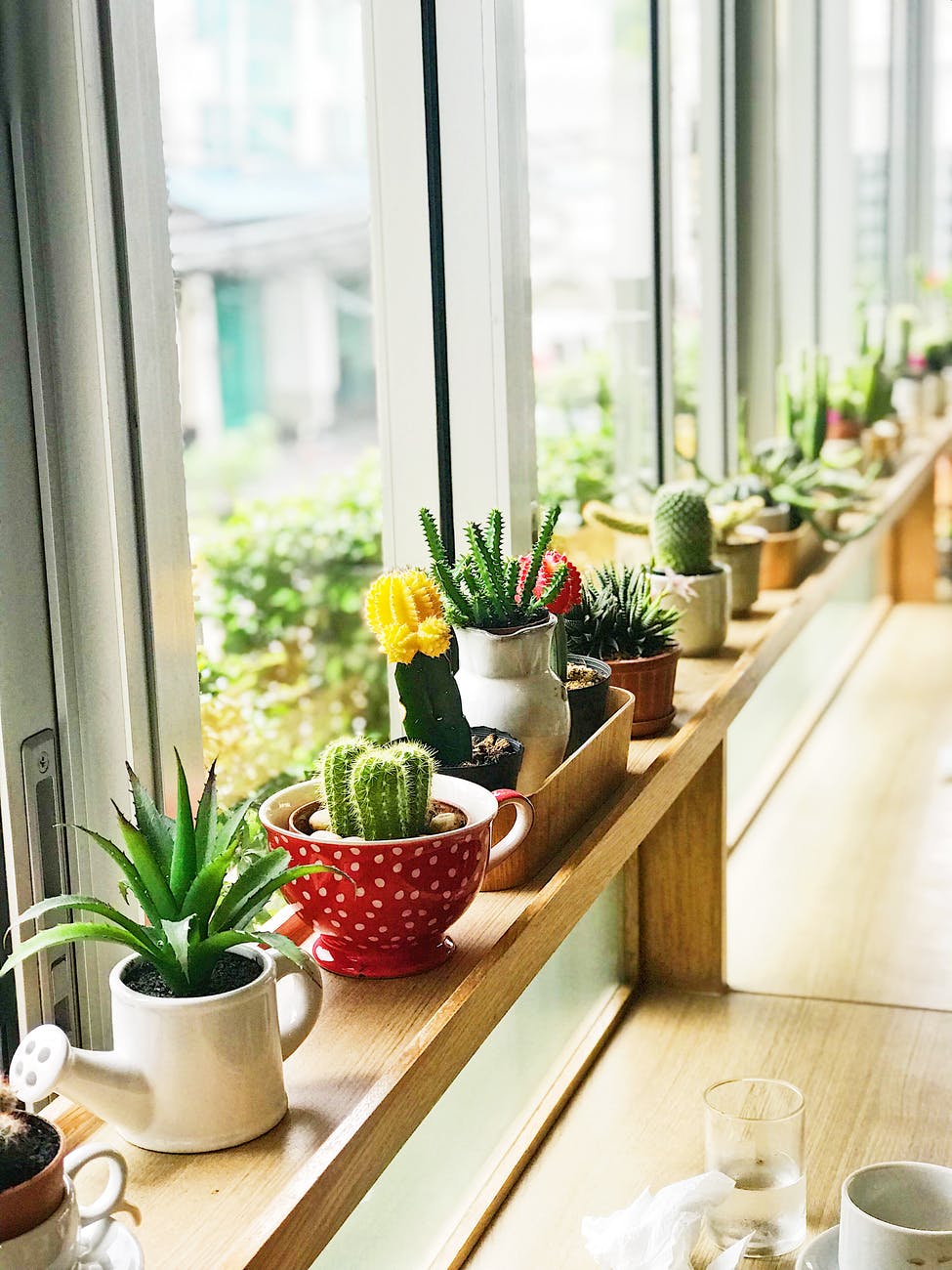
Photo by Rovelyn Camato on Pexels.com

In botany, succulent are plants which are thick and fleshy to retain water in arid climates or soil conditions. The word succulent comes from the Latin word sucus, meaning ‘juice’, or ‘sap’. These plants may store water in various structures, such as leaves and stems. The natural habitats of these water preserving plants are in areas where there is high temperatures and low rainfall, like deserts. Having the ability to thrive on limited water sources, such as mist and dew, succulents are equipped to survive in an ecosystem with scarce water sources. In horticulture, the term succulent regularly excludes cacti. However, in botanical terminology, cacti fall under succulents.

Some easy to grow succulent varieties are –

Burro’s tail – It is a trailing succulent that looks good in a hanging basket or container so it can drape over. The stems can reach up to 3 feet long and have gray-green leaves which looks like the grains of rice. Although it rarely blooms, pink or red flowers might be visible at the end of the stems in summer.
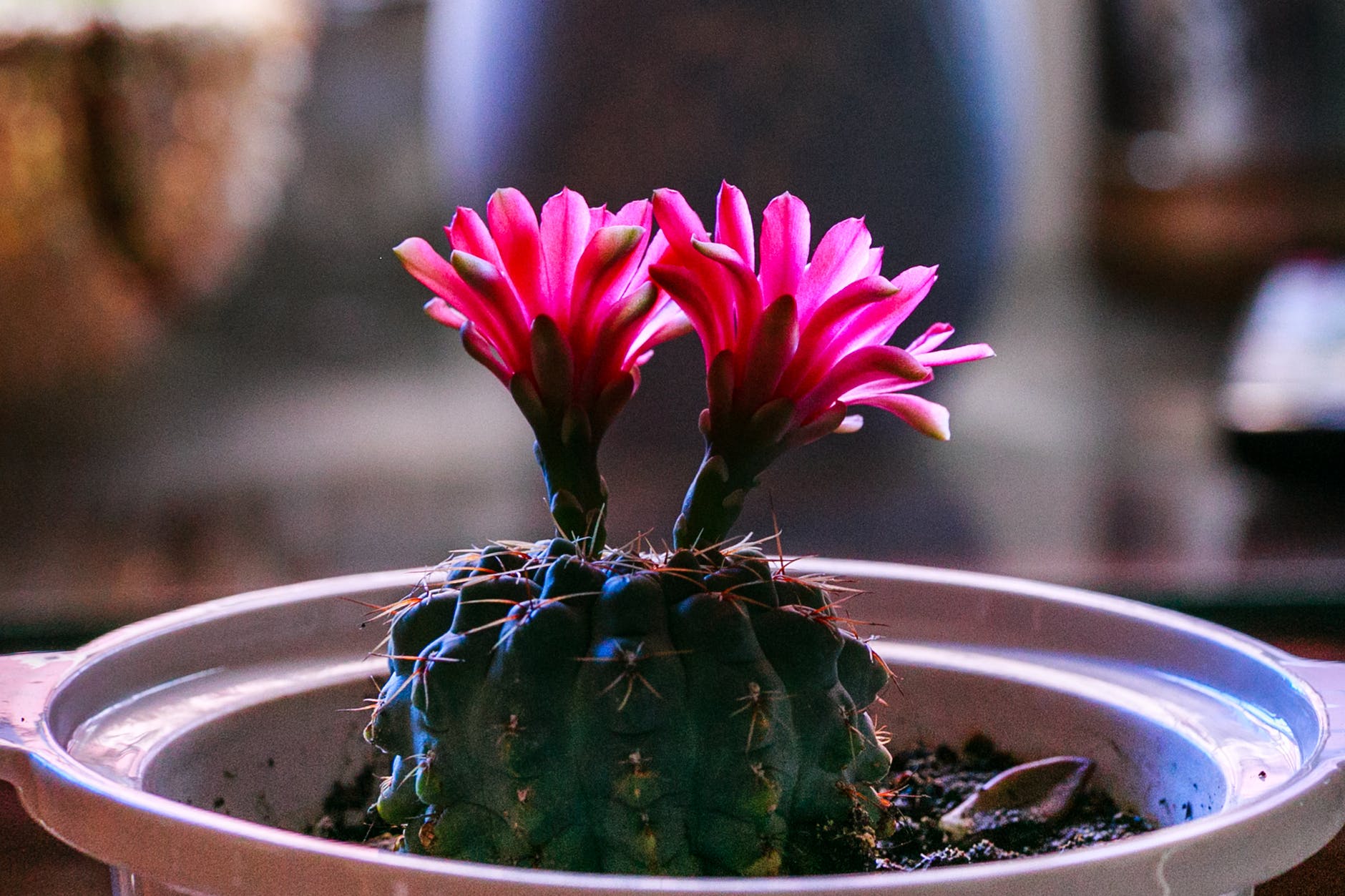
Photo by Quang Nguyen Vinh on Pexels.com

Christmas Cactus – It has flat segmented stems like crab claws which gives it the nick name crab claw cactus. It also prefers a bit more moisture so you can water it whenever the top inch of soil in the container is dry. Keeping it in bright light near a window, can make it bloom in winter.

Hens and Chickens – It is a very common type of succulent and is characterized by flower like structures with round edges. They are actually two different plants which look very similar. They have star shaped flowers.

Aloevera – It has long slender leaves with sharp teeth like edges. It’s well known for its sap which is used to treat skin diseases and heal wounds. Aloevera is an easy to grow houseplant and is tough to kill.
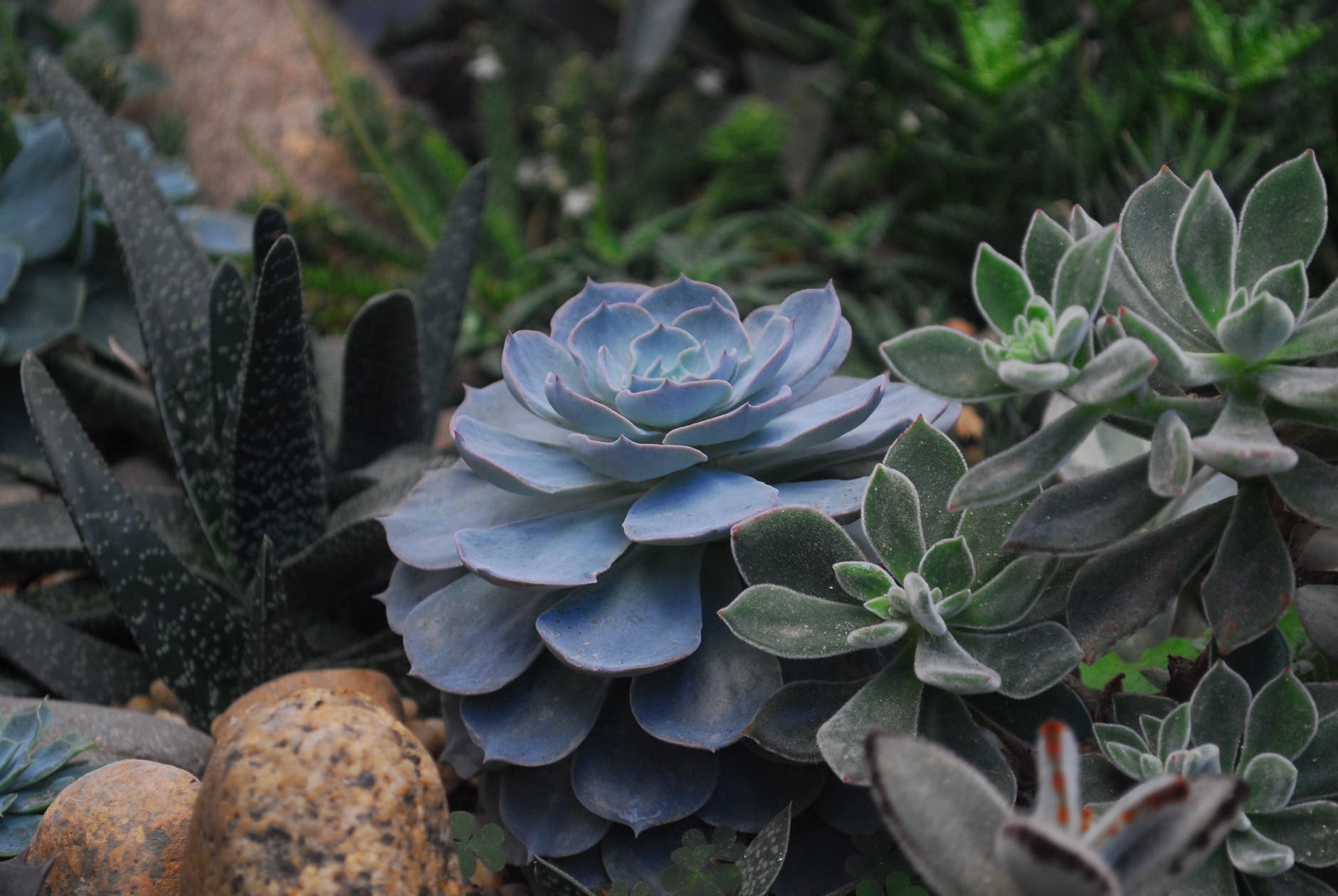
Photo by Mu00e3 Minh on Pexels.com

Snake Plant – They have thick, stiff and pointed leaves which grow straight up to 3 feet long. Having a patterned marking makes it look like a snake and hence the name. It will multiply and grow leading to filling the whole pot. It might require you to divide it in different pots.

African Milk Tree – It is capable of growing up to nine feet tall in natural habitat, and it isn’t actually a tree. As a houseplant, this succulent reaches up to three feet tall, producing upright, triangular, branched stems bordered with short sharp thorns. The tips of the green stems have small leaves with a reddish tinge.

Zebra Haworthia – It has striking stripes and spiky foliage which makes it look like a rare and exotic plant, but it’s often available at garden centers and is very easy-going when it comes to taking care of. It will stay small within 5 inches.

Tulsi: Herb for all Seasons

Even today, you see the elders worshipping Tulsi; it is still considered a Goddess. Many may view it as simply a plant. However, after knowing its history and numerous uses in our day to day lives, we have to agree that Tulsi is nothing short of a miraculous plant.

Ocimum tenuiflorum a.k.a. Holy Basil is an aromatic sacred plant in Hinduism grown mostly in tropical regions like India. Most of the people regionally know it as Krishna Tulsi (Tulasi or Thulasi), based on the dark complexion of Lord Krishna. The plant has purple colored leaves with dark stems and usually takes a longer time to grow compared to its other counterparts. This gives its leaves a less bitter after-taste and makes them very crunchy to chew.

tulsi

Kala Tulsi, another name for the same plant, is an annual plant. His is to say that it cannot withstand the winter season and dies every year. It then has to be replaced, with seeds sown in the spring season. After watering these seeds from time to time in a uniform manner, they usually germinate after a span of two weeks. Tulsi is preferably grown in rich and well-drained soil. A mixture of peat, soil, and clay with an ideal pH of 6.5 to 7.5 is ideal for the plant. Tulsi also requires an ample amount of sunlight, somewhere between four to six hours a day.

Instead of growing it from scratch, you can also get it from a nursery near your home where it usually comes in a grow bag. It then has to be transplanted to a larger pot where it grows naturally. However you may grow it, Tulsi requires constant care for it to thrive. The pruning of some top leaves give the plant more breathing space and help it grow better. Cutting off flower buds and drying leaves also direct more energy to the plant. Overwatering can kill it so extra care has to be taken while watering it. The symptoms include browning of leaves and their wilting which indicates that there is root rot. To avoid this, it is better to mist the plant.

Traditionally, the various parts of the plant like the stems, leaves, and flowers have known to be of great medicinal use. They are used for curing throat infections, respiratory system problems, nasal lesions, earaches, and skin diseases. The list of benefits further includes using Tulsi oil as eardrops, putting a few purple Tulsi leaves in tea to make it Herbal with Ayurvedic properties, as a key ingredient in Thai cuisine, and as an insect repellent, or in case of Malaria. The fresh leaves are also helpful in case of indigestion, headache, hysteria, insomnia, and cholera.

tulsi2Apart from that, many people are seen wearing Tulsi beads with these medicinal characteristics while some also believe its wood to be the most powerful in protecting them against negative influences in their lives. Beautifully handcrafted jewelry items made from Tulsi wood are also becoming more and more common these days. After knowing all the benefits and its properties, it is only fair to consider Tulsi as a sacred plant.

Image Courtesy: GOOGLE

PLANT GROWTH PROMOTING RHIZOBACTERIA

Plant Growth Promoting Rhizobacteria or PGPR is a group of bacteria that can be found in the rhizosphere or it can be said that bacteria that colonize the roots of the plants that enhance plant growth. It is observed that the rhizosphere is the zone of maximum microbial activity. It is the rhizosphere region of the plant from where most of the essential mico and macro- nutrients are extracted. The different species of Bacteria, Fungi, Actinomycetes, Protozoa, and Algae can be found in the rhizosphere region, Bacteria being the most abundant.
The term PGPR was introduced by Kloepper and Schroth. They concluded that PGPR are not only associated with the roots to exert beneficial effects on plant development but also have positive effects on controlling phytopathogenic microbes. Therefore, PGPR is one of the active ingredients in biofertilizer.
Based on the interactions , PGPRs are of 2 different types :

  1. SYMBIOTIC or INTRACELLULAR BACTERIA (iPGPR) live inside plants and exchange metabolites directly by biofertilization, stimulation of plant growth, rhizoremediation, and plant stress control. While performing direct growth promotion, they behave as Biofertilizers.
  2. FREE – LIVING or EXTRACELLULAR BACTERIA (ePGPR) live outside plant cells and indirectly increases plant growth by reducing the impact of disease, by Antibiosis, induction of systemic resistance, and competition for nutrients and niches. While performing indirect plant growth promotion, they behave as Biopesticide.

PGPR shows an important role in sustainable agriculture industry.
Undoubtedly, there is an increased demand of crop production now-a-days and also a significant reduction of synthetic chemical pesticides and fertilizers which is a big challenge. So, the use of PGPR has been proven to be one of the best ways of increasing crop yields by facilitating plant growth.
PGPR show synergistic and antagonistic interactions with microorganisms within the rhizosphere and in bulk soil, which indirectly boosts the plant growth rate. PGPR also works as a biofertilizer for agricultural sustainability.
Agriculture is one of the human activities which leads to the increasing amount of chemical pollutants with the excessive and continuous use of chemical fertilizers and pesticides. This causes further environmental damage causing a serious risk for human health.
For e.g. N2O is excessively released by continuous use of nitrogen fertilizers which causes Greenhouse effect and finally Global Warming. Farmers apply a high concentration of nitrogen fertilizers in the form of ammonium nitrate to increase crop yield but continuous use of nitrogen fertilizers decreases the Biological Nitrogen Fixation in soil.

For Sustainable Agriculture fulfillment, crops which are produced must be grown with disease resistance, salt tolerance, drought tolerance, heavy metal stress tolerance, and better nutritional value. Also, the use of soil microorganisms is the one possible way. Soil microbes increase the nutrient uptake capacity and water use efficiency in the soil. Among these soil microorganisms, PGPRs are mostly used which are capable of performing all the activities without environmental contamination. PGPR include the species of Pseudomonas, Bacillus, Enterobacter, Klebsiella, Azobacter, Variovorax, Azosprillum and Serratia.
But it is found that agricultural industries worldwide still not use the concept of PGPRs. This is due to the inconsistent properties of inoculated PGPR which can greatly influence the crop production.

 A PGPR must :

  1. Possess its survival in soil by tolerating several environmental factors.
  2. Be compatible with the crops on which it is inoculated.
  3. Be interactive with the already existing microflora in soil.
  4. Have a broad spectrum of action.
  5. Be safe for the environment.
  6. Enhance plant growth.
    Another challenge is that all Rhizobacteria do not possess the same mechanisms which is a major disadvantage for the environment therefore, PGPR still are not used as a biofertilizer in global agricultural productivity.