5 Must Read Novels Written by Indian Authors!!

1. The White Tiger by Arvind Adiga
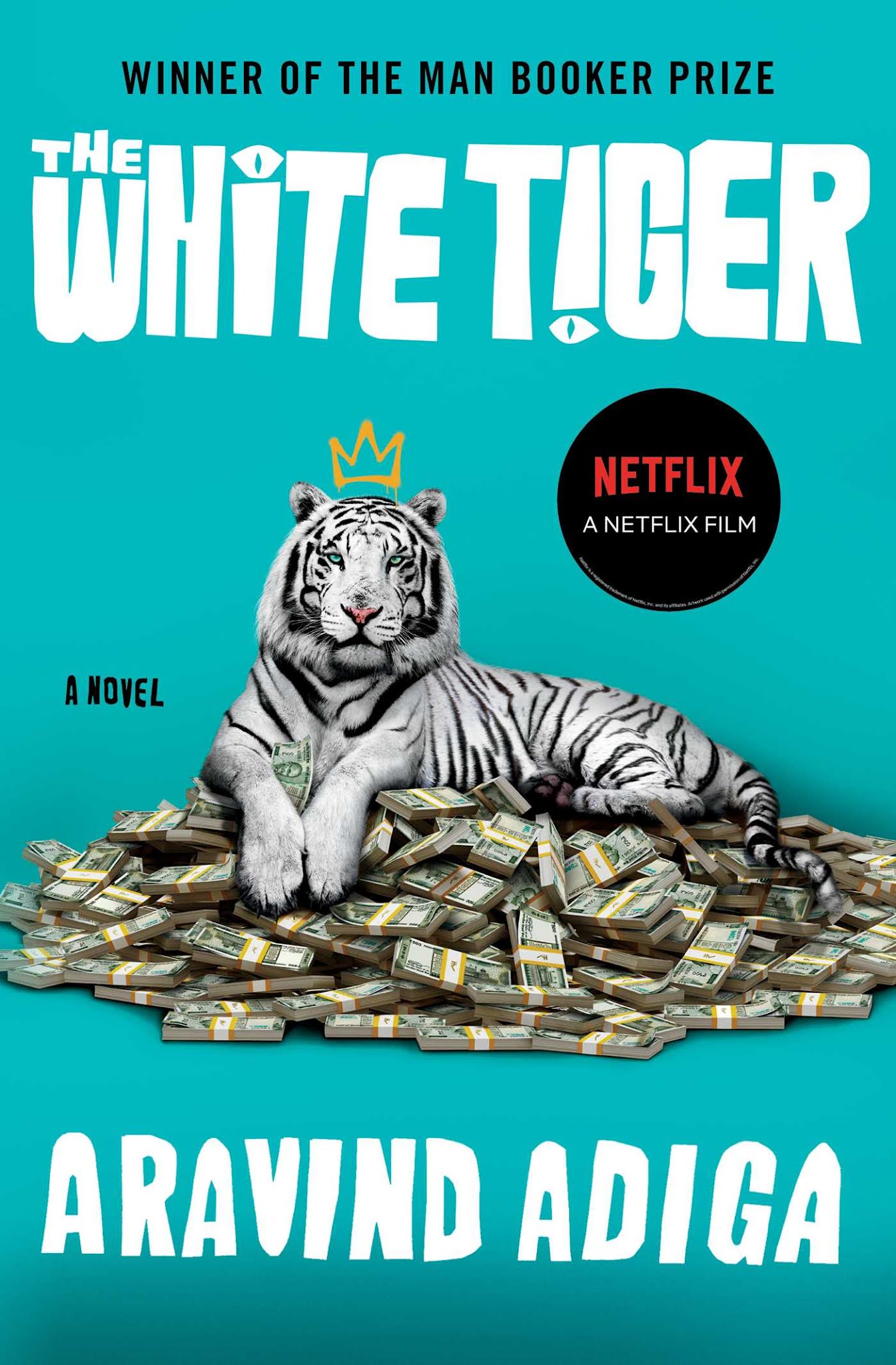

Winner of the Man Booker prize, the novel made arvind adiga the second youngest author ever to win the prize . And it’s not hard to see why, the novel succeeded in doing that what many before have tried to do and failed. It gave voice to the unspoken that exist in the darkness of the country, the colossal underclass and that too with an unmatched sense of wit and dark humor.  And we live and hear it all through one of the most edgy protagonists you’d come across in a novel: Balram  a village boy who works as a chauffeur to a rich landlord and then to Bangalore where he flees after committing murder. His story as twisted as it is represents much of the frustration of the youth in the country shackled by the invisible reins of steep class divide, caste divide and poverty ,


2. A Fine Balance by Robinton Mistry
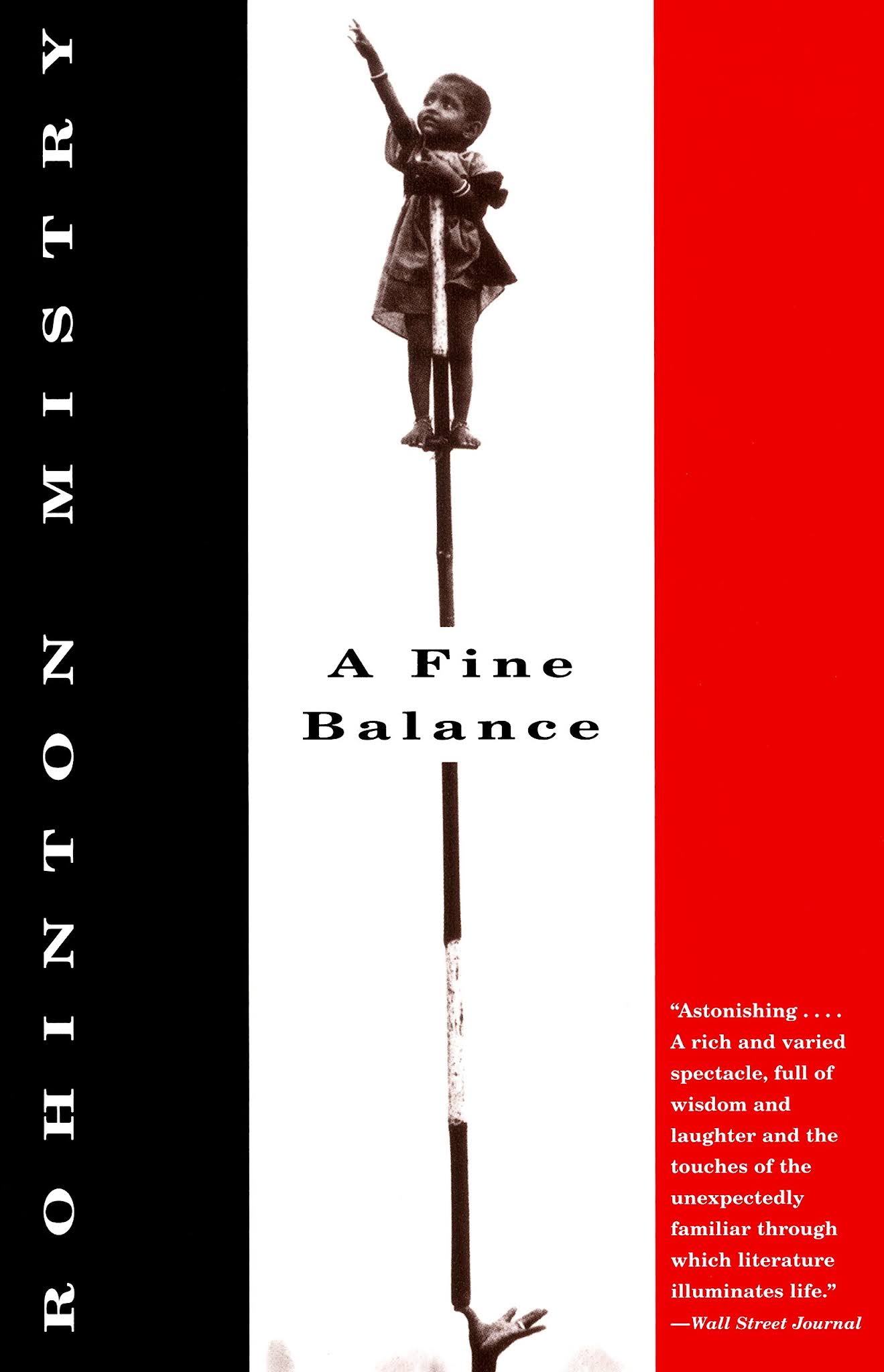

 Set in “an unidentified city” in India, initially in 1975 and later in 1984 during the turmoil: the book concerns four characters from varied background related to each other by an unseen thread of love.The philosophy of the story is the secret of survival, to balance finely hope and despair.But to realize most often we can’t do so.Our balance of life tilts and we trip and are lost. Some embrace physical death ,some live half-alive. It exposes the changes in Indian society from independence in 1947 to the Emergency called by Prime Minister Indira Gandhi. surprisingly she is never referred by name in the book 

3. A Suitable Boy by Vikram Seth
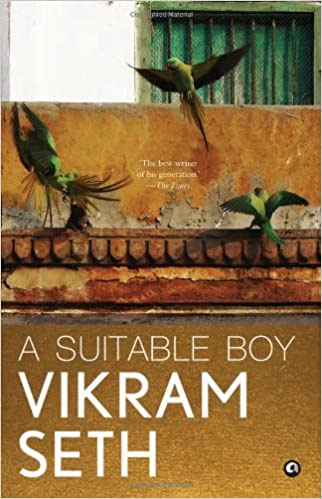

the novel is set in a newly post-independence, post-partition India. The novel follows four families during 18 months, and centres on Mrs. Rupa Mehra’s efforts to arrange the marriage of her younger daughter, Lata, to a “suitable boy”. Lata is a 19-year-old university student who refuses to be influenced by her domineering mother or opinionated brother, Arun. Her story revolves around the choice she is forced to make between her suitors Kabir, Haresh, and Amit.

It begins in the fictional town of Brahmpur, located along the Ganges between Banares and Patna. Brahmpur, along with Calcutta, Delhi, Lucknow and other Indian cities, forms a colourful backdrop for the emerging stories.

4. Sacred Games by Vikram Chandra


Weighing in at 900 pages, the novel is Dickensian in scope, and part Godfather as well. Sacred Games follows a world-weary cop and a larger-than-life crime boss. Add in the world’s largest film industry, Bollywood, a shady guru and the ever-present tension between India and Pakistan, and you have a full-blown literary potboiler.

The book is so full of gritty underworld slang that there’s a glossary to help readers navigate the language. Sartaj sing, gaitonde and mumbai are the main characters of the novel which unfold and grab you by the throat.

5.The Inheritance Of Loss by Kiran desai 
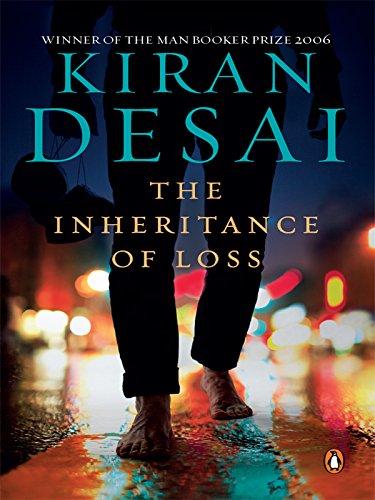

Published to extraordinary acclaim, The Inheritance of Loss heralds Kiran Desai as one of our most insightful novelists. She illuminates the pain of exile and the ambiguities of post-colonialism with a tapestry of colorful characters: an embittered old judge; Sai, his sixteen-year-old orphaned grand­daughter; a chatty cook; and the cook’s son, Biju, who is hopscotching from one miserable New York restaurant to another, trying to stay a step ahead of the INS.

<

p style=”background-color: white;color: #454441;line-height: 1.63;margin: 0px 0px 18px;max-height: 1e+06px;padding: 0px”>When a Nepalese insurgency in the mountains threatens Sai’s new-sprung romance with her handsome tutor, their lives descend into chaos. The cook wit­nesses India’s hierarchy being overturned and discarded. The judge revisits his past and his role in Sai and Biju’s intertwining lives. A story of depth and emotion, hilarity and imagination, The Inheritance of Loss tells “of love, longing, futility, and loss that is Desai’s true territory”
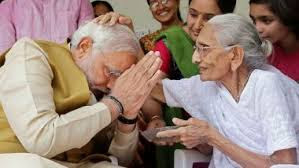

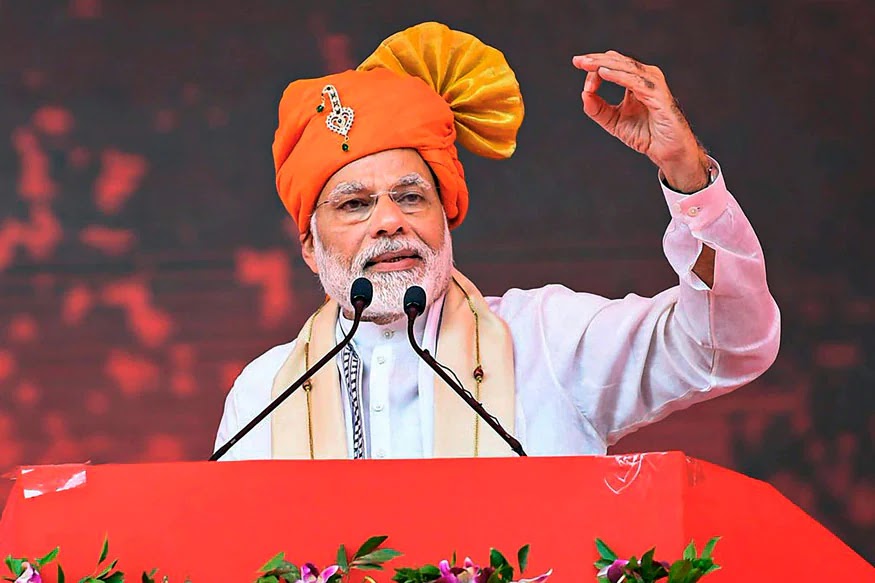
BIOGRAPHY – NARENDRA MODI (PM OF INDIA)

            PM OF INDIA – Mr. NARENDRA DAMODARDAS MODI

Name: Narendra  Damodardas Modi
Born: 17 September, 1950
Place of Birth: Vadnagar, Mehsana (Gujarat)
Zodiac Sign: Virgo
Nationality: Indian
Father’s Name: Late Damodardas Mulchand Modi
Mother’s Name: Smt. Heeraben Damodardas Modi
Siblings: Soma Modi, Amrut Modi, Pankaj Modi, Prahlad Modi, Vasantiben Hasmukhlal Modi
Spouse Name: Smt. Jashodaben Modi
Education: SSC – 1967 from SSC board, Gujarat; BA  in Political Science a distance-education course from Delhi University, Delhi; PG MA – 1983 Gujarat University, Ahmedabad (acc. to the affidavit before Election Commission)
Political Party: Bharatiya Janta Party
Profession: Politician
Prime Minister of India: Since 26 May, 2014
Preceded by: Manmohan Singh
Favorite Leaders: Mohandas Karamchand Gandhi, Swami Vivekananda


Narendra Modi’s inspiring life journey to the Office of Prime Minister began in the by-lanes of Vadnagar, a small town in North Gujarat’s Mehsana district. He was born on the 17th of September 1950; three years after India had gained its Independence. This makes him the first Prime Minister to be born in independent India. Mr. Modi is the third child born to Damodardas Modi and Hiraba Modi. Mr. Modi comes from a family of humble origins and modest means. The entire family lived in a small single store house which was approximately 40 feet by 12 feet.


Formative Years

Narendra Modi’s formative years taught him early tough lessons as he balanced his studies, non-academic life to spare time to work at the family owned Tea Stall as the family struggled to make ends meet. His school friends remember that as a child also he was very industrious and had an affinity for debates and a curiosity to read books. Schoolmates recollect how Mr. Modi used to spend many hours reading in the local Library. As a child he was also fond of swimming.

Mr. Modi’s thoughts and dreams as a child were quite removed from how most children of his age thought. Perhaps it was the influence of Vadnagar which once used to be a vibrant center of Buddhist learning and spirituality many centuries ago. As a child also he always felt a strong urge to make a difference to society. He was highly influenced by the works of Swami Vivekananda which laid the foundation of his journey towards spiritualism and which inspired him to pursue the mission to fulfill Swamiji’s dream of making India a Jagat Guru.

At the age of 17 he left home to travel across India. For two years he travelled across the expansive landscape of India exploring various cultures. When he returned home he was a changed man with a clear aim of what he wanted to achieve in life. He went to Ahmedabad and joined Rastriya Swayamsevak Sangh (RSS). RSS is a socio-cultural organization working towards the social and cultural regeneration of India. It was a tough routine for Narendra Modi in Ahmedabad since 1972 when he became a Pracharak for RSS. His day began at 5 am and went on till late night. Late 1970s also saw a young Narendra Modi join the movement to restore Democracy in India which was reeling under Emergency.

While continuing to shoulder different responsibilities within the Sangh during the 1980s Narendra Modi emerged as an Organizer exemplar with his organizing skills. In 1987 a different chapter began in the life of Mr. Modi when he started work as the General Secretary of the BJP in Gujarat. In his first task Mr. Modi won a victory for the BJP in Ahmedabad Municipal Corporation elections for the first time ever. He also ensured that the BJP was a close second to the Congress in the 1990 Gujarat Assembly elections. In the 1995 Assembly elections Mr. Modi’s organizational skills ensured the BJP’s vote share increased and the party won 121 seats in the Assembly.

Mr. Modi worked as the National Secretary of BJP from 1995 looking after party’s activities in Haryana and Himachal Pradesh. As BJP’s General Secretary Organization he worked to ensure the BJP won the 1998 Lok Sabha elections. It was in September 2001 that Mr. Modi received a phone call from then Prime Minister Vajpayee which opened a new chapter in his life taking him from the rough and tumble of Organizational Politics to the world of Governance. 


Years in Governance

Narendra Modi’s evolution from quintessential Organization Man of the BJP to one of India’s best known leaders recognized for his Good Governance over a span of a decade tells a story of grit, determination and Strong Leadership in the face of grave adversity. Narendra Modi’s transition from the world of Political Organizing to the realm of Administration and Governance neither had the luxury of time nor the benefit of training. Shri Modi had to learn the ropes of Administration while on the job right from Day One. Narendra Modi’s first 100 days in office offer a glimpse of not just how Shri Modi made that personal transition but these 100 days also offer a glimpse of how Shri Modi brought unconventional thinking and out of the box ideas to shake status-quo and reform Governance.

Narendra Modi’s life has been a journey of courage, compassion and constant hard work. At a very young age he had decided to devote his life in service of the people. He displayed his skills as a grass root level worker, an organizer and an administrator during his 13 year long stint as the Chief Minister of his home state of Gujarat, where he ushered a paradigm shift towards pro-people and pro-active good governance.

Narendra Modi’s path to creating a Vibrant Gujarat as a shining example of Development and Governance did not come easy. It was a path littered with adversities and challenges. Through the last decade if there is one constant trait of Narendra Modi that has stood out it is his Strong Leadership in the face of grave adversity. Shri Narendra Modi’s approach to governance has always been viewed as being above politics. Shri Modi never let political differences get in the way of pursuing solutions to developmental challenges. As Shri Narendra Modi prepares to assume Office as India’s next Prime Minister, his approach to Administration and Governance stands out for its convergent thinking. The finest manifestation of Shri Modi’s philosophy of “Minimum Government, Maximum Governance” is his Pancha-Amrut construct for convergent Governance.


His performance is reflected in the many Awards his government received from both National and International media. Shri Narendra Modi as India’s Prime Minister brings with him a rich and hands-on experience as one of India’s most successful Chief Ministers and one of its finest of Administrators. 


History was recorded in the plaza of Rashtrapati Bhawan on the evening of 26th May 2014 as Narendra Modi took oath as the Prime Minister of India after a historic mandate from the people of India. Narendra Modi has come out as a spirited, strong minded and development-oriented leader who have a ray of hope for the dreams and inclination of a bazillions Indians. His aim on enlargement, scrupulous  and attempts to initiate a qualitative difference in the lives of the poorest of the poor have made Narendra Modi a popular and respected leader across the length and breadth of India.

<

p style=”background-color: white;border: 0px;font-size: 16px;line-height: 22.4px;margin: 0px;padding: 0px 0px 15px;text-align: justify;vertical-align: baseline”>Narendra Modi’s life has been a journey of courage, compassion and constant hard work. At a very young age he had decided to devote his life in service of the people. He displayed his skills as a grass root level worker, an organizer and an administrator during his 13 year long stint as the Chief Minister of his home state of Gujarat, where he ushered a paradigm shift towards pro-people and pro-active good governance.