Human-wildlife conflict has Climate Change as an emerging Factor

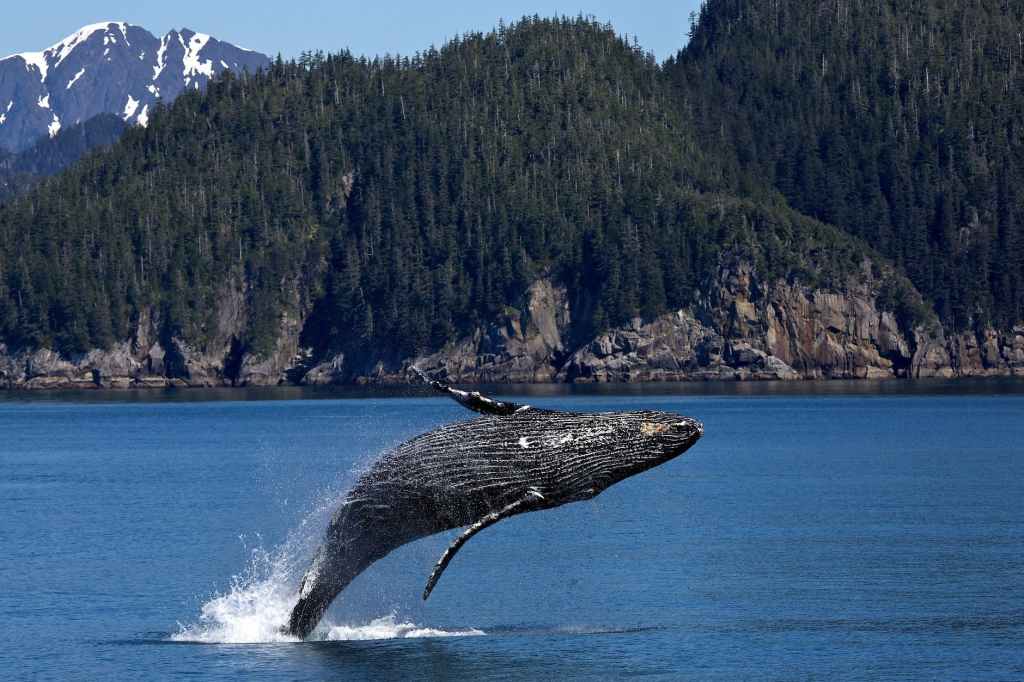
In 2015, the largest marine heat wave in the U.S. hit the Pacific Coast. Whales moved closer to shore to find prey, but they came across something dangerous—they were getting entangled in crab fishing gear.

Crab fishermen and women wouldn’t usually be out at that time of year. But the change in climate was also causing an algal bloom, toxic to crabs. So the fisheries delayed their timing by several months—the same time migrating whales were on the coast.

“It was this double-whammy,” said Briana Abrahms, an assistant professor in the Department of Biology and Center for Ecosystems Sentinels at the University of Washington.

This was one of the topics Abrahms was studying when she realized there hadn’t been much published research on how climate change is exacerbating human-wildlife conflicts. Looking at scientific literature and government reports, she came across only a few dozen. And many of those were either buried in obscure journals or just anecdotal mentions.

In a paper published in Science, she delved deeper into this area and wrote a call to action for managers and researchers to focus on this issue.Abrahms was working on another project at the same time as her whale research that was on completely different species in a completely different area, but seemed to have some similarities when it came to climate and conflict.

In Botswana, a government report cited some of the highest numbers of human-wild conflicts on record, mostly large carnivores preying on livestock. That happened to be during an extreme drought in 2018. “It struck me how different these systems were, but the story was the same,” she said. “I felt like it was really important to tell this story and draw attention since these climate changes and conflicts are likely to increase in the future.”


As part of her paper, Abrahms applauded a new, proactive risk assessment developed by the state of California to help managers figure out when and where to close fisheries under different climate and ocean conditions. “If you understand what the underlying driver is, in this case climate is a factor in these dynamics, you can better prepare to make management decisions and reduce conflict—or avoid it in the first place,” she said.


Abrahms also pushes for more research in these areas, especially where there are geographic and taxonomic gaps. “We definitely need more research and also need to be synthesizing research across everything already out there to understand how much we should be more worried about long-term changes,” she said.
Wildlife crimes rise by 100% in a year in Kerala

KOCHI: Wildlife-related crimes have increased dramatically in the state and there has been a 100% rise in the number of cases registered in 2020 compared to the previous year.

According to data obtained under the Right to Information (RTI) Act, the state registered 303 cases in 2020 as against 151 in 2019 and 61 in 2018. As many as 156 cases were recorded in the state in 2021 till August 26 this year.


Most cases pertained to poaching of endangered animals and reptiles, hunting for meat and illegal trading and possession of horns, tusks, nails, and teeth. Removing tusks or nails and collecting meat from animals that died naturally is also an offence. More than 80% of the total cases registered each year are in connection with poaching of wild animals other than wild boars that cause extensive damage to standing crops.

Besides wild boars, sambar deer, spotted deer, porcupines, monitor lizards, pythons, civets and turtles are among those that fall prey to poaching. Occasionally, elephants, leopard, tigers and wild gaurs are also hunted down, say the data.


“Since movements were restricted during the Covid period, people living adjacent to forests got more opportunities to engage in poaching. Poachers have also improved their intelligence gathering. The presence of wild animals also increased in the fringe areas, leading to the rise in poaching incidents,” said a member of a flying squad of the forest department.


People also lay electric wires to electrocute the animals, besides using poisoning too.
Besides killing the animals, depriving them of food is also an offence, as the data show. Among the registered cases, two are in connection with freeing chickens from the mouth of a python forcefully.

The Greatest Threat to Wildlife

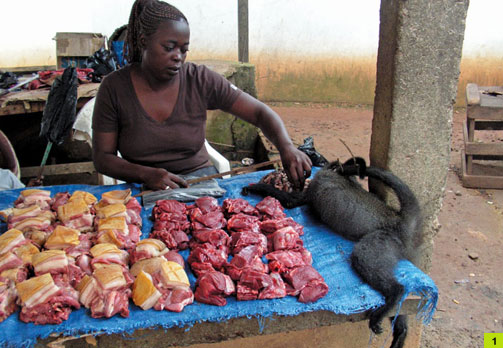
In Africa the poaching of animals such as tigers or elephants for their skins or tusks has been a problem well known throughout the world. But the impact of hunting for their meat may pose a greater threat, such a trade is known as bushmeat trade. It refers to the non-traditional hunting of non-game animals for meat. Wild chimpanzees and other forest animals are systematically hunted and sold as meat through markets across Africa and cities across the world. What once was a form of subsistence hunting in rural villages, has now evolved into a commercial trade that has grown in scale over recent decades.

While Bushmeat has been practiced since the late 1800s, the scale of hunting is far greater today and has been increasing, facilitated by road building in the forest for logging and mining operations and fuelled by growing demand in urban markets, where comparatively well-off customers consider wild-sourced protein a delicacy and a status symbol. A smaller international market for exotic meat thrives in Europe and the United States.

THE ENVIRONMENTAL IMPACTS OF BUSHMEAT TRADING

  • Environmental Imbalance

 Poachers and hunters involved in the illegal bushmeat market mainly use snares to trap these beasts and often larger animals like jackals, lions, cheetahs, wild dogs get caught in these traps. These carnivores the primary one being lions are the ones most affected due to the trading of bushmeat in two ways; by dramatically reducing the populations of animals that are food sources for lions such as antelopes and other small animals (pigs and boars) and by directly killing these animals who inadvertently are caught in the wire snares that are set to illegally harvest other species. The removal of any animal from the food chain causes an imbalance for both the species as well as other species dependant on it for food.

  • Endangering of animals

There are roughly 301 mammal species threatened by hunting for bushmeat including 126 primates, 65 even-toed ungulates, 27 bats, 26 diprotodont marsupials, 21 rodents, 12 carnivores and all Pangolin species. On Bioko Island, off the coast of Equatorial Guinea, for example, hunting for bushmeat has decimated populations of the island’s seven endemic monkey species, which are all endangered. Another prime example is the elephant which have been hunted for their tusks are also for their meat. It has been done to the extent that the bushmeat trade is estimated to be worth higher than the ivory industry. While the ivory obtained from tusks may be sold for around $180 (in 2007), a poacher could sell the meat (approximately 1,000 pounds) for up to $6,000 this may be primarily due to the high demand and the fact that the elephant’s meat is considered prestigious and hence sold at higher costs. The elephant’s population has dropped by 62% in the recent decade and the situation has not improved since with population going from 1.34 million in 1976 to barely 415,00 elephants in 2018

The Impact of Bushmeat on Humans

Animal sources may have been the cause for infectious diseases such as tuberculosis, leprosy, cholera, smallpox, measles, influenza, and syphilis acquired by early agrarians. The emergence of HIV-1, AIDS, Ebola virus disease, and Creutzfeldt-Jakob disease are attributed to animal sources today. Thomas’s rope squirrel and red-legged sun squirrel were identified as reservoirs of the monkeypox virus in the Democratic Republic of the Congo in the 1980s. Outbreaks of the Ebola virus in the Congo Basin and in Gabon in the 1990s have been associated with the butchering and consumption of chimpanzees and bonobos. The risk of bloodborne diseases to be transmitted is higher when butchering a carcass than when transporting, cooking and eating it. Many hunters and traders are not aware of zoonosis and the risks of disease transmissions. An interview survey in rural communities in Nigeria revealed that 55% of the respondents knew of zoonoses, but their education and cultural traditions are important drivers for hunting and eating bushmeat despite the risks involved.

Wild meat provides a primary food source for many millions of people throughout the developing world, especially where other food options are not readily available. Unsustainable hunting has now metamorphosed into a global hunting crisis taking the form of a serious threat to the food security of many people as well as the immediate survival of hundreds of mammal species, other wildlife and altered ecological cascades rippling through ecosystems. Averting this crisis requires bold and prompt actions. Approaches that benefit both local people and wildlife will be required to avoid a future of hungry desperate people inhabiting ‘empty landscapes’ across much of the planet Earth.