Dante Aligheiri: Connecting His Life, Love and Literature

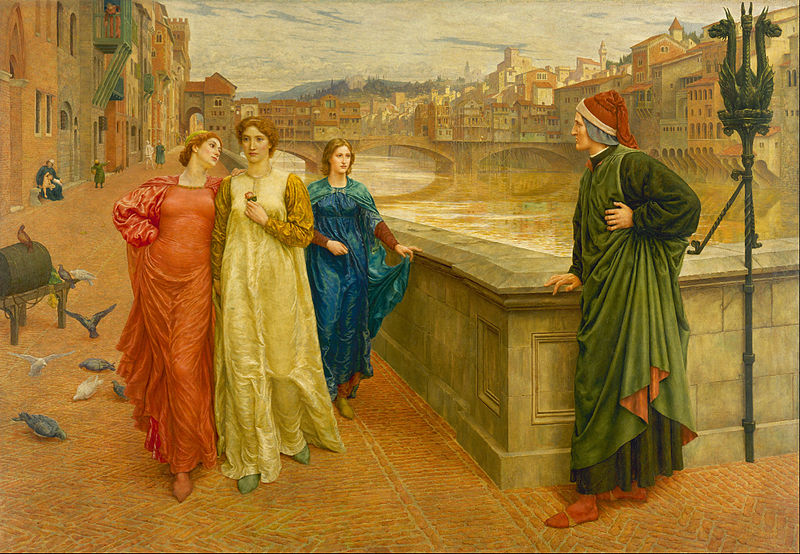
Dante, looking at Beatrice passing by (Art Work)

Introduction

Dante Aligheiri, the famous Italian poet, is without any debate, one of the most passionate poets of all time who believed in and lived by the true meaning of Love through his exceptional writings . His works are still considered as the Canvases of Human Mind, sparkling and expressing love through words. Though, the love of his own life remained unrequited and that agony fueled his journey of writing as a neverhealed wound, creating some masterpieces of Romantic Literature.

Early Life of Dante

Born in Florence, Italy around 1265, Dante was the son of Alighiero di Bellincione Alighieri and Bella di Abati, and he grew up among Florentine aristocracy. Scholars surmise that he received formal instruction in grammar, language, and philosophy at one of the Franciscan schools in the city. 

Dante’s Love : Beatrice Portinari

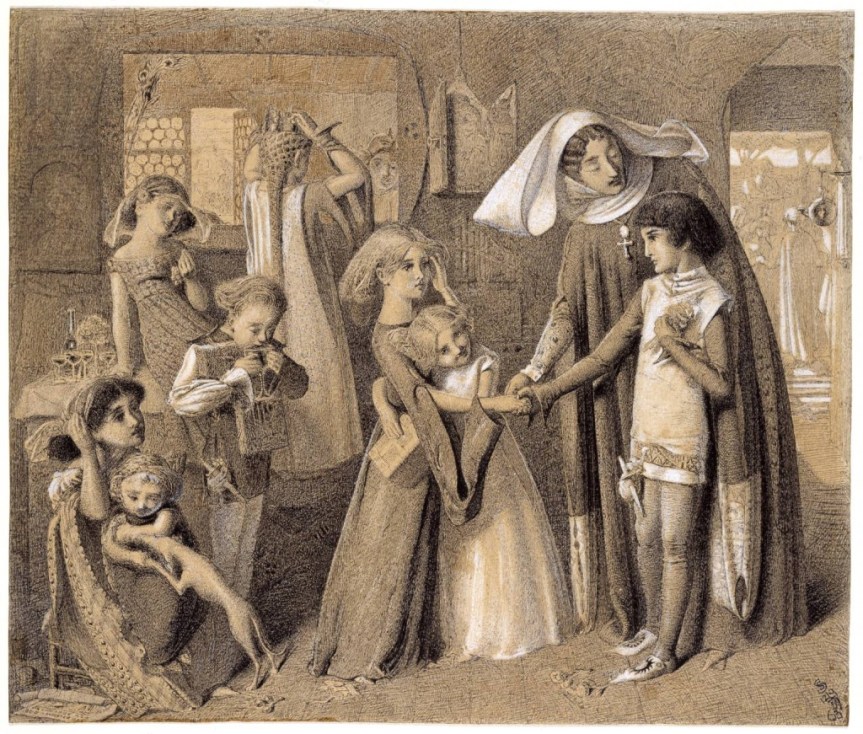
Dante first met Beatrice Portinari, daughter of Folco Portinari, when he was only nine years old and he claimed to have fallen in love with her “at first sight”, apparently without even talking with her. He would later write about his instant love for her in “Vita Nuova”, saying “Behold, a deity stronger than I; who coming, shall rule over me.”

When he was 12, however, he was promised in marriage to Gemma di Manetto Donati, daughter of Manetto Donati, member of the powerful Donati family. Contracting marriages for children at such an early age was quite common and involved a formal ceremony, including contracts signed before a notary. Dante claimed to have seen Beatrice again frequently after he turned 18, exchanging greetings with her in the streets of Florence, though he never knew her well.

Dante meeting Beatrice for the first time (Art work)

Beatrice’s Death: Presence in Dante’s work

Beatrice died in 1290 at age twenty four. Beatrice probably never had any idea of the depth of his passion for her, yet she was to become one of literature’s most famous figures.

After Beatrice’s death, Dante withdrew into intense study and began composing poems dedicated to her memory. The collection of these poems, along with others he had previously written in his journal in awe of Beatrice, became La Vita Nuova, a prose work interlaced with lyrics.
Dante describes his meetings with her, praises her beauty and goodness, describes his own intense reactions to her kindness or lack thereof, tells of events in both their lives, and explains the nature of his feelings for her. She represents an idealized love, the kind of love that transcends physicality. Alighieri included her in both La Vita Nuova and Divine Comedy. She is his salvation; the “gentilissima” (most kind) and “benedetta”(blessed). It is Beatrice who serves as his guide in Heaven in Divine Comedy. La Vita Nuova also relates of the day when Dante was informed of her death and contains several anguished poems written after that event. In the final chapter, Dante vows to write nothing further of Beatrice until he writes “concerning her what hath not before been written of any woman.”
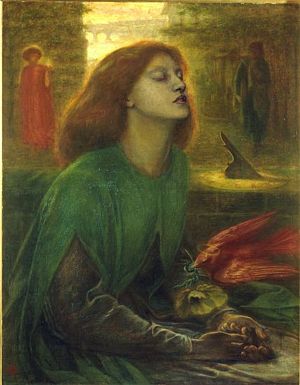
Portrait of Beatrice

Analysis of Dante’s Love and Literature

The promise is fulfilled in the epic poem The Divine Comedy, which he composed many years later. In that poem, he expresses his exalted and spiritual love for Beatrice, who is his intercessor in the Inferno, his purpose in traveling through Purgatorio, and his guide through Paradiso.

Beatrice addresses Dante, the author and a character himself, for the first time in Canto 2 of Dante’s “Inferno”: she descends into Limbo and prays that the poet Virgil can rescue Dante. She then reappears in Canto 30 of Purgatorio, when Virgil disappears.

At first sight of her in Purgatorio, he is as overwhelmed as he was at the age of nine and is dazzled by her presence throughout the journey until she ascends again to her place in heaven, the point closest to God that he is allowed to reach.
This expression of sublimated and spiritualized love ends with Dante’s total absorption into the divine.
Their last meeting is set among the blessed in Heaven at the end of their journey into the afterlife.
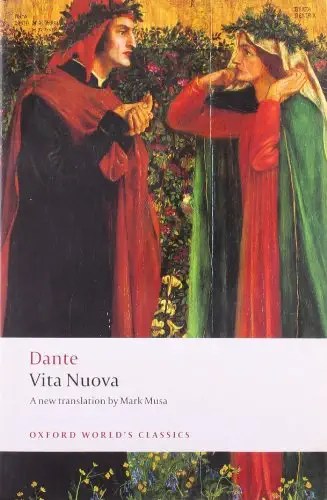
Dante’s work Vita Nuova, heavily influenced by Beatrice

Conclusion

Dante’s love for Beatrice may have been idealized and unattainable, but at the core of that love is admiration, goodness, and respect. That’s a type of love that we don’t see much of in the media of today’s world. We prize the scintillating and love has become synonymous with physical lust.Dante’s love transcends the physical. It is a love of the heart and the intellect. She represented the ideal of beauty and grace, but was also a real woman.
Beatrice appeared to Dante as the woman/angel that guides him through Paradise, but also remained a real woman who made his heart beat in the streets of Florence.

About that author- Emily Dickinson

One of the most prominent 19th century poet, who sharpened her skill with self reflection and seclusion and made such a huge impact in literature

Emily Elizabeth Dickinson born in 1830, in Amherst, Massachusetts, U.S. her father Edward Dickinson was a Whig lawyer and her mother was a docile housekeeper. Her parents were loving but strict with their 3 children. So Emily and her siblings Austin and Lavinia got closer. The 2 sisters never got married and stayed at home.

Emily was a well behaved, docile little girl just like anyone would expect a 19th century girl to be like. All the siblings went to the same school where Emily excelled academically and was particularly good in music and composition and she also played the piano. 

Emily’s family was highly religious and she grew up with religious faith all around her household and it inspired some of her work as well. Contrary to her family’s beliefs, Emily herself was not particularly religious and was the only member from her family who did not join Amherst’s First Congregational Church.

Dickinson was introduced to the works of  William Wordsworth,  Ralph Waldo Emerson by one of her father’s friends Benjamin Franklin Newton, who she also talks about in one of her poems.

It was during her late teens when Dickinson started writing poetry consistently. And later her poems took the form of letters assorted with a little bit of humor which she sent to her brother and her friends, one of whom was married to Austin. She was especially close with Susan Gilbert, her brother’s wife and sent more than 300 letters to her. Susan was very supportive of Dickinson’s work and was a very dear friend.

Her poems also possessed a sense of alienation and seclusion as she faced loss of friends in her life. 

As time passed Emily withdrew to herself and became isolated from the outside world. This was because of her mother’s illness and someone had to stay with her at all times. During this time she found comfort in reading and writing. In 1858, she started rewriting her previously written poems. Between 1858 and 1865 she wrote around 800 poems, which no one was aware of until after her death. These are the works that Dickinson is most famous for.

Dickinson’s work possessed a certain melancholy to it, the kind that can also be seen in Sylvia Plath’s work, which shows that Plath was inspired by Dickinson. Her poems mostly revolved around death, which for some weird reason she seemed aggressive, self reflection and immortality. Her poems have been punctuated with dashes that critics are still not sure as to why they were used by the poet.

The last few years of Emily’s life were extremely tough for the Dickinsons; one death followed another. In an 1884 poem she wrote “The Dyings have been too deep for me, and before I could raise my Heart from one, another has come.” In 1886 she died, her physician gave the cause of her death as Bright’s disease. Before her death she asked her sister Lavinia to burn all her poems. Lavinia found 1800 poems after her sister’s death. Her first volume of poems was published four years after her death and Thomas H. Johnson published Dickinson’s Complete Poems in 1955.   

About that author- Charles Bukowski

“We are here to laugh at the odds and live our lives so well that Death will tremble to take us.”

This very famous quote by Charles Bukowski gives us an idea about the kind of individual he was. He was the kind of poet who wrote whatever was in his heart, whenever it was. He always spoke about a part of himself that exists inside us all but we choose to silence it. Bukowski, afraid of that part, still chooses to give it a voice through his poems.

Life 

Charles Bukowski was a German-American poet, writer known for the violent imagery he tries to depict with his writing. Bukowski left his home in Los Angeles to move to New York to pursue writing. In New York he took up a lot of odd jobs so that he could continue to write, but he did not see much success during that period of his life.

Career 

Charles Bukowski published his first story, titled  “Aftermath of a Lengthy Rejection Slip” in 1944, at the age of 24 in a magazine. He published another story titled “20 Tanks from Kasseldown” about 2 years later in 1946, but unfortunately he failed to make a breakthrough and was left disappointed. Bukowski wrote a lot, was published too little and received even less recognition. This led him to quit writing or rather take a break from writing in the year 1946.

Now, one could say that Bukowski did not do anything during his hiatus but I disagree. During these years Bukowski gathered material for his future work. He moved back to Los Angeles and lived the life of a hippie and wandered around the country staying in cheap places. He would travel. drink alcohol and observe. The observations are talked about in his later published books.

Bukowski talked about the harsh and crude reality of existence and is known for his raw and bare writing.

After a hiatus of almost a decade, Bukowski got back to writing. In the mid 1950s he was hospitalized for a fatal bleeding ulcer. After being released from the hospital he started to write poetry, at the age of 35. Charles Bukowski, in 1957 married Barbara Frye, who later died in India. This incident resulted in Bukowski going back to alcohol and writing poetry.

By this time, Bukowski’s poems were published in literary magazines. But still he was unable to see the success he very much deserved. In the 1960s, he published a lot of poems and short stories and only tasted success in his 50s.

Bukowski spent more than half of his life writing and not seeing any considerable amount of success. He did not give up, in fact there was no point in him giving up because he was not one of the writers who wrote to achieve success, he wrote because he was extraordinarily in love with his art. He did not try to be a writer, in fact he didn’t try to be anything but true to himself and his work. He did not force himself to write, evident by his decade long hiatus. He thought that there had been too many writers in the past who forced themselves to try, whereas in his opinion if you truly love an art form you wouldn’t have to try, it would come to the artist. In his opinion if you had to try to be or do something you shouldn’t try at all. Even his grave has the words “don’t try” engraved on it.

He died in 1994, due to leukemia after living an adventurous and fulfiled life. 

About that author- Sylvia Plath

If the moon smiled, she would remember you. You leave the same impression of something beautiful but annihilating.

This quote is from one of my favorite Sylvia Plath poems “The Rival”. 

If you read Sylvia Plath you would find that her poetry wasn’t about the beauty that surrounded her, the fruity aroma of the garden flowers or blistering sun shining on her face or the wind sweeping her way. No, it was about none of that. Her poetry style was confessional.

LIFE

Sylvia Plath was born on october 27 of 1932 in Boston Massachusetts. She was a poet and a novelist who shaped American literature to a great extent. Plath published her first poem at the age of 8 in an American newspaper under the children’s section.From then on Plath went on to write  and publish multiple poems in different magazines and newspapers. At the age of 8 Plath also faced a great deal of personal loss, her father passed away due to untreated diabetes. Her father was also a subject for a lot of her poems that she wrote in her later years.

Plath was a good student, she excelled in academics and attended the Smith’s College in Massachusetts. Plath also suffered from depression, which she elaborates in her poems. She underwent electrocution therapy for her depression. We are talking about the year 1950, when mental illness was not a socially acceptable concept. No points for guessing that the electrocution therapy did not work in fact it made matters worse for plath. In 1953, at the age of 21, the feeling of which she describes in one of her works as “blissfully succumbed to the whirling blackness that I honestly believed was eternal oblivion.” plath made her first suicide attempt by taking her mother’s sleeping pills. After this incident she remained in psychiatric care for months. 

Career 

In 1960, Sylvia Plath released a collection of her poems, entitled the colossus and other poems.. In this collection she talks about death, suicide, her father, and her depressive periods and thoughts.

Sylvia Plath’s poetry wasn’t particularly happy and that is because it was confessional or even autobiographical in a sense and Plath herself was deeply depressed. Here is an excerpt from one of her poems called Lady Lazarus;

“Dying is an art,

like everything else. 

I do it exceptionally well. 

I do it so it feels like hell. 

I do it so it feels real. 

I guess you could say I’ve a call”.

If it wasn’t clear until now, then these lines give us an idea of the intensity of torment that her own mind was subjecting her to.

Marriage and the aftermath

Plath married Ted Hughes, a poet and writer in 1956. They had 2 children together. The two later separated in 1962. The couple did not have a great relationship, some controversy and rumors surrounded Hughes even after Plath’s death.

During the last few years of her life Plath published exceptional work, some of the best work ever written. This vey period of Plath’s life is the one that shaped literature and inspired the future confessional poets. Plath poured her heart out on the pages during these years. She published a novel “the bell jar” in 1963 which did exceptionally well. But her career was cut short when at the age of 30, in 1962 after what is described as “a burst of creativity” she took her own life. Her posthumously published collection of poems “Ariel” also attracted a lot of readers and to this day transcends her.

THE PALACE OF ILLUSIONS (BOOK REVIEW)

Re-imagining the Epic with The Palace of Illusions by Chitra Banerjee  Divakaruni
Image source: Google

Mahabharata; as written by Vyasa, is heard and known by almost every person within and out of the community. All thanks to either the creators of the show or the story we heard from our grandparents back then. Mahabharata is historical fiction and the longest epic poem ever written revolving around the Kauravas and Pandavas, the brothers, the men of the story. Crux revolves around the battle and Victory of either of the two, the story of the brothers, the men in the house.

The women too had a shared part in it but what if I tell you the same story with the perspective of the women of their house? Perhaps, a story from the perspective of one woman in particular?

The Palace of illusions is all about itself.

Written by the award-winning poet and writer Chitra Banerjee Divakaruni, its first edition was released in 2008. 

The narrator and the protagonist is Draupadi herself.

Narrating all aspects of her life, from her unnatural birth to her lonely childhood, her bond with her brother, her marriage, her children, her death.

Every intricate detail is covered about her whole life

and the justice to the story is one hundred per cent done.

There are so many instances within the novel where you’ll feel too sympathetic with her character,story,struggles, and life.

Banerjee has not only laid emphasis on her but all the characters are defined and penned amazingly which makes its flow well. There are so many lines and dialogues within the novel that makes you ready to appreciate the writer for even thinking about that In all, the novel, the Mahabharata of this century, has something remarkable to it that there’s no way you can skip reading this one. It’s a kind of novel that maybe will make you think more of the role and the life of women involved in the world of men of Mahabharata with a whole new perspective.

Kamala Das: The Woman Who Broke Barriers

In an era where women were enclosed within the walls of customs and traditions, Kamala Das rose ferociously against the world. From expressing her relation struggles to her sexual desires Kamala Das is a writer who laid out her life in literature despite the criticisms she received for it.

Born in Punnayurkulam Kerala in 1934 Kamala Das was introduced to literature from a young age thanks to her parent’s literary background. However, Kamala spent her early years in Calcutta. She was married quite early, at 15, to a bank officer who was fairly older than her but encouraged her passion for writing. Kamala Das wrote in two languages, Malayalam (her native tongue) and English, and has expressed the criticisms she received for this in her poem, An Introduction;

Why not leave

Me alone, critics, friends, visiting cousins,

Every one of you? Why not let me speak in

Any language I like?

The language I speak

Becomes mine, its distortions, its queernesses,

All mine, mine alone. It is half English, half

Indian, funny perhaps, but it is honest,

It is human as I am human, don’t

You see?

Her most famous works include her poetry collections included in Summer in Calcutta (1965), The Descendants (1967), and The Old Playhouse, and Other Poems (1973). Her novel and short-stories such as “A Doll for the Child Prostitute” (1977) and her other Malayalam works were some of her most significant works. However, her most criticised work was her own autobiography My Story (1976) that invited harsh criticisms for her open and intimate sexual confessions.

The poet-author apart from her confessional poetry also sketched out the experiences of being a woman in India. The strong patriarchal opinions and her strong feministic yearnings make Kamala a woman who followed her own principles.

Apart from the negative lime-light Kamala’s literary art is one that speaks volume. Her poems are often filled with rich and intense imagery emotions with the verse outlined creatively to convey Kamala’s feelings and bring the experience of her abyss to her readers.

In her poem, Summer in Calcutta the beginning verse goes;

What is this drink but

The April sun, squeezed

Like an orange in

My glass? I sip the

Fire, I drink and drink

Again, I am drunk

The main idea of the poem is that Kamala Das is drunk on the summer vibes of Calcutta. She describes the April sun as an orange juice that is making her feel happy, satisfied and worry-free. She loves the heat of the sun and forgets all her pains of the past momentarily. One may assume Kamala to be drunk on alcohol while sitting in the sun although this cannot be true as Kamala re-iterates again and again that it is the sun that makes her drunk. The whole scene in the poem describes the transient happiness and pleasure that Kamala receives by being under the sun and away from her marital life.

In another poem, My Grandmother’s House, Kamala describes the sense of security she felt in her grandma’s house when she was young. She also explains how apart from being a haven how the house comforted her and made her felt proud for who she was. Her present life is so full of devastations that she now longs to go back to her past.

Kamala maybe majorly known for her explicit use of sexual imagery but her art always spoke for her, portrayed her emotions honestly and made her a woman who stood strong with her convictions.

Most Controversial Figure : Vinayak Damodar Savarkar

Vinayak Damodar Savarkar commonly known as Swatanryaveer or simply Veer Savarkar was born on 28 May, 1883 and died on 26th February 1966. He was an Indian independence activist, historian , poet, novelist , politician who formed the Hindu Nationalist philosophy of Hindutva. He was a leading personality in Hindu Mahasabha

Vinayak Savarkar is highly controversial figure in India because of his mercy petition he wrote to British Government when he was imprisoned in Andaman and Nicobar. But what many fails to understand is the mentality behind the mercy petition. Prisoners in Kaala Paani ( Andaman and Nicobar) were treated horribly and brutally. They were tortured to death . They were neither given good food nor good living condition. To save himself from such inhumane torture Vinayak Savarkar appealed for mercy. He was barrister and he knew his rights well. He knew sitting inside jail he will not be able to serve his country and so tried to get out by writing mercy petition.

But before judging and throwing him into the light of black or white , it is important to know why some hate him and others remark him as a patriot

Why he is loved :

1) He went to Gray’s Inn Law college in London and stayed at famous India House. At that time , India House was a hub of student politics . Savarkar founded the Free India Society to mobilise youth against the colonial rule in India

2) He burnt all foreign goods and propagated the idea of ‘Swadeshi’

3) He plotted armed revolt against the Morley- Minto reform but was arrested for it

4) He established a temple called ‘ Patit Pawan Mandir’ in Maharashtra , where people from every caste were welcomed

5) His book ‘The Indian war of Indian Independence 1857’ inspired many freedom fighters like Bhagat Singh , Chandra Shekhar Azad , Subash Chandra Bose .

6) Savarkar was one of the first writers to call for India’s first war for Independence against British. He asked for poorna swaraj ( Total independence) when people were settling for less

7) After his release from jail , he worked on the abolishment of untouchability in Ratnagiri

8) He wrote mercy petitions not only for himself but for other prisoners too.

Why He is Hated:

1) When Savarkar was 12 years old , he lead a march with his schoolmates to vandalise a mosque in order to take revenge against atrocities committed against Hindus by Muslims.

2) He was fierce critic of Indian National Congress and Mahatma Gandhi.

3) He opposed the ‘Quit India Movement and later objected to INC’s acceptance to the Indian partition

4) For his mercy petition written to British Government.

Over the years many facts have beem destroyed and twisted, so no one can ever say if Vinayak was a hero or villain. It is well known fact that there is no person with zero flaws. There is some good in evil and some evil in good.

The Road Not Taken

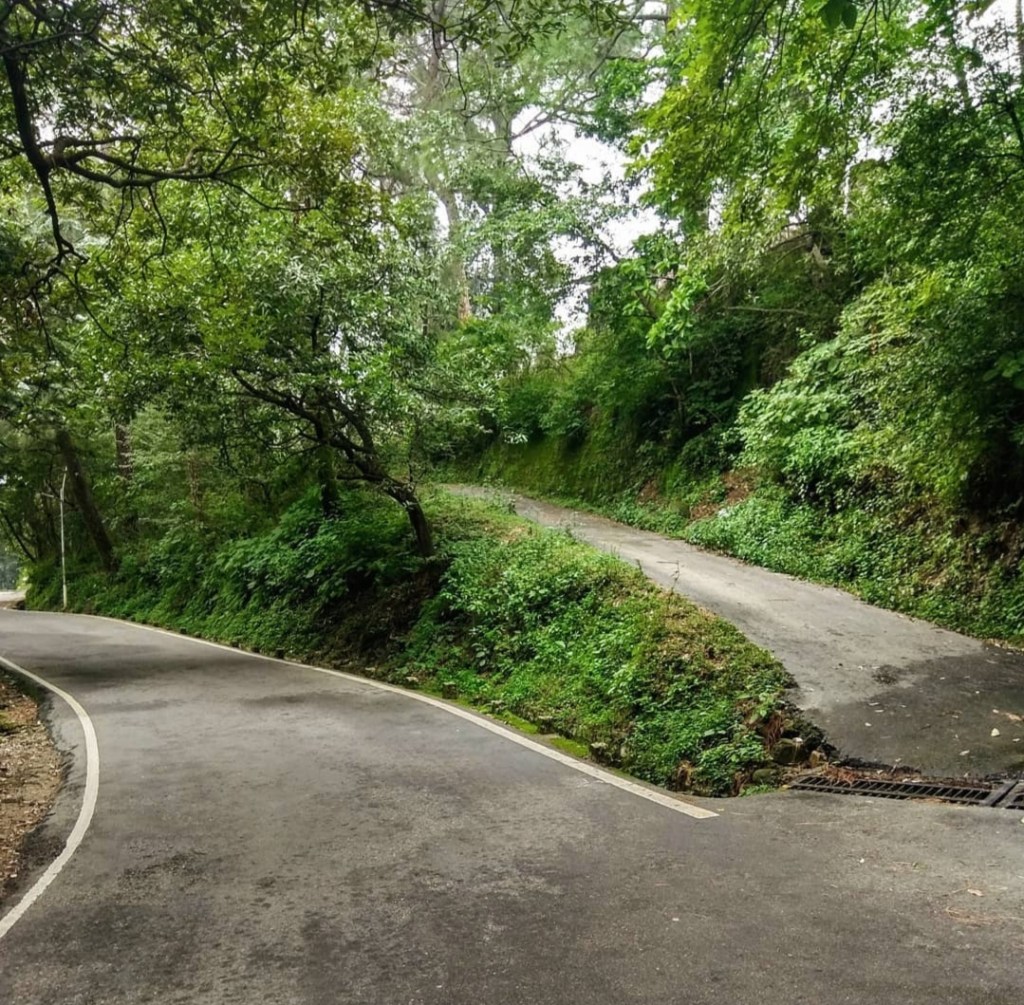
When every choice involves the loss of opportunity, which path will you choose? When your choices come with incomplete information, how can you be certain? How long will you stand still before making your choice? How confident are you when you realize you can’t save the first road for another day when the road you chose tends to lead onward to another? Whichever road you choose will make all the difference. In order to be different and do something great, you have to think different and implement things with a different approach. You have to take a different lane; the road not taken.

Remember the poem “The Road Not Taken” penned by Robert Frost?

Two roads diverged in a yellow wood,

And sorry I could not travel both

And be one traveler, long I stood

And looked down one as far as I could

To where it bent in the undergrowth…

The poem describes someone standing at a fork, or turning point, in a road in the woods, trying to decide which path he is going to take. He looks down one road as far as he can see, and after thinking for another minute, decides to take one because it looks like nobody’s been that way yet, and he is curious about where it leads. He thinks maybe he might come back another day and try out the other path but he has a feeling that the road he has chosen will lead him to new places and discoveries, and he probably won’t be back. He thinks wistfully about that road, which he did not take, and where he might have wound up if he’d gone that way instead. Part of him regrets his decision, but he also realizes that the things he’s seen and the places he’s gone because of the direction he chose has made him who he is.

This poem tells a lot about life in general. Life is all about making choices, whether it’s about choosing to change your daily diet or choosing the right partner. Every choice has its significance in some way or the other.

It makes me remember that past is always dynamic because it shapes my present and therefore, I should be careful about my present as it will take care of my future. Most importantly, this poem makes me think wisely about my choices. It reminds me that I should not make such a choice which I would regret one day and say ‘if I would have taken the other road, it would have been better’. Rather I should be proud of my decision and say ‘Yes! Since I chose the right path, it has led to all this difference’. The difference is what makes it different. Just as Frost ended the poem: “I took the road less travelled, and that’s all that matters”. There are no bad roads, there are only different battles that births different results.

In my opinion, the poet encourages the readers to create opportunities that may be overlooked by us because we all are in search of solutions for our problems rather than trying to sort out the things in the less conventional way.

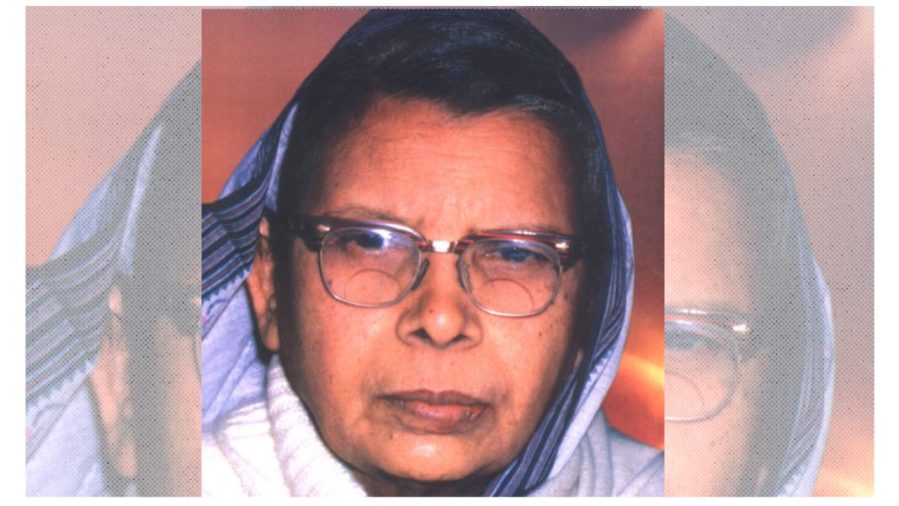
Mahadevi Varma


In the 1920s, a time when few Indian girls could dream of finishing school and being anything other than housewives and mothers, one-woman name Mahadevi Varma discovered a love of writing and went on to become one of the key figures in a new era of Hindi poetry.

Mahadevi Varma best known as an outstanding Hindi poet, was a freedom fighter, woman’s activist and educationist from India. She is widely regarded as the “modern Meera”. She was a major poet of the Chhayavaad generation, a period of romanticism in Modern Hindi poetry ranging from 1914- 1938. With passage of time, her limited but outstanding prose has been recognised as unique in Hindi Literature. She was a prominent poet in Hindi Kavi sammelans (Gatherings of poets).


She was the Principal, and then the Vice Chancellor of Prayag Mahila Vidyapeeth, a woman’s residential college in Allahabad. She was awarded India’s highest literary award, for lifetime achievement, the Sahitya Akademi Fellowship in 1979, followed by the Jnanpith Award in 1982. She was the recipient of the Padma Vibhushan, India’s second-highest civilian award, in 1988.


Mahadevi Varma was deeply affected by Buddhism and also contributed to the Indian freedom movement. She even tried to become a Buddhist bhikshuni. Mahadevi was appointed as the first headmistress of Allahabad (Prayag) Mahila Vidyapeeth, which was started with a view to imparting cultural and literary education to girls through Hindi medium.

Later, she became the chancellor of the institute. Mahadevi is considered to be one of the four major poets of the Chhayavaadi school of the Hindi literature, others being Suryakant Tripathi ‘Nirala’, Jaishankar Prasad and Sumitranandan Pant. She was also a noted painter. She drew a number of illustrations for her poetic works like Hindi and Yama.


Many of her books are included in the syllabus for school children by CBSE. A few of these are; Neelkanth, which is about her experience with a peacock; Gaura, a story about a beautiful cow; Mere Bachpan Ke Din and Gillu, about her childhood memories; and also her poem Madhur Madhur Mere Deepak Jal. Mahadevi Varma studied the compositions of devout poets like Meera, Sur and Tulsi from childhood. This is the reason that these poets became his source of inspiration. Following are the major compositions of Mahadevi Varma – ‘Neehar’, ‘Neerja’, ‘Sandhyagit’, ‘Deepshikha’, ‘Yama’, ‘Movies of the past’, ‘Lines of Smriti’, ‘Links of series’ etc.
Mahadevi Verma received several awards for her poems which had a language that was original and lyrical, at the same time having profound meaning. She was able to paint a picture that was both colourful as well as had depths of philosophy in it.